What is history?


          By: Shaw Kobayashi
Journey of Man

●   Around 45,000 years ago, a group of simple people in East
    Africa began to behave in new ways and rapidly expanding in
    population and range.
1. Drama evidence of a surge in ingenuity and adaptability comes from a wave
   of human migration around 40,000 to 35,000 years ago.
2. Fully modern Africans made their way into Europe, where they encountered
   the Neanderthals, cave dwellers who had lived in and around Europe for
   more than 200,000 years.
3. Modern Africans took advantage of a long warm spell to expand northward
   into Neanderthal territory in the Middle East, only to scuttle south again
   when temperatures later plunged.
Journey of Man

●    DNA studies suggest that all humans today descend
     from a group of African ancestors who about 60,000
     years ago began a remarkable journey.
1.   The Genographic Project is seeking to chart new knowledge about the
     migratory history of the human species by using sophisticated laboratory and
     computer analysis of DNA contributed by hundreds of thousands of people
     from around the world.

2.   Analyzing historical patterns in DNA from participants around the world to
     better understand our human genetic roots have three components of the
     project.

3.   The three are to gather field research data in collaboration with indigenous and
     traditional peoples around the world; to invite the general public to join the
     project by purchasing a Genographic Project public Participation Kit; and to
     use proceeds from Genographic Public Participation Kit sales to further field
     research and the Genographic Legacy Fund which in turn supports indigenous
     conservation and revitalization projects.
Catastrophe

●   Around the year 535 A.D, very strange activity
    happened to the world's Climate.
1. Clouds of dust developed on the Earth. Rain poured red, the
  sun began to go dark, bitter cold gripped the land for two
  years.
2. It followed by Drought, Plague and Famine, some feared it
   was the end of the world.
3. For years no one was sure what had cause this great
   catastrophe.
Catastrophe

●   Scientists are able to look back at
    climatic changes that happened
    thousands of years ago. There are
    three ways.
●   Ice cores- There are layers of ice build
    from years of snow compressed into layers
    of ice.
●   Tree rings- Each ring has a year to it as the
    tree gets older the more layers it will have.
●   Carbon dating- The carbon Dioxide starts
    from plants and transfers through out the
    food chain and if an organism dies the
    process is stoped.
Guns, Germs, and Steel

●   The future of Human history as a Science is the striking differences
    between the long term histories of people of the different continents
    have been due not to innate differences in the peoples themselves but
    to differences in their environments. There are four sets of differences
    appear to be the most important ones.
1. The first one consists of continental differences in the wild plant and animal species available
   as starting materials for domestication.
2. The second set of factors consists of those affecting rates of diffusion and migration, which
   differed greatly among continents
3. The third set of factors influencing diffusion between continents, which may also help build
   up a local pool of domesticates and technology.
4. The fourth set of factors consists of continental differences in area or total population size.
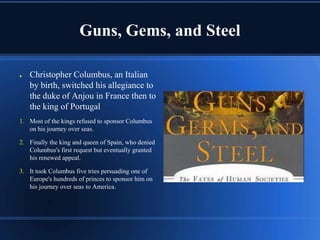
Guns, Gems, and Steel

●   Christopher Columbus, an Italian
    by birth, switched his allegiance to
    the duke of Anjou in France then to
    the king of Portugal
1. Most of the kings refused to sponsor Columbus
   on his journey over seas.

2. Finally the king and queen of Spain, who denied
   Columbus's first request but eventually granted
   his renewed appeal.

3. It took Columbus five tries persuading one of
   Europe's hundreds of princes to sponsor him on
   his journey over seas to America.
The Columbian Exchange

●   Humans have reversed the ancient trend of geographical bio
    diversification
●   The most influential example of this is from the exchange of
    organisms between the Eastern and Western Hemispheres.
●   It began with the Amerindians who brought with them a number of
    different species and diseases.
●   Another influential example is when the Europeans made contact
    across the Atlantic Ocean and Pacific Ocean. There motives were
    economic and nationalistic, not biological. Their intentions were to
    gain money and expand empires, but the most important aspect of
    their advance was spreading old world DNA.
The Columbian Exchange

●   The Columbian exchange was an exchange
    between the Eastern and Western
    Hemispheres. It was an exchange of plants,
    animals, diseases, and even slaves.
●   Christopher Columbus' voyage in 1492
    launched this huge exchange. It is named
    after him.
●   The Columbian Exchange wasn't all good.
    It spread diseases in places where people
    had no immunities, and depopulated many
    places.
●   The diseased places lost between 50 to 90
    percent of their population.

Assignment 1

  • 1.
    What is history? By: Shaw Kobayashi
  • 2.
    Journey of Man ● Around 45,000 years ago, a group of simple people in East Africa began to behave in new ways and rapidly expanding in population and range. 1. Drama evidence of a surge in ingenuity and adaptability comes from a wave of human migration around 40,000 to 35,000 years ago. 2. Fully modern Africans made their way into Europe, where they encountered the Neanderthals, cave dwellers who had lived in and around Europe for more than 200,000 years. 3. Modern Africans took advantage of a long warm spell to expand northward into Neanderthal territory in the Middle East, only to scuttle south again when temperatures later plunged.
  • 3.
    Journey of Man ● DNA studies suggest that all humans today descend from a group of African ancestors who about 60,000 years ago began a remarkable journey. 1. The Genographic Project is seeking to chart new knowledge about the migratory history of the human species by using sophisticated laboratory and computer analysis of DNA contributed by hundreds of thousands of people from around the world. 2. Analyzing historical patterns in DNA from participants around the world to better understand our human genetic roots have three components of the project. 3. The three are to gather field research data in collaboration with indigenous and traditional peoples around the world; to invite the general public to join the project by purchasing a Genographic Project public Participation Kit; and to use proceeds from Genographic Public Participation Kit sales to further field research and the Genographic Legacy Fund which in turn supports indigenous conservation and revitalization projects.
  • 4.
    Catastrophe ● Around the year 535 A.D, very strange activity happened to the world's Climate. 1. Clouds of dust developed on the Earth. Rain poured red, the sun began to go dark, bitter cold gripped the land for two years. 2. It followed by Drought, Plague and Famine, some feared it was the end of the world. 3. For years no one was sure what had cause this great catastrophe.
  • 5.
    Catastrophe ● Scientists are able to look back at climatic changes that happened thousands of years ago. There are three ways. ● Ice cores- There are layers of ice build from years of snow compressed into layers of ice. ● Tree rings- Each ring has a year to it as the tree gets older the more layers it will have. ● Carbon dating- The carbon Dioxide starts from plants and transfers through out the food chain and if an organism dies the process is stoped.
  • 6.
    Guns, Germs, andSteel ● The future of Human history as a Science is the striking differences between the long term histories of people of the different continents have been due not to innate differences in the peoples themselves but to differences in their environments. There are four sets of differences appear to be the most important ones. 1. The first one consists of continental differences in the wild plant and animal species available as starting materials for domestication. 2. The second set of factors consists of those affecting rates of diffusion and migration, which differed greatly among continents 3. The third set of factors influencing diffusion between continents, which may also help build up a local pool of domesticates and technology. 4. The fourth set of factors consists of continental differences in area or total population size.
  • 7.
    Guns, Gems, andSteel ● Christopher Columbus, an Italian by birth, switched his allegiance to the duke of Anjou in France then to the king of Portugal 1. Most of the kings refused to sponsor Columbus on his journey over seas. 2. Finally the king and queen of Spain, who denied Columbus's first request but eventually granted his renewed appeal. 3. It took Columbus five tries persuading one of Europe's hundreds of princes to sponsor him on his journey over seas to America.
  • 8.
    The Columbian Exchange ● Humans have reversed the ancient trend of geographical bio diversification ● The most influential example of this is from the exchange of organisms between the Eastern and Western Hemispheres. ● It began with the Amerindians who brought with them a number of different species and diseases. ● Another influential example is when the Europeans made contact across the Atlantic Ocean and Pacific Ocean. There motives were economic and nationalistic, not biological. Their intentions were to gain money and expand empires, but the most important aspect of their advance was spreading old world DNA.
  • 9.
    The Columbian Exchange ● The Columbian exchange was an exchange between the Eastern and Western Hemispheres. It was an exchange of plants, animals, diseases, and even slaves. ● Christopher Columbus' voyage in 1492 launched this huge exchange. It is named after him. ● The Columbian Exchange wasn't all good. It spread diseases in places where people had no immunities, and depopulated many places. ● The diseased places lost between 50 to 90 percent of their population.