Assessment and Evaluation Basic Principles, Intended Audience, and Enhancing Communication Presented By: Lillian Vania, MEd.					October 13, 2010
Assessment and Evaluation Williamstown Community Preschool					October 13, 2010Name:2 hours: Observation, Assessment, and Planning for Individual NeedPresenter: Lillian Vania, MEdBasic Principles, Intended Audience, and Enhancing Communication
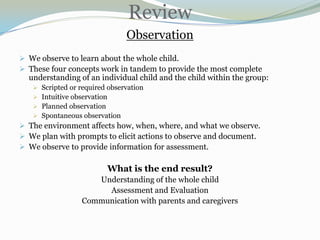
ReviewObservationWe observe to learn about the whole child.
These four concepts work in tandem to provide the most complete understanding of an individual child and the child within the group:
Scripted or required observation
Intuitive observation
Planned observation
Spontaneous observation
The environment affects how, when, where, and what we observe.
We plan with prompts to elicit actions to observe and document.
We observe to provide information for assessment.What is the end result?Understanding of the whole childAssessment and EvaluationCommunication with parents and caregivers
Assessment and EvaluationThe Basic Principles
Assessment and EvaluationThe terms assessment and evaluation are often used interchangeably, in actuality they are two parts of the same process.1Assessment is the process of gathering evidence of what the child can do.Evaluation is the process that follows this collection of data, including analysis and reflection, as well as decisions                           based on the data.1. Assessing and Evaluating Student Learning: Atlantic Canada English Language Arts Curriculum: K-3 p. 263-264
Primary Purpose:
To inform teaching
To promote and encourage learning
To promote optimal individual growth
To assist learners in their quest for understanding at the point in time in which we (teachers) encounter them in the classroom 2Assessment and Evaluation2.  Jacobs, Heidi Hayes Mapping the Big Picture: Integrating Curriculum and Assessment K-12
In order to provide information vital to teachers, assessment and evaluation must be: 3
Ongoing
Integrated into the teaching and learning process
 A continuous cycle of collecting data, interpreting data, reporting information, and influencing teaching
Consistent with beliefs about curriculum and classroom practices
 A reflection of the desired outcomes of Creative Curriculum
Designed to use multiple sources of information collected in a variety of contexts
Designed to recognize learners as active partners in their own learning and in the evaluation of that learning.Assessment and Evaluation3. Assessing and Evaluating Student Learning: Atlantic Canada English Language Arts Curriculum: K-3 p. 263-264

Assessment Power Point Presentation 10 10 2010

  • 1.
    Assessment and EvaluationBasic Principles, Intended Audience, and Enhancing Communication Presented By: Lillian Vania, MEd. October 13, 2010
  • 2.
    Assessment and EvaluationWilliamstown Community Preschool October 13, 2010Name:2 hours: Observation, Assessment, and Planning for Individual NeedPresenter: Lillian Vania, MEdBasic Principles, Intended Audience, and Enhancing Communication
  • 3.
    ReviewObservationWe observe tolearn about the whole child.
  • 4.
    These four conceptswork in tandem to provide the most complete understanding of an individual child and the child within the group:
  • 5.
  • 6.
  • 7.
  • 8.
  • 9.
    The environment affectshow, when, where, and what we observe.
  • 10.
    We plan withprompts to elicit actions to observe and document.
  • 11.
    We observe toprovide information for assessment.What is the end result?Understanding of the whole childAssessment and EvaluationCommunication with parents and caregivers
  • 12.
  • 13.
    Assessment and EvaluationTheterms assessment and evaluation are often used interchangeably, in actuality they are two parts of the same process.1Assessment is the process of gathering evidence of what the child can do.Evaluation is the process that follows this collection of data, including analysis and reflection, as well as decisions based on the data.1. Assessing and Evaluating Student Learning: Atlantic Canada English Language Arts Curriculum: K-3 p. 263-264
  • 14.
  • 15.
  • 16.
    To promote andencourage learning
  • 17.
    To promote optimalindividual growth
  • 18.
    To assist learnersin their quest for understanding at the point in time in which we (teachers) encounter them in the classroom 2Assessment and Evaluation2. Jacobs, Heidi Hayes Mapping the Big Picture: Integrating Curriculum and Assessment K-12
  • 19.
    In order toprovide information vital to teachers, assessment and evaluation must be: 3
  • 20.
  • 21.
    Integrated into theteaching and learning process
  • 22.
    A continuouscycle of collecting data, interpreting data, reporting information, and influencing teaching
  • 23.
    Consistent with beliefsabout curriculum and classroom practices
  • 24.
    A reflectionof the desired outcomes of Creative Curriculum
  • 25.
    Designed to usemultiple sources of information collected in a variety of contexts
  • 26.
    Designed to recognizelearners as active partners in their own learning and in the evaluation of that learning.Assessment and Evaluation3. Assessing and Evaluating Student Learning: Atlantic Canada English Language Arts Curriculum: K-3 p. 263-264

Editor's Notes

  • #6 Ask for examples of evidence: notes from observation, photographs capturing an action, paintings, etc.
  • #8 Exercise: how can you include your age group in the evaluation of what they are learning- link this to communication with parents later on in presentation
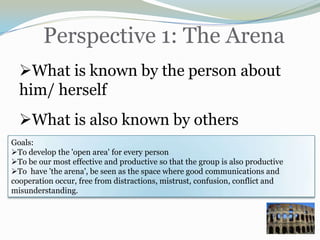
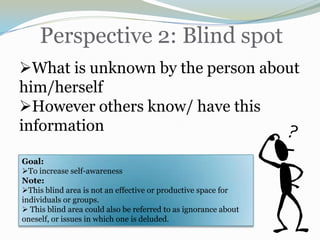
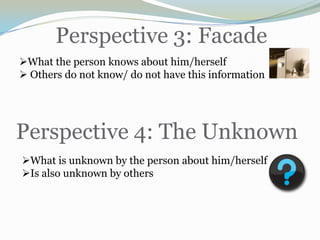
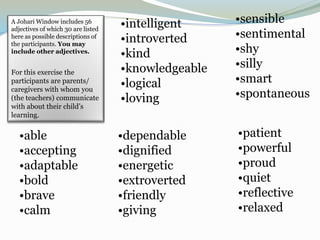
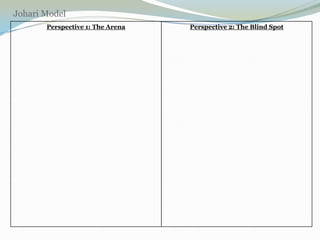
  • #16 Question to guide perspective 1: What do both groups of participants know about each other?Follow-up question: What qualities do we need to add or remove to have good communication and cooperation and reduce mistrust and conflict?
  • #17 Question to prompt the group: What are some characteristics of parents you have interacted with that they seem to be unaware of? What characteristics immediately set a negative tone? Example: Branda @ the beginning of each school year- fight or flight mode!
  • #23 Chart paper: How to enhance communication
  • #24 Chart paperExample: surprises you: resilience, empathy