
Download to read offline


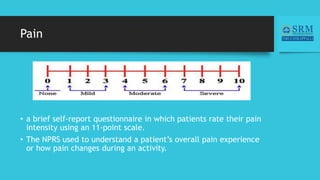






This document discusses the importance of assessing personal context when conducting occupational therapy assessments. It provides examples of factors within a client's personal context that can influence functioning, such as age, symptoms like pain and fatigue, coping strategies, mental health, spirituality, and beliefs. The document also emphasizes that a therapist must be aware of how their own personal context and biases could influence the client interaction and assessment. It provides suggestions for questionnaires and topics therapists can explore with clients to better understand their personal context, values, and experiences with disability or illness.


