VISHAL SHARMA
INSTITUTE OF MANAGEMENT STUDIES
GHAZIABAD
DATE : AUG/11/2017
 What is ASP.NET MVC?
 ASP.NET MVC Power.
 ASP.NET Web Forms vs. ASP.NET MVC
 ASP.NET MVC Parts:
◦ Model
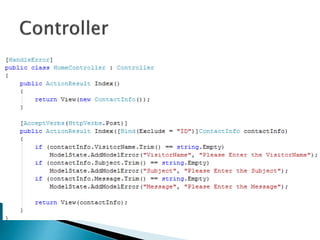
◦ Controller
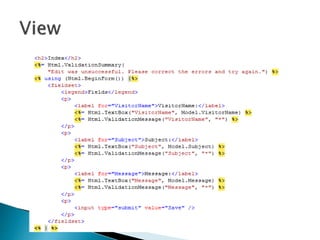
◦ View
◦ Router
 The Model-View-Controller(MVC) architectural pattern separates an
application into three main components:the model,the view,and the
controller.
 The ASP.NET MVC framework is a light weight,highly testable presentation
framework that(as with Web Forms-based applications)is integrated with
existing ASP.NET features,such as master pages and membership-based
authentication.
 The MVC framework is defined in the System.Web.Mvc assembly.
 ASP.NET MVC is one of the methods of developing ASP.NET applications
 ASP.NET MVC Framework is Microsoft’s Web Application development
framework, the other one being traditional webforms framework.
 MVC or Model View Controller is a design pattern that addresses the
separation of concerns(Soc) which is the process of identifying and
separating the application into distinct parts like UI, Logic and Data Access.
 MVC is a standard design pattern that many devlopers are familier with some
types of web applications will benefit from MVC framework.
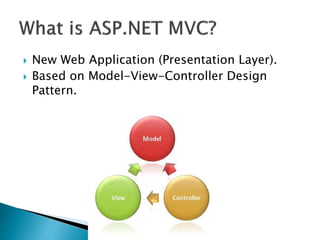
 New Web Application (Presentation Layer).
 Based on Model-View-Controller Design
Pattern.
 Complete control on HTML.
 Smooth Web 2.0 Development .
 SEO-friendly URLs.
 Easy Test Driven Development (TDD).
 Stateless.
 ASP.NET Web Forms
◦ Advantages:
 Fast Development.
 Windows Application Development Experience.
 Event Driven.
 View State.
 Web Controls.
◦ Disadvantages:
 Hard to Control HTML.
 Unfriendly URLs.
 Single “Form” tag in single page.
 ASP.NET MVC
◦ Advantages:
 Model-View-Controller Design Pattern.
 Web Application Development Experience.
 Easy to control HTML.
 Friendly URLs (SEO).
◦ Disadvantages:
 Stateless.
 More Development Time.
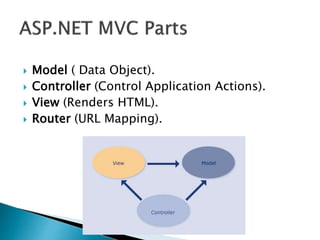
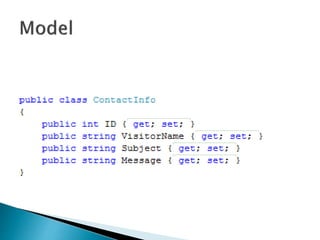
 Model ( Data Object).
 Controller (Control Application Actions).
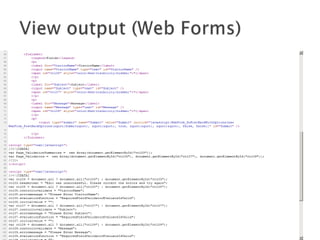
 View (Renders HTML).
 Router (URL Mapping).
Asp.net Mvc Introduction

Asp.net Mvc Introduction

  • 1.
    VISHAL SHARMA INSTITUTE OFMANAGEMENT STUDIES GHAZIABAD DATE : AUG/11/2017
  • 2.
     What isASP.NET MVC?  ASP.NET MVC Power.  ASP.NET Web Forms vs. ASP.NET MVC  ASP.NET MVC Parts: ◦ Model ◦ Controller ◦ View ◦ Router
  • 3.
     The Model-View-Controller(MVC)architectural pattern separates an application into three main components:the model,the view,and the controller.  The ASP.NET MVC framework is a light weight,highly testable presentation framework that(as with Web Forms-based applications)is integrated with existing ASP.NET features,such as master pages and membership-based authentication.  The MVC framework is defined in the System.Web.Mvc assembly.  ASP.NET MVC is one of the methods of developing ASP.NET applications  ASP.NET MVC Framework is Microsoft’s Web Application development framework, the other one being traditional webforms framework.  MVC or Model View Controller is a design pattern that addresses the separation of concerns(Soc) which is the process of identifying and separating the application into distinct parts like UI, Logic and Data Access.  MVC is a standard design pattern that many devlopers are familier with some types of web applications will benefit from MVC framework.
  • 4.
     New WebApplication (Presentation Layer).  Based on Model-View-Controller Design Pattern.
  • 5.
     Complete controlon HTML.  Smooth Web 2.0 Development .  SEO-friendly URLs.  Easy Test Driven Development (TDD).  Stateless.
  • 6.
     ASP.NET WebForms ◦ Advantages:  Fast Development.  Windows Application Development Experience.  Event Driven.  View State.  Web Controls. ◦ Disadvantages:  Hard to Control HTML.  Unfriendly URLs.  Single “Form” tag in single page.
  • 7.
     ASP.NET MVC ◦Advantages:  Model-View-Controller Design Pattern.  Web Application Development Experience.  Easy to control HTML.  Friendly URLs (SEO). ◦ Disadvantages:  Stateless.  More Development Time.
  • 8.
     Model (Data Object).  Controller (Control Application Actions).  View (Renders HTML).  Router (URL Mapping).