Fotografi
Sejarah perkembangan fotografi Bahagian asas dan fungsi kamera Jenis-jenis dan aksesori kamera Jenis-jenis filem Teknik penggambaran Komposisi Fotografi digital
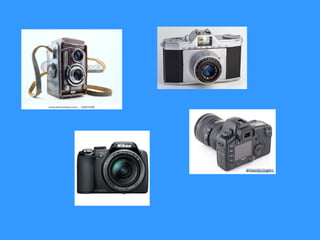
Jenis-jenis kamera Point and shoot SLR and DSLR
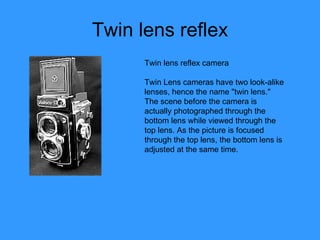
Twin lens reflex Twin lens reflex camera Twin Lens cameras have two look-alike lenses, hence the name "twin lens." The scene before the camera is actually photographed through the bottom lens while viewed through the top lens. As the picture is focused through the top lens, the bottom lens is adjusted at the same time.
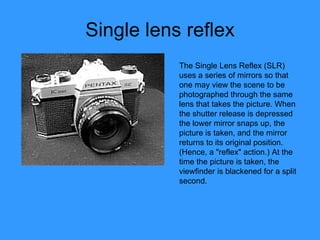
Single lens reflex The Single Lens Reflex (SLR) uses a series of mirrors so that one may view the scene to be photographed through the same lens that takes the picture. When the shutter release is depressed the lower mirror snaps up, the picture is taken, and the mirror returns to its original position. (Hence, a "reflex" action.) At the time the picture is taken, the viewfinder is blackened for a split second.
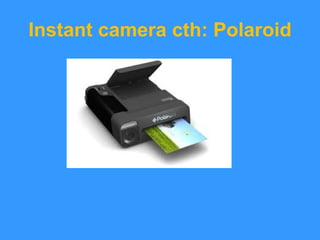
Instant camera cth: Polaroid
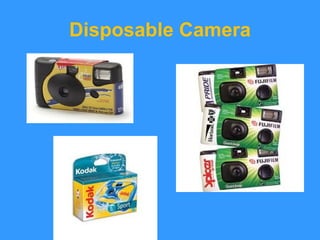
Disposable Camera
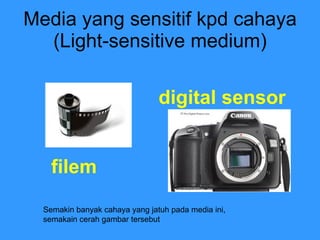
Media yang sensitif kpd cahaya (Light-sensitive medium) digital sensor filem Semakin banyak cahaya yang jatuh pada media ini, semakain cerah gambar tersebut
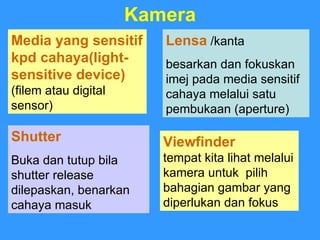
Kamera Lensa  /kanta besarkan dan fokuskan imej pada media sensitif cahaya melalui satu pembukaan (aperture) Shutter   Buka dan tutup bila shutter release dilepaskan, benarkan cahaya masuk Media yang sensitif kpd cahaya(light-sensitive device)  (filem atau digital sensor) Viewfinder tempat kita lihat melalui kamera untuk  pilih bahagian gambar yang diperlukan dan fokus
 
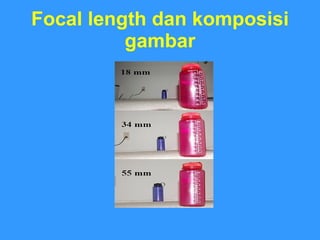
Lensa (kanta) Digunakan untuk membentuk imej yang jelas di atas fillem/digital sensor Diukur dalam unit ‘mm’ yang menentukan focal length (jarak fokus) Focal length yang berlainan membentuk saiz imej yang berlainan
Jenis Lensa (kanta) sesuatu lensa diukur dalam bentuk mm yang dikenali sebagai ‘focal length’ 3 jenis utama: Normal/ Standard/biasa Wide angle (bidang luas) Telephoto/ Foto Jauh
Jenis lensa Normal/ standard lens (paparkan secara tepat apa yang boleh dilihat oleh mata manusia) – cth 50mm Telephoto Wide angle  (paparkan kawasan yang lebih luas) – kurang daripada standard focal length, cth 24 & 35mm
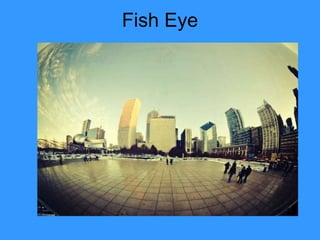
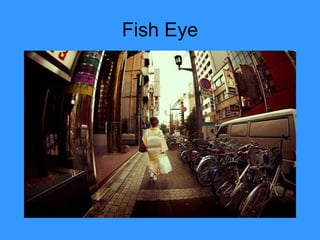
Jenis Lensa Lain Prime lens (mempunyai  focal length yang tetap, cth 35mm, 100mm)  Macro Fisheye (uses an angle of view up to 180 degrees. The angle distorts the photograph so the four sides appear to be farther away) Teleconverter (A teleconverter attaches between the camera and another lens. It increases the focal length of your lens)
Telephoto Lens membawa objek jauh ke jarak yang dekat  70-300mm 85-120mm 135-200mm 300-600mm
Zoom Lens Mempunyai gabungan beberapa jenis kanta pada satu unit 28mm-50mm (sudut luas ke normal) 50mm-100mm (normal ke sederhana) 70-200mm (normal ke jauh) 135-300mm (sederhana ke jauh)
Focal length dan komposisi gambar
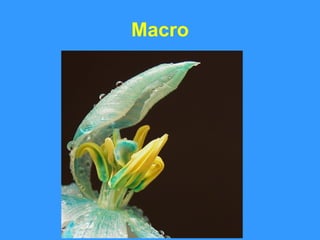
Macro
Macro
Fish Eye
Fish Eye
Kawalan cahaya Shutter speed (kelajuan pengatup)  ISO (100, 200, 400 – dua kali ganda) Aperture (saiz bukaan lensa)
Exposure 'exposure' jumlah cahaya yang masuk pada media, filem atau digital sensor
Underexposed
Overexposed
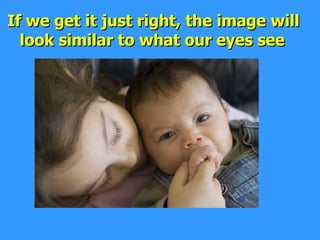
If we get it just right, the image will look similar to what our eyes see
Shutter Speed Tempoh pembukaan pengatup Unit ukuran = saat / pecahan/fraction  (cth: 1/1000, 1/30).
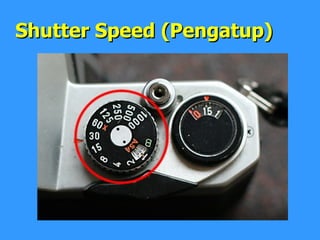
Shutter Speed (Pengatup)
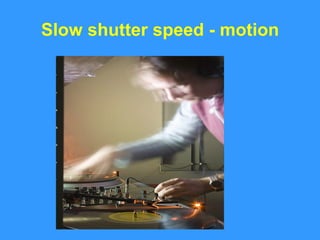
Slow shutter speed - motion
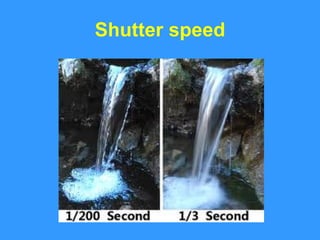
Shutter speed
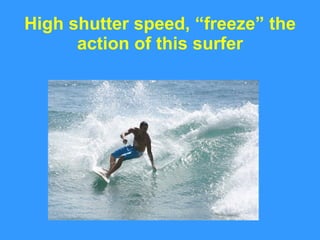
High shutter speed, “freeze” the action of this surfer
The shutter speeds are 1/30th of a second, 1/60th of a second, 1/125th of a second, 1/250th of a second, etc.  Moving from one speed to the next one halves the amount of light that can enter the camera.  On the other hand, moving the other way, to a slower shutter speed, doubles the amount of light that can get into the camera.  The change from one speed to another (and halving or doubling the light that enters the camera) is called moving a  stop .
Petua untuk penggunaan shutter speed Shutter speed tidak boleh kurang daripada focal length. Cth: jika guna lensa 200mm, shutter speed sekurang-kurangnya 1/200 sec
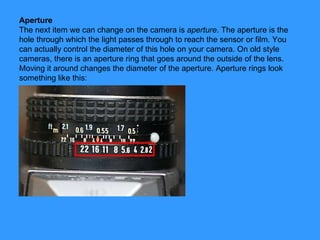
Aperture The next item we can change on the camera is  aperture . The aperture is the hole through which the light passes through to reach the sensor or film. You can actually control the diameter of this hole on your camera. On old style cameras, there is an aperture ring that goes around the outside of the lens. Moving it around changes the diameter of the aperture. Aperture rings look something like this:
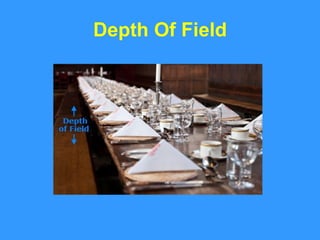
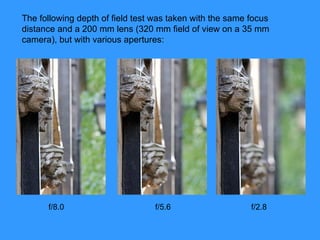
Depth of Field (kawasan jelas) Kawasan yang jelas dalam Ditentukan oleh aperture dan jarak fokus
Depth Of Field
The following depth of field test was taken with the same focus distance and a 200 mm lens (320 mm field of view on a 35 mm camera), but with various apertures:  f/8.0  f/5.6  f/2.8
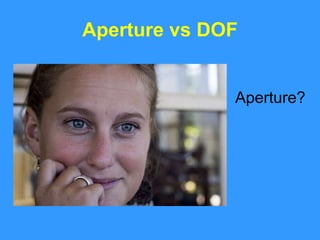
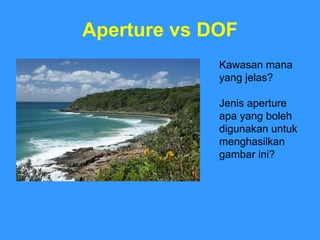
Aperture vs DOF Kawasan mana yang jelas? Jenis aperture apa yang boleh digunakan untuk menghasilkan gambar ini?
Aperture vs DOF Aperture?
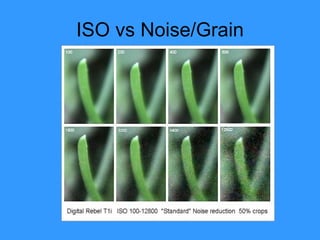
ISO vs Noise/Grain
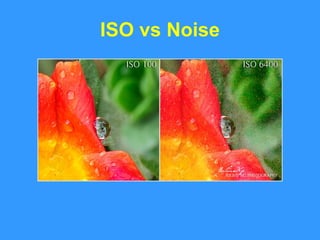
ISO vs Noise
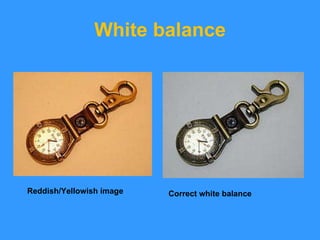
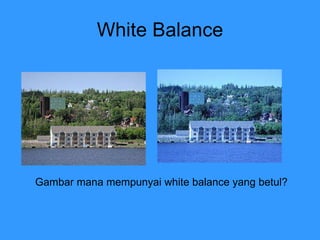
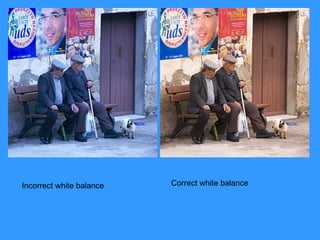
White Balance Proses mengeluarkan warna yang tidak dikehendaki supaya objek yang berwarna putih akan ditunjukkan sebagai warna putih dalam gambar Berkaitan dengan  color temperature – satu cara untuk menyukat kualiti punca cahaya ( It is based on the ratio of the amount of blue light to the amount of red light, ignoring green light) .
White balance Reddish/Yellowish image  Correct white balance
White Balance Gambar mana mempunyai white balance yang betul?
Incorrect white balance Correct white balance
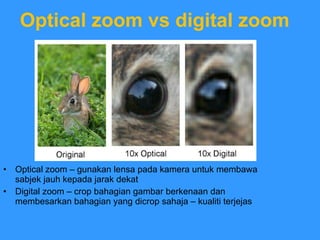
Optical zoom vs digital zoom Optical zoom – gunakan lensa pada kamera untuk membawa sabjek jauh kepada jarak dekat Digital zoom – crop bahagian gambar berkenaan dan membesarkan bahagian yang dicrop sahaja – kualiti terjejas
Komposisi Gambar
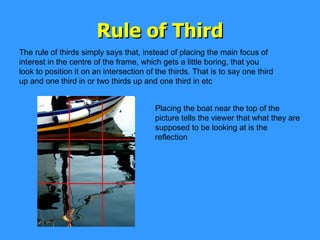
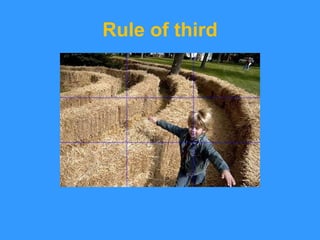
Rule of Third The rule of thirds simply says that, instead of placing the main focus of interest in the centre of the frame, which gets a little boring, that you look to position it on an intersection of the thirds. That is to say one third up and one third in or two thirds up and one third in etc  Placing the boat near the top of the picture tells the viewer that what they are supposed to be looking at is the reflection
Rule of third
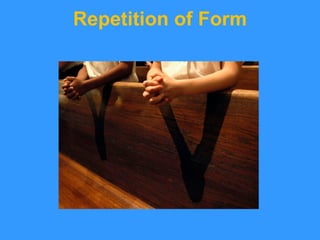
Repetition of Form
Leading Lines railroad tracks bring your eye from the railroad worker to the train wreck behind him:
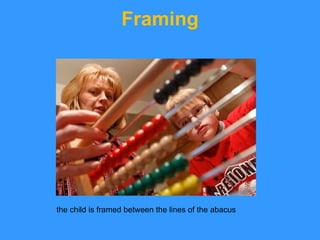
Framing the child is framed between the lines of the abacus
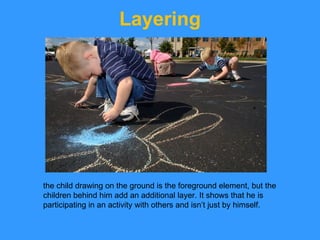
Layering the child drawing on the ground is the foreground element, but the children behind him add an additional layer. It shows that he is participating in an activity with others and isn’t just by himself.
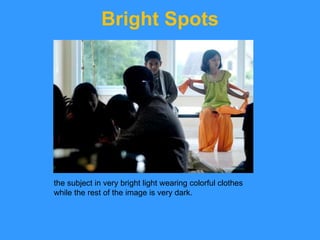
Bright Spots the subject in very bright light wearing colorful clothes while the rest of the image is very dark.
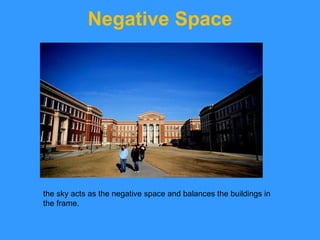
Negative Space the sky acts as the negative space and balances the buildings in the frame.
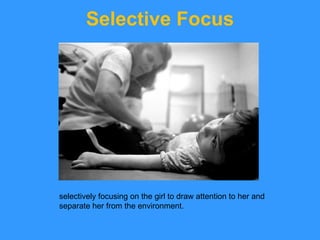
Selective Focus selectively focusing on the girl to draw attention to her and separate her from the environment.
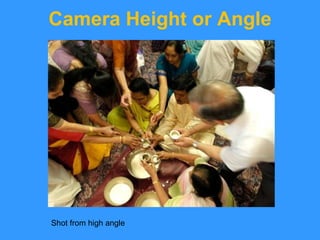
Camera Height or Angle Shot from high angle
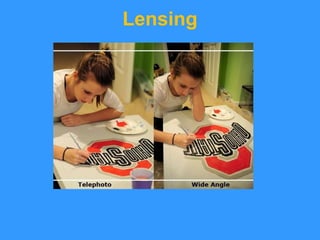
Lensing
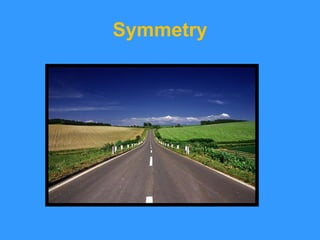
Symmetry
Memberi fokus kepada objek melalui pemilihan DOF yang sesuai
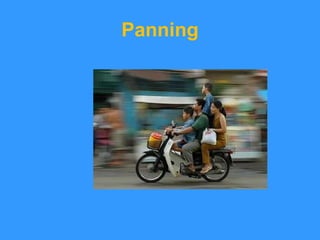
Panning
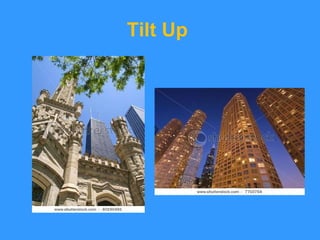
Tilt Up
Tilt down
Tilt Down
Kad Memori
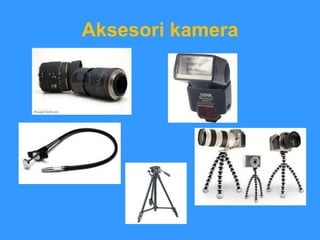
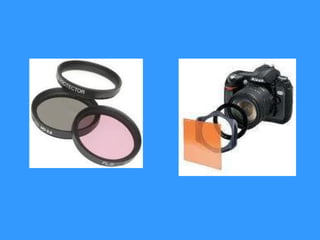
Aksesori kamera
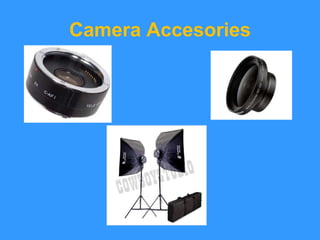
Camera Accesories
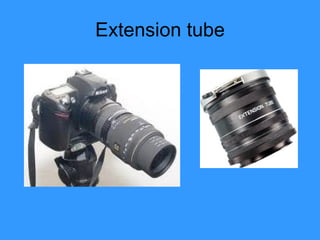
Extension tube
 
Perisian berkaitan dengan fotografi Adobe photoshop Microsoft Photo editor Microsoft Paint
Apakah peranan gambar foto dalam P-P?

Asas fotografi

  • 1.
  • 2.
    Sejarah perkembangan fotografiBahagian asas dan fungsi kamera Jenis-jenis dan aksesori kamera Jenis-jenis filem Teknik penggambaran Komposisi Fotografi digital
  • 3.
    Jenis-jenis kamera Pointand shoot SLR and DSLR
  • 4.
    Twin lens reflexTwin lens reflex camera Twin Lens cameras have two look-alike lenses, hence the name "twin lens." The scene before the camera is actually photographed through the bottom lens while viewed through the top lens. As the picture is focused through the top lens, the bottom lens is adjusted at the same time.
  • 5.
    Single lens reflexThe Single Lens Reflex (SLR) uses a series of mirrors so that one may view the scene to be photographed through the same lens that takes the picture. When the shutter release is depressed the lower mirror snaps up, the picture is taken, and the mirror returns to its original position. (Hence, a "reflex" action.) At the time the picture is taken, the viewfinder is blackened for a split second.
  • 6.
  • 7.
  • 8.
    Media yang sensitifkpd cahaya (Light-sensitive medium) digital sensor filem Semakin banyak cahaya yang jatuh pada media ini, semakain cerah gambar tersebut
  • 9.
    Kamera Lensa /kanta besarkan dan fokuskan imej pada media sensitif cahaya melalui satu pembukaan (aperture) Shutter Buka dan tutup bila shutter release dilepaskan, benarkan cahaya masuk Media yang sensitif kpd cahaya(light-sensitive device) (filem atau digital sensor) Viewfinder tempat kita lihat melalui kamera untuk pilih bahagian gambar yang diperlukan dan fokus
  • 10.
  • 11.
    Lensa (kanta) Digunakanuntuk membentuk imej yang jelas di atas fillem/digital sensor Diukur dalam unit ‘mm’ yang menentukan focal length (jarak fokus) Focal length yang berlainan membentuk saiz imej yang berlainan
  • 12.
    Jenis Lensa (kanta)sesuatu lensa diukur dalam bentuk mm yang dikenali sebagai ‘focal length’ 3 jenis utama: Normal/ Standard/biasa Wide angle (bidang luas) Telephoto/ Foto Jauh
  • 13.
    Jenis lensa Normal/standard lens (paparkan secara tepat apa yang boleh dilihat oleh mata manusia) – cth 50mm Telephoto Wide angle (paparkan kawasan yang lebih luas) – kurang daripada standard focal length, cth 24 & 35mm
  • 14.
    Jenis Lensa LainPrime lens (mempunyai focal length yang tetap, cth 35mm, 100mm) Macro Fisheye (uses an angle of view up to 180 degrees. The angle distorts the photograph so the four sides appear to be farther away) Teleconverter (A teleconverter attaches between the camera and another lens. It increases the focal length of your lens)
  • 15.
    Telephoto Lens membawaobjek jauh ke jarak yang dekat 70-300mm 85-120mm 135-200mm 300-600mm
  • 16.
    Zoom Lens Mempunyaigabungan beberapa jenis kanta pada satu unit 28mm-50mm (sudut luas ke normal) 50mm-100mm (normal ke sederhana) 70-200mm (normal ke jauh) 135-300mm (sederhana ke jauh)
  • 17.
    Focal length dankomposisi gambar
  • 18.
  • 19.
  • 20.
  • 21.
  • 22.
    Kawalan cahaya Shutterspeed (kelajuan pengatup) ISO (100, 200, 400 – dua kali ganda) Aperture (saiz bukaan lensa)
  • 23.
    Exposure 'exposure' jumlahcahaya yang masuk pada media, filem atau digital sensor
  • 24.
  • 25.
  • 26.
    If we getit just right, the image will look similar to what our eyes see
  • 27.
    Shutter Speed Tempohpembukaan pengatup Unit ukuran = saat / pecahan/fraction (cth: 1/1000, 1/30).
  • 28.
  • 29.
  • 30.
  • 31.
    High shutter speed,“freeze” the action of this surfer
  • 32.
    The shutter speedsare 1/30th of a second, 1/60th of a second, 1/125th of a second, 1/250th of a second, etc. Moving from one speed to the next one halves the amount of light that can enter the camera. On the other hand, moving the other way, to a slower shutter speed, doubles the amount of light that can get into the camera. The change from one speed to another (and halving or doubling the light that enters the camera) is called moving a stop .
  • 33.
    Petua untuk penggunaanshutter speed Shutter speed tidak boleh kurang daripada focal length. Cth: jika guna lensa 200mm, shutter speed sekurang-kurangnya 1/200 sec
  • 34.
    Aperture The nextitem we can change on the camera is aperture . The aperture is the hole through which the light passes through to reach the sensor or film. You can actually control the diameter of this hole on your camera. On old style cameras, there is an aperture ring that goes around the outside of the lens. Moving it around changes the diameter of the aperture. Aperture rings look something like this:
  • 35.
    Depth of Field(kawasan jelas) Kawasan yang jelas dalam Ditentukan oleh aperture dan jarak fokus
  • 36.
  • 37.
    The following depthof field test was taken with the same focus distance and a 200 mm lens (320 mm field of view on a 35 mm camera), but with various apertures: f/8.0 f/5.6 f/2.8
  • 38.
    Aperture vs DOFKawasan mana yang jelas? Jenis aperture apa yang boleh digunakan untuk menghasilkan gambar ini?
  • 39.
    Aperture vs DOFAperture?
  • 40.
  • 41.
  • 42.
    White Balance Prosesmengeluarkan warna yang tidak dikehendaki supaya objek yang berwarna putih akan ditunjukkan sebagai warna putih dalam gambar Berkaitan dengan color temperature – satu cara untuk menyukat kualiti punca cahaya ( It is based on the ratio of the amount of blue light to the amount of red light, ignoring green light) .
  • 43.
    White balance Reddish/Yellowishimage Correct white balance
  • 44.
    White Balance Gambarmana mempunyai white balance yang betul?
  • 45.
    Incorrect white balanceCorrect white balance
  • 46.
    Optical zoom vsdigital zoom Optical zoom – gunakan lensa pada kamera untuk membawa sabjek jauh kepada jarak dekat Digital zoom – crop bahagian gambar berkenaan dan membesarkan bahagian yang dicrop sahaja – kualiti terjejas
  • 47.
  • 48.
    Rule of ThirdThe rule of thirds simply says that, instead of placing the main focus of interest in the centre of the frame, which gets a little boring, that you look to position it on an intersection of the thirds. That is to say one third up and one third in or two thirds up and one third in etc Placing the boat near the top of the picture tells the viewer that what they are supposed to be looking at is the reflection
  • 49.
  • 50.
  • 51.
    Leading Lines railroadtracks bring your eye from the railroad worker to the train wreck behind him:
  • 52.
    Framing the childis framed between the lines of the abacus
  • 53.
    Layering the childdrawing on the ground is the foreground element, but the children behind him add an additional layer. It shows that he is participating in an activity with others and isn’t just by himself.
  • 54.
    Bright Spots thesubject in very bright light wearing colorful clothes while the rest of the image is very dark.
  • 55.
    Negative Space thesky acts as the negative space and balances the buildings in the frame.
  • 56.
    Selective Focus selectivelyfocusing on the girl to draw attention to her and separate her from the environment.
  • 57.
    Camera Height orAngle Shot from high angle
  • 58.
  • 59.
  • 60.
    Memberi fokus kepadaobjek melalui pemilihan DOF yang sesuai
  • 61.
  • 62.
  • 63.
  • 64.
  • 65.
  • 66.
  • 67.
  • 68.
  • 69.
  • 70.
    Perisian berkaitan denganfotografi Adobe photoshop Microsoft Photo editor Microsoft Paint
  • 71.
    Apakah peranan gambarfoto dalam P-P?