PRESENTED BY
SWAROOP KUMAR K
Novel Drug Discovery and
Development (NDDD), Lupin
swaroopkumar@lupin.com
Meyer et al
Pfizer Global Research & Development, USA
Journal of Inflammation 2010, 7:41
ARTHRITIS and TOFACITINIB
Discussion
27-07-2013
Introduction
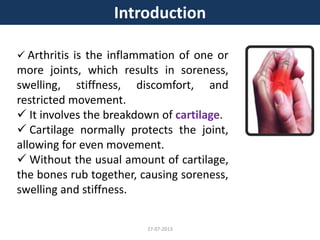
 Arthritis is the inflammation of one or
more joints, which results in soreness,
swelling, stiffness, discomfort, and
restricted movement.
 It involves the breakdown of cartilage.
 Cartilage normally protects the joint,
allowing for even movement.
 Without the usual amount of cartilage,
the bones rub together, causing soreness,
swelling and stiffness.
27-07-2013
Who is Affected?
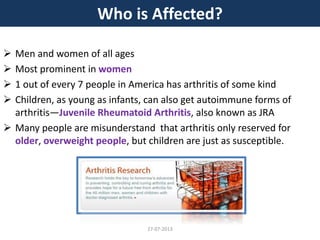
 Men and women of all ages
 Most prominent in women
 1 out of every 7 people in America has arthritis of some kind
 Children, as young as infants, can also get autoimmune forms of
arthritis—Juvenile Rheumatoid Arthritis, also known as JRA
 Many people are misunderstand that arthritis only reserved for
older, overweight people, but children are just as susceptible.
27-07-2013
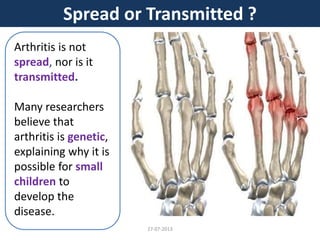
Arthritis is not
spread, nor is it
transmitted.
Many researchers
believe that
arthritis is genetic,
explaining why it is
possible for small
children to
develop the
disease.
Spread or Transmitted ?
27-07-2013
Signs
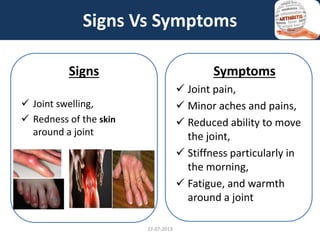
 Joint swelling,
 Redness of the skin
around a joint
Symptoms
 Joint pain,
 Minor aches and pains,
 Reduced ability to move
the joint,
 Stiffness particularly in
the morning,
 Fatigue, and warmth
around a joint
Signs Vs Symptoms
27-07-2013
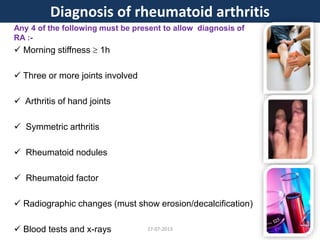
Any 4 of the following must be present to allow diagnosis of
RA :-
 Morning stiffness  1h
 Three or more joints involved
 Arthritis of hand joints
 Symmetric arthritis
 Rheumatoid nodules
 Rheumatoid factor
 Radiographic changes (must show erosion/decalcification)
 Blood tests and x-rays
Diagnosis of rheumatoid arthritis
27-07-2013
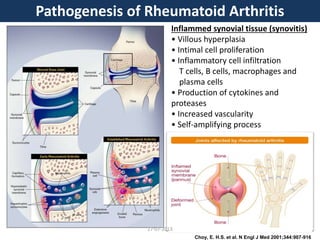
Choy, E. H.S. et al. N Engl J Med 2001;344:907-916
Inflammed synovial tissue (synovitis)
• Villous hyperplasia
• Intimal cell proliferation
• Inflammatory cell infiltration
T cells, B cells, macrophages and
plasma cells
• Production of cytokines and
proteases
• Increased vascularity
• Self-amplifying process
Pathogenesis of Rheumatoid Arthritis
27-07-2013
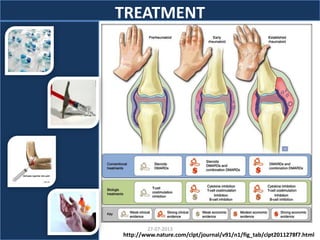
http://www.nature.com/clpt/journal/v91/n1/fig_tab/clpt2011278f7.html
TREATMENT
27-07-2013
Current therapy : Limitations
 Currently used therapy carry the burden of major side effects such as GIT
Ulceration, infections, hepatotoxicity and nephrotoxicity.
 Not effective for all patients. Moreover some patients develop resistance .
 Drawback for Biologics is loss in efficacy during therapy& 30% of patients
fail to achieve an improvement 20% ACR 20.
 Moderately to severely active rheumatoid arthritis who have had an
inadequate response or intolerance to methotrexate
 Accordingly, a need exists for improved treatment for immune disorders
and inflammatory disorders.
Treating inflammation with the Janus Kinase inhibitor CP - 690,550, cell, 2011, vol-3227-07-2013
27-07-2013
JAK – STAT INHIBITOR
CP-690550 (TOFACITINIB)
IUPAC NAME :- 3-[(3R,4R)-4-methyl-3-[methyl(7H-
pyrrolo[2,3-d]pyrimidin-4-yl)amino]piperidin-1-yl]-3-
oxopropanenitrile
STRUCTURE OF CP-690550
CENTER FOR DRUG EVALUATION AND RESEARCH (NDA 213214)
27-07-2013
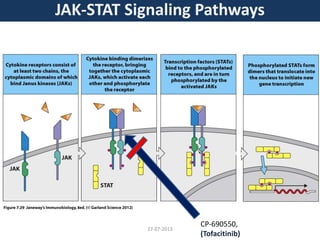
JAK-STAT Signaling Pathways
CP-690550,
(Tofacitinib)
27-07-2013
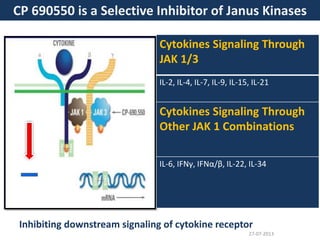
CP 690550 is a Selective Inhibitor of Janus Kinases
Cytokines Signaling Through
JAK 1/3
IL-2, IL-4, IL-7, IL-9, IL-15, IL-21
Cytokines Signaling Through
Other JAK 1 Combinations
IL-6, IFNγ, IFNα/β, IL-22, IL-34
Inhibiting downstream signaling of cytokine receptor
27-07-2013
27-07-2013
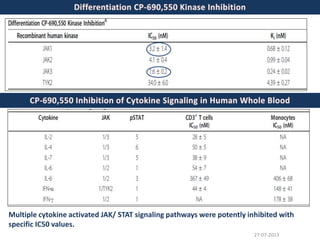
Multiple cytokine activated JAK/ STAT signaling pathways were potently inhibited with
specific IC50 values.
27-07-2013
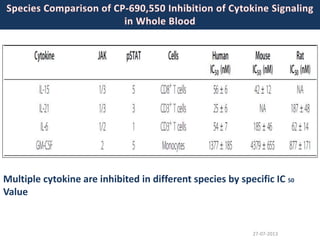
Multiple cytokine are inhibited in different species by specific IC 50
Value
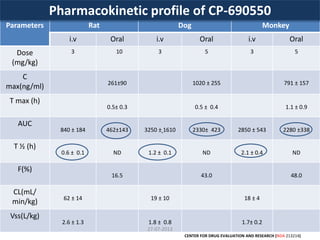
Parameters Rat Dog Monkey
i.v Oral i.v Oral i.v Oral
Dose
(mg/kg)
3 10 3 5 3 5
C
max(ng/ml) 261±90 1020 ± 255 791 ± 157
T max (h)
0.5± 0.3 0.5 ± 0.4 1.1 ± 0.9
AUC
840 ± 184 462±143 3250 ± 1610 2330± 423 2850 ± 543 2280 ±338
T ½ (h)
0.6 ± 0.1 ND 1.2 ± 0.1 ND 2.1 ± 0.4 ND
F(%)
16.5 43.0 48.0
CL(mL/
min/kg) 62 ± 14 19 ± 10 18 ± 4
Vss(L/kg)
2.6 ± 1.3 1.8 ± 0.8 1.7± 0.2
Pharmacokinetic profile of CP-690550
CENTER FOR DRUG EVALUATION AND RESEARCH (NDA 213214)
27-07-2013
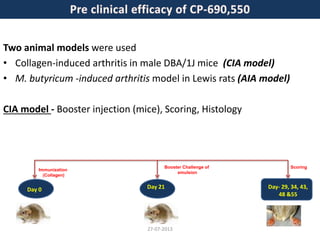
Two animal models were used
• Collagen-induced arthritis in male DBA/1J mice (CIA model)
• M. butyricum -induced arthritis model in Lewis rats (AIA model)
CIA model - Booster injection (mice), Scoring, Histology
Day 0 Day 21 Day- 29, 34, 43,
48 &55
Immunization
(Collagen)
Booster Challenge of
emulsion
Scoring
27-07-2013
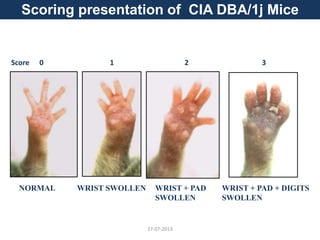
Score 1 2 3
NORMAL WRIST SWOLLEN WRIST + PAD
SWOLLEN
WRIST + PAD + DIGITS
SWOLLEN
0
Scoring presentation of CIA DBA/1j Mice
27-07-2013
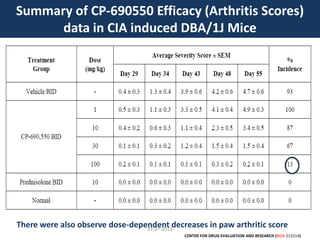
Summary of CP-690550 Efficacy (Arthritis Scores)
data in CIA induced DBA/1J Mice
CENTER FOR DRUG EVALUATION AND RESEARCH (NDA 213214)
There were also observe dose-dependent decreases in paw arthritic score27-07-2013
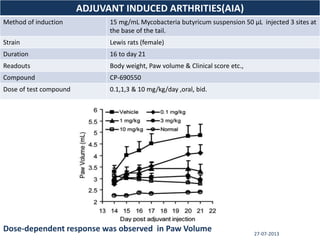
ADJUVANT INDUCED ARTHRITIES(AIA)
Method of induction 15 mg/mL Mycobacteria butyricum suspension 50 μL injected 3 sites at
the base of the tail.
Strain Lewis rats (female)
Duration 16 to day 21
Readouts Body weight, Paw volume & Clinical score etc.,
Compound CP-690550
Dose of test compound 0.1,1,3 & 10 mg/kg/day ,oral, bid.
Dose-dependent response was observed in Paw Volume 27-07-2013
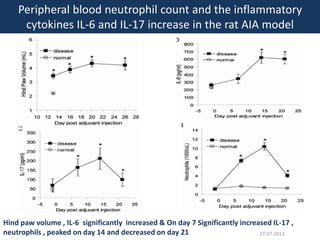
Peripheral blood neutrophil count and the inflammatory
cytokines IL-6 and IL-17 increase in the rat AIA model
Hind paw volume , IL-6 significantly increased & On day 7 Significantly increased IL-17 ,
neutrophils , peaked on day 14 and decreased on day 21 27-07-2013
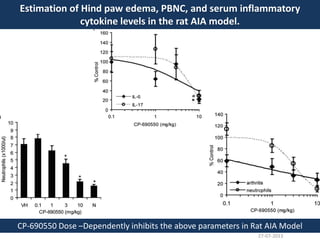
Estimation of Hind paw edema, PBNC, and serum inflammatory
cytokine levels in the rat AIA model.
CP-690550 Dose –Dependently inhibits the above parameters in Rat AIA Model
27-07-2013
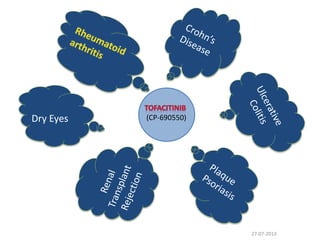
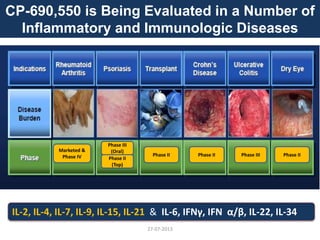
(CP-690550)Dry Eyes
27-07-2013
Marketed &
Phase IV Phase II Phase II Phase III Phase II
IL-2, IL-4, IL-7, IL-9, IL-15, IL-21 & IL-6, IFNγ, IFN α/β, IL-22, IL-34
CP-690,550 is Being Evaluated in a Number of
Inflammatory and Immunologic Diseases
Phase III
(Oral)
Phase II
(Top)
27-07-2013
27-07-2013
Modeled Human Pharmacokinetic Parameters and JAK1/3 and JAK2
IC50 Coverage for CP-690,550
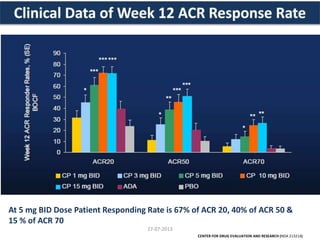
 At doses from 5 to 10 mg BID, JAK2 IC50 coverage is insignificant in comparison to JAK1/3
IC50 coverage
 Doses as low as 5 mg BID are well-tolerated and efficacious in moderate to severe RA ,
suggesting the importance of JAK1 and JAK3 target coverage in the absence of JAK2
inhibition
A) JAK1/3 human whole blood IC50 (IL-21 dependent pSTAT3) = 25 ± 6 nM; B) Range based on the upper and lower error around the IC50
where available; C ) JAK2 human whole blood IC50 (GM-CSF dependent pSTAT5) = 1377 ± 185 nM; D) GM-CSF stimulated myelomonocytic
HUO3 cell JAK2 IC50 = 324 nM [1].
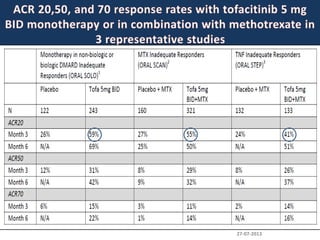
At 5 mg BID Dose Patient Responding Rate is 67% of ACR 20, 40% of ACR 50 &
15 % of ACR 70
CENTER FOR DRUG EVALUATION AND RESEARCH (NDA 213214)
27-07-2013
27-07-2013
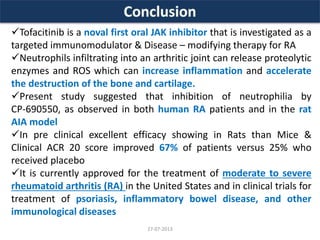
Tofacitinib is a noval first oral JAK inhibitor that is investigated as a
targeted immunomodulator & Disease – modifying therapy for RA
Neutrophils infiltrating into an arthritic joint can release proteolytic
enzymes and ROS which can increase inflammation and accelerate
the destruction of the bone and cartilage.
Present study suggested that inhibition of neutrophilia by
CP-690550, as observed in both human RA patients and in the rat
AIA model
In pre clinical excellent efficacy showing in Rats than Mice &
Clinical ACR 20 score improved 67% of patients versus 25% who
received placebo
It is currently approved for the treatment of moderate to severe
rheumatoid arthritis (RA) in the United States and in clinical trials for
treatment of psoriasis, inflammatory bowel disease, and other
immunological diseases
27-07-2013
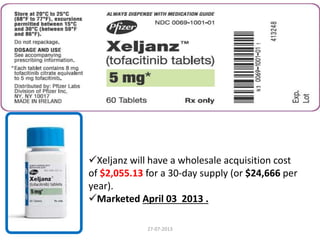
Xeljanz will have a wholesale acquisition cost
of $2,055.13 for a 30-day supply (or $24,666 per
year).
Marketed April 03 2013 .
27-07-2013
The Sun is Rising for Patients with Rheumatic Diseases: The
Future is Bright
27-07-2013
27-07-2013
Back up slides
27-07-2013
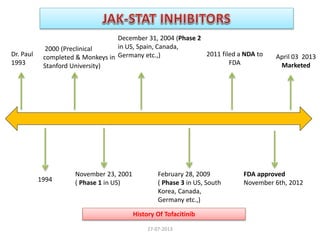
1994
Dr. Paul
1993
2011 filed a NDA to
FDA
November 23, 2001
( Phase 1 in US)
December 31, 2004 (Phase 2
in US, Spain, Canada,
Germany etc.,)
February 28, 2009
( Phase 3 in US, South
Korea, Canada,
Germany etc.,)
FDA approved
November 6th, 2012
April 03 2013
Marketed
History Of Tofacitinib
2000 (Preclinical
completed & Monkeys in
Stanford University)
27-07-2013
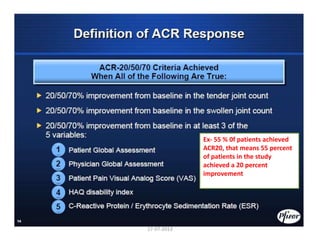
Ex- 55 % 0f patients achieved
ACR20, that means 55 percent
of patients in the study
achieved a 20 percent
improvement
27-07-2013
What was Pfizer's response on Arthritis Drug Xeljanz (tofacitinib) Receives A Negative
Opinion In Europe
Dr. Yvonne Greenstreet, senior vice president and the head of the Medicines
Development Group for Pfizer Specialty Care, said:
"We have confidence in XELJANZ and believe our application to the EMA demonstrates
that XELJANZ has a favorable risk:benefit profile.
XELJANZ's safety profile is well-characterized, and the issues raised by the EMA, including
serious infections, gastrointestinal perforations and malignancies, are familiar to
rheumatologists who are experienced working with treatments for patients to manage
this difficult disease.
Each regulatory authority will review and interpret applications individually and different
assessments are not uncommon.
The re-examination process will enable us to seek to address the CHMP's questions, and
we will continue to work closely with the EMA with the goal of making this medicine
available to appropriate patients in Europe."
27-07-2013
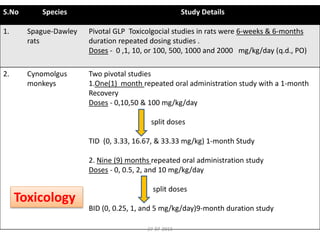
S.No Species Study Details
1. Spague-Dawley
rats
Pivotal GLP Toxicolgocial studies in rats were 6-weeks & 6-months
duration repeated dosing studies .
Doses - 0 ,1, 10, or 100, 500, 1000 and 2000 mg/kg/day (q.d., PO)
2. Cynomolgus
monkeys
Two pivotal studies
1.One(1) month repeated oral administration study with a 1-month
Recovery
Doses - 0,10,50 & 100 mg/kg/day
split doses
TID (0, 3.33, 16.67, & 33.33 mg/kg) 1-month Study
2. Nine (9) months repeated oral administration study
Doses - 0, 0.5, 2, and 10 mg/kg/day
split doses
BID (0, 0.25, 1, and 5 mg/kg/day)9-month duration study
Toxicology
27-07-2013
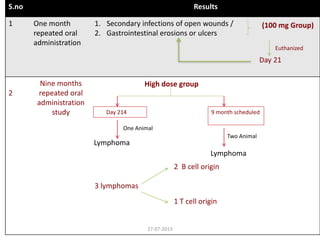
S.no Results
1 One month
repeated oral
administration
1. Secondary infections of open wounds /
2. Gastrointestinal erosions or ulcers
2
Nine months
repeated oral
administration
study
3 lymphomas
(100 mg Group)
Day 21
Euthanized
High dose group
Day 214
2 B cell origin
1 T cell origin
Lymphoma
Lymphoma
Two Animal
9 month scheduled
One Animal
27-07-2013
Tissue Distribution of CP-690550 (Pyrrolo[2,3-d]pyrimidine) in Long-
Evans Male Rats
Post Dosing in each time point One rat was euthanized by CO2 asphyxiation at
0.5, 1, 2, 4, 8, 12, 24, 72, 168, and 504 hr
Key Study Findings
The distribution of [14C]CP-690550 in blood and 57 tissues of male rats was studied
up to 504 hr following oral administration of 10.0 mg/kg (454 μCi/kg).
Maximum concentrations of [14C]CP-690550 occurred at 0.5 hr for 43 tissues, 1 hr
for 10 tissues and the whole-body, and 12 hr for the uvea.
It across the BBB by 0.5 hr and persisted in all CNS tissues for at least 4 hr.
It distributed into and was eliminated from 47 of 57 tissues by 24 hr following oral
administration.
By 72 hr, only the intervertebral discs, liver, vessel walls, kidneys, and ocular tissues
impregnated with melanin contained measurable levels of [14C]CP- 690550.
By168 and 504, only vessel walls and ocular tissues impregnated with melanin still
had measurable concentrations of [14C]CP-690550.27-07-2013
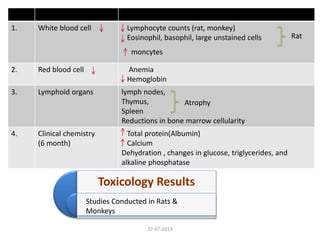
1. White blood cell Lymphocyte counts (rat, monkey)
Eosinophil, basophil, large unstained cells
2. Red blood cell Anemia
Hemoglobin
3. Lymphoid organs lymph nodes,
Thymus,
Spleen
Reductions in bone marrow cellularity
4. Clinical chemistry
(6 month)
Total protein(Albumin)
Calcium
Dehydration , changes in glucose, triglycerides, and
alkaline phosphatase
moncytes
Rat
Atrophy
Toxicology Results
Studies Conducted in Rats &
Monkeys
27-07-2013
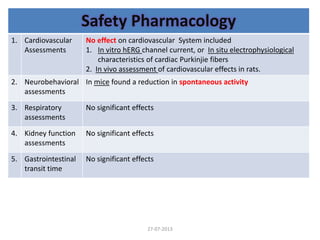
Safety Pharmacology
1. Cardiovascular
Assessments
No effect on cardiovascular System included
1. In vitro hERG channel current, or In situ electrophysiological
characteristics of cardiac Purkinjie fibers
2. In vivo assessment of cardiovascular effects in rats.
2. Neurobehavioral
assessments
In mice found a reduction in spontaneous activity
3. Respiratory
assessments
No significant effects
4. Kidney function
assessments
No significant effects
5. Gastrointestinal
transit time
No significant effects
27-07-2013
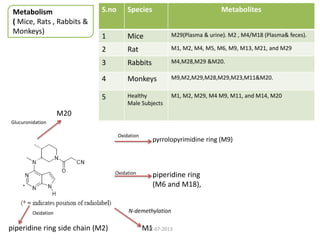
Oxidation
pyrrolopyrimidine ring (M9)
Oxidation piperidine ring
(M6 and M18),
N-demethylation
M1
Oxidation
piperidine ring side chain (M2)
Glucuronidation
M20
Metabolism
( Mice, Rats , Rabbits &
Monkeys)
S.no Species Metabolites
1 Mice M29(Plasma & urine). M2 , M4/M18 (Plasma& feces).
2 Rat M1, M2, M4, M5, M6, M9, M13, M21, and M29
3 Rabbits M4,M28,M29 &M20.
4 Monkeys M9,M2,M29,M28,M29,M23,M11&M20.
5 Healthy
Male Subjects
M1, M2, M29, M4 M9, M11, and M14, M20
27-07-2013
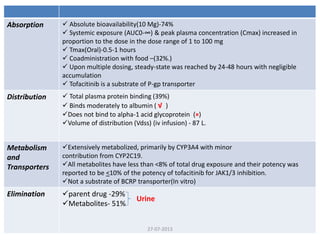
Absorption  Absolute bioavailability(10 Mg)-74%
 Systemic exposure (AUC0-∞) & peak plasma concentration (Cmax) increased in
proportion to the dose in the dose range of 1 to 100 mg
 Tmax(Oral)-0.5-1 hours
 Coadministration with food –(32%.)
 Upon multiple dosing, steady-state was reached by 24-48 hours with negligible
accumulation
 Tofacitinib is a substrate of P-gp transporter
Distribution  Total plasma protein binding (39%)
 Binds moderately to albumin ( √ )
Does not bind to alpha-1 acid glycoprotein (×)
Volume of distribution (Vdss) (iv infusion) - 87 L.
Metabolism
and
Transporters
Extensively metabolized, primarily by CYP3A4 with minor
contribution from CYP2C19.
All metabolites have less than <8% of total drug exposure and their potency was
reported to be <10% of the potency of tofacitinib for JAK1/3 inhibition.
Not a substrate of BCRP transporter(In vitro)
Elimination parent drug -29%
Metabolites- 51%
Urine
27-07-2013

ARTHRITIS and TOFACITINIB Discussion

  • 1.
    PRESENTED BY SWAROOP KUMARK Novel Drug Discovery and Development (NDDD), Lupin swaroopkumar@lupin.com Meyer et al Pfizer Global Research & Development, USA Journal of Inflammation 2010, 7:41
  • 2.
  • 3.
    Introduction  Arthritis isthe inflammation of one or more joints, which results in soreness, swelling, stiffness, discomfort, and restricted movement.  It involves the breakdown of cartilage.  Cartilage normally protects the joint, allowing for even movement.  Without the usual amount of cartilage, the bones rub together, causing soreness, swelling and stiffness. 27-07-2013
  • 4.
    Who is Affected? Men and women of all ages  Most prominent in women  1 out of every 7 people in America has arthritis of some kind  Children, as young as infants, can also get autoimmune forms of arthritis—Juvenile Rheumatoid Arthritis, also known as JRA  Many people are misunderstand that arthritis only reserved for older, overweight people, but children are just as susceptible. 27-07-2013
  • 5.
    Arthritis is not spread,nor is it transmitted. Many researchers believe that arthritis is genetic, explaining why it is possible for small children to develop the disease. Spread or Transmitted ? 27-07-2013
  • 6.
    Signs  Joint swelling, Redness of the skin around a joint Symptoms  Joint pain,  Minor aches and pains,  Reduced ability to move the joint,  Stiffness particularly in the morning,  Fatigue, and warmth around a joint Signs Vs Symptoms 27-07-2013
  • 7.
    Any 4 ofthe following must be present to allow diagnosis of RA :-  Morning stiffness  1h  Three or more joints involved  Arthritis of hand joints  Symmetric arthritis  Rheumatoid nodules  Rheumatoid factor  Radiographic changes (must show erosion/decalcification)  Blood tests and x-rays Diagnosis of rheumatoid arthritis 27-07-2013
  • 8.
    Choy, E. H.S.et al. N Engl J Med 2001;344:907-916 Inflammed synovial tissue (synovitis) • Villous hyperplasia • Intimal cell proliferation • Inflammatory cell infiltration T cells, B cells, macrophages and plasma cells • Production of cytokines and proteases • Increased vascularity • Self-amplifying process Pathogenesis of Rheumatoid Arthritis 27-07-2013
  • 9.
  • 10.
    Current therapy :Limitations  Currently used therapy carry the burden of major side effects such as GIT Ulceration, infections, hepatotoxicity and nephrotoxicity.  Not effective for all patients. Moreover some patients develop resistance .  Drawback for Biologics is loss in efficacy during therapy& 30% of patients fail to achieve an improvement 20% ACR 20.  Moderately to severely active rheumatoid arthritis who have had an inadequate response or intolerance to methotrexate  Accordingly, a need exists for improved treatment for immune disorders and inflammatory disorders. Treating inflammation with the Janus Kinase inhibitor CP - 690,550, cell, 2011, vol-3227-07-2013
  • 11.
    27-07-2013 JAK – STATINHIBITOR CP-690550 (TOFACITINIB)
  • 12.
    IUPAC NAME :-3-[(3R,4R)-4-methyl-3-[methyl(7H- pyrrolo[2,3-d]pyrimidin-4-yl)amino]piperidin-1-yl]-3- oxopropanenitrile STRUCTURE OF CP-690550 CENTER FOR DRUG EVALUATION AND RESEARCH (NDA 213214) 27-07-2013
  • 13.
  • 14.
    CP 690550 isa Selective Inhibitor of Janus Kinases Cytokines Signaling Through JAK 1/3 IL-2, IL-4, IL-7, IL-9, IL-15, IL-21 Cytokines Signaling Through Other JAK 1 Combinations IL-6, IFNγ, IFNα/β, IL-22, IL-34 Inhibiting downstream signaling of cytokine receptor 27-07-2013
  • 15.
    27-07-2013 Multiple cytokine activatedJAK/ STAT signaling pathways were potently inhibited with specific IC50 values.
  • 16.
    27-07-2013 Multiple cytokine areinhibited in different species by specific IC 50 Value
  • 17.
    Parameters Rat DogMonkey i.v Oral i.v Oral i.v Oral Dose (mg/kg) 3 10 3 5 3 5 C max(ng/ml) 261±90 1020 ± 255 791 ± 157 T max (h) 0.5± 0.3 0.5 ± 0.4 1.1 ± 0.9 AUC 840 ± 184 462±143 3250 ± 1610 2330± 423 2850 ± 543 2280 ±338 T ½ (h) 0.6 ± 0.1 ND 1.2 ± 0.1 ND 2.1 ± 0.4 ND F(%) 16.5 43.0 48.0 CL(mL/ min/kg) 62 ± 14 19 ± 10 18 ± 4 Vss(L/kg) 2.6 ± 1.3 1.8 ± 0.8 1.7± 0.2 Pharmacokinetic profile of CP-690550 CENTER FOR DRUG EVALUATION AND RESEARCH (NDA 213214) 27-07-2013
  • 18.
    Two animal modelswere used • Collagen-induced arthritis in male DBA/1J mice (CIA model) • M. butyricum -induced arthritis model in Lewis rats (AIA model) CIA model - Booster injection (mice), Scoring, Histology Day 0 Day 21 Day- 29, 34, 43, 48 &55 Immunization (Collagen) Booster Challenge of emulsion Scoring 27-07-2013
  • 19.
    Score 1 23 NORMAL WRIST SWOLLEN WRIST + PAD SWOLLEN WRIST + PAD + DIGITS SWOLLEN 0 Scoring presentation of CIA DBA/1j Mice 27-07-2013
  • 20.
    Summary of CP-690550Efficacy (Arthritis Scores) data in CIA induced DBA/1J Mice CENTER FOR DRUG EVALUATION AND RESEARCH (NDA 213214) There were also observe dose-dependent decreases in paw arthritic score27-07-2013
  • 21.
    ADJUVANT INDUCED ARTHRITIES(AIA) Methodof induction 15 mg/mL Mycobacteria butyricum suspension 50 μL injected 3 sites at the base of the tail. Strain Lewis rats (female) Duration 16 to day 21 Readouts Body weight, Paw volume & Clinical score etc., Compound CP-690550 Dose of test compound 0.1,1,3 & 10 mg/kg/day ,oral, bid. Dose-dependent response was observed in Paw Volume 27-07-2013
  • 22.
    Peripheral blood neutrophilcount and the inflammatory cytokines IL-6 and IL-17 increase in the rat AIA model Hind paw volume , IL-6 significantly increased & On day 7 Significantly increased IL-17 , neutrophils , peaked on day 14 and decreased on day 21 27-07-2013
  • 23.
    Estimation of Hindpaw edema, PBNC, and serum inflammatory cytokine levels in the rat AIA model. CP-690550 Dose –Dependently inhibits the above parameters in Rat AIA Model 27-07-2013
  • 24.
  • 25.
    Marketed & Phase IVPhase II Phase II Phase III Phase II IL-2, IL-4, IL-7, IL-9, IL-15, IL-21 & IL-6, IFNγ, IFN α/β, IL-22, IL-34 CP-690,550 is Being Evaluated in a Number of Inflammatory and Immunologic Diseases Phase III (Oral) Phase II (Top) 27-07-2013
  • 26.
    27-07-2013 Modeled Human PharmacokineticParameters and JAK1/3 and JAK2 IC50 Coverage for CP-690,550  At doses from 5 to 10 mg BID, JAK2 IC50 coverage is insignificant in comparison to JAK1/3 IC50 coverage  Doses as low as 5 mg BID are well-tolerated and efficacious in moderate to severe RA , suggesting the importance of JAK1 and JAK3 target coverage in the absence of JAK2 inhibition A) JAK1/3 human whole blood IC50 (IL-21 dependent pSTAT3) = 25 ± 6 nM; B) Range based on the upper and lower error around the IC50 where available; C ) JAK2 human whole blood IC50 (GM-CSF dependent pSTAT5) = 1377 ± 185 nM; D) GM-CSF stimulated myelomonocytic HUO3 cell JAK2 IC50 = 324 nM [1].
  • 27.
    At 5 mgBID Dose Patient Responding Rate is 67% of ACR 20, 40% of ACR 50 & 15 % of ACR 70 CENTER FOR DRUG EVALUATION AND RESEARCH (NDA 213214) 27-07-2013
  • 28.
  • 29.
    Tofacitinib is anoval first oral JAK inhibitor that is investigated as a targeted immunomodulator & Disease – modifying therapy for RA Neutrophils infiltrating into an arthritic joint can release proteolytic enzymes and ROS which can increase inflammation and accelerate the destruction of the bone and cartilage. Present study suggested that inhibition of neutrophilia by CP-690550, as observed in both human RA patients and in the rat AIA model In pre clinical excellent efficacy showing in Rats than Mice & Clinical ACR 20 score improved 67% of patients versus 25% who received placebo It is currently approved for the treatment of moderate to severe rheumatoid arthritis (RA) in the United States and in clinical trials for treatment of psoriasis, inflammatory bowel disease, and other immunological diseases 27-07-2013
  • 30.
    Xeljanz will havea wholesale acquisition cost of $2,055.13 for a 30-day supply (or $24,666 per year). Marketed April 03 2013 . 27-07-2013
  • 31.
    The Sun isRising for Patients with Rheumatic Diseases: The Future is Bright 27-07-2013
  • 32.
  • 33.
  • 34.
    1994 Dr. Paul 1993 2011 fileda NDA to FDA November 23, 2001 ( Phase 1 in US) December 31, 2004 (Phase 2 in US, Spain, Canada, Germany etc.,) February 28, 2009 ( Phase 3 in US, South Korea, Canada, Germany etc.,) FDA approved November 6th, 2012 April 03 2013 Marketed History Of Tofacitinib 2000 (Preclinical completed & Monkeys in Stanford University) 27-07-2013
  • 35.
    Ex- 55 %0f patients achieved ACR20, that means 55 percent of patients in the study achieved a 20 percent improvement 27-07-2013
  • 36.
    What was Pfizer'sresponse on Arthritis Drug Xeljanz (tofacitinib) Receives A Negative Opinion In Europe Dr. Yvonne Greenstreet, senior vice president and the head of the Medicines Development Group for Pfizer Specialty Care, said: "We have confidence in XELJANZ and believe our application to the EMA demonstrates that XELJANZ has a favorable risk:benefit profile. XELJANZ's safety profile is well-characterized, and the issues raised by the EMA, including serious infections, gastrointestinal perforations and malignancies, are familiar to rheumatologists who are experienced working with treatments for patients to manage this difficult disease. Each regulatory authority will review and interpret applications individually and different assessments are not uncommon. The re-examination process will enable us to seek to address the CHMP's questions, and we will continue to work closely with the EMA with the goal of making this medicine available to appropriate patients in Europe." 27-07-2013
  • 37.
    S.No Species StudyDetails 1. Spague-Dawley rats Pivotal GLP Toxicolgocial studies in rats were 6-weeks & 6-months duration repeated dosing studies . Doses - 0 ,1, 10, or 100, 500, 1000 and 2000 mg/kg/day (q.d., PO) 2. Cynomolgus monkeys Two pivotal studies 1.One(1) month repeated oral administration study with a 1-month Recovery Doses - 0,10,50 & 100 mg/kg/day split doses TID (0, 3.33, 16.67, & 33.33 mg/kg) 1-month Study 2. Nine (9) months repeated oral administration study Doses - 0, 0.5, 2, and 10 mg/kg/day split doses BID (0, 0.25, 1, and 5 mg/kg/day)9-month duration study Toxicology 27-07-2013
  • 38.
    S.no Results 1 Onemonth repeated oral administration 1. Secondary infections of open wounds / 2. Gastrointestinal erosions or ulcers 2 Nine months repeated oral administration study 3 lymphomas (100 mg Group) Day 21 Euthanized High dose group Day 214 2 B cell origin 1 T cell origin Lymphoma Lymphoma Two Animal 9 month scheduled One Animal 27-07-2013
  • 39.
    Tissue Distribution ofCP-690550 (Pyrrolo[2,3-d]pyrimidine) in Long- Evans Male Rats Post Dosing in each time point One rat was euthanized by CO2 asphyxiation at 0.5, 1, 2, 4, 8, 12, 24, 72, 168, and 504 hr Key Study Findings The distribution of [14C]CP-690550 in blood and 57 tissues of male rats was studied up to 504 hr following oral administration of 10.0 mg/kg (454 μCi/kg). Maximum concentrations of [14C]CP-690550 occurred at 0.5 hr for 43 tissues, 1 hr for 10 tissues and the whole-body, and 12 hr for the uvea. It across the BBB by 0.5 hr and persisted in all CNS tissues for at least 4 hr. It distributed into and was eliminated from 47 of 57 tissues by 24 hr following oral administration. By 72 hr, only the intervertebral discs, liver, vessel walls, kidneys, and ocular tissues impregnated with melanin contained measurable levels of [14C]CP- 690550. By168 and 504, only vessel walls and ocular tissues impregnated with melanin still had measurable concentrations of [14C]CP-690550.27-07-2013
  • 40.
    1. White bloodcell Lymphocyte counts (rat, monkey) Eosinophil, basophil, large unstained cells 2. Red blood cell Anemia Hemoglobin 3. Lymphoid organs lymph nodes, Thymus, Spleen Reductions in bone marrow cellularity 4. Clinical chemistry (6 month) Total protein(Albumin) Calcium Dehydration , changes in glucose, triglycerides, and alkaline phosphatase moncytes Rat Atrophy Toxicology Results Studies Conducted in Rats & Monkeys 27-07-2013
  • 41.
    Safety Pharmacology 1. Cardiovascular Assessments Noeffect on cardiovascular System included 1. In vitro hERG channel current, or In situ electrophysiological characteristics of cardiac Purkinjie fibers 2. In vivo assessment of cardiovascular effects in rats. 2. Neurobehavioral assessments In mice found a reduction in spontaneous activity 3. Respiratory assessments No significant effects 4. Kidney function assessments No significant effects 5. Gastrointestinal transit time No significant effects 27-07-2013
  • 42.
    Oxidation pyrrolopyrimidine ring (M9) Oxidationpiperidine ring (M6 and M18), N-demethylation M1 Oxidation piperidine ring side chain (M2) Glucuronidation M20 Metabolism ( Mice, Rats , Rabbits & Monkeys) S.no Species Metabolites 1 Mice M29(Plasma & urine). M2 , M4/M18 (Plasma& feces). 2 Rat M1, M2, M4, M5, M6, M9, M13, M21, and M29 3 Rabbits M4,M28,M29 &M20. 4 Monkeys M9,M2,M29,M28,M29,M23,M11&M20. 5 Healthy Male Subjects M1, M2, M29, M4 M9, M11, and M14, M20 27-07-2013
  • 43.
    Absorption  Absolutebioavailability(10 Mg)-74%  Systemic exposure (AUC0-∞) & peak plasma concentration (Cmax) increased in proportion to the dose in the dose range of 1 to 100 mg  Tmax(Oral)-0.5-1 hours  Coadministration with food –(32%.)  Upon multiple dosing, steady-state was reached by 24-48 hours with negligible accumulation  Tofacitinib is a substrate of P-gp transporter Distribution  Total plasma protein binding (39%)  Binds moderately to albumin ( √ ) Does not bind to alpha-1 acid glycoprotein (×) Volume of distribution (Vdss) (iv infusion) - 87 L. Metabolism and Transporters Extensively metabolized, primarily by CYP3A4 with minor contribution from CYP2C19. All metabolites have less than <8% of total drug exposure and their potency was reported to be <10% of the potency of tofacitinib for JAK1/3 inhibition. Not a substrate of BCRP transporter(In vitro) Elimination parent drug -29% Metabolites- 51% Urine 27-07-2013