Argumentative Structure

  5 Parts NOT 5 Paragraphs
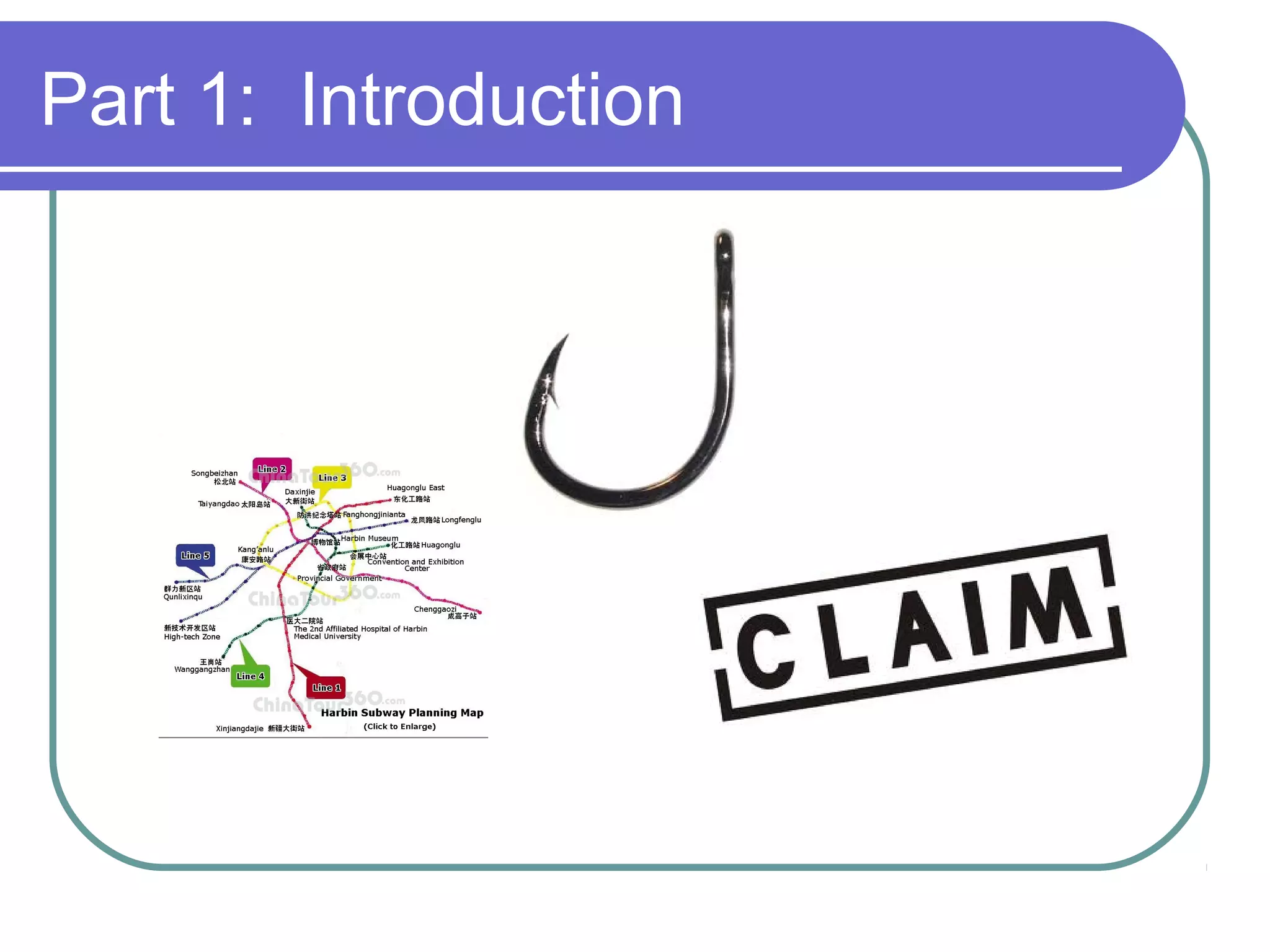
Part 1: Introduction
2. Background Info

 What   needs to be defined?

 What   needs to be reviewed?

 What   needs to be clarified?
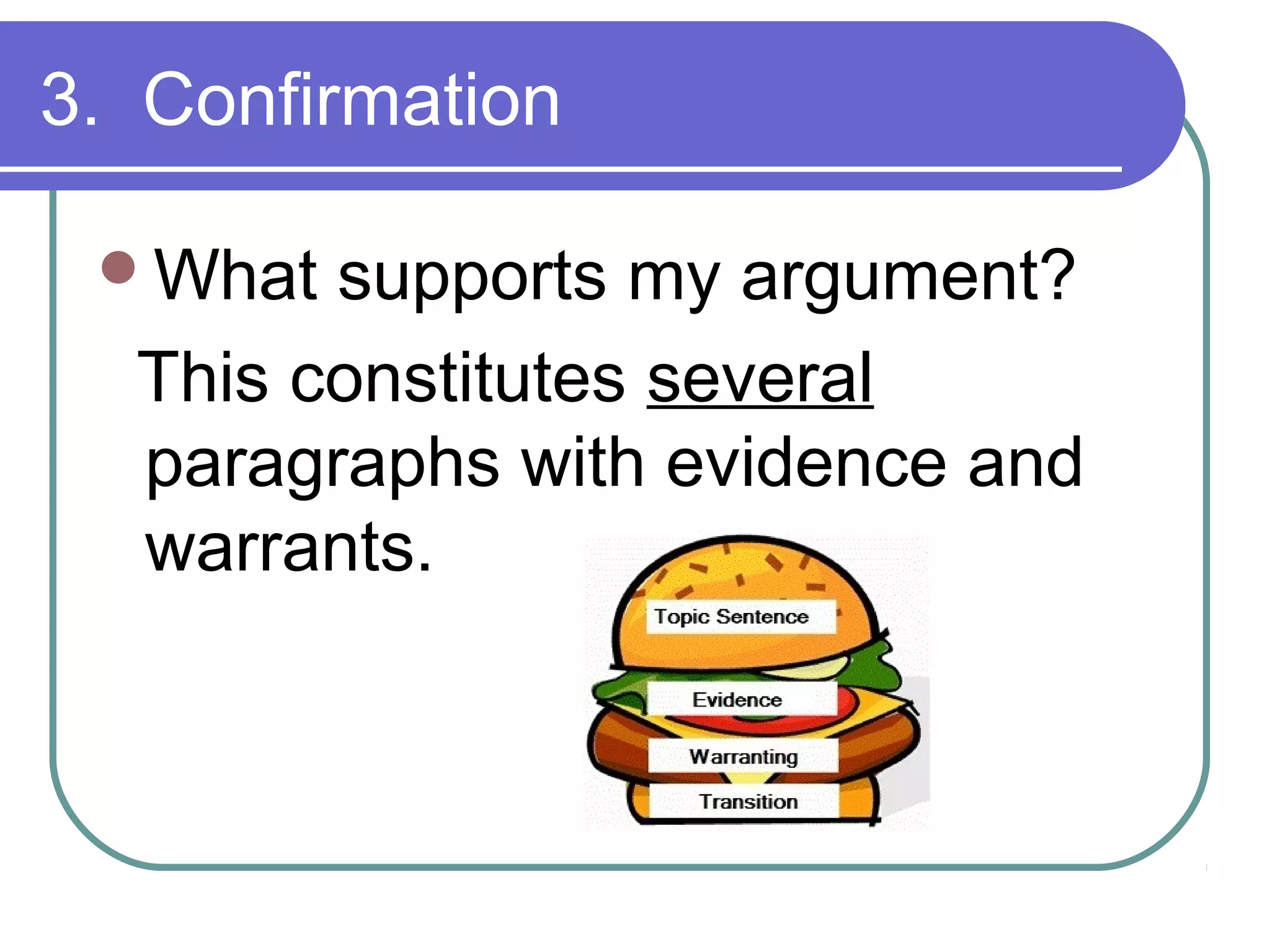
3. Confirmation

 What  supports my argument?
  This constitutes several
  paragraphs with evidence and
  warrants.
4. Refutation

  What  will skeptics say and how will I
   refute these views?

  Thismay be woven into confirmation
   paragraphs or as separate ones.
5. Conclusion

  What are the benefits or implications of
   accepting my argument?
  May be a call to action
  May be an effect
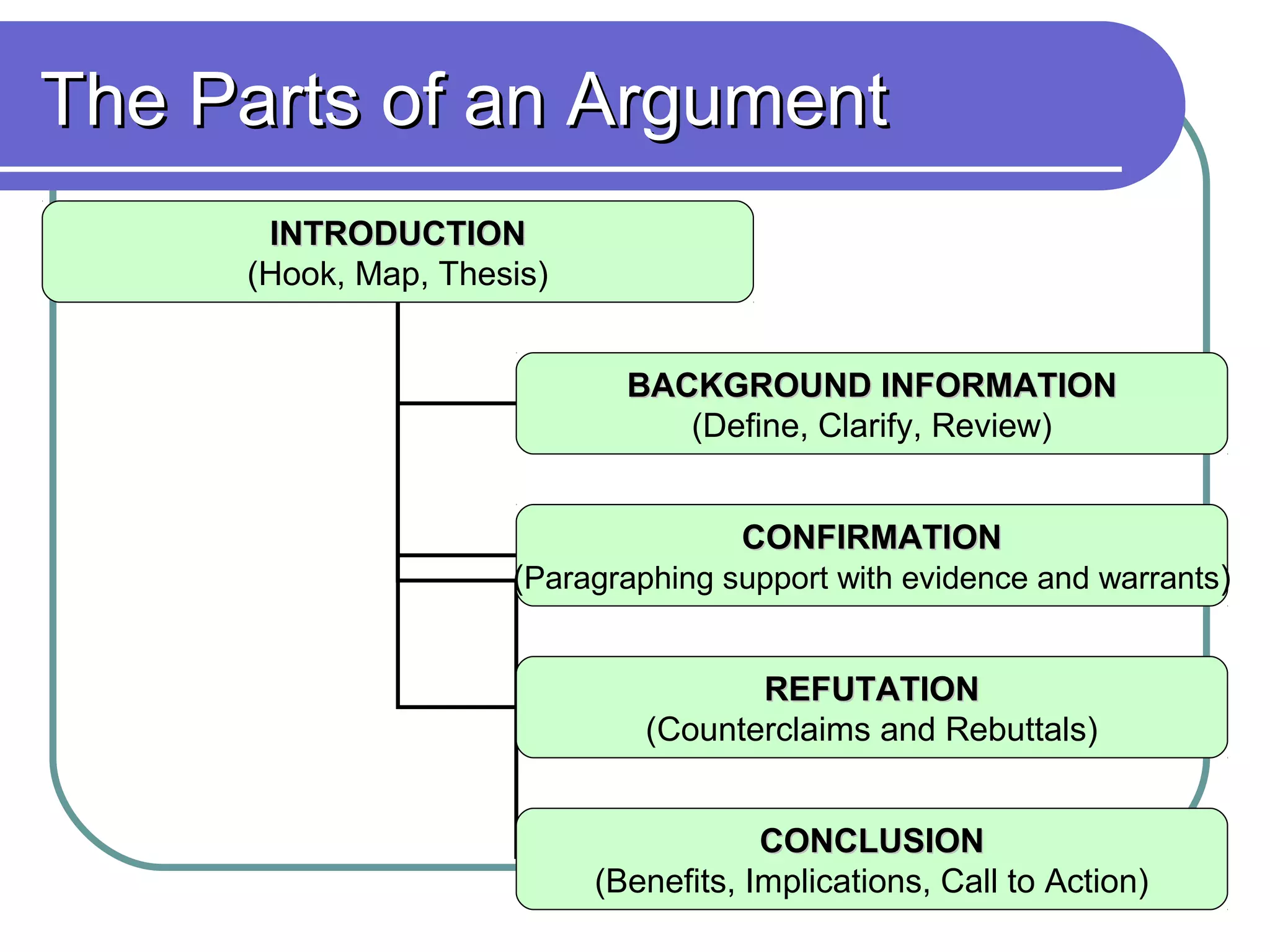
The Parts of an Argument
      INTRODUCTION
     (Hook, Map, Thesis)


                             BACKGROUND INFORMATION
                                (Define, Clarify, Review)


                                     CONFIRMATION
                     (Paragraphing support with evidence and warrants)


                                     REFUTATION
                              (Counterclaims and Rebuttals)


                                       CONCLUSION
                           (Benefits, Implications, Call to Action)
Work Cited

 Adapted from Salazar, Ray. "Stop Boring
      Students (and Yourself) with Five-
      Paragraph Essays." Michigan
      Reading Association Annual
      Conference. Grand Rapids, MI. 9
      Mar. 2013. Breakout Session.

Argumentative response

  • 1.
    Argumentative Structure 5 Parts NOT 5 Paragraphs
  • 2.
  • 3.
    2. Background Info What needs to be defined? What needs to be reviewed? What needs to be clarified?
  • 4.
    3. Confirmation What supports my argument? This constitutes several paragraphs with evidence and warrants.
  • 5.
    4. Refutation What will skeptics say and how will I refute these views?  Thismay be woven into confirmation paragraphs or as separate ones.
  • 6.
    5. Conclusion What are the benefits or implications of accepting my argument?  May be a call to action  May be an effect
  • 7.
    The Parts ofan Argument INTRODUCTION (Hook, Map, Thesis) BACKGROUND INFORMATION (Define, Clarify, Review) CONFIRMATION (Paragraphing support with evidence and warrants) REFUTATION (Counterclaims and Rebuttals) CONCLUSION (Benefits, Implications, Call to Action)
  • 8.
    Work Cited Adaptedfrom Salazar, Ray. "Stop Boring Students (and Yourself) with Five- Paragraph Essays." Michigan Reading Association Annual Conference. Grand Rapids, MI. 9 Mar. 2013. Breakout Session.