Ben Irons
Digital Marketing Director
Notonthehighstreet.com
The Digital Marketing landscape can be complicated. We all
want to be innovative but ultimately need to achieve results
to drive our businesses forward. How do we balance it all and
navigate through the complexity?
Big Data
Data Quality
AI
Voice Search
Image Search
CLTV
Targeting
GDPR
Personalisation
Analytics
Creative
Testing
Algorithms
Data Science
Technology
Programatic
Custom Audiences
Product Feeds
Measurement
Attribution
Single Customer View
Customer Experience
UX
Site Speed
Tagging
Tracking
Pixel data
Cookies
Are we in danger of over complicating our personal Digital
eco-systems and have we forgotten what our main objectives
were in the first place?
Is is wrong or just sensible to pause and take a look at the
landscape and work out the route most suitable for our
business to achieve our objectives?
How do we build a framework that will lead us to success?
Don’t forget the basics
What data is actually of value,
can we access it, and are we
using it in the correct and
appropriate manor to benefit
our customers and our
campaigns
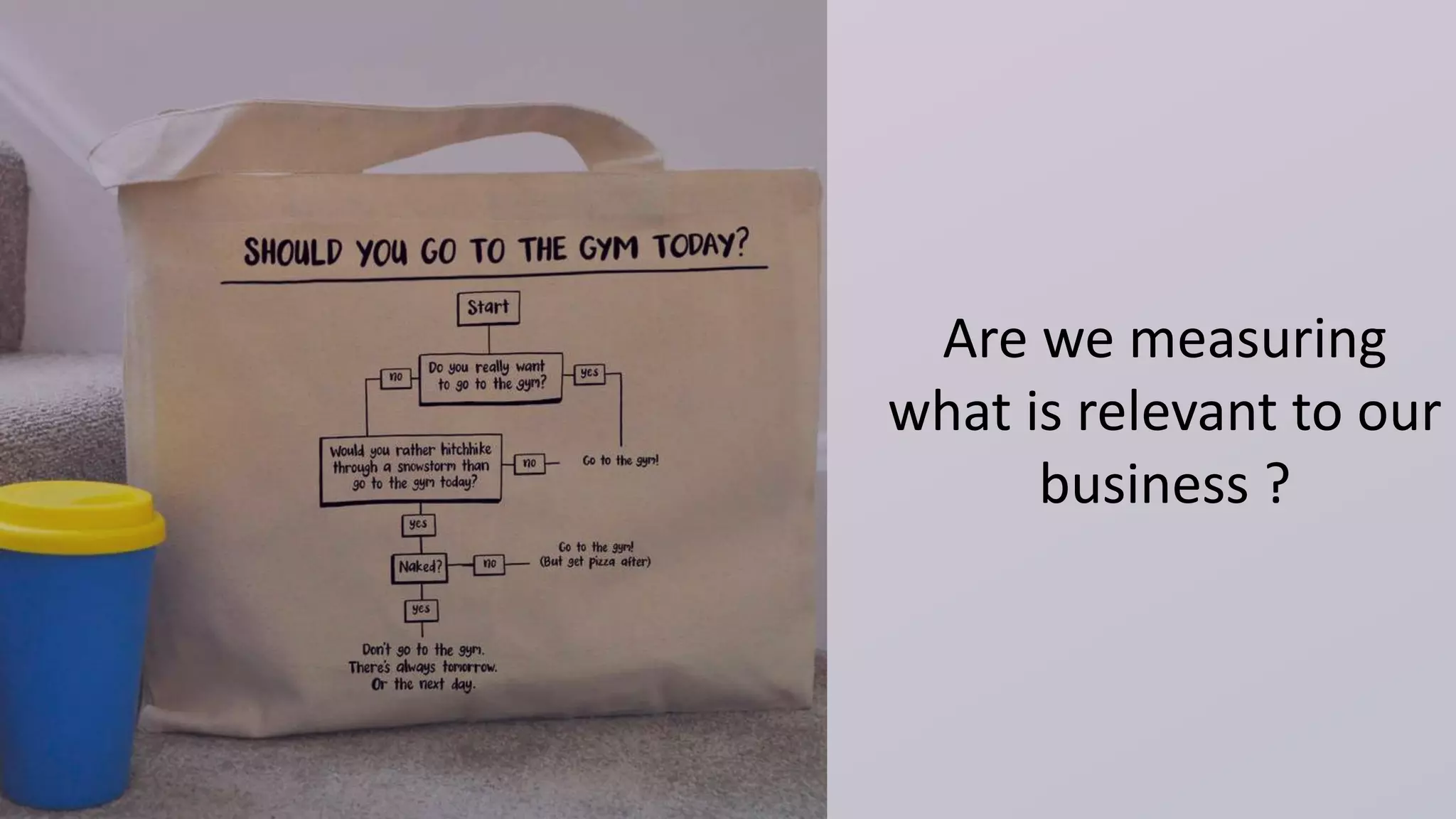
Are we measuring
what is relevant to our
business ?
How are we spending
our time and is it
paying back?
Always think of the
Customer first and
listen to what signals
they are giving you
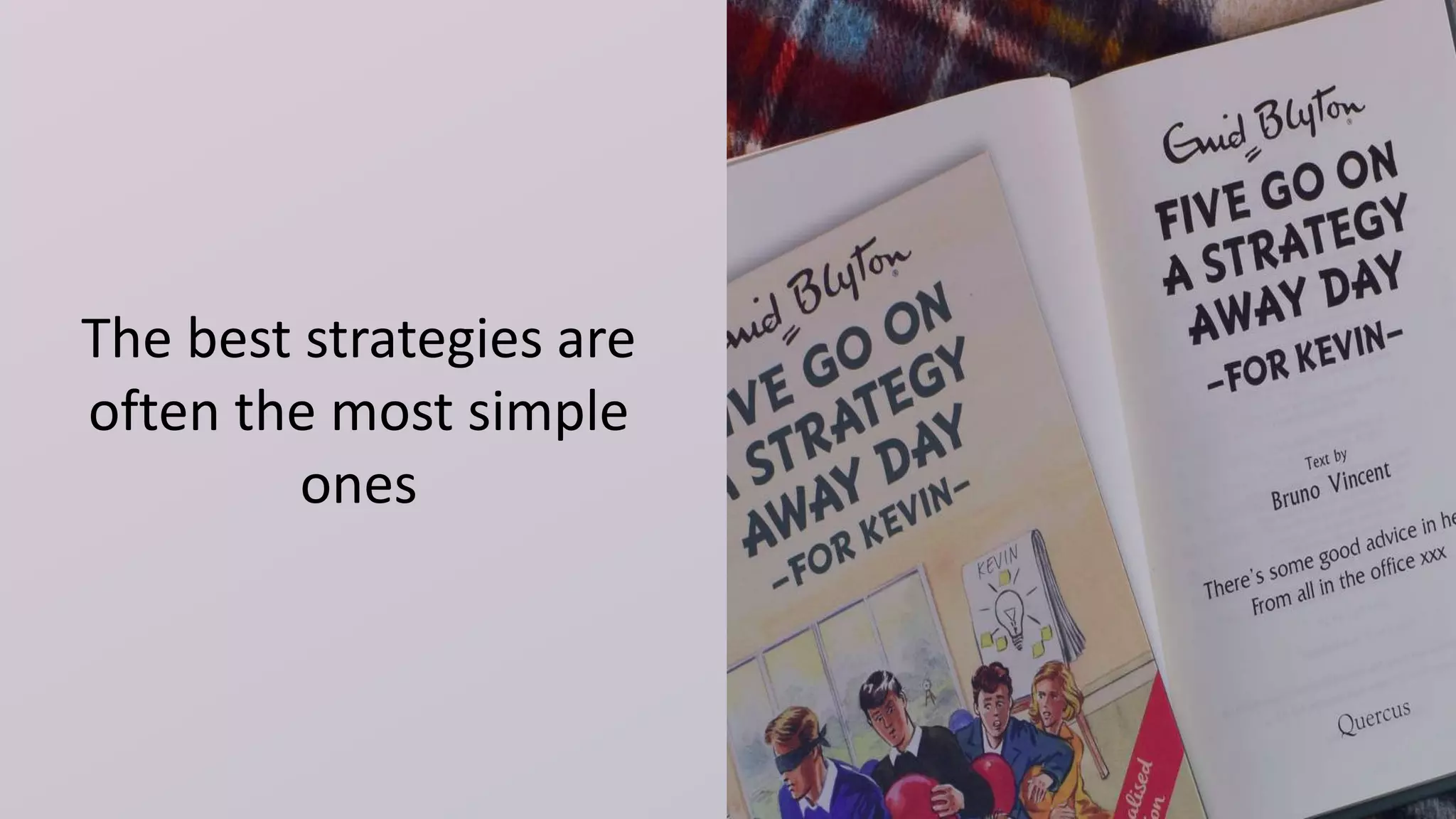
The best strategies are
often the most simple
ones
Don’t lose sight of the original objectives and get caught up in
the complexity of the Digital marketplace to get the best
campaign results.
All good campaign are built on strong foundations and from
implementing and updating the basics. Follow a simple
strategy and breakdown the goals and actions needed to
achieve the goals and the expected outcome.
Use the data that appropriate to facilitate achieving and
make sure it can be accessed. Measure accordingly, and
spend time as a group on the initiatives that are going to
make a difference and add value
Being ‘customer first’ means listening to what customers are
telling you as well as the data you can gather from their
behaviour
Thank You

Are We in Danger of Losing Sight of Our Objectives and Strategies

  • 1.
    Ben Irons Digital MarketingDirector Notonthehighstreet.com
  • 2.
    The Digital Marketinglandscape can be complicated. We all want to be innovative but ultimately need to achieve results to drive our businesses forward. How do we balance it all and navigate through the complexity?
  • 3.
    Big Data Data Quality AI VoiceSearch Image Search CLTV Targeting GDPR Personalisation Analytics Creative Testing Algorithms Data Science Technology Programatic Custom Audiences Product Feeds Measurement Attribution Single Customer View Customer Experience UX Site Speed Tagging Tracking Pixel data Cookies
  • 4.
    Are we indanger of over complicating our personal Digital eco-systems and have we forgotten what our main objectives were in the first place?
  • 5.
    Is is wrongor just sensible to pause and take a look at the landscape and work out the route most suitable for our business to achieve our objectives?
  • 6.
    How do webuild a framework that will lead us to success?
  • 7.
  • 8.
    What data isactually of value, can we access it, and are we using it in the correct and appropriate manor to benefit our customers and our campaigns
  • 9.
    Are we measuring whatis relevant to our business ?
  • 10.
    How are wespending our time and is it paying back?
  • 11.
    Always think ofthe Customer first and listen to what signals they are giving you
  • 12.
    The best strategiesare often the most simple ones
  • 13.
    Don’t lose sightof the original objectives and get caught up in the complexity of the Digital marketplace to get the best campaign results.
  • 14.
    All good campaignare built on strong foundations and from implementing and updating the basics. Follow a simple strategy and breakdown the goals and actions needed to achieve the goals and the expected outcome.
  • 15.
    Use the datathat appropriate to facilitate achieving and make sure it can be accessed. Measure accordingly, and spend time as a group on the initiatives that are going to make a difference and add value
  • 16.
    Being ‘customer first’means listening to what customers are telling you as well as the data you can gather from their behaviour
  • 17.

Editor's Notes

  • #2 You’ve already heard from some fantastic experts in the of the more technical elements of the our craft and heard some great insights. These are no doubt super valuable I just wanted to help close out the day with some things to think about and to pose some questions and thought starters to be a little more strategic and think about the bigger picture Offer some views and opinions on keeping everything in check. I’ve held roles at Agency, Publisher and Client side – offer a perspective having sat on all three sides of the table
  • #3 Here to pose some questions and thought starters, and offer some views and opinions. I’ve held roles at Agency, Publisher and Client side – offer a perspective having sat on all three sides of the table
  • #4 H
  • #5 This might not be the case with everyone
  • #6 This might not be the case with everyone
  • #7 This might not be the case with everyone
  • #8 Heard from great experts today who can give the right tips, but in simple terms things such as: PPC Campaign Structures Bidding Technical SEO requirements and consistent evolution of best practice Shopping feed structures and data quality
  • #9 There is loads of data available, is there too much? Is there so much that we don’t know what to do with it all? Not just referring to GDPR here either. Hear lots of talk of multiple data points, and I know this is relevant for data scientists to create incredible algorithms. But I challenge the teams to think about what data is available that we can actually use to make a difference to our campaigns. Where can we get it from and use it in our everyday campaigns to drive better performance. Big data is great, but if I can use small amounts of relevant data to improve our marketing, site experience, or retention of customers then I’d argue this is more valueble
  • #10 Channel, customer, Channel and customer – these are tricky and can get complex Attribution and measurement can be complicated, and expensive. Single source of truth? Really difficult as different data sets don’t like to speak to each other Customer measurement is crucial to ensuring retention and gaining an understanding of how channels deliver customer quality What is our hypothesis to begin with and are we asking the right questions to deliver this
  • #11 Sometimes I think we’re all guilty of being busy fools. Not focusing our time on the things that are really going to make a difference. Not spending enough time: - Reviewing previous performance and learning from mistakes - are we just head down all the time following a line without knowing where the line is leading? - Evaluating the right customer targeting – use the data at our disposal and really critique and evaluate where we should, or shouldn’t, be focusing our time. - Selecting the testing we want to do, properly creating hypothesis and considering if the end results change our view or the decisions we’d be taking as a result? - Are we spending too much time discussing and talking about trying things? Should we not just go for it and see what the results tell us?
  • #12 This is crucial and wraps up into the data piece. IF you claim to be customer centric, then treat customers as people not as ‘audiences’ All our Marketing needs to work to deliver emotional connections with customers, drive customer acquisition and purchase intent efficiently and effectively. We can be efficient in our efforts, creatively as well as by listening and reacting to what customer are telling us ‘verbatum’ but also in their engagement actions and the metrics we can see off the back of this through all channels. Social creative, tailored content in CRM etc.
  • #13 Is the word strategy one of the most overused words around? I’m not sure but I hear it a lot and maybe it’s because it applies to many different aspect of what we do, but I feel that simplicity is often the best approach. Definition: ‘a plan of action designed to achieve a long-term or overall aim’ Have a clear plan, a ‘strategy’ which clearly incorporates the following aspects: A clearly defined goal The actions needed to take to achieve that goal And the expected outcome It seems a simple framework, but do we often get lost in the complexity of making it happen. Either with data, tech, channels etc
  • #14 This might not be the case with everyone
  • #15 This might not be the case with everyone
  • #16 This might not be the case with everyone
  • #17 This might not be the case with everyone
  • #18 You’ve already heard from some fantastic experts in the of the more technical elements of the our craft and heard some great insights. These are no doubt super valuable I just wanted to help close out the day with some things to think about and to pose some questions and thought starters to be a little more strategic and think about the bigger picture Offer some views and opinions on keeping everything in check. I’ve held roles at Agency, Publisher and Client side – offer a perspective having sat on all three sides of the table