Archaeologist
Ishani Jais
6F
WHO ARE ARCHAEOLOGIST?
 An archaeologist is a scientist who studies human history by digging up human
remains and artifacts. ...
 They examine cultures, languages, behaviors, archaeological remains, and physical
characteristics of people in many parts of the world. They ask questions and develop
theories.
 The word archaeologist can also be spelled archeologist.
 It comes from the Greek root archaeo-, for "ancient, primitive."
WHAT DOES AN ARCHAEOLOGIST DO ?
 Archaeologists use scientific sampling techniques to guide them as to where they
need to dig on the site. They observe, record, categorize, and interpret what they
find, then share their findings with other scientists and the public.
 Drawing and building on knowledge from the humanities and social, physical, and
biological sciences, archaeologists examine the ways of prehistoric societies in
various parts of the world.
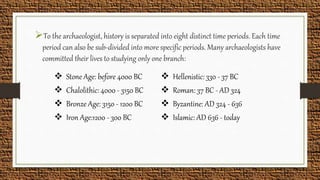
To the archaeologist, history is separated into eight distinct time periods. Each time
period can also be sub-divided into more specific periods. Many archaeologists have
committed their lives to studying only one branch:
 Stone Age: before 4000 BC  Hellenistic: 330 - 37 BC
 Chalolithic: 4000 - 3150 BC  Roman: 37 BC - AD 324
 Bronze Age: 3150 - 1200 BC  Byzantine: AD 324 - 636
 Iron Age:1200 - 300 BC  Islamic: AD 636 - today
TECHNIQUES THEY USE
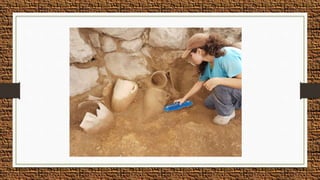
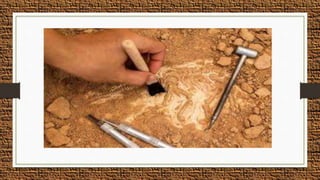
 Archaeologists crawl, kneel and laboriously brush away dirt with a brush from
objects they unearth. Soil, sand and excavated material are sifted through screen to
retrieve small artifacts
 Archaeologists often dig a series of trial trenches to figure out the best places to
excavate.
Tools they use
• Many archaeologists use sophisticated tools and technologies in their work.
Although tasks vary by specialty, materials often include excavating tools,
laboratory equipment, statistical and database software, and geographic
information systems (GIS)
An archaeologist will typically do the following:
• Plan research projects to answer questions and test hypotheses about human
activity through environmental data left behind
• Develop data collection methods tailored to a particular specialty, project, or culture
• Collect information from observations, interviews, and documents
• Record and manage records of observations taken in the field
• Analyze data, laboratory samples, and other sources to uncover patterns about human life,
culture, and origins
• Write reports and give presentations on research findings
• Advise organizations on the cultural impact of proposed plans, policies, and programs
Kinds of Archaeologists
• Landscape archaeologists - search for traces of ancient sites
• Archaeological surveyors - plan and record earthworks, buildings, and excavated sites
• Field technicians - do the hard work of excavation and extraction of relics
• Archaeological photographers - take photos of the site before, during, and after excavation; and
of individual relics
• Archaeological conservators - preserve the artifacts for future generations
• Finds specialists - date, analyze, identify, and interpret artifacts
• Archaeological illustrators - complete drawings of objects, work on publication
plans, and design and typeset archaeological books and publications
• Environmental scientists - study and reconstruct the relationships between past
societies and the environments they lived in. They work to identify the diet, health
and living conditions of these societies
• Human bones experts - identify and interpret human skeletal remains
• Finds curators - organize the long-term storage and aftercare of artifacts
Where Does an Archaeologist Work?
• Professional archaeologists work for universities, museums, governments, private
companies, and as consultants.
• Archaeological work is conducted either outdoors during field work or in an office
environment when writing reports or research papers.
About our ARCHELOGY
The scientific study of the physical evidence of past human societies recovered
through the excavation.
Archaeologists not only attempt to discover and describe past cultures, but to
explain the development of these culture.
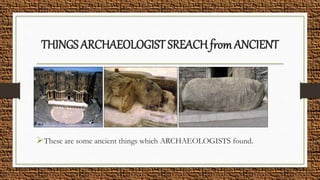
THINGS ARCHAEOLOGIST SREACH from ANCIENT
These are some ancient things which ARCHAEOLOGISTS found.
Bring it out!
Ishani jais from grade 6F

Archologists for grade 6 history

  • 1.
  • 3.
    WHO ARE ARCHAEOLOGIST? An archaeologist is a scientist who studies human history by digging up human remains and artifacts. ...  They examine cultures, languages, behaviors, archaeological remains, and physical characteristics of people in many parts of the world. They ask questions and develop theories.  The word archaeologist can also be spelled archeologist.  It comes from the Greek root archaeo-, for "ancient, primitive."
  • 4.
    WHAT DOES ANARCHAEOLOGIST DO ?  Archaeologists use scientific sampling techniques to guide them as to where they need to dig on the site. They observe, record, categorize, and interpret what they find, then share their findings with other scientists and the public.  Drawing and building on knowledge from the humanities and social, physical, and biological sciences, archaeologists examine the ways of prehistoric societies in various parts of the world.
  • 5.
    To the archaeologist,history is separated into eight distinct time periods. Each time period can also be sub-divided into more specific periods. Many archaeologists have committed their lives to studying only one branch:  Stone Age: before 4000 BC  Hellenistic: 330 - 37 BC  Chalolithic: 4000 - 3150 BC  Roman: 37 BC - AD 324  Bronze Age: 3150 - 1200 BC  Byzantine: AD 324 - 636  Iron Age:1200 - 300 BC  Islamic: AD 636 - today
  • 7.
    TECHNIQUES THEY USE Archaeologists crawl, kneel and laboriously brush away dirt with a brush from objects they unearth. Soil, sand and excavated material are sifted through screen to retrieve small artifacts  Archaeologists often dig a series of trial trenches to figure out the best places to excavate.
  • 8.
    Tools they use •Many archaeologists use sophisticated tools and technologies in their work. Although tasks vary by specialty, materials often include excavating tools, laboratory equipment, statistical and database software, and geographic information systems (GIS)
  • 9.
    An archaeologist willtypically do the following: • Plan research projects to answer questions and test hypotheses about human activity through environmental data left behind • Develop data collection methods tailored to a particular specialty, project, or culture • Collect information from observations, interviews, and documents • Record and manage records of observations taken in the field
  • 10.
    • Analyze data,laboratory samples, and other sources to uncover patterns about human life, culture, and origins • Write reports and give presentations on research findings • Advise organizations on the cultural impact of proposed plans, policies, and programs
  • 11.
    Kinds of Archaeologists •Landscape archaeologists - search for traces of ancient sites • Archaeological surveyors - plan and record earthworks, buildings, and excavated sites • Field technicians - do the hard work of excavation and extraction of relics • Archaeological photographers - take photos of the site before, during, and after excavation; and of individual relics • Archaeological conservators - preserve the artifacts for future generations
  • 12.
    • Finds specialists- date, analyze, identify, and interpret artifacts • Archaeological illustrators - complete drawings of objects, work on publication plans, and design and typeset archaeological books and publications • Environmental scientists - study and reconstruct the relationships between past societies and the environments they lived in. They work to identify the diet, health and living conditions of these societies • Human bones experts - identify and interpret human skeletal remains • Finds curators - organize the long-term storage and aftercare of artifacts
  • 13.
    Where Does anArchaeologist Work? • Professional archaeologists work for universities, museums, governments, private companies, and as consultants. • Archaeological work is conducted either outdoors during field work or in an office environment when writing reports or research papers.
  • 14.
    About our ARCHELOGY Thescientific study of the physical evidence of past human societies recovered through the excavation. Archaeologists not only attempt to discover and describe past cultures, but to explain the development of these culture.
  • 15.
    THINGS ARCHAEOLOGIST SREACHfrom ANCIENT These are some ancient things which ARCHAEOLOGISTS found.
  • 16.
  • 17.