UNIT-1
ARCHITECTURE AND INSTRUCTION SET OF 8051
1.1 ARCHITECTURE OF 8051
1.1.1 - Unit Introductory Class
1.1.2 - Introduction To 8051
1.1.3 - Features Of Microcontroller 8051
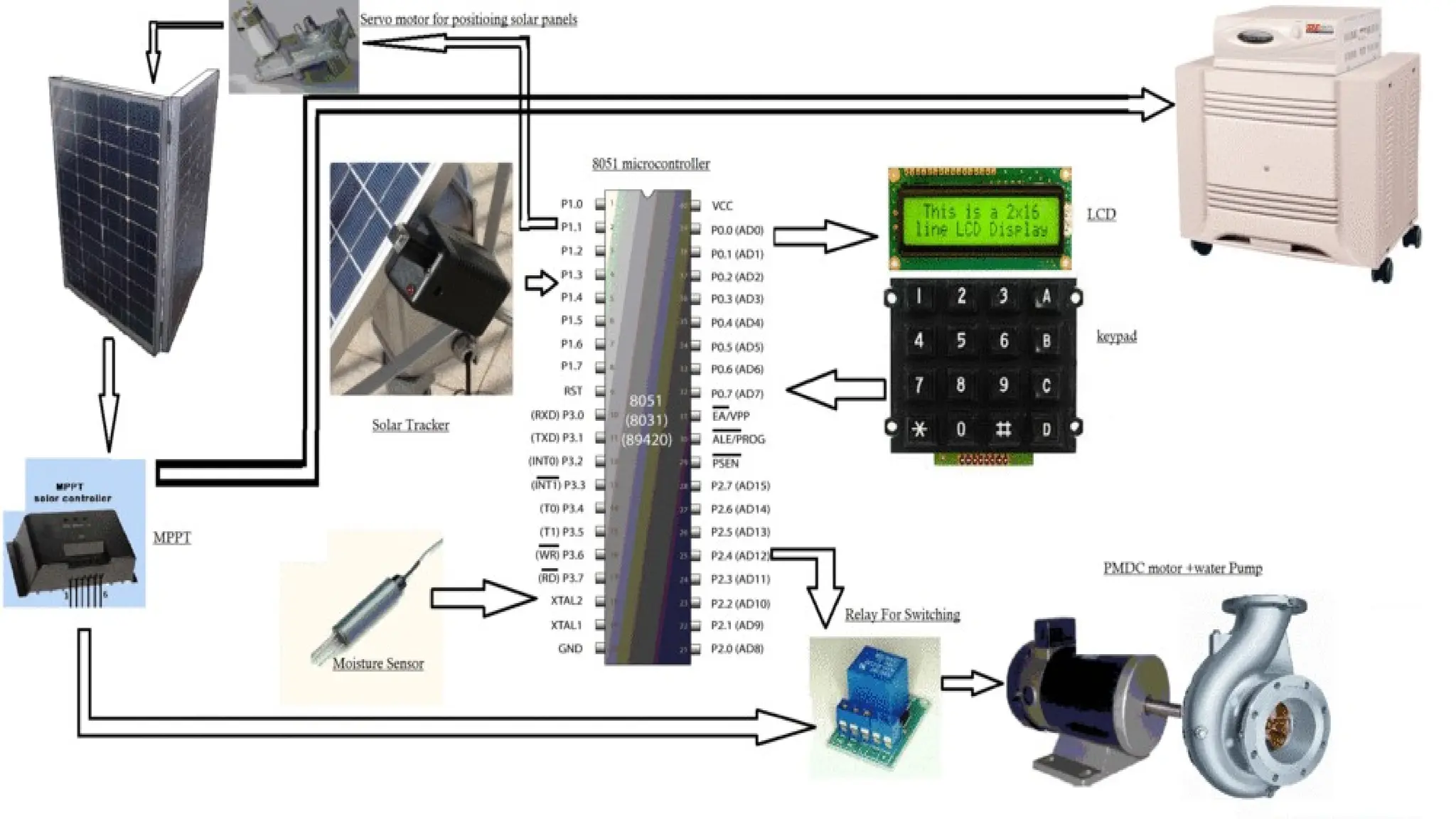
1.1.4 - Applications Of Microcontroller
1.1.5 - Comparison Of Microprocessor And
Microcontroller
1.1.1 - UNIT INTRODUCTORY CLASS
The microcontroller incorporates all the features that are
found in microprocessor.
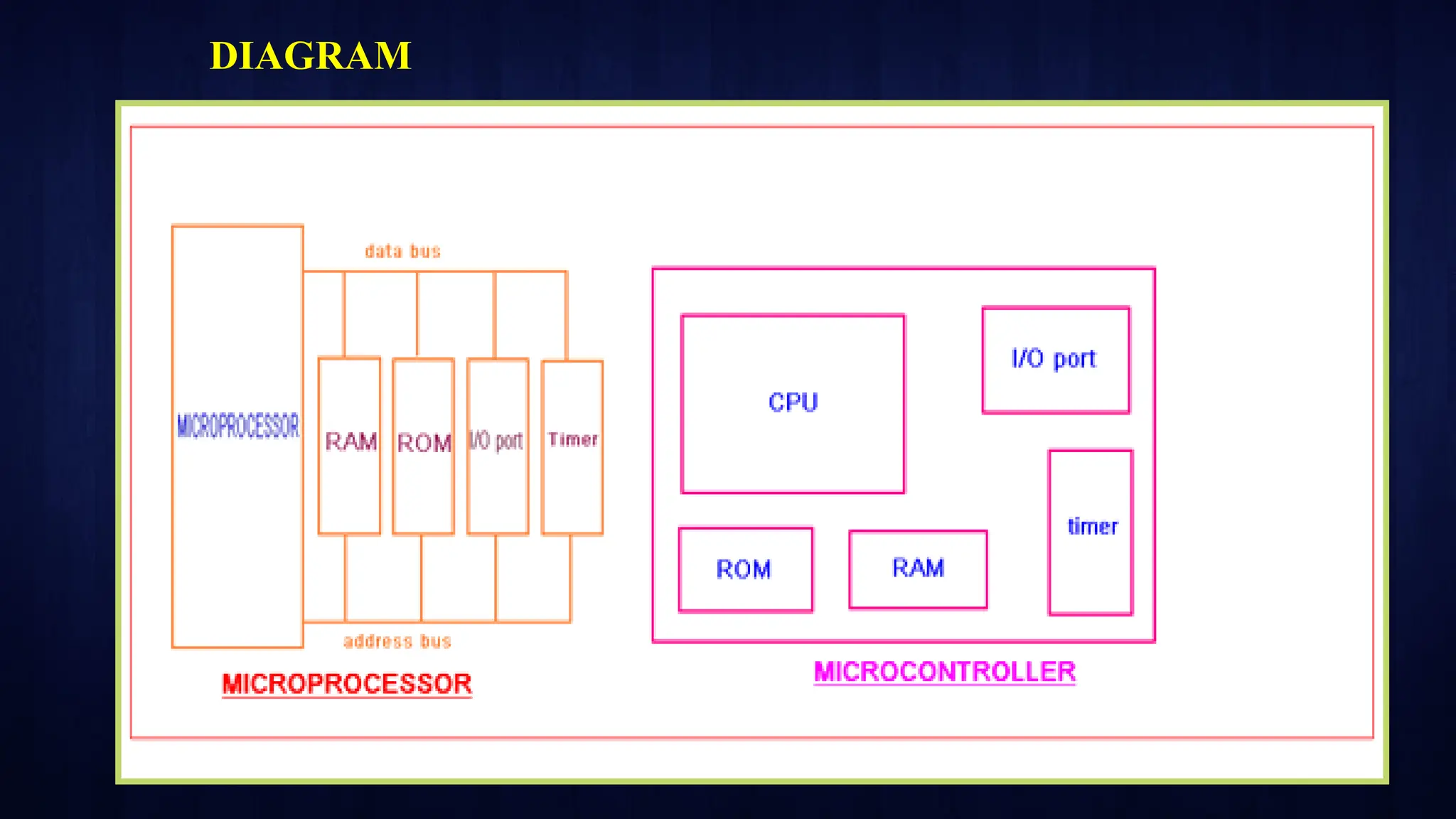
The microcontroller has built in ROM, RAM, Input Output
ports, Serial Port, timers, interrupts and clock circuit.
A microcontroller is an entire computer manufactured on a
single chip. Microcontrollers are usually dedicated devices
embedded within an application.
For example, microcontrollers are used as engine controllers
in automobiles and as exposure and focus controllers in
cameras
1.1.2 - INTRODUCTION TO 8051
ADVANTAGES OF MICROCONTROLLER
DISADVANTAGES OF
MICROCONTROLLER
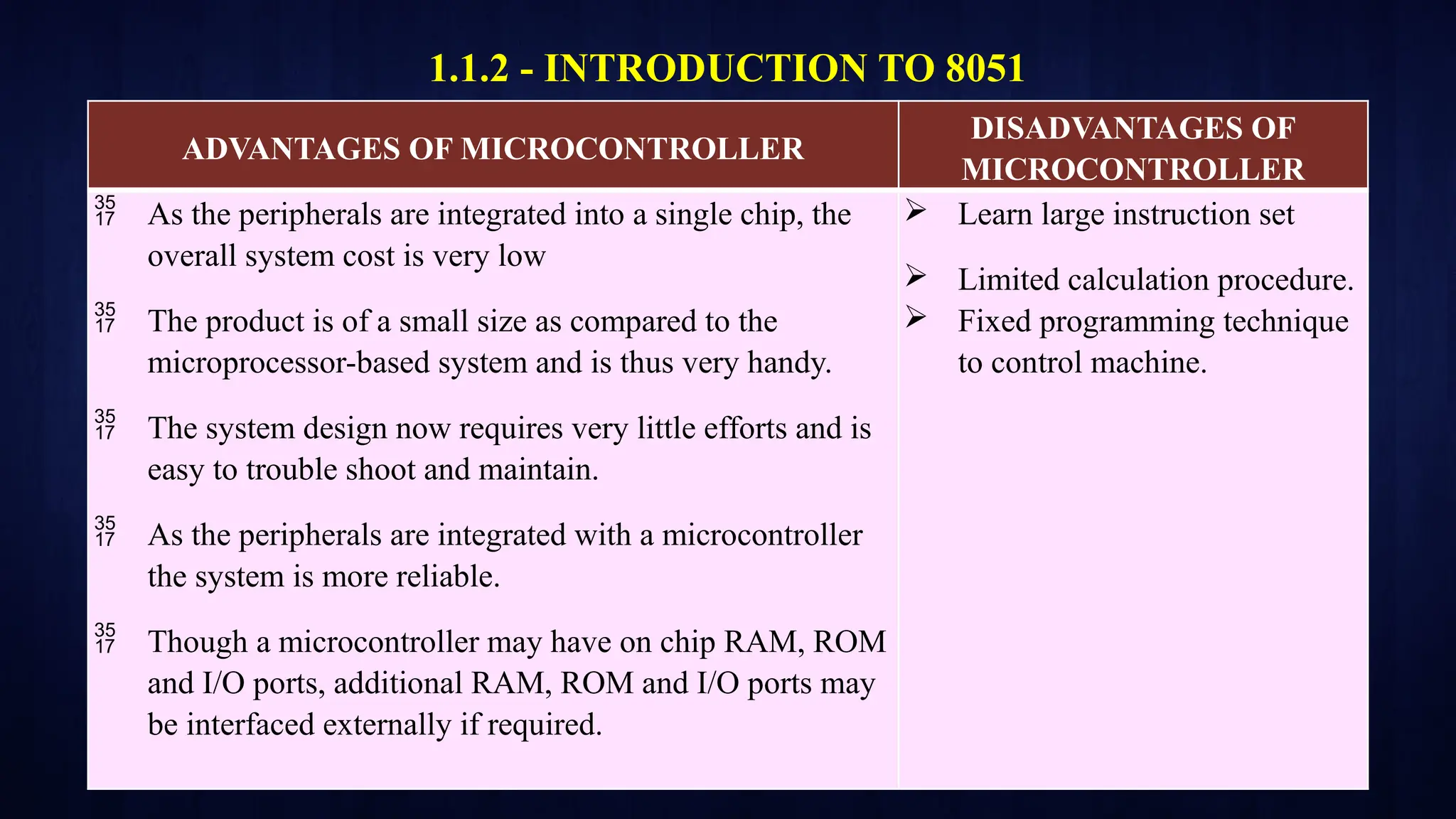
 As the peripherals are integrated into a single chip, the
overall system cost is very low
 The product is of a small size as compared to the
microprocessor-based system and is thus very handy.
 The system design now requires very little efforts and is
easy to trouble shoot and maintain.
 As the peripherals are integrated with a microcontroller
the system is more reliable.
 Though a microcontroller may have on chip RAM, ROM
and I/O ports, additional RAM, ROM and I/O ports may
be interfaced externally if required.
 Learn large instruction set
 Limited calculation procedure.
 Fixed programming technique
to control machine.
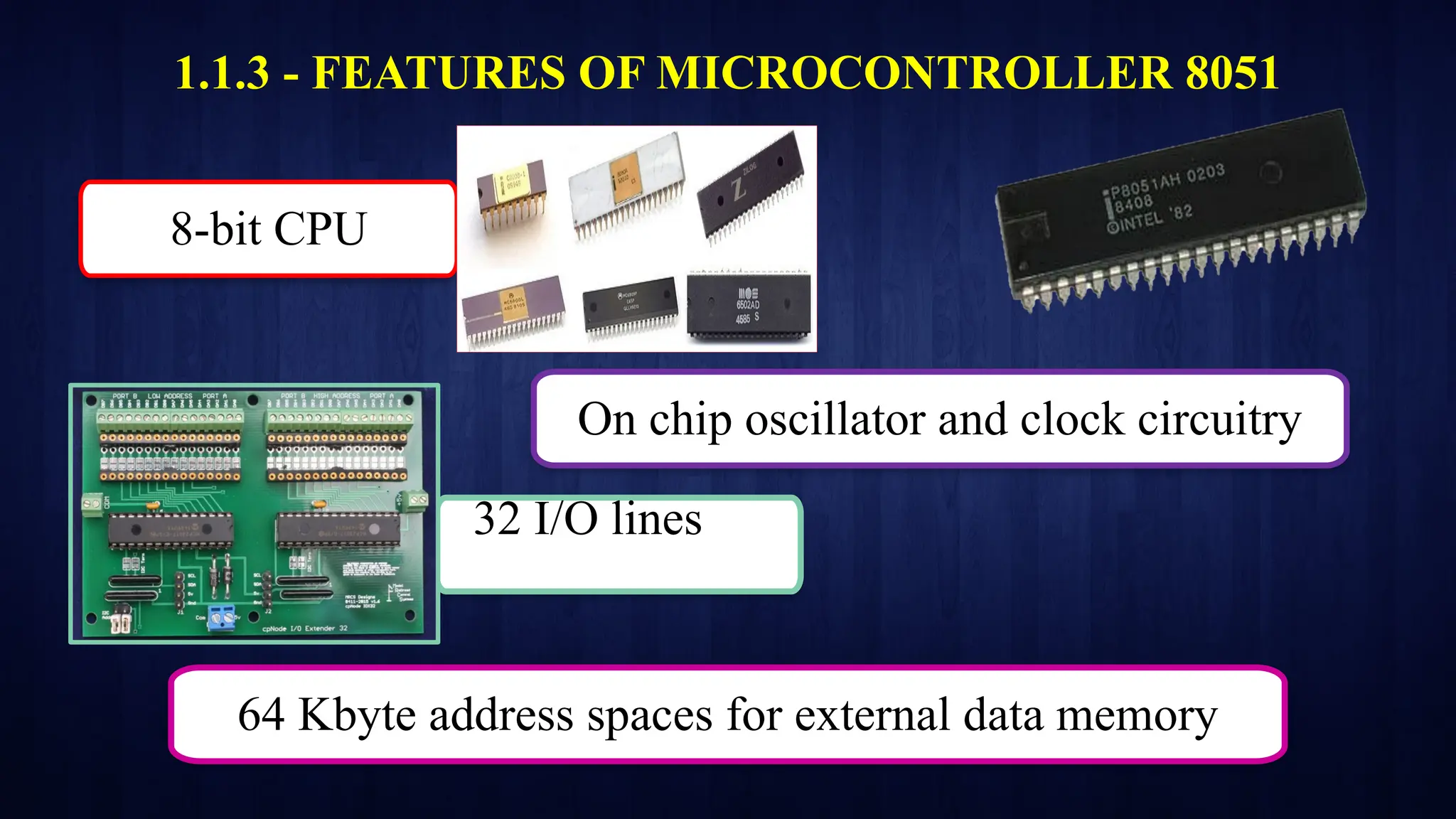
On chip oscillator and clock circuitry
64 Kbyte address spaces for external data memory
1.1.3 - FEATURES OF MICROCONTROLLER 8051
8-bit CPU
32 I/O lines
64 Kbyte address spaces for external code
(program) memory
Two number of 16-bit timer/counters
1.1.3 - FEATURES OF MICROCONTROLLER 8051
Full duplex serial port and Boolean processor
1.1.4 - APPLICATIONS OF MICROCONTROLLER
 Entertainment
 Television and VCR
 Telephones
 Xerox copier
 Microwave ovens
 Office automation
 Traffic control
 Clock radios
 Washing machines, Electronic toys & Automobiles
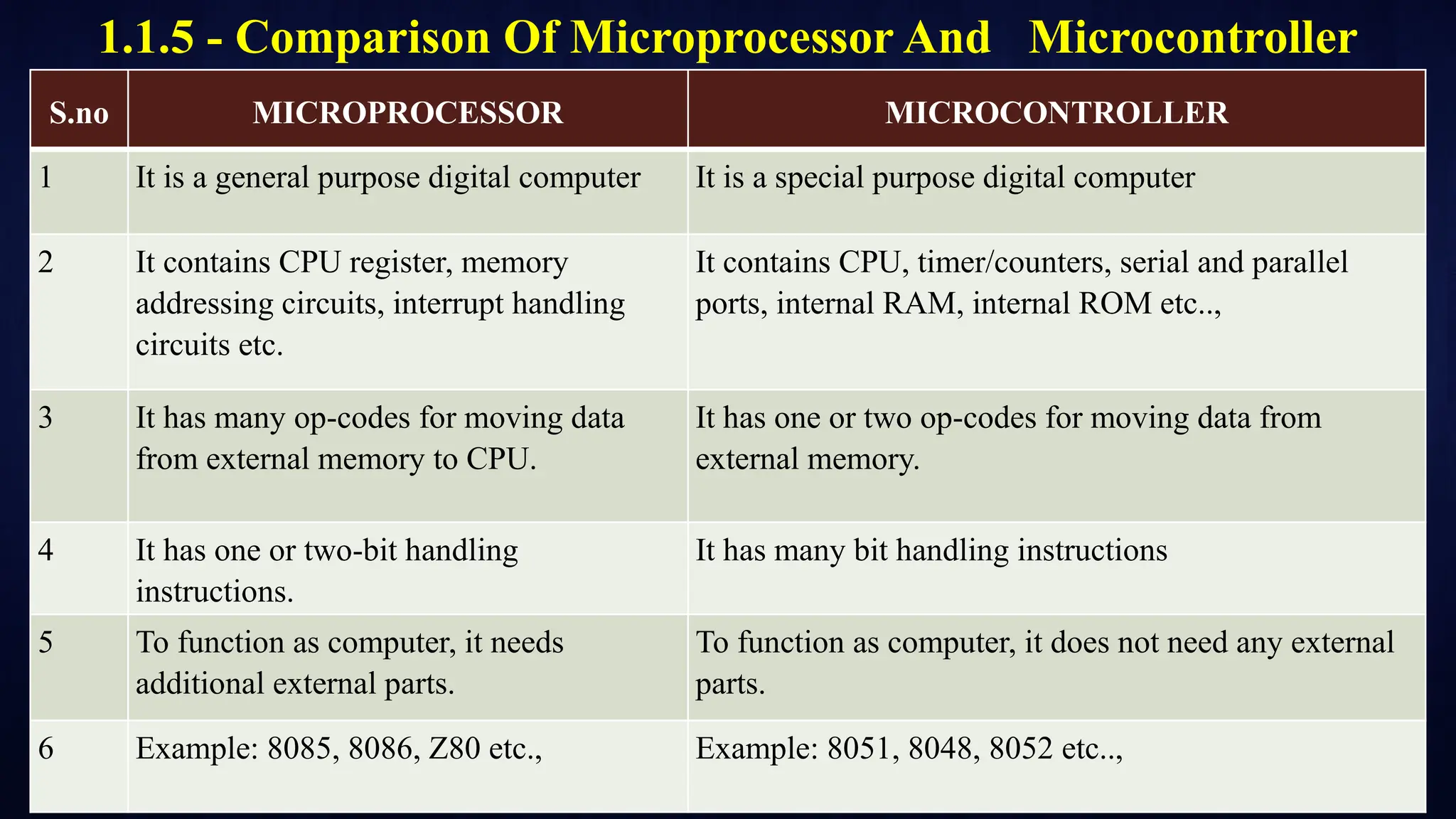
S.no MICROPROCESSOR MICROCONTROLLER
1 It is a general purpose digital computer It is a special purpose digital computer
2 It contains CPU register, memory
addressing circuits, interrupt handling
circuits etc.
It contains CPU, timer/counters, serial and parallel
ports, internal RAM, internal ROM etc..,
3 It has many op-codes for moving data
from external memory to CPU.
It has one or two op-codes for moving data from
external memory.
4 It has one or two-bit handling
instructions.
It has many bit handling instructions
5 To function as computer, it needs
additional external parts.
To function as computer, it does not need any external
parts.
6 Example: 8085, 8086, Z80 etc., Example: 8051, 8048, 8052 etc..,
1.1.5 - Comparison Of Microprocessor And Microcontroller
DIAGRAM

ARCHITECTURE AND INSTRUCTION SET OF 8051.pptx

  • 1.
    UNIT-1 ARCHITECTURE AND INSTRUCTIONSET OF 8051 1.1 ARCHITECTURE OF 8051 1.1.1 - Unit Introductory Class 1.1.2 - Introduction To 8051 1.1.3 - Features Of Microcontroller 8051 1.1.4 - Applications Of Microcontroller 1.1.5 - Comparison Of Microprocessor And Microcontroller
  • 3.
    1.1.1 - UNITINTRODUCTORY CLASS The microcontroller incorporates all the features that are found in microprocessor. The microcontroller has built in ROM, RAM, Input Output ports, Serial Port, timers, interrupts and clock circuit. A microcontroller is an entire computer manufactured on a single chip. Microcontrollers are usually dedicated devices embedded within an application. For example, microcontrollers are used as engine controllers in automobiles and as exposure and focus controllers in cameras
  • 4.
    1.1.2 - INTRODUCTIONTO 8051 ADVANTAGES OF MICROCONTROLLER DISADVANTAGES OF MICROCONTROLLER  As the peripherals are integrated into a single chip, the overall system cost is very low  The product is of a small size as compared to the microprocessor-based system and is thus very handy.  The system design now requires very little efforts and is easy to trouble shoot and maintain.  As the peripherals are integrated with a microcontroller the system is more reliable.  Though a microcontroller may have on chip RAM, ROM and I/O ports, additional RAM, ROM and I/O ports may be interfaced externally if required.  Learn large instruction set  Limited calculation procedure.  Fixed programming technique to control machine.
  • 5.
    On chip oscillatorand clock circuitry 64 Kbyte address spaces for external data memory 1.1.3 - FEATURES OF MICROCONTROLLER 8051 8-bit CPU 32 I/O lines
  • 6.
    64 Kbyte addressspaces for external code (program) memory Two number of 16-bit timer/counters 1.1.3 - FEATURES OF MICROCONTROLLER 8051 Full duplex serial port and Boolean processor
  • 7.
    1.1.4 - APPLICATIONSOF MICROCONTROLLER  Entertainment  Television and VCR  Telephones  Xerox copier  Microwave ovens  Office automation  Traffic control  Clock radios  Washing machines, Electronic toys & Automobiles
  • 8.
    S.no MICROPROCESSOR MICROCONTROLLER 1It is a general purpose digital computer It is a special purpose digital computer 2 It contains CPU register, memory addressing circuits, interrupt handling circuits etc. It contains CPU, timer/counters, serial and parallel ports, internal RAM, internal ROM etc.., 3 It has many op-codes for moving data from external memory to CPU. It has one or two op-codes for moving data from external memory. 4 It has one or two-bit handling instructions. It has many bit handling instructions 5 To function as computer, it needs additional external parts. To function as computer, it does not need any external parts. 6 Example: 8085, 8086, Z80 etc., Example: 8051, 8048, 8052 etc.., 1.1.5 - Comparison Of Microprocessor And Microcontroller
  • 10.