Archeology
and
Botany
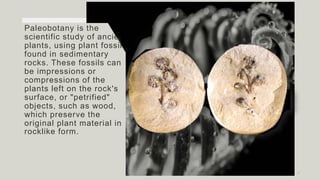
Paleobotany is the
scientific study of ancient
plants, using plant fossils
found in sedimentary
rocks. These fossils can
be impressions or
compressions of the
plants left on the rock's
surface, or "petrified"
objects, such as wood,
which preserve the
original plant material in
rocklike form.
2
3
Recovery of artifacts
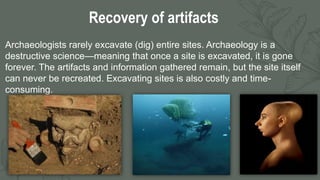
Archaeologists rarely excavate (dig) entire sites. Archaeology is a
destructive science—meaning that once a site is excavated, it is gone
forever. The artifacts and information gathered remain, but the site itself
can never be recreated. Excavating sites is also costly and time-
consuming.
Processing the artifacts
4
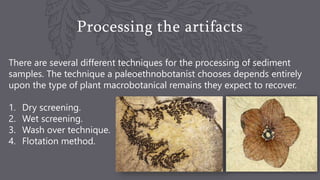
There are several different techniques for the processing of sediment
samples. The technique a paleoethnobotanist chooses depends entirely
upon the type of plant macrobotanical remains they expect to recover.
1. Dry screening.
2. Wet screening.
3. Wash over technique.
4. Flotation method.
20XX Presentation title
5
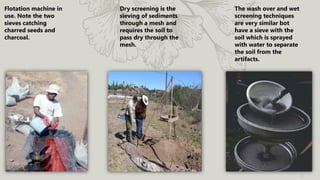
Flotation machine in
use. Note the two
sieves catching
charred seeds and
charcoal.
Dry screening is the
sieving of sediments
through a mesh and
requires the soil to
pass dry through the
mesh.
The wash over and wet
screening techniques
are very similar bot
have a sieve with the
soil which is sprayed
with water to separate
the soil from the
artifacts.
6
Analyzing Artifacts
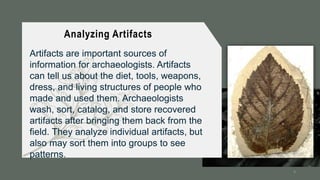
Artifacts are important sources of
information for archaeologists. Artifacts
can tell us about the diet, tools, weapons,
dress, and living structures of people who
made and used them. Archaeologists
wash, sort, catalog, and store recovered
artifacts after bringing them back from the
field. They analyze individual artifacts, but
also may sort them into groups to see
patterns.
Preserving Collections
7
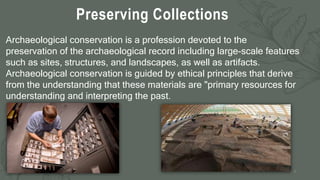
Archaeological conservation is a profession devoted to the
preservation of the archaeological record including large-scale features
such as sites, structures, and landscapes, as well as artifacts.
Archaeological conservation is guided by ethical principles that derive
from the understanding that these materials are "primary resources for
understanding and interpreting the past.
Bibliography
https://coolsandiegosights.com
/
https://www.saa.org/
https://www.nationalgeograph
ic.org/
https://en.wikipedia.org/
8

Archeology

  • 1.
  • 2.
    Paleobotany is the scientificstudy of ancient plants, using plant fossils found in sedimentary rocks. These fossils can be impressions or compressions of the plants left on the rock's surface, or "petrified" objects, such as wood, which preserve the original plant material in rocklike form. 2
  • 3.
    3 Recovery of artifacts Archaeologistsrarely excavate (dig) entire sites. Archaeology is a destructive science—meaning that once a site is excavated, it is gone forever. The artifacts and information gathered remain, but the site itself can never be recreated. Excavating sites is also costly and time- consuming.
  • 4.
    Processing the artifacts 4 Thereare several different techniques for the processing of sediment samples. The technique a paleoethnobotanist chooses depends entirely upon the type of plant macrobotanical remains they expect to recover. 1. Dry screening. 2. Wet screening. 3. Wash over technique. 4. Flotation method.
  • 5.
    20XX Presentation title 5 Flotationmachine in use. Note the two sieves catching charred seeds and charcoal. Dry screening is the sieving of sediments through a mesh and requires the soil to pass dry through the mesh. The wash over and wet screening techniques are very similar bot have a sieve with the soil which is sprayed with water to separate the soil from the artifacts.
  • 6.
    6 Analyzing Artifacts Artifacts areimportant sources of information for archaeologists. Artifacts can tell us about the diet, tools, weapons, dress, and living structures of people who made and used them. Archaeologists wash, sort, catalog, and store recovered artifacts after bringing them back from the field. They analyze individual artifacts, but also may sort them into groups to see patterns.
  • 7.
    Preserving Collections 7 Archaeological conservationis a profession devoted to the preservation of the archaeological record including large-scale features such as sites, structures, and landscapes, as well as artifacts. Archaeological conservation is guided by ethical principles that derive from the understanding that these materials are "primary resources for understanding and interpreting the past.
  • 8.