What is ARC FLASH?
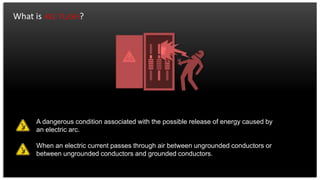
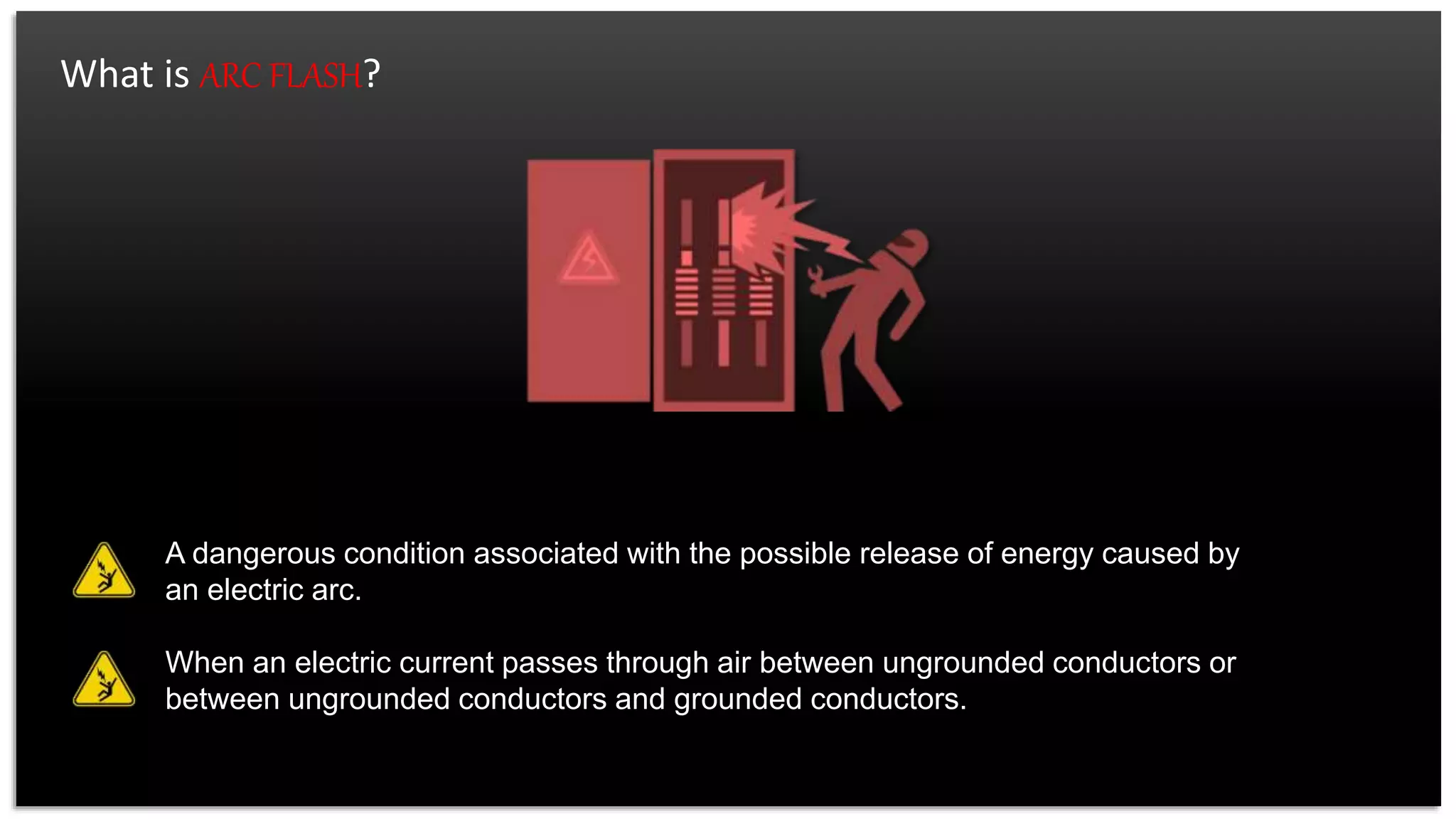
A dangerous condition associated with the possible release of energy caused by
an electric arc.
When an electric current passes through air between ungrounded conductors or
between ungrounded conductors and grounded conductors.
Facts about ARC FLASH
What Cause
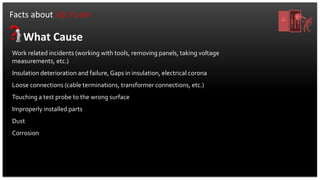
Work related incidents (working with tools, removing panels, taking voltage
measurements, etc.)
Insulation deterioration and failure, Gaps in insulation, electrical corona
Loose connections (cable terminations, transformer connections, etc.)
Touching a test probe to the wrong surface
Improperly installed parts
Dust
Corrosion
Facts about ARC FLASH
Statistics
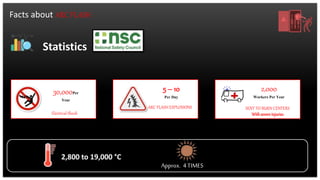
30,000Per
Year
Electrical Shock
5 – 10
Per Day
ARC FLASH EXPLOSIONS
2,000
Workers Per Year
SENT TO BURN CENTERS
Withsevereinjuries
Hot enough to vaporize metal.
2,800 to 19,000 °C
Approx. 4 TIMES
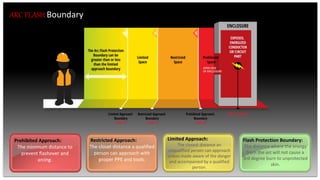
ARC FLASH Boundary
Prohibited Approach:
The minimum distance to
prevent flashover and
arcing.
Restricted Approach:
The closet distance a qualified
person can approach with
proper PPE and tools.
Limited Approach:
The closest distance an
unqualified person can approach
unless made aware of the danger
and accompanied by a qualified
person.
Flash Protection Boundary:
The distance where the energy
from the arc will not cause a
3rd degree burn to unprotected
skin.
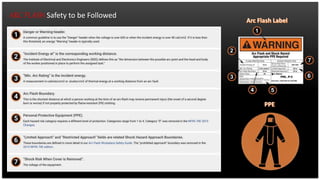
ARC FLASH Safety to be Followed
Hot enough to vaporize metal.

ARC FLASH.pptx

  • 1.
    What is ARCFLASH? A dangerous condition associated with the possible release of energy caused by an electric arc. When an electric current passes through air between ungrounded conductors or between ungrounded conductors and grounded conductors.
  • 2.
    Facts about ARCFLASH What Cause Work related incidents (working with tools, removing panels, taking voltage measurements, etc.) Insulation deterioration and failure, Gaps in insulation, electrical corona Loose connections (cable terminations, transformer connections, etc.) Touching a test probe to the wrong surface Improperly installed parts Dust Corrosion
  • 3.
    Facts about ARCFLASH Statistics 30,000Per Year Electrical Shock 5 – 10 Per Day ARC FLASH EXPLOSIONS 2,000 Workers Per Year SENT TO BURN CENTERS Withsevereinjuries Hot enough to vaporize metal. 2,800 to 19,000 °C Approx. 4 TIMES
  • 4.
    ARC FLASH Boundary ProhibitedApproach: The minimum distance to prevent flashover and arcing. Restricted Approach: The closet distance a qualified person can approach with proper PPE and tools. Limited Approach: The closest distance an unqualified person can approach unless made aware of the danger and accompanied by a qualified person. Flash Protection Boundary: The distance where the energy from the arc will not cause a 3rd degree burn to unprotected skin.
  • 5.
    ARC FLASH Safetyto be Followed Hot enough to vaporize metal.

Editor's Notes

  • #2 An arc flash is a condition which is caused by the release of energy by an electrical arc, it usually occurs when an insulation or isolation between electrical conductors is breached or cannot withstand the applied voltage, it can also be caused by the movement near or contact with the equipment, or the failure of the equipment may cause a phase to ground or phase to phase fault by the arc flash incident a heavy explosion can be produced
  • #4 The majority of hospital admissions due to electrical accidents are from arc-flash burns. Each year more than 2,000 people are admitted to burn centers with severe arc-flash burns. Almost 5 people every day. Almost 4 times of surface of the sun’s. Exposure to these extreme temperatures both burns the skin directly and causes ignition of clothing, which adds to the burn injury.  Arc-flashes can and do kill at distances of 3 m (10 ft). Personal Protective Equipment (PPE) to prevent death     or severe injuries due to arc flash burns are available.
  • #6 we understand the potential issues that can happen with arc flash, THE BEST WAYS TO AVOID AND ELIMINATE ARC FLASH INCIDENTS The most effective and foolproof way to eliminate the risk of arc flash is to simply de-energize the equipment. But even the process of de-energizing the equipment can cause an arc flash – plus, it is not always possible to have the equipment powered down to conduct service. However, de-energizing remains the most foolproof, guaranteed way to avoid arc flash. Other ways to minimize the rock of arc flash include: Redesigning electrical systems and controls to prevent and lessen risk Collect data about your facility’s power distribution system and identify where you can use low-risk technology to reduce the chance of arc flash occurring. Improve safety training and risk awareness, so your employees and personnel understand the dangers and consequences that come with ignoring safety procedures. Identify the risks, boundaries, and suitable PPE for electrical safety through arc flash hazard studies. PPE : Anytime your body crosses the Restrictive Approach Boundary or the Flash Protection Boundary, You Must wear PPE to protect you from Arc Flash and Electrical Shock. Depending on the task, you may need: Rubber insulated gloves and insulated tools to protect against electrical shock. Leather hand and arm covers ro protect against arc flash burns and flying debris. Head, face, neck, chin, eye and body protection. Hearing protection Dielectric overshoes A full multi-layer flash suit, including hood, face shield and suplied air may be needed for higher risk. Prohibited Clothing : Polyester Nylon Rayon Any blend of the above fabrics Any metallic or conductive clothing. Metal/ Plastic Jewelry