What is Arc Flash?
Arc flash is a short circuit through air
that flashes over from one exposed live
conductor to another conductor or to
ground. Arc flash incidents are common
and costly, and the frequency of reported
accidents is increasing. This is why arc
flash has become a very hot topic within
MSHA & OSHA.
What Causes Arc Flash?
Arc flashes can be caused in a variety of ways:
• Just coming close to a high-amp source with a
conductive object can cause the electricity to
flash over.
• Dropping a tool or otherwise creating a spark
can ignite an arc flash.
• Equipment failure due to use of substandard
parts, improper installation, or even normal wear
and tear.
• Breaks or gaps in insulation.
• Dust, corrosion or other impurities on the surface
of the conductor.
How Common Is Arc Flash?
• In the past, if someone suffered burns in an electrical
accident, people thought the burns were caused by the
electrical shock passing through the body. Electrical
shocks can cause burns. But what research has shown is
that most burns from electrical accidents actually come
from arc flash.
• The majority of hospital admissions due to electrical
accidents are from arc flash burns, not from electrical
shocks. Of the approximately 350 persons killed in the
work place by electricity last year, roughly 50% were
related to arc flash. A report by Capelli-Schellpfeffer, Inc.,
estimates that 5-10 arc flash explosions happen in the
USA every day, resulting in 1 to 2 deaths per day.
• That figure only in takes into account incidents where
victims were sent to special burn centers. The
number does not include cases sent to regular hospitals or
clinics, nor unreported cases or near misses.
Safety Facts
• Fact: Almost 8000 electrical contact accidents
occur in the U.S. each year.
• Fact: At least One worker dies each day from
electrical contact.
• Fact: Fatalities from electrical accidents with a
potential arc flash component have been
trending downward since recent mandatory safe
work practices have become “law.”
Training
• Do you and your employees know the risks?
Knowing the level of potential hazard is critical to
taking the proper level of precaution.
• Fact: Everyone at risk of arc flash needs a basic
understanding of:
 Risk Analysis
 Arc Energy Theory
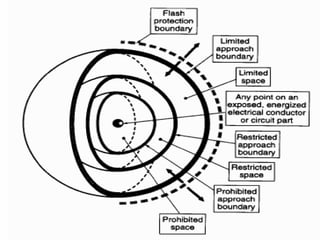
 How to determine safe working distances
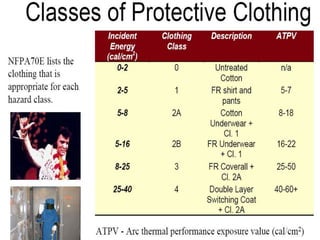
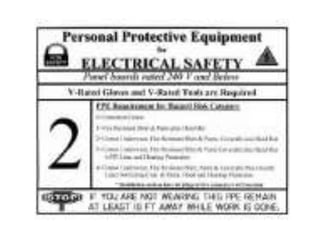
 Required PPE.
ARC FLASH EVENT
NFPA / NEC 70E ARC FLASH
PROTECTION
© ABB
2/07/2012 | Slide 10
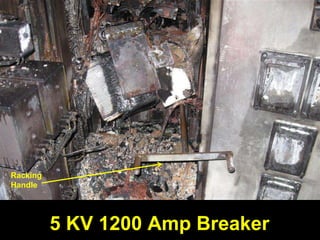
5 KV 1200 Amp Breaker
Racking
Handle
© ABB
2/07/2012 | Slide 11
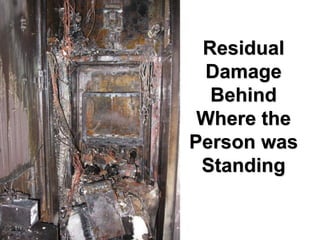
Residual
Damage
Behind
Where the
Person was
Standing
© ABB
2/07/2012 | Slide 12
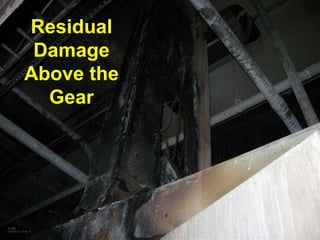
Residual
Damage
Above the
Gear
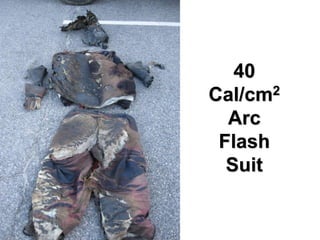
40
Cal/cm2
Arc
Flash
Suit
© ABB
2/07/2012 | Slide 13
© ABB
2/07/2012 | Slide 14
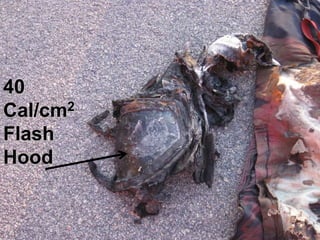
40
Cal/cm2
Flash
Hood

ARC_FLASH_PRESENTATION.ppt

  • 1.
    What is ArcFlash? Arc flash is a short circuit through air that flashes over from one exposed live conductor to another conductor or to ground. Arc flash incidents are common and costly, and the frequency of reported accidents is increasing. This is why arc flash has become a very hot topic within MSHA & OSHA.
  • 2.
    What Causes ArcFlash? Arc flashes can be caused in a variety of ways: • Just coming close to a high-amp source with a conductive object can cause the electricity to flash over. • Dropping a tool or otherwise creating a spark can ignite an arc flash. • Equipment failure due to use of substandard parts, improper installation, or even normal wear and tear. • Breaks or gaps in insulation. • Dust, corrosion or other impurities on the surface of the conductor.
  • 3.
    How Common IsArc Flash? • In the past, if someone suffered burns in an electrical accident, people thought the burns were caused by the electrical shock passing through the body. Electrical shocks can cause burns. But what research has shown is that most burns from electrical accidents actually come from arc flash. • The majority of hospital admissions due to electrical accidents are from arc flash burns, not from electrical shocks. Of the approximately 350 persons killed in the work place by electricity last year, roughly 50% were related to arc flash. A report by Capelli-Schellpfeffer, Inc., estimates that 5-10 arc flash explosions happen in the USA every day, resulting in 1 to 2 deaths per day. • That figure only in takes into account incidents where victims were sent to special burn centers. The number does not include cases sent to regular hospitals or clinics, nor unreported cases or near misses.
  • 4.
    Safety Facts • Fact:Almost 8000 electrical contact accidents occur in the U.S. each year. • Fact: At least One worker dies each day from electrical contact. • Fact: Fatalities from electrical accidents with a potential arc flash component have been trending downward since recent mandatory safe work practices have become “law.”
  • 5.
    Training • Do youand your employees know the risks? Knowing the level of potential hazard is critical to taking the proper level of precaution. • Fact: Everyone at risk of arc flash needs a basic understanding of:  Risk Analysis  Arc Energy Theory  How to determine safe working distances  Required PPE.
  • 9.
    ARC FLASH EVENT NFPA/ NEC 70E ARC FLASH PROTECTION
  • 10.
    © ABB 2/07/2012 |Slide 10 5 KV 1200 Amp Breaker Racking Handle
  • 11.
    © ABB 2/07/2012 |Slide 11 Residual Damage Behind Where the Person was Standing
  • 12.
    © ABB 2/07/2012 |Slide 12 Residual Damage Above the Gear
  • 13.
  • 14.
    © ABB 2/07/2012 |Slide 14 40 Cal/cm2 Flash Hood