


MEDIA POWER AND BIG DATA
Dr. Nouha Belaid, PhD
September 2018, Bari- Italy
Twiiter @Belnouha – Facebook : Nouha Belaid
Email: belaid.nouha@gmail.com
Web site: www.nouhabelaid.com
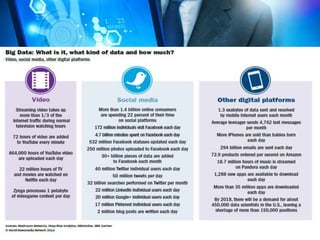
“Big data "mean the data of which the data volume, acquisition
speed, or data representation limits the capacity of using
traditional relational methods to conduct effective analysis or
the data which may be effectively processed with important
horizontal zoom technologies, which focuses on the
technological aspect of big data. It indicates that efficient
methods or technologies need to be developed and used to
analyze and process big data”.
(Chen et al. , 2014: 4-5).
Twiiter @Belnouha – Facebook : Nouha Belaid
What’s the « Big Data » ?
“Computational journalism is a contemporary term for
journalistic work done in the intersection between journalism
and computing. This type of work seems to be more common
now, and this has to do with the increasing availability of data
and tools and the dynamics often associated with Web 2.0.
(Karlsen et Stavelin, 2014: 34)
What’s the « Computational Journalism » ?
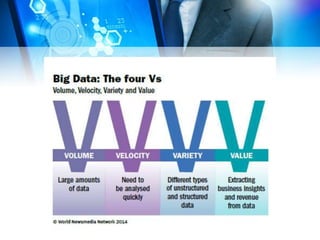
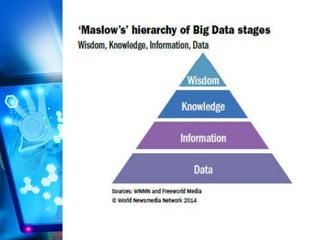
What about Media and « Big Data » ?
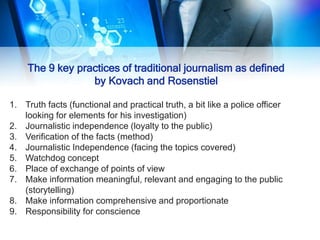
The 9 key practices of traditional journalism as defined
by Kovach and Rosenstiel
1. Truth facts (functional and practical truth, a bit like a police officer
looking for elements for his investigation)
2. Journalistic independence (loyalty to the public)
3. Verification of the facts (method)
4. Journalistic Independence (facing the topics covered)
5. Watchdog concept
6. Place of exchange of points of view
7. Make information meaningful, relevant and engaging to the public
(storytelling)
8. Make information comprehensive and proportionate
9. Responsibility for conscience
For Media, Big Data strategies can include :
• Audience analytics to enable a better understanding and
targeting of customers;
• Tools to understand public and private databases for
journalistic storytelling;
• Tools to manage and search the exploding amount of video,
• Social media and other content;
• Tools to target advertising and ad campaigns;
• Tools to automate the production of text and video stories,
• Tools to identify waste and enable efficiencies; and much
more.
What about Media and « Big Data » in
the MENA Region?
According to last report of the Faculty of
Mohamed Ibn Rashid of the government and
administration in the Arab Emirates, 76% of
Internet users in 22 countries in the Arab
World, provide personal information on social
media.
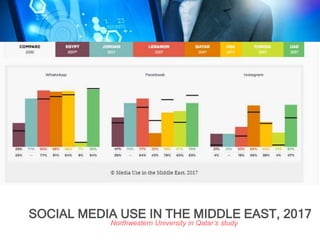
SOCIAL MEDIA USE IN THE MIDDLE EAST, 2017
Northwestern University in Qatar’s study
In #Tunisia, an adapted and powerful
legislative arsenal exists around the law of
access to information. The ministers have
become accustomed to publishing data and
have short-term plans for publications, which
explains the launch of the “Open Data
Portal”.
Some developped experiences in Data
Journalism exist since 2012 such as
« Inkyfada » in Tunisia and
« Infotimes » in Egypt.
#New_Skills
Since the “Arab Spring”, Many training
sessions funded by NGOs have been
offered to journalists in the countries of
revolution, to develop their journalistic
practices.
Thank you for your attention
Dr. Nouha Belaid, PhD
Email: belaid.nouha@gmail.com

Arab World - Media power and big data

  • 1.
    MEDIA POWER ANDBIG DATA Dr. Nouha Belaid, PhD September 2018, Bari- Italy Twiiter @Belnouha – Facebook : Nouha Belaid Email: belaid.nouha@gmail.com Web site: www.nouhabelaid.com
  • 2.
    “Big data "meanthe data of which the data volume, acquisition speed, or data representation limits the capacity of using traditional relational methods to conduct effective analysis or the data which may be effectively processed with important horizontal zoom technologies, which focuses on the technological aspect of big data. It indicates that efficient methods or technologies need to be developed and used to analyze and process big data”. (Chen et al. , 2014: 4-5). Twiiter @Belnouha – Facebook : Nouha Belaid What’s the « Big Data » ?
  • 3.
    “Computational journalism isa contemporary term for journalistic work done in the intersection between journalism and computing. This type of work seems to be more common now, and this has to do with the increasing availability of data and tools and the dynamics often associated with Web 2.0. (Karlsen et Stavelin, 2014: 34) What’s the « Computational Journalism » ?
  • 6.
    What about Mediaand « Big Data » ?
  • 7.
    The 9 keypractices of traditional journalism as defined by Kovach and Rosenstiel 1. Truth facts (functional and practical truth, a bit like a police officer looking for elements for his investigation) 2. Journalistic independence (loyalty to the public) 3. Verification of the facts (method) 4. Journalistic Independence (facing the topics covered) 5. Watchdog concept 6. Place of exchange of points of view 7. Make information meaningful, relevant and engaging to the public (storytelling) 8. Make information comprehensive and proportionate 9. Responsibility for conscience
  • 8.
    For Media, BigData strategies can include : • Audience analytics to enable a better understanding and targeting of customers; • Tools to understand public and private databases for journalistic storytelling; • Tools to manage and search the exploding amount of video, • Social media and other content; • Tools to target advertising and ad campaigns; • Tools to automate the production of text and video stories, • Tools to identify waste and enable efficiencies; and much more.
  • 13.
    What about Mediaand « Big Data » in the MENA Region?
  • 14.
    According to lastreport of the Faculty of Mohamed Ibn Rashid of the government and administration in the Arab Emirates, 76% of Internet users in 22 countries in the Arab World, provide personal information on social media.
  • 15.
    SOCIAL MEDIA USEIN THE MIDDLE EAST, 2017 Northwestern University in Qatar’s study
  • 16.
    In #Tunisia, anadapted and powerful legislative arsenal exists around the law of access to information. The ministers have become accustomed to publishing data and have short-term plans for publications, which explains the launch of the “Open Data Portal”.
  • 17.
    Some developped experiencesin Data Journalism exist since 2012 such as « Inkyfada » in Tunisia and « Infotimes » in Egypt.
  • 18.
    #New_Skills Since the “ArabSpring”, Many training sessions funded by NGOs have been offered to journalists in the countries of revolution, to develop their journalistic practices.
  • 19.
    Thank you foryour attention Dr. Nouha Belaid, PhD Email: belaid.nouha@gmail.com