




A not-for-profit
 health and tax policy
research organization
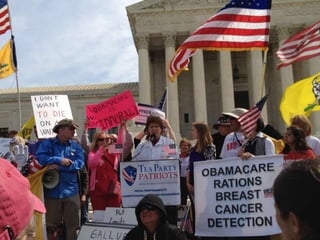
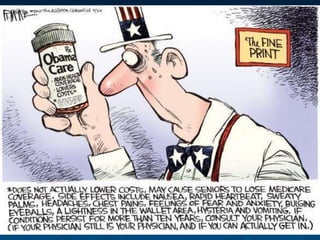
                         OBAMACARE:

                         What’s next?


                         Grace-Marie Turner
                         April 27, 2012
                         Docs 4 Patient Care
   /GalenInstitute
   www.galen.org
1eadceae
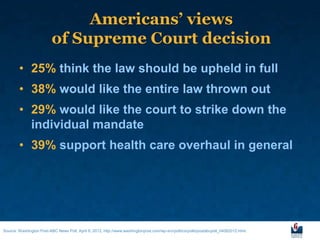
Americans’ views
                          of Supreme Court decision
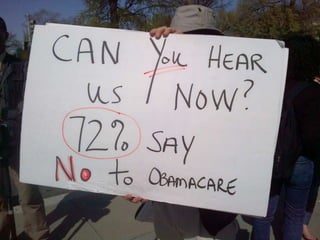
        • 25% think the law should be upheld in full
        • 38% would like the entire law thrown out
        • 29% would like the court to strike down the
          individual mandate
        • 39% support health care overhaul in general


Source: Washington Post-ABC News Poll, April 8, 2012, http://www.washingtonpost.com/wp-srv/politics/polls/postabcpoll_04082012.html.
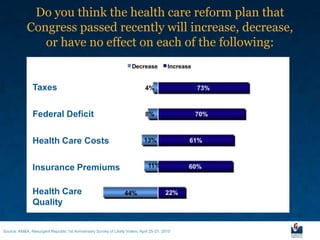
Do you think the health care reform plan that
            Congress passed recently will increase, decrease,
               or have no effect on each of the following:


               Taxes

               Federal Deficit

               Health Care Costs

               Insurance Premiums

               Health Care
               Quality


Source: AM&A, Resurgent Republic 1st Anniversary Survey of Likely Voters, April 25-27, 2010
A not-for-profit
 health and tax policy
research organization


   /GalenInstitute
   www.galen.org
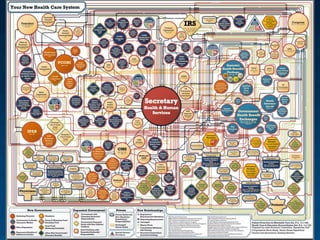
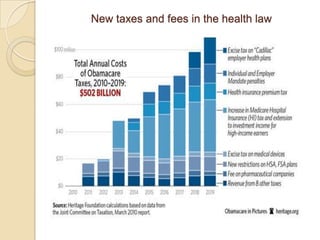
New taxes and fees in the health law
Studies show law fails to meet goals
  • Health costs and health spending increase
  • One-third of businesses may drop insurance
  • Young people worried about high cost of
    policies
  • Doctors concerned about Medicaid
    expansion and fraying the safety net
  • Seniors are concerned about access to care
    through Medicare and Medicare Advantage
  • Up to 25 million will remain uninsured
www.galen.org
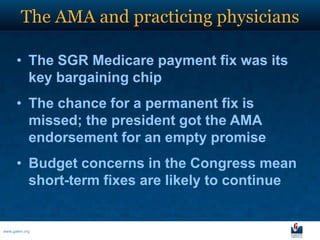
The AMA and practicing physicians

      • The SGR Medicare payment fix was its
        key bargaining chip
      • The chance for a permanent fix is
        missed; the president got the AMA
        endorsement for an empty promise
      • Budget concerns in the Congress mean
        short-term fixes are likely to continue


www.galen.org
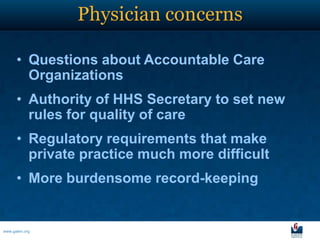
Physician concerns

      • Questions about Accountable Care
        Organizations
      • Authority of HHS Secretary to set new
        rules for quality of care
      • Regulatory requirements that make
        private practice much more difficult
      • More burdensome record-keeping


www.galen.org
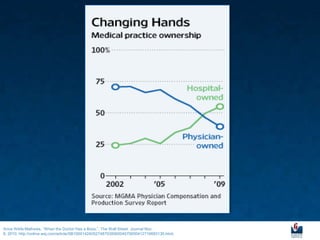
Anna Wilde Mathews, “When the Doctor Has a Boss,”, The Wall Street Journal Nov.
8, 2010, http://online.wsj.com/article/SB10001424052748703856504575600412716683130.html.
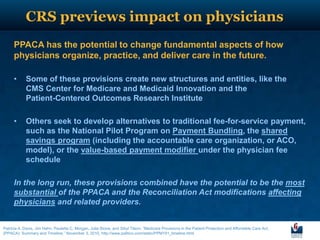
CRS previews impact on physicians
      PPACA has the potential to change fundamental aspects of how
      physicians organize, practice, and deliver care in the future.

      •     Some of these provisions create new structures and entities, like the
            CMS Center for Medicare and Medicaid Innovation and the
            Patient-Centered Outcomes Research Institute

      •     Others seek to develop alternatives to traditional fee-for-service payment,
            such as the National Pilot Program on Payment Bundling, the shared
            savings program (including the accountable care organization, or ACO,
            model), or the value-based payment modifier under the physician fee
            schedule

      In the long run, these provisions combined have the potential to be the most
      substantial of the PPACA and the Reconciliation Act modifications affecting
      physicians and related providers.


Patricia A. Davis, Jim Hahn, Paulette C. Morgan, Julie Stone, and Sibyl Tilson, “Medicare Provisions in the Patient Protection and Affordable Care Act,
(PPACA): Summary and Timeline,” November 3, 2010, http://www.politico.com/static/PPM191_timeline.html.
Specific changes to watch

     • IPAB — the Independent Payment
       Advisory Board
     • Patient-Centered Outcomes Research
       Institute
     • Physician Quality Reporting Initiative


www.galen.org
Action items

       • Government requirements for use of
         EMR
       • Comparative effectiveness “guidelines”
       • Payment policies that penalize those
         with the top 10% of charges


www.galen.org
Predictions of the Medicare actuary

     Under current law, CMS actuary Richard Foster
     says Medicare is on track to pay physicians less
     than Medicaid does, and this would lead to “severe
     problems with beneficiary access to care.”

     He predicts many Medicare providers will go
     bankrupt if policies are unchanged. More than 40%
     eventually would end up “shifting to negative profit
     margins” and will either go out of business or stop
     seeing Medicare patients altogether.

“House Budget Committee Hearing Highlights,” House Budget Committee, July 13, 2011, http://paulryan.house.gov/News/DocumentSingle.aspx?
DocumentID=251972. “Statement of Actuarial Opinion,” 2011 Annual Report of the Boards of Trustees of the Federal Hospital Insurance and Federal
Supplementary Medical Insurance Trust Funds, The Boards of Trustees, Federal Hospital Insurance and Federal Supplementary Medicare Insurance Trust Funds,
May 13, 2011, https://www.cms.gov/ReportsTrustFunds/downloads/tr2011.pdf.
Some realities


www.galen.org
Who said this?
“You should never try to tell people what they
ought to do because all of their circumstances
are different.

“But if you give them very good timely
information, they are going to make their own
decisions in ways, in general, that are going to
be better for them and better for the system as
a whole.”
     ― Ron Kirby, transportation planning coordinator for the
         Metropolitan Washington Council of Governments
                         Ashley Halsey III and Ed O‟Keefe, “Earthquake illustrates colossal challenge
                         of evacuating Washington, D.C.” The Washington Post, August 24, 2011.
Health care in 2012

       • Legislation
         Challenges to the law: 1099, CLASS and
         IPAB
       • Regulation
         12,000+ pages so far
       • Legal
         U.S. Supreme Court decision in late June
       • Political
         2012 campaigns and elections
www.galen.org
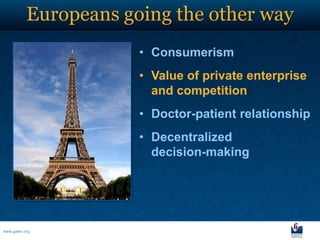
Europeans going the other way
                       • Consumerism
                       • Value of private enterprise
                         and competition
                       • Doctor-patient relationship
                       • Decentralized
                         decision-making


www.galen.org
Opportunities ahead
                          This is not settled policy
   A not-for-profit
 health and tax policy
                          Major election before implementation
research organization
                          States will have a big say
                          This law will be changed, likely
                          significantly, if not repealed outright.

                         The American people want private
                          insurance, and they want to be in
                          charge of choices.
   /GalenInstitute
                          Freedom.     Innovation. Control.
   www.galen.org
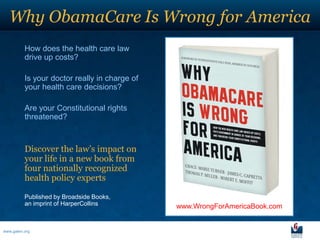
Why ObamaCare Is Wrong for America
          How does the health care law
          drive up costs?

          Is your doctor really in charge of
          your health care decisions?

          Are your Constitutional rights
          threatened?


          Discover the law’s impact on
          your life in a new book from
          four nationally recognized
          health policy experts

          Published by Broadside Books,
          an imprint of HarperCollins          www.WrongForAmericaBook.com


www.galen.org
Grace-Marie Turner
   A not-for-profit
 health and tax policy
research organization
                         Galen Institute
                         703-299-8900
                         gracemarie@galen.org

                         twitter.com/GalenInstitute
                         facebook.com/GalenInstitu
                         te
                         Subscribe to our free email alerts at
   /GalenInstitute
   www.galen.org         www.galen.org/subscribe
Americans agreed on goals for health reform…

       • The U.S. needs health reform to:
                – make coverage more affordable
                – assure quality, and
                – expand access to insurance
       • Most people rate their own coverage as
         good or excellent
       • They want stability. Change is for
         others.

www.galen.org
Early changes from the law

                          – Medical Loss Ratio
   A not-for-profit
 health and tax policy
research organization     – Grandfathering rules
                          – “Free” preventive care
                          – Allowing “children” up to age 26 on
                            parent’s policies
                          – No annual or lifetime limits on
                            coverage
                          – Pools for pre-existing condition
                            policies
   /GalenInstitute
   www.galen.org          – $250 for seniors with high drug costs
The health law’s main features
• Expands coverage to 30 million uninsured
• A new system of Exchanges to deliver subsidies
• States required to expand Medicaid
• Citizens required to purchase approved health insurance
• Most employers required to offer coverage
• Significant new federal regulation of the health sector
  (with 159 new regulatory agencies and programs)
• Medicare cuts and changes

Financed by
• $575 billion in payment reductions to Medicare
• $550 billion new taxes and penalties

www.galen.org
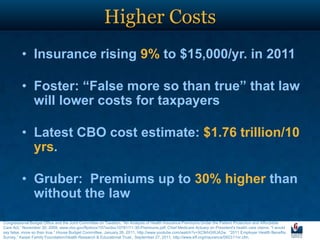
Higher Costs
         • Insurance rising 9% to $15,000/yr. in 2011

         • Foster: “False more so than true” that law
           will lower costs for taxpayers

         • Latest CBO cost estimate: $1.76 trillion/10
           yrs.

         • Gruber: Premiums up to 30% higher than
           without the law
Congressional Budget Office and the Joint Committee on Taxation, “An Analysis of Health Insurance Premiums Under the Patient Protection and Affordable
Care Act,” November 30, 2009, www.cbo.gov/ftpdocs/107xx/doc10781/11-30-Premiums.pdf. Chief Medicare Actuary on President's health care claims: "I would
say false, more so than true,“ House Budget Committee, January 26, 2011, http://www.youtube.com/watch?v=XC9rhGWJA2w. “2011 Employer Health Benefits
Survey,” Kaiser Family Foundation/Health Research & Educational Trust, September 27, 2011, http://www.kff.org/insurance/092311nr.cfm.
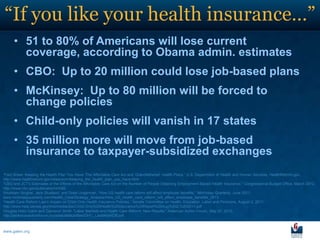
“If you like your health insurance…”
      • 51 to 80% of Americans will lose current
        coverage, according to Obama admin. estimates
      • CBO: Up to 20 million could lose job-based plans
      • McKinsey: Up to 80 million will be forced to
        change policies
      • Child-only policies will vanish in 17 states
      • 35 million more will move from job-based
        insurance to taxpayer-subsidized exchanges
“Fact Sheet: Keeping the Health Plan You Have: The Affordable Care Act and „Grandfathered‟ Health Plans,” U.S. Department of Health and Human Services, HealthReform.gov,
http://www.healthreform.gov/newsroom/keeping_the_health_plan_you_have.html.
"CBO and JCT's Estimates of the Effects of the Affordable Care Act on the Number of People Obtaining Employment-Based Health Insurance," Congressional Budget Office, March 2012,
http://www.cbo.gov/publication/43082.
Shubham Singhal, Jeris Stueland, and Drew Ungerman, “How US health care reform will affect employee benefits,” McKinsey Quarterly, June 2011,
www.mckinseyquarterly.com/Health_Care/Strategy_Analysis/How_US_health_care_reform_will_affect_employee_benefits_2813.
“Health Care Reform Law‟s Impact on Child-Only Health Insurance Policies,” Senate Committee on Health, Education, Labor and Pensions, August 2, 2011,
http://www.help.senate.gov/imo/media/doc/Child-Only%20Health%20Insurance%20Report%20Aug%202,%202011.pdf.
Douglas Holtz-Eakin and Cameron Smith "Labor Markets and Health Care Reform: New Results," American Action Forum, May 27, 2010,
http://americanactionforum.org/sites/default/files/OHC_LabMktsHCR.pdf.


www.galen.org
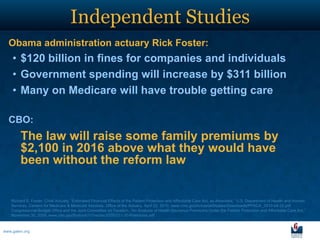
Independent Studies
  Obama administration actuary Rick Foster:
    • $120 billion in fines for companies and individuals
    • Government spending will increase by $311 billion
    • Many on Medicare will have trouble getting care

  CBO:
        The law will raise some family premiums by
        $2,100 in 2016 above what they would have
        been without the reform law


   Richard S. Foster, Chief Actuary, “Estimated Financial Effects of the Patient Protection and Affordable Care Act, as Amended,” U.S. Department of Health and Human
   Services, Centers for Medicare & Medicaid Services, Office of the Actuary, April 22, 2010, www.cms.gov/ActuarialStudies/Downloads/PPACA_2010-04-22.pdf.
   Congressional Budget Office and the Joint Committee on Taxation, “An Analysis of Health Insurance Premiums Under the Patient Protection and Affordable Care Act,”
   November 30, 2009, www.cbo.gov/ftpdocs/107xx/doc10781/11-30-Premiums.pdf.


www.galen.org
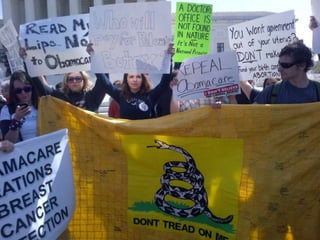
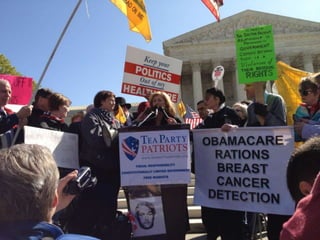
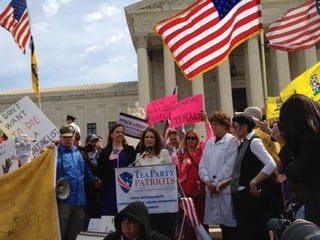
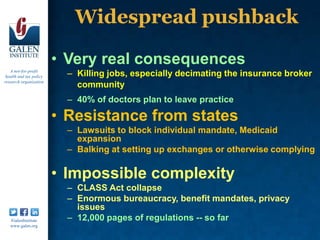
Widespread pushback

                         • Very real consequences
   A not-for-profit
 health and tax policy     – Killing jobs, especially decimating the insurance broker
research organization
                             community
                           – 40% of doctors plan to leave practice

                         • Resistance from states
                           – Lawsuits to block individual mandate, Medicaid
                             expansion
                           – Balking at setting up exchanges or otherwise complying

                         • Impossible complexity
                           – CLASS Act collapse
                           – Enormous bureaucracy, benefit mandates, privacy
                             issues
   /GalenInstitute         – 12,000 pages of regulations -- so far
   www.galen.org
Push-back coming from
       • Doctors and patients
         Losing control over medical decisions

       • Small businesses and big employers
         New taxes, penalties, and mandates

       • States
         Higher costs for Medicaid

       • Consumers
         Higher costs for insurance and fewer choices

       • Seniors
         Cuts to Medicare
www.galen.org
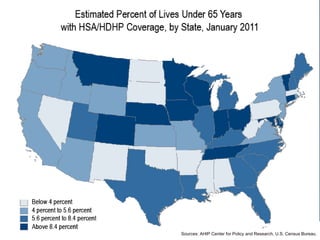
Sources: AHIP Center for Policy and Research, U.S. Census Bureau.

April 27, 2012 Docs 4 Patient Care

  • 1.
    A not-for-profit healthand tax policy research organization OBAMACARE: What’s next? Grace-Marie Turner April 27, 2012 Docs 4 Patient Care /GalenInstitute www.galen.org
  • 5.
  • 12.
    Americans’ views of Supreme Court decision • 25% think the law should be upheld in full • 38% would like the entire law thrown out • 29% would like the court to strike down the individual mandate • 39% support health care overhaul in general Source: Washington Post-ABC News Poll, April 8, 2012, http://www.washingtonpost.com/wp-srv/politics/polls/postabcpoll_04082012.html.
  • 13.
    Do you thinkthe health care reform plan that Congress passed recently will increase, decrease, or have no effect on each of the following: Taxes Federal Deficit Health Care Costs Insurance Premiums Health Care Quality Source: AM&A, Resurgent Republic 1st Anniversary Survey of Likely Voters, April 25-27, 2010
  • 15.
    A not-for-profit healthand tax policy research organization /GalenInstitute www.galen.org
  • 17.
    New taxes andfees in the health law
  • 18.
    Studies show lawfails to meet goals • Health costs and health spending increase • One-third of businesses may drop insurance • Young people worried about high cost of policies • Doctors concerned about Medicaid expansion and fraying the safety net • Seniors are concerned about access to care through Medicare and Medicare Advantage • Up to 25 million will remain uninsured www.galen.org
  • 20.
    The AMA andpracticing physicians • The SGR Medicare payment fix was its key bargaining chip • The chance for a permanent fix is missed; the president got the AMA endorsement for an empty promise • Budget concerns in the Congress mean short-term fixes are likely to continue www.galen.org
  • 21.
    Physician concerns • Questions about Accountable Care Organizations • Authority of HHS Secretary to set new rules for quality of care • Regulatory requirements that make private practice much more difficult • More burdensome record-keeping www.galen.org
  • 22.
    Anna Wilde Mathews,“When the Doctor Has a Boss,”, The Wall Street Journal Nov. 8, 2010, http://online.wsj.com/article/SB10001424052748703856504575600412716683130.html.
  • 23.
    CRS previews impacton physicians PPACA has the potential to change fundamental aspects of how physicians organize, practice, and deliver care in the future. • Some of these provisions create new structures and entities, like the CMS Center for Medicare and Medicaid Innovation and the Patient-Centered Outcomes Research Institute • Others seek to develop alternatives to traditional fee-for-service payment, such as the National Pilot Program on Payment Bundling, the shared savings program (including the accountable care organization, or ACO, model), or the value-based payment modifier under the physician fee schedule In the long run, these provisions combined have the potential to be the most substantial of the PPACA and the Reconciliation Act modifications affecting physicians and related providers. Patricia A. Davis, Jim Hahn, Paulette C. Morgan, Julie Stone, and Sibyl Tilson, “Medicare Provisions in the Patient Protection and Affordable Care Act, (PPACA): Summary and Timeline,” November 3, 2010, http://www.politico.com/static/PPM191_timeline.html.
  • 24.
    Specific changes towatch • IPAB — the Independent Payment Advisory Board • Patient-Centered Outcomes Research Institute • Physician Quality Reporting Initiative www.galen.org
  • 25.
    Action items • Government requirements for use of EMR • Comparative effectiveness “guidelines” • Payment policies that penalize those with the top 10% of charges www.galen.org
  • 26.
    Predictions of theMedicare actuary Under current law, CMS actuary Richard Foster says Medicare is on track to pay physicians less than Medicaid does, and this would lead to “severe problems with beneficiary access to care.” He predicts many Medicare providers will go bankrupt if policies are unchanged. More than 40% eventually would end up “shifting to negative profit margins” and will either go out of business or stop seeing Medicare patients altogether. “House Budget Committee Hearing Highlights,” House Budget Committee, July 13, 2011, http://paulryan.house.gov/News/DocumentSingle.aspx? DocumentID=251972. “Statement of Actuarial Opinion,” 2011 Annual Report of the Boards of Trustees of the Federal Hospital Insurance and Federal Supplementary Medical Insurance Trust Funds, The Boards of Trustees, Federal Hospital Insurance and Federal Supplementary Medicare Insurance Trust Funds, May 13, 2011, https://www.cms.gov/ReportsTrustFunds/downloads/tr2011.pdf.
  • 27.
  • 28.
    Who said this? “Youshould never try to tell people what they ought to do because all of their circumstances are different. “But if you give them very good timely information, they are going to make their own decisions in ways, in general, that are going to be better for them and better for the system as a whole.” ― Ron Kirby, transportation planning coordinator for the Metropolitan Washington Council of Governments Ashley Halsey III and Ed O‟Keefe, “Earthquake illustrates colossal challenge of evacuating Washington, D.C.” The Washington Post, August 24, 2011.
  • 29.
    Health care in2012 • Legislation Challenges to the law: 1099, CLASS and IPAB • Regulation 12,000+ pages so far • Legal U.S. Supreme Court decision in late June • Political 2012 campaigns and elections www.galen.org
  • 30.
    Europeans going theother way • Consumerism • Value of private enterprise and competition • Doctor-patient relationship • Decentralized decision-making www.galen.org
  • 31.
    Opportunities ahead This is not settled policy A not-for-profit health and tax policy Major election before implementation research organization States will have a big say This law will be changed, likely significantly, if not repealed outright. The American people want private insurance, and they want to be in charge of choices. /GalenInstitute Freedom. Innovation. Control. www.galen.org
  • 32.
    Why ObamaCare IsWrong for America How does the health care law drive up costs? Is your doctor really in charge of your health care decisions? Are your Constitutional rights threatened? Discover the law’s impact on your life in a new book from four nationally recognized health policy experts Published by Broadside Books, an imprint of HarperCollins www.WrongForAmericaBook.com www.galen.org
  • 33.
    Grace-Marie Turner A not-for-profit health and tax policy research organization Galen Institute 703-299-8900 gracemarie@galen.org twitter.com/GalenInstitute facebook.com/GalenInstitu te Subscribe to our free email alerts at /GalenInstitute www.galen.org www.galen.org/subscribe
  • 34.
    Americans agreed ongoals for health reform… • The U.S. needs health reform to: – make coverage more affordable – assure quality, and – expand access to insurance • Most people rate their own coverage as good or excellent • They want stability. Change is for others. www.galen.org
  • 35.
    Early changes fromthe law – Medical Loss Ratio A not-for-profit health and tax policy research organization – Grandfathering rules – “Free” preventive care – Allowing “children” up to age 26 on parent’s policies – No annual or lifetime limits on coverage – Pools for pre-existing condition policies /GalenInstitute www.galen.org – $250 for seniors with high drug costs
  • 36.
    The health law’smain features • Expands coverage to 30 million uninsured • A new system of Exchanges to deliver subsidies • States required to expand Medicaid • Citizens required to purchase approved health insurance • Most employers required to offer coverage • Significant new federal regulation of the health sector (with 159 new regulatory agencies and programs) • Medicare cuts and changes Financed by • $575 billion in payment reductions to Medicare • $550 billion new taxes and penalties www.galen.org
  • 37.
    Higher Costs • Insurance rising 9% to $15,000/yr. in 2011 • Foster: “False more so than true” that law will lower costs for taxpayers • Latest CBO cost estimate: $1.76 trillion/10 yrs. • Gruber: Premiums up to 30% higher than without the law Congressional Budget Office and the Joint Committee on Taxation, “An Analysis of Health Insurance Premiums Under the Patient Protection and Affordable Care Act,” November 30, 2009, www.cbo.gov/ftpdocs/107xx/doc10781/11-30-Premiums.pdf. Chief Medicare Actuary on President's health care claims: "I would say false, more so than true,“ House Budget Committee, January 26, 2011, http://www.youtube.com/watch?v=XC9rhGWJA2w. “2011 Employer Health Benefits Survey,” Kaiser Family Foundation/Health Research & Educational Trust, September 27, 2011, http://www.kff.org/insurance/092311nr.cfm.
  • 38.
    “If you likeyour health insurance…” • 51 to 80% of Americans will lose current coverage, according to Obama admin. estimates • CBO: Up to 20 million could lose job-based plans • McKinsey: Up to 80 million will be forced to change policies • Child-only policies will vanish in 17 states • 35 million more will move from job-based insurance to taxpayer-subsidized exchanges “Fact Sheet: Keeping the Health Plan You Have: The Affordable Care Act and „Grandfathered‟ Health Plans,” U.S. Department of Health and Human Services, HealthReform.gov, http://www.healthreform.gov/newsroom/keeping_the_health_plan_you_have.html. "CBO and JCT's Estimates of the Effects of the Affordable Care Act on the Number of People Obtaining Employment-Based Health Insurance," Congressional Budget Office, March 2012, http://www.cbo.gov/publication/43082. Shubham Singhal, Jeris Stueland, and Drew Ungerman, “How US health care reform will affect employee benefits,” McKinsey Quarterly, June 2011, www.mckinseyquarterly.com/Health_Care/Strategy_Analysis/How_US_health_care_reform_will_affect_employee_benefits_2813. “Health Care Reform Law‟s Impact on Child-Only Health Insurance Policies,” Senate Committee on Health, Education, Labor and Pensions, August 2, 2011, http://www.help.senate.gov/imo/media/doc/Child-Only%20Health%20Insurance%20Report%20Aug%202,%202011.pdf. Douglas Holtz-Eakin and Cameron Smith "Labor Markets and Health Care Reform: New Results," American Action Forum, May 27, 2010, http://americanactionforum.org/sites/default/files/OHC_LabMktsHCR.pdf. www.galen.org
  • 39.
    Independent Studies Obama administration actuary Rick Foster: • $120 billion in fines for companies and individuals • Government spending will increase by $311 billion • Many on Medicare will have trouble getting care CBO: The law will raise some family premiums by $2,100 in 2016 above what they would have been without the reform law Richard S. Foster, Chief Actuary, “Estimated Financial Effects of the Patient Protection and Affordable Care Act, as Amended,” U.S. Department of Health and Human Services, Centers for Medicare & Medicaid Services, Office of the Actuary, April 22, 2010, www.cms.gov/ActuarialStudies/Downloads/PPACA_2010-04-22.pdf. Congressional Budget Office and the Joint Committee on Taxation, “An Analysis of Health Insurance Premiums Under the Patient Protection and Affordable Care Act,” November 30, 2009, www.cbo.gov/ftpdocs/107xx/doc10781/11-30-Premiums.pdf. www.galen.org
  • 40.
    Widespread pushback • Very real consequences A not-for-profit health and tax policy – Killing jobs, especially decimating the insurance broker research organization community – 40% of doctors plan to leave practice • Resistance from states – Lawsuits to block individual mandate, Medicaid expansion – Balking at setting up exchanges or otherwise complying • Impossible complexity – CLASS Act collapse – Enormous bureaucracy, benefit mandates, privacy issues /GalenInstitute – 12,000 pages of regulations -- so far www.galen.org
  • 41.
    Push-back coming from • Doctors and patients Losing control over medical decisions • Small businesses and big employers New taxes, penalties, and mandates • States Higher costs for Medicaid • Consumers Higher costs for insurance and fewer choices • Seniors Cuts to Medicare www.galen.org
  • 43.
    Sources: AHIP Centerfor Policy and Research, U.S. Census Bureau.