Alone, alone, all, all Alone or
Together?
Ana da Palma
Jorge Delmar
Sapato 43
Avanca| Cinema 2013
Conferência Internacional Cinema
Alone, alone, all, all alone* or Together?
As social spaces diminish in the political architecture of the
no-man’s-land, as television and computer screen numb our
natural ability of social beings, as the web provides an
account less, meanwhile possibly «endangered», number of
film material, cinema in the community emerges as a
possible.
In Porto (Portugal), a certain number of groups and
associations reinvent lost social spaces through providing the
sharing of films, thoughts and ideas. tool to rethink social
spaces, relations and learning.
Introduction
Screening of the World in the Community
Social Spaces
Brief aspects to rethink learning theories
Alone, alone, all, all alone,
Alone on a wide wide sea!
And never a saint took pity on
My soul in agony.
Samuel Taylor Coleridge in English Romantic Verse (1986 [1968]) London:
Penguin Classics, «The rime of the ancient mariner», part IV , 163.
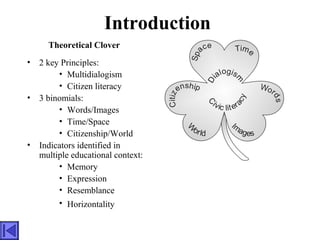
Introduction
• 2 key Principles:
• Multidialogism
• Citizen literacy
• 3 binomials:
• Words/Images
• Time/Space
• Citizenship/World
• Indicators identified in
multiple educational context:
• Memory
• Expression
• Resemblance
• Horizontality
Theoretical Clover
• Communities – 2 examples
• Casa Viva
• Gato Vadio
• Film screening – 2 informal
educational dimensions
Educational topos
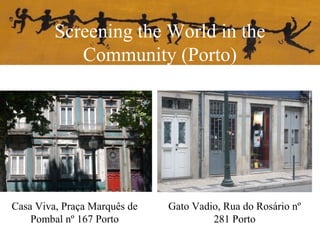
Screening the World in the
Community (Porto)
Casa Viva, Praça Marquês de
Pombal nº 167 Porto
Gato Vadio, Rua do Rosário nº
281 Porto
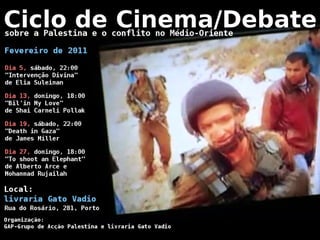
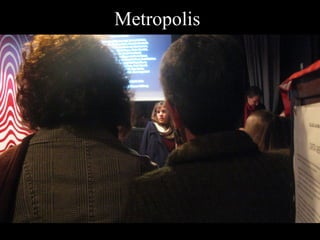
Metropolis
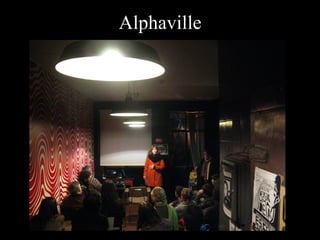
Alphaville
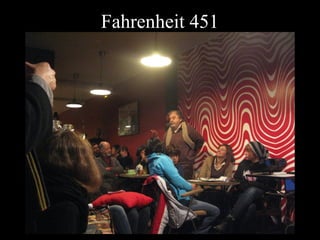
Fahrenheit 451
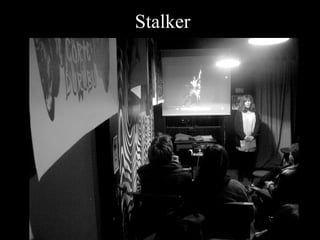
Stalker
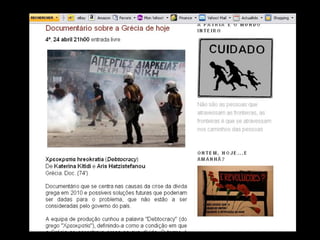
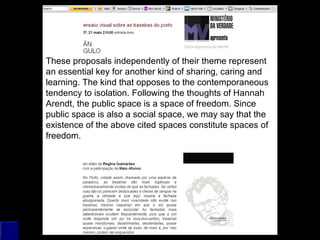
These proposals independently of their theme represent
an essential key for another kind of sharing, caring and
learning. The kind that opposes to the contemporaneous
tendency to isolation. Following the thoughts of Hannah
Arendt, the public space is a space of freedom. Since
public space is also a social space, we may say that the
existence of the above cited spaces constitute spaces of
freedom.
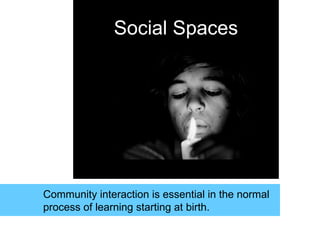
Social Spaces
Community interaction is essential in the normal
process of learning starting at birth.
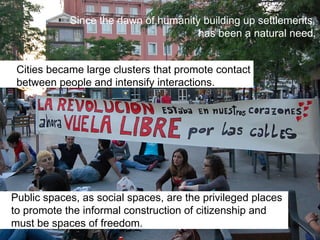
Since the dawn of humanity building up settlements
has been a natural need.
Public spaces, as social spaces, are the privileged places
to promote the informal construction of citizenship and
must be spaces of freedom.
Cities became large clusters that promote contact
between people and intensify interactions.
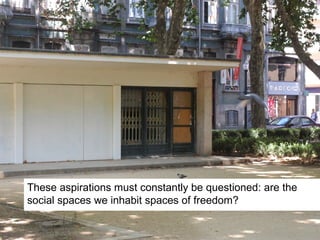
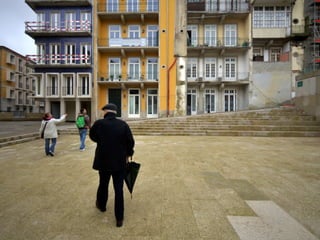
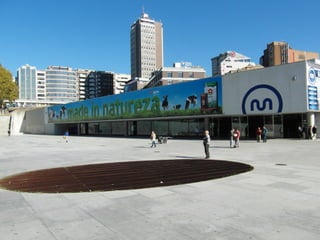
These aspirations must constantly be questioned: are the
social spaces we inhabit spaces of freedom?
These aspirations must constantly be questioned: are the
social spaces we inhabit spaces of freedom?
These aspirations must constantly be questioned: are the
social spaces we inhabit spaces of freedom?
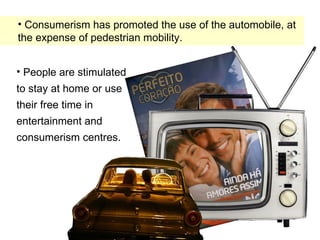
• People are stimulated
to stay at home or use
their free time in
entertainment and
consumerism centres.
• Consumerism has promoted the use of the automobile, at
the expense of pedestrian mobility.
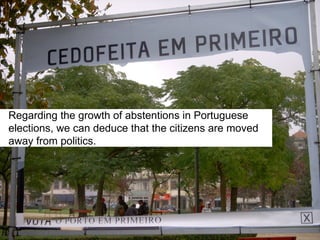
Regarding the growth of abstentions in Portuguese
elections, we can deduce that the citizens are moved
away from politics.
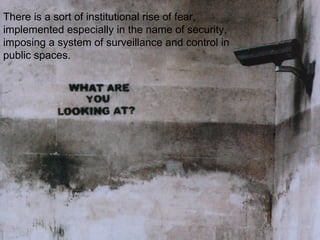
There is a sort of institutional rise of fear,
implemented especially in the name of security,
imposing a system of surveillance and control in
public spaces.
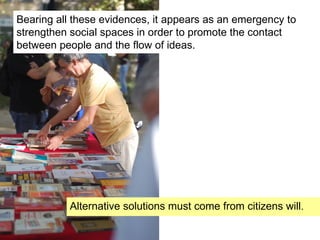
Bearing all these evidences, it appears as an emergency to
strengthen social spaces in order to promote the contact
between people and the flow of ideas.
Alternative solutions must come from citizens will.
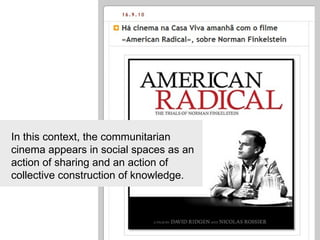
In this context, the communitarian
cinema appears in social spaces as an
action of sharing and an action of
collective construction of knowledge.
Brief aspects to rethink
learning theories
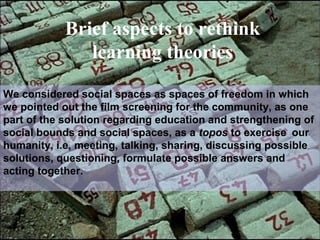
We considered social spaces as spaces of freedom in which
we pointed out the film screening for the community, as one
part of the solution regarding education and strengthening of
social bounds and social spaces, as a topos to exercise our
humanity, i.e, meeting, talking, sharing, discussing possible
solutions, questioning, formulate possible answers and
acting together.
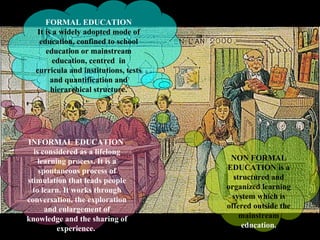
FORMAL EDUCATION
It is a widely adopted mode of
education, confined to school
education or mainstream
education, centred in
curricula and institutions, tests
and quantification and
hierarchical structure.
,.
NON FORMAL
EDUCATION is a
structured and
organized learning
system which is
offered outside the
mainstream
education.
INFORMAL EDUCATION
is considered as a lifelong
learning process. It is a
spontaneous process of
stimulation that leads people
to learn. It works through
conversation, the exploration
and enlargement of
knowledge and the sharing of
experience.
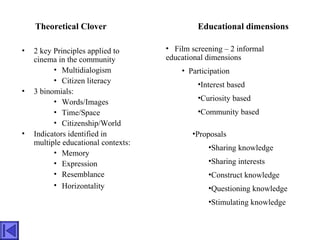
• 2 key Principles applied to
cinema in the community
• Multidialogism
• Citizen literacy
• 3 binomials:
• Words/Images
• Time/Space
• Citizenship/World
• Indicators identified in
multiple educational contexts:
• Memory
• Expression
• Resemblance
• Horizontality
• Film screening – 2 informal
educational dimensions
• Participation
•Interest based
•Curiosity based
•Community based
Theoretical Clover Educational dimensions
•Proposals
•Sharing knowledge
•Sharing interests
•Construct knowledge
•Questioning knowledge
•Stimulating knowledge
The End.
Thank you!
Contact:

Apresentação Avanca/2013

  • 1.
    Alone, alone, all,all Alone or Together? Ana da Palma Jorge Delmar Sapato 43 Avanca| Cinema 2013 Conferência Internacional Cinema
  • 2.
    Alone, alone, all,all alone* or Together? As social spaces diminish in the political architecture of the no-man’s-land, as television and computer screen numb our natural ability of social beings, as the web provides an account less, meanwhile possibly «endangered», number of film material, cinema in the community emerges as a possible. In Porto (Portugal), a certain number of groups and associations reinvent lost social spaces through providing the sharing of films, thoughts and ideas. tool to rethink social spaces, relations and learning. Introduction Screening of the World in the Community Social Spaces Brief aspects to rethink learning theories Alone, alone, all, all alone, Alone on a wide wide sea! And never a saint took pity on My soul in agony. Samuel Taylor Coleridge in English Romantic Verse (1986 [1968]) London: Penguin Classics, «The rime of the ancient mariner», part IV , 163.
  • 3.
    Introduction • 2 keyPrinciples: • Multidialogism • Citizen literacy • 3 binomials: • Words/Images • Time/Space • Citizenship/World • Indicators identified in multiple educational context: • Memory • Expression • Resemblance • Horizontality Theoretical Clover • Communities – 2 examples • Casa Viva • Gato Vadio • Film screening – 2 informal educational dimensions Educational topos
  • 4.
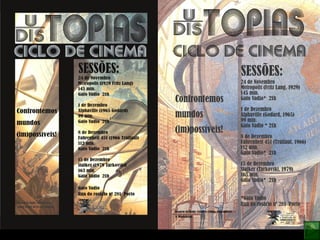
    Screening the Worldin the Community (Porto) Casa Viva, Praça Marquês de Pombal nº 167 Porto Gato Vadio, Rua do Rosário nº 281 Porto
  • 7.
  • 8.
  • 9.
  • 10.
  • 16.
    These proposals independentlyof their theme represent an essential key for another kind of sharing, caring and learning. The kind that opposes to the contemporaneous tendency to isolation. Following the thoughts of Hannah Arendt, the public space is a space of freedom. Since public space is also a social space, we may say that the existence of the above cited spaces constitute spaces of freedom.
  • 17.
    Social Spaces Community interactionis essential in the normal process of learning starting at birth.
  • 18.
    Since the dawnof humanity building up settlements has been a natural need. Public spaces, as social spaces, are the privileged places to promote the informal construction of citizenship and must be spaces of freedom. Cities became large clusters that promote contact between people and intensify interactions.
  • 19.
    These aspirations mustconstantly be questioned: are the social spaces we inhabit spaces of freedom?
  • 20.
    These aspirations mustconstantly be questioned: are the social spaces we inhabit spaces of freedom?
  • 21.
    These aspirations mustconstantly be questioned: are the social spaces we inhabit spaces of freedom?
  • 22.
    • People arestimulated to stay at home or use their free time in entertainment and consumerism centres. • Consumerism has promoted the use of the automobile, at the expense of pedestrian mobility.
  • 23.
    Regarding the growthof abstentions in Portuguese elections, we can deduce that the citizens are moved away from politics.
  • 24.
    There is asort of institutional rise of fear, implemented especially in the name of security, imposing a system of surveillance and control in public spaces.
  • 25.
    Bearing all theseevidences, it appears as an emergency to strengthen social spaces in order to promote the contact between people and the flow of ideas. Alternative solutions must come from citizens will.
  • 26.
    In this context,the communitarian cinema appears in social spaces as an action of sharing and an action of collective construction of knowledge.
  • 27.
    Brief aspects torethink learning theories We considered social spaces as spaces of freedom in which we pointed out the film screening for the community, as one part of the solution regarding education and strengthening of social bounds and social spaces, as a topos to exercise our humanity, i.e, meeting, talking, sharing, discussing possible solutions, questioning, formulate possible answers and acting together.
  • 28.
    FORMAL EDUCATION It isa widely adopted mode of education, confined to school education or mainstream education, centred in curricula and institutions, tests and quantification and hierarchical structure. ,. NON FORMAL EDUCATION is a structured and organized learning system which is offered outside the mainstream education. INFORMAL EDUCATION is considered as a lifelong learning process. It is a spontaneous process of stimulation that leads people to learn. It works through conversation, the exploration and enlargement of knowledge and the sharing of experience.
  • 29.
    • 2 keyPrinciples applied to cinema in the community • Multidialogism • Citizen literacy • 3 binomials: • Words/Images • Time/Space • Citizenship/World • Indicators identified in multiple educational contexts: • Memory • Expression • Resemblance • Horizontality • Film screening – 2 informal educational dimensions • Participation •Interest based •Curiosity based •Community based Theoretical Clover Educational dimensions •Proposals •Sharing knowledge •Sharing interests •Construct knowledge •Questioning knowledge •Stimulating knowledge
  • 30.