Applying behavioral science
to cybersecurity
People don't do things because they don't understand.
They don't do things because they're not motivated to.
(PROVEN BY RESEARCH, HARVARD BUSINESS REVIEW 2018)
So, in order to get more compliance
in cybersecurity, we just need to
motivate people, right?
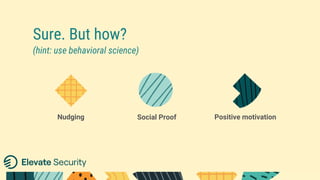
Sure. But how? 
(hint: use behavioral science)
Social Proof Positive motivationNudging
Nudging
1) Understand how people make decisions
2) Create environments that nudge them to
do what’s right.
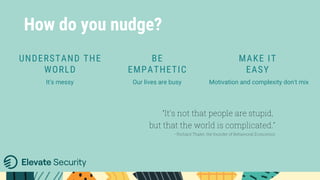
It's messy
UNDERSTAND THE
WORLD
Motivation and complexity don't mix
MAKE IT
EASY
Our lives are busy
BE
EMPATHETIC
“It's not that people are stupid,
but that the world is complicated.”
- Richard Thaler, the founder of Behavioral Economics
How do you nudge?
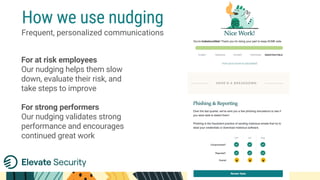
How we use nudging
Frequent, personalized communications
For at risk employees
Our nudging helps them slow
down, evaluate their risk, and
take steps to improve
For strong performers 
Our nudging validates strong
performance and encourages
continued great work
Social Proof
A behavioral science technique that highlights
what the majority is doing.
We might think that
we're autonomous
beings navigating
through the world but
in truth... WE'RE CONSTANTLY
MIMICKING THE BEHAVIOR
OF PEOPLE AROUND US.
Tie security to
something that your
employees already
care about
The key to using
social proof in
security
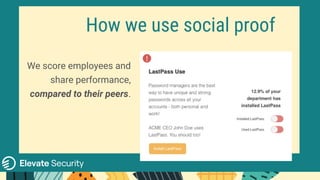
We score employees and
share performance,
compared to their peers.
How we use social proof
Positive Reinforcement
Presenting a pleasant stimulus after a behavior
so the desired behavior continues.
The security industry motivates by
fear and uncertainty.
But, when something is too scary, it
leads to numbness and inaction.
(PROVEN BY RESEARCH, HARVARD BUSINESS REVIEW 2016)
THE HIGHEST PERFORMING TEAMS
HAVE FIVE OR SIX TIMES MORE
POSITIVE RECOGNITIONS TO EVERY
ONE CRITICISM
Using positive
reinforcement
in security
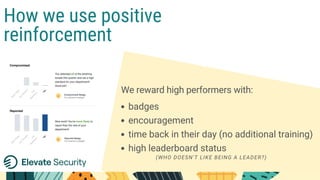
badges
encouragement
time back in their day (no additional training)
high leaderboard status
How we use positive
reinforcement
(WHO DOESN'T LIKE BEING A LEADER?)
We reward high performers with:
Check us out
to learn more.
.com

Applying behavioral science to security 0320

  • 1.
  • 2.
    People don't dothings because they don't understand. They don't do things because they're not motivated to. (PROVEN BY RESEARCH, HARVARD BUSINESS REVIEW 2018)
  • 3.
    So, in orderto get more compliance in cybersecurity, we just need to motivate people, right?
  • 4.
    Sure. But how?  (hint:use behavioral science) Social Proof Positive motivationNudging
  • 5.
    Nudging 1) Understand howpeople make decisions 2) Create environments that nudge them to do what’s right.
  • 6.
    It's messy UNDERSTAND THE WORLD Motivationand complexity don't mix MAKE IT EASY Our lives are busy BE EMPATHETIC “It's not that people are stupid, but that the world is complicated.” - Richard Thaler, the founder of Behavioral Economics How do you nudge?
  • 7.
    How we usenudging Frequent, personalized communications For at risk employees Our nudging helps them slow down, evaluate their risk, and take steps to improve For strong performers  Our nudging validates strong performance and encourages continued great work
  • 8.
    Social Proof A behavioralscience technique that highlights what the majority is doing.
  • 9.
    We might thinkthat we're autonomous beings navigating through the world but in truth... WE'RE CONSTANTLY MIMICKING THE BEHAVIOR OF PEOPLE AROUND US.
  • 10.
    Tie security to somethingthat your employees already care about The key to using social proof in security
  • 11.
    We score employeesand share performance, compared to their peers. How we use social proof
  • 12.
    Positive Reinforcement Presenting apleasant stimulus after a behavior so the desired behavior continues.
  • 13.
    The security industrymotivates by fear and uncertainty. But, when something is too scary, it leads to numbness and inaction.
  • 14.
    (PROVEN BY RESEARCH,HARVARD BUSINESS REVIEW 2016) THE HIGHEST PERFORMING TEAMS HAVE FIVE OR SIX TIMES MORE POSITIVE RECOGNITIONS TO EVERY ONE CRITICISM Using positive reinforcement in security
  • 15.
    badges encouragement time back intheir day (no additional training) high leaderboard status How we use positive reinforcement (WHO DOESN'T LIKE BEING A LEADER?) We reward high performers with:
  • 16.
    Check us out tolearn more. .com