Democratic
                               Implications of
                               Elected PCCs


APACE: March 2012

catherine.howe@public-i.info
Some background

Working with over 70 local authorities in the UK over the last 10 years


Working closely with both democratic services and political leaders


Close ties with Solace and LGA


Active researcher into informal civic activity online
Do we need to
fix democracy?
Democratic Participation is still dropping

Are we in a state of democratic deficit?


  • Diminishing voter turnout


  • Diminishing trust in politicians and the political process


  • Reductions in membership of political parties – in a system which is organised
    around political parties
General Election Voter Turnout

at the 1 May 1997 general election: 71.4%
at the 7 June 2001 general election: 59.54%
at the 5 May 2005 general election: 61.4%
at the 6 May 2010 general election: 65.1%


In Local Elections turnout is assumed to be around 35% in England and 43% in
Wales
Party Membership is declining

• 1951 Conservative 2.9m - Labour 876,000
• 1971 Conservative 1.3m - Labour 700,000
• 1981 Conservative 1.2m - Labour 277,000
• 1991 Conservative 1m to 0.5m - Labour 261,000 - Lib Dem 91,000
• 2001 Conservative 311,000 - Labour 272,000 - Lib Dem 73,000
• 2011 Conservative 177,000 - Labour 190,000 - Lib Dem - 66,000 (Source:
  Estimates based on party reports and House of Commons Library)
What do we think is behind this?

Time / Convenience / laziness (depending on your point of view)


Lack of interest or even dislike of politics.


Lack of Self-Efficacy
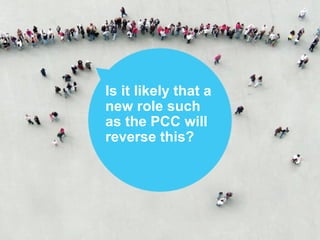
Is it likely that a
new role such
as the PCC will
reverse this?
Are you happy with
my assumption that
the answer is no?
Perhaps the
world has
shifted
The World Wide Web was born with the
mosaic browser in 1993

Children born the same year are now 18
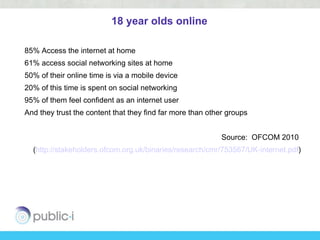
18 year olds online

85% Access the internet at home
61% access social networking sites at home
50% of their online time is via a mobile device
20% of this time is spent on social networking
95% of them feel confident as an internet user
And they trust the content that they find far more than other groups


                                                            Source: OFCOM 2010
  (http://stakeholders.ofcom.org.uk/binaries/research/cmr/753567/UK-internet.pdf)
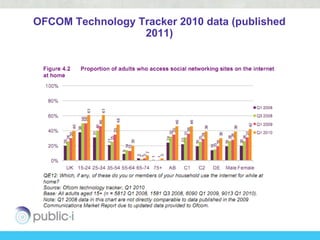
This would be someone else’s problem if not for the fact we are seeing
increases in all demographics

18-24 years olds are only 12% of the active online audience
OFCOM Technology Tracker 2010 data (published
                  2011)
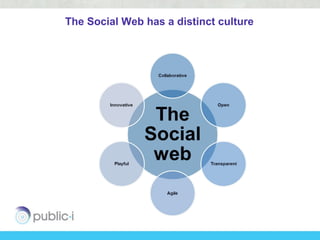
The Social Web has a distinct culture
How could the
new Office of
the PCC make a
difference?
Don’t just rebuild
Local Government –
create something
more relevant
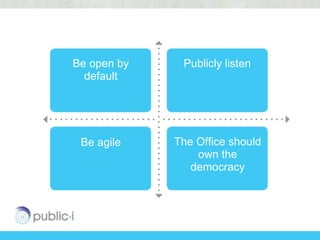
Be open by    Publicly listen
  default


 Be agile    The Office should
                 own the
                democracy
Be open by default
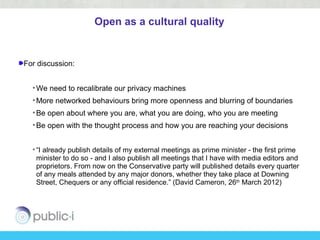
Open as a cultural quality


For discussion:


  • We need to recalibrate our privacy machines
  • More networked behaviours bring more openness and blurring of boundaries
  • Be open about where you are, what you are doing, who you are meeting
  • Be open with the thought process and how you are reaching your decisions


  • “I already publish details of my external meetings as prime minister - the first prime
    minister to do so - and I also publish all meetings that I have with media editors and
    proprietors. From now on the Conservative party will published details every quarter
    of any meals attended by any major donors, whether they take place at Downing
    Street, Chequers or any official residence.” (David Cameron, 26th March 2012)
Publicly listen
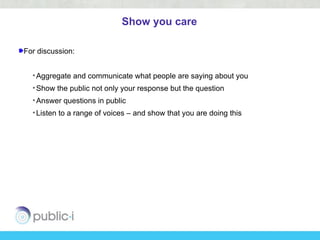
Show you care

For discussion:


  • Aggregate and communicate what people are saying about you
  • Show the public not only your response but the question
  • Answer questions in public
  • Listen to a range of voices – and show that you are doing this
Be agile
Decision making in a shifting context

For discussion:


Consultation results are usually out of date by the time they get considered
Quick representative polling allows more agile decision making
Think about the length of your policy making process – you will not be as
 constrained by the committee structure
The Office owns the
democracy
A good democratic experience

For discussion:


• The role of the Chief Executive is partly as a check and balance against political
  decision making
• Deleting Council Chief Executives is seen as a way of giving more weight to
  political leadership
• Who is your monitoring officer?
• Do we have confidence in the panels providing this balance in the absence of a
  statutory role?
• The persistence of the Office is important to balance the 4 year cycle of electoral
  change
Your event horizon should be 5…10…
15..20 years in the future


 What kind of relationship with citizens will
you have then?


How will you help shape that now?
catherine.howe@public-i.info
APACE                          27th March 2012

Apace march 2012 (final)

  • 1.
    Democratic Implications of Elected PCCs APACE: March 2012 catherine.howe@public-i.info
  • 2.
    Some background Working withover 70 local authorities in the UK over the last 10 years Working closely with both democratic services and political leaders Close ties with Solace and LGA Active researcher into informal civic activity online
  • 3.
    Do we needto fix democracy?
  • 4.
    Democratic Participation isstill dropping Are we in a state of democratic deficit? • Diminishing voter turnout • Diminishing trust in politicians and the political process • Reductions in membership of political parties – in a system which is organised around political parties
  • 5.
    General Election VoterTurnout at the 1 May 1997 general election: 71.4% at the 7 June 2001 general election: 59.54% at the 5 May 2005 general election: 61.4% at the 6 May 2010 general election: 65.1% In Local Elections turnout is assumed to be around 35% in England and 43% in Wales
  • 6.
    Party Membership isdeclining • 1951 Conservative 2.9m - Labour 876,000 • 1971 Conservative 1.3m - Labour 700,000 • 1981 Conservative 1.2m - Labour 277,000 • 1991 Conservative 1m to 0.5m - Labour 261,000 - Lib Dem 91,000 • 2001 Conservative 311,000 - Labour 272,000 - Lib Dem 73,000 • 2011 Conservative 177,000 - Labour 190,000 - Lib Dem - 66,000 (Source: Estimates based on party reports and House of Commons Library)
  • 7.
    What do wethink is behind this? Time / Convenience / laziness (depending on your point of view) Lack of interest or even dislike of politics. Lack of Self-Efficacy
  • 8.
    Is it likelythat a new role such as the PCC will reverse this?
  • 9.
    Are you happywith my assumption that the answer is no?
  • 10.
  • 11.
    The World WideWeb was born with the mosaic browser in 1993 Children born the same year are now 18
  • 12.
    18 year oldsonline 85% Access the internet at home 61% access social networking sites at home 50% of their online time is via a mobile device 20% of this time is spent on social networking 95% of them feel confident as an internet user And they trust the content that they find far more than other groups Source: OFCOM 2010 (http://stakeholders.ofcom.org.uk/binaries/research/cmr/753567/UK-internet.pdf)
  • 13.
    This would besomeone else’s problem if not for the fact we are seeing increases in all demographics 18-24 years olds are only 12% of the active online audience
  • 14.
    OFCOM Technology Tracker2010 data (published 2011)
  • 15.
    The Social Webhas a distinct culture
  • 18.
    How could the newOffice of the PCC make a difference?
  • 19.
    Don’t just rebuild LocalGovernment – create something more relevant
  • 20.
    Be open by Publicly listen default Be agile The Office should own the democracy
  • 21.
    Be open bydefault
  • 22.
    Open as acultural quality For discussion: • We need to recalibrate our privacy machines • More networked behaviours bring more openness and blurring of boundaries • Be open about where you are, what you are doing, who you are meeting • Be open with the thought process and how you are reaching your decisions • “I already publish details of my external meetings as prime minister - the first prime minister to do so - and I also publish all meetings that I have with media editors and proprietors. From now on the Conservative party will published details every quarter of any meals attended by any major donors, whether they take place at Downing Street, Chequers or any official residence.” (David Cameron, 26th March 2012)
  • 23.
  • 24.
    Show you care Fordiscussion: • Aggregate and communicate what people are saying about you • Show the public not only your response but the question • Answer questions in public • Listen to a range of voices – and show that you are doing this
  • 25.
  • 26.
    Decision making ina shifting context For discussion: Consultation results are usually out of date by the time they get considered Quick representative polling allows more agile decision making Think about the length of your policy making process – you will not be as constrained by the committee structure
  • 27.
    The Office ownsthe democracy
  • 28.
    A good democraticexperience For discussion: • The role of the Chief Executive is partly as a check and balance against political decision making • Deleting Council Chief Executives is seen as a way of giving more weight to political leadership • Who is your monitoring officer? • Do we have confidence in the panels providing this balance in the absence of a statutory role? • The persistence of the Office is important to balance the 4 year cycle of electoral change
  • 29.
    Your event horizonshould be 5…10… 15..20 years in the future What kind of relationship with citizens will you have then? How will you help shape that now?
  • 30.

Editor's Notes