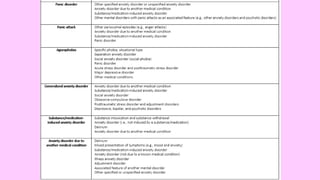
ANXIETY DISORDERS
LARA, Kasmere Q.
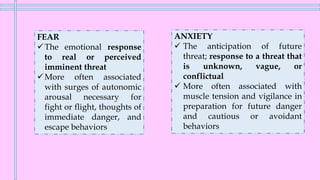
FEAR
✓The emotional response
to real or perceived
imminent threat
✓More often associated
with surges of autonomic
arousal necessary for
fight or flight, thoughts of
immediate danger, and
escape behaviors
ANXIETY
✓ The anticipation of future
threat; response to a threat that
is unknown, vague, or
conflictual
✓ More often associated with
muscle tension and vigilance in
preparation for future danger
and cautious or avoidant
behaviors
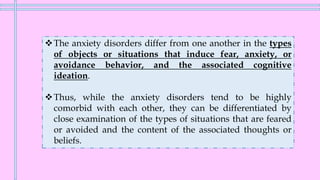
❖The anxiety disorders differ from one another in the types
of objects or situations that induce fear, anxiety, or
avoidance behavior, and the associated cognitive
ideation.
❖Thus, while the anxiety disorders tend to be highly
comorbid with each other, they can be differentiated by
close examination of the types of situations that are feared
or avoided and the content of the associated thoughts or
beliefs.
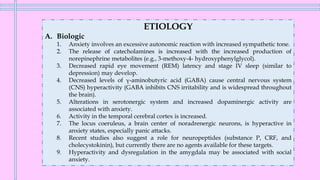
ETIOLOGY
A. Biologic
1. Anxiety involves an excessive autonomic reaction with increased sympathetic tone.
2. The release of catecholamines is increased with the increased production of
norepinephrine metabolites (e.g., 3-methoxy-4- hydroxyphenylglycol).
3. Decreased rapid eye movement (REM) latency and stage IV sleep (similar to
depression) may develop.
4. Decreased levels of γ-aminobutyric acid (GABA) cause central nervous system
(CNS) hyperactivity (GABA inhibits CNS irritability and is widespread throughout
the brain).
5. Alterations in serotonergic system and increased dopaminergic activity are
associated with anxiety.
6. Activity in the temporal cerebral cortex is increased.
7. The locus coeruleus, a brain center of noradrenergic neurons, is hyperactive in
anxiety states, especially panic attacks.
8. Recent studies also suggest a role for neuropeptides (substance P, CRF, and
cholecystokinin), but currently there are no agents available for these targets.
9. Hyperactivity and dysregulation in the amygdala may be associated with social
anxiety.
ETIOLOGY
B. Psychoanalytic.
❖ According to Freud, unconscious impulses (e.g., sex or aggression)
threaten to burst into consciousness and produce anxiety. Anxiety
is related developmentally to childhood fears of disintegration that
derive from the fear of an actual or imagined loss of a love object
or the fear of bodily harm (e.g., castration). Freud used the term
signal anxiety to describe anxiety not consciously experienced but
that triggers defense mechanisms used by the person to deal with
a potentially threatening situation.
ETIOLOGY
C. Learning theory
1. Anxiety is produced by continued or severe frustration or stress. The
anxiety then becomes a conditioned response to other situations that are
less severely frustrating or stressful.
2. It may be learned through identification and imitation of anxiety patterns in
parents (social learning theory).
3. Anxiety is associated with a naturally frightening stimulus (e.g., accident).
Subsequent displacement or transference to another stimulus through
conditioning produces a phobia to a new and different object or situation.
4. Anxiety disorders involve faulty, distorted, or counterproductive patterns of
cognitive thinking.
D. Genetic studies
1. Half of patients with panic disorder have one affected relative.
2. About 5% of persons with high levels of anxiety have a polymorphic variant
of the gene associated with serotonin transporter metabolism.
PSYCHOLOGICAL TESTS
A. Rorschach test
1. Anxiety responses include animal movements, unstructured forms, and heightened color.
2. Phobic responses include anatomic forms or bodily harm.
3. Obsessive–compulsive responses include over attention to detail.
B. Thematic apperception test
1. Increased fantasy productions may be present.
2. Themes of aggression and sexuality may be prominent.
3. Feelings of tension may be evident.
C. Bender–Gestalt
1. No changes indicative of brain damage are apparent.
2. Use of small area may be manifested in obsessive–compulsive disorder.
3. Productions may spread out on the page in anxiety states.
D. Draw-a-Person
1. Attention to head and general detailing may be noted in obsessive– compulsive disorder.
2. Body image distortions may be present in phobias.
3. Rapid drawing may be evident in anxiety disorders.
E. Minnesota Multiphasic Personality Inventory-2.
High hypochondriasis, psychasthenia, hysteria scales in anxiety.
Laboratory Tests
A. No specific laboratory tests for anxiety.
B. Experimental infusion of lactate increases norepinephrine levels and produces anxiety in patients with
panic disorder.
Pathophysiology and Brain-Imaging Studies
A. No consistent pathognomonic changes.
B. In obsessive–compulsive disorder, positron emission tomography (PET) reveals decreased metabolism
in the orbital gyrus, caudate nuclei, and cingulate gyrus.
C. In generalized anxiety disorder and panic states, PET reveals increased blood flow in the right
parahippocampus in the frontal lobe.
D. Magnetic resonance imaging (MRI) has shown increased ventricular size in some cases, but findings are
not consistent.
E. Right temporal atrophy is seen in some panic disorder patients, and cerebral vasoconstriction is often
present in anxiety.
F. Mitral valve prolapse is present in 50% of patients with panic disorder, but clinical significance
unknown.
G. Nonspecific electroencephalogram (EEG) changes may be noted.
H. Dexamethasone suppression test does not suppress cortisol in some obsessive–compulsive patients.
I. Panic-inducing substances include carbon dioxide, sodium lactate, methyl-chlorophenyl-piperazine
(mCPP), carbolines, GABAB receptor antagonists, caffeine, isoproterenol, and yohimbine (Yocon).
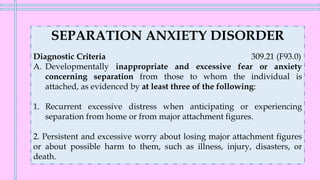
SEPARATION ANXIETY DISORDER
Diagnostic Criteria 309.21 (F93.0)
A. Developmentally inappropriate and excessive fear or anxiety
concerning separation from those to whom the individual is
attached, as evidenced by at least three of the following:
1. Recurrent excessive distress when anticipating or experiencing
separation from home or from major attachment figures.
2. Persistent and excessive worry about losing major attachment figures
or about possible harm to them, such as illness, injury, disasters, or
death.
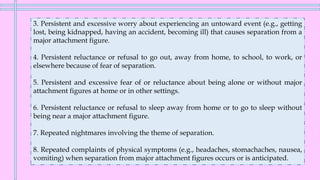
3. Persistent and excessive worry about experiencing an untoward event (e.g., getting
lost, being kidnapped, having an accident, becoming ill) that causes separation from a
major attachment figure.
4. Persistent reluctance or refusal to go out, away from home, to school, to work, or
elsewhere because of fear of separation.
5. Persistent and excessive fear of or reluctance about being alone or without major
attachment figures at home or in other settings.
6. Persistent reluctance or refusal to sleep away from home or to go to sleep without
being near a major attachment figure.
7. Repeated nightmares involving the theme of separation.
8. Repeated complaints of physical symptoms (e.g., headaches, stomachaches, nausea,
vomiting) when separation from major attachment figures occurs or is anticipated.
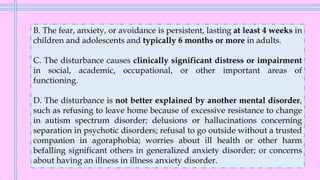
B. The fear, anxiety, or avoidance is persistent, lasting at least 4 weeks in
children and adolescents and typically 6 months or more in adults.
C. The disturbance causes clinically significant distress or impairment
in social, academic, occupational, or other important areas of
functioning.
D. The disturbance is not better explained by another mental disorder,
such as refusing to leave home because of excessive resistance to change
in autism spectrum disorder; delusions or hallucinations concerning
separation in psychotic disorders; refusal to go outside without a trusted
companion in agoraphobia; worries about ill health or other harm
befalling significant others in generalized anxiety disorder; or concerns
about having an illness in illness anxiety disorder.
Associated Features Supporting Diagnosis
❖ When separated from major attachment figures → children may exhibit social
withdrawal, apathy, sadness, or difficulty concentrating on work or play.
❖ Separation anxiety disorder in children may lead to school refusal, which in
turn may lead to academic difficulties and social isolation.
❖ When extremely upset at the prospect of separation, children may show anger
or occasionally aggression toward someone who is forcing separation.
❖ When alone, especially in the evening or the dark, young children may report
unusual perceptual experiences (e.g., seeing people peering into their room,
frightening creatures reaching for them, feeling eyes staring at them).
Development and Course
❖ Periods of heightened separation anxiety from attachment figures are part of
normal early development and may indicate the development of secure
attachment relationships (e.g., around 1 year of age, when infants may suffer
from stranger anxiety).
❖ Onset of separation anxiety disorder may be as early as preschool age and may
occur at any time during childhood and more rarely in adolescence.
❖ As children age, worries emerge; these are often worries about specific dangers
(e.g., accidents, kidnapping, mugging, death) or vague concerns about not
being reunited with attachment figures.
❖ In adults, separation anxiety disorder may limit their ability to cope with
changes in circumstances (e.g., moving, getting married).
Risk and Prognostic Factors
Environmental.
o Separation anxiety disorder often develops after life stress, especially a loss
(e.g., the death of a relative or pet; an illness of the individual or a relative; a
change of schools; parental divorce; a move to a new neighborhood;
immigration; a disaster that involved periods of separation from attachment
figures).
o In young adults, other examples of life stress include leaving the parental home,
entering into a romantic relationship, and becoming a parent.
o Parental overprotection and intrusiveness may be associated with separation
anxiety disorder.
Genetic and physiological.
o Heritability was estimated at 73% in a community sample of 6-year-old twins,
with higher rates in girls.
Functional Consequences of Separation Anxiety Disorder
❖ Individuals with separation anxiety disorder often limit independent
activities away from home or attachment figures (e.g., in children,
avoiding school, not going to camp, having difficulty sleeping alone; in
adolescents, not going away to college; in adults, not leaving the parental
home, not traveling, not working outside the home).
Comorbidity
❖ In children: highly comorbid with generalized anxiety disorder and
specific phobia.
❖ In adults: common comorbidities include specific phobia, PTSD, panic
disorder, generalized anxiety disorder, social anxiety disorder,
agoraphobia, obsessive-compulsive disorder, personality disorders,
depressive and bipolar disorders.
SELECTIVE MUTISM
Diagnostic Criteria
A. Consistent failure to speak in specific social situations in which there
is an expectation for speaking (e.g., at school) despite speaking in
other situations.
B. The disturbance interferes with educational or occupational
achievement or with social communication.
C. The duration of the disturbance is at least 1 month (not limited to the
first month of school).
D. The failure to speak is not attributable to a lack of knowledge of, or
comfort with, the spoken language required in the social situation.
E. The disturbance is not better explained by a communication disorder
(e.g., childhood onset fluency disorder) and does not occur exclusively
during the course of autism spectrum disorder, schizophrenia, or
another psychotic disorder.
Associated Features Supporting Diagnosis
✓ excessive shyness
✓ fear of social embarrassment
✓ social isolation and withdrawal
✓ Clinging
✓ compulsive traits
✓ Negativism
✓ temper tantrums
✓ mild oppositional behavior
✓ occasionally be an associated communication disorder.
✓ Anxiety (MC: social anxiety disorder)
Development and Course
❖ The onset of selective mutism is usually before age 5 years, but the
disturbance may not come to clinical attention until entry into school,
where there is an increase in social interaction and performance
tasks, such as reading aloud.
❖ The persistence of the disorder is variable.
❖ Although clinical reports suggest that many individuals "'outgrow"
selective mutism, the longitudinal course of the disorder is unknown.
In some cases, particularly in individuals with social anxiety
disorder, selective mutism may disappear, but symptoms of social
anxiety disorder remain.
Risk and Prognostic Factors
❖ Temperamental. Negative affectivity (neuroticism) or behavioral inhibition
may play a role, as may parental history of shyness, social isolation, and social
anxiety. Children with selective mutism may have subtle receptive language
difficulties compared with their peers, although receptive language is still within
the normal range.
❖ Environmental. Social inhibition on the part of parents may serve as a model
for social reticence and selective mutism in children. Furthermore, parents of
children with selective mutism have been described as overprotective or more
controlling than parents of children with other anxiety disorders or no disorder.
❖ Genetic and physiological factors. Because of the significant overlap
between selective mutism and social anxiety disorder, there may be shared genetic
factors between these conditions.
Functional Consequences of Selective Mutism
❖ Selective mutism may result in social impairment.
❖ In school settings, these children may suffer academic impairment,
because often they do not communicate with teachers regarding
their academic or personal needs (e.g., not understanding a class
assignment, not asking to use the restroom).
❖ Severe impairment in school and social functioning, including that
resulting from teasing by peers, is common.
Comorbidity
❖ The most common comorbid conditions are other anxiety disorders,
most commonly social anxiety disorder, followed by separation
anxiety disorder and specific phobia. Oppositional behaviors have
been noted to occur in children with selective mutism, although
oppositional behavior may be limited to situations requiring
speech. Communication delays or disorders also may appear in some
children with selective mutism.
SPECIFIC PHOBIA
Diagnostic Criteria
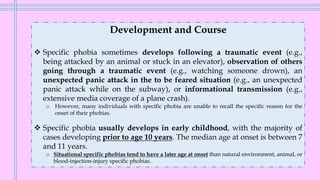
A. Marked fear or anxiety about a specific object or situation (e.g., flying, heights,
animals, receiving an injection, seeing blood). Note: In children, the fear or anxiety
may be expressed by crying, tantrums, freezing, or clinging.
B. The phobic object or situation almost always provokes immediate fear or anxiety.
C. The phobic object or situation is actively avoided or endured with intense fear or
anxiety.
D. The fear or anxiety is out of proportion to the actual danger posed by the specific
object or situation and to the sociocultural context. E. The fear, anxiety, or
avoidance is persistent, typically lasting for 6 months or more. F. The fear, anxiety,
or avoidance causes clinically significant distress or impairment in social,
occupational, or other important areas of functioning.
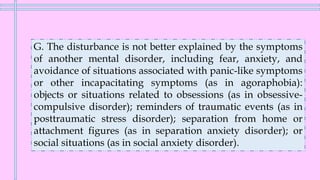
G. The disturbance is not better explained by the symptoms
of another mental disorder, including fear, anxiety, and
avoidance of situations associated with panic-like symptoms
or other incapacitating symptoms (as in agoraphobia):
objects or situations related to obsessions (as in obsessive-
compulsive disorder); reminders of traumatic events (as in
posttraumatic stress disorder); separation from home or
attachment figures (as in separation anxiety disorder); or
social situations (as in social anxiety disorder).
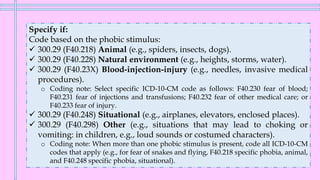
Specify if:
Code based on the phobic stimulus:
✓ 300.29 (F40.218) Animal (e.g., spiders, insects, dogs).
✓ 300.29 (F40.228) Natural environment (e.g., heights, storms, water).
✓ 300.29 (F40.23X) Blood-injection-injury (e.g., needles, invasive medical
procedures).
o Coding note: Select specific ICD-10-CM code as follows: F40.230 fear of blood;
F40.231 fear of injections and transfusions; F40.232 fear of other medical care; or
F40.233 fear of injury.
✓ 300.29 (F40.248) Situational (e.g., airplanes, elevators, enclosed places).
✓ 300.29 (F40.298) Other (e.g., situations that may lead to choking or
vomiting: in children, e.g., loud sounds or costumed characters).
o Coding note: When more than one phobic stimulus is present, code all ICD-10-CM
codes that apply (e.g., for fear of snakes and flying, F40.218 specific phobia, animal,
and F40.248 specific phobia, situational).
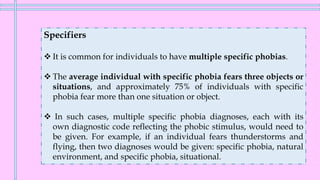
Specifiers
❖ It is common for individuals to have multiple specific phobias.
❖ The average individual with specific phobia fears three objects or
situations, and approximately 75% of individuals with specific
phobia fear more than one situation or object.
❖ In such cases, multiple specific phobia diagnoses, each with its
own diagnostic code reflecting the phobic stimulus, would need to
be given. For example, if an individual fears thunderstorms and
flying, then two diagnoses would be given: specific phobia, natural
environment, and specific phobia, situational.
Associated Features Supporting Diagnosis
❖ Individuals with specific phobia typically experience an increase in
physiological arousal in anticipation of or during exposure to a phobic
object or situation.
❖ Whereas individuals with situational, natural environment, and animal
specific phobias are likely to show sympathetic nervous system
arousal
❖ Individuals with blood-injection-injury specific phobia often
demonstrate a vasovagal fainting or near-fainting response that is
marked by initial brief acceleration of heart rate and elevation of blood
pressure followed by a deceleration of heart rate and a drop in blood
pressure.
Development and Course
❖ Specific phobia sometimes develops following a traumatic event (e.g.,
being attacked by an animal or stuck in an elevator), observation of others
going through a traumatic event (e.g., watching someone drown), an
unexpected panic attack in the to be feared situation (e.g., an unexpected
panic attack while on the subway), or informational transmission (e.g.,
extensive media coverage of a plane crash).
o However, many individuals with specific phobia are unable to recall the specific reason for the
onset of their phobias.
❖ Specific phobia usually develops in early childhood, with the majority of
cases developing prior to age 10 years. The median age at onset is between 7
and 11 years.
o Situational specific phobias tend to have a later age at onset than natural environment, animal, or
blood-injection-injury specific phobias.
❖ When specific phobia is being diagnosed in children, two issues should
be considered.
✓ First, young children may express their fear and anxiety by crying,
tantrums, freezing, or clinging.
✓ Second, young children typically are not able to understand the concept of
avoidance. Therefore, the clinician should assemble additional information
from parents, teachers, or others who know the child well.
o Excessive fears are quite common in young children but are usually
transitory and only mildly impairing and thus considered
developmentally appropriate → In such cases a diagnosis of specific
phobia would not be made.
❖ Several issues should be considered when diagnosing specific phobia in
older populations.
✓ First, older individuals may be more likely to endorse natural environment
specific phobias, as well as phobias of falling.
✓ Second, specific phobia (like all anxiety disorders) tends to co-occur with medical
concerns in older individuals, including coronary heart disease and chronic
obstructive pulmonary disease.
✓ Third, older individuals may be more likely to attribute the symptoms of anxiety
to medical conditions.
✓ Fourth, older individuals may be more likely to manifest anxiety in an atypical
manner (e.g., involving symptoms of both anxiety and depression) and thus be
more likely to warrant a diagnosis of unspecified anxiety disorder.
✓ Additionally, the presence of specific phobia in older adults is associated with
decreased quality of life and may serve as a risk factor for major neurocognitive
disorder.
Risk and Prognostic Factors
❖ Temperamental. Negative affectivity (neuroticism) or behavioral inhibition, are risk
factors for other anxiety disorders as well.
❖ Environmental. Environmental risk factors for specific phobias, such as parental
overprotectiveness, parental loss and separation, and physical and sexual abuse, tend to
predict other anxiety disorders as well. As noted earlier, negative or traumatic encounters
with the feared object or situation sometimes (but not always) precede the development of
specific phobia.
❖ Genetic and physiological. There may be a genetic susceptibility to a certain category
of specific phobia (e.g., an individual with a first-degree relative with a specific phobia of
animals is significantly more likely to have the same specific phobia than any other category
of phobia). Individuals with blood-injection-injury phobia show a unique propensity to
vasovagal syncope (fainting) in the presence of the phobic stimulus.
Functional Consequences of Specific Phobia
❖ Fear of falling in older adults can lead to reduced mobility and reduced
physical and social functioning, and may lead to receiving formal or informal
home support.
❖ The distress and impairment caused by specific phobias tend to increase
with the number of feared objects and situations.
o Thus, an individual who fears four objects or situations is likely to have more
impairment in his or her occupational and social roles and a lower quality of life than an
individual who fears only one object or situation.
o Individuals with blood-injection-injury specific phobia are often reluctant to obtain
medical care even when a medical concern is present.
o Additionally, fear of vomiting and choking may substantially reduce dietary intake.
Comorbidity
❖ Specific phobia is frequently associated with a range of other disorders,
especially depression in older adults.
❖ Individuals with specific phobia are at increased risk for the development of
other disorders, including
✓ Other anxiety disorders
✓ depressive and bipolar disorders
✓ substance-related disorders
✓ somatic symptom and related disorders
✓ and personality disorders (particularly dependent personality disorder).
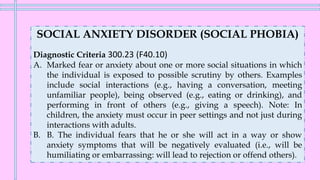
SOCIAL ANXIETY DISORDER (SOCIAL PHOBIA)
Diagnostic Criteria 300.23 (F40.10)
A. Marked fear or anxiety about one or more social situations in which
the individual is exposed to possible scrutiny by others. Examples
include social interactions (e.g., having a conversation, meeting
unfamiliar people), being observed (e.g., eating or drinking), and
performing in front of others (e.g., giving a speech). Note: In
children, the anxiety must occur in peer settings and not just during
interactions with adults.
B. B. The individual fears that he or she will act in a way or show
anxiety symptoms that will be negatively evaluated (i.e., will be
humiliating or embarrassing: will lead to rejection or offend others).
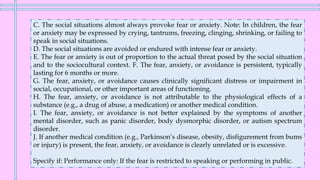
C. The social situations almost always provoke fear or anxiety. Note: In children, the fear
or anxiety may be expressed by crying, tantrums, freezing, clinging, shrinking, or failing to
speak in social situations.
D. The social situations are avoided or endured with intense fear or anxiety.
E. The fear or anxiety is out of proportion to the actual threat posed by the social situation
and to the sociocultural context. F. The fear, anxiety, or avoidance is persistent, typically
lasting for 6 months or more.
G. The fear, anxiety, or avoidance causes clinically significant distress or impairment in
social, occupational, or other important areas of functioning.
H. The fear, anxiety, or avoidance is not attributable to the physiological effects of a
substance (e.g., a drug of abuse, a medication) or another medical condition.
I. The fear, anxiety, or avoidance is not better explained by the symptoms of another
mental disorder, such as panic disorder, body dysmorphic disorder, or autism spectrum
disorder.
J. If another medical condition (e.g., Parkinson’s disease, obesity, disfigurement from bums
or injury) is present, the fear, anxiety, or avoidance is clearly unrelated or is excessive.
Specify if: Performance only: If the fear is restricted to speaking or performing in public.
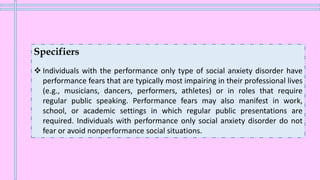
Specifiers
❖ Individuals with the performance only type of social anxiety disorder have
performance fears that are typically most impairing in their professional lives
(e.g., musicians, dancers, performers, athletes) or in roles that require
regular public speaking. Performance fears may also manifest in work,
school, or academic settings in which regular public presentations are
required. Individuals with performance only social anxiety disorder do not
fear or avoid nonperformance social situations.
Associated Features Supporting Diagnosis
❖ Individuals with social anxiety disorder may be inadequately assertive or
excessively submissive or, less commonly, highly controlling of the conversation.
❖ They may show overly rigid body posture or inadequate eye contact, or speak
with an overly soft voice. These individuals may be shy or withdrawn, and they
may be less open in conversations and disclose little about themselves.
❖ They may seek employment in jobs that do not require social contact, although this
is not the case for individuals with social anxiety disorder, performance only.
❖ Men may be delayed in marrying and having a family, whereas women who would
want to work outside the home may live a life as homemaker and mother.
❖ Blushing is a hallmark physical response of social anxiety disorder.
Development and Course
❖ Median age at onset of social anxiety disorder in the United States is 13 years,
and 75% of individuals have an age at onset between 8 and 15 years.
❖ Onset can also occur in early childhood. Onset of social anxiety disorder may
follow a stressful or humiliating experience (e.g., being bullied, vomiting during
a public speech), or it may be insidious, developing slowly.
❖ First onset in adulthood is relatively rare and is more likely to occur after a
stressful or humiliating event or after life changes that require new social roles
(e.g., marrying someone from a different social class, receiving a job
promotion).
Development and Course
❖ Adolescents endorse a broader pattern of fear and avoidance, including
of dating, compared with younger children.
❖ Older adults express social anxiety at lower levels but across a broader
range of situations, whereas younger adults express higher levels of
social anxiety for specific situations.
❖ In the community approximately 30% of individuals with social anxiety
disorder experience remission of symptoms within 1 year, and about
50% experience remission within a few years.
Risk and Prognostic Factors
❖ Temperamental. Underlying traits that predispose individuals to social anxiety
disorder include behavioral inhibition and fear of negative evaluation.
❖ Environmental. There is no causative role of increased rates of childhood
maltreatment or other early-onset psychosocial adversity in the development of social
anxiety disorder. However, childhood maltreatment and adversity are risk factors for
social anxiety disorder.
❖ Genetic and physiological. Traits predisposing individuals to social anxiety
disorder, such as behavioral inhibition, are strongly genetically influenced. The genetic
influence is subject to gene-environment interaction; that is, children with high
behavioral inhibition are more susceptible to environmental influences, such as socially
anxious modeling by parents. Also, social anxiety disorder is heritable (but
performance-only anxiety less so). First-degree relatives have a two to six times greater
chance of having social anxiety disorder, and liability to the disorder involves the
interplay of disorder-specific (e.g., fear of negative evaluation) and nonspecific (e.g.,
neuroticism) genetic factors.
Functional Consequences of Social Anxiety Disorder
❖ Social anxiety disorder is associated with elevated rates of school dropout and
with decreased well-being, employment, workplace productivity,
socioeconomic status, and quality of life.
❖ Social anxiety disorder is also associated with being single, unmarried, or
divorced and with not having children, particularly among men.
❖ Social anxiety disorder also impedes leisure activities.
❖ Not being employed is a strong predictor for the persistence of social anxiety
disorder.
Comorbidity
✓ Other anxiety disorders
✓ Major depressive disorder
✓ Bipolar disorder
✓ Body dysmorphic disorder
✓ Avoidant personality disorder
✓ High-functioning autism
✓ Selective mutism
✓ and substance use disorders
❖ Substances may be used as self-medication for social fears, but the symptoms of
substance intoxication or withdrawal, such as trembling, may also be a source of
(further) social fear.
PANIC DISORDER
Diagnostic Criteria 300.01 (F41.0)
A. Recurrent unexpected panic attacks. A panic attack is an abrupt surge of intense fear or
intense discomfort that reaches a peak within minutes, and during which time four (or
more) of the following symptoms occur:
Note: The abrupt surge can occur from a calm state or an anxious state.
1. Palpitations, pounding heart, or accelerated heart rate.
2. Sweating.
3. Trembling or shaking.
4. Sensations of shortness of breath or smothering.
5. Feelings of choking.
6. Chest pain or discomfort.
7. Nausea or abdominal distress.
8. Feeling dizzy, unsteady, light-headed, or faint.
9. Chills or heat sensations.
10. Paresthesias (numbness or tingling sensations).
11. Derealization (feelings of unreality) or depersonalization (being detached from oneself).
12. Fear of losing control or “going crazy.”
13. Fear of dying.
Note: Culture-specific symptoms (e.g., tinnitus, neck soreness, headache, uncontrollable screaming or crying) may be
seen. Such symptoms should not count as one of the four required symptoms.
B. At least one of the attacks has been followed by 1 month (or more) of one or
both of the following:
1. Persistent concern or worry about additional panic attacks or their consequences (e.g.,
losing control, having a heart attack, “going crazy”).
2. A significant maladaptive change in behavior related to the attacks (e.g., behaviors
designed to avoid having panic attacks, such as avoidance of exercise or unfamiliar
situations).
C. The disturbance is not attributable to the physiological effects of a substance
(e.g., a drug of abuse, a medication) or another medical condition (e.g.,
hyperthyroidism, cardiopulmonary disorders).
D. The disturbance is not better explained by another mental disorder (e.g., the
panic attacks do not occur only in response to feared social situations, as in social
anxiety disorder: in response to circumscribed phobic objects or situations, as in
specific phobia: in response to obsessions, as in obsessive-compulsive disorder: in
response to reminders of traumatic events, as in posttraumatic stress disorder: or
in response to separation from attachment figures, as in separation anxiety
disorder).
Associated Features Supporting Diagnosis
❖ One type of unexpected panic attack is a nocturnal panic attack (i.e., waking from sleep
in a state of panic, which differs from panicking after fully waking from sleep).
❖ In addition to worry about panic attacks and their consequences, many individuals
with panic disorder report constant or intermittent feelings of anxiety that are more
broadly related to health and mental health concerns.
o For example, individuals with panic disorder often anticipate a catastrophic
outcome from a mild physical symptom or medication side effect (e.g., thinking
that they may have heart disease or that a headache means presence of a brain
tumor).
❖ In addition, there may be pervasive concerns about abilities to complete daily tasks or
withstand daily stressors, excessive use of drugs (e.g., alcohol, prescribed medications or
illicit drugs) to control panic attacks, or extreme behaviors aimed at controlling panic
attacks (e.g., severe restrictions on food intake or avoidance of specific foods or medications
because of concerns about physical symptoms that provoke panic attacks).
Development and Course
❖ The median age at onset for panic disorder in the United States is 20-
24 years.
❖ A small number of cases begin in childhood, and onset after age 45
years is unusual but can occur.
❖ Some individuals may have episodic outbreaks with years of
remission in between, and others may have continuous severe
symptomatology.
❖ Only a minority of individuals have full remission without
subsequent relapse within a few years.
Development and Course
❖ Although panic disorder is very rare in childhood, first occurrence of
"fearful spells" is often dated retrospectively back to childhood.
❖ Lower prevalence of panic disorder in older adults appears to be
attributable to age-related "dampening" of the autonomic nervous
system response.
❖ Older adults tend to attribute their panic attacks to certain stressful
situations, such as a medical procedure or social setting. (This may result
in under-endorsement of unexpected panic attacks in older individuals.)
o Thus, careful questioning of older adults is required to assess whether panic attacks
were expected before entering the situation, so that unexpected panic attacks and
the diagnosis of panic disorder are not overlooked.
Risk and Prognostic Factors
❖ Temperamental. Negative affectivity (neuroticism) (i.e., proneness to experiencing
negative emotions) and anxiety sensitivity (i.e., the disposition to believe that
symptoms of anxiety are harmful) are risk factors for the onset of panic attacks and,
separately, for worry about panic, although their risk status for the diagnosis of panic
disorder is unknown.
❖ Environmental. Reports of childhood experiences of sexual and physical abuse are
more common in panic disorder than in certain other anxiety disorders. Smoking is a
risk factor for panic attacks and panic disorder. Most individuals report identifiable
stressors in the months before their first panic attack (e.g., interpersonal stressors and
stressors related to physical well-being, such as negative experiences with illicit or
prescription drugs, disease, or death in the family).
❖ Genetic and physiological. It is believed that multiple genes confer vulnerability
to panic disorder. However, the exact genes, gene products, or functions related to the
genetic regions implicated remain unknown. There is an increased risk for panic
disorder among offspring of parents with anxiety, depressive, and bipolar disorders.
Diagnostic Markers
❖ Sodium lactate, caffeine, isoproterenol, yohimbine, carbon dioxide, and
cholecystokinin, provoke panic attacks in individuals with panic
disorder to a much greater extent than in healthy control subjects (and in
some cases, than in individuals with other anxiety, depressive, or bipolar
disorders without panic attacks).
❖ Also, for a proportion of individuals with panic disorder, panic attacks
are related to hypersensitive medullary carbon dioxide detectors,
resulting in hypocapnia and other respiratory irregularities.
❖ However, none of these laboratory findings are considered diagnostic
of panic disorder.
Functional Consequences of Panic Disorder
❖ Individuals with panic disorder may be frequently absent from work or
school for doctor and emergency room visits, which can lead to
unemployment or dropping out of school.
❖ Full-symptom panic attacks typically are associated with greater morbidity
(e.g., greater health care utilization, more disability, poorer quality of life)
than limited-symptom attacks.
Comorbidity
❖ The prevalence of panic disorder is elevated in individuals with other
disorders, particularly other anxiety disorders (and especially agoraphobia),
major depression, bipolar disorder, and possibly mild alcohol use disorder.
PANIC ATTACK SPECIFIER
Note: Symptoms are presented for the purpose of identifying a panic
attack; however, panic attack is not a mental disorder and cannot be coded.
Panic attacks can occur in the context of any anxiety disorder as well as
other mental disorders (e.g., depressive disorders, posttraumatic stress
disorder, substance use disorders) and some medical conditions (e.g.,
cardiac, respiratory, vestibular, gastrointestinal). When the presence of a
panic attack is identified, it should be noted as a specifier (e.g.,
“posttraumatic stress disorder with panic attacks”). For panic disorder, the
presence of panic attack is contained within the criteria for the disorder and
panic attack is not used as a specifier.
An abrupt surge of intense fear or intense discomfort that reaches a peak
within minutes, and during which time four (or more) of the following
symptoms occur:
Note: The abrupt surge can occur from a calm state or an anxious state.
1. Palpitations, pounding heart, or accelerated heart rate.
2. Sweating.
3. Trembling or shaking.
4. Sensations of shortness of breath or smothering.
5. Feelings of choking.
6. Chest pain or discomfort.
7. Nausea or abdominal distress.
8. Feeling dizzy, unsteady, light-headed, or faint. 9
9. Chills or heat sensations.
10. Paresthesias (numbness or tingling sensations).
11. Derealization (feelings of unreality) or depersonalization (being detached from
oneself).
12. Fear of losing control or “going crazy.”
13. Fear of dying.
Note: Culture-specific symptoms (e.g., tinnitus, neck soreness, headache, uncontrollable screaming or
crying) may be seen. Such symptoms should not count as one of the four required symptoms.
Features
❖Attacks that meet all other criteria but have fewer than four physical
and/or cognitive symptoms are referred to as limited-symptom attacks.
❖There are two characteristic types of panic attacks: expected and
unexpected.
o Expected panic attacks are attacks for which there is an obvious cue
or trigger, such as situations in which panic attacks have typically
occurred.
o Unexpected panic attacks are those for which there is no obvious cue
or trigger at the time of occurrence (e.g., when relaxing or out of sleep
[nocturnal panic attack].
o Cultural interpretations may influence their determination as expected or
unexpected.
Functional Consequences of Panic Attacks
❖ In the context of co-occurring mental disorders, including anxiety
disorders, depressive disorders, bipolar disorder, substance use
disorders, psychotic disorders, and personality disorders, panic attacks
are associated with increased symptom severity, higher rates of
comorbidity and suicidality, and poorer treatment response.
❖ Also, full-symptom panic attacks typically are associated with greater
morbidity (e.g., greater health care utilization, more disability, poorer
quality of life) than limited-symptom attacks.
Comorbidity
❖Panic attacks are associated with increased likelihood of various
comorbid mental disorders, including:
✓ anxiety disorders
✓ depressive disorders
✓ bipolar disorders
✓ impulse control disorders
✓ and substance use disorders.
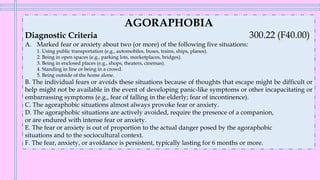
AGORAPHOBIA
Diagnostic Criteria 300.22 (F40.00)
A. Marked fear or anxiety about two (or more) of the following five situations:
1. Using public transportation (e.g., automobiles, buses, trains, ships, planes).
2. Being in open spaces (e.g., parking lots, marketplaces, bridges).
3. Being in enclosed places (e.g., shops, theaters, cinemas).
4. Standing in line or being in a crowd.
5. Being outside of the home alone.
B. The individual fears or avoids these situations because of thoughts that escape might be difficult or
help might not be available in the event of developing panic-like symptoms or other incapacitating or
embarrassing symptoms (e.g., fear of falling in the elderly; fear of incontinence).
C. The agoraphobic situations almost always provoke fear or anxiety.
D. The agoraphobic situations are actively avoided, require the presence of a companion,
or are endured with intense fear or anxiety.
E. The fear or anxiety is out of proportion to the actual danger posed by the agoraphobic
situations and to the sociocultural context.
F. The fear, anxiety, or avoidance is persistent, typically lasting for 6 months or more.
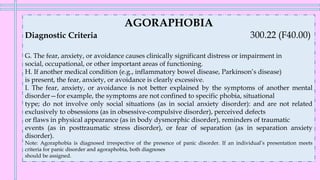
AGORAPHOBIA
Diagnostic Criteria 300.22 (F40.00)
G. The fear, anxiety, or avoidance causes clinically significant distress or impairment in
social, occupational, or other important areas of functioning.
H. If another medical condition (e.g., inflammatory bowel disease, Parkinson’s disease)
is present, the fear, anxiety, or avoidance is clearly excessive.
I. The fear, anxiety, or avoidance is not better explained by the symptoms of another mental
disorder—for example, the symptoms are not confined to specific phobia, situational
type; do not involve only social situations (as in social anxiety disorder): and are not related
exclusively to obsessions (as in obsessive-compulsive disorder), perceived defects
or flaws in physical appearance (as in body dysmorphic disorder), reminders of traumatic
events (as in posttraumatic stress disorder), or fear of separation (as in separation anxiety
disorder).
Note: Agoraphobia is diagnosed irrespective of the presence of panic disorder. If an individual’s presentation meets
criteria for panic disorder and agoraphobia, both diagnoses
should be assigned.
Associated Features Supporting Diagnosis
❖ In its most severe forms:
✓ completely homebound
✓ unable to leave their home
✓ and dependent on others for services or assistance to provide even for
basic needs
❖ Demoralization and depressive symptoms, as well as abuse of alcohol
and sedative medication as inappropriate self-medication strategies, are
common.
Development and Course
❖ The course of agoraphobia is typically persistent and chronic.
❖ Complete remission is rare (10%), unless the agoraphobia is treated.
❖ With more severe agoraphobia, rates of full remission decrease, whereas rates
of relapse and chronicity increase.
❖ A range of other disorders, in particular other anxiety disorders, depressive
disorders, substance use disorders, and personality disorders, may complicate
the course of agoraphobia.
❖ The long-term course and outcome of agoraphobia are associated with
substantially elevated risk of secondary major depressive disorder, persistent
depressive disorder (dysthymia), and substance use disorders.
Risk and Prognostic Factors
❖ Temperamental.
o Behavioral inhibition and neurotic disposition (i.e., negative affectivity
[neuroticism] and anxiety sensitivity) are closely associated with agoraphobia but
are relevant to most anxiety disorders (phobic disorders, panic disorder,
generalized anxiety disorder). Anxiety sensitivity (the disposition to believe that
symptoms of anxiety are harmful) is also characteristic of individuals with
agoraphobia.
❖ Environmental.
o Negative events in childhood (e.g., separation, death of parent) and other stressful
events, such as being attacked or mugged, are associated with the onset of
agoraphobia. Furthermore, individuals with agoraphobia describe the family
climate and child-rearing behavior as being characterized by reduced warmth and
increased overprotection.
❖ Genetic and physiological.
o Heritability for agoraphobia is 61%. Of the various phobias, agoraphobia has the
strongest and most specific association with the genetic factor that represents
proneness to phobias.
Functional Consequences of Agoraphobia
❖ Agoraphobia is associated with considerable impairment and disability
in terms of role functioning, work productivity, and disability days.
❖ Agoraphobia severity is a strong determinant of the degree of disability,
irrespective of the presence of comorbid panic disorder, panic attacks,
and other comorbid conditions.
❖ More than one-third of individuals with agoraphobia are completely
homebound and unable to work.
Comorbidity
❖ The majority of individuals with agoraphobia also have other mental
disorders.
❖ The most frequent additional diagnoses are:
✓ Other anxiety disorders (e.g., specific phobias, panic disorder,
social anxiety disorder)
✓ depressive disorders (major depressive disorder)
✓ PTSD
✓ and alcohol use disorder.
o Whereas other anxiety disorders (e.g., separation anxiety disorder, specific
phobias, panic disorder) frequently precede onset of agoraphobia,
depressive disorders and substance use disorders typically occur
secondary to agoraphobia.
GENERALIZED ANXIETY DISORDER
Diagnostic Criteria 300.02 (F41.1)
A. Excessive anxiety and worry (apprehensive expectation), occurring more days than not for at least 6
months, about a number of events or activities (such as work or school performance).
B. The individual finds it difficult to control the worry.
C. The anxiety and worry are associated with three (or more) of the following six symptoms (with at
least some symptoms having been present for more days than not for the past 6 months);
Note: Only one item is required in children.
1. Restlessness or feeling keyed up or on edge.
2. Being easily fatigued.
3. Difficulty concentrating or mind going blank.
4. Irritability.
5. Muscle tension.
6. Sleep disturbance (difficulty falling or staying asleep, or restless, unsatisfying sleep).
D. The anxiety, worry, or physical symptoms cause clinically significant distress or impairment in
social, occupational, or other important areas of functioning.
GENERALIZED ANXIETY DISORDER
Diagnostic Criteria 300.02 (F41.1)
E. The disturbance is not attributable to the physiological effects of a substance (e.g., a
drug of abuse, a medication) or another medical condition (e.g., hyperthyroidism).
F. The disturbance is not better explained by another mental disorder (e.g., anxiety or worry about
having panic attacks in panic disorder, negative evaluation in social anxiety disorder [social phobia],
contamination or other obsessions in obsessive-compulsive disorder, separation from attachment
figures in separation anxiety disorder, reminders of traumatic events in posttraumatic stress disorder,
gaining weight in anorexia nervosa, physical complaints in somatic symptom disorder, perceived
appearance flaws in body dysmorphic disorder, having a serious illness in illness anxiety disorder, or
the content of delusional beliefs in schizophrenia or delusional disorder).
Associated Features Supporting Diagnosis
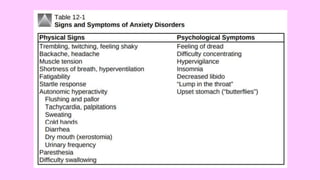
❖ Associated with muscle tension, there may be trembling, twitching, feeling
shaky, and muscle aches or soreness.
❖ Many individuals with generalized anxiety disorder also experience
somatic symptoms (e.g., sweating, nausea, diarrhea) and an exaggerated
startle response.
❖ Symptoms of autonomic hyperarousal (e.g., accelerated heart rate, shortness
of breath, dizziness) are less prominent in generalized anxiety disorder than
in other anxiety disorders, such as panic disorder.
❖ Other conditions that may be associated with stress (e.g., irritable bowel
syndrome, headaches) frequently accompany generalized anxiety disorder.
Development and Course
❖ The symptoms of generalized anxiety disorder tend to be chronic and wax and wane across
the lifespan, fluctuating between syndromal and subsyndromal forms of the disorder.
❖ Rates of full remission are very low.
❖ Children and adolescents tend to worry more about school and sporting performance,
whereas older adults report greater concern about the well-being of family or their own
physical heath.
o Children with the disorder may be overly conforming, perfectionist, and unsure of themselves and
tend to redo tasks because of excessive dissatisfaction with less-than-perfect performance. They
are typically overzealous in seeking reassurance and approval and require excessive reassurance
about their performance and other things they are worried about.
❖ The earlier in life individuals have symptoms that meet criteria for generalized anxiety
disorder, the more comorbidity they tend to have and the more impaired they are likely to
be.
Risk and Prognostic Factors
❖ Temperamental.
o Behavioral inhibition, negative affectivity (neuroticism), and harm
avoidance have been associated with generalized anxiety disorder.
❖ Environmental.
o Although childhood adversities and parental overprotection have been
associated with generalized anxiety disorder, no environmental factors
have been identified as specific to generalized anxiety disorder or
necessary or sufficient for making the diagnosis.
❖ Genetic and physiological.
o One-third of the risk of experiencing generalized anxiety disorder is
genetic, and these genetic factors overlap with the risk of neuroticism and
are shared with other anxiety and mood disorders, particularly major
depressive disorder.
Functional Consequences of Generalized Anxiety Disorder
❖ Excessive worrying impairs the individual's capacity to do things quickly
and efficiently, whether at home or at work.
❖ The worrying takes time and energy; the associated symptoms of muscle
tension and feeling keyed up or on edge, tiredness, difficulty
concentrating, and disturbed sleep contribute to the impairment.
❖ Importantly the excessive worrying may impair the ability of individuals
with generalized anxiety disorder to encourage confidence in their
children.
Comorbidity
❖ Individuals whose presentation meets criteria for generalized
anxiety disorder are likely to have met, or currently meet,
criteria for other anxiety and unipolar depressive disorders.
❖ Comorbidity with substance use, conduct, psychotic,
neurodevelopmental, and neurocognitive disorders is less
common.
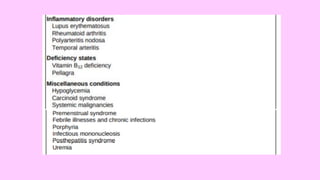
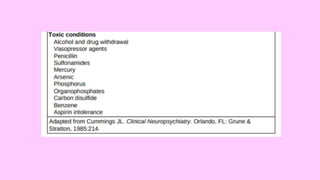
SUBSTANCE/MEDICATION-INDUCED ANXIETY
DISORDER
Diagnostic Criteria
A. Panic attacks or anxiety is predominant in the clinical picture.
B. There is evidence from the history, physical examination, or laboratory findings of both
(1)and (2):
1. The symptoms in Criterion A developed during or soon after substance intoxication or
withdrawal or after exposure to a medication.
2. The involved substance/medication is capable of producing the symptoms in Criterion A.
C. The disturbance is not better explained by an anxiety disorder that is not substance/
medication-induced. Such evidence of an independent anxiety disorder could include the
following:
The symptoms precede the onset of the substance/medication use; the symptoms persist for a
substantial period of time (e.g., about 1 month) atter the cessation of acute withdrawal or severe
intoxication: or there is other evidence suggesting the existence of an independent non-
substance/medication-induced anxiety disorder (e.g., a history of recurrent non-
substance/medication-related episodes).
SUBSTANCE/MEDICATION-INDUCED ANXIETY
DISORDER
Diagnostic Criteria
D. The disturbance does not occur exclusively during the course of a delirium.
E. The disturbance causes clinically significant distress or impairment in social,
occupational, or other important areas of functioning.
Note: This diagnosis should be made instead of a diagnosis of substance intoxication or substance
withdrawal only when the symptoms in Criterion A predominate in the clinical picture and they are
sufficiently severe to warrant clinical attention.
Specify if:
With onset during intoxication: This specifier applies if criteria are met for intoxication with the
substance and the symptoms develop during intoxication.
With onset during withdrawal: This specifier applies if criteria are met for withdrawal from the
substance and the symptoms develop during, or shortly after, withdrawal.
With onset after medication use: Symptoms may appear either at initiation of medication or after a
modification or change in use.
Diagnostic Markers
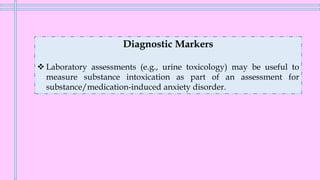
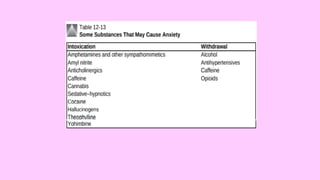
❖ Laboratory assessments (e.g., urine toxicology) may be useful to
measure substance intoxication as part of an assessment for
substance/medication-induced anxiety disorder.
ANXIETY DISORDER DUE TO ANOTHER MEDICAL
CONDITION
Diagnostic Criteria 293.84 (F06.4)
A. Panic attacks or anxiety is predominant in the clinical picture.
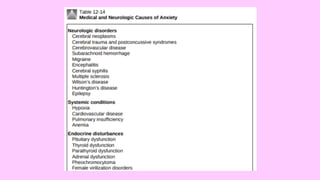
B. There is evidence from the history, physical examination, or laboratory findings that the disturbance
is the direct pathophysiological consequence of another medical condition.
C. The disturbance is not better explained by another mental disorder.
D. The disturbance does not occur exclusively during the course of a delirium.
E. The disturbance causes clinically significant distress or impairment in social, occupational, or other
important areas of functioning.
Coding note: Include the name of the other medical condition within the name of the mental disorder (e.g., 293.84
[F06.4] anxiety disorder due to pheochromocytoma). The other medical condition should be coded and listed
separately immediately before the anxiety disorder due to the medical condition (e.g., 227.0 [D35.00]
pheochromocytoma; 293.84 [F06.4] anxiety disorder due to pheochromocytoma.
Development and Course
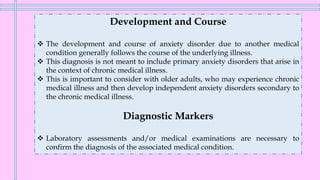
❖ The development and course of anxiety disorder due to another medical
condition generally follows the course of the underlying illness.
❖ This diagnosis is not meant to include primary anxiety disorders that arise in
the context of chronic medical illness.
❖ This is important to consider with older adults, who may experience chronic
medical illness and then develop independent anxiety disorders secondary to
the chronic medical illness.
Diagnostic Markers
❖ Laboratory assessments and/or medical examinations are necessary to
confirm the diagnosis of the associated medical condition.
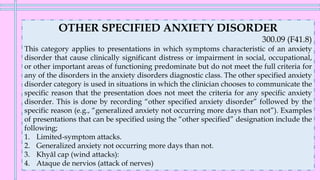
OTHER SPECIFIED ANXIETY DISORDER
300.09 (F41.8)
This category applies to presentations in which symptoms characteristic of an anxiety
disorder that cause clinically significant distress or impairment in social, occupational,
or other important areas of functioning predominate but do not meet the full criteria for
any of the disorders in the anxiety disorders diagnostic class. The other specified anxiety
disorder category is used in situations in which the clinician chooses to communicate the
specific reason that the presentation does not meet the criteria for any specific anxiety
disorder. This is done by recording “other specified anxiety disorder” followed by the
specific reason (e.g., “generalized anxiety not occurring more days than not”). Examples
of presentations that can be specified using the “other specified” designation include the
following;
1. Limited-symptom attacks.
2. Generalized anxiety not occurring more days than not.
3. Khyâl cap (wind attacks):
4. Ataque de nervios (attack of nerves)
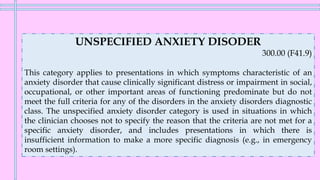
UNSPECIFIED ANXIETY DISODER
300.00 (F41.9)
This category applies to presentations in which symptoms characteristic of an
anxiety disorder that cause clinically significant distress or impairment in social,
occupational, or other important areas of functioning predominate but do not
meet the full criteria for any of the disorders in the anxiety disorders diagnostic
class. The unspecified anxiety disorder category is used in situations in which
the clinician chooses not to specify the reason that the criteria are not met for a
specific anxiety disorder, and includes presentations in which there is
insufficient information to make a more specific diagnosis (e.g., in emergency
room settings).
TREATMENT
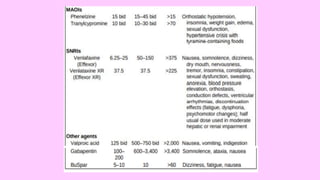
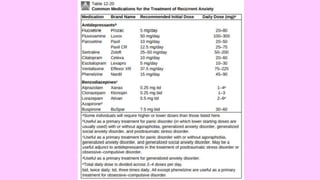
A. Pharmacologic.
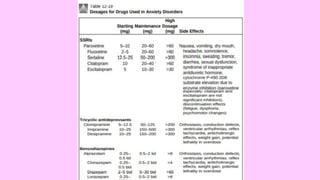
1. Benzodiazepines (alprazolam, clonazepam, diazepam, lorazepam)
✓ These drugs are effective in reducing anxiety generally, also useful in social and specific phobia
✓ In panic disorder, they reduce both the number and intensity of attacks.
✓ Discontinuation (withdrawal) syndromes may occur!
✓ Alprazolam has been associated with a discontinuation syndrome after as little as 6 to 8 weeks of treatment.
2. Selective serotonin reuptake inhibitors (fluoxetine, citalopram, escitalopram, paroxetine,
sertraline, venlafaxine)
✓ safer than the tricyclic drugs because they lack anticholinergic effects and are not as lethal if taken
in overdose.
✓ The most common side effects are transient nausea, headache, and sexual dysfunction.
✓ Initial increase in anxiety → controlled with benzodiazepines
✓ SSRIs are used with extreme caution in children and adolescents because of reports of agitation and
impulsive suicidal acts as side effects of the medication in that population.
✓ Paroxetine is especially useful for the treatment of panic disorder.
TREATMENT
A. Pharmacologic.
3. Tricyclics (imipramine, nortryptaline, clomipramine)
✓ Drugs in this class reduce the intensity of anxiety in all the anxiety disorders.
✓ SE: anticholinergic effects, cardiotoxicity, and potential lethality in overdose [10 times the daily
recommended dose can be fatal] → they are not first-line agents!
4. Monoamine oxidase inhibitors (phenelzine, tranylcypromine)
✓ MAOIs are effective for the treatment of panic and other anxiety disorders
✓ SE: occurrence of a hypertensive crisis (tramine) → not first-line agents!
✓ Certain medications such as sympathomimetics and opioids (especially meperidine [Demerol])
must be avoided because if combined with MAOIs, death may ensue!
5. Other drugs used in anxiety disorders
a. Adrenergic receptor antagonists (beta blockers)
b. Venlafaxine
c. Buspirone
d. Anticonvulsants anxiolytics
TREATMENT
A. Psychological.
1. Supportive psychotherapy.
✓This approach involves the use of psychodynamic concepts and a therapeutic alliance
to promote adaptive coping.
2. Insight-oriented psychotherapy.
✓The goal is to increase the patient’s development of insight into psychological
conflicts that, if unresolved, can manifest as symptomatic behavior (e.g., anxiety and
phobias).
✓This modality is particularly indicated if
(1) anxiety symptoms are clearly secondary to an underlying unconscious conflict,
(2) anxiety continues after behavioral or pharmacologic treatments are instituted,
(3) new anxiety symptoms develop after the original symptoms have resolved
(symptom substitution), or
(4) the anxieties are more generalized and less specific.
TREATMENT
A. Psychological.
3. Behavior therapy.
✓Techniques include positive and negative reinforcement, systematic desensitization,
flooding, implosion, graded exposure, response prevention, stop-thought, relaxation
techniques, panic control therapy, self-monitoring, and hypnosis.
✓Virtual Therapy Treatment (VRT) uses augmented reality and virtual immersion
experience to desensitize the patient against anxiety.
4. Cognitive therapy.
✓This is based on the premise that maladaptive behavior is secondary to distortions in how
people perceive themselves and in how others perceive them.
5. Group therapy.
✓Groups range from those that provide only support and an increase in social skills to
those that focus on relief of specific symptoms to those that are primarily insight-oriented.
ANXIETY-DISORDERS.pdf

ANXIETY-DISORDERS.pdf

  • 1.
  • 2.
    FEAR ✓The emotional response toreal or perceived imminent threat ✓More often associated with surges of autonomic arousal necessary for fight or flight, thoughts of immediate danger, and escape behaviors ANXIETY ✓ The anticipation of future threat; response to a threat that is unknown, vague, or conflictual ✓ More often associated with muscle tension and vigilance in preparation for future danger and cautious or avoidant behaviors
  • 3.
    ❖The anxiety disordersdiffer from one another in the types of objects or situations that induce fear, anxiety, or avoidance behavior, and the associated cognitive ideation. ❖Thus, while the anxiety disorders tend to be highly comorbid with each other, they can be differentiated by close examination of the types of situations that are feared or avoided and the content of the associated thoughts or beliefs.
  • 4.
    ETIOLOGY A. Biologic 1. Anxietyinvolves an excessive autonomic reaction with increased sympathetic tone. 2. The release of catecholamines is increased with the increased production of norepinephrine metabolites (e.g., 3-methoxy-4- hydroxyphenylglycol). 3. Decreased rapid eye movement (REM) latency and stage IV sleep (similar to depression) may develop. 4. Decreased levels of γ-aminobutyric acid (GABA) cause central nervous system (CNS) hyperactivity (GABA inhibits CNS irritability and is widespread throughout the brain). 5. Alterations in serotonergic system and increased dopaminergic activity are associated with anxiety. 6. Activity in the temporal cerebral cortex is increased. 7. The locus coeruleus, a brain center of noradrenergic neurons, is hyperactive in anxiety states, especially panic attacks. 8. Recent studies also suggest a role for neuropeptides (substance P, CRF, and cholecystokinin), but currently there are no agents available for these targets. 9. Hyperactivity and dysregulation in the amygdala may be associated with social anxiety.
  • 5.
    ETIOLOGY B. Psychoanalytic. ❖ Accordingto Freud, unconscious impulses (e.g., sex or aggression) threaten to burst into consciousness and produce anxiety. Anxiety is related developmentally to childhood fears of disintegration that derive from the fear of an actual or imagined loss of a love object or the fear of bodily harm (e.g., castration). Freud used the term signal anxiety to describe anxiety not consciously experienced but that triggers defense mechanisms used by the person to deal with a potentially threatening situation.
  • 6.
    ETIOLOGY C. Learning theory 1.Anxiety is produced by continued or severe frustration or stress. The anxiety then becomes a conditioned response to other situations that are less severely frustrating or stressful. 2. It may be learned through identification and imitation of anxiety patterns in parents (social learning theory). 3. Anxiety is associated with a naturally frightening stimulus (e.g., accident). Subsequent displacement or transference to another stimulus through conditioning produces a phobia to a new and different object or situation. 4. Anxiety disorders involve faulty, distorted, or counterproductive patterns of cognitive thinking. D. Genetic studies 1. Half of patients with panic disorder have one affected relative. 2. About 5% of persons with high levels of anxiety have a polymorphic variant of the gene associated with serotonin transporter metabolism.
  • 7.
    PSYCHOLOGICAL TESTS A. Rorschachtest 1. Anxiety responses include animal movements, unstructured forms, and heightened color. 2. Phobic responses include anatomic forms or bodily harm. 3. Obsessive–compulsive responses include over attention to detail. B. Thematic apperception test 1. Increased fantasy productions may be present. 2. Themes of aggression and sexuality may be prominent. 3. Feelings of tension may be evident. C. Bender–Gestalt 1. No changes indicative of brain damage are apparent. 2. Use of small area may be manifested in obsessive–compulsive disorder. 3. Productions may spread out on the page in anxiety states. D. Draw-a-Person 1. Attention to head and general detailing may be noted in obsessive– compulsive disorder. 2. Body image distortions may be present in phobias. 3. Rapid drawing may be evident in anxiety disorders. E. Minnesota Multiphasic Personality Inventory-2. High hypochondriasis, psychasthenia, hysteria scales in anxiety.
  • 8.
    Laboratory Tests A. Nospecific laboratory tests for anxiety. B. Experimental infusion of lactate increases norepinephrine levels and produces anxiety in patients with panic disorder. Pathophysiology and Brain-Imaging Studies A. No consistent pathognomonic changes. B. In obsessive–compulsive disorder, positron emission tomography (PET) reveals decreased metabolism in the orbital gyrus, caudate nuclei, and cingulate gyrus. C. In generalized anxiety disorder and panic states, PET reveals increased blood flow in the right parahippocampus in the frontal lobe. D. Magnetic resonance imaging (MRI) has shown increased ventricular size in some cases, but findings are not consistent. E. Right temporal atrophy is seen in some panic disorder patients, and cerebral vasoconstriction is often present in anxiety. F. Mitral valve prolapse is present in 50% of patients with panic disorder, but clinical significance unknown. G. Nonspecific electroencephalogram (EEG) changes may be noted. H. Dexamethasone suppression test does not suppress cortisol in some obsessive–compulsive patients. I. Panic-inducing substances include carbon dioxide, sodium lactate, methyl-chlorophenyl-piperazine (mCPP), carbolines, GABAB receptor antagonists, caffeine, isoproterenol, and yohimbine (Yocon).
  • 14.
    SEPARATION ANXIETY DISORDER DiagnosticCriteria 309.21 (F93.0) A. Developmentally inappropriate and excessive fear or anxiety concerning separation from those to whom the individual is attached, as evidenced by at least three of the following: 1. Recurrent excessive distress when anticipating or experiencing separation from home or from major attachment figures. 2. Persistent and excessive worry about losing major attachment figures or about possible harm to them, such as illness, injury, disasters, or death.
  • 15.
    3. Persistent andexcessive worry about experiencing an untoward event (e.g., getting lost, being kidnapped, having an accident, becoming ill) that causes separation from a major attachment figure. 4. Persistent reluctance or refusal to go out, away from home, to school, to work, or elsewhere because of fear of separation. 5. Persistent and excessive fear of or reluctance about being alone or without major attachment figures at home or in other settings. 6. Persistent reluctance or refusal to sleep away from home or to go to sleep without being near a major attachment figure. 7. Repeated nightmares involving the theme of separation. 8. Repeated complaints of physical symptoms (e.g., headaches, stomachaches, nausea, vomiting) when separation from major attachment figures occurs or is anticipated.
  • 16.
    B. The fear,anxiety, or avoidance is persistent, lasting at least 4 weeks in children and adolescents and typically 6 months or more in adults. C. The disturbance causes clinically significant distress or impairment in social, academic, occupational, or other important areas of functioning. D. The disturbance is not better explained by another mental disorder, such as refusing to leave home because of excessive resistance to change in autism spectrum disorder; delusions or hallucinations concerning separation in psychotic disorders; refusal to go outside without a trusted companion in agoraphobia; worries about ill health or other harm befalling significant others in generalized anxiety disorder; or concerns about having an illness in illness anxiety disorder.
  • 17.
    Associated Features SupportingDiagnosis ❖ When separated from major attachment figures → children may exhibit social withdrawal, apathy, sadness, or difficulty concentrating on work or play. ❖ Separation anxiety disorder in children may lead to school refusal, which in turn may lead to academic difficulties and social isolation. ❖ When extremely upset at the prospect of separation, children may show anger or occasionally aggression toward someone who is forcing separation. ❖ When alone, especially in the evening or the dark, young children may report unusual perceptual experiences (e.g., seeing people peering into their room, frightening creatures reaching for them, feeling eyes staring at them).
  • 18.
    Development and Course ❖Periods of heightened separation anxiety from attachment figures are part of normal early development and may indicate the development of secure attachment relationships (e.g., around 1 year of age, when infants may suffer from stranger anxiety). ❖ Onset of separation anxiety disorder may be as early as preschool age and may occur at any time during childhood and more rarely in adolescence. ❖ As children age, worries emerge; these are often worries about specific dangers (e.g., accidents, kidnapping, mugging, death) or vague concerns about not being reunited with attachment figures. ❖ In adults, separation anxiety disorder may limit their ability to cope with changes in circumstances (e.g., moving, getting married).
  • 19.
    Risk and PrognosticFactors Environmental. o Separation anxiety disorder often develops after life stress, especially a loss (e.g., the death of a relative or pet; an illness of the individual or a relative; a change of schools; parental divorce; a move to a new neighborhood; immigration; a disaster that involved periods of separation from attachment figures). o In young adults, other examples of life stress include leaving the parental home, entering into a romantic relationship, and becoming a parent. o Parental overprotection and intrusiveness may be associated with separation anxiety disorder. Genetic and physiological. o Heritability was estimated at 73% in a community sample of 6-year-old twins, with higher rates in girls.
  • 20.
    Functional Consequences ofSeparation Anxiety Disorder ❖ Individuals with separation anxiety disorder often limit independent activities away from home or attachment figures (e.g., in children, avoiding school, not going to camp, having difficulty sleeping alone; in adolescents, not going away to college; in adults, not leaving the parental home, not traveling, not working outside the home). Comorbidity ❖ In children: highly comorbid with generalized anxiety disorder and specific phobia. ❖ In adults: common comorbidities include specific phobia, PTSD, panic disorder, generalized anxiety disorder, social anxiety disorder, agoraphobia, obsessive-compulsive disorder, personality disorders, depressive and bipolar disorders.
  • 21.
    SELECTIVE MUTISM Diagnostic Criteria A.Consistent failure to speak in specific social situations in which there is an expectation for speaking (e.g., at school) despite speaking in other situations. B. The disturbance interferes with educational or occupational achievement or with social communication. C. The duration of the disturbance is at least 1 month (not limited to the first month of school).
  • 22.
    D. The failureto speak is not attributable to a lack of knowledge of, or comfort with, the spoken language required in the social situation. E. The disturbance is not better explained by a communication disorder (e.g., childhood onset fluency disorder) and does not occur exclusively during the course of autism spectrum disorder, schizophrenia, or another psychotic disorder.
  • 23.
    Associated Features SupportingDiagnosis ✓ excessive shyness ✓ fear of social embarrassment ✓ social isolation and withdrawal ✓ Clinging ✓ compulsive traits ✓ Negativism ✓ temper tantrums ✓ mild oppositional behavior ✓ occasionally be an associated communication disorder. ✓ Anxiety (MC: social anxiety disorder)
  • 24.
    Development and Course ❖The onset of selective mutism is usually before age 5 years, but the disturbance may not come to clinical attention until entry into school, where there is an increase in social interaction and performance tasks, such as reading aloud. ❖ The persistence of the disorder is variable. ❖ Although clinical reports suggest that many individuals "'outgrow" selective mutism, the longitudinal course of the disorder is unknown. In some cases, particularly in individuals with social anxiety disorder, selective mutism may disappear, but symptoms of social anxiety disorder remain.
  • 25.
    Risk and PrognosticFactors ❖ Temperamental. Negative affectivity (neuroticism) or behavioral inhibition may play a role, as may parental history of shyness, social isolation, and social anxiety. Children with selective mutism may have subtle receptive language difficulties compared with their peers, although receptive language is still within the normal range. ❖ Environmental. Social inhibition on the part of parents may serve as a model for social reticence and selective mutism in children. Furthermore, parents of children with selective mutism have been described as overprotective or more controlling than parents of children with other anxiety disorders or no disorder. ❖ Genetic and physiological factors. Because of the significant overlap between selective mutism and social anxiety disorder, there may be shared genetic factors between these conditions.
  • 26.
    Functional Consequences ofSelective Mutism ❖ Selective mutism may result in social impairment. ❖ In school settings, these children may suffer academic impairment, because often they do not communicate with teachers regarding their academic or personal needs (e.g., not understanding a class assignment, not asking to use the restroom). ❖ Severe impairment in school and social functioning, including that resulting from teasing by peers, is common.
  • 27.
    Comorbidity ❖ The mostcommon comorbid conditions are other anxiety disorders, most commonly social anxiety disorder, followed by separation anxiety disorder and specific phobia. Oppositional behaviors have been noted to occur in children with selective mutism, although oppositional behavior may be limited to situations requiring speech. Communication delays or disorders also may appear in some children with selective mutism.
  • 28.
    SPECIFIC PHOBIA Diagnostic Criteria A.Marked fear or anxiety about a specific object or situation (e.g., flying, heights, animals, receiving an injection, seeing blood). Note: In children, the fear or anxiety may be expressed by crying, tantrums, freezing, or clinging. B. The phobic object or situation almost always provokes immediate fear or anxiety. C. The phobic object or situation is actively avoided or endured with intense fear or anxiety. D. The fear or anxiety is out of proportion to the actual danger posed by the specific object or situation and to the sociocultural context. E. The fear, anxiety, or avoidance is persistent, typically lasting for 6 months or more. F. The fear, anxiety, or avoidance causes clinically significant distress or impairment in social, occupational, or other important areas of functioning.
  • 29.
    G. The disturbanceis not better explained by the symptoms of another mental disorder, including fear, anxiety, and avoidance of situations associated with panic-like symptoms or other incapacitating symptoms (as in agoraphobia): objects or situations related to obsessions (as in obsessive- compulsive disorder); reminders of traumatic events (as in posttraumatic stress disorder); separation from home or attachment figures (as in separation anxiety disorder); or social situations (as in social anxiety disorder).
  • 30.
    Specify if: Code basedon the phobic stimulus: ✓ 300.29 (F40.218) Animal (e.g., spiders, insects, dogs). ✓ 300.29 (F40.228) Natural environment (e.g., heights, storms, water). ✓ 300.29 (F40.23X) Blood-injection-injury (e.g., needles, invasive medical procedures). o Coding note: Select specific ICD-10-CM code as follows: F40.230 fear of blood; F40.231 fear of injections and transfusions; F40.232 fear of other medical care; or F40.233 fear of injury. ✓ 300.29 (F40.248) Situational (e.g., airplanes, elevators, enclosed places). ✓ 300.29 (F40.298) Other (e.g., situations that may lead to choking or vomiting: in children, e.g., loud sounds or costumed characters). o Coding note: When more than one phobic stimulus is present, code all ICD-10-CM codes that apply (e.g., for fear of snakes and flying, F40.218 specific phobia, animal, and F40.248 specific phobia, situational).
  • 31.
    Specifiers ❖ It iscommon for individuals to have multiple specific phobias. ❖ The average individual with specific phobia fears three objects or situations, and approximately 75% of individuals with specific phobia fear more than one situation or object. ❖ In such cases, multiple specific phobia diagnoses, each with its own diagnostic code reflecting the phobic stimulus, would need to be given. For example, if an individual fears thunderstorms and flying, then two diagnoses would be given: specific phobia, natural environment, and specific phobia, situational.
  • 32.
    Associated Features SupportingDiagnosis ❖ Individuals with specific phobia typically experience an increase in physiological arousal in anticipation of or during exposure to a phobic object or situation. ❖ Whereas individuals with situational, natural environment, and animal specific phobias are likely to show sympathetic nervous system arousal ❖ Individuals with blood-injection-injury specific phobia often demonstrate a vasovagal fainting or near-fainting response that is marked by initial brief acceleration of heart rate and elevation of blood pressure followed by a deceleration of heart rate and a drop in blood pressure.
  • 34.
    Development and Course ❖Specific phobia sometimes develops following a traumatic event (e.g., being attacked by an animal or stuck in an elevator), observation of others going through a traumatic event (e.g., watching someone drown), an unexpected panic attack in the to be feared situation (e.g., an unexpected panic attack while on the subway), or informational transmission (e.g., extensive media coverage of a plane crash). o However, many individuals with specific phobia are unable to recall the specific reason for the onset of their phobias. ❖ Specific phobia usually develops in early childhood, with the majority of cases developing prior to age 10 years. The median age at onset is between 7 and 11 years. o Situational specific phobias tend to have a later age at onset than natural environment, animal, or blood-injection-injury specific phobias.
  • 35.
    ❖ When specificphobia is being diagnosed in children, two issues should be considered. ✓ First, young children may express their fear and anxiety by crying, tantrums, freezing, or clinging. ✓ Second, young children typically are not able to understand the concept of avoidance. Therefore, the clinician should assemble additional information from parents, teachers, or others who know the child well. o Excessive fears are quite common in young children but are usually transitory and only mildly impairing and thus considered developmentally appropriate → In such cases a diagnosis of specific phobia would not be made.
  • 36.
    ❖ Several issuesshould be considered when diagnosing specific phobia in older populations. ✓ First, older individuals may be more likely to endorse natural environment specific phobias, as well as phobias of falling. ✓ Second, specific phobia (like all anxiety disorders) tends to co-occur with medical concerns in older individuals, including coronary heart disease and chronic obstructive pulmonary disease. ✓ Third, older individuals may be more likely to attribute the symptoms of anxiety to medical conditions. ✓ Fourth, older individuals may be more likely to manifest anxiety in an atypical manner (e.g., involving symptoms of both anxiety and depression) and thus be more likely to warrant a diagnosis of unspecified anxiety disorder. ✓ Additionally, the presence of specific phobia in older adults is associated with decreased quality of life and may serve as a risk factor for major neurocognitive disorder.
  • 37.
    Risk and PrognosticFactors ❖ Temperamental. Negative affectivity (neuroticism) or behavioral inhibition, are risk factors for other anxiety disorders as well. ❖ Environmental. Environmental risk factors for specific phobias, such as parental overprotectiveness, parental loss and separation, and physical and sexual abuse, tend to predict other anxiety disorders as well. As noted earlier, negative or traumatic encounters with the feared object or situation sometimes (but not always) precede the development of specific phobia. ❖ Genetic and physiological. There may be a genetic susceptibility to a certain category of specific phobia (e.g., an individual with a first-degree relative with a specific phobia of animals is significantly more likely to have the same specific phobia than any other category of phobia). Individuals with blood-injection-injury phobia show a unique propensity to vasovagal syncope (fainting) in the presence of the phobic stimulus.
  • 38.
    Functional Consequences ofSpecific Phobia ❖ Fear of falling in older adults can lead to reduced mobility and reduced physical and social functioning, and may lead to receiving formal or informal home support. ❖ The distress and impairment caused by specific phobias tend to increase with the number of feared objects and situations. o Thus, an individual who fears four objects or situations is likely to have more impairment in his or her occupational and social roles and a lower quality of life than an individual who fears only one object or situation. o Individuals with blood-injection-injury specific phobia are often reluctant to obtain medical care even when a medical concern is present. o Additionally, fear of vomiting and choking may substantially reduce dietary intake.
  • 39.
    Comorbidity ❖ Specific phobiais frequently associated with a range of other disorders, especially depression in older adults. ❖ Individuals with specific phobia are at increased risk for the development of other disorders, including ✓ Other anxiety disorders ✓ depressive and bipolar disorders ✓ substance-related disorders ✓ somatic symptom and related disorders ✓ and personality disorders (particularly dependent personality disorder).
  • 40.
    SOCIAL ANXIETY DISORDER(SOCIAL PHOBIA) Diagnostic Criteria 300.23 (F40.10) A. Marked fear or anxiety about one or more social situations in which the individual is exposed to possible scrutiny by others. Examples include social interactions (e.g., having a conversation, meeting unfamiliar people), being observed (e.g., eating or drinking), and performing in front of others (e.g., giving a speech). Note: In children, the anxiety must occur in peer settings and not just during interactions with adults. B. B. The individual fears that he or she will act in a way or show anxiety symptoms that will be negatively evaluated (i.e., will be humiliating or embarrassing: will lead to rejection or offend others).
  • 41.
    C. The socialsituations almost always provoke fear or anxiety. Note: In children, the fear or anxiety may be expressed by crying, tantrums, freezing, clinging, shrinking, or failing to speak in social situations. D. The social situations are avoided or endured with intense fear or anxiety. E. The fear or anxiety is out of proportion to the actual threat posed by the social situation and to the sociocultural context. F. The fear, anxiety, or avoidance is persistent, typically lasting for 6 months or more. G. The fear, anxiety, or avoidance causes clinically significant distress or impairment in social, occupational, or other important areas of functioning. H. The fear, anxiety, or avoidance is not attributable to the physiological effects of a substance (e.g., a drug of abuse, a medication) or another medical condition. I. The fear, anxiety, or avoidance is not better explained by the symptoms of another mental disorder, such as panic disorder, body dysmorphic disorder, or autism spectrum disorder. J. If another medical condition (e.g., Parkinson’s disease, obesity, disfigurement from bums or injury) is present, the fear, anxiety, or avoidance is clearly unrelated or is excessive. Specify if: Performance only: If the fear is restricted to speaking or performing in public.
  • 42.
    Specifiers ❖ Individuals withthe performance only type of social anxiety disorder have performance fears that are typically most impairing in their professional lives (e.g., musicians, dancers, performers, athletes) or in roles that require regular public speaking. Performance fears may also manifest in work, school, or academic settings in which regular public presentations are required. Individuals with performance only social anxiety disorder do not fear or avoid nonperformance social situations.
  • 43.
    Associated Features SupportingDiagnosis ❖ Individuals with social anxiety disorder may be inadequately assertive or excessively submissive or, less commonly, highly controlling of the conversation. ❖ They may show overly rigid body posture or inadequate eye contact, or speak with an overly soft voice. These individuals may be shy or withdrawn, and they may be less open in conversations and disclose little about themselves. ❖ They may seek employment in jobs that do not require social contact, although this is not the case for individuals with social anxiety disorder, performance only. ❖ Men may be delayed in marrying and having a family, whereas women who would want to work outside the home may live a life as homemaker and mother. ❖ Blushing is a hallmark physical response of social anxiety disorder.
  • 44.
    Development and Course ❖Median age at onset of social anxiety disorder in the United States is 13 years, and 75% of individuals have an age at onset between 8 and 15 years. ❖ Onset can also occur in early childhood. Onset of social anxiety disorder may follow a stressful or humiliating experience (e.g., being bullied, vomiting during a public speech), or it may be insidious, developing slowly. ❖ First onset in adulthood is relatively rare and is more likely to occur after a stressful or humiliating event or after life changes that require new social roles (e.g., marrying someone from a different social class, receiving a job promotion).
  • 45.
    Development and Course ❖Adolescents endorse a broader pattern of fear and avoidance, including of dating, compared with younger children. ❖ Older adults express social anxiety at lower levels but across a broader range of situations, whereas younger adults express higher levels of social anxiety for specific situations. ❖ In the community approximately 30% of individuals with social anxiety disorder experience remission of symptoms within 1 year, and about 50% experience remission within a few years.
  • 46.
    Risk and PrognosticFactors ❖ Temperamental. Underlying traits that predispose individuals to social anxiety disorder include behavioral inhibition and fear of negative evaluation. ❖ Environmental. There is no causative role of increased rates of childhood maltreatment or other early-onset psychosocial adversity in the development of social anxiety disorder. However, childhood maltreatment and adversity are risk factors for social anxiety disorder. ❖ Genetic and physiological. Traits predisposing individuals to social anxiety disorder, such as behavioral inhibition, are strongly genetically influenced. The genetic influence is subject to gene-environment interaction; that is, children with high behavioral inhibition are more susceptible to environmental influences, such as socially anxious modeling by parents. Also, social anxiety disorder is heritable (but performance-only anxiety less so). First-degree relatives have a two to six times greater chance of having social anxiety disorder, and liability to the disorder involves the interplay of disorder-specific (e.g., fear of negative evaluation) and nonspecific (e.g., neuroticism) genetic factors.
  • 47.
    Functional Consequences ofSocial Anxiety Disorder ❖ Social anxiety disorder is associated with elevated rates of school dropout and with decreased well-being, employment, workplace productivity, socioeconomic status, and quality of life. ❖ Social anxiety disorder is also associated with being single, unmarried, or divorced and with not having children, particularly among men. ❖ Social anxiety disorder also impedes leisure activities. ❖ Not being employed is a strong predictor for the persistence of social anxiety disorder.
  • 48.
    Comorbidity ✓ Other anxietydisorders ✓ Major depressive disorder ✓ Bipolar disorder ✓ Body dysmorphic disorder ✓ Avoidant personality disorder ✓ High-functioning autism ✓ Selective mutism ✓ and substance use disorders ❖ Substances may be used as self-medication for social fears, but the symptoms of substance intoxication or withdrawal, such as trembling, may also be a source of (further) social fear.
  • 49.
    PANIC DISORDER Diagnostic Criteria300.01 (F41.0) A. Recurrent unexpected panic attacks. A panic attack is an abrupt surge of intense fear or intense discomfort that reaches a peak within minutes, and during which time four (or more) of the following symptoms occur: Note: The abrupt surge can occur from a calm state or an anxious state. 1. Palpitations, pounding heart, or accelerated heart rate. 2. Sweating. 3. Trembling or shaking. 4. Sensations of shortness of breath or smothering. 5. Feelings of choking. 6. Chest pain or discomfort. 7. Nausea or abdominal distress. 8. Feeling dizzy, unsteady, light-headed, or faint. 9. Chills or heat sensations. 10. Paresthesias (numbness or tingling sensations). 11. Derealization (feelings of unreality) or depersonalization (being detached from oneself). 12. Fear of losing control or “going crazy.” 13. Fear of dying. Note: Culture-specific symptoms (e.g., tinnitus, neck soreness, headache, uncontrollable screaming or crying) may be seen. Such symptoms should not count as one of the four required symptoms.
  • 50.
    B. At leastone of the attacks has been followed by 1 month (or more) of one or both of the following: 1. Persistent concern or worry about additional panic attacks or their consequences (e.g., losing control, having a heart attack, “going crazy”). 2. A significant maladaptive change in behavior related to the attacks (e.g., behaviors designed to avoid having panic attacks, such as avoidance of exercise or unfamiliar situations). C. The disturbance is not attributable to the physiological effects of a substance (e.g., a drug of abuse, a medication) or another medical condition (e.g., hyperthyroidism, cardiopulmonary disorders). D. The disturbance is not better explained by another mental disorder (e.g., the panic attacks do not occur only in response to feared social situations, as in social anxiety disorder: in response to circumscribed phobic objects or situations, as in specific phobia: in response to obsessions, as in obsessive-compulsive disorder: in response to reminders of traumatic events, as in posttraumatic stress disorder: or in response to separation from attachment figures, as in separation anxiety disorder).
  • 51.
    Associated Features SupportingDiagnosis ❖ One type of unexpected panic attack is a nocturnal panic attack (i.e., waking from sleep in a state of panic, which differs from panicking after fully waking from sleep). ❖ In addition to worry about panic attacks and their consequences, many individuals with panic disorder report constant or intermittent feelings of anxiety that are more broadly related to health and mental health concerns. o For example, individuals with panic disorder often anticipate a catastrophic outcome from a mild physical symptom or medication side effect (e.g., thinking that they may have heart disease or that a headache means presence of a brain tumor). ❖ In addition, there may be pervasive concerns about abilities to complete daily tasks or withstand daily stressors, excessive use of drugs (e.g., alcohol, prescribed medications or illicit drugs) to control panic attacks, or extreme behaviors aimed at controlling panic attacks (e.g., severe restrictions on food intake or avoidance of specific foods or medications because of concerns about physical symptoms that provoke panic attacks).
  • 52.
    Development and Course ❖The median age at onset for panic disorder in the United States is 20- 24 years. ❖ A small number of cases begin in childhood, and onset after age 45 years is unusual but can occur. ❖ Some individuals may have episodic outbreaks with years of remission in between, and others may have continuous severe symptomatology. ❖ Only a minority of individuals have full remission without subsequent relapse within a few years.
  • 53.
    Development and Course ❖Although panic disorder is very rare in childhood, first occurrence of "fearful spells" is often dated retrospectively back to childhood. ❖ Lower prevalence of panic disorder in older adults appears to be attributable to age-related "dampening" of the autonomic nervous system response. ❖ Older adults tend to attribute their panic attacks to certain stressful situations, such as a medical procedure or social setting. (This may result in under-endorsement of unexpected panic attacks in older individuals.) o Thus, careful questioning of older adults is required to assess whether panic attacks were expected before entering the situation, so that unexpected panic attacks and the diagnosis of panic disorder are not overlooked.
  • 54.
    Risk and PrognosticFactors ❖ Temperamental. Negative affectivity (neuroticism) (i.e., proneness to experiencing negative emotions) and anxiety sensitivity (i.e., the disposition to believe that symptoms of anxiety are harmful) are risk factors for the onset of panic attacks and, separately, for worry about panic, although their risk status for the diagnosis of panic disorder is unknown. ❖ Environmental. Reports of childhood experiences of sexual and physical abuse are more common in panic disorder than in certain other anxiety disorders. Smoking is a risk factor for panic attacks and panic disorder. Most individuals report identifiable stressors in the months before their first panic attack (e.g., interpersonal stressors and stressors related to physical well-being, such as negative experiences with illicit or prescription drugs, disease, or death in the family). ❖ Genetic and physiological. It is believed that multiple genes confer vulnerability to panic disorder. However, the exact genes, gene products, or functions related to the genetic regions implicated remain unknown. There is an increased risk for panic disorder among offspring of parents with anxiety, depressive, and bipolar disorders.
  • 55.
    Diagnostic Markers ❖ Sodiumlactate, caffeine, isoproterenol, yohimbine, carbon dioxide, and cholecystokinin, provoke panic attacks in individuals with panic disorder to a much greater extent than in healthy control subjects (and in some cases, than in individuals with other anxiety, depressive, or bipolar disorders without panic attacks). ❖ Also, for a proportion of individuals with panic disorder, panic attacks are related to hypersensitive medullary carbon dioxide detectors, resulting in hypocapnia and other respiratory irregularities. ❖ However, none of these laboratory findings are considered diagnostic of panic disorder.
  • 56.
    Functional Consequences ofPanic Disorder ❖ Individuals with panic disorder may be frequently absent from work or school for doctor and emergency room visits, which can lead to unemployment or dropping out of school. ❖ Full-symptom panic attacks typically are associated with greater morbidity (e.g., greater health care utilization, more disability, poorer quality of life) than limited-symptom attacks. Comorbidity ❖ The prevalence of panic disorder is elevated in individuals with other disorders, particularly other anxiety disorders (and especially agoraphobia), major depression, bipolar disorder, and possibly mild alcohol use disorder.
  • 57.
    PANIC ATTACK SPECIFIER Note:Symptoms are presented for the purpose of identifying a panic attack; however, panic attack is not a mental disorder and cannot be coded. Panic attacks can occur in the context of any anxiety disorder as well as other mental disorders (e.g., depressive disorders, posttraumatic stress disorder, substance use disorders) and some medical conditions (e.g., cardiac, respiratory, vestibular, gastrointestinal). When the presence of a panic attack is identified, it should be noted as a specifier (e.g., “posttraumatic stress disorder with panic attacks”). For panic disorder, the presence of panic attack is contained within the criteria for the disorder and panic attack is not used as a specifier. An abrupt surge of intense fear or intense discomfort that reaches a peak within minutes, and during which time four (or more) of the following symptoms occur:
  • 58.
    Note: The abruptsurge can occur from a calm state or an anxious state. 1. Palpitations, pounding heart, or accelerated heart rate. 2. Sweating. 3. Trembling or shaking. 4. Sensations of shortness of breath or smothering. 5. Feelings of choking. 6. Chest pain or discomfort. 7. Nausea or abdominal distress. 8. Feeling dizzy, unsteady, light-headed, or faint. 9 9. Chills or heat sensations. 10. Paresthesias (numbness or tingling sensations). 11. Derealization (feelings of unreality) or depersonalization (being detached from oneself). 12. Fear of losing control or “going crazy.” 13. Fear of dying. Note: Culture-specific symptoms (e.g., tinnitus, neck soreness, headache, uncontrollable screaming or crying) may be seen. Such symptoms should not count as one of the four required symptoms.
  • 59.
    Features ❖Attacks that meetall other criteria but have fewer than four physical and/or cognitive symptoms are referred to as limited-symptom attacks. ❖There are two characteristic types of panic attacks: expected and unexpected. o Expected panic attacks are attacks for which there is an obvious cue or trigger, such as situations in which panic attacks have typically occurred. o Unexpected panic attacks are those for which there is no obvious cue or trigger at the time of occurrence (e.g., when relaxing or out of sleep [nocturnal panic attack]. o Cultural interpretations may influence their determination as expected or unexpected.
  • 60.
    Functional Consequences ofPanic Attacks ❖ In the context of co-occurring mental disorders, including anxiety disorders, depressive disorders, bipolar disorder, substance use disorders, psychotic disorders, and personality disorders, panic attacks are associated with increased symptom severity, higher rates of comorbidity and suicidality, and poorer treatment response. ❖ Also, full-symptom panic attacks typically are associated with greater morbidity (e.g., greater health care utilization, more disability, poorer quality of life) than limited-symptom attacks.
  • 61.
    Comorbidity ❖Panic attacks areassociated with increased likelihood of various comorbid mental disorders, including: ✓ anxiety disorders ✓ depressive disorders ✓ bipolar disorders ✓ impulse control disorders ✓ and substance use disorders.
  • 62.
    AGORAPHOBIA Diagnostic Criteria 300.22(F40.00) A. Marked fear or anxiety about two (or more) of the following five situations: 1. Using public transportation (e.g., automobiles, buses, trains, ships, planes). 2. Being in open spaces (e.g., parking lots, marketplaces, bridges). 3. Being in enclosed places (e.g., shops, theaters, cinemas). 4. Standing in line or being in a crowd. 5. Being outside of the home alone. B. The individual fears or avoids these situations because of thoughts that escape might be difficult or help might not be available in the event of developing panic-like symptoms or other incapacitating or embarrassing symptoms (e.g., fear of falling in the elderly; fear of incontinence). C. The agoraphobic situations almost always provoke fear or anxiety. D. The agoraphobic situations are actively avoided, require the presence of a companion, or are endured with intense fear or anxiety. E. The fear or anxiety is out of proportion to the actual danger posed by the agoraphobic situations and to the sociocultural context. F. The fear, anxiety, or avoidance is persistent, typically lasting for 6 months or more.
  • 63.
    AGORAPHOBIA Diagnostic Criteria 300.22(F40.00) G. The fear, anxiety, or avoidance causes clinically significant distress or impairment in social, occupational, or other important areas of functioning. H. If another medical condition (e.g., inflammatory bowel disease, Parkinson’s disease) is present, the fear, anxiety, or avoidance is clearly excessive. I. The fear, anxiety, or avoidance is not better explained by the symptoms of another mental disorder—for example, the symptoms are not confined to specific phobia, situational type; do not involve only social situations (as in social anxiety disorder): and are not related exclusively to obsessions (as in obsessive-compulsive disorder), perceived defects or flaws in physical appearance (as in body dysmorphic disorder), reminders of traumatic events (as in posttraumatic stress disorder), or fear of separation (as in separation anxiety disorder). Note: Agoraphobia is diagnosed irrespective of the presence of panic disorder. If an individual’s presentation meets criteria for panic disorder and agoraphobia, both diagnoses should be assigned.
  • 64.
    Associated Features SupportingDiagnosis ❖ In its most severe forms: ✓ completely homebound ✓ unable to leave their home ✓ and dependent on others for services or assistance to provide even for basic needs ❖ Demoralization and depressive symptoms, as well as abuse of alcohol and sedative medication as inappropriate self-medication strategies, are common.
  • 65.
    Development and Course ❖The course of agoraphobia is typically persistent and chronic. ❖ Complete remission is rare (10%), unless the agoraphobia is treated. ❖ With more severe agoraphobia, rates of full remission decrease, whereas rates of relapse and chronicity increase. ❖ A range of other disorders, in particular other anxiety disorders, depressive disorders, substance use disorders, and personality disorders, may complicate the course of agoraphobia. ❖ The long-term course and outcome of agoraphobia are associated with substantially elevated risk of secondary major depressive disorder, persistent depressive disorder (dysthymia), and substance use disorders.
  • 66.
    Risk and PrognosticFactors ❖ Temperamental. o Behavioral inhibition and neurotic disposition (i.e., negative affectivity [neuroticism] and anxiety sensitivity) are closely associated with agoraphobia but are relevant to most anxiety disorders (phobic disorders, panic disorder, generalized anxiety disorder). Anxiety sensitivity (the disposition to believe that symptoms of anxiety are harmful) is also characteristic of individuals with agoraphobia. ❖ Environmental. o Negative events in childhood (e.g., separation, death of parent) and other stressful events, such as being attacked or mugged, are associated with the onset of agoraphobia. Furthermore, individuals with agoraphobia describe the family climate and child-rearing behavior as being characterized by reduced warmth and increased overprotection. ❖ Genetic and physiological. o Heritability for agoraphobia is 61%. Of the various phobias, agoraphobia has the strongest and most specific association with the genetic factor that represents proneness to phobias.
  • 67.
    Functional Consequences ofAgoraphobia ❖ Agoraphobia is associated with considerable impairment and disability in terms of role functioning, work productivity, and disability days. ❖ Agoraphobia severity is a strong determinant of the degree of disability, irrespective of the presence of comorbid panic disorder, panic attacks, and other comorbid conditions. ❖ More than one-third of individuals with agoraphobia are completely homebound and unable to work.
  • 68.
    Comorbidity ❖ The majorityof individuals with agoraphobia also have other mental disorders. ❖ The most frequent additional diagnoses are: ✓ Other anxiety disorders (e.g., specific phobias, panic disorder, social anxiety disorder) ✓ depressive disorders (major depressive disorder) ✓ PTSD ✓ and alcohol use disorder. o Whereas other anxiety disorders (e.g., separation anxiety disorder, specific phobias, panic disorder) frequently precede onset of agoraphobia, depressive disorders and substance use disorders typically occur secondary to agoraphobia.
  • 69.
    GENERALIZED ANXIETY DISORDER DiagnosticCriteria 300.02 (F41.1) A. Excessive anxiety and worry (apprehensive expectation), occurring more days than not for at least 6 months, about a number of events or activities (such as work or school performance). B. The individual finds it difficult to control the worry. C. The anxiety and worry are associated with three (or more) of the following six symptoms (with at least some symptoms having been present for more days than not for the past 6 months); Note: Only one item is required in children. 1. Restlessness or feeling keyed up or on edge. 2. Being easily fatigued. 3. Difficulty concentrating or mind going blank. 4. Irritability. 5. Muscle tension. 6. Sleep disturbance (difficulty falling or staying asleep, or restless, unsatisfying sleep). D. The anxiety, worry, or physical symptoms cause clinically significant distress or impairment in social, occupational, or other important areas of functioning.
  • 70.
    GENERALIZED ANXIETY DISORDER DiagnosticCriteria 300.02 (F41.1) E. The disturbance is not attributable to the physiological effects of a substance (e.g., a drug of abuse, a medication) or another medical condition (e.g., hyperthyroidism). F. The disturbance is not better explained by another mental disorder (e.g., anxiety or worry about having panic attacks in panic disorder, negative evaluation in social anxiety disorder [social phobia], contamination or other obsessions in obsessive-compulsive disorder, separation from attachment figures in separation anxiety disorder, reminders of traumatic events in posttraumatic stress disorder, gaining weight in anorexia nervosa, physical complaints in somatic symptom disorder, perceived appearance flaws in body dysmorphic disorder, having a serious illness in illness anxiety disorder, or the content of delusional beliefs in schizophrenia or delusional disorder).
  • 71.
    Associated Features SupportingDiagnosis ❖ Associated with muscle tension, there may be trembling, twitching, feeling shaky, and muscle aches or soreness. ❖ Many individuals with generalized anxiety disorder also experience somatic symptoms (e.g., sweating, nausea, diarrhea) and an exaggerated startle response. ❖ Symptoms of autonomic hyperarousal (e.g., accelerated heart rate, shortness of breath, dizziness) are less prominent in generalized anxiety disorder than in other anxiety disorders, such as panic disorder. ❖ Other conditions that may be associated with stress (e.g., irritable bowel syndrome, headaches) frequently accompany generalized anxiety disorder.
  • 72.
    Development and Course ❖The symptoms of generalized anxiety disorder tend to be chronic and wax and wane across the lifespan, fluctuating between syndromal and subsyndromal forms of the disorder. ❖ Rates of full remission are very low. ❖ Children and adolescents tend to worry more about school and sporting performance, whereas older adults report greater concern about the well-being of family or their own physical heath. o Children with the disorder may be overly conforming, perfectionist, and unsure of themselves and tend to redo tasks because of excessive dissatisfaction with less-than-perfect performance. They are typically overzealous in seeking reassurance and approval and require excessive reassurance about their performance and other things they are worried about. ❖ The earlier in life individuals have symptoms that meet criteria for generalized anxiety disorder, the more comorbidity they tend to have and the more impaired they are likely to be.
  • 73.
    Risk and PrognosticFactors ❖ Temperamental. o Behavioral inhibition, negative affectivity (neuroticism), and harm avoidance have been associated with generalized anxiety disorder. ❖ Environmental. o Although childhood adversities and parental overprotection have been associated with generalized anxiety disorder, no environmental factors have been identified as specific to generalized anxiety disorder or necessary or sufficient for making the diagnosis. ❖ Genetic and physiological. o One-third of the risk of experiencing generalized anxiety disorder is genetic, and these genetic factors overlap with the risk of neuroticism and are shared with other anxiety and mood disorders, particularly major depressive disorder.
  • 74.
    Functional Consequences ofGeneralized Anxiety Disorder ❖ Excessive worrying impairs the individual's capacity to do things quickly and efficiently, whether at home or at work. ❖ The worrying takes time and energy; the associated symptoms of muscle tension and feeling keyed up or on edge, tiredness, difficulty concentrating, and disturbed sleep contribute to the impairment. ❖ Importantly the excessive worrying may impair the ability of individuals with generalized anxiety disorder to encourage confidence in their children.
  • 75.
    Comorbidity ❖ Individuals whosepresentation meets criteria for generalized anxiety disorder are likely to have met, or currently meet, criteria for other anxiety and unipolar depressive disorders. ❖ Comorbidity with substance use, conduct, psychotic, neurodevelopmental, and neurocognitive disorders is less common.
  • 76.
    SUBSTANCE/MEDICATION-INDUCED ANXIETY DISORDER Diagnostic Criteria A.Panic attacks or anxiety is predominant in the clinical picture. B. There is evidence from the history, physical examination, or laboratory findings of both (1)and (2): 1. The symptoms in Criterion A developed during or soon after substance intoxication or withdrawal or after exposure to a medication. 2. The involved substance/medication is capable of producing the symptoms in Criterion A. C. The disturbance is not better explained by an anxiety disorder that is not substance/ medication-induced. Such evidence of an independent anxiety disorder could include the following: The symptoms precede the onset of the substance/medication use; the symptoms persist for a substantial period of time (e.g., about 1 month) atter the cessation of acute withdrawal or severe intoxication: or there is other evidence suggesting the existence of an independent non- substance/medication-induced anxiety disorder (e.g., a history of recurrent non- substance/medication-related episodes).
  • 77.
    SUBSTANCE/MEDICATION-INDUCED ANXIETY DISORDER Diagnostic Criteria D.The disturbance does not occur exclusively during the course of a delirium. E. The disturbance causes clinically significant distress or impairment in social, occupational, or other important areas of functioning. Note: This diagnosis should be made instead of a diagnosis of substance intoxication or substance withdrawal only when the symptoms in Criterion A predominate in the clinical picture and they are sufficiently severe to warrant clinical attention. Specify if: With onset during intoxication: This specifier applies if criteria are met for intoxication with the substance and the symptoms develop during intoxication. With onset during withdrawal: This specifier applies if criteria are met for withdrawal from the substance and the symptoms develop during, or shortly after, withdrawal. With onset after medication use: Symptoms may appear either at initiation of medication or after a modification or change in use.
  • 78.
    Diagnostic Markers ❖ Laboratoryassessments (e.g., urine toxicology) may be useful to measure substance intoxication as part of an assessment for substance/medication-induced anxiety disorder.
  • 80.
    ANXIETY DISORDER DUETO ANOTHER MEDICAL CONDITION Diagnostic Criteria 293.84 (F06.4) A. Panic attacks or anxiety is predominant in the clinical picture. B. There is evidence from the history, physical examination, or laboratory findings that the disturbance is the direct pathophysiological consequence of another medical condition. C. The disturbance is not better explained by another mental disorder. D. The disturbance does not occur exclusively during the course of a delirium. E. The disturbance causes clinically significant distress or impairment in social, occupational, or other important areas of functioning. Coding note: Include the name of the other medical condition within the name of the mental disorder (e.g., 293.84 [F06.4] anxiety disorder due to pheochromocytoma). The other medical condition should be coded and listed separately immediately before the anxiety disorder due to the medical condition (e.g., 227.0 [D35.00] pheochromocytoma; 293.84 [F06.4] anxiety disorder due to pheochromocytoma.
  • 81.
    Development and Course ❖The development and course of anxiety disorder due to another medical condition generally follows the course of the underlying illness. ❖ This diagnosis is not meant to include primary anxiety disorders that arise in the context of chronic medical illness. ❖ This is important to consider with older adults, who may experience chronic medical illness and then develop independent anxiety disorders secondary to the chronic medical illness. Diagnostic Markers ❖ Laboratory assessments and/or medical examinations are necessary to confirm the diagnosis of the associated medical condition.
  • 85.
    OTHER SPECIFIED ANXIETYDISORDER 300.09 (F41.8) This category applies to presentations in which symptoms characteristic of an anxiety disorder that cause clinically significant distress or impairment in social, occupational, or other important areas of functioning predominate but do not meet the full criteria for any of the disorders in the anxiety disorders diagnostic class. The other specified anxiety disorder category is used in situations in which the clinician chooses to communicate the specific reason that the presentation does not meet the criteria for any specific anxiety disorder. This is done by recording “other specified anxiety disorder” followed by the specific reason (e.g., “generalized anxiety not occurring more days than not”). Examples of presentations that can be specified using the “other specified” designation include the following; 1. Limited-symptom attacks. 2. Generalized anxiety not occurring more days than not. 3. Khyâl cap (wind attacks): 4. Ataque de nervios (attack of nerves)
  • 86.
    UNSPECIFIED ANXIETY DISODER 300.00(F41.9) This category applies to presentations in which symptoms characteristic of an anxiety disorder that cause clinically significant distress or impairment in social, occupational, or other important areas of functioning predominate but do not meet the full criteria for any of the disorders in the anxiety disorders diagnostic class. The unspecified anxiety disorder category is used in situations in which the clinician chooses not to specify the reason that the criteria are not met for a specific anxiety disorder, and includes presentations in which there is insufficient information to make a more specific diagnosis (e.g., in emergency room settings).
  • 87.
    TREATMENT A. Pharmacologic. 1. Benzodiazepines(alprazolam, clonazepam, diazepam, lorazepam) ✓ These drugs are effective in reducing anxiety generally, also useful in social and specific phobia ✓ In panic disorder, they reduce both the number and intensity of attacks. ✓ Discontinuation (withdrawal) syndromes may occur! ✓ Alprazolam has been associated with a discontinuation syndrome after as little as 6 to 8 weeks of treatment. 2. Selective serotonin reuptake inhibitors (fluoxetine, citalopram, escitalopram, paroxetine, sertraline, venlafaxine) ✓ safer than the tricyclic drugs because they lack anticholinergic effects and are not as lethal if taken in overdose. ✓ The most common side effects are transient nausea, headache, and sexual dysfunction. ✓ Initial increase in anxiety → controlled with benzodiazepines ✓ SSRIs are used with extreme caution in children and adolescents because of reports of agitation and impulsive suicidal acts as side effects of the medication in that population. ✓ Paroxetine is especially useful for the treatment of panic disorder.
  • 88.
    TREATMENT A. Pharmacologic. 3. Tricyclics(imipramine, nortryptaline, clomipramine) ✓ Drugs in this class reduce the intensity of anxiety in all the anxiety disorders. ✓ SE: anticholinergic effects, cardiotoxicity, and potential lethality in overdose [10 times the daily recommended dose can be fatal] → they are not first-line agents! 4. Monoamine oxidase inhibitors (phenelzine, tranylcypromine) ✓ MAOIs are effective for the treatment of panic and other anxiety disorders ✓ SE: occurrence of a hypertensive crisis (tramine) → not first-line agents! ✓ Certain medications such as sympathomimetics and opioids (especially meperidine [Demerol]) must be avoided because if combined with MAOIs, death may ensue! 5. Other drugs used in anxiety disorders a. Adrenergic receptor antagonists (beta blockers) b. Venlafaxine c. Buspirone d. Anticonvulsants anxiolytics
  • 89.
    TREATMENT A. Psychological. 1. Supportivepsychotherapy. ✓This approach involves the use of psychodynamic concepts and a therapeutic alliance to promote adaptive coping. 2. Insight-oriented psychotherapy. ✓The goal is to increase the patient’s development of insight into psychological conflicts that, if unresolved, can manifest as symptomatic behavior (e.g., anxiety and phobias). ✓This modality is particularly indicated if (1) anxiety symptoms are clearly secondary to an underlying unconscious conflict, (2) anxiety continues after behavioral or pharmacologic treatments are instituted, (3) new anxiety symptoms develop after the original symptoms have resolved (symptom substitution), or (4) the anxieties are more generalized and less specific.
  • 90.
    TREATMENT A. Psychological. 3. Behaviortherapy. ✓Techniques include positive and negative reinforcement, systematic desensitization, flooding, implosion, graded exposure, response prevention, stop-thought, relaxation techniques, panic control therapy, self-monitoring, and hypnosis. ✓Virtual Therapy Treatment (VRT) uses augmented reality and virtual immersion experience to desensitize the patient against anxiety. 4. Cognitive therapy. ✓This is based on the premise that maladaptive behavior is secondary to distortions in how people perceive themselves and in how others perceive them. 5. Group therapy. ✓Groups range from those that provide only support and an increase in social skills to those that focus on relief of specific symptoms to those that are primarily insight-oriented.