21ST MARCH


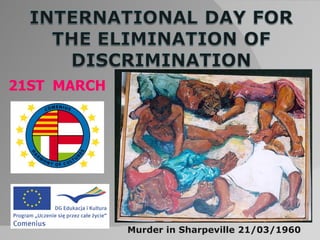
             Murder in Sharpeville 21/03/1960
International Day for the
   Elimination of Racial
      Discrimination is
 celebrated on the day of
    the week when the
  Sharpeville massacre in
 1960 (South Africa) took
    place - in a peaceful
  demonstration against
     the "pass laws" of
 apartheid police gunned
   down 69 people who
       took part in it.
The day begins Week of Solidarity with the People
       Struggling against Racism and Racial
    Discrimination (to 27 March), established by
  Resolution 34/24 (1979) of United Nations, as
    part of the celebration of the first Decade to
     Combat Racism and Racial Discrimination
        established in 1973 (1973 - 1982).
The festival is to celebrate the memory of the victims of
     the Sharpeville massacre and other incidents and an
     increase in activity for the elimination of all forms of
     racism, xenophobia and discrimination in the world.
In 2001 (31 August-7 September), at the end of World
   Conference on Racism, Racial Discrimination,
   Xenophobia and related intolerance, the participants
   adopted the Declaration of the Durban (South Africa)
   and the programme of Action, as a model for
   implementing the rules relating equality and combating
   discrimination.
Each year the celebration takes place at a
  different password. The slogan in 2006
  was "The fight against racism in everyday
  life." In 2010, the keynote of the
  celebration was the relationship between
  racism and sport. This was particularly
  important since South Africa became the
  first African country, acted as host World
  Cup in football.
In his message to the Member States (2010), UN
        Secretary General Ban Ki-moon stressed that:
'' Celebration of International Day for the Elimination of
   Racial Discrimination should also be an opportunity to
   draw attention to the role of sport in uniting people of
   different cultures and backgrounds. Sport can add the
     strength of civil rights of vulnerable population, to
    influence our thinking, and inspire millions of people
                      around the world.''
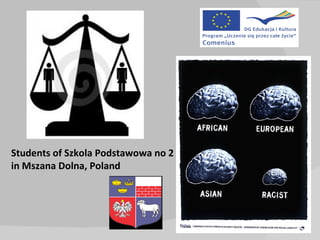
Students of Szkola Podstawowa no 2
in Mszana Dolna, Poland

Anti racism day

  • 1.
    21ST MARCH Murder in Sharpeville 21/03/1960
  • 2.
    International Day forthe Elimination of Racial Discrimination is celebrated on the day of the week when the Sharpeville massacre in 1960 (South Africa) took place - in a peaceful demonstration against the "pass laws" of apartheid police gunned down 69 people who took part in it.
  • 3.
    The day beginsWeek of Solidarity with the People Struggling against Racism and Racial Discrimination (to 27 March), established by Resolution 34/24 (1979) of United Nations, as part of the celebration of the first Decade to Combat Racism and Racial Discrimination established in 1973 (1973 - 1982).
  • 4.
    The festival isto celebrate the memory of the victims of the Sharpeville massacre and other incidents and an increase in activity for the elimination of all forms of racism, xenophobia and discrimination in the world. In 2001 (31 August-7 September), at the end of World Conference on Racism, Racial Discrimination, Xenophobia and related intolerance, the participants adopted the Declaration of the Durban (South Africa) and the programme of Action, as a model for implementing the rules relating equality and combating discrimination.
  • 5.
    Each year thecelebration takes place at a different password. The slogan in 2006 was "The fight against racism in everyday life." In 2010, the keynote of the celebration was the relationship between racism and sport. This was particularly important since South Africa became the first African country, acted as host World Cup in football.
  • 6.
    In his messageto the Member States (2010), UN Secretary General Ban Ki-moon stressed that: '' Celebration of International Day for the Elimination of Racial Discrimination should also be an opportunity to draw attention to the role of sport in uniting people of different cultures and backgrounds. Sport can add the strength of civil rights of vulnerable population, to influence our thinking, and inspire millions of people around the world.''
  • 7.
    Students of SzkolaPodstawowa no 2 in Mszana Dolna, Poland