www.antea.fr | White paper 1
White paper
© 2014 Antea
Optimizing the life cycle of S1000D and
ATA iSpec 2200-compliant technical illustrations
Aerospace and defense industry: a complex ecosystem
Large aerospace and defense programs are characterized by the multiplicity of operators and long
product lifecycles: OEMs, engine manufacturers and equipment suppliers cooperate to deliver a
complete product to the end customer who will then operate and maintain it for several years or
even decades. An immense amount of technical data is necessary to accompany the product
throughout its life cycle, including engineering information, operational and maintenance
procedures, spare parts lists, wiring diagrams, etc. The prime contractor companies might produce
this data internally, but often they subcontract the work to a technical documentation service
provider, adding yet another party to the data exchange chain. In addition, all data needs to be
revised regularly and comply with strict regulatory requirements.
To meet these challenges, a common method of handling technical data is essential. Information
must be compatible and easily exchanged between multiple communities at all phases of the product
life cycle. In fact, interchange standards have been developed to guarantee that information can be
shared and processed in a similar and efficient manner, whatever its origin.
This white paper takes a close look at the two major interchange standards used in the aerospace
and defense industries: S1000D and ATA iSpec 2200. Although these standards apply to all elements
of technical publications, we will specifically focus on the way they affect the creation, revision and
validation of technical illustrations.
S1000D and ATA iSpec 2200
Airlines for America (A4A) – formerly known as Air Transport Association of America (ATA) – is the
United States’ oldest and largest airline trade association. ATA started developing common
information standards for technical airline documentation as early as in the 1940s. The first outcome
of this work was the ATA 100 specification for printed aircraft maintenance information, later
completed by ATA 2100, which provided guidelines for electronic data exchange. In 2000, the two
standards were incorporated into ATA iSpec 2200 that became the new reference standard for
aircraft engineering, maintenance, material management and flight operations information. ATA
iSpec 2200 was widely adopted by the global commercial aviation industry as it enabled efficient
electronic data exchange and greatly reduced the industry operators’ dependence on paper manuals,
minimizing costs and improving information quality.
www.antea.fr | White paper 2
Optimizing the life cycle of S1000D and ATA iSpec 2200-compliant technical illustrations
© 2014 Antea
The development of S1000D was initiated in the 1980s by the Association Européenne des
Constructeurs de Matériel Aérospatial (AECMA), which represented the common interests of the
European aerospace industry. The purpose of the initiative was to improve the existing technical
publications processes and develop a common standard that would meet the needs of combined
European military projects that required input from multiple suppliers and countries.
The international development of S1000D outside Europe accelerated when the US military and
industry representatives entered the S1000D working groups and adopted the specification for new
defense projects. As a result of the involvement of the USA, the Aerospace Industries Association of
America (AIA) entered into the governance of the standard together with the successor to AECMA,
the AeroSpace and Defence Industries of Europe (ASD).
The originality of S1000D is its structure based on Data Modules, chunks of information that are
stored and managed in a Common Source Data Base (CSDB) and that can be published across a
variety of output media, from print to IETPs. Information reuse in different contexts is the main
benefit offered by the modular structure of S1000D.
Since its inception, S1000D has become a truly global standard whose scope and depth have
broadened along the years. While most of its early applications were in military aerospace, today it
covers the domains of air, land and sea. Industry-specific customizations of S1000D include the
Shipdex protocol for the shipping community as well as Raildex, a recent initiative to standardize the
exchange of maintenance documentation in the railway industry between all stakeholders including
OEMs, integrators and operators.
Towards a unique information exchange standard?
As opposed to S1000D, ATA iSpec 2200 approaches information structure from a more traditional,
paper-oriented perspective and doesn’t offer the same benefits of information reuse as S1000D.
These limits were acknowledged by the ATA working groups and eventually led them to evaluate the
potential of creating a new standard for civil aviation based on S1000D. The cooperation between
the different standards groups became official in 2007 when ATA, AIA and ASD agreed on a
memorandum of understanding to jointly maintain S1000D. For the past several years, the civil
aerospace and defense industries have been working closely to enable S1000D to include commercial
requirements.
www.antea.fr | White paper 3
Optimizing the life cycle of S1000D and ATA iSpec 2200-compliant technical illustrations
© 2014 Antea
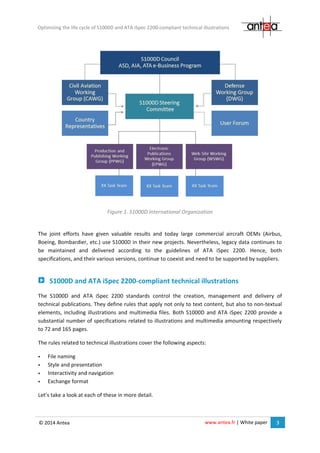
Figure 1. S1000D International Organization
The joint efforts have given valuable results and today large commercial aircraft OEMs (Airbus,
Boeing, Bombardier, etc.) use S1000D in their new projects. Nevertheless, legacy data continues to
be maintained and delivered according to the guidelines of ATA iSpec 2200. Hence, both
specifications, and their various versions, continue to coexist and need to be supported by suppliers.
S1000D and ATA iSpec 2200-compliant technical illustrations
The S1000D and ATA iSpec 2200 standards control the creation, management and delivery of
technical publications. They define rules that apply not only to text content, but also to non-textual
elements, including illustrations and multimedia files. Both S1000D and ATA iSpec 2200 provide a
substantial number of specifications related to illustrations and multimedia amounting respectively
to 72 and 165 pages.
The rules related to technical illustrations cover the following aspects:
 File naming
 Style and presentation
 Interactivity and navigation
 Exchange format
Let’s take a look at each of these in more detail.
www.antea.fr | White paper 4
Optimizing the life cycle of S1000D and ATA iSpec 2200-compliant technical illustrations
© 2014 Antea
File naming
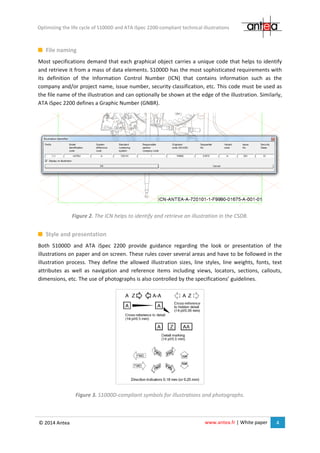
Most specifications demand that each graphical object carries a unique code that helps to identify
and retrieve it from a mass of data elements. S1000D has the most sophisticated requirements with
its definition of the Information Control Number (ICN) that contains information such as the
company and/or project name, issue number, security classification, etc. This code must be used as
the file name of the illustration and can optionally be shown at the edge of the illustration. Similarly,
ATA iSpec 2200 defines a Graphic Number (GNBR).
Figure 2. The ICN helps to identify and retrieve an illustration in the CSDB.
Style and presentation
Both S1000D and ATA iSpec 2200 provide guidance regarding the look or presentation of the
illustrations on paper and on screen. These rules cover several areas and have to be followed in the
illustration process. They define the allowed illustration sizes, line styles, line weights, fonts, text
attributes as well as navigation and reference items including views, locators, sections, callouts,
dimensions, etc. The use of photographs is also controlled by the specifications’ guidelines.
Figure 3. S1000D-compliant symbols for illustrations and photographs.
www.antea.fr | White paper 5
Optimizing the life cycle of S1000D and ATA iSpec 2200-compliant technical illustrations
© 2014 Antea
Interactivity and navigation
Easy navigation and access to information are one of the main benefits of using IETMs (Interactive
Electronic Technical Manuals) instead of printed manuals. In an IETM, graphical interactivity is based
on hotspots. Hotspots are sensitive, clickable areas in an illustration that provide a link to navigate
from one area to another. They can point either to text data or to other graphical elements that
belong to the same illustration or to another one. Both S1000D and ATA iSpec 2200 define the
handling of hotspots and provide guidance on hyperlinking and navigation.
One of the technologies enabling the use of hotspots is based on CGM (Computer Graphics Metafile),
which is the recommended S1000D and ATA iSpec 2200 format for interchanging technical
illustrations.
Exchange format
As stated above, S1000D and ATA iSpec 2200 recommend the use of CGM. CGM is an ISO standard
for the storage and exchange of 2D vector graphics, raster graphics and text. It standardizes a meta
language for defining each element of an illustration, independent of platforms or software, which
makes it particularly adapted for exchanging data between operators.
CGM can be further adapted to different use contexts through application profiles, subsets of the
standard developed independently by standards groups within specific industries. Both the S1000D
and the ATA standards groups have developed their own CGM profiles to optimize the exchange of
data in the aerospace and defense industry. ATA was the first one to introduce its CGM profile for
graphics interchange, named GREXCHANGE. S1000D used the GREXCHANGE profile for many years
before defining its own profile based on WebCGM, which describes how CGM vector, raster, and
hybrid graphics are to be used on the web. In fact, the S1000D profile further restricts the properties
of WebCGM, which is why it is described as a cascading profile.
The S1000D and ATA iSpec 2200 standards also allow other formats to be used: TIFF for monochrome
bitmap drawings; JPEG and PNG for photographs and drawings. However, of the permitted graphics
interchange formats, CGM is by far the most flexible, providing a robust, self-contained mechanism
for interactive links between vector or embedded raster graphics and text.
Project and company specific rules
In addition to the standards’ guidelines, companies often define their own sets of requirements to
meet their project needs. The purpose of these requirements is to further clarify how the standard
should be implemented in the context of a specific project. They can cover any aspect of the
standard; in the case of illustrated data, examples could include customized style and presentation
rules (color palettes, line weights, fonts, etc.) or hotspot naming conventions. S1000D provides the
most formalized approach to this practice through the concept of Business Rules even though other
interchange standards, including ATA iSpec 2200, can be similarly adapted to specific project
requirements as well.
www.antea.fr | White paper 6
Optimizing the life cycle of S1000D and ATA iSpec 2200-compliant technical illustrations
© 2014 Antea
S1000D and ATA iSpec 2200: similarities and differences
S1000D was inspired by the early ATA specifications. Therefore, the two standards have a similar
approach to the rules related to the production and use of technical illustrations. However, ATA iSpec
2200 is considerably more precise and restrictive in its definitions than S1000D, which gives greater
leeway for configuration within the Business Rules of the project. Even though for the non-expert the
illustration style differences between S1000D and ATA iSpec 2200 might seem subtle, they have
prevented the alignment of these two specifications despite many months of effort by the technical
committees to deliver a harmonized style guide.
Standards-compliant technical illustrations: Understanding the stakes
and the challenges
As stated earlier, S1000D and ATA iSpec 2200 provide a substantial number of guidelines related to
technical illustrations. However, the complexity of the specifications themselves is only one part of
the challenge...
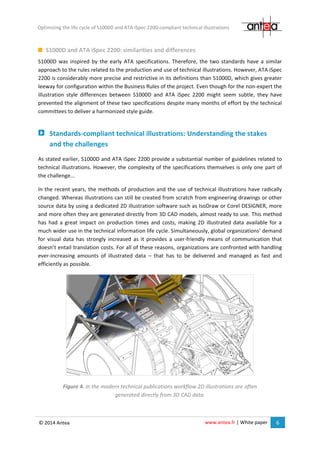
In the recent years, the methods of production and the use of technical illustrations have radically
changed. Whereas illustrations can still be created from scratch from engineering drawings or other
source data by using a dedicated 2D illustration software such as IsoDraw or Corel DESIGNER, more
and more often they are generated directly from 3D CAD models, almost ready to use. This method
has had a great impact on production times and costs, making 2D illustrated data available for a
much wider use in the technical information life cycle. Simultaneously, global organizations’ demand
for visual data has strongly increased as it provides a user-friendly means of communication that
doesn’t entail translation costs. For all of these reasons, organizations are confronted with handling
ever-increasing amounts of illustrated data – that has to be delivered and managed as fast and
efficiently as possible.
Figure 4. In the modern technical publications workflow 2D illustrations are often
generated directly from 3D CAD data.
www.antea.fr | White paper 7
Optimizing the life cycle of S1000D and ATA iSpec 2200-compliant technical illustrations
© 2014 Antea
Electronic production and consultation have also driven the emergence of more and more powerful
graphics in terms of interactivity and functionalities. “Intelligent Graphics” is the name given to
graphics that contain graphical objects and associated text data (metadata) that cause the graphical
objects to be responsive to user-generated or external events.
As opposed to static paper publishing, intelligent graphics enable easy identification of parts and
assemblies as well as advanced navigation, queries and data extraction. For example, illustrated
components can contain links to information supplier, part numbers, ordering tools or animated
sequences (for more information on intelligent graphics, see Jackson & Woolsey).
Intelligent graphics provide multiple benefits to the user as they enable intuitive access to a
multitude of data. However, it requires particular attention to ensure their compliance with S1000D
and ATA iSpec 2200: sensitive areas or hotspots must be defined according to the specifications’
guidelines, and the associated metadata needs to be correctly encoded. In addition, project business
rules might define specific hotspot naming conventions.
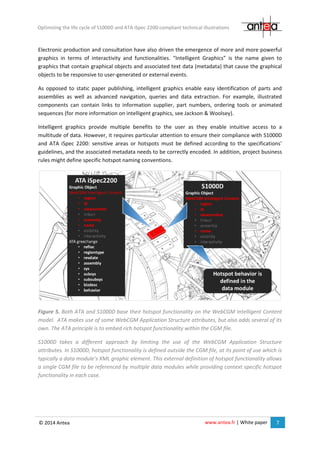
Figure 5. Both ATA and S1000D base their hotspot functionality on the WebCGM Intelligent Content
model. ATA makes use of some WebCGM Application Structure attributes, but also adds several of its
own. The ATA principle is to embed rich hotspot functionality within the CGM file.
S1000D takes a different approach by limiting the use of the WebCGM Application Structure
attributes. In S1000D, hotspot functionality is defined outside the CGM file, at its point of use which is
typically a data module’s XML graphic element. This external definition of hotspot functionality allows
a single CGM file to be referenced by multiple data modules while providing context specific hotspot
functionality in each case.
www.antea.fr | White paper 8
Optimizing the life cycle of S1000D and ATA iSpec 2200-compliant technical illustrations
© 2014 Antea
In summary, ensuring the conformance of illustrated data to the relevant interchange standards such
as S1000D and ATA iSpec 2200 has become a more complex, demanding and error-prone task. This
can only become more challenging due to the ever-increasing quantity and complexity of illustrated
technical data. In addition, aerospace and defense organizations often work on several projects at a
time, requiring them to support several standards, versions and sets of business rules
simultaneously. The stakes are high as uncompliant technical illustrations can entail significant costs
and delays in the production of documentation.
There are two key roles in delivering standards-compliant illustrations: the illustrator and the quality
assurance manager. Let’s take look at their scope of work in more detail.
The illustrator’s job
In recent years the illustrator’s job has changed out of all recognition. Where it was once a purely
creative task, it can now encompass many roles.
As mentioned above, technical illustrations can be either drawn from diverse source data, such as
engineering drawings or photographs, by using a dedicated illustration tool, or automatically
generated from 3D CAD data. Whatever the chosen method, a “raw” 2D illustration is rarely usable
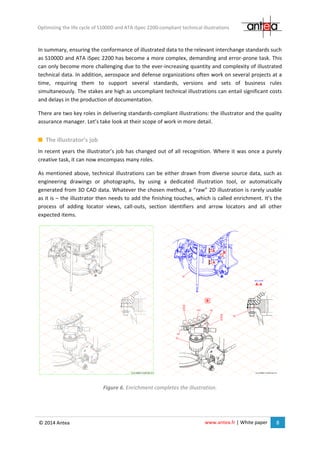
as it is – the illustrator then needs to add the finishing touches, which is called enrichment. It’s the
process of adding locator views, call-outs, section identifiers and arrow locators and all other
expected items.
Figure 6. Enrichment completes the illustration.
www.antea.fr | White paper 9
Optimizing the life cycle of S1000D and ATA iSpec 2200-compliant technical illustrations
© 2014 Antea
The enrichment phase is crucial for ensuring the illustration’s compliance with the formal
specifications and project business rules. However, when carried out manually, it implies time-
consuming and repetitive commands that are prone to human error. In fact, without the appropriate
tools, the enrichment work requires significant time and effort – as well as a detailed knowledge of
the notoriously complex specifications.
The challenge is all the greater because of some of the current trends affecting the production of
technical publications: illustration work is increasingly often carried out by authoring personnel or it
might even be outsourced offshore to non-specialized service providers.
Given this current context, it is easy to see the need for technologies that help the illustrator to
control the illustration production process and the compliance of the deliverables without needing
special expertise in the specifications.
Quality Assurance
The purpose of Quality Assurance is to verify that finished data meets specifications and
requirements. QA checks are run at both ends of the delivery chain: by the organizations producing
the data as well as by those receiving it.
Quality Assurance for technical illustrations requires careful checking in three domains:
1. Is the illustration fit for purpose?
2. Does the illustration follow the style rules as defined in the formal specification?
3. Does the illustration comply with the specified CGM format and profile rules?
Checking these domains fast and accurately is not an easy task.
Firstly, it is necessary to make sure that the illustration meets its purpose. Every illustration is created
for a reason; they are not just pretty pictures designed to fill an empty space. It takes knowledge of
the subject in context to make this assessment. Even the most skillfully crafted drawing fails in its
purpose if it does not illustrate the relevant technical information. Errors in this domain can include
poor choice of view, incorrect parts shown, applicability mismatches, insufficient detail or even too
much detail.
Style rules might be easier to understand but difficult to check quickly. It takes a trained eye to notice
that a line’s weight is too thin or that the wrong font has been chosen for just one call-out. How to
tell that a color definition is not quite right? What about the enrichment items, if they have been
drawn manually, is each one of them style compliant? There are also several background features to
take into account that cannot be checked visually, such as illustration sizes, correct use of the
illustration’s identification code or hotspot definitions.
Finally, it is necessary to check that the CGM-file conforms to the required CGM version and profile.
All mainstream CGM editors or generators create valid output but even the best of them have their
www.antea.fr | White paper 10
Optimizing the life cycle of S1000D and ATA iSpec 2200-compliant technical illustrations
© 2014 Antea
minor non-compliance issues. The CGM files’ compliance cannot be verified visually and thus
necessarily requires a specialist validation tool.
In summary, illustration QA is a complex and time-consuming task. However, it is essential for
organizations as non-compliance issues can result in rejected deliverables, entailing rework and
increased costs. Tools that help to identify and fix QA problems can considerably improve the quality
of the delivered data and drive significant cost savings.
www.antea.fr | White paper 11
Optimizing the life cycle of S1000D and ATA iSpec 2200-compliant technical illustrations
© 2014 Antea
Resources
Web
 Organization that maintains S1000D: www.s1000d.org
 Airlines for America (former ATA): www.airlines.org
 ATA e-Business Program: www.ataebiz.org
 Aerospace Industries Association of America (AIA): www.aia-aerospace.org
 AeroSpace and Defence Industries Association of Europe: www.asd-europe.org
 Organization that promotes the adoption, application, and implementation of the Computer
Graphics Metafile (CGM): www.cgmopen.org
Articles
 GEBHARDT, J. & HENDERSON, L. (1999): “WebCGM: Industrial-strength vector graphics for the
Web, CGM Open Consortium, Inc.”.
 HENDERSON, L. & WEIDENBRÜCK, D. (2003): “Applicability of CGM versus SVG for technical
graphics”.
 JACKSON, M. & WOOLSEY, J. (n.d.): “Interactive Graphics – Efficiencies for the Customer and
Business: an Aerospace Perspective”.
www.antea.fr | White paper 12
Optimizing the life cycle of S1000D and ATA iSpec 2200-compliant technical illustrations
© 2014 Antea
Tools that really help
Antea has developed a comprehensive software solution to answer to the needs of organizations
that need to create, edit and validate technical illustrations in accordance with S1000D and ATA iSpec
2200. It consists of tools that help both the Illustrator and the QA Manager to deliver standards-
compliant data fast and accurately:
 Leonardo S1000D & ATA: The Illustrator’s tools for S1000D and ATA iSpec 2200-compliant
content production.
 LeoValidate: A high-performance batch validation solution for CGM-based technical illustrations
with support for WebCGM, ATA and S1000D.
For more information, visit www.antea.fr.
About Antea – Antea offers innovative Technical Communication & Publishing
software for content creation, management, cross-media publishing and delivery
for Paper, Web and Mobile with a strong background managing the content life
cycle of enterprise-wide documentation. Established for more than 20 years,
Antea is a recognized expert in Tech Pubs software solutions for the Aerospace
and Defense sectors, strongly involved in ATA, ASD & AIA related Specifications
such as ATA iSpec 2200, ATA 2300 and S1000D.
Antea | 3 rue Etienne Dolet | 93400 Saint-Ouen | France
Tel: +33 (0)1 58 61 23 00
www.antea.fr

Antea technical illustration white paper

  • 1.
    www.antea.fr | Whitepaper 1 White paper © 2014 Antea Optimizing the life cycle of S1000D and ATA iSpec 2200-compliant technical illustrations Aerospace and defense industry: a complex ecosystem Large aerospace and defense programs are characterized by the multiplicity of operators and long product lifecycles: OEMs, engine manufacturers and equipment suppliers cooperate to deliver a complete product to the end customer who will then operate and maintain it for several years or even decades. An immense amount of technical data is necessary to accompany the product throughout its life cycle, including engineering information, operational and maintenance procedures, spare parts lists, wiring diagrams, etc. The prime contractor companies might produce this data internally, but often they subcontract the work to a technical documentation service provider, adding yet another party to the data exchange chain. In addition, all data needs to be revised regularly and comply with strict regulatory requirements. To meet these challenges, a common method of handling technical data is essential. Information must be compatible and easily exchanged between multiple communities at all phases of the product life cycle. In fact, interchange standards have been developed to guarantee that information can be shared and processed in a similar and efficient manner, whatever its origin. This white paper takes a close look at the two major interchange standards used in the aerospace and defense industries: S1000D and ATA iSpec 2200. Although these standards apply to all elements of technical publications, we will specifically focus on the way they affect the creation, revision and validation of technical illustrations. S1000D and ATA iSpec 2200 Airlines for America (A4A) – formerly known as Air Transport Association of America (ATA) – is the United States’ oldest and largest airline trade association. ATA started developing common information standards for technical airline documentation as early as in the 1940s. The first outcome of this work was the ATA 100 specification for printed aircraft maintenance information, later completed by ATA 2100, which provided guidelines for electronic data exchange. In 2000, the two standards were incorporated into ATA iSpec 2200 that became the new reference standard for aircraft engineering, maintenance, material management and flight operations information. ATA iSpec 2200 was widely adopted by the global commercial aviation industry as it enabled efficient electronic data exchange and greatly reduced the industry operators’ dependence on paper manuals, minimizing costs and improving information quality.
  • 2.
    www.antea.fr | Whitepaper 2 Optimizing the life cycle of S1000D and ATA iSpec 2200-compliant technical illustrations © 2014 Antea The development of S1000D was initiated in the 1980s by the Association Européenne des Constructeurs de Matériel Aérospatial (AECMA), which represented the common interests of the European aerospace industry. The purpose of the initiative was to improve the existing technical publications processes and develop a common standard that would meet the needs of combined European military projects that required input from multiple suppliers and countries. The international development of S1000D outside Europe accelerated when the US military and industry representatives entered the S1000D working groups and adopted the specification for new defense projects. As a result of the involvement of the USA, the Aerospace Industries Association of America (AIA) entered into the governance of the standard together with the successor to AECMA, the AeroSpace and Defence Industries of Europe (ASD). The originality of S1000D is its structure based on Data Modules, chunks of information that are stored and managed in a Common Source Data Base (CSDB) and that can be published across a variety of output media, from print to IETPs. Information reuse in different contexts is the main benefit offered by the modular structure of S1000D. Since its inception, S1000D has become a truly global standard whose scope and depth have broadened along the years. While most of its early applications were in military aerospace, today it covers the domains of air, land and sea. Industry-specific customizations of S1000D include the Shipdex protocol for the shipping community as well as Raildex, a recent initiative to standardize the exchange of maintenance documentation in the railway industry between all stakeholders including OEMs, integrators and operators. Towards a unique information exchange standard? As opposed to S1000D, ATA iSpec 2200 approaches information structure from a more traditional, paper-oriented perspective and doesn’t offer the same benefits of information reuse as S1000D. These limits were acknowledged by the ATA working groups and eventually led them to evaluate the potential of creating a new standard for civil aviation based on S1000D. The cooperation between the different standards groups became official in 2007 when ATA, AIA and ASD agreed on a memorandum of understanding to jointly maintain S1000D. For the past several years, the civil aerospace and defense industries have been working closely to enable S1000D to include commercial requirements.
  • 3.
    www.antea.fr | Whitepaper 3 Optimizing the life cycle of S1000D and ATA iSpec 2200-compliant technical illustrations © 2014 Antea Figure 1. S1000D International Organization The joint efforts have given valuable results and today large commercial aircraft OEMs (Airbus, Boeing, Bombardier, etc.) use S1000D in their new projects. Nevertheless, legacy data continues to be maintained and delivered according to the guidelines of ATA iSpec 2200. Hence, both specifications, and their various versions, continue to coexist and need to be supported by suppliers. S1000D and ATA iSpec 2200-compliant technical illustrations The S1000D and ATA iSpec 2200 standards control the creation, management and delivery of technical publications. They define rules that apply not only to text content, but also to non-textual elements, including illustrations and multimedia files. Both S1000D and ATA iSpec 2200 provide a substantial number of specifications related to illustrations and multimedia amounting respectively to 72 and 165 pages. The rules related to technical illustrations cover the following aspects:  File naming  Style and presentation  Interactivity and navigation  Exchange format Let’s take a look at each of these in more detail.
  • 4.
    www.antea.fr | Whitepaper 4 Optimizing the life cycle of S1000D and ATA iSpec 2200-compliant technical illustrations © 2014 Antea File naming Most specifications demand that each graphical object carries a unique code that helps to identify and retrieve it from a mass of data elements. S1000D has the most sophisticated requirements with its definition of the Information Control Number (ICN) that contains information such as the company and/or project name, issue number, security classification, etc. This code must be used as the file name of the illustration and can optionally be shown at the edge of the illustration. Similarly, ATA iSpec 2200 defines a Graphic Number (GNBR). Figure 2. The ICN helps to identify and retrieve an illustration in the CSDB. Style and presentation Both S1000D and ATA iSpec 2200 provide guidance regarding the look or presentation of the illustrations on paper and on screen. These rules cover several areas and have to be followed in the illustration process. They define the allowed illustration sizes, line styles, line weights, fonts, text attributes as well as navigation and reference items including views, locators, sections, callouts, dimensions, etc. The use of photographs is also controlled by the specifications’ guidelines. Figure 3. S1000D-compliant symbols for illustrations and photographs.
  • 5.
    www.antea.fr | Whitepaper 5 Optimizing the life cycle of S1000D and ATA iSpec 2200-compliant technical illustrations © 2014 Antea Interactivity and navigation Easy navigation and access to information are one of the main benefits of using IETMs (Interactive Electronic Technical Manuals) instead of printed manuals. In an IETM, graphical interactivity is based on hotspots. Hotspots are sensitive, clickable areas in an illustration that provide a link to navigate from one area to another. They can point either to text data or to other graphical elements that belong to the same illustration or to another one. Both S1000D and ATA iSpec 2200 define the handling of hotspots and provide guidance on hyperlinking and navigation. One of the technologies enabling the use of hotspots is based on CGM (Computer Graphics Metafile), which is the recommended S1000D and ATA iSpec 2200 format for interchanging technical illustrations. Exchange format As stated above, S1000D and ATA iSpec 2200 recommend the use of CGM. CGM is an ISO standard for the storage and exchange of 2D vector graphics, raster graphics and text. It standardizes a meta language for defining each element of an illustration, independent of platforms or software, which makes it particularly adapted for exchanging data between operators. CGM can be further adapted to different use contexts through application profiles, subsets of the standard developed independently by standards groups within specific industries. Both the S1000D and the ATA standards groups have developed their own CGM profiles to optimize the exchange of data in the aerospace and defense industry. ATA was the first one to introduce its CGM profile for graphics interchange, named GREXCHANGE. S1000D used the GREXCHANGE profile for many years before defining its own profile based on WebCGM, which describes how CGM vector, raster, and hybrid graphics are to be used on the web. In fact, the S1000D profile further restricts the properties of WebCGM, which is why it is described as a cascading profile. The S1000D and ATA iSpec 2200 standards also allow other formats to be used: TIFF for monochrome bitmap drawings; JPEG and PNG for photographs and drawings. However, of the permitted graphics interchange formats, CGM is by far the most flexible, providing a robust, self-contained mechanism for interactive links between vector or embedded raster graphics and text. Project and company specific rules In addition to the standards’ guidelines, companies often define their own sets of requirements to meet their project needs. The purpose of these requirements is to further clarify how the standard should be implemented in the context of a specific project. They can cover any aspect of the standard; in the case of illustrated data, examples could include customized style and presentation rules (color palettes, line weights, fonts, etc.) or hotspot naming conventions. S1000D provides the most formalized approach to this practice through the concept of Business Rules even though other interchange standards, including ATA iSpec 2200, can be similarly adapted to specific project requirements as well.
  • 6.
    www.antea.fr | Whitepaper 6 Optimizing the life cycle of S1000D and ATA iSpec 2200-compliant technical illustrations © 2014 Antea S1000D and ATA iSpec 2200: similarities and differences S1000D was inspired by the early ATA specifications. Therefore, the two standards have a similar approach to the rules related to the production and use of technical illustrations. However, ATA iSpec 2200 is considerably more precise and restrictive in its definitions than S1000D, which gives greater leeway for configuration within the Business Rules of the project. Even though for the non-expert the illustration style differences between S1000D and ATA iSpec 2200 might seem subtle, they have prevented the alignment of these two specifications despite many months of effort by the technical committees to deliver a harmonized style guide. Standards-compliant technical illustrations: Understanding the stakes and the challenges As stated earlier, S1000D and ATA iSpec 2200 provide a substantial number of guidelines related to technical illustrations. However, the complexity of the specifications themselves is only one part of the challenge... In the recent years, the methods of production and the use of technical illustrations have radically changed. Whereas illustrations can still be created from scratch from engineering drawings or other source data by using a dedicated 2D illustration software such as IsoDraw or Corel DESIGNER, more and more often they are generated directly from 3D CAD models, almost ready to use. This method has had a great impact on production times and costs, making 2D illustrated data available for a much wider use in the technical information life cycle. Simultaneously, global organizations’ demand for visual data has strongly increased as it provides a user-friendly means of communication that doesn’t entail translation costs. For all of these reasons, organizations are confronted with handling ever-increasing amounts of illustrated data – that has to be delivered and managed as fast and efficiently as possible. Figure 4. In the modern technical publications workflow 2D illustrations are often generated directly from 3D CAD data.
  • 7.
    www.antea.fr | Whitepaper 7 Optimizing the life cycle of S1000D and ATA iSpec 2200-compliant technical illustrations © 2014 Antea Electronic production and consultation have also driven the emergence of more and more powerful graphics in terms of interactivity and functionalities. “Intelligent Graphics” is the name given to graphics that contain graphical objects and associated text data (metadata) that cause the graphical objects to be responsive to user-generated or external events. As opposed to static paper publishing, intelligent graphics enable easy identification of parts and assemblies as well as advanced navigation, queries and data extraction. For example, illustrated components can contain links to information supplier, part numbers, ordering tools or animated sequences (for more information on intelligent graphics, see Jackson & Woolsey). Intelligent graphics provide multiple benefits to the user as they enable intuitive access to a multitude of data. However, it requires particular attention to ensure their compliance with S1000D and ATA iSpec 2200: sensitive areas or hotspots must be defined according to the specifications’ guidelines, and the associated metadata needs to be correctly encoded. In addition, project business rules might define specific hotspot naming conventions. Figure 5. Both ATA and S1000D base their hotspot functionality on the WebCGM Intelligent Content model. ATA makes use of some WebCGM Application Structure attributes, but also adds several of its own. The ATA principle is to embed rich hotspot functionality within the CGM file. S1000D takes a different approach by limiting the use of the WebCGM Application Structure attributes. In S1000D, hotspot functionality is defined outside the CGM file, at its point of use which is typically a data module’s XML graphic element. This external definition of hotspot functionality allows a single CGM file to be referenced by multiple data modules while providing context specific hotspot functionality in each case.
  • 8.
    www.antea.fr | Whitepaper 8 Optimizing the life cycle of S1000D and ATA iSpec 2200-compliant technical illustrations © 2014 Antea In summary, ensuring the conformance of illustrated data to the relevant interchange standards such as S1000D and ATA iSpec 2200 has become a more complex, demanding and error-prone task. This can only become more challenging due to the ever-increasing quantity and complexity of illustrated technical data. In addition, aerospace and defense organizations often work on several projects at a time, requiring them to support several standards, versions and sets of business rules simultaneously. The stakes are high as uncompliant technical illustrations can entail significant costs and delays in the production of documentation. There are two key roles in delivering standards-compliant illustrations: the illustrator and the quality assurance manager. Let’s take look at their scope of work in more detail. The illustrator’s job In recent years the illustrator’s job has changed out of all recognition. Where it was once a purely creative task, it can now encompass many roles. As mentioned above, technical illustrations can be either drawn from diverse source data, such as engineering drawings or photographs, by using a dedicated illustration tool, or automatically generated from 3D CAD data. Whatever the chosen method, a “raw” 2D illustration is rarely usable as it is – the illustrator then needs to add the finishing touches, which is called enrichment. It’s the process of adding locator views, call-outs, section identifiers and arrow locators and all other expected items. Figure 6. Enrichment completes the illustration.
  • 9.
    www.antea.fr | Whitepaper 9 Optimizing the life cycle of S1000D and ATA iSpec 2200-compliant technical illustrations © 2014 Antea The enrichment phase is crucial for ensuring the illustration’s compliance with the formal specifications and project business rules. However, when carried out manually, it implies time- consuming and repetitive commands that are prone to human error. In fact, without the appropriate tools, the enrichment work requires significant time and effort – as well as a detailed knowledge of the notoriously complex specifications. The challenge is all the greater because of some of the current trends affecting the production of technical publications: illustration work is increasingly often carried out by authoring personnel or it might even be outsourced offshore to non-specialized service providers. Given this current context, it is easy to see the need for technologies that help the illustrator to control the illustration production process and the compliance of the deliverables without needing special expertise in the specifications. Quality Assurance The purpose of Quality Assurance is to verify that finished data meets specifications and requirements. QA checks are run at both ends of the delivery chain: by the organizations producing the data as well as by those receiving it. Quality Assurance for technical illustrations requires careful checking in three domains: 1. Is the illustration fit for purpose? 2. Does the illustration follow the style rules as defined in the formal specification? 3. Does the illustration comply with the specified CGM format and profile rules? Checking these domains fast and accurately is not an easy task. Firstly, it is necessary to make sure that the illustration meets its purpose. Every illustration is created for a reason; they are not just pretty pictures designed to fill an empty space. It takes knowledge of the subject in context to make this assessment. Even the most skillfully crafted drawing fails in its purpose if it does not illustrate the relevant technical information. Errors in this domain can include poor choice of view, incorrect parts shown, applicability mismatches, insufficient detail or even too much detail. Style rules might be easier to understand but difficult to check quickly. It takes a trained eye to notice that a line’s weight is too thin or that the wrong font has been chosen for just one call-out. How to tell that a color definition is not quite right? What about the enrichment items, if they have been drawn manually, is each one of them style compliant? There are also several background features to take into account that cannot be checked visually, such as illustration sizes, correct use of the illustration’s identification code or hotspot definitions. Finally, it is necessary to check that the CGM-file conforms to the required CGM version and profile. All mainstream CGM editors or generators create valid output but even the best of them have their
  • 10.
    www.antea.fr | Whitepaper 10 Optimizing the life cycle of S1000D and ATA iSpec 2200-compliant technical illustrations © 2014 Antea minor non-compliance issues. The CGM files’ compliance cannot be verified visually and thus necessarily requires a specialist validation tool. In summary, illustration QA is a complex and time-consuming task. However, it is essential for organizations as non-compliance issues can result in rejected deliverables, entailing rework and increased costs. Tools that help to identify and fix QA problems can considerably improve the quality of the delivered data and drive significant cost savings.
  • 11.
    www.antea.fr | Whitepaper 11 Optimizing the life cycle of S1000D and ATA iSpec 2200-compliant technical illustrations © 2014 Antea Resources Web  Organization that maintains S1000D: www.s1000d.org  Airlines for America (former ATA): www.airlines.org  ATA e-Business Program: www.ataebiz.org  Aerospace Industries Association of America (AIA): www.aia-aerospace.org  AeroSpace and Defence Industries Association of Europe: www.asd-europe.org  Organization that promotes the adoption, application, and implementation of the Computer Graphics Metafile (CGM): www.cgmopen.org Articles  GEBHARDT, J. & HENDERSON, L. (1999): “WebCGM: Industrial-strength vector graphics for the Web, CGM Open Consortium, Inc.”.  HENDERSON, L. & WEIDENBRÜCK, D. (2003): “Applicability of CGM versus SVG for technical graphics”.  JACKSON, M. & WOOLSEY, J. (n.d.): “Interactive Graphics – Efficiencies for the Customer and Business: an Aerospace Perspective”.
  • 12.
    www.antea.fr | Whitepaper 12 Optimizing the life cycle of S1000D and ATA iSpec 2200-compliant technical illustrations © 2014 Antea Tools that really help Antea has developed a comprehensive software solution to answer to the needs of organizations that need to create, edit and validate technical illustrations in accordance with S1000D and ATA iSpec 2200. It consists of tools that help both the Illustrator and the QA Manager to deliver standards- compliant data fast and accurately:  Leonardo S1000D & ATA: The Illustrator’s tools for S1000D and ATA iSpec 2200-compliant content production.  LeoValidate: A high-performance batch validation solution for CGM-based technical illustrations with support for WebCGM, ATA and S1000D. For more information, visit www.antea.fr. About Antea – Antea offers innovative Technical Communication & Publishing software for content creation, management, cross-media publishing and delivery for Paper, Web and Mobile with a strong background managing the content life cycle of enterprise-wide documentation. Established for more than 20 years, Antea is a recognized expert in Tech Pubs software solutions for the Aerospace and Defense sectors, strongly involved in ATA, ASD & AIA related Specifications such as ATA iSpec 2200, ATA 2300 and S1000D. Antea | 3 rue Etienne Dolet | 93400 Saint-Ouen | France Tel: +33 (0)1 58 61 23 00 www.antea.fr