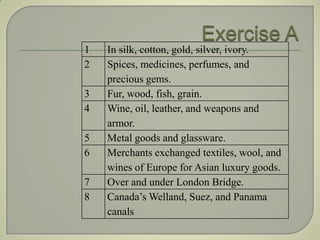
1   In silk, cotton, gold, silver, ivory.
2   Spices, medicines, perfumes, and
    precious gems.
3   Fur, wood, fish, grain.
4   Wine, oil, leather, and weapons and
    armor.
5   Metal goods and glassware.
6   Merchants exchanged textiles, wool, and
    wines of Europe for Asian luxury goods.
7   Over and under London Bridge.
8   Canada’s Welland, Suez, and Panama
    canals
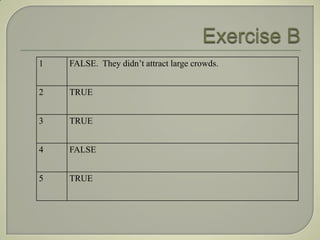
1   FALSE. They didn’t attract large crowds.


2   TRUE


3   TRUE


4   FALSE


5   TRUE
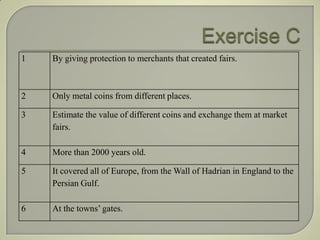
1   By giving protection to merchants that created fairs.


2   Only metal coins from different places.

3   Estimate the value of different coins and exchange them at market
    fairs.

4   More than 2000 years old.

5   It covered all of Europe, from the Wall of Hadrian in England to the
    Persian Gulf.

6   At the towns’ gates.
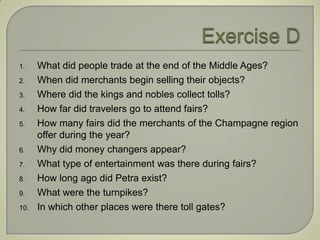
1.    What did people trade at the end of the Middle Ages?
2.    When did merchants begin selling their objects?
3.    Where did the kings and nobles collect tolls?
4.    How far did travelers go to attend fairs?
5.    How many fairs did the merchants of the Champagne region
      offer during the year?
6.    Why did money changers appear?
7.    What type of entertainment was there during fairs?
8.    How long ago did Petra exist?
9.    What were the turnpikes?
10.   In which other places were there toll gates?
 Compare   your map to the map provided
 with the lesson, and count your correct
 answers.
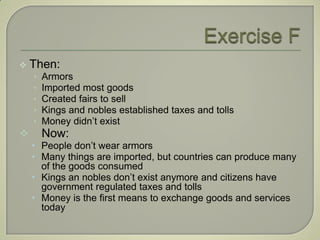
   Then:
    •   Armors
    •   Imported most goods
    •   Created fairs to sell
    •   Kings and nobles established taxes and tolls
    •   Money didn’t exist
       Now:
    • People don’t wear armors
    • Many things are imported, but countries can produce many
      of the goods consumed
    • Kings an nobles don’t exist anymore and citizens have
      government regulated taxes and tolls
    • Money is the first means to exchange goods and services
      today

Answer key to exercises on medieval ages

  • 1.
    1 In silk, cotton, gold, silver, ivory. 2 Spices, medicines, perfumes, and precious gems. 3 Fur, wood, fish, grain. 4 Wine, oil, leather, and weapons and armor. 5 Metal goods and glassware. 6 Merchants exchanged textiles, wool, and wines of Europe for Asian luxury goods. 7 Over and under London Bridge. 8 Canada’s Welland, Suez, and Panama canals
  • 2.
    1 FALSE. They didn’t attract large crowds. 2 TRUE 3 TRUE 4 FALSE 5 TRUE
  • 3.
    1 By giving protection to merchants that created fairs. 2 Only metal coins from different places. 3 Estimate the value of different coins and exchange them at market fairs. 4 More than 2000 years old. 5 It covered all of Europe, from the Wall of Hadrian in England to the Persian Gulf. 6 At the towns’ gates.
  • 4.
    1. What did people trade at the end of the Middle Ages? 2. When did merchants begin selling their objects? 3. Where did the kings and nobles collect tolls? 4. How far did travelers go to attend fairs? 5. How many fairs did the merchants of the Champagne region offer during the year? 6. Why did money changers appear? 7. What type of entertainment was there during fairs? 8. How long ago did Petra exist? 9. What were the turnpikes? 10. In which other places were there toll gates?
  • 5.
     Compare your map to the map provided with the lesson, and count your correct answers.
  • 6.
    Then: • Armors • Imported most goods • Created fairs to sell • Kings and nobles established taxes and tolls • Money didn’t exist  Now: • People don’t wear armors • Many things are imported, but countries can produce many of the goods consumed • Kings an nobles don’t exist anymore and citizens have government regulated taxes and tolls • Money is the first means to exchange goods and services today