•inflammatory disorder of unknown etiology that
primarily affects the axial skeleton.
•peripheral joints & extra articular structure are
also frequently involved.
•also called Marie-Strumpell disease or Bechtrew’s
disease.
Epidemiology
Usually begins in second or third decade
Male:female involvement 2:1 to 10:1 (1)
striking correlation with histocompatibility antigen HLA-
B27
•sub types named 2701 to 2708.
•five of these subtypes(01,02,04,05,07) found to be
associated with ankylosing spondylitis
•HLA-B2705 is major subtype
•Interestingly HLA-B2703 reported protective against AS. (2)
HLA B27found in 8% of general population, over 95% of
patients and half of their first degree relatives. (3)
1-6% of individuals inheriting HLAB27 develop ankylosing
spondylitis.
Concordance rates in identical twins 65%. (4)
Racial groups with low prevalance of HLA B27 also have low
prevalance of AS. Eg Japanese population.
ETIOLOGY
Unclear
thought to be immune-mediated, but there is no direct
evidence for autoimmunity.
•Strong association with HLA-B27 supports genetic
determination.
• B27 comprises up to one-half of the genetic component
leading to susceptibility to AS. Other half contributed by
other HLA-linked genes
The dramatic response of the disease to therapeutic blockade of tumor
necrosis factor (TNF-) indicates that this cytokine plays a central role in
the immunopathogenesis of AS.
No specific event or exogenous agent that triggers the onset of disease
has been identified.
overlapping features with reactive arthritis and inflammatory bowel
disease (IBD) suggest that enteric bacteria may play a role.
Theories:
Bacterial antigen may closely resemble HLAB27 and the immune
response may target cells possessing these HLA types.
HLA B27 may be involved in antigen presentation of these bacterial
antigens to T cells triggering the immune response.
Pathology
Two basic pathological lesions:
1.synovitis of diarthrodial joints
2.inflammation of fibro-osseous junctions and insertions of
tendons:enthesopathy
Synovitis of sacroiliac, vertebral facet joints, costovertebral joints or
peripheral joints:destruction of articular cartilage and periarticular
bone.
Enthesopathy:intervertebral discs, sacroiliac ligaments, manubrium
sterni, bony insertions of large tendons eg achilles tendon.
Pathological changes proceed in 3 stages:
Inflammatory reaction, cell infiltration and granulation tissue formation
Replacement of granulation tissue by fibrous tissue
Ossification of fibrous tissue
Sacroilitis is one of the earliest manifestation with feature of
both enthesitis and synovitis
Spine: inflammatory granulation tissue at the junction of
annulus fibrosus and margin of vertebral bone.
The outer annular fibres are eroded and eventually replaced
by bone forming syndesmophyte ultimately bridging
vertebral bodies leading to bamboo spine.
Ossification also occurs in the facet joints,interspinous and
supraspinous ligaments and ligamentum flavum.
Osteoporosis common in long standing disease and there may be
hyperkyphosis of the thoracic spine.
Clinical Features
Usual presentation: late adolescence or early adulthood as
inflammatory low back pain
insidious onset dull pain in the lower lumbar or gluteal region, worst in
the morning accompanied by stiffness that improves with activity and
returns following inactivity.
Within a few months persistent and bilateral.
Nocturnal exacerbation of pain often forces the patient to rise and
move around.
Neck pain and stiffness from involvement of the cervical spine are
usually late manifestations
Extra-axial sites of involvement: most commonly the shoulder and hip.
Rarely atypical presentation beginning with peripheral joint.
Chest Pain: Due to subsequent involvement of thoracic
spine (including costovertebral joint) & occurrence of
enthesopathy of costosternal & manibriosternal joint.
In women the disease may be restricted to sacroiliac joint
leading to difficulty in diagnosis.
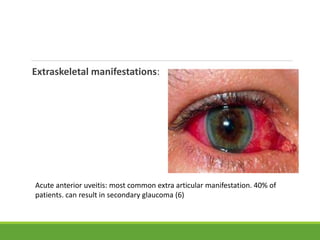
Extraskeletal manifestations:
Acute anterior uveitis: most common extra articular manifestation. 40% of
patients. can result in secondary glaucoma (6)
Extraskeletal manifestations
Cardiac: Aortic valve disease, carditis, conduction
abnormalities
Pulmonary diseases: Rare and late manifestation.
slowly progressive fibrosis of upper lobes
Renal:IgA Nephropathy and amyloidosis.
Gastrointestinal: Colitis or ileitis
Generalised fatigue and loss of weight
Physical findings
Diffuse tenderness over spine and sacroiliac joints
bony tenderness at sites of enthesopathy including the costosternal
junctions, iliac crests, greater trochanters, ischial tuberosities, tibial
tuberosity, and heels.
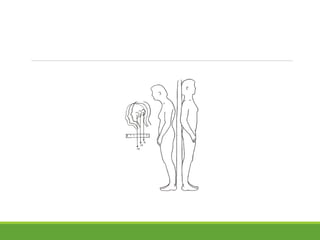
In the spine first and usually the movement to be affected severely is
extension.
Wall test:
Patient is asked to stand with his back to the wall.
The heels,buttocks, scapulae and occiput must be able to touch the wall
simultaneously.
modified Schober test: measure of flexion at lumbar spine
The patient stands erect, with heels together, and marks
are made on the spine at the lumbosacral junction
(identified by a horizontal line between the posterosuperior
iliac spines) and 10 cm above.
The patient then bends forward maximally with knees fully
extended, and the distance between the two marks is
measured.
This distance increases by 5 cm in the case of normal
mobility and by <4 cm in the case of decreased mobility. (7)
Chest expansion:
measured as the difference between maximal inspiration and maximal
forced expiration in the fourth intercostal space in males or just below
the breasts in females, with the patient's hands resting on or just
behind the head.
Normal chest expansion equals or more than 5 cm. (8)
Established cases:
•Loss of lumbar lordosis
•Increased thoracic kyphosis
•Upright posture maintained by flexion in hip and knees
Complications
Spinal fractures:
spine is both rigid and osteoporotic
leading to fracture even with trivial
trauma. most common in lower cervical
C5-7 vertebra.
Pseudoarthrosis: common complication of
spinal fracture in patients with AS.
•Neurologic involvement :
•It can occur due to trauma, instability due to
inflammatory process or compression.
•Atlantoaxial subluxation, atlanto-occipital subluxation
can occur as a consequence of instability due to
inflammatory process.
•ossification of posterior longitudinal ligament,
destructive intervertebral disc lesion and spinal
stenosis can lead to compressive myelopathy.
•Rare but serious complication: cauda equina syndrome
Laboratory Investigations
Erythrocyte sedimentation rate (ESR) and C-reactive protein (CRP)
often elevated.
Mild anemia.
HLA-B27 is present in 80–90% of patients (9)
Patients with severe disease may show an elevated alkaline
phosphatase level.
Elevated serum IgA levels are common.
Synovial fluid analysis from peripheral joints inflammatory picture.
Spirometry: restrictive pattern with reduced vital capacity
Radiographic Findings
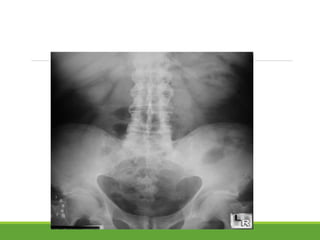
Sacroiliitis:
earliest changes blurring of the cortical margins of the subchondral
bone
followed by erosions and sclerosis.
Progression of the erosions leads to "pseudowidening" of the joint
space
as fibrous and bony ankylosis supervene, the joint space becomes
obliterated
Radiological grading of Sacroilitis
New York criteria (10)
grade 0 : normal
grade I : some blurring of the joint margins - suspicious
grade II : minimal sclerosis with some erosion
grade III :
◦ definite sclerosis on both sides of joint
◦ severe erosions with widening of joint space + / - some ankylosis
grade IV : complete ankylosis
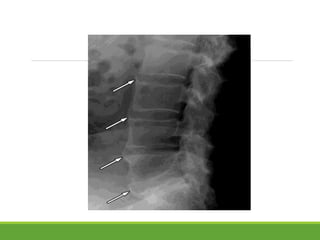
Most marked in lumbar region in the spine
loss of lordosis,
Flattening of normal anterior concavity of vertebral body leading to "squaring"
of vertebral bodies.
marginal syndesmophytes, visible on plain films as bony bridges connecting
successive vertebral bodies.
Ossification in annulus fibrosus sparing anterior longitudinal ligament and
nucleosus pulposus “bamboo spine” appearance.
MRI:sensitive than conventional radiography for identifying
early intraarticular inflammation, cartilage changes, and
underlying bone marrow edema in sacroiliitis
Reduced bone mineral density can be detected by dual-
energy x-ray absorptiometry of the femoral neck and the
lumbar spine.
Diagnosis
Must always be considered in differential diagnosis of inflammatory backpain
of more than 3 months duration in a young individual.
A positive family history
radiological evidence of bilateral sacroilitis
Modified New York criteria for diagnosis of ankylosing spondylitis(11)
A definite diagnosis of ankylosing spondylitis requires the radiological criterion and at
least one clinical criterion to be satisfied as defined below.
Radiological criterion
Sacroiliitis at least grade 2 bilaterally or grade 3 or 4 unilaterally.
Clinical criteria
Low back pain and stiffness for more than 3 months that improves with exercise but is
not relieved by rest.
Limitation of motion of the lumbar spine in both the sagittal and frontal planes.
Limitation of chest expansion relative to normal values correlated for age and sex.
All reasonable measures should be taken to ensure that symptoms are due
predominantly to ankylosing spondylitis and that alternative causes, including spinal
fracture, disc disease and fibromyalgia, are excluded.
modified New York criteria (1984) is based on the presence of definite
radiographic sacroiliitis and is less sensitive in early or mild cases.
Assessment of Spondyloarthritis International Society (ASAS) proposed
a new criteria in 2009 for back pain of more than 3 months in an
individual with onset less than 45 years of age.(12)
1.sacroilitis in imaging+ one or more features of spondyloarthropathy
2.HLA B27 positive + two or more features of spondyloarthropathy
Sacroilitis in imaging:
Active (acute) inflammation on MRI highly suggestive of SpA-associated
sacroiliitis and/or
Definite radiographic sacroiliitis according to modified New York criteria
Spondyloarthropathy features:
Inflammatory back pain
Arthritis
Enthesitis (heel)
Anterior uveitis
Dactylitis
Psoriasis
Crohn's disease or ulcerative colitis
Good response to NSAIDs
Family history of SpA
HLA-B27
Elevated CRP
Differential Diagnosis
•Seronegative Spondyloarthropathies
•share certain clinical features & association with HLA B-27.
•Include:
•Ankylosing Spondylitis
•Reactive arthritis and Reiters syndrome ,
•Psoriatic arthritis
•Juvenile onset Spondyloarthropathies and
•Enteropathic arthritis.
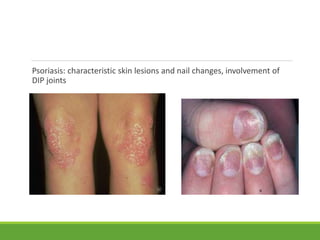
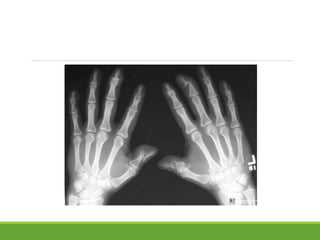
Psoriasis: characteristic skin lesions and nail changes, involvement of
DIP joints
Enteropathic arthritis: intestinal ulceration
Reiter’s disease: Genitourinary and ocular inflammation
Behcet’s syndrome: buccal and genital ulceration
Mechanical causes: common etiologies muscle strain, facet joint
dysfunction, spondylolisthesis
Pain related to specific physical activities and relieved by rest
Stiffness not a feature.
Diffuse Idiopathic Hyperostosis(Forestier’s Disease): Can radiologically
resemble AS.
Older age of onset
Pronounced involvement of thoracic spine
Asymmetrical intervertebral spur formation
Pain and stiffness not predominant.ESR normal
Pott’s Spine
Involvement of thoracolumbar spine
Localised bony tenderness
Collapse and destruction of vertebra
Paravertebral abscess
No enthesopathy and syndesmophyte formation.
Management
A full explanation of diseases its course, and prognosis is
essential to achieve appropriate compliance by the patient
The objectives of management are
to relieve pain and stiffness
To maintain good posture and
good physical and psychosocial functioning
Aspects of treatment
1. General measures
2. Drugs:
Anti-inflammatory drugs
TNF inhibitors
3. Surgery
General measures
Encouraged to remain active
Preserve movement especially extension
maintain satisfactory posture,
Spinal extension exercises,
dancing, swimming etc
Patients must be asked to sleep in firm mattress in supine or prone
position and avoid lateral position.
Smoking cessation to reduce respiratory compromise.
Drugs
NSAIDS:
• for control of pain and stiffness
•Donot retard the progress of the disease or control disease activity.
•Adjuncts to NSAIDS: antispasmodics and sedatives to counter sleep
disturbances
TNF inhibitors:
•Established role in control of disease activity.
•drugs that have been approved for use in AS: Infliximab, adalimumab,
golimumab and Etanercept
•efficacy of individual TNF blockers in AS have not been directly
compared.
•Generally reserved for individuals with severe involvement whom
NSAID alone has failed.
MTX is generally not effective in axial spondyloarthritis.
Sulphasalazine has limited benefit for axial symptoms, but may help
peripheral joint disease.
Surgery
Role of surgery:
•Total hip replacement in advanced arthritis of hip
•Surgical stabilisation of spinal fractures
•Deformity correction and restoration of mobility: spinal osteotomies
Difficulties to be anticipated in surgery of patients with AS:
•Difficult intubation: due to ankylosis of TMJ and cervical spine
deformities
•Respiratory compromise: involvement of costovertebral joints,
pulmonary fibrosis
•Instability of spine:atlanto axial and atlanto occipital subluxations,
fractures.
•Aortic disease
Osteotomy of lumbar spine
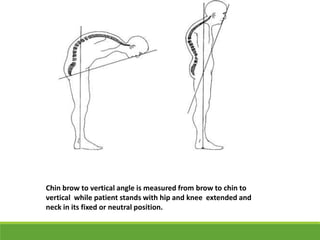
Assessment of severity of flexion deformity:
Chin-brow to vertical angle.
Chin brow to vertical angle is measured from brow to chin to
vertical while patient stands with hip and knee extended and
neck in its fixed or neutral position.
Osteotomy usually done at upper lumbar level
Deformity is then corrected by extension either by division of anterior
longitudinal ligaments or allowing it to rupture by gentle manipulaiton.
Operative methods:
1. Resection of spinous process from lamina to the pedicles
2. Wedge resection of spinous process into neural foramina:pedicle
substracion osteotomy
3. Chevron excision of lamina and spinous process
4. Combined anterior opening wedge osteotomy and posterior
resection of spinous process and lamina.
Position of patient on operating table
a) Before operation.
b) After operation.
CHEVERON EXCISION OF LAMINAE
AND SPINOUS PROCESS.
TOTAL LAMINECTOMY
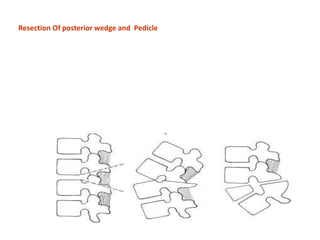
Resection Of posterior wedge and Pedicle
Complications of lumbar osteotomies
1. Neurological
2. Dural tears
3. Death from rupture of aorta
4. Gastrointestinal problems.
Cervical Osteotomy:
Indications:
To elevate chin from sternum
Prevent atlantoaxial and cervical subluxations and dislocations.
To prevent esophageal and tracheal distortions
Cervicaodorsal kyphosis can be treated by lumbar osteotomy and use of
skeletal traction alone has been reported.
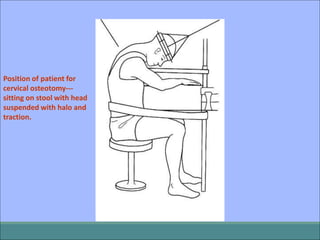
Position of patient for
cervical osteotomy---
sitting on stool with head
suspended with halo and
traction.
Recent advance
Recent genome-wide association studies (GWAS) in AS have identified
11 gene regions in addition to HLA-B27 that are associated with
susceptibility to AS.(13)
ERAP1 encodes the enzyme endoplasmic reticulum aminopeptidase-1,
which functions to trim intracellular peptides to the appropriate length
for loading in the binding groove of HLA class I molecules, including
HLA-B27 for presentation to the immune system.
supports the theory that HLA-B27 is involved in the pathogenesis of AS
because of its role in antigen presentation.
References
1,3.Apley’s system of orthopedics and fractures 9th edition 66-70.
2. Jan Tore Gran, Gunnar Husby, HLA-B27 and spondyloarthropathy: value for
early diagnosis? JMed Genet 1995;32:497-501
4-9.Harrison’s Principles of internal Medicine 18 th edition, chapter 325
Campbell’s operative orthopedics 11 th edition 2316-2319
David S. Pisetsky, and Michael M. Ward, Advances in the treatment of
inflammatory arthritis
Rosaline van den Berg, Désirée M.F.M. van der Heijde, How should we diagnose
spondyloarthritis according to the ASAS classification criteria?
Ankylos ing spondylitis

Ankylos ing spondylitis

  • 2.
    •inflammatory disorder ofunknown etiology that primarily affects the axial skeleton. •peripheral joints & extra articular structure are also frequently involved. •also called Marie-Strumpell disease or Bechtrew’s disease.
  • 3.
    Epidemiology Usually begins insecond or third decade Male:female involvement 2:1 to 10:1 (1) striking correlation with histocompatibility antigen HLA- B27 •sub types named 2701 to 2708. •five of these subtypes(01,02,04,05,07) found to be associated with ankylosing spondylitis •HLA-B2705 is major subtype •Interestingly HLA-B2703 reported protective against AS. (2)
  • 4.
    HLA B27found in8% of general population, over 95% of patients and half of their first degree relatives. (3) 1-6% of individuals inheriting HLAB27 develop ankylosing spondylitis. Concordance rates in identical twins 65%. (4) Racial groups with low prevalance of HLA B27 also have low prevalance of AS. Eg Japanese population.
  • 5.
    ETIOLOGY Unclear thought to beimmune-mediated, but there is no direct evidence for autoimmunity. •Strong association with HLA-B27 supports genetic determination. • B27 comprises up to one-half of the genetic component leading to susceptibility to AS. Other half contributed by other HLA-linked genes
  • 6.
    The dramatic responseof the disease to therapeutic blockade of tumor necrosis factor (TNF-) indicates that this cytokine plays a central role in the immunopathogenesis of AS. No specific event or exogenous agent that triggers the onset of disease has been identified. overlapping features with reactive arthritis and inflammatory bowel disease (IBD) suggest that enteric bacteria may play a role.
  • 7.
    Theories: Bacterial antigen mayclosely resemble HLAB27 and the immune response may target cells possessing these HLA types. HLA B27 may be involved in antigen presentation of these bacterial antigens to T cells triggering the immune response.
  • 8.
    Pathology Two basic pathologicallesions: 1.synovitis of diarthrodial joints 2.inflammation of fibro-osseous junctions and insertions of tendons:enthesopathy Synovitis of sacroiliac, vertebral facet joints, costovertebral joints or peripheral joints:destruction of articular cartilage and periarticular bone. Enthesopathy:intervertebral discs, sacroiliac ligaments, manubrium sterni, bony insertions of large tendons eg achilles tendon.
  • 9.
    Pathological changes proceedin 3 stages: Inflammatory reaction, cell infiltration and granulation tissue formation Replacement of granulation tissue by fibrous tissue Ossification of fibrous tissue
  • 10.
    Sacroilitis is oneof the earliest manifestation with feature of both enthesitis and synovitis Spine: inflammatory granulation tissue at the junction of annulus fibrosus and margin of vertebral bone. The outer annular fibres are eroded and eventually replaced by bone forming syndesmophyte ultimately bridging vertebral bodies leading to bamboo spine. Ossification also occurs in the facet joints,interspinous and supraspinous ligaments and ligamentum flavum.
  • 11.
    Osteoporosis common inlong standing disease and there may be hyperkyphosis of the thoracic spine.
  • 12.
    Clinical Features Usual presentation:late adolescence or early adulthood as inflammatory low back pain insidious onset dull pain in the lower lumbar or gluteal region, worst in the morning accompanied by stiffness that improves with activity and returns following inactivity. Within a few months persistent and bilateral. Nocturnal exacerbation of pain often forces the patient to rise and move around.
  • 13.
    Neck pain andstiffness from involvement of the cervical spine are usually late manifestations Extra-axial sites of involvement: most commonly the shoulder and hip.
  • 14.
    Rarely atypical presentationbeginning with peripheral joint. Chest Pain: Due to subsequent involvement of thoracic spine (including costovertebral joint) & occurrence of enthesopathy of costosternal & manibriosternal joint. In women the disease may be restricted to sacroiliac joint leading to difficulty in diagnosis.
  • 15.
    Extraskeletal manifestations: Acute anterioruveitis: most common extra articular manifestation. 40% of patients. can result in secondary glaucoma (6)
  • 16.
    Extraskeletal manifestations Cardiac: Aorticvalve disease, carditis, conduction abnormalities Pulmonary diseases: Rare and late manifestation. slowly progressive fibrosis of upper lobes Renal:IgA Nephropathy and amyloidosis. Gastrointestinal: Colitis or ileitis Generalised fatigue and loss of weight
  • 17.
    Physical findings Diffuse tendernessover spine and sacroiliac joints bony tenderness at sites of enthesopathy including the costosternal junctions, iliac crests, greater trochanters, ischial tuberosities, tibial tuberosity, and heels.
  • 18.
    In the spinefirst and usually the movement to be affected severely is extension. Wall test: Patient is asked to stand with his back to the wall. The heels,buttocks, scapulae and occiput must be able to touch the wall simultaneously.
  • 20.
    modified Schober test:measure of flexion at lumbar spine The patient stands erect, with heels together, and marks are made on the spine at the lumbosacral junction (identified by a horizontal line between the posterosuperior iliac spines) and 10 cm above. The patient then bends forward maximally with knees fully extended, and the distance between the two marks is measured. This distance increases by 5 cm in the case of normal mobility and by <4 cm in the case of decreased mobility. (7)
  • 22.
    Chest expansion: measured asthe difference between maximal inspiration and maximal forced expiration in the fourth intercostal space in males or just below the breasts in females, with the patient's hands resting on or just behind the head. Normal chest expansion equals or more than 5 cm. (8)
  • 23.
    Established cases: •Loss oflumbar lordosis •Increased thoracic kyphosis •Upright posture maintained by flexion in hip and knees
  • 25.
    Complications Spinal fractures: spine isboth rigid and osteoporotic leading to fracture even with trivial trauma. most common in lower cervical C5-7 vertebra. Pseudoarthrosis: common complication of spinal fracture in patients with AS.
  • 26.
    •Neurologic involvement : •Itcan occur due to trauma, instability due to inflammatory process or compression. •Atlantoaxial subluxation, atlanto-occipital subluxation can occur as a consequence of instability due to inflammatory process. •ossification of posterior longitudinal ligament, destructive intervertebral disc lesion and spinal stenosis can lead to compressive myelopathy. •Rare but serious complication: cauda equina syndrome
  • 27.
    Laboratory Investigations Erythrocyte sedimentationrate (ESR) and C-reactive protein (CRP) often elevated. Mild anemia. HLA-B27 is present in 80–90% of patients (9) Patients with severe disease may show an elevated alkaline phosphatase level. Elevated serum IgA levels are common.
  • 28.
    Synovial fluid analysisfrom peripheral joints inflammatory picture. Spirometry: restrictive pattern with reduced vital capacity
  • 29.
    Radiographic Findings Sacroiliitis: earliest changesblurring of the cortical margins of the subchondral bone followed by erosions and sclerosis. Progression of the erosions leads to "pseudowidening" of the joint space as fibrous and bony ankylosis supervene, the joint space becomes obliterated
  • 31.
    Radiological grading ofSacroilitis New York criteria (10) grade 0 : normal grade I : some blurring of the joint margins - suspicious grade II : minimal sclerosis with some erosion grade III : ◦ definite sclerosis on both sides of joint ◦ severe erosions with widening of joint space + / - some ankylosis grade IV : complete ankylosis
  • 32.
    Most marked inlumbar region in the spine loss of lordosis, Flattening of normal anterior concavity of vertebral body leading to "squaring" of vertebral bodies. marginal syndesmophytes, visible on plain films as bony bridges connecting successive vertebral bodies. Ossification in annulus fibrosus sparing anterior longitudinal ligament and nucleosus pulposus “bamboo spine” appearance.
  • 35.
    MRI:sensitive than conventionalradiography for identifying early intraarticular inflammation, cartilage changes, and underlying bone marrow edema in sacroiliitis Reduced bone mineral density can be detected by dual- energy x-ray absorptiometry of the femoral neck and the lumbar spine.
  • 36.
    Diagnosis Must always beconsidered in differential diagnosis of inflammatory backpain of more than 3 months duration in a young individual. A positive family history radiological evidence of bilateral sacroilitis
  • 37.
    Modified New Yorkcriteria for diagnosis of ankylosing spondylitis(11) A definite diagnosis of ankylosing spondylitis requires the radiological criterion and at least one clinical criterion to be satisfied as defined below. Radiological criterion Sacroiliitis at least grade 2 bilaterally or grade 3 or 4 unilaterally. Clinical criteria Low back pain and stiffness for more than 3 months that improves with exercise but is not relieved by rest. Limitation of motion of the lumbar spine in both the sagittal and frontal planes. Limitation of chest expansion relative to normal values correlated for age and sex. All reasonable measures should be taken to ensure that symptoms are due predominantly to ankylosing spondylitis and that alternative causes, including spinal fracture, disc disease and fibromyalgia, are excluded.
  • 38.
    modified New Yorkcriteria (1984) is based on the presence of definite radiographic sacroiliitis and is less sensitive in early or mild cases. Assessment of Spondyloarthritis International Society (ASAS) proposed a new criteria in 2009 for back pain of more than 3 months in an individual with onset less than 45 years of age.(12)
  • 39.
    1.sacroilitis in imaging+one or more features of spondyloarthropathy 2.HLA B27 positive + two or more features of spondyloarthropathy Sacroilitis in imaging: Active (acute) inflammation on MRI highly suggestive of SpA-associated sacroiliitis and/or Definite radiographic sacroiliitis according to modified New York criteria
  • 40.
    Spondyloarthropathy features: Inflammatory backpain Arthritis Enthesitis (heel) Anterior uveitis Dactylitis Psoriasis Crohn's disease or ulcerative colitis Good response to NSAIDs Family history of SpA HLA-B27 Elevated CRP
  • 41.
    Differential Diagnosis •Seronegative Spondyloarthropathies •sharecertain clinical features & association with HLA B-27. •Include: •Ankylosing Spondylitis •Reactive arthritis and Reiters syndrome , •Psoriatic arthritis •Juvenile onset Spondyloarthropathies and •Enteropathic arthritis.
  • 42.
    Psoriasis: characteristic skinlesions and nail changes, involvement of DIP joints
  • 44.
    Enteropathic arthritis: intestinalulceration Reiter’s disease: Genitourinary and ocular inflammation Behcet’s syndrome: buccal and genital ulceration
  • 45.
    Mechanical causes: commonetiologies muscle strain, facet joint dysfunction, spondylolisthesis Pain related to specific physical activities and relieved by rest Stiffness not a feature. Diffuse Idiopathic Hyperostosis(Forestier’s Disease): Can radiologically resemble AS. Older age of onset Pronounced involvement of thoracic spine Asymmetrical intervertebral spur formation Pain and stiffness not predominant.ESR normal
  • 46.
    Pott’s Spine Involvement ofthoracolumbar spine Localised bony tenderness Collapse and destruction of vertebra Paravertebral abscess No enthesopathy and syndesmophyte formation.
  • 47.
    Management A full explanationof diseases its course, and prognosis is essential to achieve appropriate compliance by the patient The objectives of management are to relieve pain and stiffness To maintain good posture and good physical and psychosocial functioning
  • 48.
    Aspects of treatment 1.General measures 2. Drugs: Anti-inflammatory drugs TNF inhibitors 3. Surgery
  • 49.
    General measures Encouraged toremain active Preserve movement especially extension maintain satisfactory posture, Spinal extension exercises, dancing, swimming etc Patients must be asked to sleep in firm mattress in supine or prone position and avoid lateral position. Smoking cessation to reduce respiratory compromise.
  • 50.
    Drugs NSAIDS: • for controlof pain and stiffness •Donot retard the progress of the disease or control disease activity. •Adjuncts to NSAIDS: antispasmodics and sedatives to counter sleep disturbances TNF inhibitors: •Established role in control of disease activity. •drugs that have been approved for use in AS: Infliximab, adalimumab, golimumab and Etanercept
  • 51.
    •efficacy of individualTNF blockers in AS have not been directly compared. •Generally reserved for individuals with severe involvement whom NSAID alone has failed. MTX is generally not effective in axial spondyloarthritis. Sulphasalazine has limited benefit for axial symptoms, but may help peripheral joint disease.
  • 52.
    Surgery Role of surgery: •Totalhip replacement in advanced arthritis of hip •Surgical stabilisation of spinal fractures •Deformity correction and restoration of mobility: spinal osteotomies
  • 53.
    Difficulties to beanticipated in surgery of patients with AS: •Difficult intubation: due to ankylosis of TMJ and cervical spine deformities •Respiratory compromise: involvement of costovertebral joints, pulmonary fibrosis •Instability of spine:atlanto axial and atlanto occipital subluxations, fractures. •Aortic disease
  • 54.
    Osteotomy of lumbarspine Assessment of severity of flexion deformity: Chin-brow to vertical angle.
  • 55.
    Chin brow tovertical angle is measured from brow to chin to vertical while patient stands with hip and knee extended and neck in its fixed or neutral position.
  • 56.
    Osteotomy usually doneat upper lumbar level Deformity is then corrected by extension either by division of anterior longitudinal ligaments or allowing it to rupture by gentle manipulaiton. Operative methods: 1. Resection of spinous process from lamina to the pedicles 2. Wedge resection of spinous process into neural foramina:pedicle substracion osteotomy 3. Chevron excision of lamina and spinous process 4. Combined anterior opening wedge osteotomy and posterior resection of spinous process and lamina.
  • 57.
    Position of patienton operating table a) Before operation. b) After operation.
  • 58.
    CHEVERON EXCISION OFLAMINAE AND SPINOUS PROCESS. TOTAL LAMINECTOMY
  • 59.
    Resection Of posteriorwedge and Pedicle
  • 60.
    Complications of lumbarosteotomies 1. Neurological 2. Dural tears 3. Death from rupture of aorta 4. Gastrointestinal problems.
  • 61.
    Cervical Osteotomy: Indications: To elevatechin from sternum Prevent atlantoaxial and cervical subluxations and dislocations. To prevent esophageal and tracheal distortions Cervicaodorsal kyphosis can be treated by lumbar osteotomy and use of skeletal traction alone has been reported.
  • 62.
    Position of patientfor cervical osteotomy--- sitting on stool with head suspended with halo and traction.
  • 63.
    Recent advance Recent genome-wideassociation studies (GWAS) in AS have identified 11 gene regions in addition to HLA-B27 that are associated with susceptibility to AS.(13) ERAP1 encodes the enzyme endoplasmic reticulum aminopeptidase-1, which functions to trim intracellular peptides to the appropriate length for loading in the binding groove of HLA class I molecules, including HLA-B27 for presentation to the immune system. supports the theory that HLA-B27 is involved in the pathogenesis of AS because of its role in antigen presentation.
  • 64.
    References 1,3.Apley’s system oforthopedics and fractures 9th edition 66-70. 2. Jan Tore Gran, Gunnar Husby, HLA-B27 and spondyloarthropathy: value for early diagnosis? JMed Genet 1995;32:497-501 4-9.Harrison’s Principles of internal Medicine 18 th edition, chapter 325 Campbell’s operative orthopedics 11 th edition 2316-2319 David S. Pisetsky, and Michael M. Ward, Advances in the treatment of inflammatory arthritis Rosaline van den Berg, Désirée M.F.M. van der Heijde, How should we diagnose spondyloarthritis according to the ASAS classification criteria?