Anger Management
Dr. Monika Khatwani
What is anger?
Anger –It is expression of helplessness and extreme displeasure.
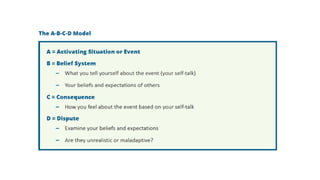
Why Anger-when expectation doesn’t match reality.
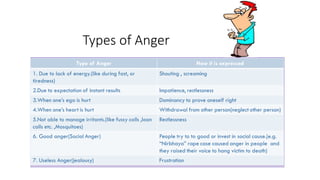
Types of Anger
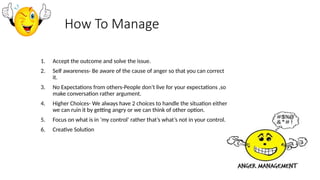
How To Manage
1. Accept the outcome and solve the issue.
2. Self awareness- Be aware of the cause of anger so that you can correct
it.
3. No Expectations from others-People don’t live for your expectations ,so
make conversation rather argument.
4. Higher Choices- We always have 2 choices to handle the situation either
we can ruin it by getting angry or we can think of other option.
5. Focus on what is in ‘my control’ rather that’s what’s not in your control.
6. Creative Solution
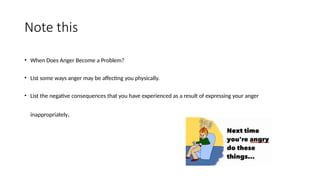
Note this
• When Does Anger Become a Problem?
• List some ways anger may be affecting you physically.
• List the negative consequences that you have experienced as a result of expressing your anger
inappropriately.
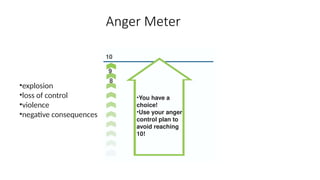
•You have a
choice!
•Use your anger
control plan to
avoid reaching
10!
10
9
8
•explosion
•loss of control
•violence
•negative consequences
Anger Meter
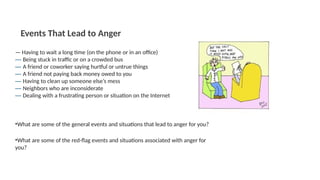
— Having to wait a long time (on the phone or in an office)
— Being stuck in traffic or on a crowded bus
— A friend or coworker saying hurtful or untrue things
— A friend not paying back money owed to you
— Having to clean up someone else’s mess
— Neighbors who are inconsiderate
— Dealing with a frustrating person or situation on the Internet
•What are some of the general events and situations that lead to anger for you?
Events That Lead to Anger
•What are some of the red-flag events and situations associated with anger for
you?
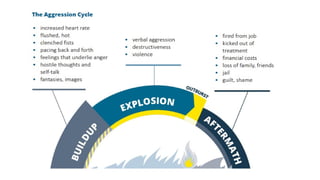
1.Physical Cues (how your body responds—with an increased heart rate, tightness in the chest,
feeling hot or flushed)
2.Behavioral Cues (what you do—clench your fists, raise your voice, stare at others)
3.Emotional Cues (other feelings that may occur along with anger—fear, hurt, jealousy,
disrespect)
4.Cognitive Cues (what you think about in response to the event—hostile self-talk, images of
aggression and revenge)
Note that down
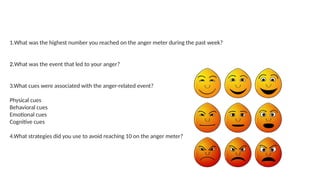
1.What was the highest number you reached on the anger meter during the past week?
2.What was the event that led to your anger?
3.What cues were associated with the anger-related event?
Physical cues
Behavioral cues
Emotional cues
Cognitive cues
4.What strategies did you use to avoid reaching 10 on the anger meter?
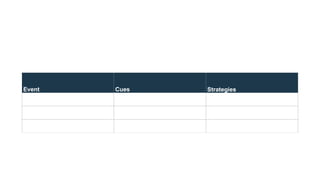
Event Cues Strategies
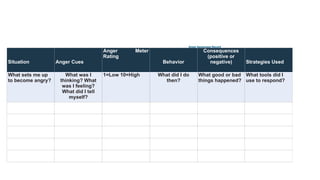
Situation Anger Cues
Anger Meter
Rating
Behavior
Consequences
(positive or
negative) Strategies Used
What sets me up
to become angry?
What was I
thinking? What
was I feeling?
What did I tell
myself?
1=Low 10=High What did I do
then?
What good or bad
things happened?
What tools did I
use to respond?
Anger Awareness Record
What else do to?
1.Take a timeout.
2. Talk to a friend (someone you trust).
3. Use the Conflict Resolution Model to solve problems with expressing anger
4. Exercise (for example, take a walk, go to the gym).
5. Attend 12-Step meetings.
6. Explore primary feelings beneath the anger.
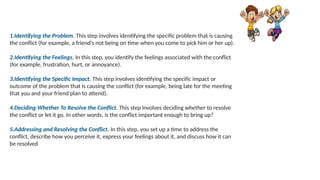
1.Identifying the Problem. This step involves identifying the specific problem that is causing
the conflict (for example, a friend’s not being on time when you come to pick him or her up).
2.Identifying the Feelings. In this step, you identify the feelings associated with the conflict
(for example, frustration, hurt, or annoyance).
3.Identifying the Specific Impact. This step involves identifying the specific impact or
outcome of the problem that is causing the conflict (for example, being late for the meeting
that you and your friend plan to attend).
4.Deciding Whether To Resolve the Conflict. This step involves deciding whether to resolve
the conflict or let it go. In other words, is the conflict important enough to bring up?
5.Addressing and Resolving the Conflict. In this step, you set up a time to address the
conflict, describe how you perceive it, express your feelings about it, and discuss how it can
be resolved
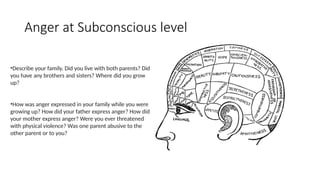
•Describe your family. Did you live with both parents? Did
you have any brothers and sisters? Where did you grow
up?
•How was anger expressed in your family while you were
growing up? How did your father express anger? How did
your mother express anger? Were you ever threatened
with physical violence? Was one parent abusive to the
other parent or to you?
Anger at Subconscious level
What We Learned
Anger has potent energy.(different people express anger in different ways )
Anger leads to Hurt. We have 3 Choices to tackle it.
a) Low Morale and don’t take any action
b) Fight , Rebel , hate
c) Convert hurt into growth
Anger is double edged sword
a)It can be used for doing harm and wrong purpose (like terrorist activities).
b)Can be used for right purpose (like Mahatma Gandhi to free the nation when he was humiliated on railway track)
When we channelize our anger, it becomes our strength.
To know the depth of your anger , enroll in our anger management
Programme:
Contact :9810380028

Anger Management -How Anger can be worked upon

  • 1.
  • 2.
    What is anger? Anger–It is expression of helplessness and extreme displeasure. Why Anger-when expectation doesn’t match reality.
  • 3.
  • 4.
    How To Manage 1.Accept the outcome and solve the issue. 2. Self awareness- Be aware of the cause of anger so that you can correct it. 3. No Expectations from others-People don’t live for your expectations ,so make conversation rather argument. 4. Higher Choices- We always have 2 choices to handle the situation either we can ruin it by getting angry or we can think of other option. 5. Focus on what is in ‘my control’ rather that’s what’s not in your control. 6. Creative Solution
  • 5.
    Note this • WhenDoes Anger Become a Problem? • List some ways anger may be affecting you physically. • List the negative consequences that you have experienced as a result of expressing your anger inappropriately.
  • 6.
    •You have a choice! •Useyour anger control plan to avoid reaching 10! 10 9 8 •explosion •loss of control •violence •negative consequences Anger Meter
  • 7.
    — Having towait a long time (on the phone or in an office) — Being stuck in traffic or on a crowded bus — A friend or coworker saying hurtful or untrue things — A friend not paying back money owed to you — Having to clean up someone else’s mess — Neighbors who are inconsiderate — Dealing with a frustrating person or situation on the Internet •What are some of the general events and situations that lead to anger for you? Events That Lead to Anger •What are some of the red-flag events and situations associated with anger for you?
  • 8.
    1.Physical Cues (howyour body responds—with an increased heart rate, tightness in the chest, feeling hot or flushed) 2.Behavioral Cues (what you do—clench your fists, raise your voice, stare at others) 3.Emotional Cues (other feelings that may occur along with anger—fear, hurt, jealousy, disrespect) 4.Cognitive Cues (what you think about in response to the event—hostile self-talk, images of aggression and revenge) Note that down
  • 9.
    1.What was thehighest number you reached on the anger meter during the past week? 2.What was the event that led to your anger? 3.What cues were associated with the anger-related event? Physical cues Behavioral cues Emotional cues Cognitive cues 4.What strategies did you use to avoid reaching 10 on the anger meter?
  • 10.
  • 11.
    Situation Anger Cues AngerMeter Rating Behavior Consequences (positive or negative) Strategies Used What sets me up to become angry? What was I thinking? What was I feeling? What did I tell myself? 1=Low 10=High What did I do then? What good or bad things happened? What tools did I use to respond? Anger Awareness Record
  • 12.
    What else doto? 1.Take a timeout. 2. Talk to a friend (someone you trust). 3. Use the Conflict Resolution Model to solve problems with expressing anger 4. Exercise (for example, take a walk, go to the gym). 5. Attend 12-Step meetings. 6. Explore primary feelings beneath the anger.
  • 15.
    1.Identifying the Problem.This step involves identifying the specific problem that is causing the conflict (for example, a friend’s not being on time when you come to pick him or her up). 2.Identifying the Feelings. In this step, you identify the feelings associated with the conflict (for example, frustration, hurt, or annoyance). 3.Identifying the Specific Impact. This step involves identifying the specific impact or outcome of the problem that is causing the conflict (for example, being late for the meeting that you and your friend plan to attend). 4.Deciding Whether To Resolve the Conflict. This step involves deciding whether to resolve the conflict or let it go. In other words, is the conflict important enough to bring up? 5.Addressing and Resolving the Conflict. In this step, you set up a time to address the conflict, describe how you perceive it, express your feelings about it, and discuss how it can be resolved
  • 16.
    •Describe your family.Did you live with both parents? Did you have any brothers and sisters? Where did you grow up? •How was anger expressed in your family while you were growing up? How did your father express anger? How did your mother express anger? Were you ever threatened with physical violence? Was one parent abusive to the other parent or to you? Anger at Subconscious level
  • 17.
    What We Learned Angerhas potent energy.(different people express anger in different ways ) Anger leads to Hurt. We have 3 Choices to tackle it. a) Low Morale and don’t take any action b) Fight , Rebel , hate c) Convert hurt into growth Anger is double edged sword a)It can be used for doing harm and wrong purpose (like terrorist activities). b)Can be used for right purpose (like Mahatma Gandhi to free the nation when he was humiliated on railway track) When we channelize our anger, it becomes our strength.
  • 18.
    To know thedepth of your anger , enroll in our anger management Programme: Contact :9810380028