Android vs. iPhone
for Mobile Security
Operating Systems
iOS only runs on Apple hardware, and this
proprietary pairing has always helped
Apple tighten up their systems more than
open vendors. Android OS runs on many
different types of hardware, each with its
own security profile. A security-conscious
person may investigate this before buying
an Android, but most people would not.
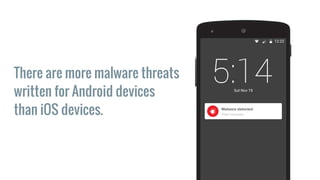
There are more malware threats
written for Android devices
than iOS devices.
Data Wipe
iPhone offers the Erase Data feature,
which wipes the device after 10
consecutive unsuccessful passcode
attempts. Apps exist for Android devices
which can do the same thing, but Apple’s
integration of this security measure into
its operating system speaks to their
consideration of security as a primary
need and doesn’t rely on third party
developers to update or patch an app.
Malware Threats
There are more malware threats written
for Android devices than iOS devices. By
sheer quantity, iOS is less likely to have a
vulnerability. However, rare
vulnerabilities do exist for iOS and its
apps, and just one can wreak havoc if
successfully exploited.
App Security
Apple has always vetted the software it
allowed into its store fairly carefully
compared to Android, which improves
quality across the board. However, many
vulnerabilities occur through
misconfiguration or bad code and won’t
always be caught by a QA center
processing thousands of apps a day.
Versioning
Android OS is currently on version 6.0.1,
which was released in October of 2015. It’
s had regular updates about every year,
usually at a major version level. The latest
iOS version, 9.3.2 came out in May of this
year. Both teams regularly update their
product at the patch level and major
releases tend to coincide with hardware
cycles, almost yearly. Look for faster OS
releases as the need to adapt increases
with new technology.
CSTAR
Apple.com and Android.com both have
great external security presences, with
scores of 877. They take security seriously
on the perimeter and implement
common mechanisms to prevent
vulnerabilities.
Encryption
During the Apple/FBI encryption battle,
much was made about whether an
Android phone would have made any
difference. Google made it clear that their
open encryption, like Apple’s, prevents
even Google from snooping Android
devices. Both platforms use strong
encryption and both companies consider
user privacy a crucial business asset.
Much of Apple’s edge over Android for
security comes at a cost: Apple
gatekeeping what apps are available, the
proprietary relationship between
hardware and software, much more “black
boxed” to end users (unless jailbroken)
than other devices, and a high price tag
that immediately puts it out of reach for
many people. Their reputation for
innovation and being “elite” often puts
them in charge of the way people use their
phones to a greater extent than even a
more popular solution like Android.
Black Boxed
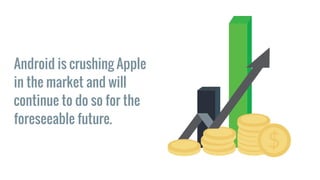
Android is crushing Apple
in the market and will
continue to do so for the
foreseeable future.
But to some extent comparing Android and Apple in this regard is misleading. Android OS is software, designed to run on
a multitude of compliant, but separate, hardware. iOS is both the software and the hardware of the iPhone. The two are
inseparable. This difference cannot be overstated and its ramifications are what truly separates Apple from other
computer corporations, for better and worse.
More malware
will continue to
target Android

Android vs. iPhone for Mobile Security

  • 1.
    Android vs. iPhone forMobile Security
  • 2.
    Operating Systems iOS onlyruns on Apple hardware, and this proprietary pairing has always helped Apple tighten up their systems more than open vendors. Android OS runs on many different types of hardware, each with its own security profile. A security-conscious person may investigate this before buying an Android, but most people would not.
  • 3.
    There are moremalware threats written for Android devices than iOS devices.
  • 4.
    Data Wipe iPhone offersthe Erase Data feature, which wipes the device after 10 consecutive unsuccessful passcode attempts. Apps exist for Android devices which can do the same thing, but Apple’s integration of this security measure into its operating system speaks to their consideration of security as a primary need and doesn’t rely on third party developers to update or patch an app.
  • 5.
    Malware Threats There aremore malware threats written for Android devices than iOS devices. By sheer quantity, iOS is less likely to have a vulnerability. However, rare vulnerabilities do exist for iOS and its apps, and just one can wreak havoc if successfully exploited.
  • 6.
    App Security Apple hasalways vetted the software it allowed into its store fairly carefully compared to Android, which improves quality across the board. However, many vulnerabilities occur through misconfiguration or bad code and won’t always be caught by a QA center processing thousands of apps a day.
  • 7.
    Versioning Android OS iscurrently on version 6.0.1, which was released in October of 2015. It’ s had regular updates about every year, usually at a major version level. The latest iOS version, 9.3.2 came out in May of this year. Both teams regularly update their product at the patch level and major releases tend to coincide with hardware cycles, almost yearly. Look for faster OS releases as the need to adapt increases with new technology.
  • 8.
    CSTAR Apple.com and Android.comboth have great external security presences, with scores of 877. They take security seriously on the perimeter and implement common mechanisms to prevent vulnerabilities.
  • 9.
    Encryption During the Apple/FBIencryption battle, much was made about whether an Android phone would have made any difference. Google made it clear that their open encryption, like Apple’s, prevents even Google from snooping Android devices. Both platforms use strong encryption and both companies consider user privacy a crucial business asset.
  • 10.
    Much of Apple’sedge over Android for security comes at a cost: Apple gatekeeping what apps are available, the proprietary relationship between hardware and software, much more “black boxed” to end users (unless jailbroken) than other devices, and a high price tag that immediately puts it out of reach for many people. Their reputation for innovation and being “elite” often puts them in charge of the way people use their phones to a greater extent than even a more popular solution like Android. Black Boxed
  • 11.
    Android is crushingApple in the market and will continue to do so for the foreseeable future.
  • 12.
    But to someextent comparing Android and Apple in this regard is misleading. Android OS is software, designed to run on a multitude of compliant, but separate, hardware. iOS is both the software and the hardware of the iPhone. The two are inseparable. This difference cannot be overstated and its ramifications are what truly separates Apple from other computer corporations, for better and worse. More malware will continue to target Android