BRIDGING GAPS,
MAKING CONNECTIONS
UKMW15 Museums on the Web
PROVOCATIONS
Hello
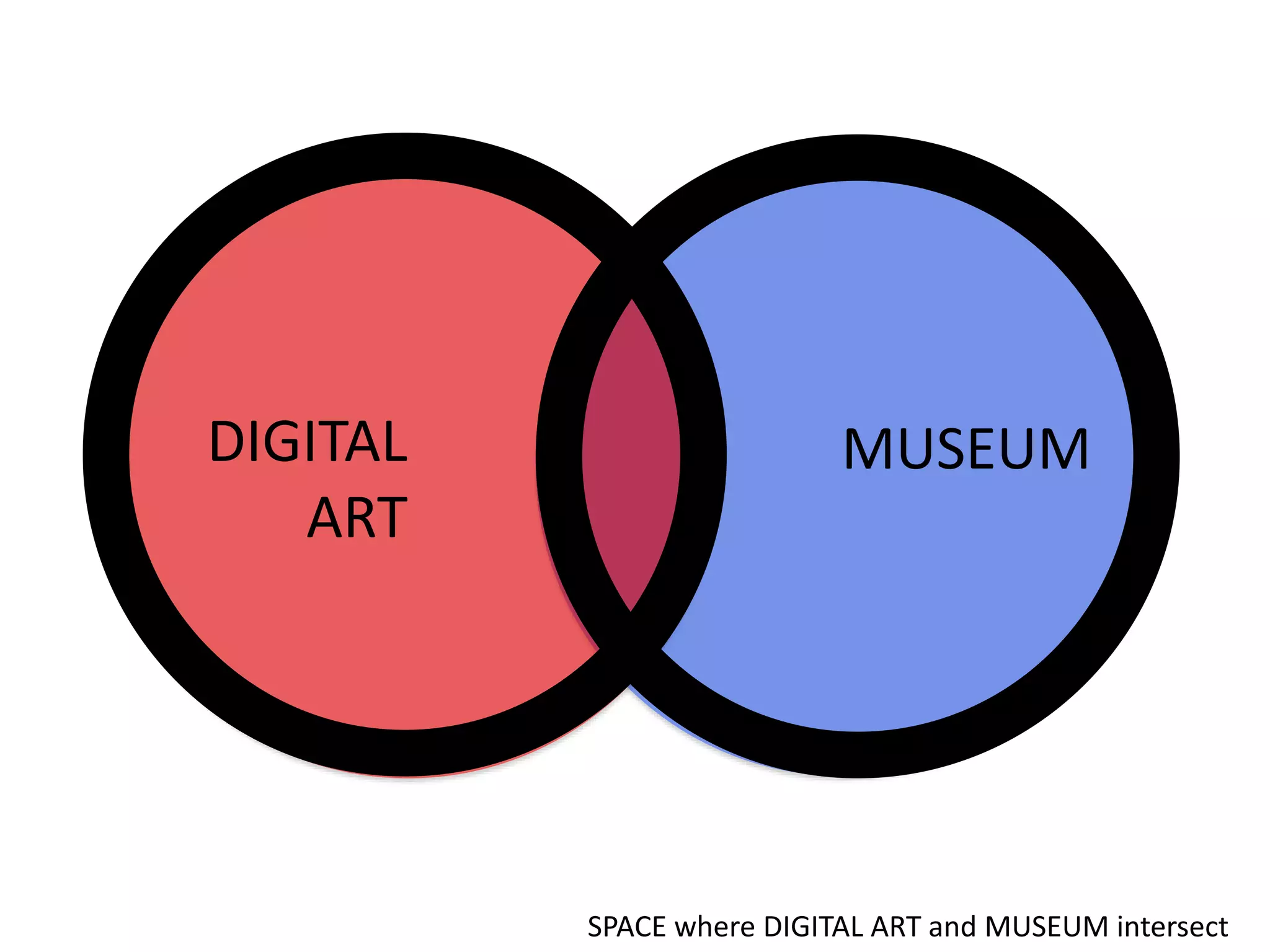
DIGITAL
ART
SPACE where DIGITAL ART and MUSEUM intersect
MUSEUM
Role: Designer? Artist? Technologist?
Dialogue & Friction
Learn? or Play?
Technology: Novelty? Experiment? Headache?
Success? Failure?
=
Develop Conversation
Thank you.

Andrew richardson - The gap as a creative space

Editor's Notes

  • #3 Good afternoon everyone. My name is Andrew. I am from the University of Sunderland where I work in the design department. My specific interest is in field of creative coding I have created novel digital installations for museum and heritage settings. (which I will use as basis for presentation).
  • #4 I would like to discuss my experiences of working in ‘the Gap’ That is to say working in the creative SPACE ‘between’. The space where well defined disciplines (art and heritage) and well defined areas of technology MEET / COLLIDE. Specifically I want to think about the SPACE where DIGITAL ART interacts with a MUSEUM intersect (interact).
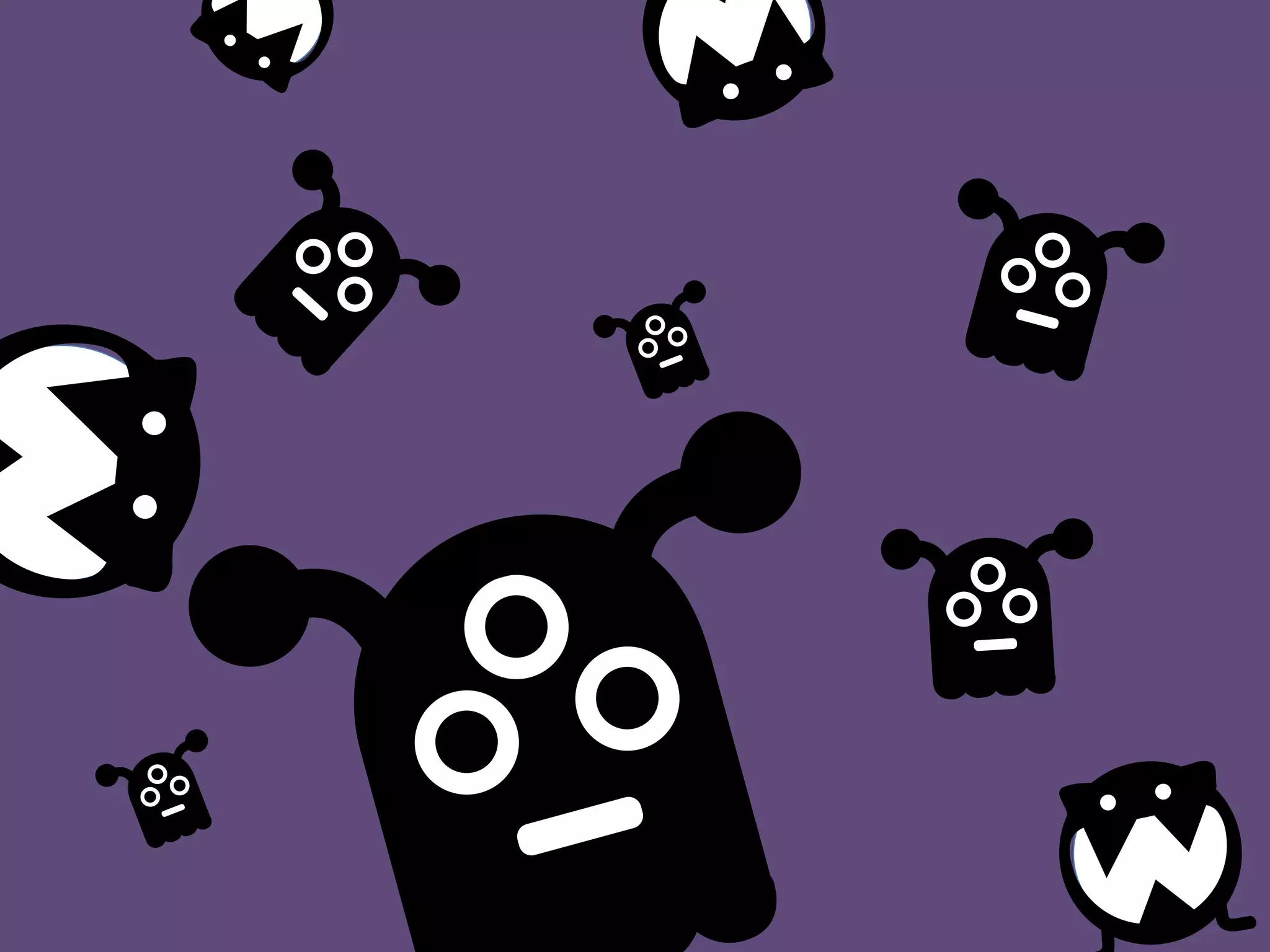
  • #5 The space between disciplines ,between well defined boundaries is a space in which can be a little scary: where unknown things lurk. These can be areas where boundaries, expectations and meanings change. An area which poses questions and raises challenges. A space of Risk / Disruption / Compromise. BUT ALSO a space of creativity, invention experimentation and opportunity
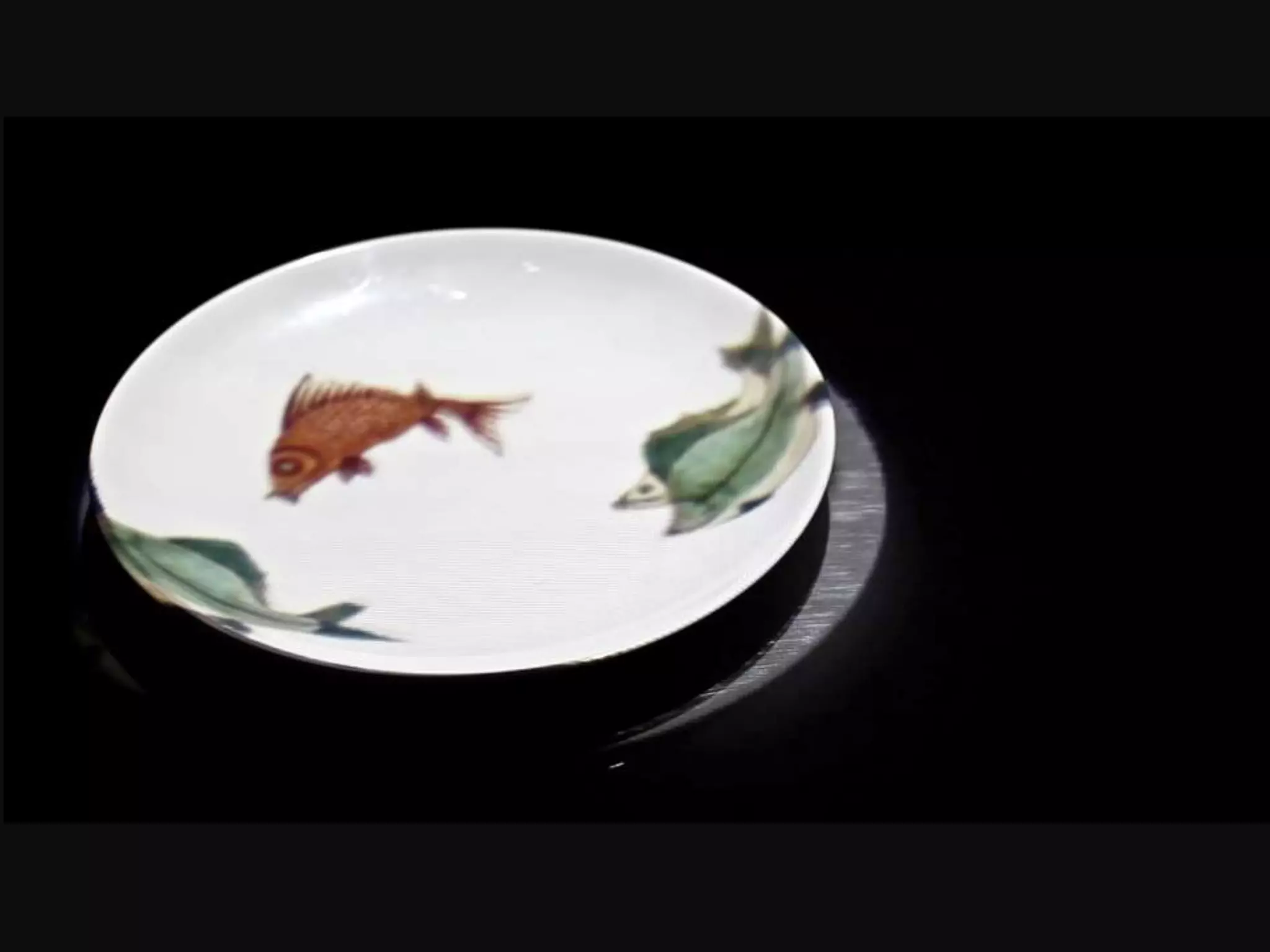
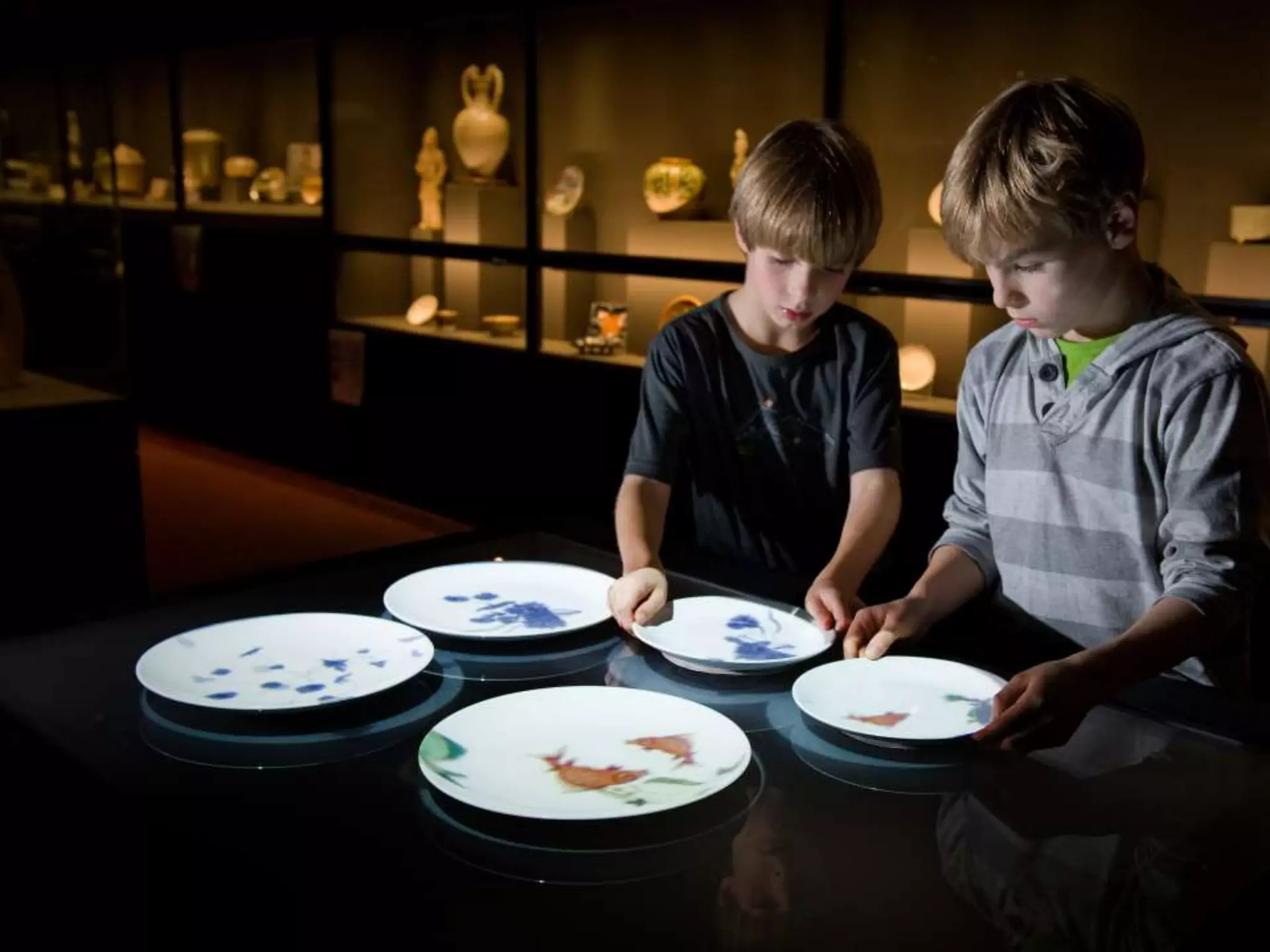
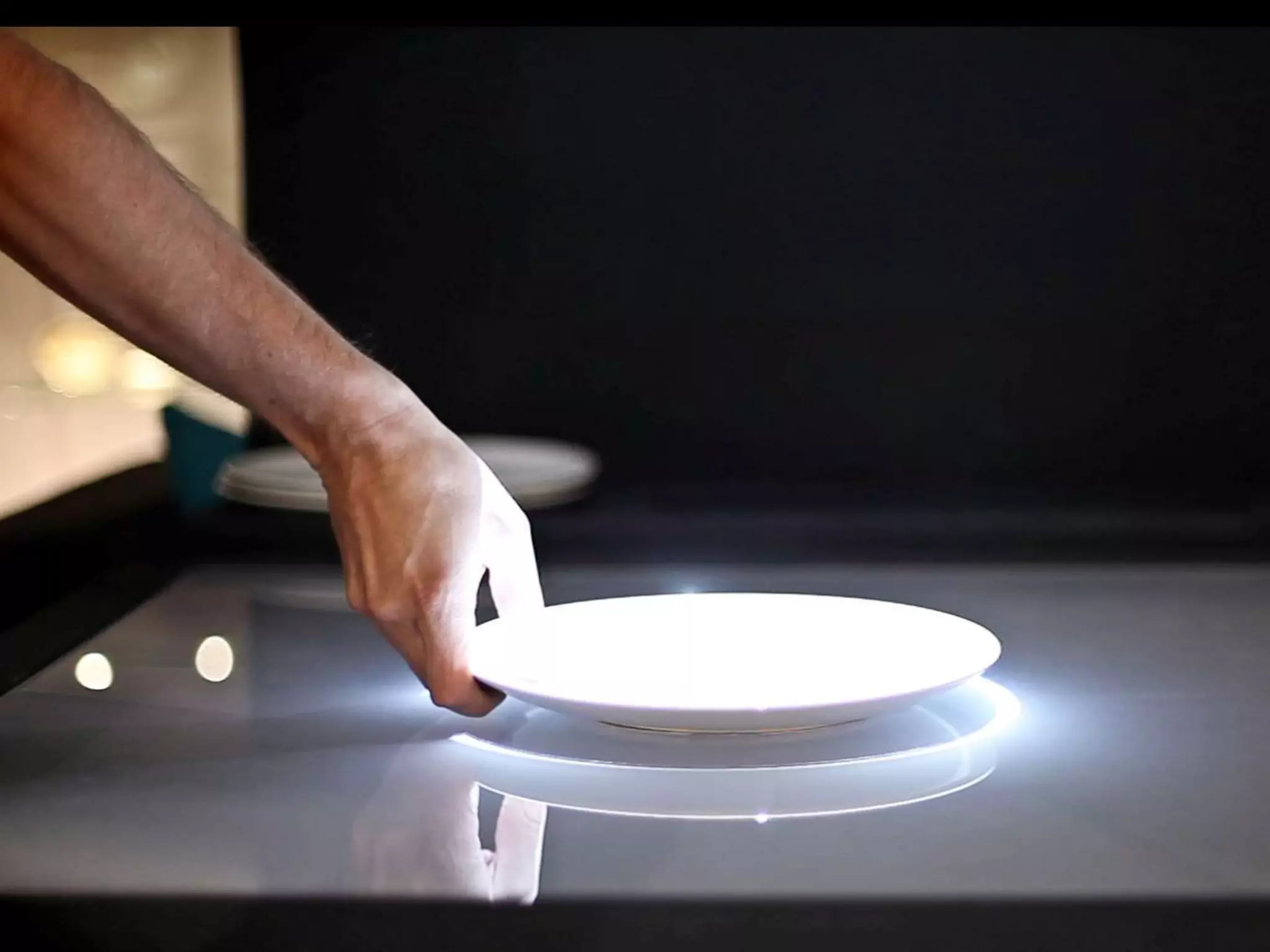
  • #6 As a ‘case study’ to illustrate my thoughts and experiences, I will be using examples taken from an interactive installation I created for the Oriental Museum in Durham. The work was called Pixel Ware. It was an interactive table surface in which digitally animated versions of Chinese ceramic pattern from the collection were dynamically projected onto the surface of physical ceramic plates. The work sits in the GAP: in the intersection of technologies and definitions.
  • #7 The space is a CHALLENGE to the definitions of my CREATIVE ACTIVITY: WHO AM I? How do I define what I DO ? Do I work as a Designer ? An Artist ? Or a Technologist? Or a Combination of all 3? Answers to these questions have implications for the way in which the work is built / created, viewed and received. They reflect the tension between different ROLES and PURPOSES of the work.
  • #8 The introduction of creative digital technology (art?) ALSO CHALLENGES the institutional voice of the museum: It creates a interesting DISRUPTIVE dialogue, a FRICTION within the established narrative. AND a challenge to expectations and perspectives on all sides. This can be unsettling and confusing. Is challenge and confusion necessary? Is it welcomed ? Is it useful?
  • #9 DIGITAL ART work ALSO presents a challenge to museum VISITORS. What is this work for? What is its use? DO I LEARN something ? DO I PLAY? DIGITAL ART aids exploration and PLAY. It encourages visitors to ask their OWN questions. Find their OWN connections and meanings. Visitors may, or may not, find answers. Is this important? Does this matter?
  • #10 Pixel Ware was as an open-ended playful experience. It prompted viewers to play and (perhaps) make connections between the digitally and traditionally generated patterns. To compare the ‘magic’ (skill) of traditional and digital processes.. Not FORMAL or INSTRUCTIONAL but a PLAYFUL experience: which visitors and staff to be enjoyable, unusual and also challenging. The work and the space around it each informed and enhanced EACH OTHER.
  • #11 What ROLE does TECHNOLOGY play in this creative space? A WAY TO EXPERIMENT with IDEAS? – for a creative practitioner A NOVELTY? A toy? – to attract visitors An HEADACHE? – for museum staff Or ALL of the above. Is technological innovation a useful end in itself? Technology DEVOURS innovation. But can be a DISTRACTION.
  • #12 EXPERIMENTATION with TECHNOLOGY was essential to PixelWare Interaction using physical plates encouraged a tactile playful experience Trying to make the technology INVISIBLE. I was conscious of the technology being the ‘star’ Prompting questions about the TECHNOLOGY Rather than enjoying the EXPERIENCE itself. TECHNOLOGY IS A WORD THAT DESCRIBES SOMETHING THAT DOESN'T WORK YET. i.e. it draws attention to itself.
  • #13 SO HOW do we define SUCCESS in this space? Is it defined by: Technology? Artist: It works (ME!) Visitor numbers ? Curator (!) Something else? Something between ? Perhaps RISK needs to be included as part of the evaluation of SUCCESS. ‘Failures’ can be judged as successful RISK taking? Perhaps a success is marked as being the of an DIALOGUE with creative technology ?
  • #14 Pixel Ware project highlighted different measurements of success. It had MANY glitches & tested patience. For me it was ‘successful: I made it and it WORKED (!) HOWEVER it was not without its challenges: - tech issues: its upkeep / maintenance - size: taking up space within a small gallery - portability: how to re-use and restore? But I was happy that the museum took the RISK. Visitor reaction was very positive.
  • #15 Creative spaces are a messy, risky, cluttered places: Of Technology, Differing Priorities, and Ideas. They: - create challenge - cause confusion - cause friction and disruption - require compromise Exploring these space is ESSENTIAL All parties benefit from the CREATIVE process: Even if its working out how to do things BETTER next time.
  • #16 Growth and innovation occurs through Ongoing conversations and DIALOGUE Allow artists in: DEVELOP DIALOGUE: Face fears and embrace the monsters. Allows disruption Embrace friction & confusion. Embrace ‘failure’ Take risks. LOVE the monsters outlined at the start. .. (this may mean change both for the artist and the institution)... // may lead to interesting results...
  • #17 Working in the space ‘between ‘offers challenges and innovations. It is a place to play and experiment A creative space, that I am pleased to occupy. It can be challenging but is a space which is ultimately rewarding and satisfying.