Ancient Persian Languages and Record Keeping (550 BCE – 400 BCE) Ancient Persians had many languages and writing systems. Used writing for many purpose. Writings were etched. Writing was not a general skill; performed by scribes. Languages and writing forms from this time influence later languages and writing forms.
Written Languages of Ancient Persia Many written languages were used at the same time. Old Persian Akkadian Aramaic Elamite Different languages were often used for different purposes. Often had different origins. Mostly based on cuneiform. Each language had many symbols.
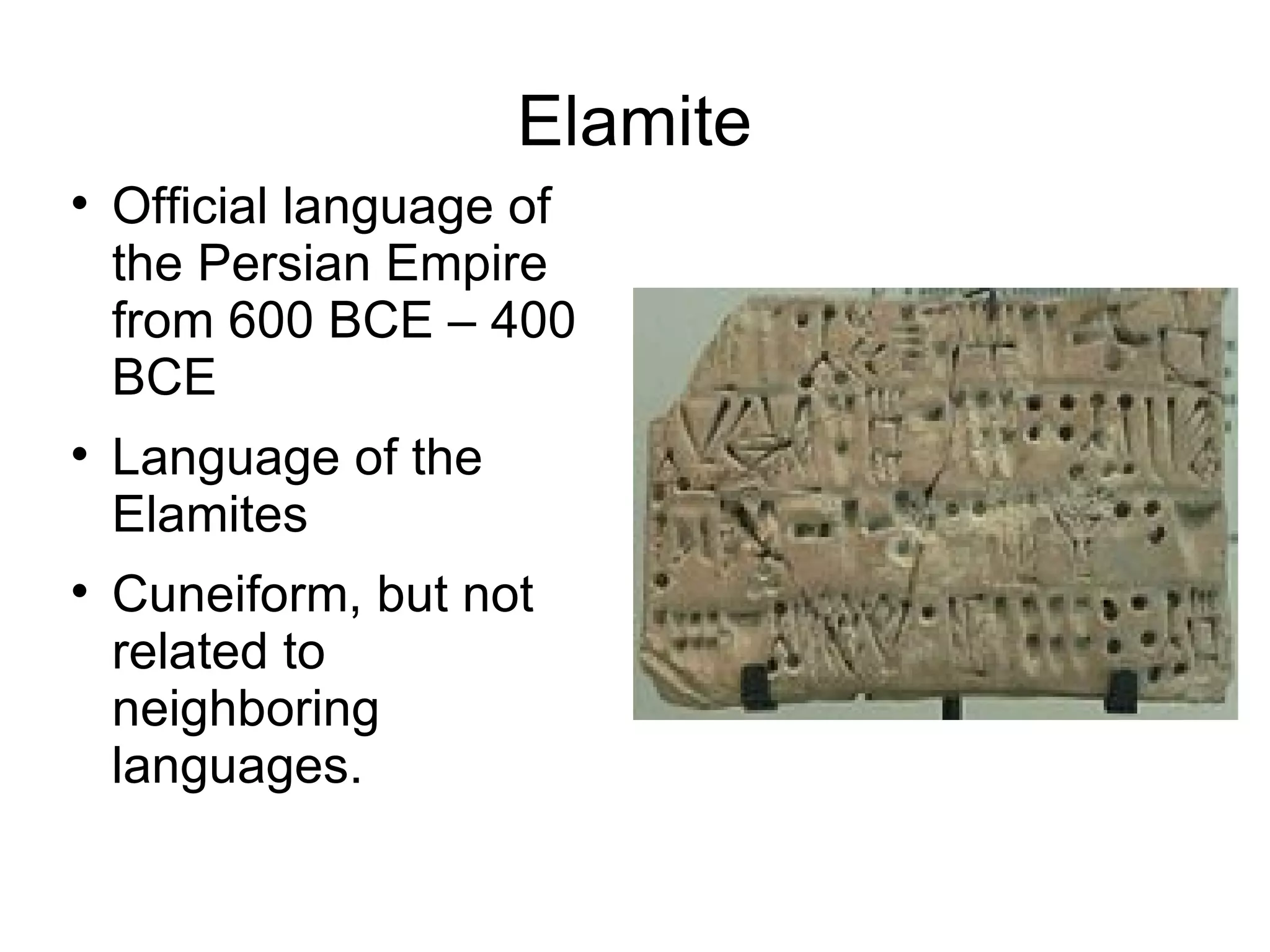
Elamite Official language of the Persian Empire from 600 BCE – 400 BCE Language of the Elamites Cuneiform, but not related to neighboring languages.
Old Persian Created by Darius I between 522 BCE and 486 BCE. Darius I wanted a written form of his native language to record his exploits. Mainly used for high status purposes.  Not used much for literature or record keeping. Heavily influenced by Aramaic concepts. Only had 42 signs.  Was more alphabetic than syllabic.
Other Languages Used for literature, record keeping, religion. Akkadian 2500 BCE – 1900 BCE Semitic Used in Mesipotamia Cuneiform Aramaic 1000 BCE – 600 BCE Influenced many other languages Widespread because of use in trade
What Was Written Persians kept extensive government records. Literature Religion Records of war and exploits
Scripts Writings were usually on clay tablets (sometimes they wrote on cliffs). Used special writing instruments
Who Did the Writing Writing was not a general skill Writing done by scribes High level people were illiterate.  Writing was beneath them.
Influence Old Persian became Middle Persian then Late Persian. Middle Persian was an official language around 300 BCE. Influenced later languages. Ancient Aramaic influenced a lot of later languages. Cuneiform influence our current alphabet.

Ancient Persian Writing

  • 1.
    Ancient Persian Languagesand Record Keeping (550 BCE – 400 BCE) Ancient Persians had many languages and writing systems. Used writing for many purpose. Writings were etched. Writing was not a general skill; performed by scribes. Languages and writing forms from this time influence later languages and writing forms.
  • 2.
    Written Languages ofAncient Persia Many written languages were used at the same time. Old Persian Akkadian Aramaic Elamite Different languages were often used for different purposes. Often had different origins. Mostly based on cuneiform. Each language had many symbols.
  • 3.
    Elamite Official languageof the Persian Empire from 600 BCE – 400 BCE Language of the Elamites Cuneiform, but not related to neighboring languages.
  • 4.
    Old Persian Createdby Darius I between 522 BCE and 486 BCE. Darius I wanted a written form of his native language to record his exploits. Mainly used for high status purposes. Not used much for literature or record keeping. Heavily influenced by Aramaic concepts. Only had 42 signs. Was more alphabetic than syllabic.
  • 5.
    Other Languages Usedfor literature, record keeping, religion. Akkadian 2500 BCE – 1900 BCE Semitic Used in Mesipotamia Cuneiform Aramaic 1000 BCE – 600 BCE Influenced many other languages Widespread because of use in trade
  • 6.
    What Was WrittenPersians kept extensive government records. Literature Religion Records of war and exploits
  • 7.
    Scripts Writings wereusually on clay tablets (sometimes they wrote on cliffs). Used special writing instruments
  • 8.
    Who Did theWriting Writing was not a general skill Writing done by scribes High level people were illiterate. Writing was beneath them.
  • 9.
    Influence Old Persianbecame Middle Persian then Late Persian. Middle Persian was an official language around 300 BCE. Influenced later languages. Ancient Aramaic influenced a lot of later languages. Cuneiform influence our current alphabet.