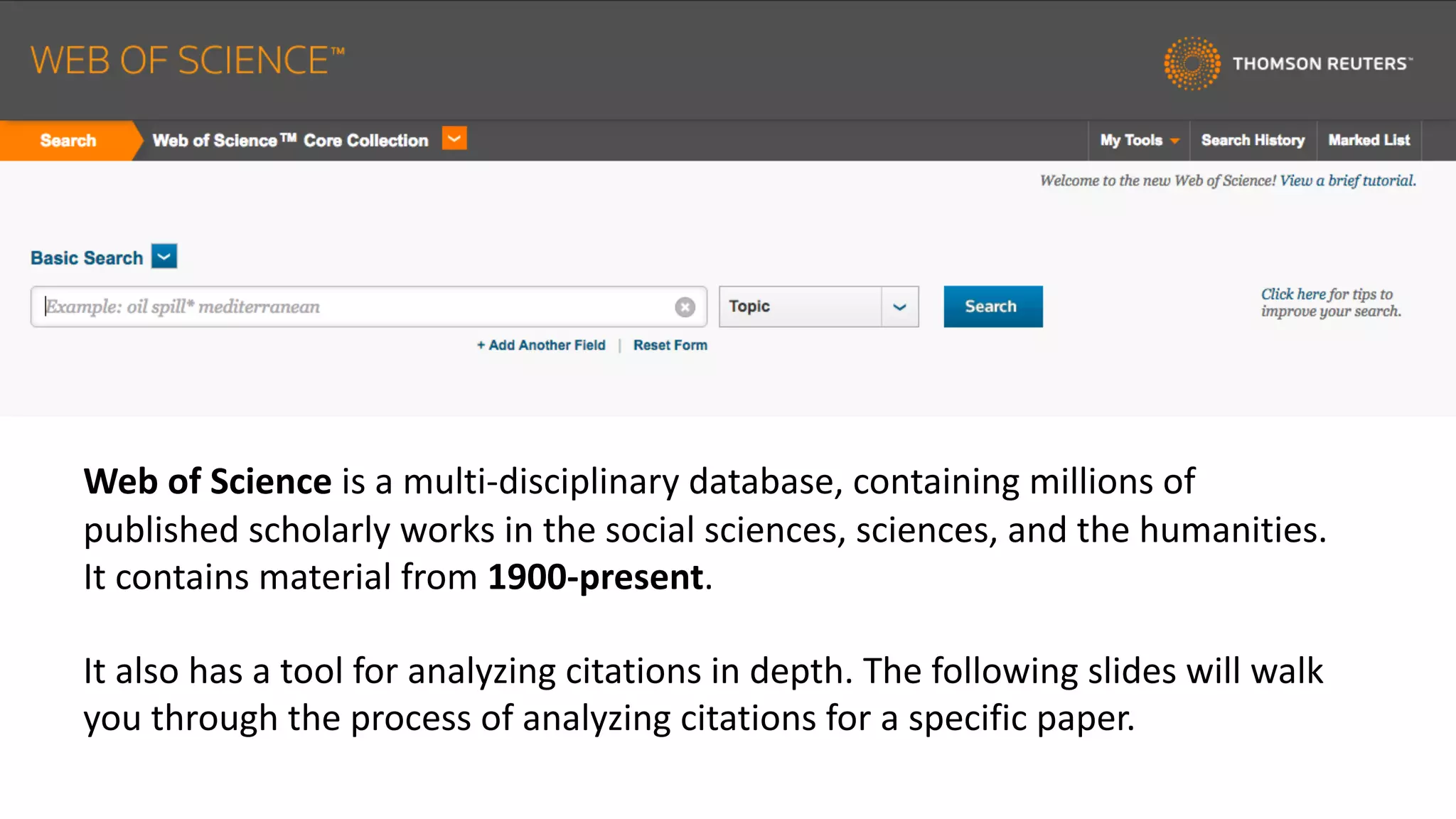
Web	of	Science	is	a	multi-disciplinary	database,	containing	millions	of	
published	scholarly	works	in	the	social	sciences,	sciences,	and	the	humanities.		
It	contains	material	from	1900-present.
It	also	has	a	tool	for	analyzing	citations	in	depth.	The	following	slides	will	walk	
you	through	the	process	of	analyzing	citations	for	a	specific	paper.
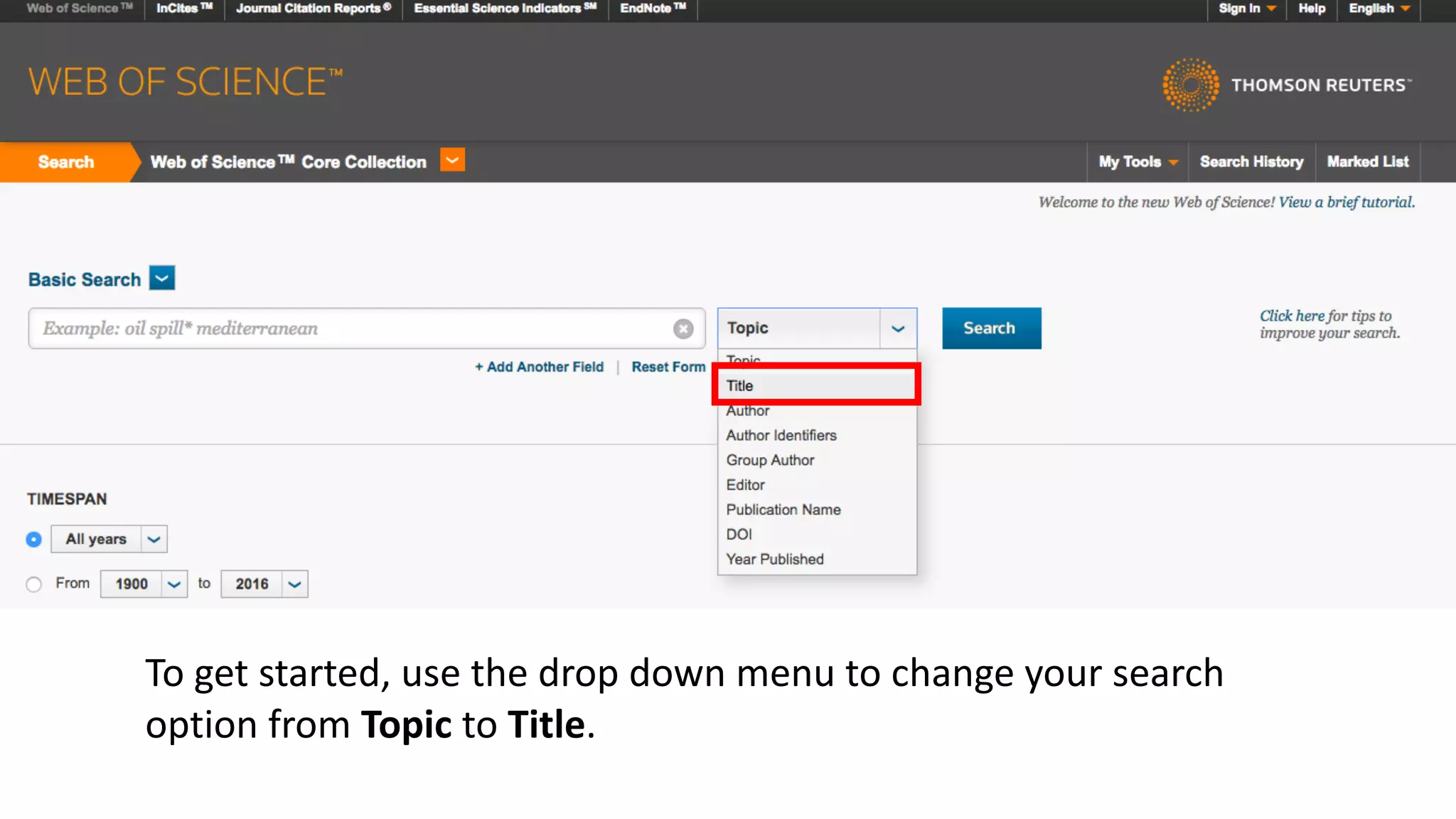
To	get	started,	use	the	drop	down	menu	to	change	your	search	
option	from	Topic to	Title.
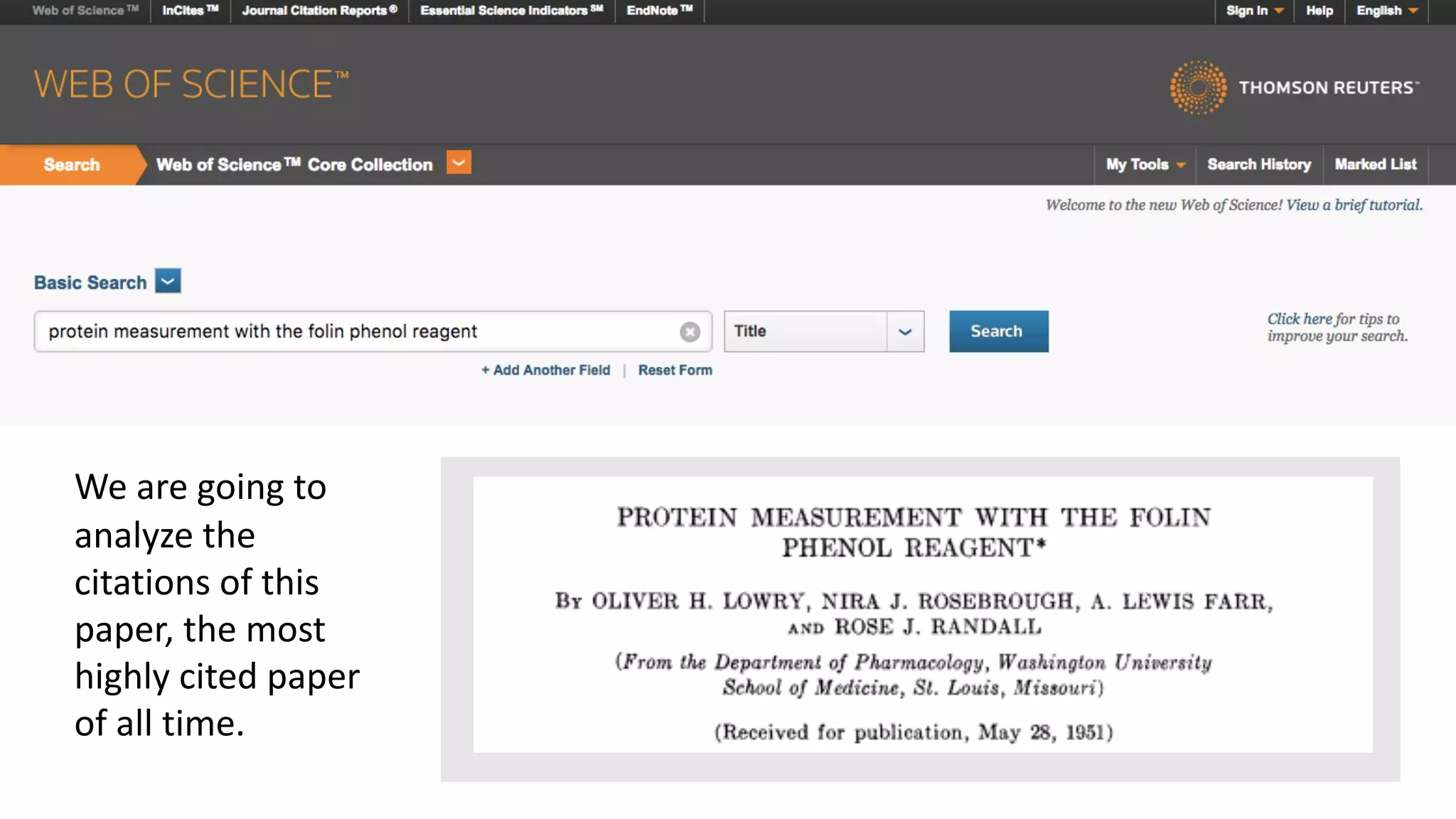
We	are	going	to	
analyze	the	
citations	of	this	
paper,	the	most	
highly	cited	paper	
of	all	time.
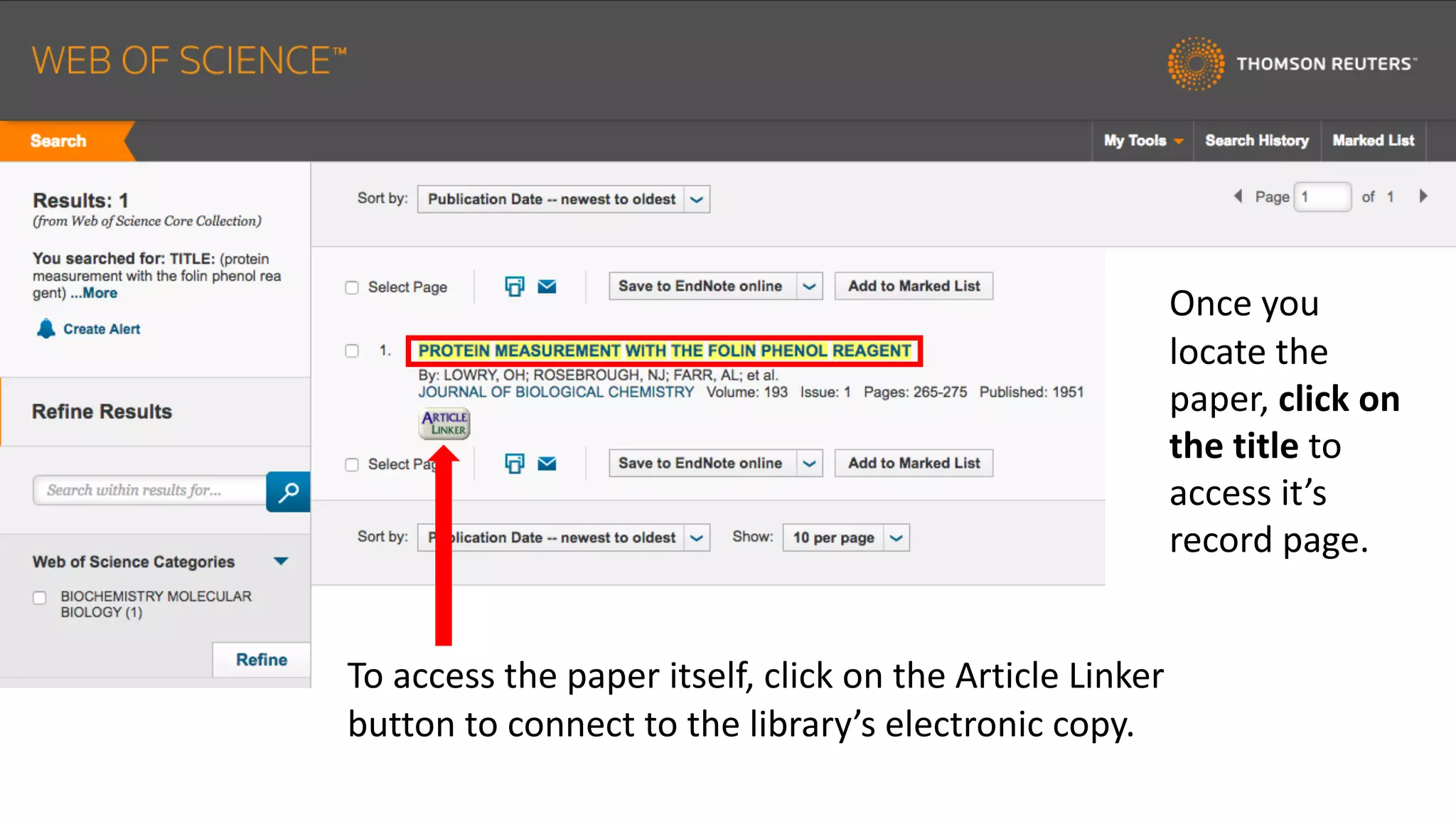
Once	you	
locate	the	
paper,	click	on	
the	title	to	
access	it’s	
record	page.
To	access	the	paper	itself,	click	on	the	Article	Linker	
button	to	connect	to	the	library’s	electronic	copy.
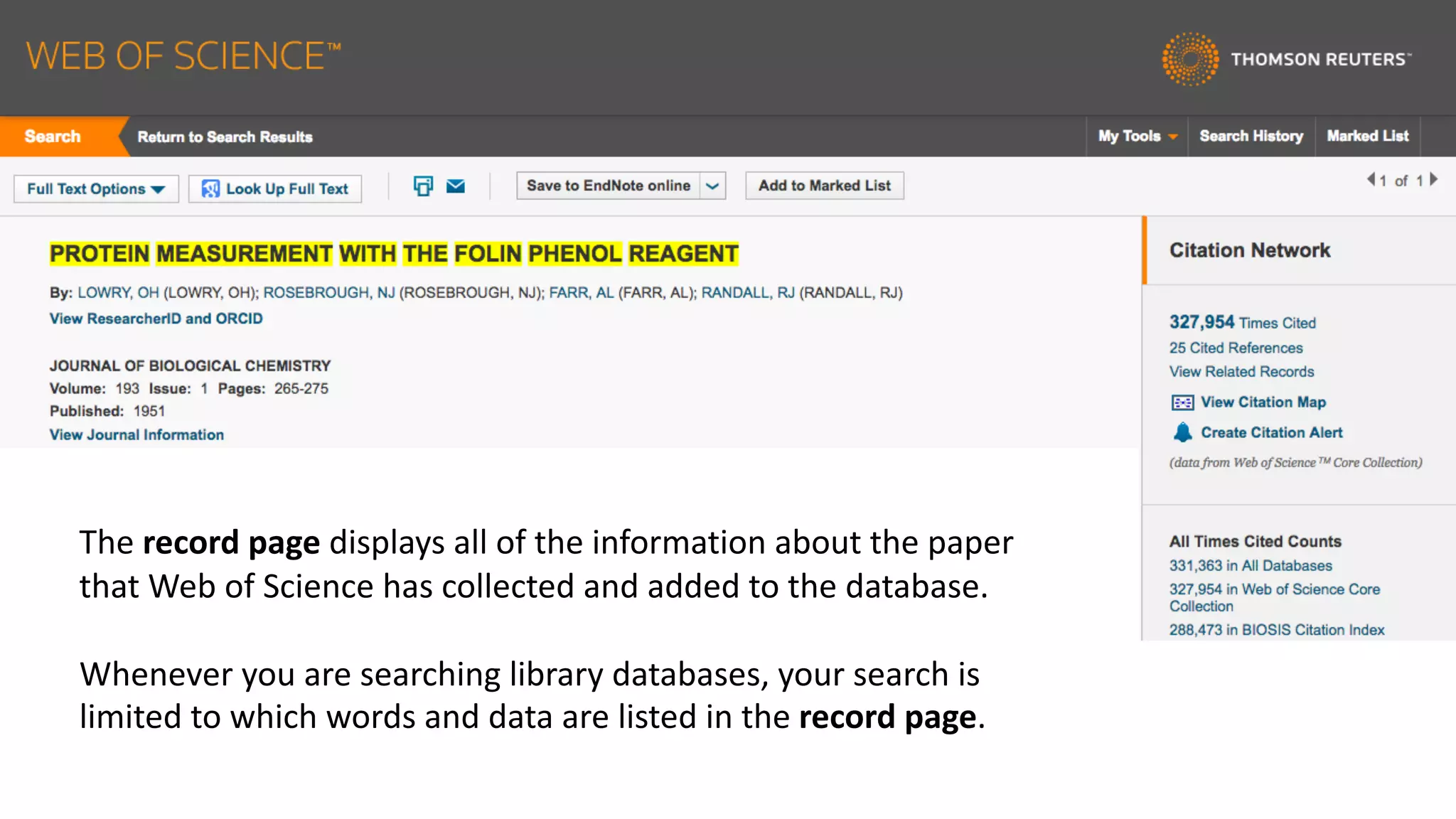
The	record	page	displays	all	of	the	information	about	the	paper	
that	Web	of	Science	has	collected	and	added	to	the	database.
Whenever	you	are	searching	library	databases,	your	search	is	
limited	to	which	words	and	data	are	listed	in	the	record	page.
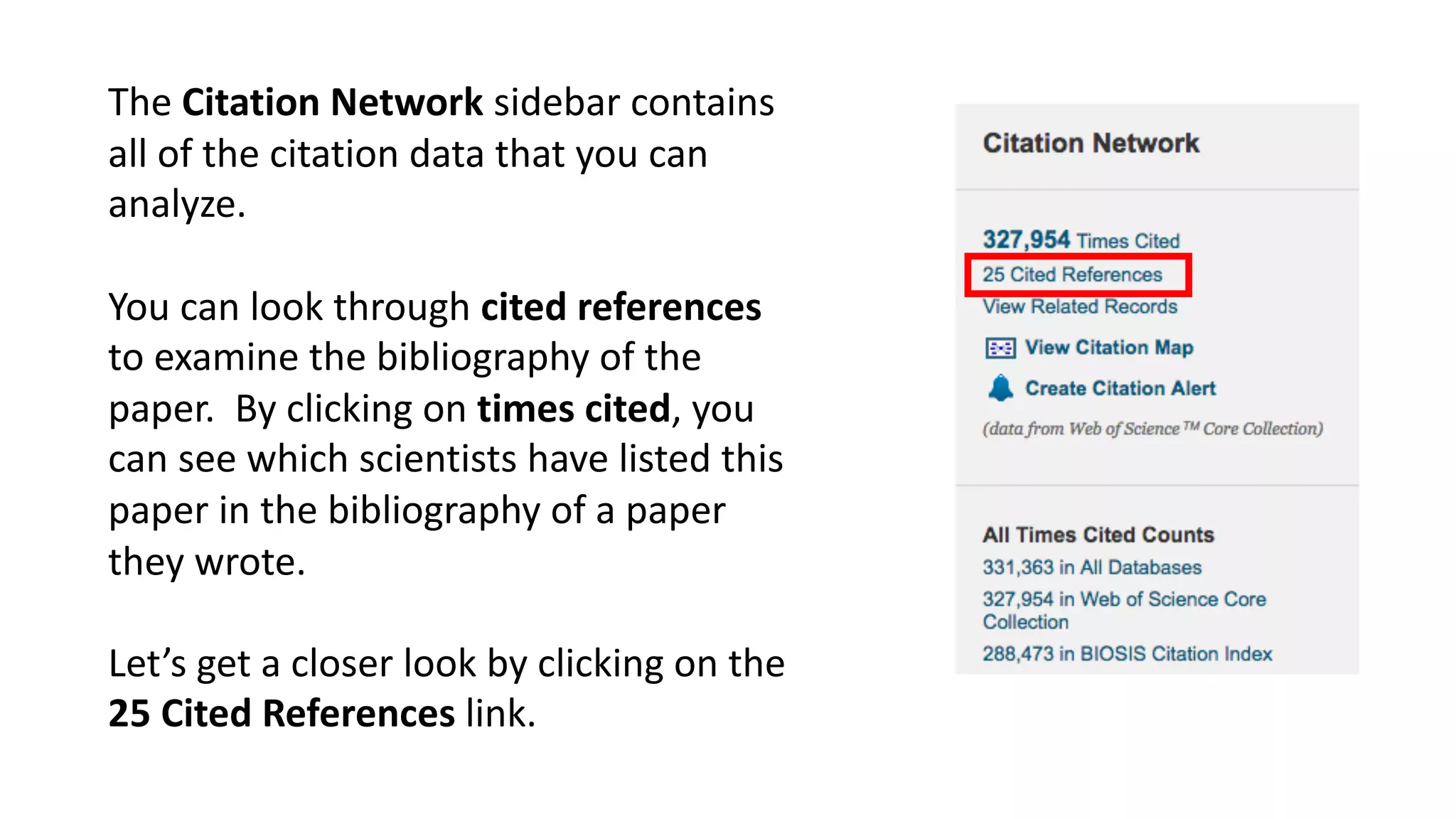
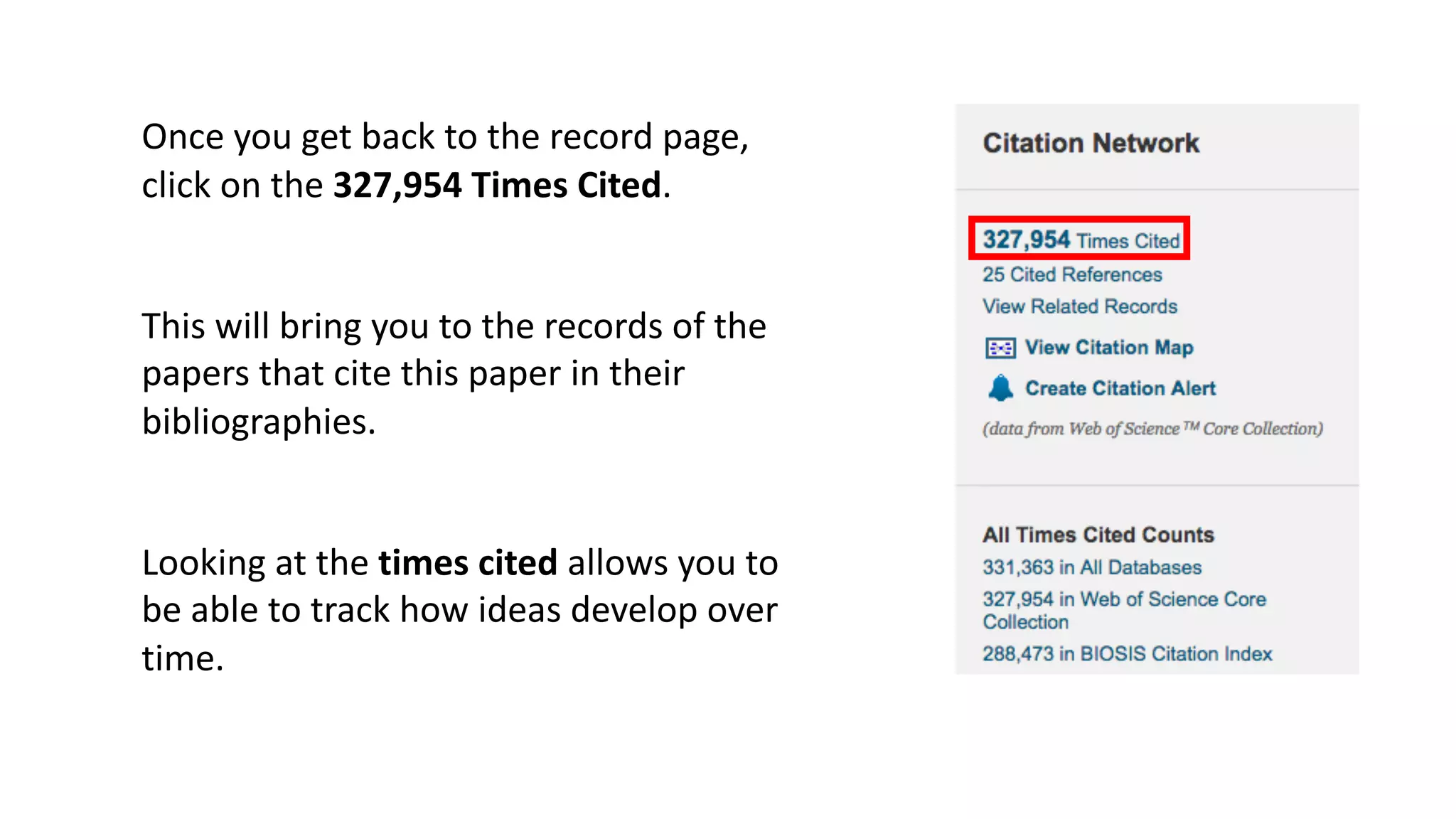
The	Citation	Network	sidebar	contains	
all	of	the	citation	data	that	you	can	
analyze.	
You	can	look	through	cited	references	
to	examine	the	bibliography	of	the	
paper.	 By	clicking	on	times	cited,	you	
can	see	which	scientists	have	listed	this	
paper	in	the	bibliography	of	a	paper	
they	wrote.	
Let’s	get	a	closer	look	by	clicking	on	the	
25	Cited	References	link.
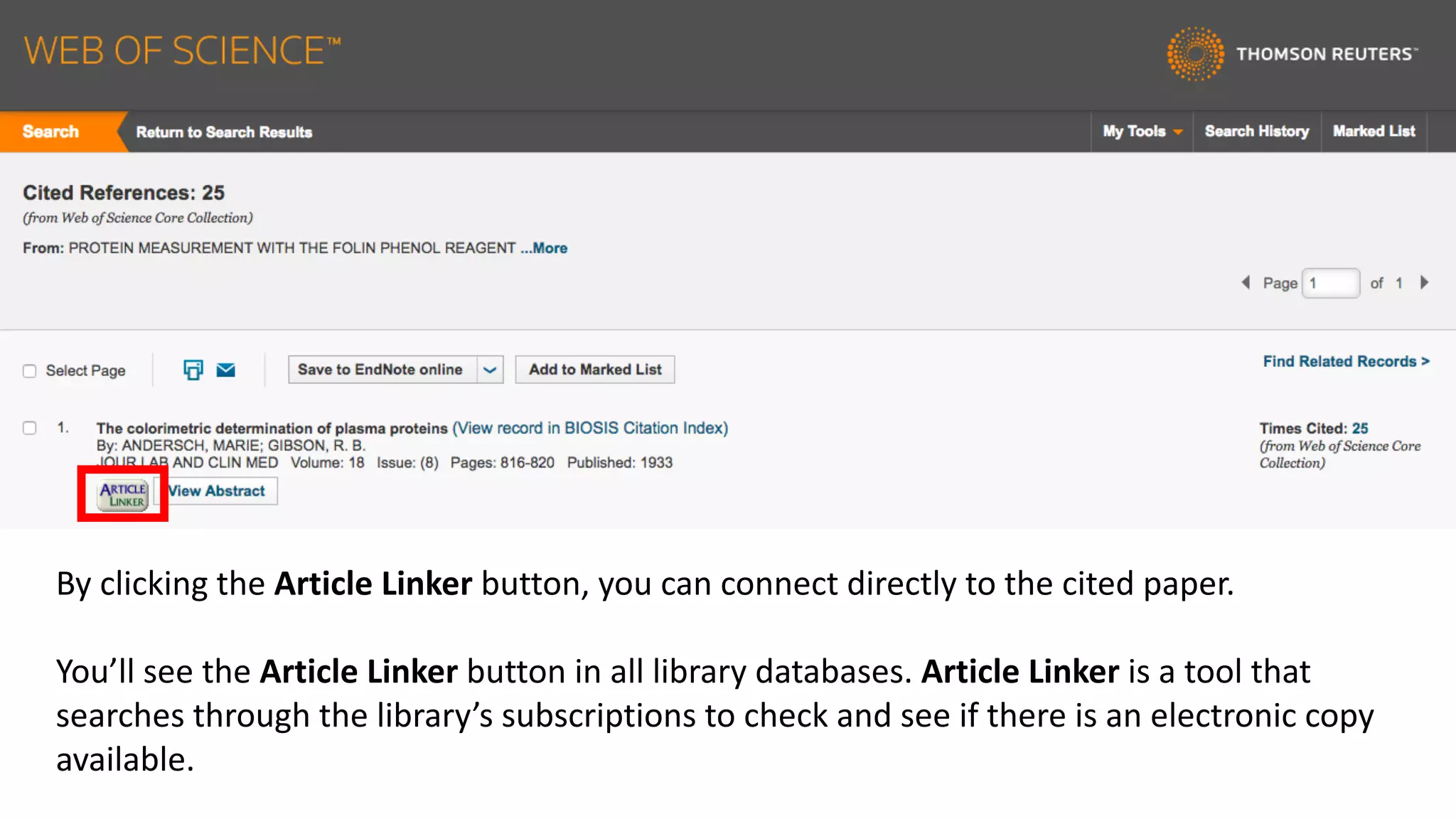
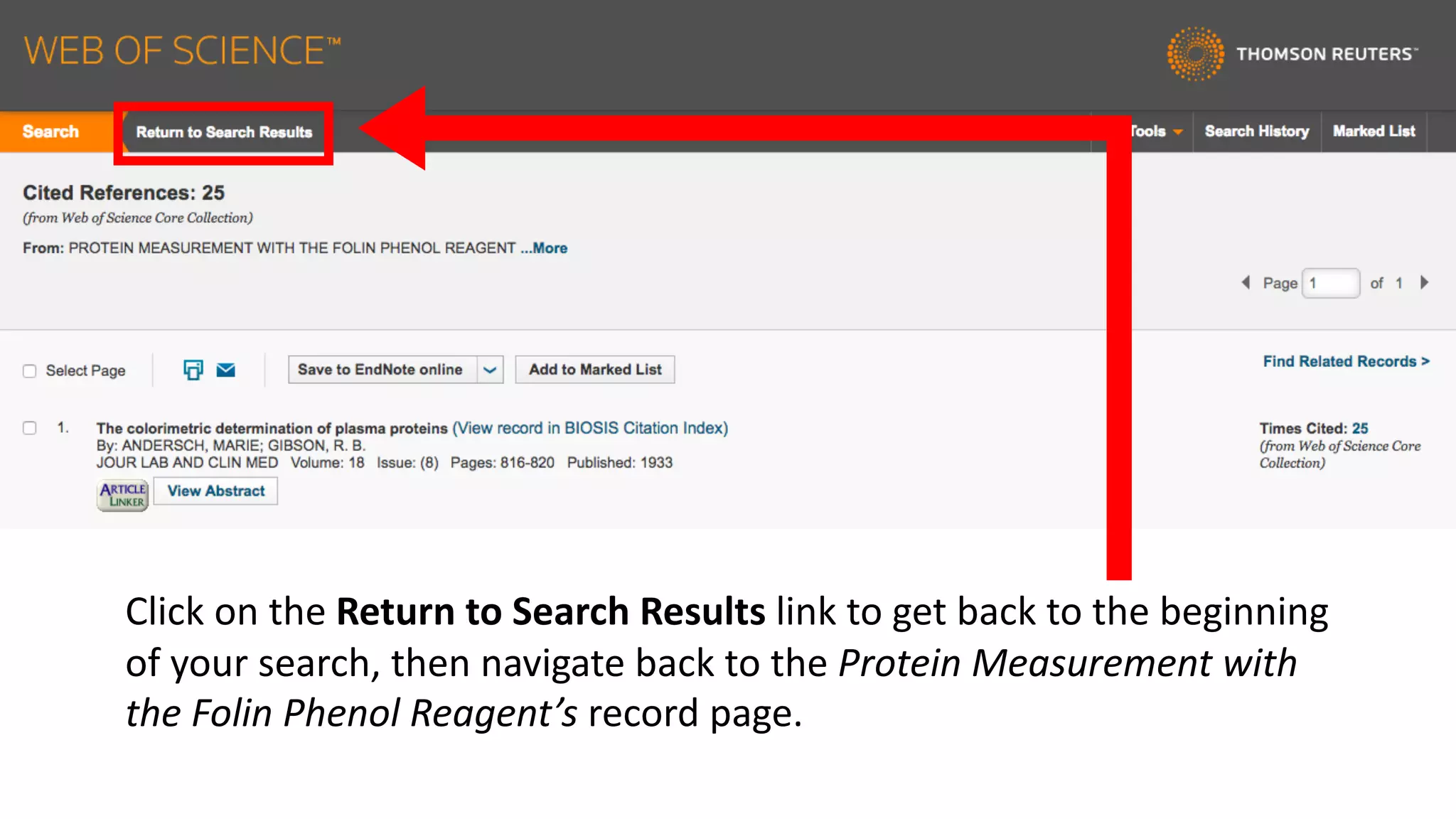
By	clicking	the	Article	Linker	button,	you	can	connect	directly	to	the	cited	paper.
You’ll	see	the	Article	Linker	button	in	all	library	databases.	Article	Linker	is	a	tool	that	
searches	through	the	library’s	subscriptions	to	check	and	see	if	there	is	an	electronic	copy	
available.
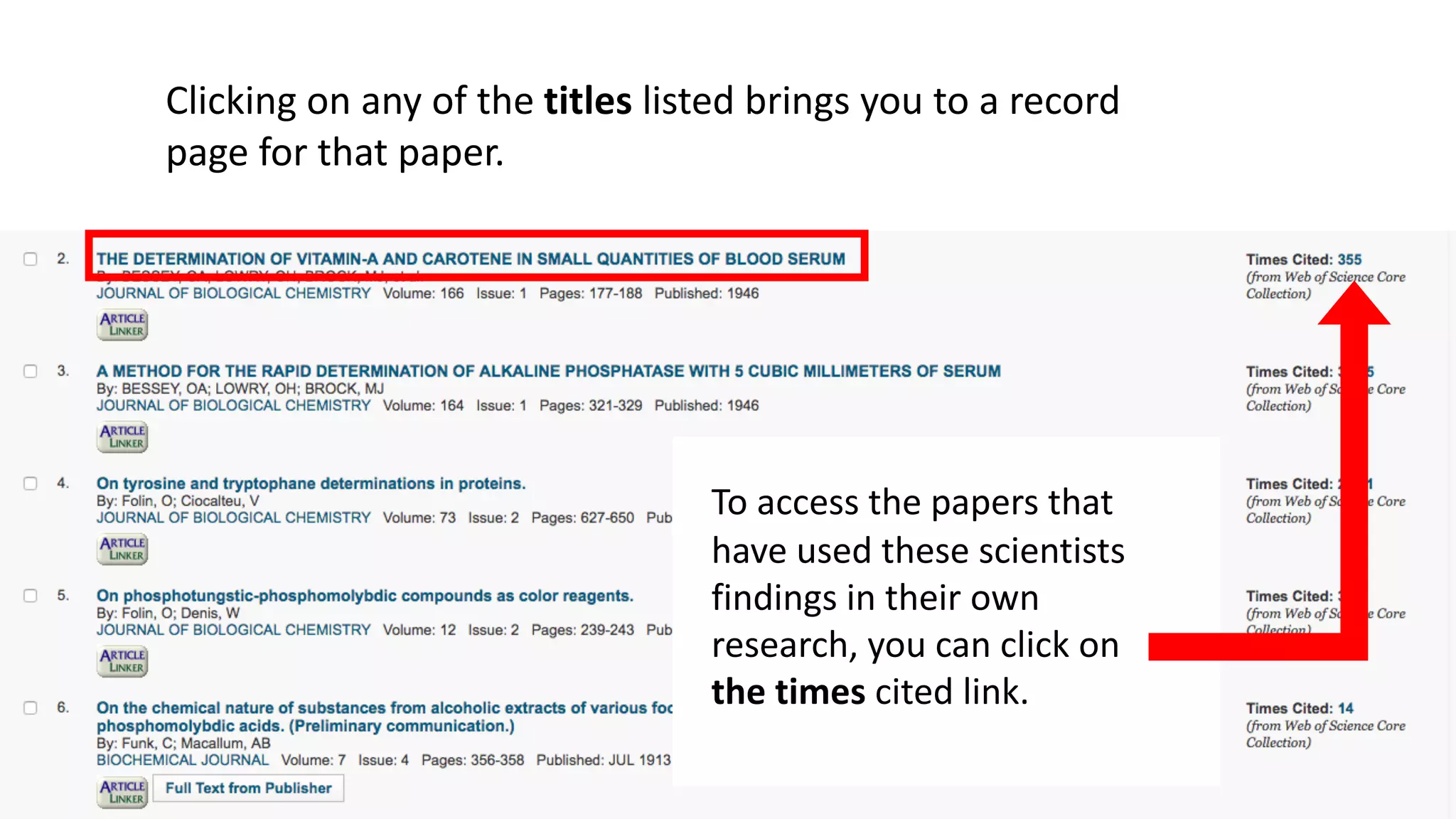
Clicking	on	any	of	the	titles listed	brings	you	to	a	record	
page	for	that	paper.	
To	access	the	papers	that	
have	used	these	scientists	
findings	in	their	own	
research,	you	can	click	on	
the	times	cited	link.
Click	on	the	Return	to	Search	Results	link	to	get	back	to	the	beginning	
of	your	search,	then	navigate	back	to	the	Protein	Measurement	with	
the	Folin Phenol	Reagent’s	record	page.
Once	you	get	back	to	the	record	page,	
click	on	the	327,954	Times	Cited.
This	will	bring	you	to	the	records	of	the	
papers	that	cite	this	paper	in	their	
bibliographies.	
Looking	at	the	times	cited	allows	you	to	
be	able	to	track	how	ideas	develop	over	
time.
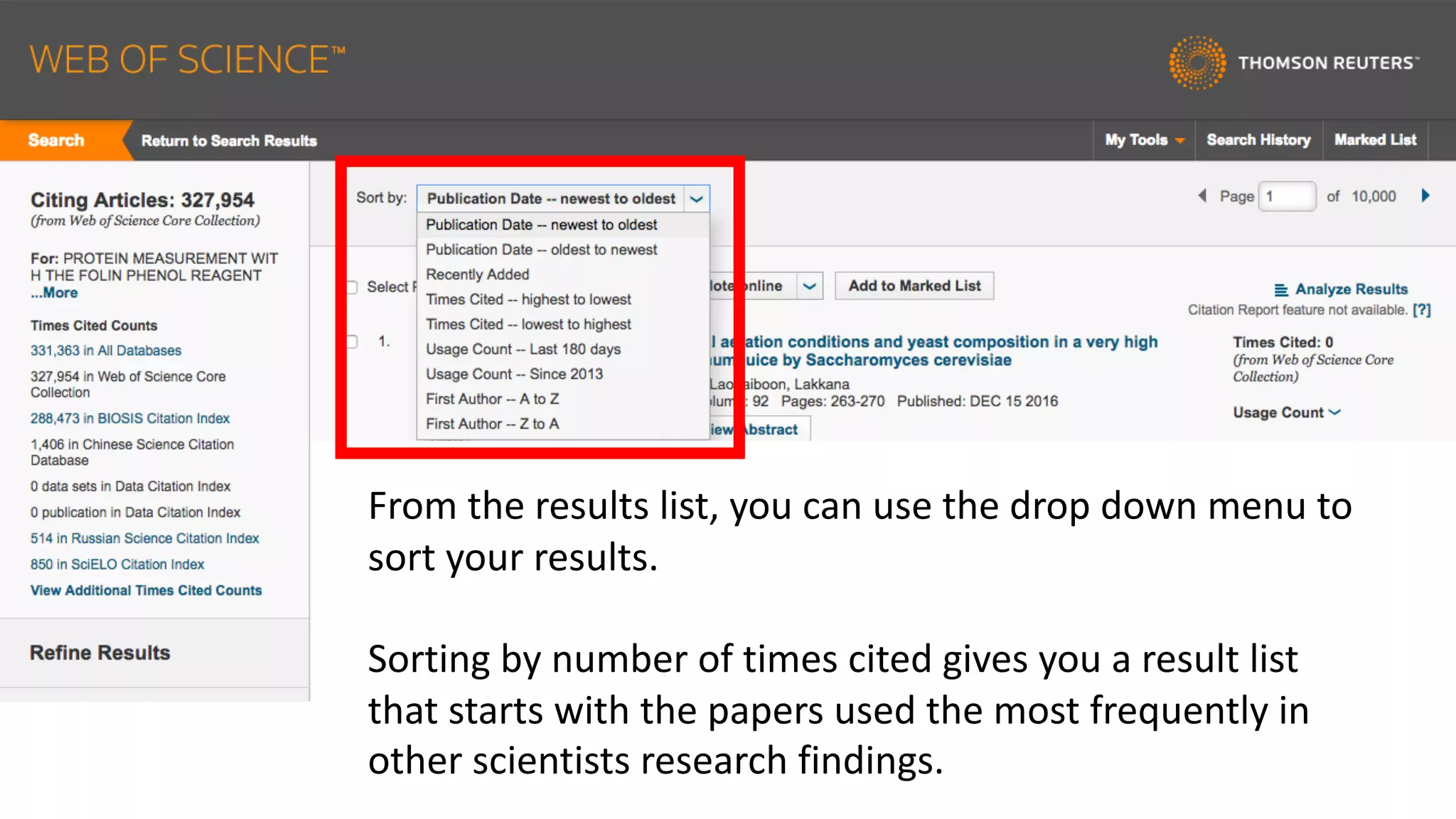
From	the	results	list,	you	can	use	the	drop	down	menu	to	
sort	your	results.	
Sorting	by	number	of	times	cited	gives	you	a	result	list	
that	starts	with	the	papers	used	the	most	frequently	in	
other	scientists	research	findings.
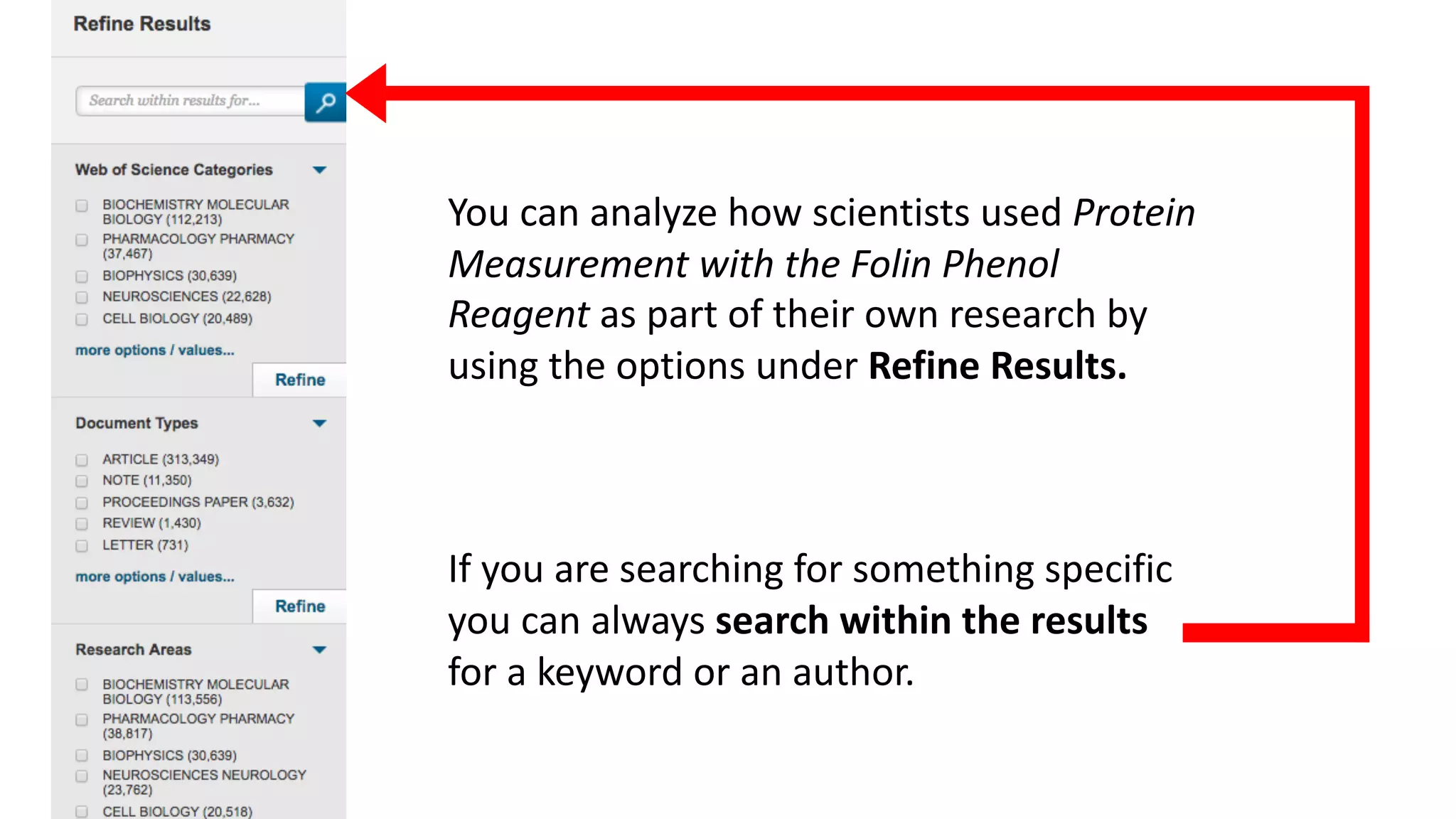
You	can	analyze	how	scientists	used	Protein	
Measurement	with	the	Folin Phenol	
Reagent	as	part	of	their	own	research	by	
using	the	options	under	Refine	Results.
If	you	are	searching	for	something	specific	
you	can	always	search	within	the	results	
for	a	keyword	or	an	author.
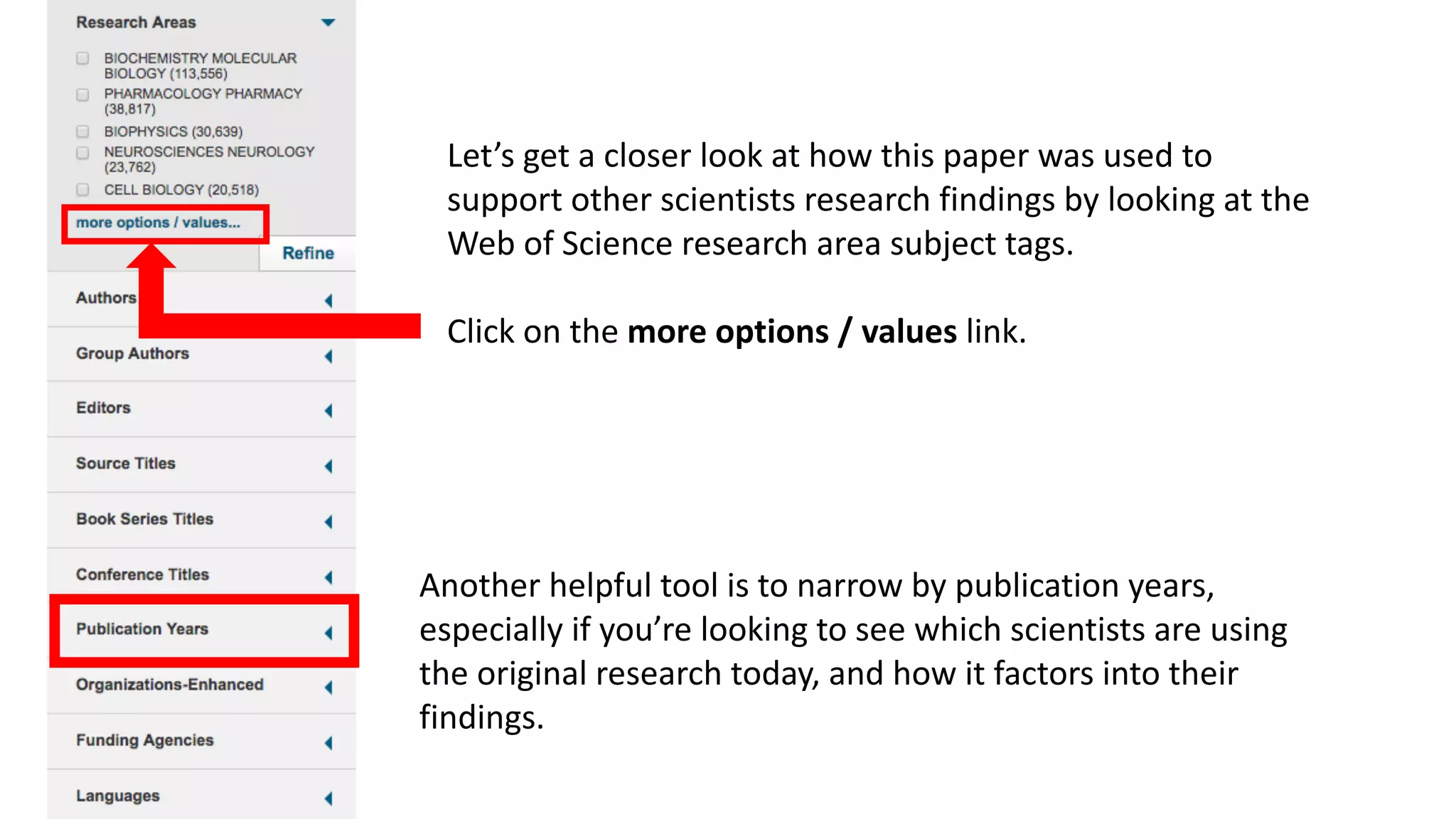
Another	helpful	tool	is	to	narrow	by	publication	years,	
especially	if	you’re	looking	to	see	which	scientists	are	using	
the	original	research	today,	and	how	it	factors	into	their	
findings.
Let’s	get	a	closer	look	at	how	this	paper	was	used	to	
support	other	scientists	research	findings	by	looking	at	the	
Web	of	Science	research	area	subject	tags.
Click	on	the	more	options	/	values	link.
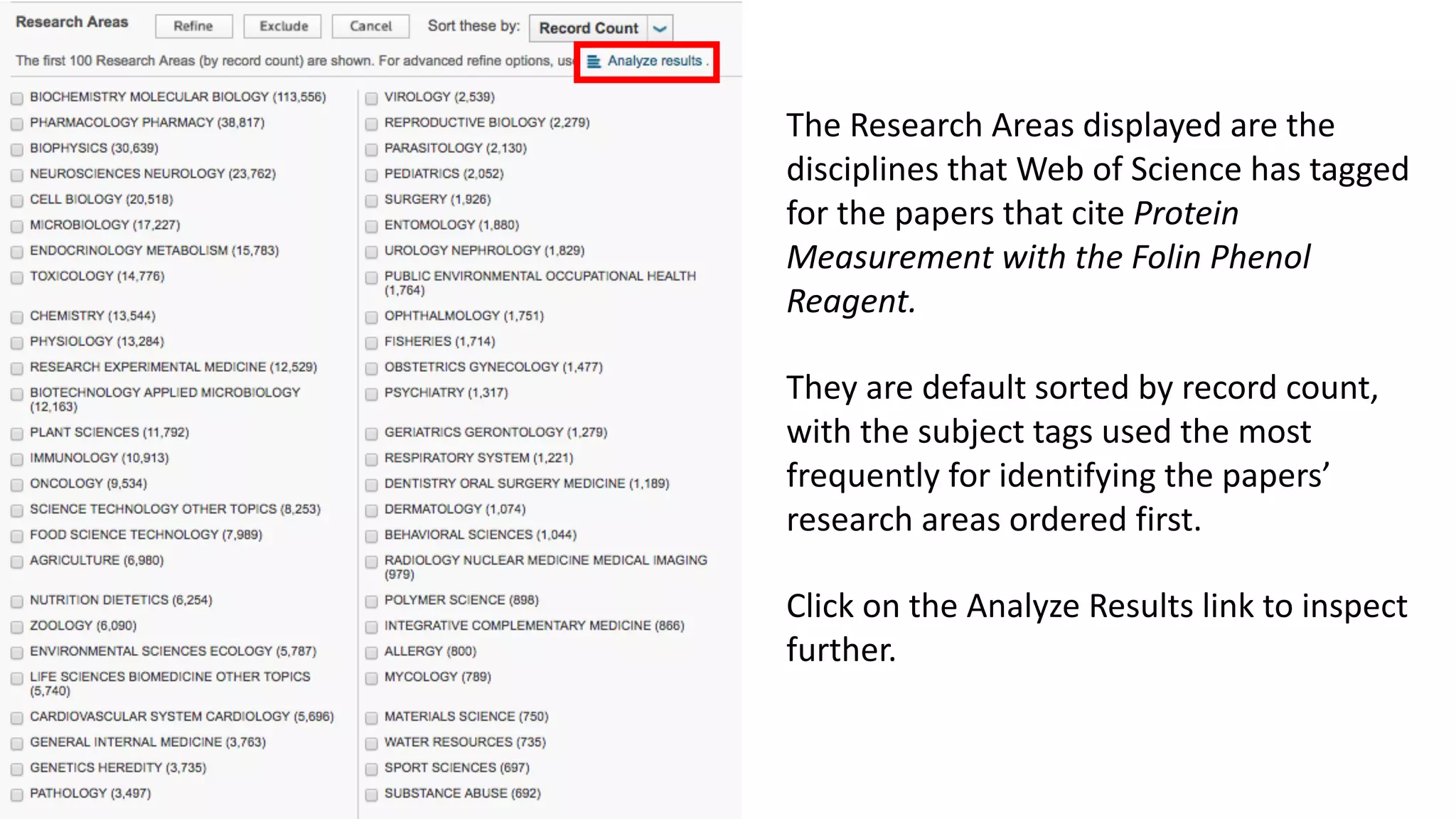
The	Research	Areas	displayed	are	the	
disciplines	that	Web	of	Science	has	tagged	
for	the	papers	that	cite	Protein	
Measurement	with	the	Folin Phenol	
Reagent.
They	are	default	sorted	by	record	count,	
with	the	subject	tags	used	the	most	
frequently	for	identifying	the	papers’	
research	areas	ordered	first.	
Click	on	the	Analyze	Results	link	to	inspect	
further.
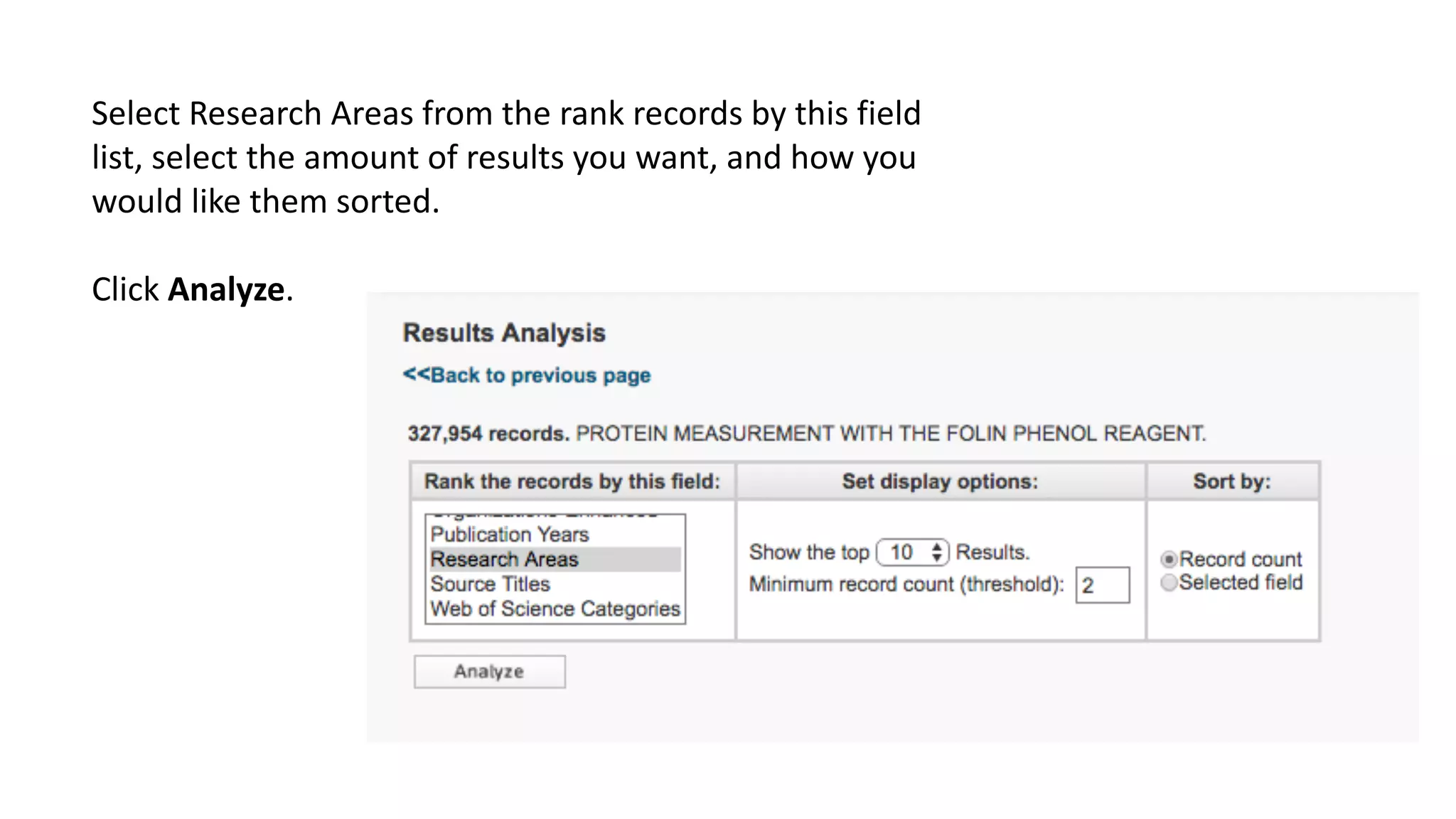
Select	Research	Areas	from	the	rank	records	by	this	field	
list,	select	the	amount	of	results	you	want,	and	how	you	
would	like	them	sorted.	
Click	Analyze.
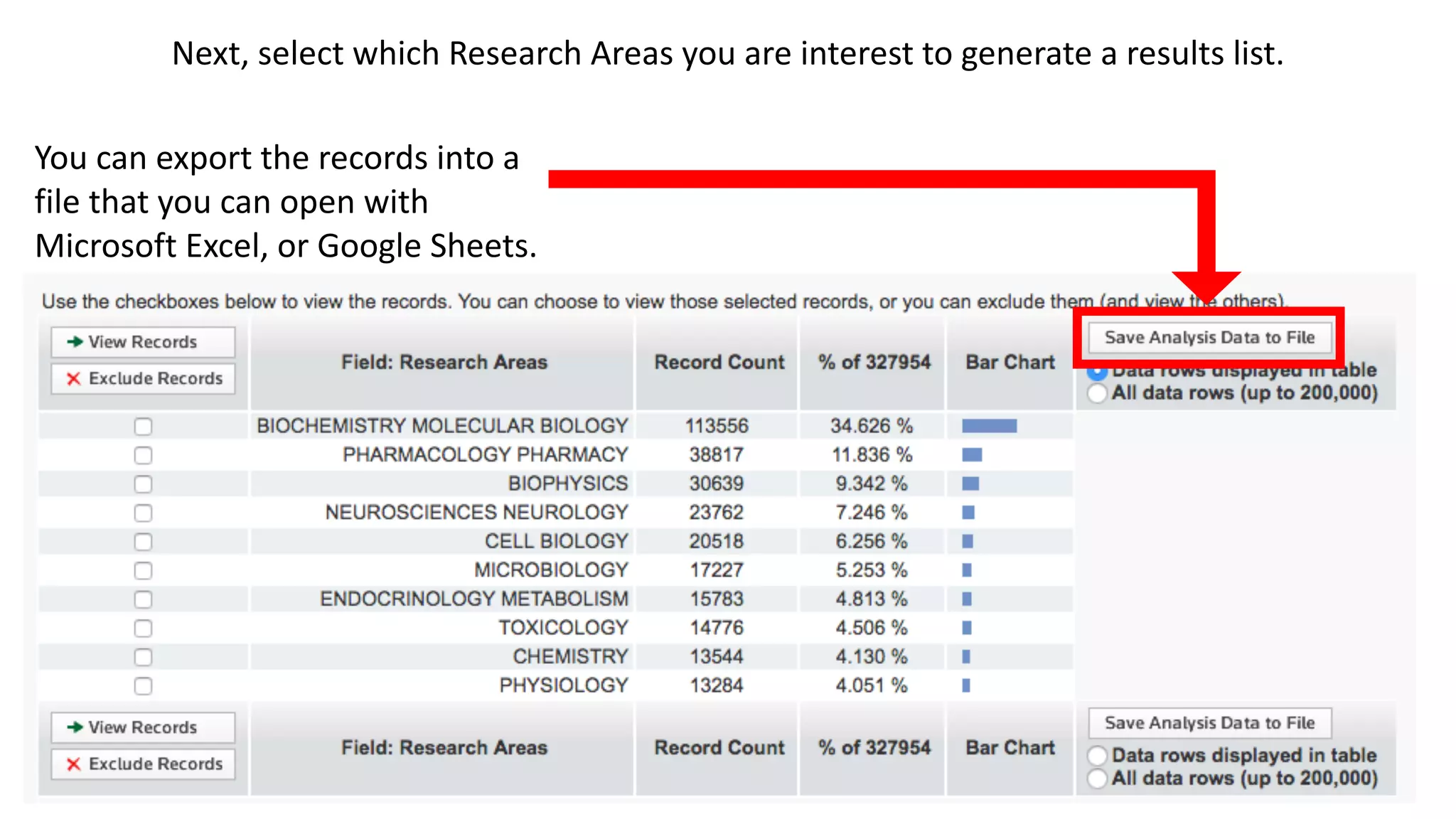
Next,	select	which	Research	Areas	you	are	interest	to	generate	a	results	list.
You	can	export	the	records	into	a	
file	that	you	can	open	with	
Microsoft	Excel,	or	Google	Sheets.
You	can	use	the	Web	of	Science	citation	analysis	tools	to	look	at	
how	ideas	develop	over	time	by	being	able	to	make	linkages	
between	articles	that	cite	each	other.		
If	you	have	any	difficulty	accessing	Web	of	Science,	please	contact	
your	librarian	for	help.

Analyzing Citations using Web of Science