Analysing
 Effective
 Pictures
Extreme Low Angle
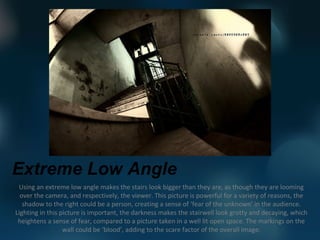
 Using an extreme low angle makes the stairs look bigger than they are, as though they are looming
  over the camera, and respectively, the viewer. This picture is powerful for a variety of reasons, the
   shadow to the right could be a person, creating a sense of ‘fear of the unknown’ in the audience.
Lighting in this picture is important, the darkness makes the stairwell look grotty and decaying, which
 heightens a sense of fear, compared to a picture taken in a well lit open space. The markings on the
                  wall could be ‘blood’, adding to the scare factor of the overall image.
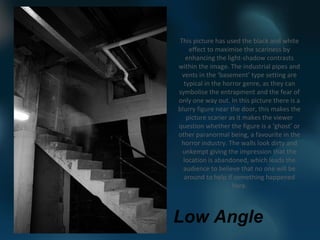
This picture has used the black and white
    effect to maximise the scariness by
   enhancing the light-shadow contrasts
within the image. The industrial pipes and
 vents in the ‘basement’ type setting are
  typical in the horror genre, as they can
symbolise the entrapment and the fear of
only one way out. In this picture there is a
blurry figure near the door, this makes the
   picture scarier as it makes the viewer
question whether the figure is a ‘ghost’ or
other paranormal being, a favourite in the
 horror industry. The walls look dirty and
 unkempt giving the impression that the
  location is abandoned, which leads the
  audience to believe that no one will be
  around to help if something happened
                    here.


Low Angle
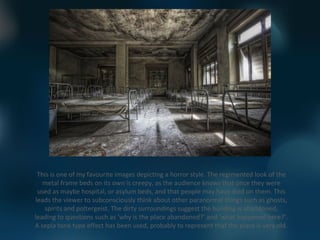
This is one of my favourite images depicting a horror style. The regimented look of the
   metal frame beds on its own is creepy, as the audience knows that once they were
 used as maybe hospital, or asylum beds, and that people may have died on them. This
leads the viewer to subconsciously think about other paranormal things such as ghosts,
   spirits and poltergeist. The dirty surroundings suggest the building is abandoned,
leading to questions such as ‘why is the place abandoned?’ and ‘what happened here?’.
A sepia tone type effect has been used, probably to represent that the place is very old.

Analysing Pictures

  • 1.
  • 2.
    Extreme Low Angle Using an extreme low angle makes the stairs look bigger than they are, as though they are looming over the camera, and respectively, the viewer. This picture is powerful for a variety of reasons, the shadow to the right could be a person, creating a sense of ‘fear of the unknown’ in the audience. Lighting in this picture is important, the darkness makes the stairwell look grotty and decaying, which heightens a sense of fear, compared to a picture taken in a well lit open space. The markings on the wall could be ‘blood’, adding to the scare factor of the overall image.
  • 3.
    This picture hasused the black and white effect to maximise the scariness by enhancing the light-shadow contrasts within the image. The industrial pipes and vents in the ‘basement’ type setting are typical in the horror genre, as they can symbolise the entrapment and the fear of only one way out. In this picture there is a blurry figure near the door, this makes the picture scarier as it makes the viewer question whether the figure is a ‘ghost’ or other paranormal being, a favourite in the horror industry. The walls look dirty and unkempt giving the impression that the location is abandoned, which leads the audience to believe that no one will be around to help if something happened here. Low Angle
  • 4.
    This is oneof my favourite images depicting a horror style. The regimented look of the metal frame beds on its own is creepy, as the audience knows that once they were used as maybe hospital, or asylum beds, and that people may have died on them. This leads the viewer to subconsciously think about other paranormal things such as ghosts, spirits and poltergeist. The dirty surroundings suggest the building is abandoned, leading to questions such as ‘why is the place abandoned?’ and ‘what happened here?’. A sepia tone type effect has been used, probably to represent that the place is very old.