Planning for
the INTERcultural City
Practice + Visions
Tufts University Intercultural Planning Group
www.sites.tufts.edu/tuftsicp
October 22, 2010
Amy Kohn, Senior Planner, Goody Clancy
Planning for the INTERcultural City
Shirley Avenue Neighborhood
Gateway Planning Initiative
• Six month study ending in August 2009
• Sponsored by a Gateway Plus grant from the
Massachusetts Dept. of Housing and Community
Development (DHCD)
– Program provided $1.35 million to 18 cities
– Targeted housing, quality of life, and community/civic
engagement
– Eligible to communities with
• Populations of over 35,000
• Median HH and Per Capita Incomes below state average
• Educational attainment rates below state average
– Grants of up to $75,000 per community
Shirley Avenue Neighborhood
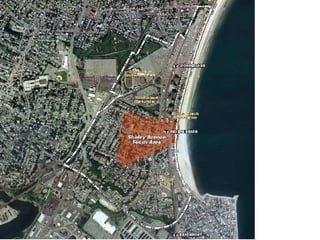
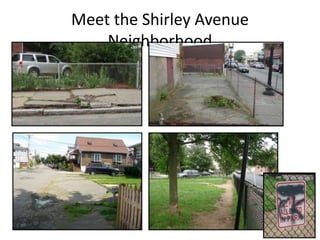
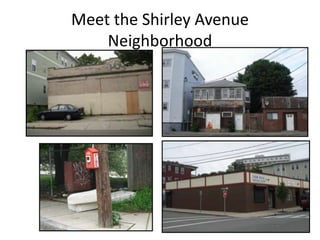
• Dense, culturally diverse “gateway neighborhood” with excellent
transit access and a lively if marginal business district
• In 2008, home to approx. 9,000 residents and 3,300 households
• Compared to the City as a whole or the Boston metro region, the
neighborhood is younger, poorer and households are larger
• 18% of residents have less than a 9th grade education
• Compared with the City as a whole, higher transiency rates,
household vacancy and more distressed or foreclosed properties
– In March 2009, over 67% of vacant residential properties were in this
neighborhood
– More than 30% of Revere’s 1,022 distressed or foreclosed properties
were located in this neighborhood (Dec. 2008)
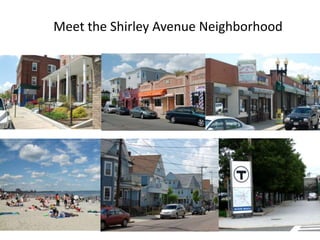
Meet the Shirley Avenue Neighborhood
Meet the Shirley Avenue
Neighborhood
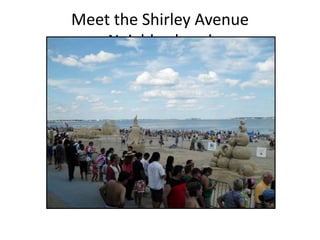
Meet the Shirley Avenue
Neighborhood
Meet the Shirley Avenue
Neighborhood
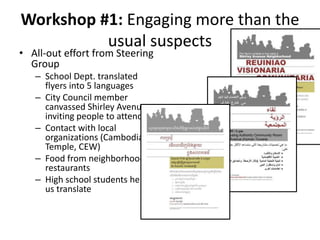
Workshop #1: Engaging more than the
usual suspects
• All-out effort from Steering
Group
– School Dept. translated
flyers into 5 languages
– City Council member
canvassed Shirley Avenue,
inviting people to attend
– Contact with local
organizations (Cambodian
Temple, CEW)
– Food from neighborhood
restaurants
– High school students help
us translate
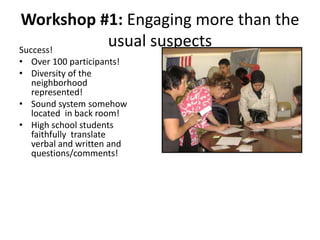
Workshop #1: Engaging more than the
usual suspectsSuccess!
• Over 100 participants!
• Diversity of the
neighborhood
represented!
• Sound system somehow
located in back room!
• High school students
faithfully translate
verbal and written and
questions/comments!
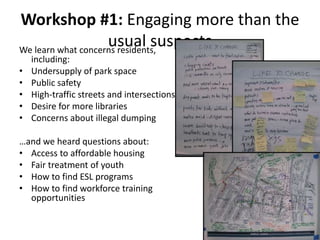
Workshop #1: Engaging more than the
usual suspectsWe learn what concerns residents,
including:
• Undersupply of park space
• Public safety
• High-traffic streets and intersections
• Desire for more libraries
• Concerns about illegal dumping
…and we heard questions about:
• Access to affordable housing
• Fair treatment of youth
• How to find ESL programs
• How to find workforce training
opportunities
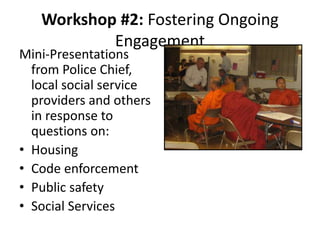
Workshop #2: Fostering Ongoing
Engagement
Mini-Presentations
from Police Chief,
local social service
providers and others
in response to
questions on:
• Housing
• Code enforcement
• Public safety
• Social Services
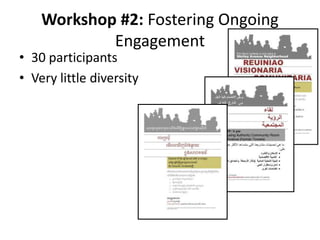
Workshop #2: Fostering Ongoing
Engagement
• 30 participants
• Very little diversity
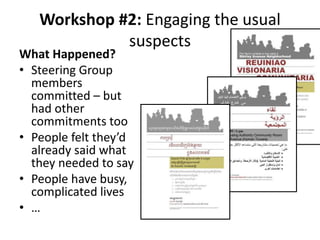
Workshop #2: Engaging the usual
suspects
What Happened?
• Steering Group
members
committed – but
had other
commitments too
• People felt they’d
already said what
they needed to say
• People have busy,
complicated lives
• …
What we learned….
• Understand your goals—involvement
in the plan or a longer term
commitment?
• New relationships take time and
resources
• Resources today are scarce!
• Language is a barrier – but not the
only barrier
• Get schools involved
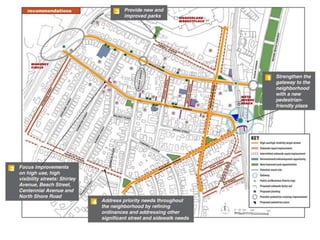
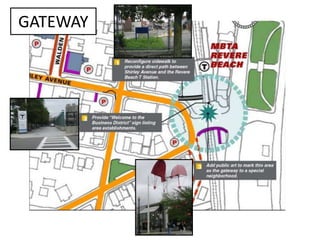
#1: Strengthen the Gateway to the
Neighborhood
GATEWAY
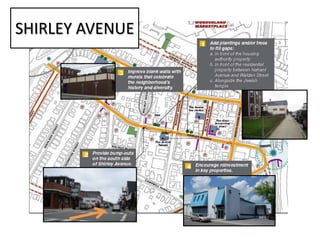
#2: Improve Key Streets
SHIRLEY AVENUE
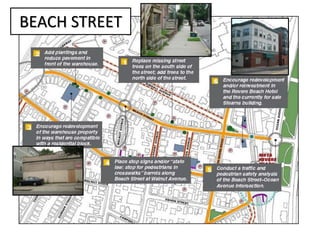
BEACH STREET
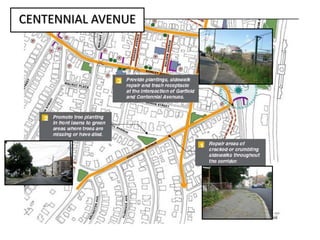
CENTENNIAL AVENUE
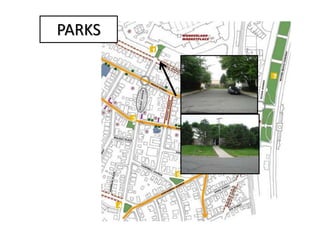
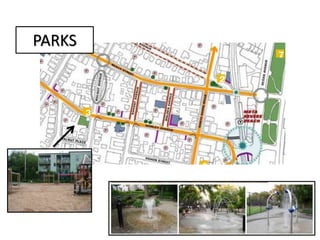
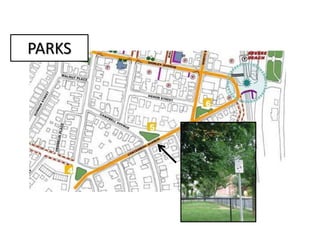
#3: Provide New and Improved Parks
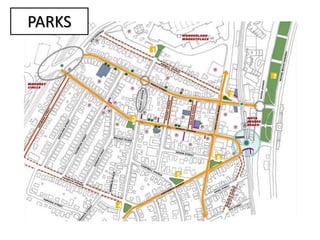
PARKS
PARKS
PARKS
PARKS
#4: Address Priority Needs Throughout
the Neighborhood
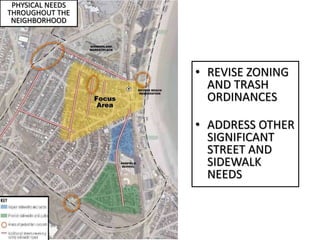
PHYSICAL NEEDS
THROUGHOUT THE
NEIGHBORHOOD
• REVISE ZONING
AND TRASH
ORDINANCES
• ADDRESS OTHER
SIGNIFICANT
STREET AND
SIDEWALK
NEEDS
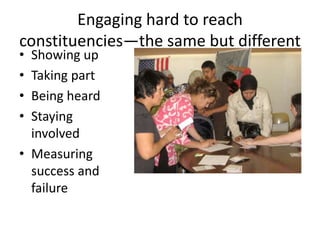
Engaging hard to reach
constituencies—the same but different
• Showing up
• Taking part
• Being heard
• Staying
involved
• Measuring
success and
failure
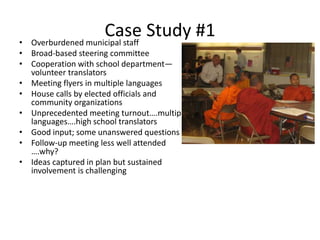
Case Study #1• Overburdened municipal staff
• Broad-based steering committee
• Cooperation with school department—
volunteer translators
• Meeting flyers in multiple languages
• House calls by elected officials and
community organizations
• Unprecedented meeting turnout….multiple
languages….high school translators
• Good input; some unanswered questions
• Follow-up meeting less well attended
….why?
• Ideas captured in plan but sustained
involvement is challenging
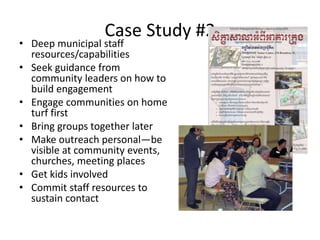
Case Study #2
• Deep municipal staff
resources/capabilities
• Seek guidance from
community leaders on how to
build engagement
• Engage communities on home
turf first
• Bring groups together later
• Make outreach personal—be
visible at community events,
churches, meeting places
• Get kids involved
• Commit staff resources to
sustain contact

Amy Kohn

  • 1.
    Planning for the INTERculturalCity Practice + Visions Tufts University Intercultural Planning Group www.sites.tufts.edu/tuftsicp October 22, 2010
  • 2.
    Amy Kohn, SeniorPlanner, Goody Clancy Planning for the INTERcultural City
  • 5.
    Shirley Avenue Neighborhood GatewayPlanning Initiative • Six month study ending in August 2009 • Sponsored by a Gateway Plus grant from the Massachusetts Dept. of Housing and Community Development (DHCD) – Program provided $1.35 million to 18 cities – Targeted housing, quality of life, and community/civic engagement – Eligible to communities with • Populations of over 35,000 • Median HH and Per Capita Incomes below state average • Educational attainment rates below state average – Grants of up to $75,000 per community
  • 6.
    Shirley Avenue Neighborhood •Dense, culturally diverse “gateway neighborhood” with excellent transit access and a lively if marginal business district • In 2008, home to approx. 9,000 residents and 3,300 households • Compared to the City as a whole or the Boston metro region, the neighborhood is younger, poorer and households are larger • 18% of residents have less than a 9th grade education • Compared with the City as a whole, higher transiency rates, household vacancy and more distressed or foreclosed properties – In March 2009, over 67% of vacant residential properties were in this neighborhood – More than 30% of Revere’s 1,022 distressed or foreclosed properties were located in this neighborhood (Dec. 2008)
  • 7.
    Meet the ShirleyAvenue Neighborhood
  • 8.
    Meet the ShirleyAvenue Neighborhood
  • 9.
    Meet the ShirleyAvenue Neighborhood
  • 10.
    Meet the ShirleyAvenue Neighborhood
  • 11.
    Workshop #1: Engagingmore than the usual suspects • All-out effort from Steering Group – School Dept. translated flyers into 5 languages – City Council member canvassed Shirley Avenue, inviting people to attend – Contact with local organizations (Cambodian Temple, CEW) – Food from neighborhood restaurants – High school students help us translate
  • 12.
    Workshop #1: Engagingmore than the usual suspectsSuccess! • Over 100 participants! • Diversity of the neighborhood represented! • Sound system somehow located in back room! • High school students faithfully translate verbal and written and questions/comments!
  • 13.
    Workshop #1: Engagingmore than the usual suspectsWe learn what concerns residents, including: • Undersupply of park space • Public safety • High-traffic streets and intersections • Desire for more libraries • Concerns about illegal dumping …and we heard questions about: • Access to affordable housing • Fair treatment of youth • How to find ESL programs • How to find workforce training opportunities
  • 14.
    Workshop #2: FosteringOngoing Engagement Mini-Presentations from Police Chief, local social service providers and others in response to questions on: • Housing • Code enforcement • Public safety • Social Services
  • 15.
    Workshop #2: FosteringOngoing Engagement • 30 participants • Very little diversity
  • 16.
    Workshop #2: Engagingthe usual suspects What Happened? • Steering Group members committed – but had other commitments too • People felt they’d already said what they needed to say • People have busy, complicated lives • …
  • 17.
    What we learned…. •Understand your goals—involvement in the plan or a longer term commitment? • New relationships take time and resources • Resources today are scarce! • Language is a barrier – but not the only barrier • Get schools involved
  • 20.
    #1: Strengthen theGateway to the Neighborhood
  • 21.
  • 22.
  • 23.
  • 24.
  • 25.
  • 26.
    #3: Provide Newand Improved Parks
  • 27.
  • 28.
  • 29.
  • 30.
  • 31.
    #4: Address PriorityNeeds Throughout the Neighborhood
  • 32.
    PHYSICAL NEEDS THROUGHOUT THE NEIGHBORHOOD •REVISE ZONING AND TRASH ORDINANCES • ADDRESS OTHER SIGNIFICANT STREET AND SIDEWALK NEEDS
  • 33.
    Engaging hard toreach constituencies—the same but different • Showing up • Taking part • Being heard • Staying involved • Measuring success and failure
  • 34.
    Case Study #1•Overburdened municipal staff • Broad-based steering committee • Cooperation with school department— volunteer translators • Meeting flyers in multiple languages • House calls by elected officials and community organizations • Unprecedented meeting turnout….multiple languages….high school translators • Good input; some unanswered questions • Follow-up meeting less well attended ….why? • Ideas captured in plan but sustained involvement is challenging
  • 35.
    Case Study #2 •Deep municipal staff resources/capabilities • Seek guidance from community leaders on how to build engagement • Engage communities on home turf first • Bring groups together later • Make outreach personal—be visible at community events, churches, meeting places • Get kids involved • Commit staff resources to sustain contact

Editor's Notes

  • #3 Interculturalism implies that we plan with and not just for our diverse communities and that we actively engage with managing differences in our practice We conducted research this spring to understand whether the concept of cultural competency, frequently applied in the field of public health, has found its place in planning curricula I give an overview of what culturally competent planning is, share highlights from our study’s findings, and discuss its implications for the future