AMP: An Audiovisual
Metadata Platform to Support
Mass Description
Jon Dunn, Indiana University / @jwdunn
Chris Lacinak, AVP / @WeAreAVP
CNI / April 13, 2018
Outline
1. Background and context - Jon
2. Outcomes and next steps - Chris
The Challenge
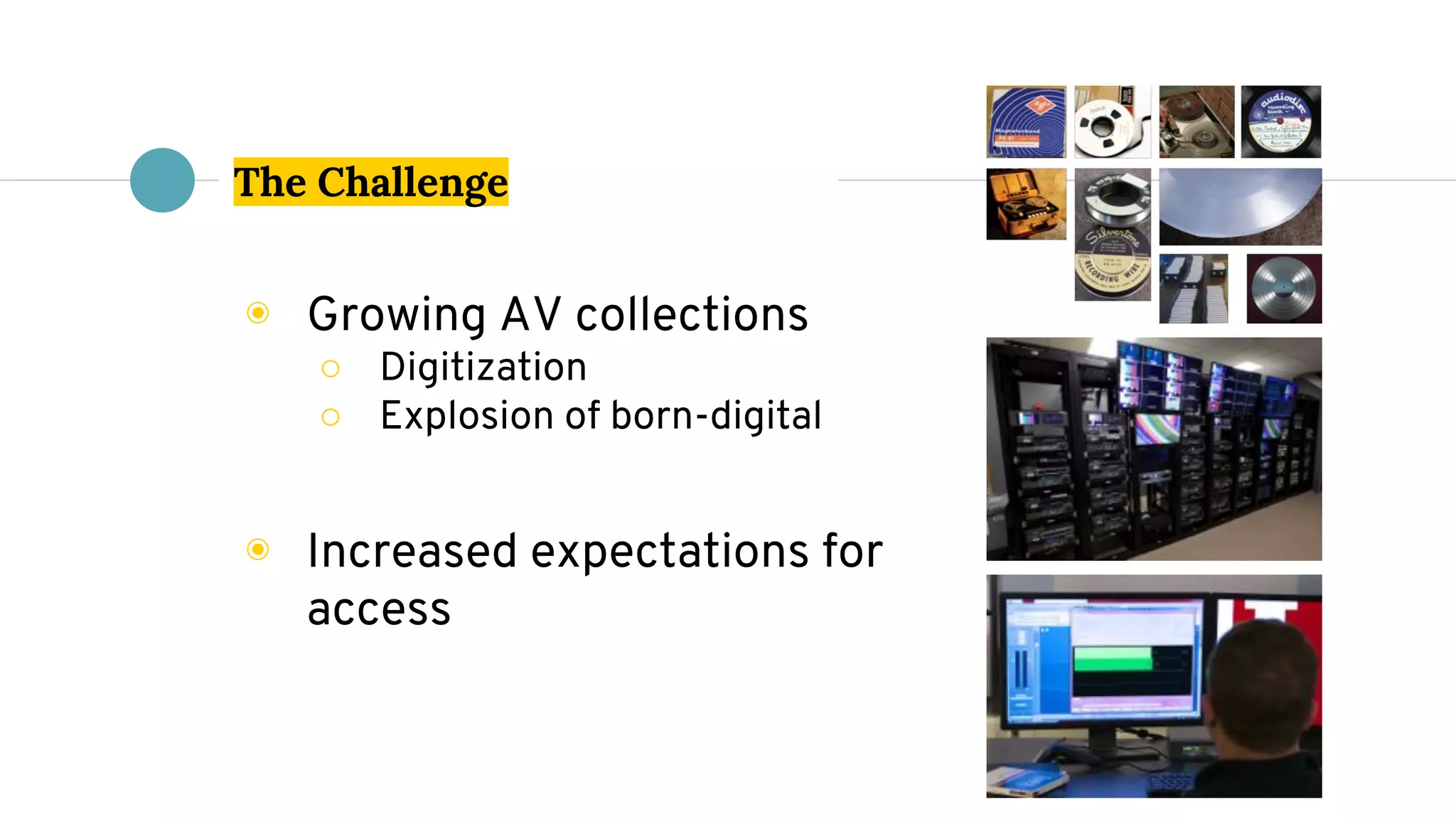
◉ Growing AV collections
○ Digitization
○ Explosion of born-digital
◉ Increased expectations for
access
The Challenge
◉ Many AV collections lack metadata
○ Discovery
○ Identification
○ Navigation
○ Rights
○ Accessibility
◉ Institutions lack resources for large
cataloging/transcription/inventory/rights
clearance projects
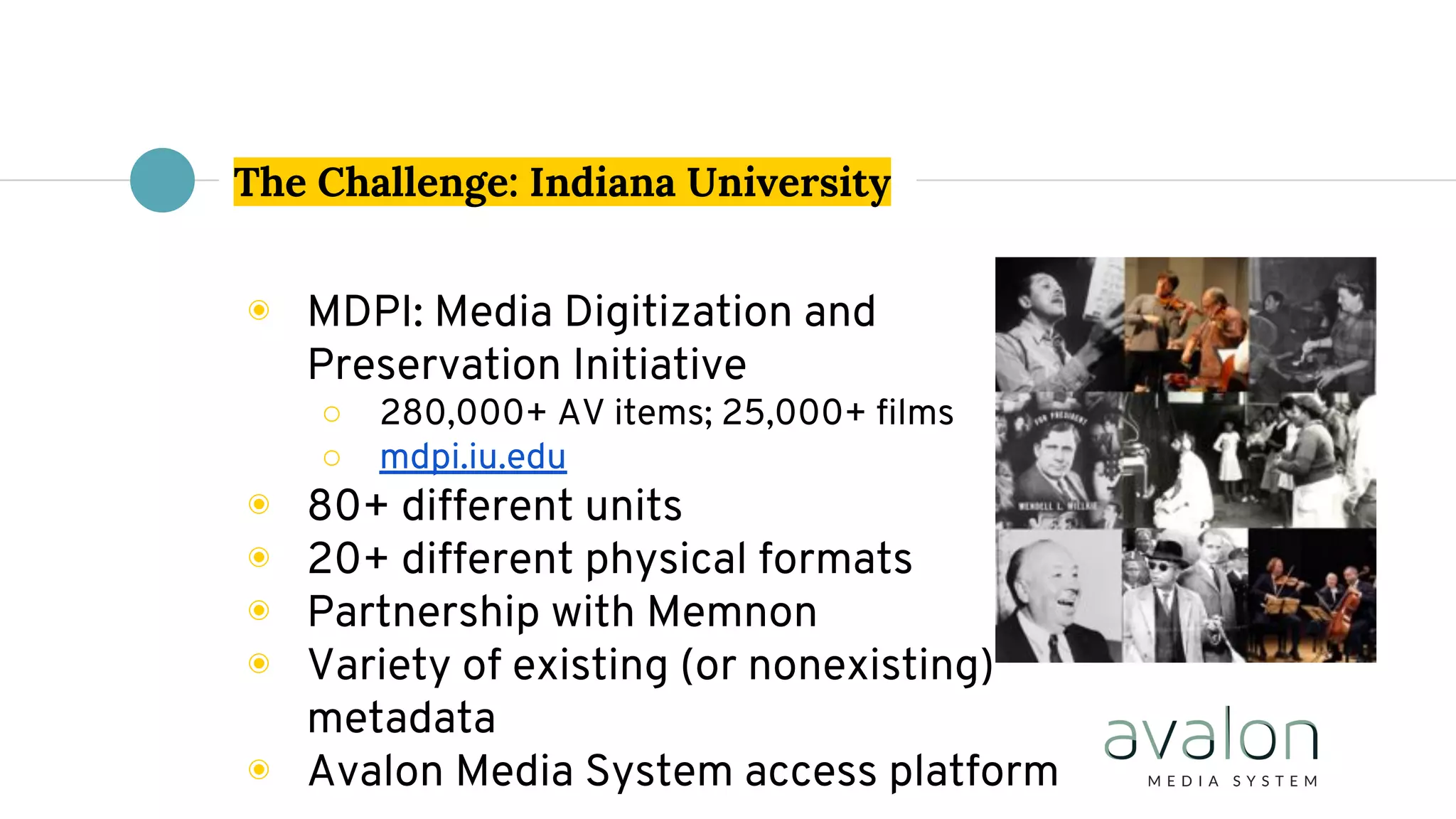
The Challenge: Indiana University
◉ MDPI: Media Digitization and
Preservation Initiative
○ 280,000+ AV items; 25,000+ films
○ mdpi.iu.edu
◉ 80+ different units
◉ 20+ different physical formats
◉ Partnership with Memnon
◉ Variety of existing (or nonexisting)
metadata
◉ Avalon Media System access platform
The Opportunity
◉ Mass digitization approach extended to AV
○ “Digitize first”
◉ Emergence and continued improvement of
machine learning and other automated tools
◉ How can we leverage the best of automated
tools and human expertise?
Existing Work in the context of AV Archives
◉ Application of specific machine learning tools
○ e.g. speech-to-text, named entity recognition
◉ “Black box” systems
○ One size fits all, brute force approach to
automated metadata generation
◉ Customized workflows
○ e.g. MiCO Platform
Existing Work: Indiana University
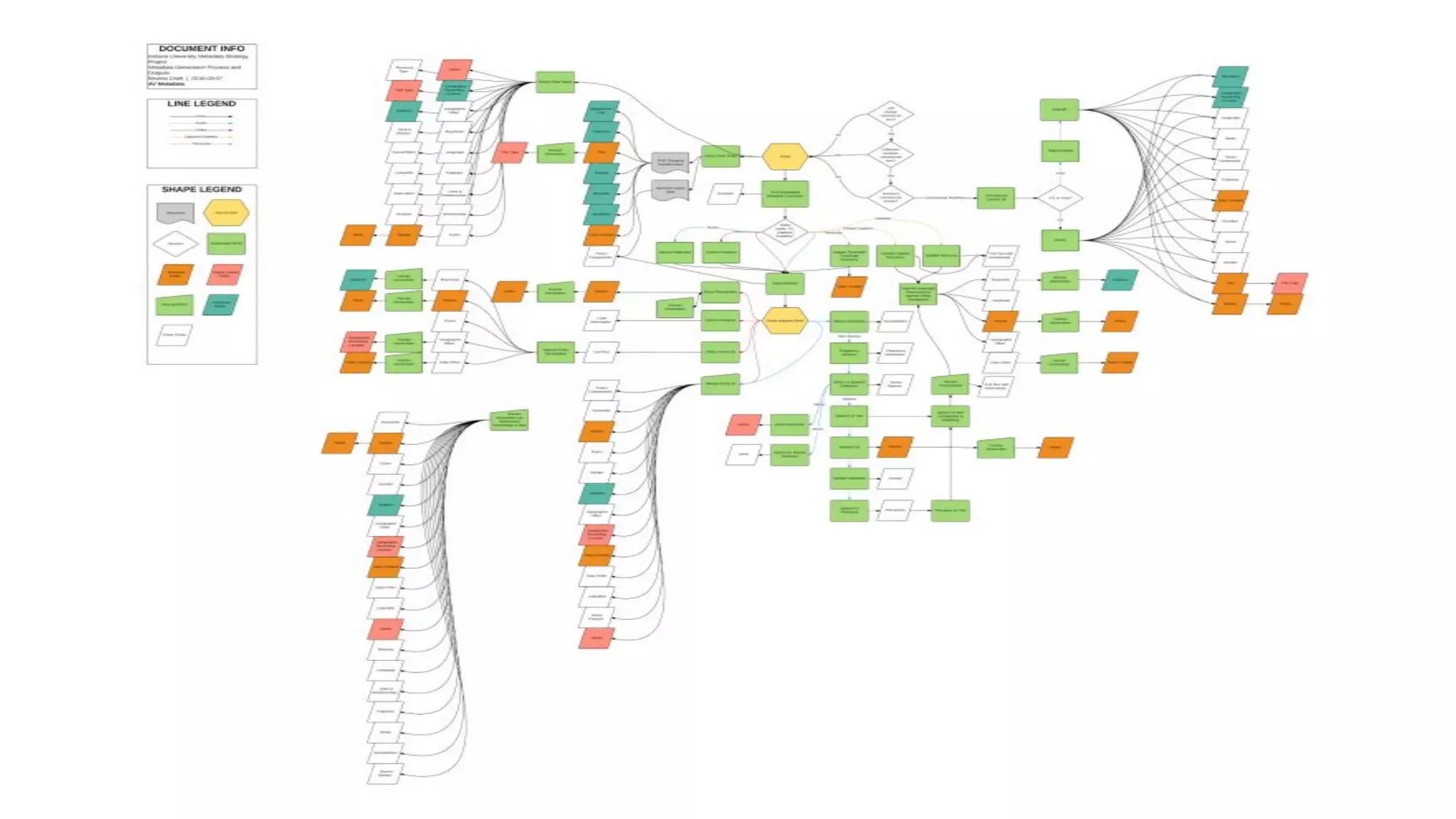
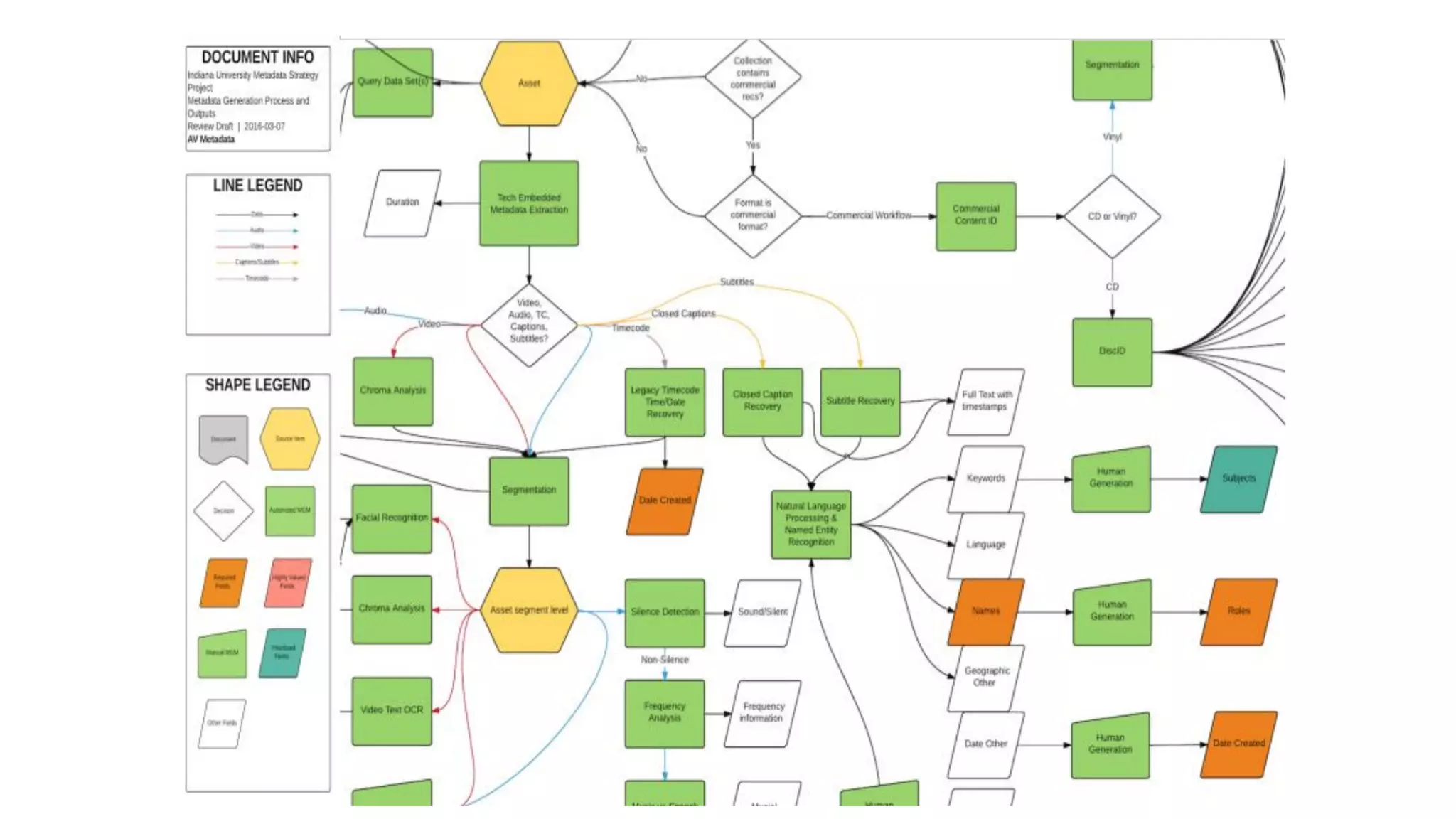
◉ Consulting engagement with AVP in 2016 to
identify metadata and rights workflows
◉ Phased approach
◉ Identification of MGMs: Metadata Generation
Mechanisms
◉ Need for platform to support workflows,
metadata warehouse
Stakeholders, User Requirements, & Personas
Existing Work: Indiana University
◉ AMIA 2016:
○ Chris Lacinak and Jon Dunn. “From Mass
Digitization to Mass Description: Indiana
University’s Strategy To Overcome The Next
Great Challenge.”
◉ go.iu.edu/1Pvj
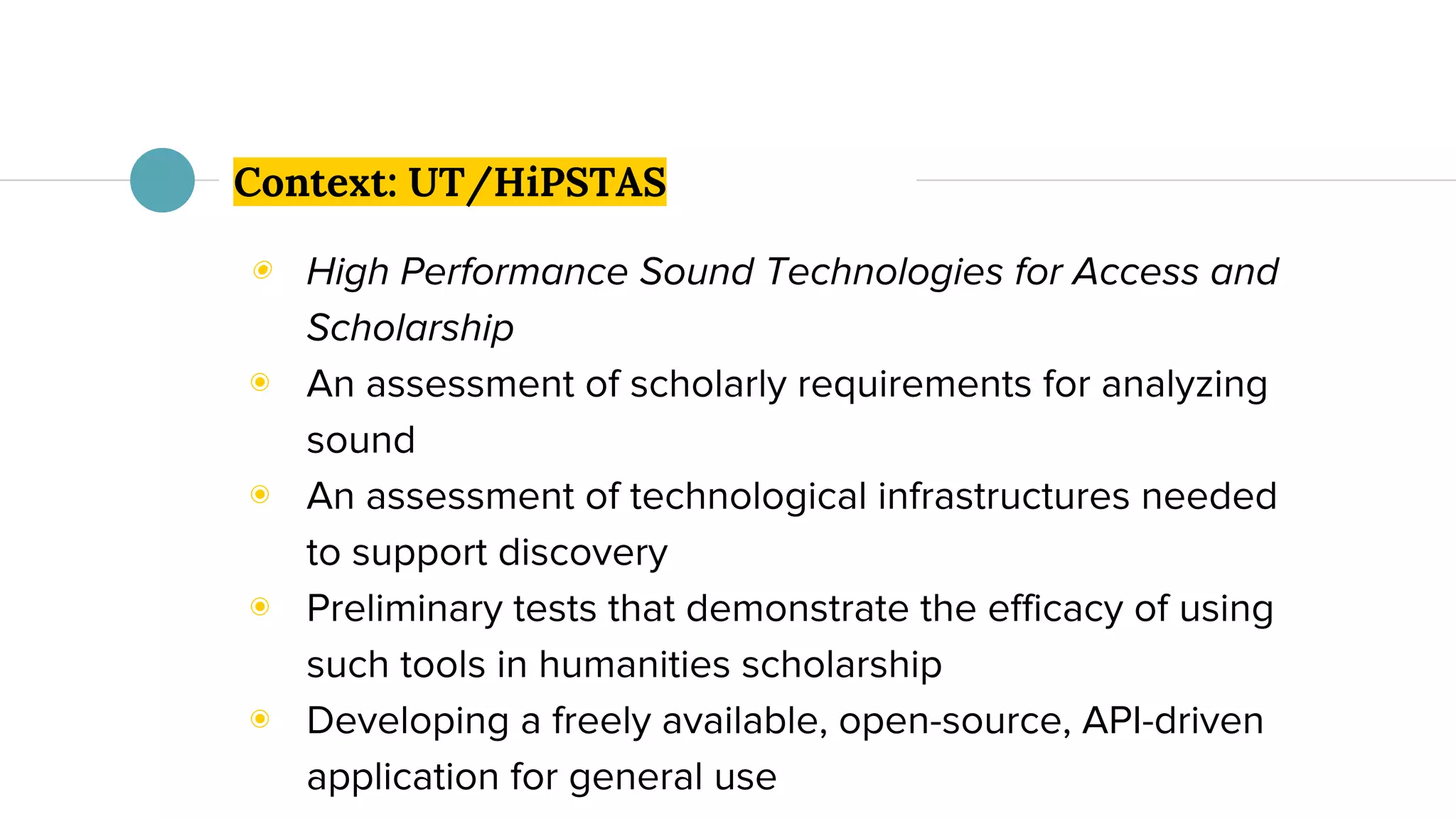
HiPSTAS
◉
◉
◉
◉
◉
Context: UT/HiPSTAS
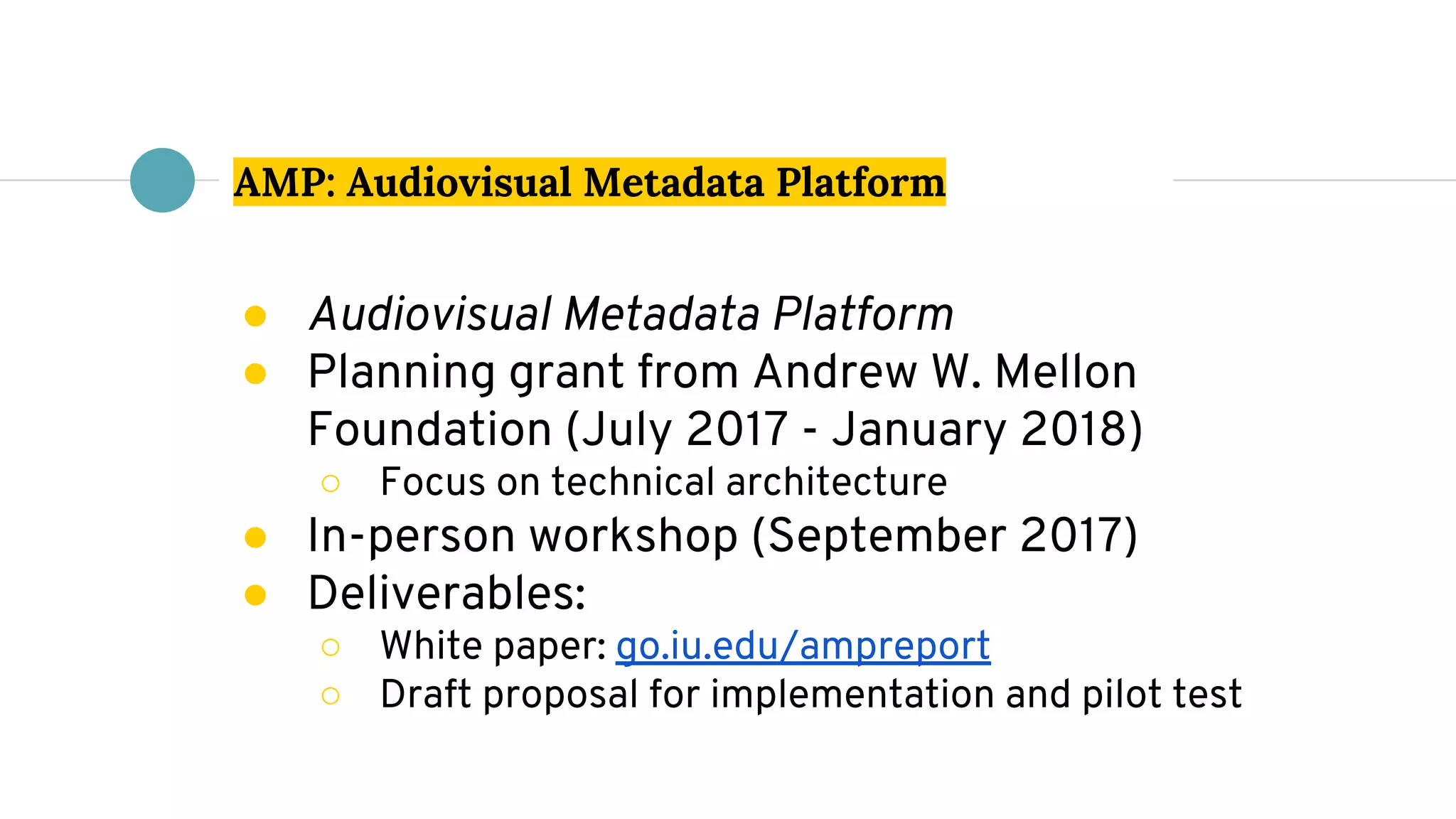
AMP: Audiovisual Metadata Platform
● Audiovisual Metadata Platform
● Planning grant from Andrew W. Mellon
Foundation (July 2017 - January 2018)
○ Focus on technical architecture
● In-person workshop (September 2017)
● Deliverables:
○ White paper: go.iu.edu/ampreport
○ Draft proposal for implementation and pilot test
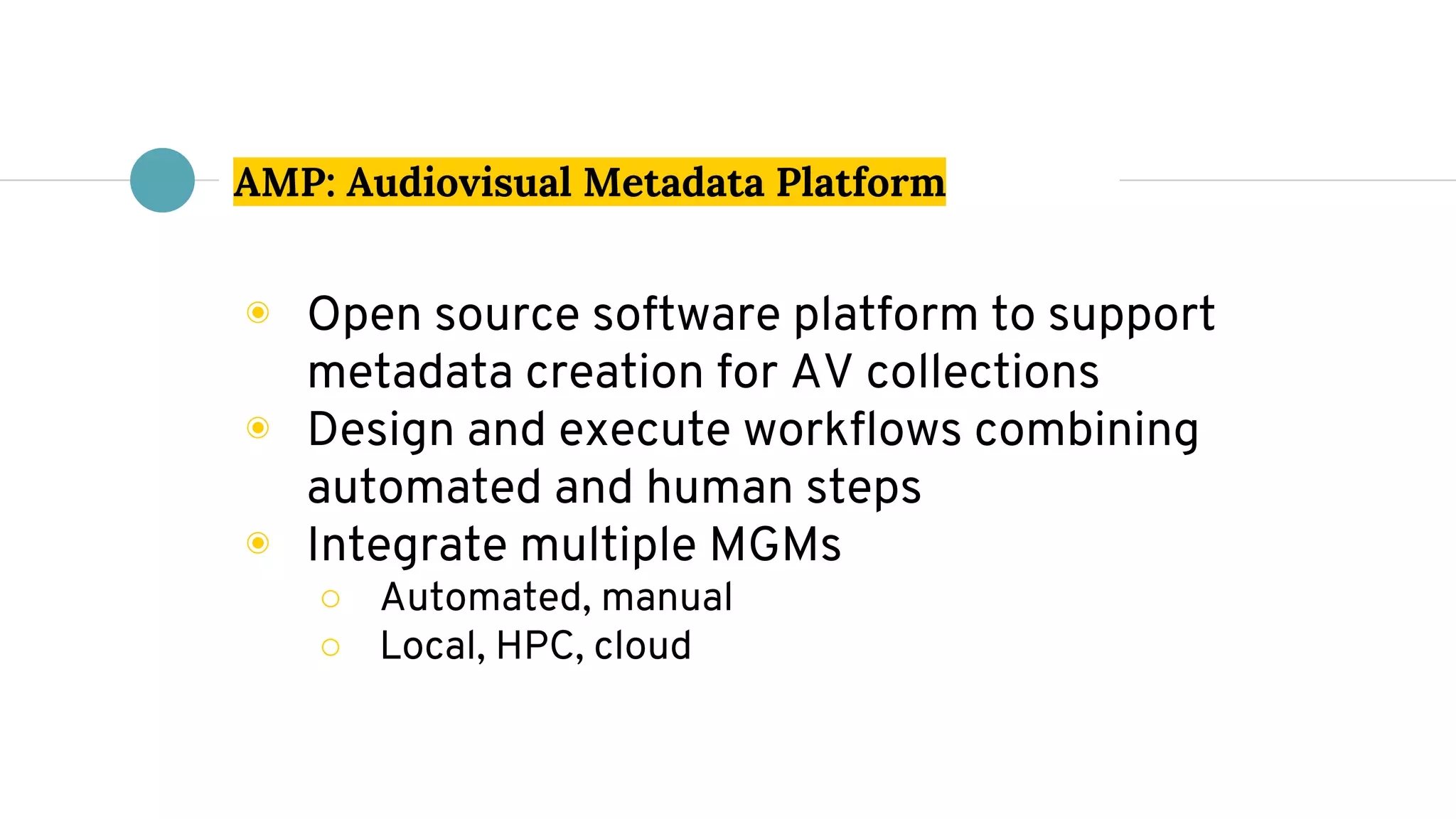
AMP: Audiovisual Metadata Platform
◉ Open source software platform to support
metadata creation for AV collections
◉ Design and execute workflows combining
automated and human steps
◉ Integrate multiple MGMs
○ Automated, manual
○ Local, HPC, cloud
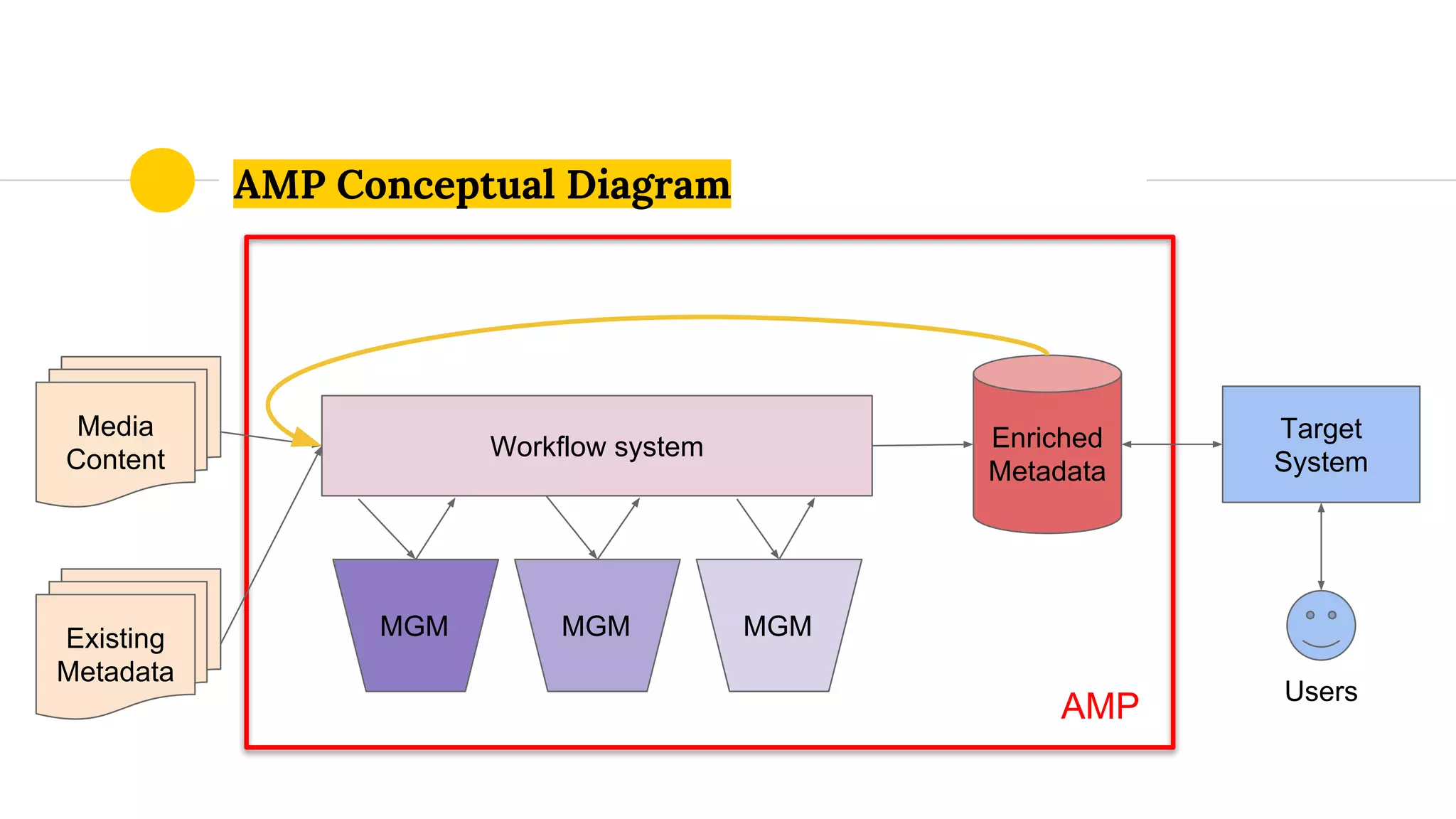
AMP Conceptual Diagram
Media
Content
Existing
Metadata
Workflow system
MGM MGM MGM
Enriched
Metadata
Target
System
Users
AMP
Core AMP Team
◉ Indiana University Libraries
○ Jon Dunn
○ Julie Hardesty
◉ University of Texas at Austin School of Information
○ Tanya Clement
◉ AVP
○ Adeel Ahmad
○ Chris Lacinak
○ Amy Rudersdorf
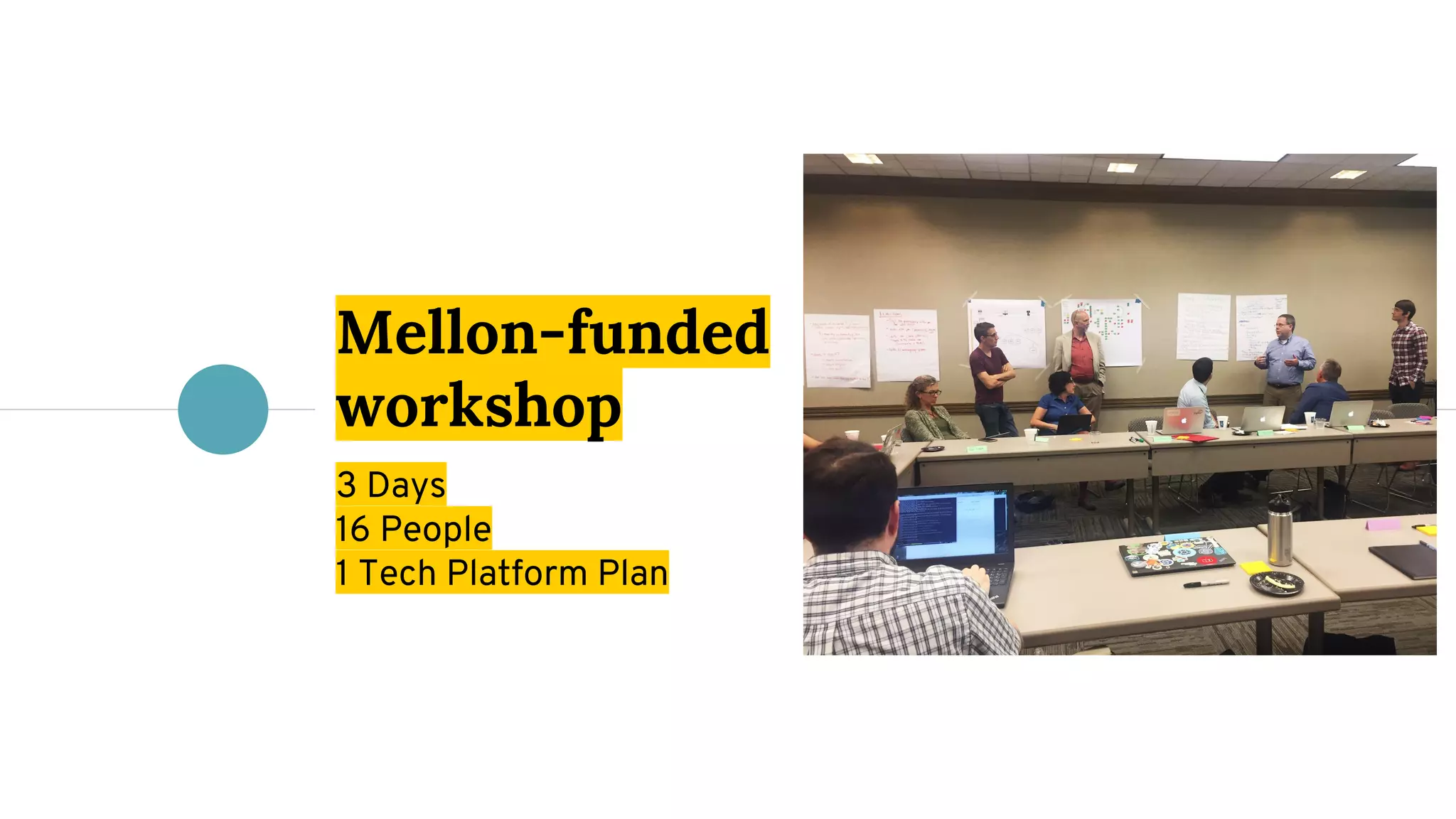
3 Days
16 People
1 Tech Platform Plan
Mellon-funded
workshop
◉ Scott Rife, Packard Campus for AV
Conservation, Library of Congress
◉ Sadie Roosa, WGBH Media Library &
Archives
◉ Felix Saurbier, TIB/German National
Library of Science & Technology
◉ Brian Wheeler, IU Libraries
◉ Maria Whitaker, IU Libraries
Workshop
Participants
◉ Kristian Allen, UCLA Library
◉ Jon Cameron, IU Libraries
◉ Maria Esteva, Texas Advanced
Computing Center, UT at Austin
◉ Mike Giarlo, Stanford University
Libraries
◉ Brian McFee, Music & Audio
Research Laboratory, NYU
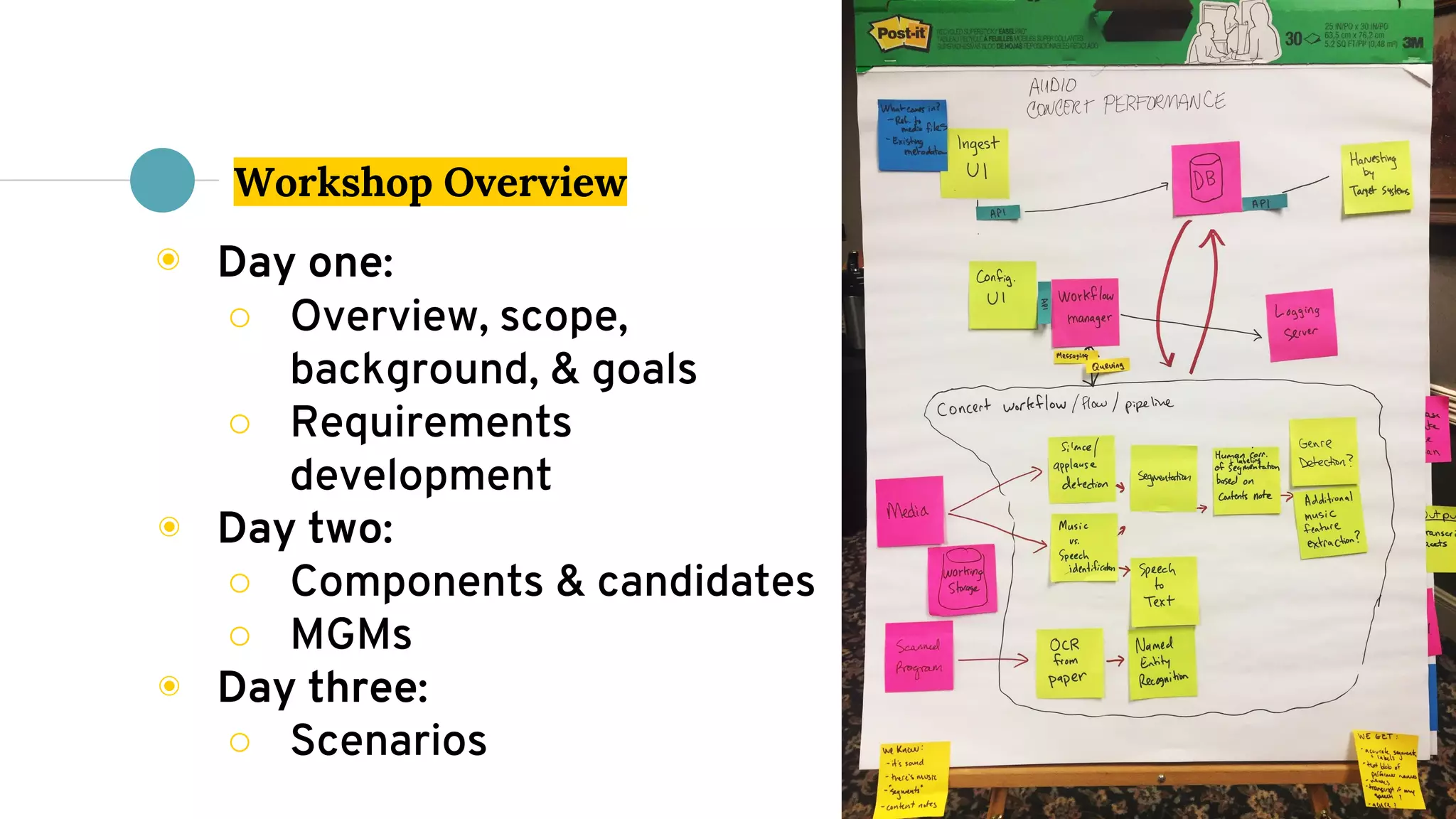
Workshop Overview
◉ Day one:
○ Overview, scope,
background, & goals
○ Requirements
development
◉ Day two:
○ Components & candidates
○ MGMs
◉ Day three:
○ Scenarios
Next Steps
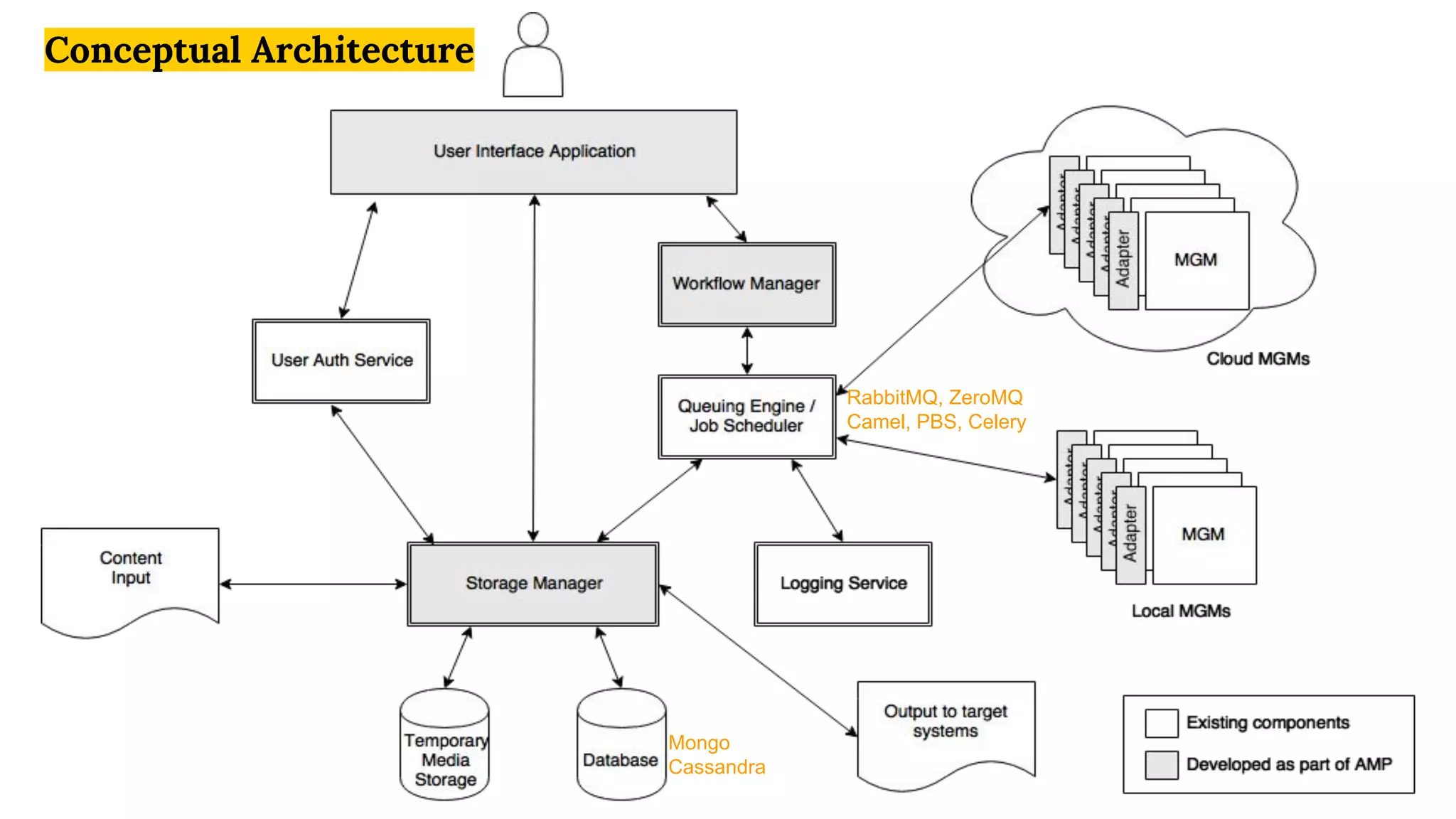
Mongo
Cassandra
RabbitMQ, ZeroMQ
Camel, PBS, Celery
Conceptual Architecture
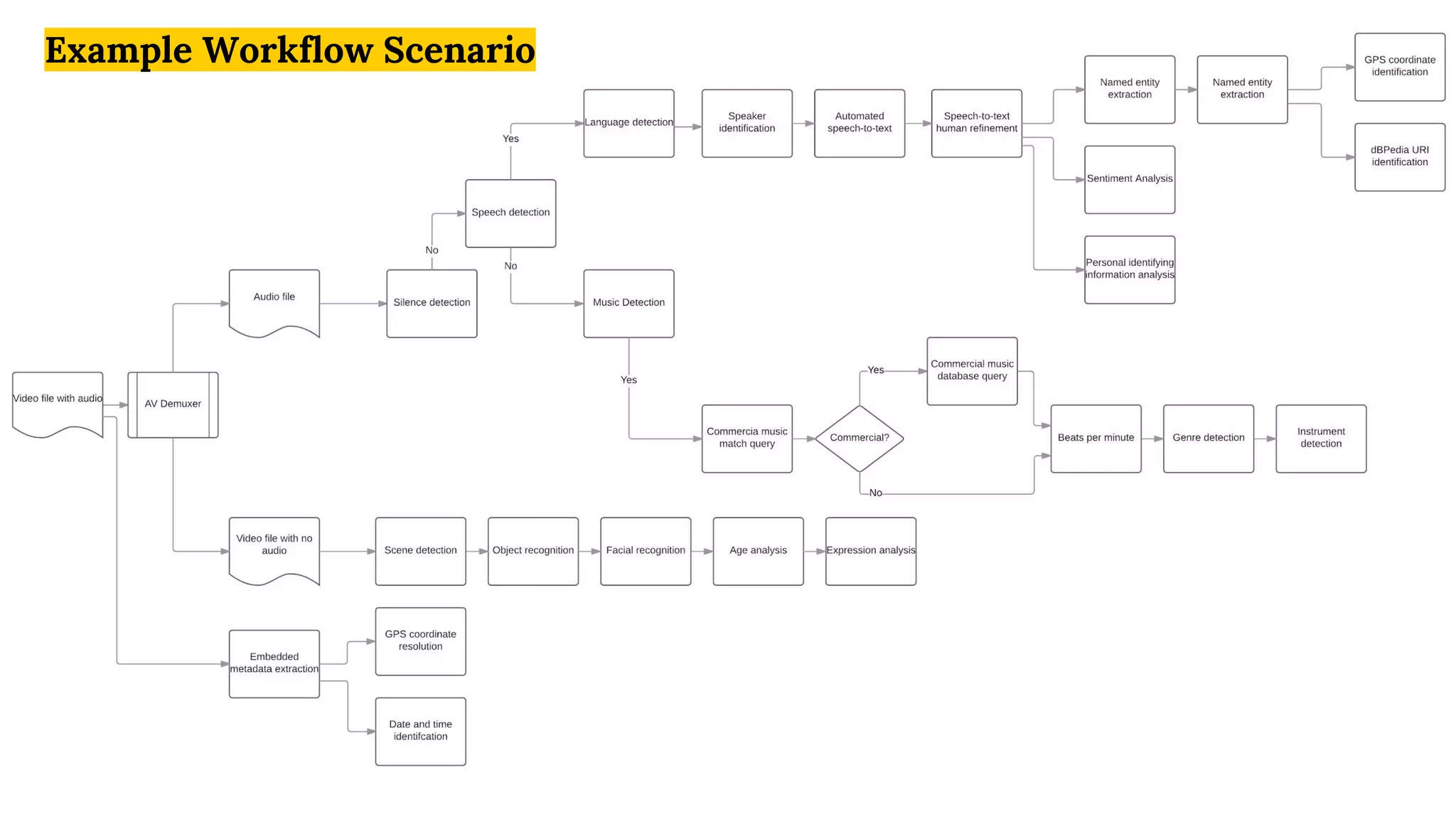
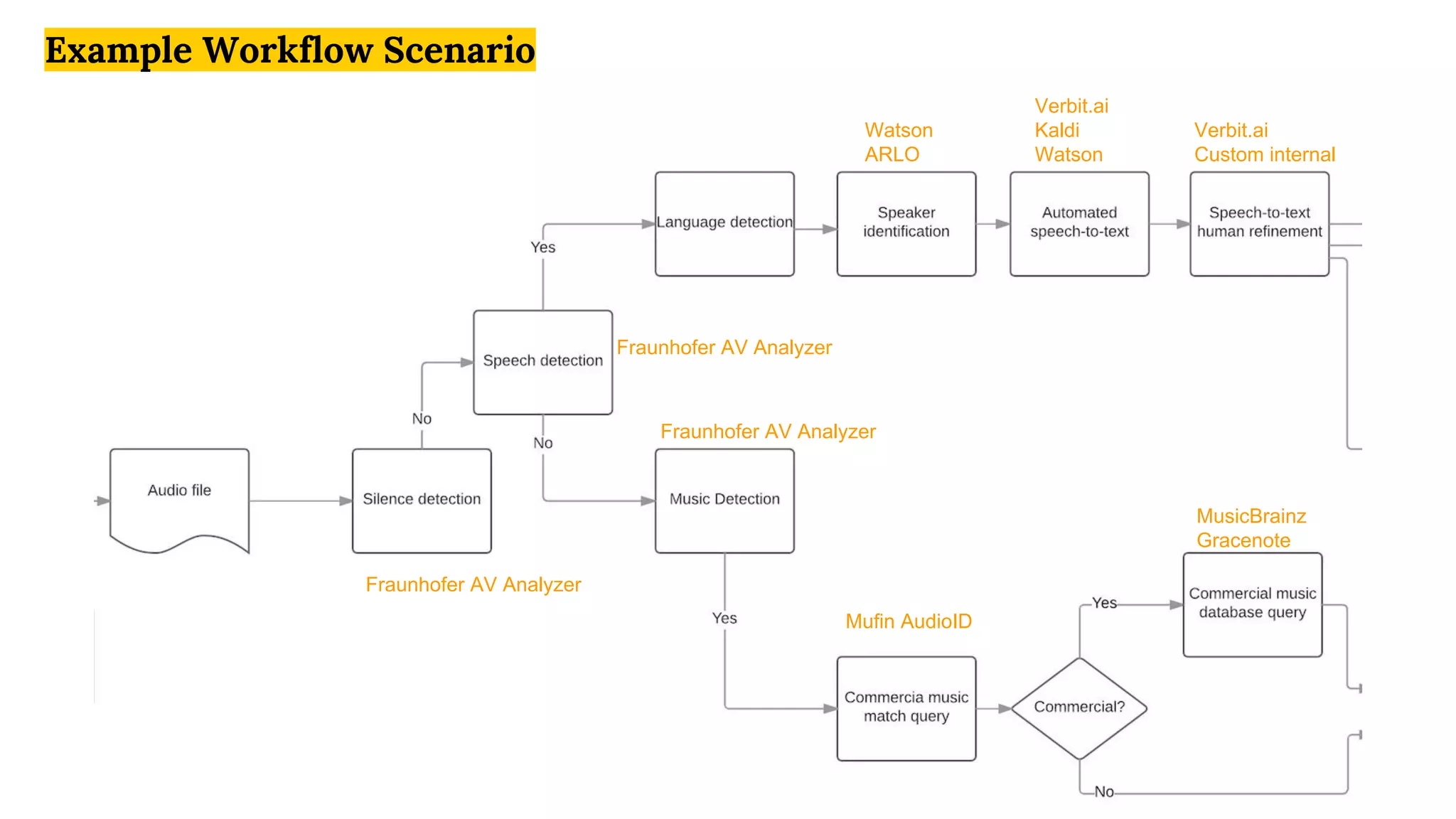
Example Workflow Scenario
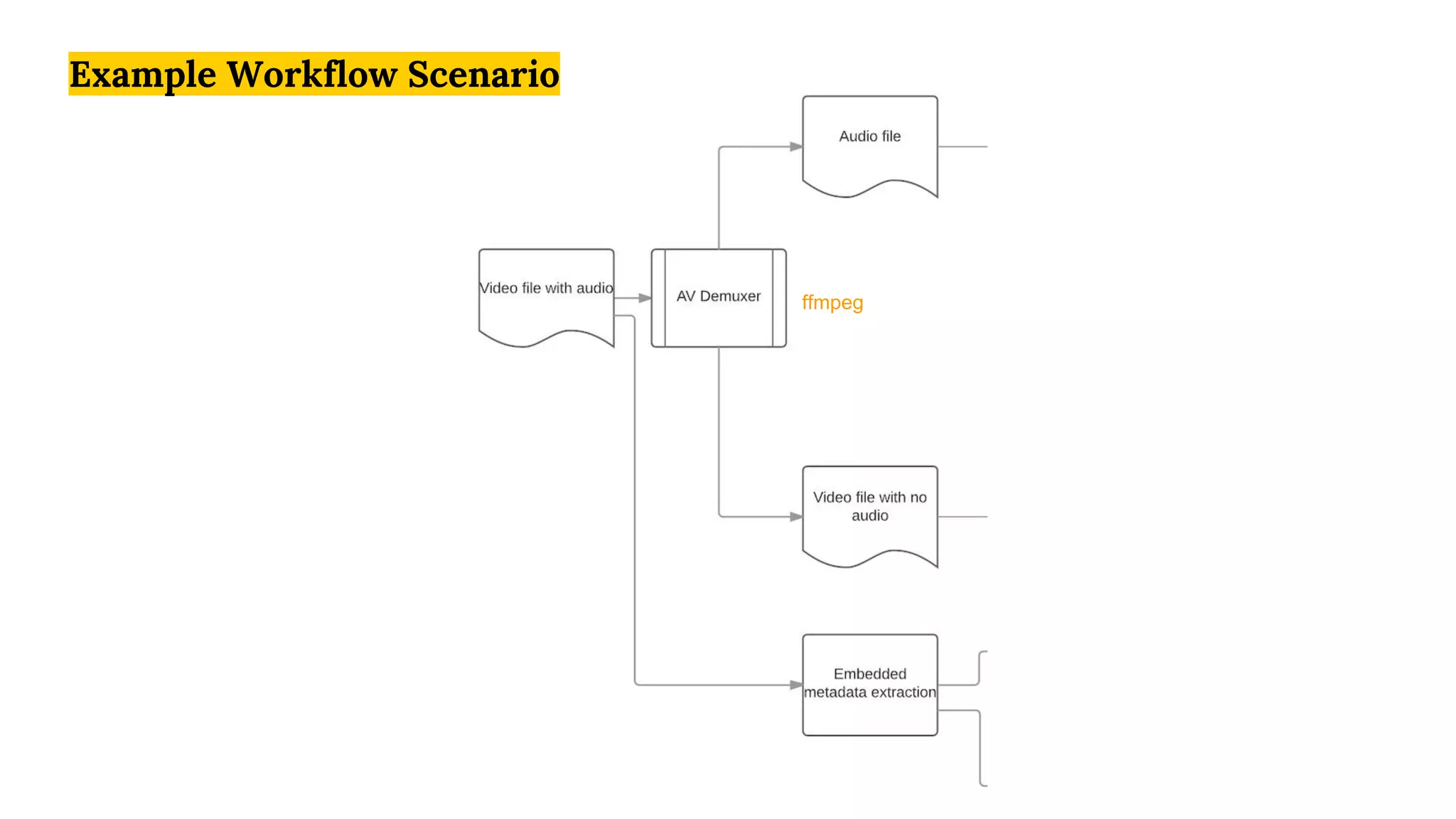
ffmpeg
Example Workflow Scenario
Watson
ARLO
Verbit.ai
Kaldi
Watson
Verbit.ai
Custom internal
MusicBrainz
Gracenote
Fraunhofer AV Analyzer
Mufin AudioID
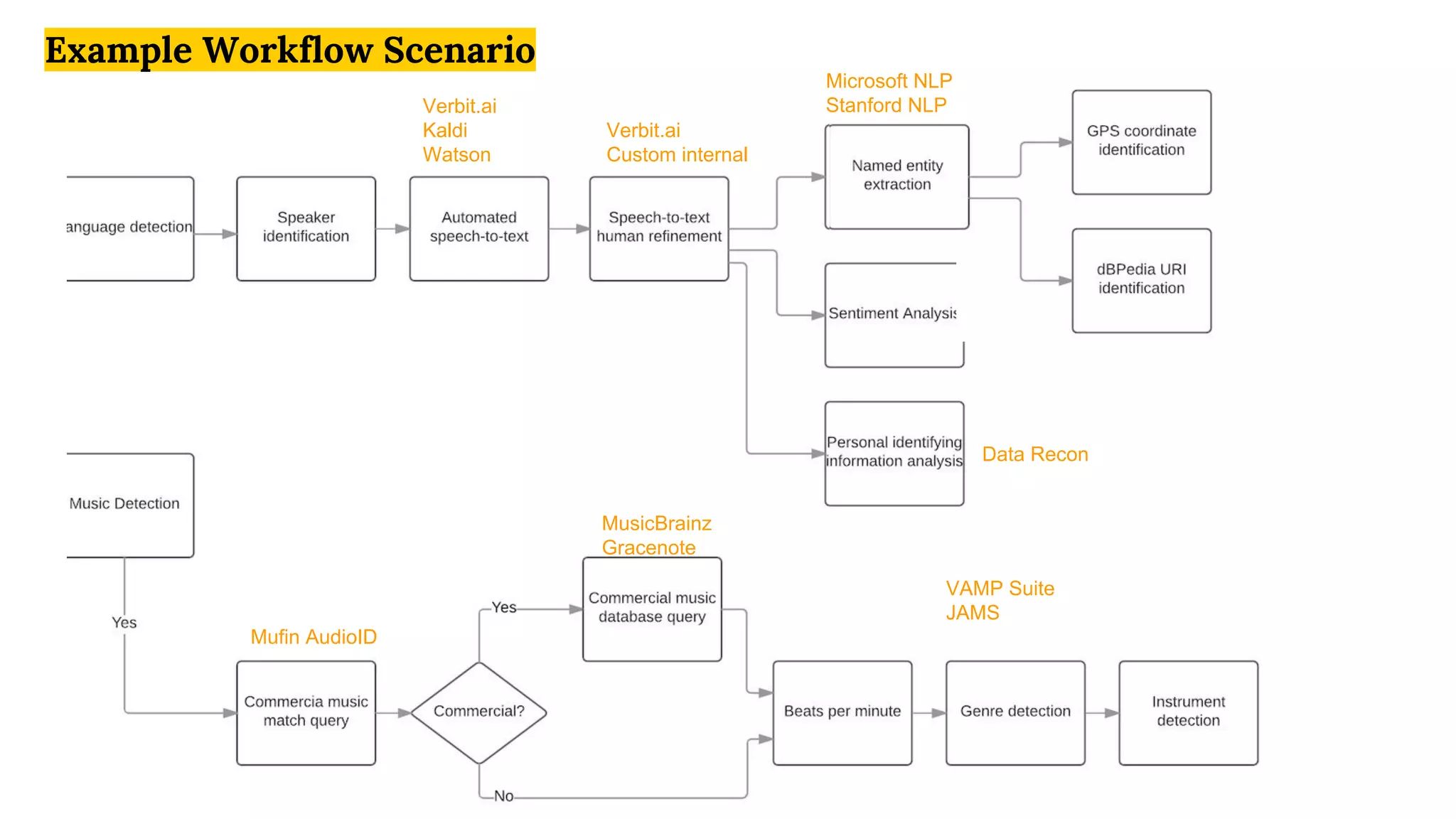
Example Workflow Scenario
Verbit.ai
Kaldi
Watson
Verbit.ai
Custom internal
Rosette
VAMP Suite
JAMS
MusicBrainz
Gracenote
Mufin AudioID
Data Recon
Microsoft NLP
Stanford NLP
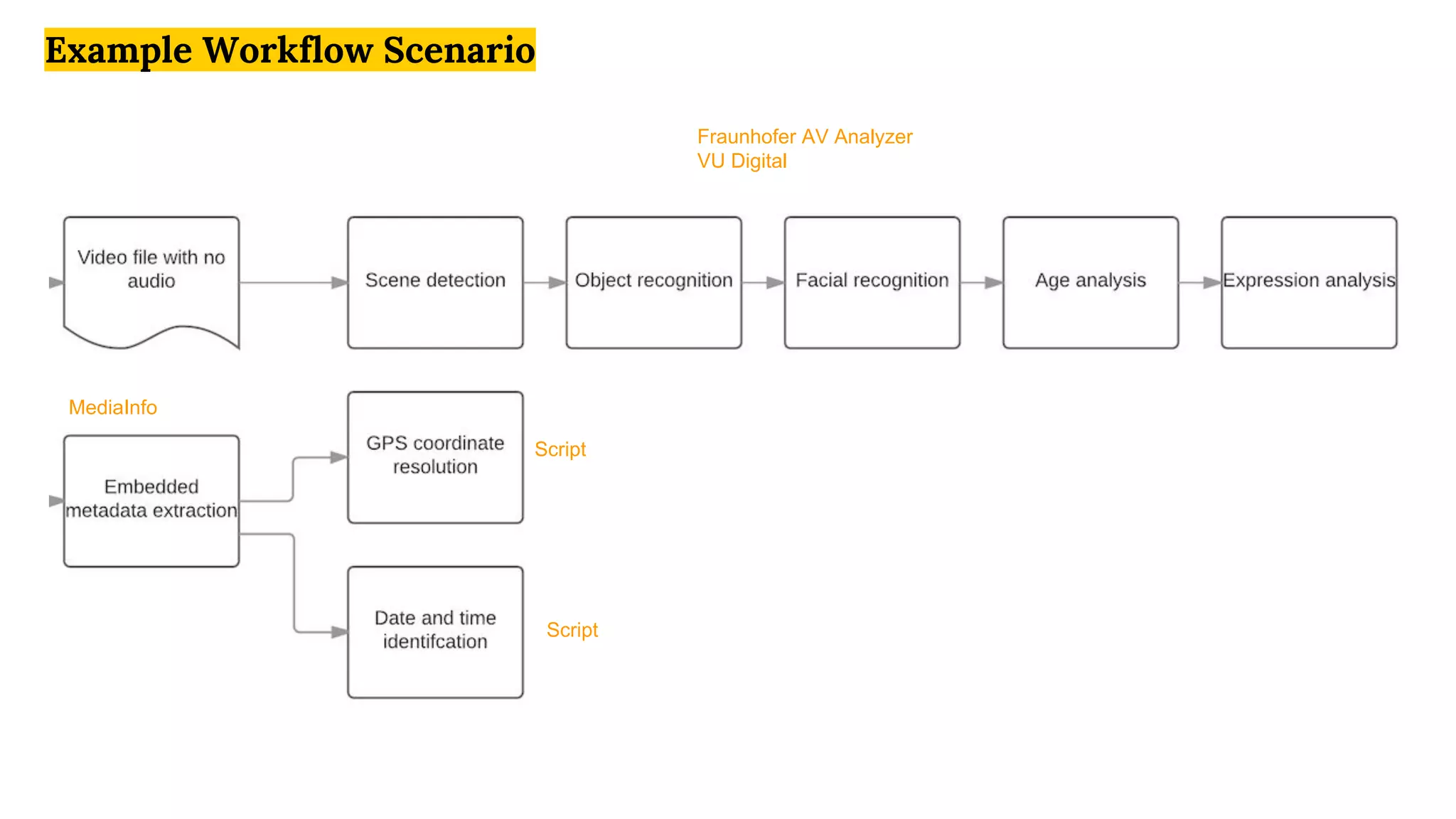
Example Workflow Scenario
Fraunhofer AV Analyzer
VU Digital
Script
Script
MediaInfo
Example Workflow Scenario
Borrow, Build, Buy Considerations
◉ Ownership of “the machine”
◉ Black boxes
◉ Limited capabilities demonstrated
◉ Exploring building on top of MiCO
◉ Very limited options
◉ Metadata cultivation concept
◉ Focal point
Anticipated Challenges & Considerations
Stay
Tuned!
Thanks!
Jon Dunn
jwd@iu.edu | @jwdunn
Chris Lacinak
chris@WeAreAVP.com | @WeAreAVP
White paper
go.iu.edu/ampreport

AMP: An Audiovisual Metadata Platform to Support Mass Description

  • 1.
    AMP: An Audiovisual MetadataPlatform to Support Mass Description Jon Dunn, Indiana University / @jwdunn Chris Lacinak, AVP / @WeAreAVP CNI / April 13, 2018
  • 2.
    Outline 1. Background andcontext - Jon 2. Outcomes and next steps - Chris
  • 3.
    The Challenge ◉ GrowingAV collections ○ Digitization ○ Explosion of born-digital ◉ Increased expectations for access
  • 4.
    The Challenge ◉ ManyAV collections lack metadata ○ Discovery ○ Identification ○ Navigation ○ Rights ○ Accessibility ◉ Institutions lack resources for large cataloging/transcription/inventory/rights clearance projects
  • 5.
    The Challenge: IndianaUniversity ◉ MDPI: Media Digitization and Preservation Initiative ○ 280,000+ AV items; 25,000+ films ○ mdpi.iu.edu ◉ 80+ different units ◉ 20+ different physical formats ◉ Partnership with Memnon ◉ Variety of existing (or nonexisting) metadata ◉ Avalon Media System access platform
  • 6.
    The Opportunity ◉ Massdigitization approach extended to AV ○ “Digitize first” ◉ Emergence and continued improvement of machine learning and other automated tools ◉ How can we leverage the best of automated tools and human expertise?
  • 7.
    Existing Work inthe context of AV Archives ◉ Application of specific machine learning tools ○ e.g. speech-to-text, named entity recognition ◉ “Black box” systems ○ One size fits all, brute force approach to automated metadata generation ◉ Customized workflows ○ e.g. MiCO Platform
  • 8.
    Existing Work: IndianaUniversity ◉ Consulting engagement with AVP in 2016 to identify metadata and rights workflows ◉ Phased approach ◉ Identification of MGMs: Metadata Generation Mechanisms ◉ Need for platform to support workflows, metadata warehouse
  • 9.
  • 12.
    Existing Work: IndianaUniversity ◉ AMIA 2016: ○ Chris Lacinak and Jon Dunn. “From Mass Digitization to Mass Description: Indiana University’s Strategy To Overcome The Next Great Challenge.” ◉ go.iu.edu/1Pvj
  • 13.
  • 14.
    AMP: Audiovisual MetadataPlatform ● Audiovisual Metadata Platform ● Planning grant from Andrew W. Mellon Foundation (July 2017 - January 2018) ○ Focus on technical architecture ● In-person workshop (September 2017) ● Deliverables: ○ White paper: go.iu.edu/ampreport ○ Draft proposal for implementation and pilot test
  • 15.
    AMP: Audiovisual MetadataPlatform ◉ Open source software platform to support metadata creation for AV collections ◉ Design and execute workflows combining automated and human steps ◉ Integrate multiple MGMs ○ Automated, manual ○ Local, HPC, cloud
  • 16.
    AMP Conceptual Diagram Media Content Existing Metadata Workflowsystem MGM MGM MGM Enriched Metadata Target System Users AMP
  • 17.
    Core AMP Team ◉Indiana University Libraries ○ Jon Dunn ○ Julie Hardesty ◉ University of Texas at Austin School of Information ○ Tanya Clement ◉ AVP ○ Adeel Ahmad ○ Chris Lacinak ○ Amy Rudersdorf
  • 18.
    3 Days 16 People 1Tech Platform Plan Mellon-funded workshop
  • 19.
    ◉ Scott Rife,Packard Campus for AV Conservation, Library of Congress ◉ Sadie Roosa, WGBH Media Library & Archives ◉ Felix Saurbier, TIB/German National Library of Science & Technology ◉ Brian Wheeler, IU Libraries ◉ Maria Whitaker, IU Libraries Workshop Participants ◉ Kristian Allen, UCLA Library ◉ Jon Cameron, IU Libraries ◉ Maria Esteva, Texas Advanced Computing Center, UT at Austin ◉ Mike Giarlo, Stanford University Libraries ◉ Brian McFee, Music & Audio Research Laboratory, NYU
  • 20.
    Workshop Overview ◉ Dayone: ○ Overview, scope, background, & goals ○ Requirements development ◉ Day two: ○ Components & candidates ○ MGMs ◉ Day three: ○ Scenarios
  • 21.
  • 22.
    Mongo Cassandra RabbitMQ, ZeroMQ Camel, PBS,Celery Conceptual Architecture
  • 23.
  • 24.
  • 25.
    Watson ARLO Verbit.ai Kaldi Watson Verbit.ai Custom internal MusicBrainz Gracenote Fraunhofer AVAnalyzer Fraunhofer AV Analyzer Fraunhofer AV Analyzer Mufin AudioID Example Workflow Scenario
  • 26.
    Verbit.ai Kaldi Watson Verbit.ai Custom internal Rosette VAMP Suite JAMS MusicBrainz Gracenote MufinAudioID Data Recon Microsoft NLP Stanford NLP Example Workflow Scenario
  • 27.
    Fraunhofer AV Analyzer VUDigital Script Script MediaInfo Example Workflow Scenario
  • 29.
    Borrow, Build, BuyConsiderations ◉ Ownership of “the machine” ◉ Black boxes ◉ Limited capabilities demonstrated ◉ Exploring building on top of MiCO ◉ Very limited options ◉ Metadata cultivation concept ◉ Focal point
  • 30.
  • 31.
  • 32.
    Thanks! Jon Dunn jwd@iu.edu |@jwdunn Chris Lacinak chris@WeAreAVP.com | @WeAreAVP White paper go.iu.edu/ampreport