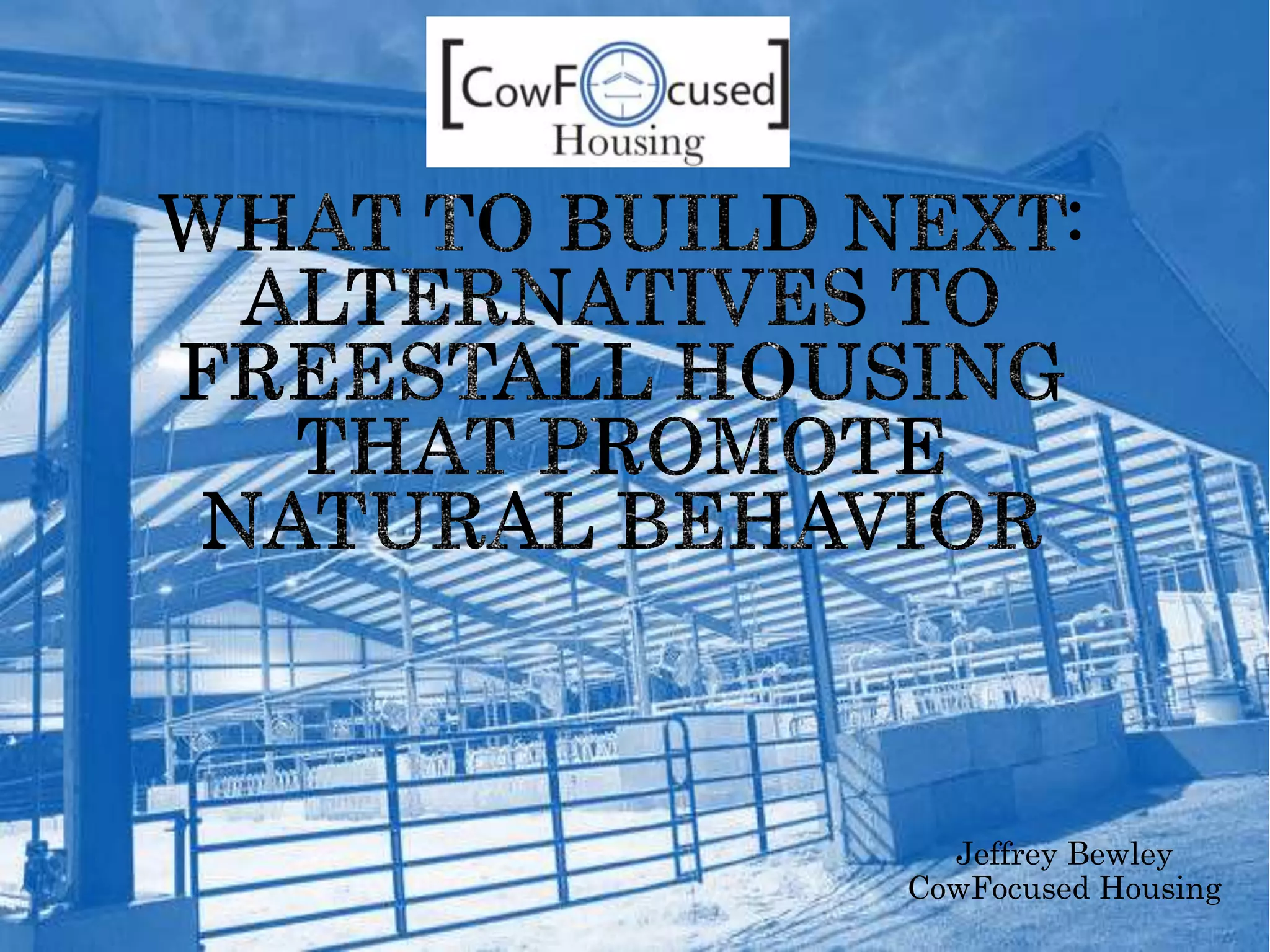

Jeffrey Bewley
CowFocused Housing
Which system is “best” is a complex, ethical,
social, and business decision
My extension philosophy is to help the
farmers design or manage the system they
want
Strong opinions, but they can all work
It all comes down to management
Choice depends on geography, existing
facilities, economics, and personal
preference
Economics
Location
Production practices
Barn type and design
Barn orientation
Stall design
Feeding system
Cow flow
Bedding material
Manure management
Cow information
Future expansion
Labor force
Ventilation
Lighting
Parlor type and size
How Does System Compare to
Natural Environment?
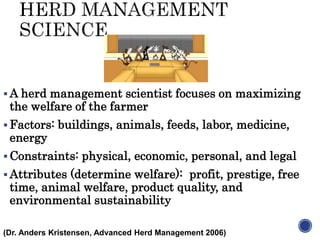
 A herd management scientist focuses on maximizing
the welfare of the farmer
 Factors: buildings, animals, feeds, labor, medicine,
energy
 Constraints: physical, economic, personal, and legal
 Attributes (determine welfare): profit, prestige, free
time, animal welfare, product quality, and
environmental sustainability
(Dr. Anders Kristensen, Advanced Herd Management 2006)
 Concurrently ensuring that the factors are combined in
such a way that the welfare of the individual farmer is
maximized subject to the constraints imposed on his
production
 The “science” is deciding how to combine the factors
(Dr. Anders Kristensen, Advanced Herd Management 2006)
A MYOPIC
APPROACH
TOWARD
FUTURE
HOUSING
VISIONS IS A
GAURANTEE FOR
FUTURE LIMITS
9
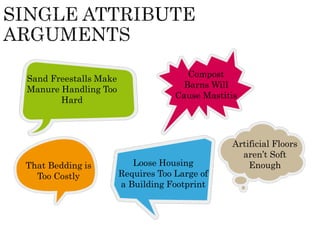
Sand Freestalls Make
Manure Handling Too
Hard
Loose Housing
Requires Too Large of
a Building Footprint
That Bedding is
Too Costly
Artificial Floors
aren’t Soft
Enough
Compost
Barns Will
Cause Mastitis
IS THE SAND
FREESTALL
BARN OF 2017
AS GOOD AS IT
GETS?
Lameness?
Time On Concrete?
Manure Handling Costs?
Natural Behavior Limits?
Public Perception?
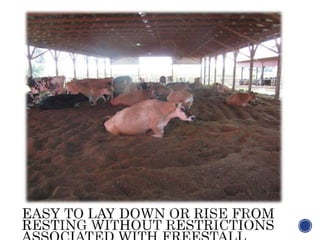
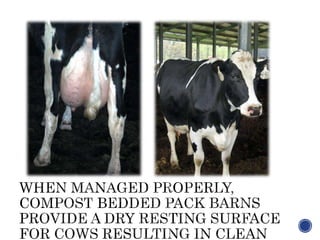
Loose-housing with large, open resting area
Not your grandfather’s bedded pack barn!
Intensively managed compost process keeps
cows dry and clean
Risks for mismanagement higher than stall
barns
More management/less labor than stall barns
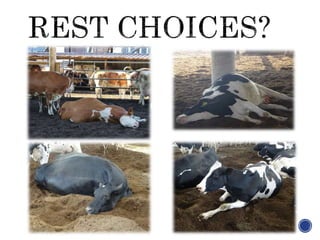
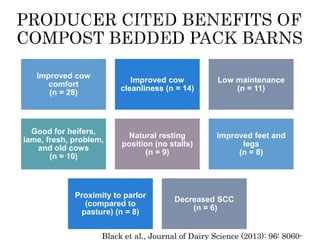
Improved cow
comfort
(n = 28)
Improved cow
cleanliness (n = 14)
Low maintenance
(n = 11)
Good for heifers,
lame, fresh, problem,
and old cows
(n = 10)
Natural resting
position (no stalls)
(n = 9)
Improved feet and
legs
(n = 8)
Proximity to parlor
(compared to
pasture) (n = 8)
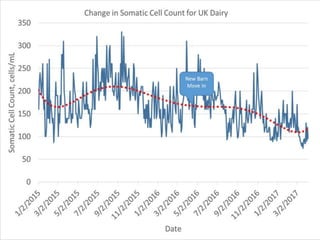
Decreased SCC
(n = 6)
Black et al., Journal of Dairy Science (2013): 96: 8060-
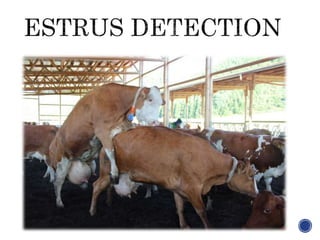
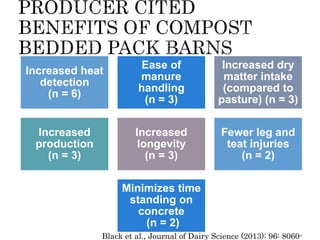
Increased heat
detection
(n = 6)
Ease of
manure
handling
(n = 3)
Increased dry
matter intake
(compared to
pasture) (n = 3)
Increased
production
(n = 3)
Increased
longevity
(n = 3)
Fewer leg and
teat injuries
(n = 2)
Minimizes time
standing on
concrete
(n = 2)
Black et al., Journal of Dairy Science (2013): 96: 8060-
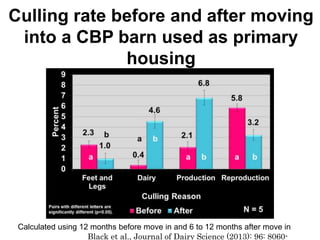
Culling rate before and after moving
into a CBP barn used as primary
housing
Calculated using 12 months before move in and 6 to 12 months after move in
Black et al., Journal of Dairy Science (2013): 96: 8060-
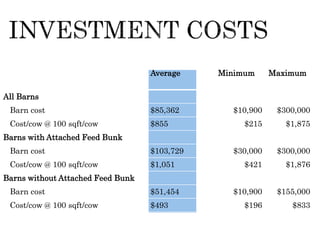
Average Minimum Maximum
All Barns
Barn cost $85,362 $10,900 $300,000
Cost/cow @ 100 sqft/cow $855 $215 $1,875
Barns with Attached Feed Bunk
Barn cost $103,729 $30,000 $300,000
Cost/cow @ 100 sqft/cow $1,051 $421 $1,876
Barns without Attached Feed Bunk
Barn cost $51,454 $10,900 $155,000
Cost/cow @ 100 sqft/cow $493 $196 $833
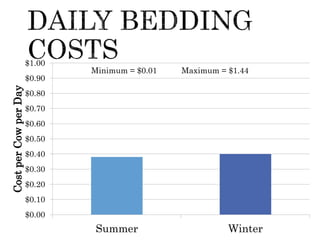
$0.00
$0.10
$0.20
$0.30
$0.40
$0.50
$0.60
$0.70
$0.80
$0.90
$1.00
Summer Winter
CostperCowperDay
Minimum = $0.01 Maximum = $1.44
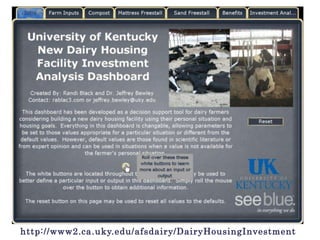
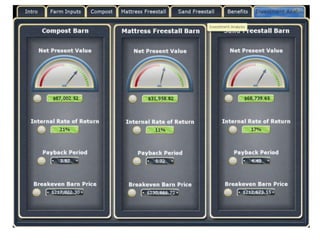
http://www2.ca.uky.edu/afsdairy/DairyHousingInvestment
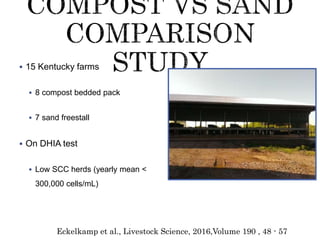
 15 Kentucky farms
 8 compost bedded pack
 7 sand freestall
 On DHIA test
 Low SCC herds (yearly mean <
300,000 cells/mL)
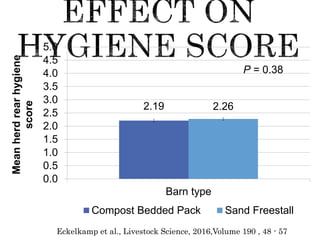
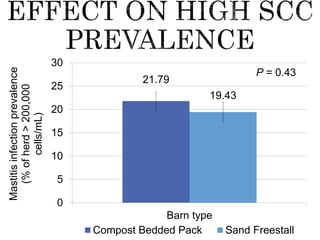
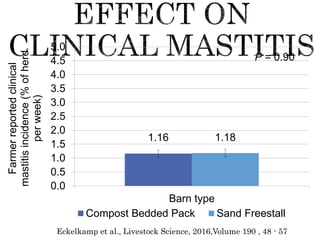
Eckelkamp et al., Livestock Science, 2016,Volume 190 , 48 - 57
2.19 2.26
0.0
0.5
1.0
1.5
2.0
2.5
3.0
3.5
4.0
4.5
5.0
Barn type
Meanherdrearhygiene
score
Compost Bedded Pack Sand Freestall
P = 0.38
Eckelkamp et al., Livestock Science, 2016,Volume 190 , 48 - 57
21.79
19.43
0
5
10
15
20
25
30
Barn type
Mastitisinfectionprevalence
(%ofherd>200,000
cells/mL)
Compost Bedded Pack Sand Freestall
P = 0.43
1.16 1.18
0.0
0.5
1.0
1.5
2.0
2.5
3.0
3.5
4.0
4.5
5.0
Barn type
Farmerreportedclinical
mastitisincidence(%ofherd
perweek)
Compost Bedded Pack Sand Freestall
P = 0.90
Eckelkamp et al., Livestock Science, 2016,Volume 190 , 48 - 57
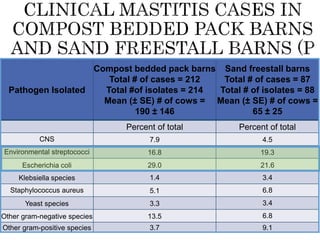
Pathogen Isolated
Compost bedded pack barns
Total # of cases = 212
Total #of isolates = 214
Mean (± SE) # of cows =
190 ± 146
Sand freestall barns
Total # of cases = 87
Total # of isolates = 88
Mean (± SE) # of cows =
65 ± 25
Percent of total Percent of total
CNS 7.9 4.5
Environmental streptococci 16.8 19.3
Escherichia coli 29.0 21.6
Klebsiella species 1.4 3.4
Staphylococcus aureus 5.1 6.8
Yeast species 3.3 3.4
Other gram-negative species 13.5 6.8
Other gram-positive species 3.7 9.1
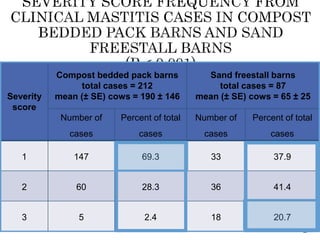
Severity
score
Compost bedded pack barns
total cases = 212
mean (± SE) cows = 190 ± 146
Sand freestall barns
total cases = 87
mean (± SE) cows = 65 ± 25
Number of
cases
Percent of total
cases
Number of
cases
Percent of total
cases
1 147 69.3 33 37.9
2 60 28.3 36 41.4
3 5 2.4 18 20.7
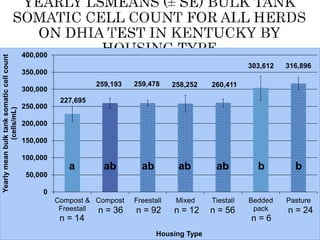
227,695
259,193 259,478 258,252 260,411
303,612 316,896
0
50,000
100,000
150,000
200,000
250,000
300,000
350,000
400,000
Compost &
Freestall
Compost Freestall Mixed Tiestall Bedded
pack
Pasture
Yearlymeanbulktanksomaticcellcount
(cells/mL)
Housing Type
ab ab bab baba
n = 14 n = 6
n = 36 n = 92 n = 12 n = 24n = 56
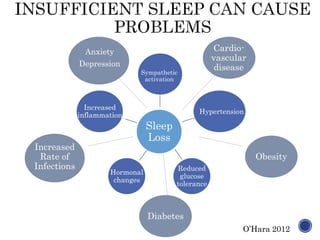
Sleep
Loss
Sympathetic
activation
Hypertension
Reduced
glucose
tolerance
Hormonal
changes
Increased
inflammation
Anxiety
Depression
Cardio-
vascular
disease
Obesity
Increased
Rate of
Infections
Diabetes
O’Hara 2012
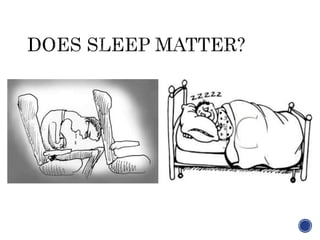
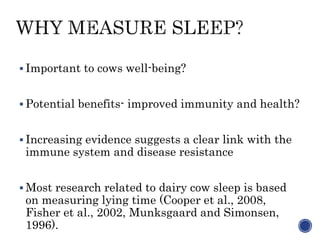
 Important to cows well-being?
 Potential benefits- improved immunity and health?
 Increasing evidence suggests a clear link with the
immune system and disease resistance
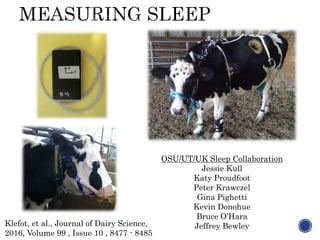
 Most research related to dairy cow sleep is based
on measuring lying time (Cooper et al., 2008,
Fisher et al., 2002, Munksgaard and Simonsen,
1996).
Klefot, et al., Journal of Dairy Science,
2016, Volume 99 , Issue 10 , 8477 - 8485
OSU/UT/UK Sleep Collaboration
Jessie Kull
Katy Proudfoot
Peter Krawczel
Gina Pighetti
Kevin Donohue
Bruce O’Hara
Jeffrey Bewley
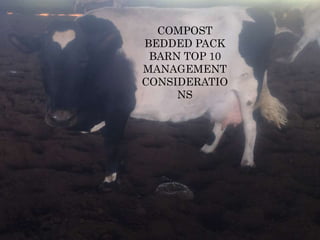
COMPOST
BEDDED PACK
BARN TOP 10
MANAGEMENT
CONSIDERATIO
NS
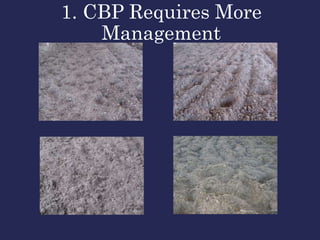
1. CBP Requires More
Management
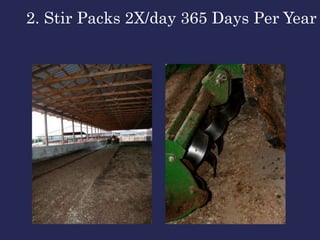
2. Stir Packs 2X/day 365 Days Per Year
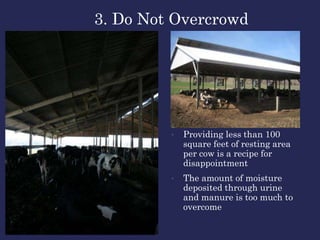
• Providing less than 100
square feet of resting area
per cow is a recipe for
disappointment
• The amount of moisture
deposited through urine
and manure is too much to
overcome
3. Do Not Overcrowd
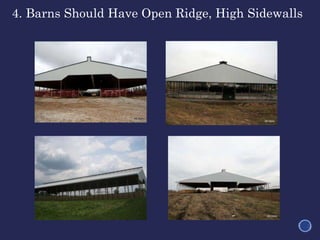
4. Barns Should Have Open Ridge, High Sidewalls
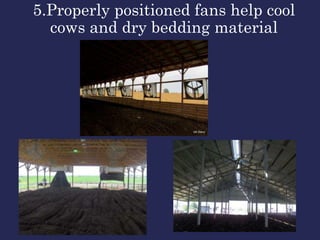
5.Properly positioned fans help cool
cows and dry bedding material
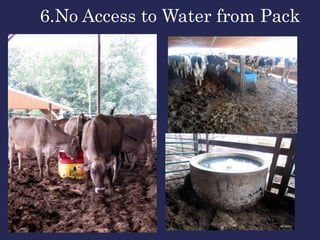
6.No Access to Water from Pack
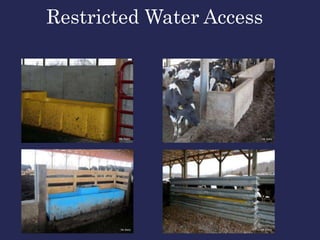
Restricted Water Access
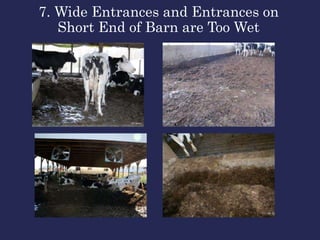
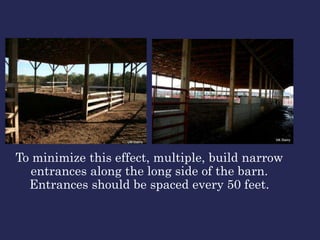
7. Wide Entrances and Entrances on
Short End of Barn are Too Wet
To minimize this effect, multiple, build narrow
entrances along the long side of the barn.
Entrances should be spaced every 50 feet.
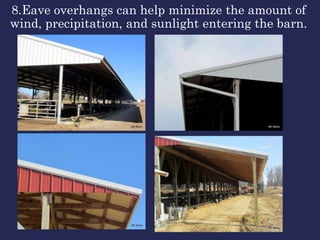
8.Eave overhangs can help minimize the amount of
wind, precipitation, and sunlight entering the barn.
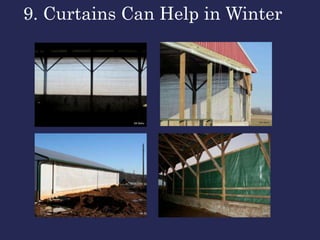
9. Curtains Can Help in Winter
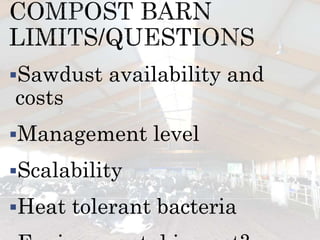
Sawdust availability and
costs
Management level
Scalability
Heat tolerant bacteria
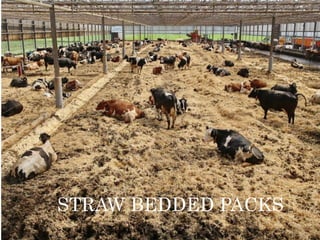
STRAW BEDDED PACKS
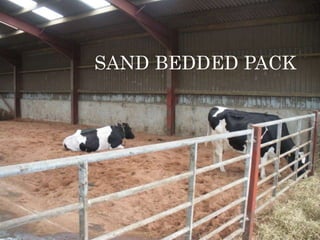
SAND BEDDED PACK
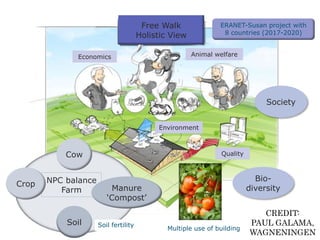
Free Walk
Holistic View
Animal welfareEconomics
Environment
Cow
Soil
NPC balance
Farm Manure
‘Compost’
Quality
Free Walk
Holistic View
Animal welfare
Society
Economics
Environment
Cow
Soil
NPC balance
Farm
Quality
Manure
‘Compost’
Crop
Bio-
diversity
Soil fertility
Multiple use of building
ERANET-Susan project with
8 countries (2017-2020)
CREDIT:
PAUL GALAMA,
WAGNENINGEN
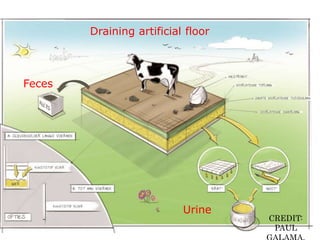
DRAINING FLOORDraining artificial floor
Feces
Urine
CREDIT:
PAUL
Jeffrey Bewley, PhD, PAS
jbewley@bovisync.com
jbewley@cowfocused.com

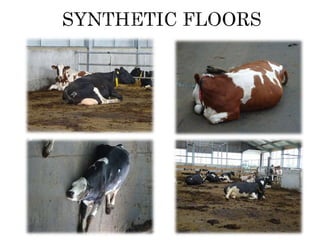
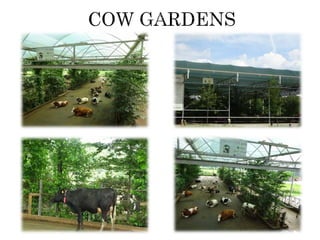
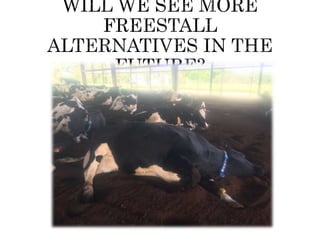
Alternatives to Freestall Housing