1. EPHEDRINE,QUININE,STRCHYNINE
2.COUNTER CURRENT EXTRACTION
TECHNIQUES
Presented to – Dr. Mujeeb Sir
Presented by- Zainab Mantasha
Department of Pharmacognosy and
Phytochemistry,
SPER, Jamia Hamdard
EPHEDRINE,QUININE,STRCHYNINE
BIOSYNTHESIS ISOLATION
CHARACTERIZATIO
N
The process by which living
organisms produce complex
molecules from simpler ones.
The process of separating a substance
or organism from its surroundings or
other entities, often to study or purify
it
The process of defining and describing the
distinct properties, features, or qualities of
a substance, organism, or system, often to
understand its behavior or function.
01 02 03
04
PURIFICATION
The process of removing impurities or
unwanted components from a
substance to obtain a cleaner or more
concentrated form.
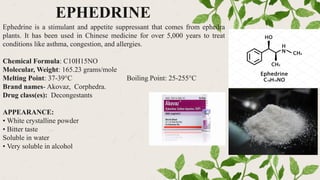
EPHEDRINE
Ephedrine is a stimulant and appetite suppressant that comes from ephedra
plants. It has been used in Chinese medicine for over 5,000 years to treat
conditions like asthma, congestion, and allergies.
Chemical Formula: C10H15NO
Molecular, Weight: 165.23 grams/mole
Melting Point: 37-39°C Boiling Point: 25-255°C
Brand names- Akovaz, Corphedra.
Drug class(es): Decongestants
APPEARANCE:
• White crystalline powder
• Bitter taste
Soluble in water
• Very soluble in alcohol
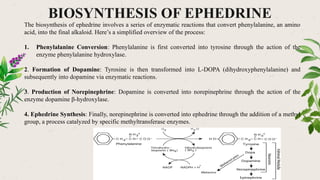
BIOSYNTHESIS OF EPHEDRINE
The biosynthesis of ephedrine involves a series of enzymatic reactions that convert phenylalanine, an amino
acid, into the final alkaloid. Here’s a simplified overview of the process:
1. Phenylalanine Conversion: Phenylalanine is first converted into tyrosine through the action of the
enzyme phenylalanine hydroxylase.
2. Formation of Dopamine: Tyrosine is then transformed into L-DOPA (dihydroxyphenylalanine) and
subsequently into dopamine via enzymatic reactions.
3. Production of Norepinephrine: Dopamine is converted into norepinephrine through the action of the
enzyme dopamine β-hydroxylase.
4. Ephedrine Synthesis: Finally, norepinephrine is converted into ephedrine through the addition of a methyl
group, a process catalyzed by specific methyltransferase enzymes.
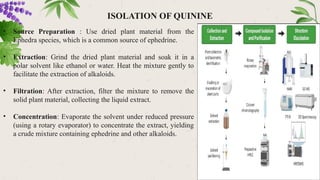
ISOLATION OF QUININE
• Source Preparation : Use dried plant material from the
Ephedra species, which is a common source of ephedrine.
• Extraction: Grind the dried plant material and soak it in a
polar solvent like ethanol or water. Heat the mixture gently to
facilitate the extraction of alkaloids.
• Filtration: After extraction, filter the mixture to remove the
solid plant material, collecting the liquid extract.
• Concentration: Evaporate the solvent under reduced pressure
(using a rotary evaporator) to concentrate the extract, yielding
a crude mixture containing ephedrine and other alkaloids.
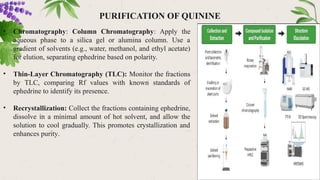
PURIFICATION OF QUININE
• Chromatography: Column Chromatography: Apply the
aqueous phase to a silica gel or alumina column. Use a
gradient of solvents (e.g., water, methanol, and ethyl acetate)
for elution, separating ephedrine based on polarity.
• Thin-Layer Chromatography (TLC): Monitor the fractions
by TLC, comparing Rf values with known standards of
ephedrine to identify its presence.
• Recrystallization: Collect the fractions containing ephedrine,
dissolve in a minimal amount of hot solvent, and allow the
solution to cool gradually. This promotes crystallization and
enhances purity.
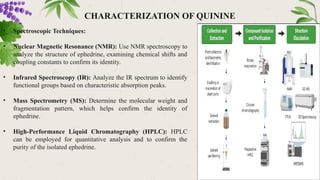
CHARACTERIZATION OF QUININE
• Spectroscopic Techniques:
• Nuclear Magnetic Resonance (NMR): Use NMR spectroscopy to
analyze the structure of ephedrine, examining chemical shifts and
coupling constants to confirm its identity.
• Infrared Spectroscopy (IR): Analyze the IR spectrum to identify
functional groups based on characteristic absorption peaks.
• Mass Spectrometry (MS): Determine the molecular weight and
fragmentation pattern, which helps confirm the identity of
ephedrine.
• High-Performance Liquid Chromatography (HPLC): HPLC
can be employed for quantitative analysis and to confirm the
purity of the isolated ephedrine.
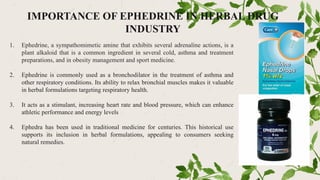
IMPORTANCE OF EPHEDRINE IN HERBAL DRUG
INDUSTRY
1. Ephedrine, a sympathomimetic amine that exhibits several adrenaline actions, is a
plant alkaloid that is a common ingredient in several cold, asthma and treatment
preparations, and in obesity management and sport medicine.
2. Ephedrine is commonly used as a bronchodilator in the treatment of asthma and
other respiratory conditions. Its ability to relax bronchial muscles makes it valuable
in herbal formulations targeting respiratory health.
3. It acts as a stimulant, increasing heart rate and blood pressure, which can enhance
athletic performance and energy levels
4. Ephedra has been used in traditional medicine for centuries. This historical use
supports its inclusion in herbal formulations, appealing to consumers seeking
natural remedies.
QUININE
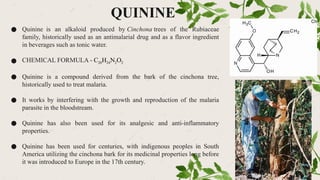
● Quinine is an alkaloid produced by Cinchona trees of the Rubiaceae
family, historically used as an antimalarial drug and as a flavor ingredient
in beverages such as tonic water.
● CHEMICAL FORMULA - C20H24N2O2
● Quinine is a compound derived from the bark of the cinchona tree,
historically used to treat malaria.
● It works by interfering with the growth and reproduction of the malaria
parasite in the bloodstream.
● Quinine has also been used for its analgesic and anti-inflammatory
properties.
● Quinine has been used for centuries, with indigenous peoples in South
America utilizing the cinchona bark for its medicinal properties long before
it was introduced to Europe in the 17th century.
BIOSYNTHESIS OF QUININE
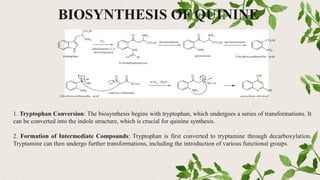
1. Tryptophan Conversion: The biosynthesis begins with tryptophan, which undergoes a series of transformations. It
can be converted into the indole structure, which is crucial for quinine synthesis.
2. Formation of Intermediate Compounds: Tryptophan is first converted to tryptamine through decarboxylation.
Tryptamine can then undergo further transformations, including the introduction of various functional groups.
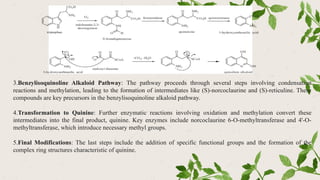
3.Benzylisoquinoline Alkaloid Pathway: The pathway proceeds through several steps involving condensation
reactions and methylation, leading to the formation of intermediates like (S)-norcoclaurine and (S)-reticuline. These
compounds are key precursors in the benzylisoquinoline alkaloid pathway.
4.Transformation to Quinine: Further enzymatic reactions involving oxidation and methylation convert these
intermediates into the final product, quinine. Key enzymes include norcoclaurine 6-O-methyltransferase and 4'-O-
methyltransferase, which introduce necessary methyl groups.
5.Final Modifications: The last steps include the addition of specific functional groups and the formation of the
complex ring structures characteristic of quinine.
ISOLATION OF QUININE
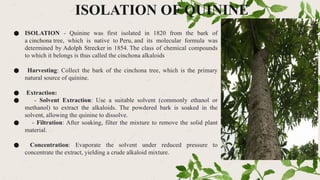
● ISOLATION - Quinine was first isolated in 1820 from the bark of
a cinchona tree, which is native to Peru, and its molecular formula was
determined by Adolph Strecker in 1854. The class of chemical compounds
to which it belongs is thus called the cinchona alkaloids
● Harvesting: Collect the bark of the cinchona tree, which is the primary
natural source of quinine.
● Extraction:
● - Solvent Extraction: Use a suitable solvent (commonly ethanol or
methanol) to extract the alkaloids. The powdered bark is soaked in the
solvent, allowing the quinine to dissolve.
● - Filtration: After soaking, filter the mixture to remove the solid plant
material.
● Concentration: Evaporate the solvent under reduced pressure to
concentrate the extract, yielding a crude alkaloid mixture.
PURIFICATION OF QUININE
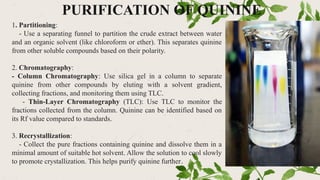
1. Partitioning:
- Use a separating funnel to partition the crude extract between water
and an organic solvent (like chloroform or ether). This separates quinine
from other soluble compounds based on their polarity.
2. Chromatography:
- Column Chromatography: Use silica gel in a column to separate
quinine from other compounds by eluting with a solvent gradient,
collecting fractions, and monitoring them using TLC.
- Thin-Layer Chromatography (TLC): Use TLC to monitor the
fractions collected from the column. Quinine can be identified based on
its Rf value compared to standards.
3. Recrystallization:
- Collect the pure fractions containing quinine and dissolve them in a
minimal amount of suitable hot solvent. Allow the solution to cool slowly
to promote crystallization. This helps purify quinine further.
CHARACTERIZATION OF QUININE
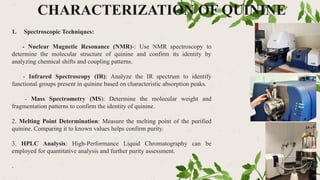
1. Spectroscopic Techniques:
- Nuclear Magnetic Resonance (NMR)-: Use NMR spectroscopy to
determine the molecular structure of quinine and confirm its identity by
analyzing chemical shifts and coupling patterns.
- Infrared Spectroscopy (IR): Analyze the IR spectrum to identify
functional groups present in quinine based on characteristic absorption peaks.
- Mass Spectrometry (MS): Determine the molecular weight and
fragmentation patterns to confirm the identity of quinine.
2. Melting Point Determination: Measure the melting point of the purified
quinine. Comparing it to known values helps confirm purity.
3. HPLC Analysis: High-Performance Liquid Chromatography can be
employed for quantitative analysis and further purity assessment.
.
SIGNIFICANCE OF QUININE IN HERBAL PLANT INDUSTRY
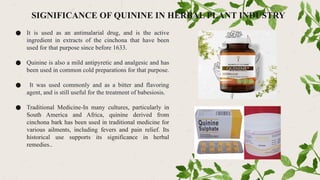
● It is used as an antimalarial drug, and is the active
ingredient in extracts of the cinchona that have been
used for that purpose since before 1633.
● Quinine is also a mild antipyretic and analgesic and has
been used in common cold preparations for that purpose.
● It was used commonly and as a bitter and flavoring
agent, and is still useful for the treatment of babesiosis.
● Traditional Medicine-In many cultures, particularly in
South America and Africa, quinine derived from
cinchona bark has been used in traditional medicine for
various ailments, including fevers and pain relief. Its
historical use supports its significance in herbal
remedies..
STRYCHININE
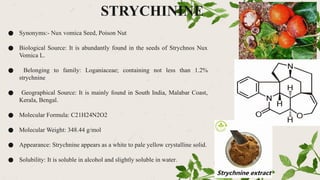
● Synonyms:- Nux vomica Seed, Poison Nut
● Biological Source: It is abundantly found in the seeds of Strychnos Nux
Vomica L.
● Belonging to family: Loganiaceae; containing not less than 1.2%
strychnine
● Geographical Source: It is mainly found in South India, Malabar Coast,
Kerala, Bengal.
● Molecular Formula: C21H24N2O2
● Molecular Weight: 348.44 g/mol
● Appearance: Strychnine appears as a white to pale yellow crystalline solid.
● Solubility: It is soluble in alcohol and slightly soluble in water.
BIOSYNTHESIS OF STRYCHININE
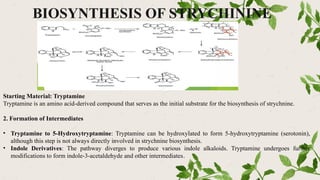
Starting Material: Tryptamine
Tryptamine is an amino acid-derived compound that serves as the initial substrate for the biosynthesis of strychnine.
2. Formation of Intermediates
• Tryptamine to 5-Hydroxytryptamine: Tryptamine can be hydroxylated to form 5-hydroxytryptamine (serotonin),
although this step is not always directly involved in strychnine biosynthesis.
• Indole Derivatives: The pathway diverges to produce various indole alkaloids. Tryptamine undergoes further
modifications to form indole-3-acetaldehyde and other intermediates.
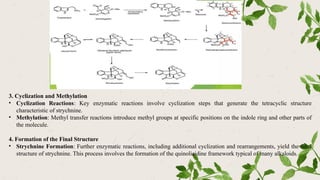
3. Cyclization and Methylation
• Cyclization Reactions: Key enzymatic reactions involve cyclization steps that generate the tetracyclic structure
characteristic of strychnine.
• Methylation: Methyl transfer reactions introduce methyl groups at specific positions on the indole ring and other parts of
the molecule.
4. Formation of the Final Structure
• Strychnine Formation: Further enzymatic reactions, including additional cyclization and rearrangements, yield the final
structure of strychnine. This process involves the formation of the quinolizidine framework typical of many alkaloids.
ISOLATION OF STRYCHININE
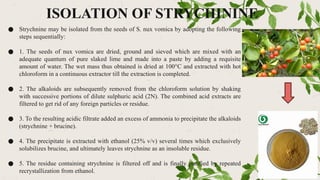
● Strychnine may be isolated from the seeds of S. nux vomica by adopting the following
steps sequentially:
● 1. The seeds of nux vomica are dried, ground and sieved which are mixed with an
adequate quantum of pure slaked lime and made into a paste by adding a requisite
amount of water. The wet mass thus obtained is dried at 100°C and extracted with hot
chloroform in a continuous extractor till the extraction is completed.
● 2. The alkaloids are subsequently removed from the chloroform solution by shaking
with successive portions of dilute sulphuric acid (2N). The combined acid extracts are
filtered to get rid of any foreign particles or residue.
● 3. To the resulting acidic filtrate added an excess of ammonia to precipitate the alkaloids
(strychnine + brucine).
● 4. The precipitate is extracted with ethanol (25% v/v) several times which exclusively
solubilizes brucine, and ultimately leaves strychnine as an insoluble residue.
● 5. The residue containing strychnine is filtered off and is finally purified by repeated
recrystallization from ethanol.
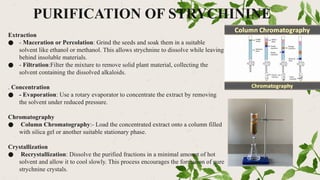
PURIFICATION OF STRYCHININE
Extraction
● - Maceration or Percolation: Grind the seeds and soak them in a suitable
solvent like ethanol or methanol. This allows strychnine to dissolve while leaving
behind insoluble materials.
● - Filtration:Filter the mixture to remove solid plant material, collecting the
solvent containing the dissolved alkaloids.
. Concentration
● - Evaporation: Use a rotary evaporator to concentrate the extract by removing
the solvent under reduced pressure.
Chromatography
● Column Chromatography:- Load the concentrated extract onto a column filled
with silica gel or another suitable stationary phase.
Crystallization
● Recrystallization: Dissolve the purified fractions in a minimal amount of hot
solvent and allow it to cool slowly. This process encourages the formation of pure
strychnine crystals.
CHARACTERIZATION OF STRYCHININE
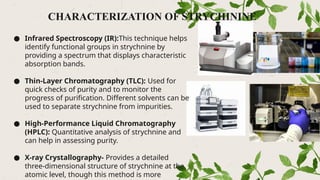
● Infrared Spectroscopy (IR):This technique helps
identify functional groups in strychnine by
providing a spectrum that displays characteristic
absorption bands.
● Thin-Layer Chromatography (TLC): Used for
quick checks of purity and to monitor the
progress of purification. Different solvents can be
used to separate strychnine from impurities.
● High-Performance Liquid Chromatography
(HPLC): Quantitative analysis of strychnine and
can help in assessing purity.
● X-ray Crystallography- Provides a detailed
three-dimensional structure of strychnine at the
atomic level, though this method is more
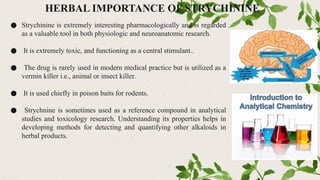
HERBAL IMPORTANCE OF STRYCHININE
● Strychinine is extremely interesting pharmacologically and is regarded
as a valuable tool in both physiologic and neuroanatomic research.
● It is extremely toxic, and functioning as a central stimulant..
● The drug is rarely used in modern medical practice but is utilized as a
vermin killer i.e., animal or insect killer.
● It is used chiefly in poison baits for rodents.
● Strychnine is sometimes used as a reference compound in analytical
studies and toxicology research. Understanding its properties helps in
developing methods for detecting and quantifying other alkaloids in
herbal products.
COUNTER CURRENT
EXTRACTION
INTRODUCTION
• Counter current extraction is a method of multiple liquid- liquid
extraction.
• Separation of components having variable solubility in two
immiscible liquid phases is achieved.
• In the counter current extraction two immiscible solvents flow in an
opposite direction in multiple stages, (after several stages pure A and
B solvents can be obtained)
• In liquid- liquid extraction the solvent is used to extract another
liquid phase.
• The distribution of active principles between water and organic
solvent depends on the hydrophilic groups present in the constituent
molecules.
• • If hydrophilic groups are ionisable,PH will be an important factor.
• If ionisation constants of isomers are different then separation can be
achieved.
INSTRUMENTATION
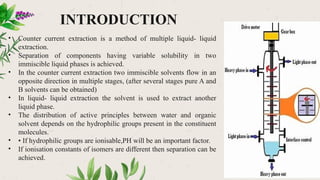
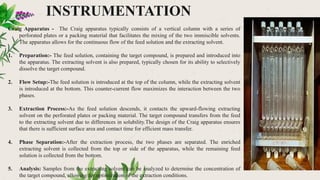
Craig Apparatus - The Craig apparatus typically consists of a vertical column with a series of
perforated plates or a packing material that facilitates the mixing of the two immiscible solvents.
The apparatus allows for the continuous flow of the feed solution and the extracting solvent.
1. Preparation:- The feed solution, containing the target compound, is prepared and introduced into
the apparatus. The extracting solvent is also prepared, typically chosen for its ability to selectively
dissolve the target compound.
2. Flow Setup:-The feed solution is introduced at the top of the column, while the extracting solvent
is introduced at the bottom. This counter-current flow maximizes the interaction between the two
phases.
3. Extraction Process:-As the feed solution descends, it contacts the upward-flowing extracting
solvent on the perforated plates or packing material. The target compound transfers from the feed
to the extracting solvent due to differences in solubility.The design of the Craig apparatus ensures
that there is sufficient surface area and contact time for efficient mass transfer.
4. Phase Separation:-After the extraction process, the two phases are separated. The enriched
extracting solvent is collected from the top or side of the apparatus, while the remaining feed
solution is collected from the bottom.
5. Analysis: Samples from the extracting solvent can be analyzed to determine the concentration of
the target compound, allowing for optimization of the extraction conditions.
FACTORS AFFECTING COUNTER CURRENT
EXTRACTION
1. Nature of the Compound -The chemical properties of the compound being extracted (e.g.,
molecular size, functional groups) can influence its distribution between the two phases.
2. Presence of Impurities-Other compounds in the feed can compete for solubility in the extracting
solvent, potentially reducing the extraction efficiency of the target compound.
3. Temperature-Increasing temperature generally enhances solubility, leading to improved extraction
efficiency. However, it may also affect the stability of heat-sensitive compounds
4. Polarity: The choice of solvents affects the solubility of the target compounds. Using solvents with
different polarities can enhance extraction efficiency.
5. Density: The density difference between the two solvents can impact the phase separation and the
speed of extraction.
6. Viscosity: Lower viscosity solvents facilitate better mass transfer and flow rates.
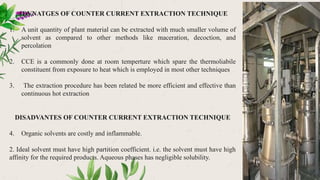
ADVNATGES OF COUNTER CURRENT EXTRACTION TECHNIQUE
1. A unit quantity of plant material can be extracted with much smaller volume of
solvent as compared to other methods like maceration, decoction, and
percolation
2. CCE is a commonly done at room temperture which spare the thermoliabile
constituent from exposure to heat which is employed in most other techniques
3. The extraction procedure has been related be more efficient and effective than
continuous hot extraction
DISADVANTES OF COUNTER CURRENT EXTRACTION TECHNIQUE
4. Organic solvents are costly and inflammable.
2. Ideal solvent must have high partition coefficient. i.e. the solvent must have high
affinity for the required products. Aqueous phases has negligible solubility.
APPLICATION OF COUNTER CURRENT
TECHNIQUES
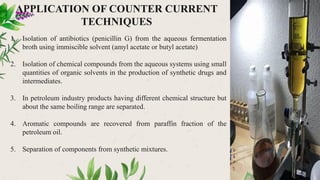
1. Isolation of antibiotics (penicillin G) from the aqueous fermentation
broth using immiscible solvent (amyl acetate or butyl acetate)
2. Isolation of chemical compounds from the aqueous systems using small
quantities of organic solvents in the production of synthetic drugs and
intermediates.
3. In petroleum industry products having different chemical structure but
about the same boiling range are separated.
4. Aromatic compounds are recovered from paraffin fraction of the
petroleum oil.
5. Separation of components from synthetic mixtures.
REFERENCES
● https://www.slideshare.net/slideshow/ephedrine-alkaloid/229370420
● https://www.slideshare.net/slideshow/ephedrine-bio-synthesis-and-its-uses-as-medicine/271432639
● https://www.bing.com/ck/a?!
&&p=a3c5aceed08e7c76bacde9c8f19232d31de989e55dd9407648198583673881cbJmltdHM9MTcyOTkwMDgwMA&ptn=3&ver=2&hs
h=4&fclid=2c13c160-76bb-6641-1b15-
d59c77bd67cc&psq=IOSOLATION+EPHEDRINE+SLIDESHARE+MPHARMA&u=a1aHR0cHM6Ly93d3cuc2xpZGVzaGFyZS5uZX
Qvc2xpZGVzaG93L2V4dHJhY3Rpb24taXNvbGF0aW9uLWVzdGltYXRpb24tb2YtZXBoZWRyaW5lLzEyNDI3NDEyNw&ntb=1
● https://www.slideshare.net/slideshow/ephedrine-222492072/222492072
● https://www.bing.com/ck/a?!
&&p=8b98787ad8bfb953eb750ca4b809c162840f683f75f7c4e3372939545a6749fbJmltdHM9MTcyOTkwMDgwMA&ptn=3&ver=2&hs
h=4&fclid=2c13c160-76bb-6641-1b15-
d59c77bd67cc&psq=CHARACTERISATION+EPHEDRINE+SLIDESHARE+MPHARMA&u=a1aHR0cHM6Ly93d3cuc2xpZGVzaGF
yZS5uZXQvc2xpZGVzaG93L2VwaGVkcmluZS1hbmQtbW9ycGhpbmUtYnktYmhhcmF0LW0tcGhhcm1hY3lwcHR4LzI1NDYwNDY
3Mg&ntb=1
● Over a century since ephedrine discovery: an updated revisit to its pharmacological aspects, functionality and toxicity in comparison to its
herbal extracts – PubMed
● Quinine: Uses, Interactions, Mechanism of Action | DrugBank Online
● Biosynthesis of quinoline alkaloids. | Download Scientific Diagram
● Strychnine PPT.pptx
● Counter current extraction | PPT | Free Download
● Counter current extraction | PPT
THANK YOU

ALkALOIDS AND COUNTER CURRENT EXTRACTION TECHNIQUEpptx

  • 1.
    1. EPHEDRINE,QUININE,STRCHYNINE 2.COUNTER CURRENTEXTRACTION TECHNIQUES Presented to – Dr. Mujeeb Sir Presented by- Zainab Mantasha Department of Pharmacognosy and Phytochemistry, SPER, Jamia Hamdard
  • 2.
    EPHEDRINE,QUININE,STRCHYNINE BIOSYNTHESIS ISOLATION CHARACTERIZATIO N The processby which living organisms produce complex molecules from simpler ones. The process of separating a substance or organism from its surroundings or other entities, often to study or purify it The process of defining and describing the distinct properties, features, or qualities of a substance, organism, or system, often to understand its behavior or function. 01 02 03 04 PURIFICATION The process of removing impurities or unwanted components from a substance to obtain a cleaner or more concentrated form.
  • 3.
    EPHEDRINE Ephedrine is astimulant and appetite suppressant that comes from ephedra plants. It has been used in Chinese medicine for over 5,000 years to treat conditions like asthma, congestion, and allergies. Chemical Formula: C10H15NO Molecular, Weight: 165.23 grams/mole Melting Point: 37-39°C Boiling Point: 25-255°C Brand names- Akovaz, Corphedra. Drug class(es): Decongestants APPEARANCE: • White crystalline powder • Bitter taste Soluble in water • Very soluble in alcohol
  • 4.
    BIOSYNTHESIS OF EPHEDRINE Thebiosynthesis of ephedrine involves a series of enzymatic reactions that convert phenylalanine, an amino acid, into the final alkaloid. Here’s a simplified overview of the process: 1. Phenylalanine Conversion: Phenylalanine is first converted into tyrosine through the action of the enzyme phenylalanine hydroxylase. 2. Formation of Dopamine: Tyrosine is then transformed into L-DOPA (dihydroxyphenylalanine) and subsequently into dopamine via enzymatic reactions. 3. Production of Norepinephrine: Dopamine is converted into norepinephrine through the action of the enzyme dopamine β-hydroxylase. 4. Ephedrine Synthesis: Finally, norepinephrine is converted into ephedrine through the addition of a methyl group, a process catalyzed by specific methyltransferase enzymes.
  • 5.
    ISOLATION OF QUININE •Source Preparation : Use dried plant material from the Ephedra species, which is a common source of ephedrine. • Extraction: Grind the dried plant material and soak it in a polar solvent like ethanol or water. Heat the mixture gently to facilitate the extraction of alkaloids. • Filtration: After extraction, filter the mixture to remove the solid plant material, collecting the liquid extract. • Concentration: Evaporate the solvent under reduced pressure (using a rotary evaporator) to concentrate the extract, yielding a crude mixture containing ephedrine and other alkaloids.
  • 6.
    PURIFICATION OF QUININE •Chromatography: Column Chromatography: Apply the aqueous phase to a silica gel or alumina column. Use a gradient of solvents (e.g., water, methanol, and ethyl acetate) for elution, separating ephedrine based on polarity. • Thin-Layer Chromatography (TLC): Monitor the fractions by TLC, comparing Rf values with known standards of ephedrine to identify its presence. • Recrystallization: Collect the fractions containing ephedrine, dissolve in a minimal amount of hot solvent, and allow the solution to cool gradually. This promotes crystallization and enhances purity.
  • 7.
    CHARACTERIZATION OF QUININE •Spectroscopic Techniques: • Nuclear Magnetic Resonance (NMR): Use NMR spectroscopy to analyze the structure of ephedrine, examining chemical shifts and coupling constants to confirm its identity. • Infrared Spectroscopy (IR): Analyze the IR spectrum to identify functional groups based on characteristic absorption peaks. • Mass Spectrometry (MS): Determine the molecular weight and fragmentation pattern, which helps confirm the identity of ephedrine. • High-Performance Liquid Chromatography (HPLC): HPLC can be employed for quantitative analysis and to confirm the purity of the isolated ephedrine.
  • 8.
    IMPORTANCE OF EPHEDRINEIN HERBAL DRUG INDUSTRY 1. Ephedrine, a sympathomimetic amine that exhibits several adrenaline actions, is a plant alkaloid that is a common ingredient in several cold, asthma and treatment preparations, and in obesity management and sport medicine. 2. Ephedrine is commonly used as a bronchodilator in the treatment of asthma and other respiratory conditions. Its ability to relax bronchial muscles makes it valuable in herbal formulations targeting respiratory health. 3. It acts as a stimulant, increasing heart rate and blood pressure, which can enhance athletic performance and energy levels 4. Ephedra has been used in traditional medicine for centuries. This historical use supports its inclusion in herbal formulations, appealing to consumers seeking natural remedies.
  • 9.
    QUININE ● Quinine isan alkaloid produced by Cinchona trees of the Rubiaceae family, historically used as an antimalarial drug and as a flavor ingredient in beverages such as tonic water. ● CHEMICAL FORMULA - C20H24N2O2 ● Quinine is a compound derived from the bark of the cinchona tree, historically used to treat malaria. ● It works by interfering with the growth and reproduction of the malaria parasite in the bloodstream. ● Quinine has also been used for its analgesic and anti-inflammatory properties. ● Quinine has been used for centuries, with indigenous peoples in South America utilizing the cinchona bark for its medicinal properties long before it was introduced to Europe in the 17th century.
  • 10.
    BIOSYNTHESIS OF QUININE 1.Tryptophan Conversion: The biosynthesis begins with tryptophan, which undergoes a series of transformations. It can be converted into the indole structure, which is crucial for quinine synthesis. 2. Formation of Intermediate Compounds: Tryptophan is first converted to tryptamine through decarboxylation. Tryptamine can then undergo further transformations, including the introduction of various functional groups.
  • 11.
    3.Benzylisoquinoline Alkaloid Pathway:The pathway proceeds through several steps involving condensation reactions and methylation, leading to the formation of intermediates like (S)-norcoclaurine and (S)-reticuline. These compounds are key precursors in the benzylisoquinoline alkaloid pathway. 4.Transformation to Quinine: Further enzymatic reactions involving oxidation and methylation convert these intermediates into the final product, quinine. Key enzymes include norcoclaurine 6-O-methyltransferase and 4'-O- methyltransferase, which introduce necessary methyl groups. 5.Final Modifications: The last steps include the addition of specific functional groups and the formation of the complex ring structures characteristic of quinine.
  • 12.
    ISOLATION OF QUININE ●ISOLATION - Quinine was first isolated in 1820 from the bark of a cinchona tree, which is native to Peru, and its molecular formula was determined by Adolph Strecker in 1854. The class of chemical compounds to which it belongs is thus called the cinchona alkaloids ● Harvesting: Collect the bark of the cinchona tree, which is the primary natural source of quinine. ● Extraction: ● - Solvent Extraction: Use a suitable solvent (commonly ethanol or methanol) to extract the alkaloids. The powdered bark is soaked in the solvent, allowing the quinine to dissolve. ● - Filtration: After soaking, filter the mixture to remove the solid plant material. ● Concentration: Evaporate the solvent under reduced pressure to concentrate the extract, yielding a crude alkaloid mixture.
  • 13.
    PURIFICATION OF QUININE 1.Partitioning: - Use a separating funnel to partition the crude extract between water and an organic solvent (like chloroform or ether). This separates quinine from other soluble compounds based on their polarity. 2. Chromatography: - Column Chromatography: Use silica gel in a column to separate quinine from other compounds by eluting with a solvent gradient, collecting fractions, and monitoring them using TLC. - Thin-Layer Chromatography (TLC): Use TLC to monitor the fractions collected from the column. Quinine can be identified based on its Rf value compared to standards. 3. Recrystallization: - Collect the pure fractions containing quinine and dissolve them in a minimal amount of suitable hot solvent. Allow the solution to cool slowly to promote crystallization. This helps purify quinine further.
  • 14.
    CHARACTERIZATION OF QUININE 1.Spectroscopic Techniques: - Nuclear Magnetic Resonance (NMR)-: Use NMR spectroscopy to determine the molecular structure of quinine and confirm its identity by analyzing chemical shifts and coupling patterns. - Infrared Spectroscopy (IR): Analyze the IR spectrum to identify functional groups present in quinine based on characteristic absorption peaks. - Mass Spectrometry (MS): Determine the molecular weight and fragmentation patterns to confirm the identity of quinine. 2. Melting Point Determination: Measure the melting point of the purified quinine. Comparing it to known values helps confirm purity. 3. HPLC Analysis: High-Performance Liquid Chromatography can be employed for quantitative analysis and further purity assessment. .
  • 15.
    SIGNIFICANCE OF QUININEIN HERBAL PLANT INDUSTRY ● It is used as an antimalarial drug, and is the active ingredient in extracts of the cinchona that have been used for that purpose since before 1633. ● Quinine is also a mild antipyretic and analgesic and has been used in common cold preparations for that purpose. ● It was used commonly and as a bitter and flavoring agent, and is still useful for the treatment of babesiosis. ● Traditional Medicine-In many cultures, particularly in South America and Africa, quinine derived from cinchona bark has been used in traditional medicine for various ailments, including fevers and pain relief. Its historical use supports its significance in herbal remedies..
  • 16.
    STRYCHININE ● Synonyms:- Nuxvomica Seed, Poison Nut ● Biological Source: It is abundantly found in the seeds of Strychnos Nux Vomica L. ● Belonging to family: Loganiaceae; containing not less than 1.2% strychnine ● Geographical Source: It is mainly found in South India, Malabar Coast, Kerala, Bengal. ● Molecular Formula: C21H24N2O2 ● Molecular Weight: 348.44 g/mol ● Appearance: Strychnine appears as a white to pale yellow crystalline solid. ● Solubility: It is soluble in alcohol and slightly soluble in water.
  • 17.
    BIOSYNTHESIS OF STRYCHININE StartingMaterial: Tryptamine Tryptamine is an amino acid-derived compound that serves as the initial substrate for the biosynthesis of strychnine. 2. Formation of Intermediates • Tryptamine to 5-Hydroxytryptamine: Tryptamine can be hydroxylated to form 5-hydroxytryptamine (serotonin), although this step is not always directly involved in strychnine biosynthesis. • Indole Derivatives: The pathway diverges to produce various indole alkaloids. Tryptamine undergoes further modifications to form indole-3-acetaldehyde and other intermediates.
  • 18.
    3. Cyclization andMethylation • Cyclization Reactions: Key enzymatic reactions involve cyclization steps that generate the tetracyclic structure characteristic of strychnine. • Methylation: Methyl transfer reactions introduce methyl groups at specific positions on the indole ring and other parts of the molecule. 4. Formation of the Final Structure • Strychnine Formation: Further enzymatic reactions, including additional cyclization and rearrangements, yield the final structure of strychnine. This process involves the formation of the quinolizidine framework typical of many alkaloids.
  • 19.
    ISOLATION OF STRYCHININE ●Strychnine may be isolated from the seeds of S. nux vomica by adopting the following steps sequentially: ● 1. The seeds of nux vomica are dried, ground and sieved which are mixed with an adequate quantum of pure slaked lime and made into a paste by adding a requisite amount of water. The wet mass thus obtained is dried at 100°C and extracted with hot chloroform in a continuous extractor till the extraction is completed. ● 2. The alkaloids are subsequently removed from the chloroform solution by shaking with successive portions of dilute sulphuric acid (2N). The combined acid extracts are filtered to get rid of any foreign particles or residue. ● 3. To the resulting acidic filtrate added an excess of ammonia to precipitate the alkaloids (strychnine + brucine). ● 4. The precipitate is extracted with ethanol (25% v/v) several times which exclusively solubilizes brucine, and ultimately leaves strychnine as an insoluble residue. ● 5. The residue containing strychnine is filtered off and is finally purified by repeated recrystallization from ethanol.
  • 20.
    PURIFICATION OF STRYCHININE Extraction ●- Maceration or Percolation: Grind the seeds and soak them in a suitable solvent like ethanol or methanol. This allows strychnine to dissolve while leaving behind insoluble materials. ● - Filtration:Filter the mixture to remove solid plant material, collecting the solvent containing the dissolved alkaloids. . Concentration ● - Evaporation: Use a rotary evaporator to concentrate the extract by removing the solvent under reduced pressure. Chromatography ● Column Chromatography:- Load the concentrated extract onto a column filled with silica gel or another suitable stationary phase. Crystallization ● Recrystallization: Dissolve the purified fractions in a minimal amount of hot solvent and allow it to cool slowly. This process encourages the formation of pure strychnine crystals.
  • 21.
    CHARACTERIZATION OF STRYCHININE ●Infrared Spectroscopy (IR):This technique helps identify functional groups in strychnine by providing a spectrum that displays characteristic absorption bands. ● Thin-Layer Chromatography (TLC): Used for quick checks of purity and to monitor the progress of purification. Different solvents can be used to separate strychnine from impurities. ● High-Performance Liquid Chromatography (HPLC): Quantitative analysis of strychnine and can help in assessing purity. ● X-ray Crystallography- Provides a detailed three-dimensional structure of strychnine at the atomic level, though this method is more
  • 22.
    HERBAL IMPORTANCE OFSTRYCHININE ● Strychinine is extremely interesting pharmacologically and is regarded as a valuable tool in both physiologic and neuroanatomic research. ● It is extremely toxic, and functioning as a central stimulant.. ● The drug is rarely used in modern medical practice but is utilized as a vermin killer i.e., animal or insect killer. ● It is used chiefly in poison baits for rodents. ● Strychnine is sometimes used as a reference compound in analytical studies and toxicology research. Understanding its properties helps in developing methods for detecting and quantifying other alkaloids in herbal products.
  • 23.
  • 24.
    INTRODUCTION • Counter currentextraction is a method of multiple liquid- liquid extraction. • Separation of components having variable solubility in two immiscible liquid phases is achieved. • In the counter current extraction two immiscible solvents flow in an opposite direction in multiple stages, (after several stages pure A and B solvents can be obtained) • In liquid- liquid extraction the solvent is used to extract another liquid phase. • The distribution of active principles between water and organic solvent depends on the hydrophilic groups present in the constituent molecules. • • If hydrophilic groups are ionisable,PH will be an important factor. • If ionisation constants of isomers are different then separation can be achieved.
  • 25.
    INSTRUMENTATION Craig Apparatus -The Craig apparatus typically consists of a vertical column with a series of perforated plates or a packing material that facilitates the mixing of the two immiscible solvents. The apparatus allows for the continuous flow of the feed solution and the extracting solvent. 1. Preparation:- The feed solution, containing the target compound, is prepared and introduced into the apparatus. The extracting solvent is also prepared, typically chosen for its ability to selectively dissolve the target compound. 2. Flow Setup:-The feed solution is introduced at the top of the column, while the extracting solvent is introduced at the bottom. This counter-current flow maximizes the interaction between the two phases. 3. Extraction Process:-As the feed solution descends, it contacts the upward-flowing extracting solvent on the perforated plates or packing material. The target compound transfers from the feed to the extracting solvent due to differences in solubility.The design of the Craig apparatus ensures that there is sufficient surface area and contact time for efficient mass transfer. 4. Phase Separation:-After the extraction process, the two phases are separated. The enriched extracting solvent is collected from the top or side of the apparatus, while the remaining feed solution is collected from the bottom. 5. Analysis: Samples from the extracting solvent can be analyzed to determine the concentration of the target compound, allowing for optimization of the extraction conditions.
  • 26.
    FACTORS AFFECTING COUNTERCURRENT EXTRACTION 1. Nature of the Compound -The chemical properties of the compound being extracted (e.g., molecular size, functional groups) can influence its distribution between the two phases. 2. Presence of Impurities-Other compounds in the feed can compete for solubility in the extracting solvent, potentially reducing the extraction efficiency of the target compound. 3. Temperature-Increasing temperature generally enhances solubility, leading to improved extraction efficiency. However, it may also affect the stability of heat-sensitive compounds 4. Polarity: The choice of solvents affects the solubility of the target compounds. Using solvents with different polarities can enhance extraction efficiency. 5. Density: The density difference between the two solvents can impact the phase separation and the speed of extraction. 6. Viscosity: Lower viscosity solvents facilitate better mass transfer and flow rates.
  • 27.
    ADVNATGES OF COUNTERCURRENT EXTRACTION TECHNIQUE 1. A unit quantity of plant material can be extracted with much smaller volume of solvent as compared to other methods like maceration, decoction, and percolation 2. CCE is a commonly done at room temperture which spare the thermoliabile constituent from exposure to heat which is employed in most other techniques 3. The extraction procedure has been related be more efficient and effective than continuous hot extraction DISADVANTES OF COUNTER CURRENT EXTRACTION TECHNIQUE 4. Organic solvents are costly and inflammable. 2. Ideal solvent must have high partition coefficient. i.e. the solvent must have high affinity for the required products. Aqueous phases has negligible solubility.
  • 28.
    APPLICATION OF COUNTERCURRENT TECHNIQUES 1. Isolation of antibiotics (penicillin G) from the aqueous fermentation broth using immiscible solvent (amyl acetate or butyl acetate) 2. Isolation of chemical compounds from the aqueous systems using small quantities of organic solvents in the production of synthetic drugs and intermediates. 3. In petroleum industry products having different chemical structure but about the same boiling range are separated. 4. Aromatic compounds are recovered from paraffin fraction of the petroleum oil. 5. Separation of components from synthetic mixtures.
  • 29.
    REFERENCES ● https://www.slideshare.net/slideshow/ephedrine-alkaloid/229370420 ● https://www.slideshare.net/slideshow/ephedrine-bio-synthesis-and-its-uses-as-medicine/271432639 ●https://www.bing.com/ck/a?! &&p=a3c5aceed08e7c76bacde9c8f19232d31de989e55dd9407648198583673881cbJmltdHM9MTcyOTkwMDgwMA&ptn=3&ver=2&hs h=4&fclid=2c13c160-76bb-6641-1b15- d59c77bd67cc&psq=IOSOLATION+EPHEDRINE+SLIDESHARE+MPHARMA&u=a1aHR0cHM6Ly93d3cuc2xpZGVzaGFyZS5uZX Qvc2xpZGVzaG93L2V4dHJhY3Rpb24taXNvbGF0aW9uLWVzdGltYXRpb24tb2YtZXBoZWRyaW5lLzEyNDI3NDEyNw&ntb=1 ● https://www.slideshare.net/slideshow/ephedrine-222492072/222492072 ● https://www.bing.com/ck/a?! &&p=8b98787ad8bfb953eb750ca4b809c162840f683f75f7c4e3372939545a6749fbJmltdHM9MTcyOTkwMDgwMA&ptn=3&ver=2&hs h=4&fclid=2c13c160-76bb-6641-1b15- d59c77bd67cc&psq=CHARACTERISATION+EPHEDRINE+SLIDESHARE+MPHARMA&u=a1aHR0cHM6Ly93d3cuc2xpZGVzaGF yZS5uZXQvc2xpZGVzaG93L2VwaGVkcmluZS1hbmQtbW9ycGhpbmUtYnktYmhhcmF0LW0tcGhhcm1hY3lwcHR4LzI1NDYwNDY 3Mg&ntb=1 ● Over a century since ephedrine discovery: an updated revisit to its pharmacological aspects, functionality and toxicity in comparison to its herbal extracts – PubMed ● Quinine: Uses, Interactions, Mechanism of Action | DrugBank Online ● Biosynthesis of quinoline alkaloids. | Download Scientific Diagram ● Strychnine PPT.pptx ● Counter current extraction | PPT | Free Download ● Counter current extraction | PPT
  • 30.