AISI – NICI - RICI


      Alain Nkoyock,
  Addis Ababa, 1st October 2005

                                  1
ICT, ECA & AISI: Historical Steps
• PADIS (Pan African Development Information System):
  1979 -> Objective: Establishment of a centralized
  development information Db at ECA (AA) with national
  development information Dbs at national participating
  centres in Africa countries
• CABECA (Capacity Building for Electronic
  Communication in Africa: 1992 -> Objective:
  Establishment of electronic communication nodes in 24
  African countries.
• AISI (African Information Society Initiative): 1996 ->
  Development of National Information and
  Communications Infrastructure (NICI) in Africa (among
  others).

                                                       2
What is AISI?
– An Action Framework to Build Africa's
  Information and Communication Infrastructure
– Aims at supporting and accelerating socio-
  economic development imperatives of African
  countries
– Focuses on priority strategies, programmes
  and projects (information networks, regional
  databases, etc)
– Main e-strategies: NICI, RICI, SICI and VICI

                                             3
What is an NICI Plan?
• An instrument to implement the global AISI visions
  of developing the information infrastructure, human
  resources and content at national level;
• An African response to facilitate the digital
  inclusion of Africa and integration of the continent
  into the globalization process;
• An exercise aiming at developing national ICT
  policies, strategies and plans which serve as
  roadmap for the countries participation in the
  knowledge economy.

                                                    4
Aims of a NICI Plan
• Improve the nations Information and
  communication infrastructure;
• Improve the nations ICT policies and regulatory
  frameworks;
• Improve the nations Human resources;
• Improve the nations Infostructure.


                                                    5
NICI Plan Components
– The policy;
– The Framework;
– The implementation plan.


                             6
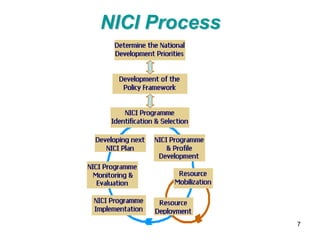
NICI Process


               7
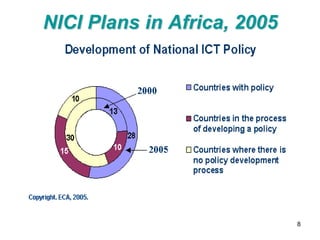
NICI Plans in Africa, 2005


                             8
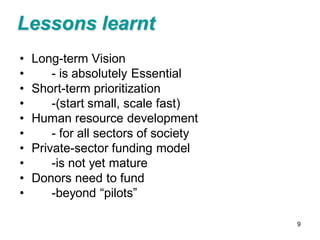
Lessons learnt
•   Long-term Vision
•       - is absolutely Essential
•   Short-term prioritization
•       -(start small, scale fast)
•   Human resource development
•       - for all sectors of society
•   Private-sector funding model
•       -is not yet mature
•   Donors need to fund
•       -beyond “pilots”

                                       9
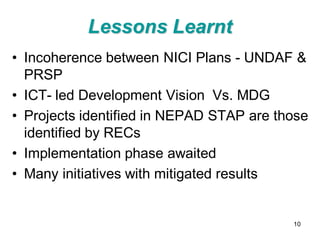
Lessons Learnt
• Incoherence between NICI Plans - UNDAF &
  PRSP
• ICT- led Development Vision Vs. MDG
• Projects identified in NEPAD STAP are those
  identified by RECs
• Implementation phase awaited
• Many initiatives with mitigated results


                                          10
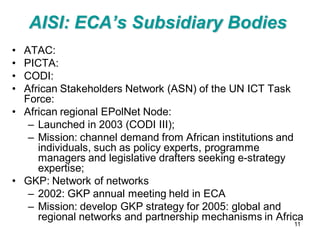
AISI: ECA’s Subsidiary Bodies
• ATAC:
• PICTA:
• CODI:
• African Stakeholders Network (ASN) of the UN ICT Task
  Force:
• African regional EPolNet Node:
   – Launched in 2003 (CODI III);
   – Mission: channel demand from African institutions and
     individuals, such as policy experts, programme
     managers and legislative drafters seeking e-strategy
     expertise;
• GKP: Network of networks
   – 2002: GKP annual meeting held in ECA
   – Mission: develop GKP strategy for 2005: global and
     regional networks and partnership mechanisms in Africa
                                                         11
What is RICI?
• A facility for harmonizing national strategies at the sub-
  regional levels by RECs for consistency in regional
  economic integration goals in the area of ICTs
• Allows for harmonization of national regulatory frameworks
  as countries deregulate and liberalize their
  telecommunication markets
• Provides a framework for the development of information
  and communication infrastructure that can facilitate regional
  economic integration goals of the African continent.
• Provides an impetus for strengthening capacity at the sub-
  regional level in ICT for development and building a critical
  mass to facilitate regional integration through ICTs


                                                            12
Benefits of RICI
•   Policy and Regulatory Integration:
      – The creation of regional strategies would enable Africa to build economy of scale for
         developing its infrastructure and content and increase Africa's ability to negotiate
         globally.
•   Regulatory integration at the regional level:
      – would create and strengthen the community/associations of regulators to facilitate
         cross-boarder interaction, market enlargement and harmonization policies at the sub-
         regional and regional levels.
•   Strengthen regional institutions:
      – to participate effectively in global ICT, as well as of decision-making bodies such as
         ICANN, WTO, WIPO, ISOC etc.
•   Infrastructure Development:
      – This will include the setting up of sub-regional backbones, exchange and
         interconnection points, with human resource development requirements.
•   Mechanisms for sharing bandwidth within the sub-regions:
      – should be looked into as part of the facilitation of sub-regional and regional
         interconnectivity.
•   Economic Policies:
      – Establishing common tariffs for ICT products and services across borders as a key
         component of the harmonization process at sub-regional and regional levels.
•   Potential for cost sharing in executing joint projects at sub-regional and regional
    levels:
      – particularly the financing and strengthening of sub-regional and regional backbones
         to enhance connectivity in the region.
                                                                                          13

Aisi and Nici - Policy Doc2

  • 1.
    AISI – NICI- RICI Alain Nkoyock, Addis Ababa, 1st October 2005 1
  • 2.
    ICT, ECA &AISI: Historical Steps • PADIS (Pan African Development Information System): 1979 -> Objective: Establishment of a centralized development information Db at ECA (AA) with national development information Dbs at national participating centres in Africa countries • CABECA (Capacity Building for Electronic Communication in Africa: 1992 -> Objective: Establishment of electronic communication nodes in 24 African countries. • AISI (African Information Society Initiative): 1996 -> Development of National Information and Communications Infrastructure (NICI) in Africa (among others). 2
  • 3.
    What is AISI? –An Action Framework to Build Africa's Information and Communication Infrastructure – Aims at supporting and accelerating socio- economic development imperatives of African countries – Focuses on priority strategies, programmes and projects (information networks, regional databases, etc) – Main e-strategies: NICI, RICI, SICI and VICI 3
  • 4.
    What is anNICI Plan? • An instrument to implement the global AISI visions of developing the information infrastructure, human resources and content at national level; • An African response to facilitate the digital inclusion of Africa and integration of the continent into the globalization process; • An exercise aiming at developing national ICT policies, strategies and plans which serve as roadmap for the countries participation in the knowledge economy. 4
  • 5.
    Aims of aNICI Plan • Improve the nations Information and communication infrastructure; • Improve the nations ICT policies and regulatory frameworks; • Improve the nations Human resources; • Improve the nations Infostructure. 5
  • 6.
    NICI Plan Components –The policy; – The Framework; – The implementation plan. 6
  • 7.
  • 8.
    NICI Plans inAfrica, 2005 8
  • 9.
    Lessons learnt • Long-term Vision • - is absolutely Essential • Short-term prioritization • -(start small, scale fast) • Human resource development • - for all sectors of society • Private-sector funding model • -is not yet mature • Donors need to fund • -beyond “pilots” 9
  • 10.
    Lessons Learnt • Incoherencebetween NICI Plans - UNDAF & PRSP • ICT- led Development Vision Vs. MDG • Projects identified in NEPAD STAP are those identified by RECs • Implementation phase awaited • Many initiatives with mitigated results 10
  • 11.
    AISI: ECA’s SubsidiaryBodies • ATAC: • PICTA: • CODI: • African Stakeholders Network (ASN) of the UN ICT Task Force: • African regional EPolNet Node: – Launched in 2003 (CODI III); – Mission: channel demand from African institutions and individuals, such as policy experts, programme managers and legislative drafters seeking e-strategy expertise; • GKP: Network of networks – 2002: GKP annual meeting held in ECA – Mission: develop GKP strategy for 2005: global and regional networks and partnership mechanisms in Africa 11
  • 12.
    What is RICI? •A facility for harmonizing national strategies at the sub- regional levels by RECs for consistency in regional economic integration goals in the area of ICTs • Allows for harmonization of national regulatory frameworks as countries deregulate and liberalize their telecommunication markets • Provides a framework for the development of information and communication infrastructure that can facilitate regional economic integration goals of the African continent. • Provides an impetus for strengthening capacity at the sub- regional level in ICT for development and building a critical mass to facilitate regional integration through ICTs 12
  • 13.
    Benefits of RICI • Policy and Regulatory Integration: – The creation of regional strategies would enable Africa to build economy of scale for developing its infrastructure and content and increase Africa's ability to negotiate globally. • Regulatory integration at the regional level: – would create and strengthen the community/associations of regulators to facilitate cross-boarder interaction, market enlargement and harmonization policies at the sub- regional and regional levels. • Strengthen regional institutions: – to participate effectively in global ICT, as well as of decision-making bodies such as ICANN, WTO, WIPO, ISOC etc. • Infrastructure Development: – This will include the setting up of sub-regional backbones, exchange and interconnection points, with human resource development requirements. • Mechanisms for sharing bandwidth within the sub-regions: – should be looked into as part of the facilitation of sub-regional and regional interconnectivity. • Economic Policies: – Establishing common tariffs for ICT products and services across borders as a key component of the harmonization process at sub-regional and regional levels. • Potential for cost sharing in executing joint projects at sub-regional and regional levels: – particularly the financing and strengthening of sub-regional and regional backbones to enhance connectivity in the region. 13