 A bone is a rigid organ that constitutes part of the
skeleton in most vertebrate animals.
 Bones are living, active tissues that the body is constantly
remodeling
 Their functions include supporting body structure,
protecting key organs, and enabling the body to move.
Also, it is in the bones that the body produces bone
marrow and, from there, blood cells. Moveover, they act
as a storage area for minerals, particularly calcium.
 The skeleton accounts for around 15% of body weight. At
birth, humans have around 270 soft bones. As they grow,
some fuse.
 By adulthood, people have between 206 and 213 bones.
The reason for the difference is that some people have
more or fewer bones in their ribs, vertebrae, fingers, and
toes.
 The largest bone in the human body is the thighbone, or
femur, and the smallest is the stapes in the middle ear, at
around 3 millimetersTrusted Source long.
 Bones consist mostly of the protein collagen, which forms
a soft framework. The mineral calcium phosphate hardens
this framework, giving it strength. The bones contain 99%
of the body’s calcium.
 Bones are composed of two types of tissue.
 Compact (cortical) bone is a hard outer layer that is dense,
strong, and durable. It makes up around 80% of adult
bone mass and forms the outer layer of bone.
 Cancellous (trabecular or spongy) bone makes up the
remaining 20% of bone and consists of a network of
trabeculae, or rod-like, structures. It is lighter, less dense,
and more flexible than compact bone.
Bones also contain:
 osteoblasts and osteocytes, responsible for creating bone
 osteoclasts, or bone-resorbing cells
 osteoid, a mix of collagen and other proteins
 inorganic mineral salts within the matrix
 nerves and blood vessels
 bone marrow
 cartilage
 membranes, including the endosteum and periosteum
 Bone marrow
 Bone marrow is present in almost all bones where
cancellous, or spongy, bone is present.
 Bone marrow produces blood cells, including: red blood
cells, which deliver oxygen to cells ,white blood cells,
essential for the body’s immune system,platelets, which the
body uses for clotting
 The marrow produces around 2 million red blood cells every
second. It also produces lymphocytes, or the white blood
cells involved in the immune response.
 Bones serve various functions that affect the whole body. Studies
show that, in addition to structure and movement, bones support
energy metabolism, the production of blood cells, the immune
system, and brain function.
 Mechanics
 Bones provide a frame to support the body. Muscles, tendons, and
ligaments attach to bones. Without anchoring to bones, muscles
could not move the body.
 Protection
 Some bones protect the body’s internal organs. For instance, the
skull protects the brain, and the ribs protect the heart and lungs.
 Synthesis
 Cancellous bone is a vital reservoir for developing red blood cells,
platelets, and white blood cells. Also, the body destroys defective
and old red blood cells in bone marrow.
 Metabolism
 The metabolic functions of bone include Storage: Bones act as a
reserve for minerals, particularly calcium and phosphorous. Bone
marrow adipose tissue can also store fatty acids.
 Endocrine function: Bones produce the precursors to various
hormones, including those involved in growth, insulin production, and
brain development. They release hormones that act on the kidneys and
influence blood sugar regulation and fat deposition.
 Calcium balance: Bones can raise or reduce calcium in the blood by
forming bone, or breaking it down in a process called resorption.
 pH balance: Some researchTrusted Source has suggested bones can
release or absorb alkaline salts, helping blood to stay at the right pH
level, but scientists need more studies to confirm this.
 Detoxification: Bones can absorbTrusted Source heavy metals such as
lead, mercury, and arsenic from the blood.
Types of bone
There are five types of bones in the human body:
Long bones: These are mostly compacted bones with little marrow and
include most of the bones in the limbs. They tend to support weight
and help movement.
Short bones: These have a squat, cubed shape and include bones of the
wrist and ankle.
Flat bones: These have a flat, broad surface. They consist of two outer
layers of compact bone and an inner layer of spongy bone. The bones
of the skull, breastbone, ribs, and shoulder blades are flat bones. They
tend to have a protective role.
Sesamoid bones: These are embeddedTrusted Source in muscles and
tendons near the surfaces of joints. They include the patella or
kneecap. They protect tendons from wear and stress.
Irregular bones: These bones do not fit into the first four categories and
have an unusual shape. They include the bones of the spine and pelvis.
They often protect organs or tissues.
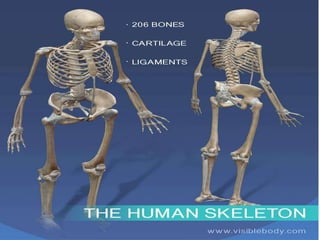
 The bones of the skeleton belong to two groups: The
appendicular and axial skeletons.
 The appendicular skeleton comprises 126 bones, including
those of the limbs, shoulders, and pelvic girdle. It provides
structure and support to other parts of the body.
 The axial skeleton has less range of motion than the
appendicular skeleton. It comprises the bones of the skull,
vertebral column, and thoracic cage.

aharapaka.pptx💞💞💞💞💞💞💞yyyyyyyyyyyy

  • 2.
     A boneis a rigid organ that constitutes part of the skeleton in most vertebrate animals.  Bones are living, active tissues that the body is constantly remodeling  Their functions include supporting body structure, protecting key organs, and enabling the body to move. Also, it is in the bones that the body produces bone marrow and, from there, blood cells. Moveover, they act as a storage area for minerals, particularly calcium.
  • 3.
     The skeletonaccounts for around 15% of body weight. At birth, humans have around 270 soft bones. As they grow, some fuse.  By adulthood, people have between 206 and 213 bones. The reason for the difference is that some people have more or fewer bones in their ribs, vertebrae, fingers, and toes.
  • 4.
     The largestbone in the human body is the thighbone, or femur, and the smallest is the stapes in the middle ear, at around 3 millimetersTrusted Source long.  Bones consist mostly of the protein collagen, which forms a soft framework. The mineral calcium phosphate hardens this framework, giving it strength. The bones contain 99% of the body’s calcium.
  • 5.
     Bones arecomposed of two types of tissue.  Compact (cortical) bone is a hard outer layer that is dense, strong, and durable. It makes up around 80% of adult bone mass and forms the outer layer of bone.  Cancellous (trabecular or spongy) bone makes up the remaining 20% of bone and consists of a network of trabeculae, or rod-like, structures. It is lighter, less dense, and more flexible than compact bone.
  • 6.
    Bones also contain: osteoblasts and osteocytes, responsible for creating bone  osteoclasts, or bone-resorbing cells  osteoid, a mix of collagen and other proteins  inorganic mineral salts within the matrix  nerves and blood vessels  bone marrow  cartilage  membranes, including the endosteum and periosteum
  • 7.
     Bone marrow Bone marrow is present in almost all bones where cancellous, or spongy, bone is present.  Bone marrow produces blood cells, including: red blood cells, which deliver oxygen to cells ,white blood cells, essential for the body’s immune system,platelets, which the body uses for clotting  The marrow produces around 2 million red blood cells every second. It also produces lymphocytes, or the white blood cells involved in the immune response.
  • 8.
     Bones servevarious functions that affect the whole body. Studies show that, in addition to structure and movement, bones support energy metabolism, the production of blood cells, the immune system, and brain function.  Mechanics  Bones provide a frame to support the body. Muscles, tendons, and ligaments attach to bones. Without anchoring to bones, muscles could not move the body.  Protection  Some bones protect the body’s internal organs. For instance, the skull protects the brain, and the ribs protect the heart and lungs.  Synthesis  Cancellous bone is a vital reservoir for developing red blood cells, platelets, and white blood cells. Also, the body destroys defective and old red blood cells in bone marrow.
  • 9.
     Metabolism  Themetabolic functions of bone include Storage: Bones act as a reserve for minerals, particularly calcium and phosphorous. Bone marrow adipose tissue can also store fatty acids.  Endocrine function: Bones produce the precursors to various hormones, including those involved in growth, insulin production, and brain development. They release hormones that act on the kidneys and influence blood sugar regulation and fat deposition.  Calcium balance: Bones can raise or reduce calcium in the blood by forming bone, or breaking it down in a process called resorption.  pH balance: Some researchTrusted Source has suggested bones can release or absorb alkaline salts, helping blood to stay at the right pH level, but scientists need more studies to confirm this.  Detoxification: Bones can absorbTrusted Source heavy metals such as lead, mercury, and arsenic from the blood.
  • 10.
    Types of bone Thereare five types of bones in the human body: Long bones: These are mostly compacted bones with little marrow and include most of the bones in the limbs. They tend to support weight and help movement. Short bones: These have a squat, cubed shape and include bones of the wrist and ankle. Flat bones: These have a flat, broad surface. They consist of two outer layers of compact bone and an inner layer of spongy bone. The bones of the skull, breastbone, ribs, and shoulder blades are flat bones. They tend to have a protective role. Sesamoid bones: These are embeddedTrusted Source in muscles and tendons near the surfaces of joints. They include the patella or kneecap. They protect tendons from wear and stress. Irregular bones: These bones do not fit into the first four categories and have an unusual shape. They include the bones of the spine and pelvis. They often protect organs or tissues.
  • 11.
     The bonesof the skeleton belong to two groups: The appendicular and axial skeletons.  The appendicular skeleton comprises 126 bones, including those of the limbs, shoulders, and pelvic girdle. It provides structure and support to other parts of the body.  The axial skeleton has less range of motion than the appendicular skeleton. It comprises the bones of the skull, vertebral column, and thoracic cage.