Agriculture
R.THARVISH KUMAR
INDEX
History1
Types2
Production3
Environmental impact4
Flows & Processes
HISTORY
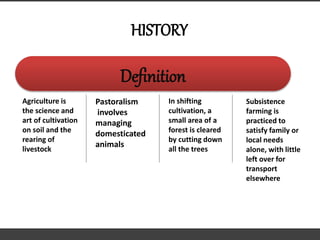
Agriculture is
the science and
art of cultivation
on soil and the
rearing of
livestock
Definition
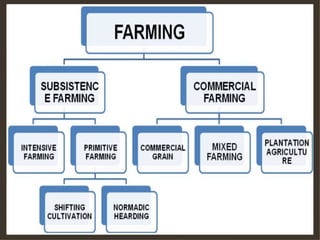
Pastoralism
involves
managing
domesticated
animals
In shifting
cultivation, a
small area of a
forest is cleared
by cutting down
all the trees
Subsistence
farming is
practiced to
satisfy family or
local needs
alone, with little
left over for
transport
elsewhere
Cause Effect
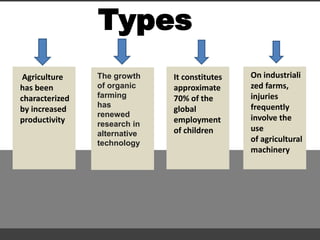
Types
Agriculture
has been
characterized
by increased
productivity
It constitutes
approximate
70% of the
global
employment
of children
On industriali
zed farms,
injuries
frequently
involve the
use
of agricultural
machinery
The growth
of organic
farming
has
renewed
research in
alternative
technology
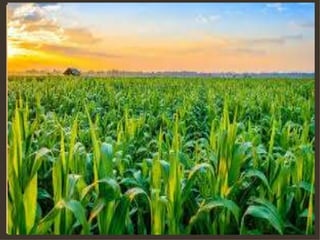
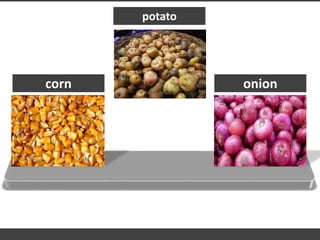
corn
potato
onion
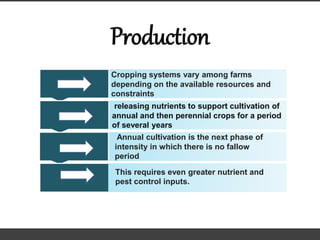
Production
Cropping systems vary among farms
depending on the available resources and
constraints
releasing nutrients to support cultivation of
annual and then perennial crops for a period
of several years
Annual cultivation is the next phase of
intensity in which there is no fallow
period
This requires even greater nutrient and
pest control inputs.
Levels & Hierarchy
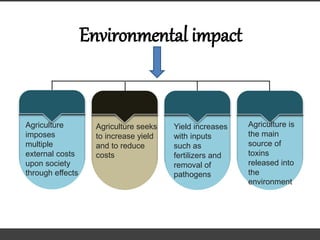
Environmental impact
Agriculture
imposes
multiple
external costs
upon society
through effects
Agriculture seeks
to increase yield
and to reduce
costs
Yield increases
with inputs
such as
fertilizers and
removal of
pathogens
Agriculture is
the main
source of
toxins
released into
the
environment
Components
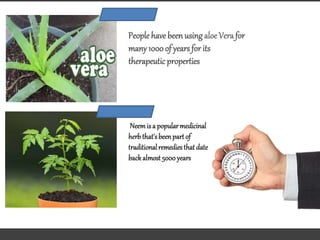
People havebeen using aloe Verafor
many1000 of yearsfor its
therapeutic properties
Neemisa popularmedicinal
herbthat'sbeenpartof
traditionalremediesthatdate
backalmost5000 years
Essential Slides
Thank you slide
THARVISH KUMAR.R
8754914788
tharvishkutty@gmail.com
Models & Frameworks

Agricluture