AGILE SCRUM
Sebastian Slotwinski
AGILE
 Agile Development is used to speed up the development of the product as
well as making it adaptable to new and different variations of the final
product.
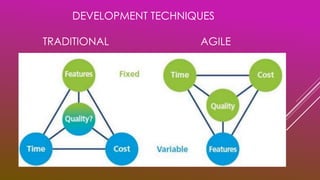
 In this development cycle the main focus is the time and the cost rather than
the features implemented
 Agile development provides constant feedback through out the project
which can help in further improving the app.
 It is providing quick and frequent results allowing easy implementation of
changes to the project.
DEVELOPMENT TECHNIQUES
TRADITIONAL AGILE
AGILE BENEFITS
 Can respond quickly to changing requirements
 Empowers teams to be self organising
 Provides Frameworks for frequent Communication
 Reduces Micro-Managment
SCRUM
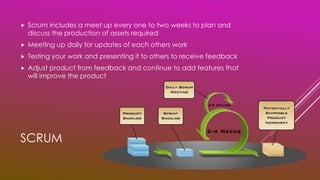
 Scrum includes a meet up every one to two weeks to plan and
discuss the production of assets required
 Meeting up daily for updates of each others work
 Testing your work and presenting it to others to receive feedback
 Adjust product from feedback and continue to add features that
will improve the product
SPRINT
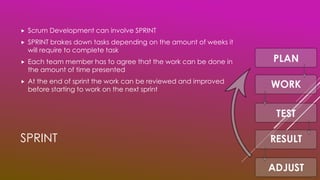
 Scrum Development can involve SPRINT
 SPRINT brakes down tasks depending on the amount of weeks it
will require to complete task
 Each team member has to agree that the work can be done in
the amount of time presented
 At the end of sprint the work can be reviewed and improved
before starting to work on the next sprint
IMPLEMENTATION

Agile scrum

  • 1.
  • 2.
    AGILE  Agile Developmentis used to speed up the development of the product as well as making it adaptable to new and different variations of the final product.  In this development cycle the main focus is the time and the cost rather than the features implemented  Agile development provides constant feedback through out the project which can help in further improving the app.  It is providing quick and frequent results allowing easy implementation of changes to the project.
  • 3.
  • 4.
    AGILE BENEFITS  Canrespond quickly to changing requirements  Empowers teams to be self organising  Provides Frameworks for frequent Communication  Reduces Micro-Managment
  • 5.
    SCRUM  Scrum includesa meet up every one to two weeks to plan and discuss the production of assets required  Meeting up daily for updates of each others work  Testing your work and presenting it to others to receive feedback  Adjust product from feedback and continue to add features that will improve the product
  • 6.
    SPRINT  Scrum Developmentcan involve SPRINT  SPRINT brakes down tasks depending on the amount of weeks it will require to complete task  Each team member has to agree that the work can be done in the amount of time presented  At the end of sprint the work can be reviewed and improved before starting to work on the next sprint
  • 7.