

© 2015 NIIT Technologies 1© 2015 NIIT Technologies
Agile Certainty: Bringing Predictability in Agile
Agile Confluence
28th November 2015
© 2015 NIIT Technologies 2
NIIT Technologies – Focus industry segments
Primary Focus Industries
SpecializedServiceLines
ADM (Development, Management, Independent Testing, Enterprise Data, Digital and Mobility Services)
Business Process Outsourcing
Managed Services- Infrastructure Management, Application Support
Asset Based
System Integration & Packaged Implementations
Airlines, TD, Railways, Airports, Ground
Transportation, Cargo, Logistics
Life, P&C and Commercial
(Re-)Insurance
Banking & Investment Management
© 2015 NIIT Technologies 3
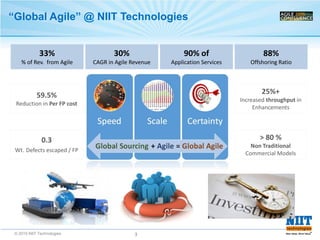
“Global Agile” @ NIIT Technologies
33%
% of Rev. from Agile
30%
CAGR in Agile Revenue
90% of
Application Services
88%
Offshoring Ratio
59.5%
Reduction in Per FP cost
0.3
Wt. Defects escaped / FP
25%+
Increased throughput in
Enhancements
> 80 %
Non Traditional
Commercial Models
© 2015 NIIT Technologies 4
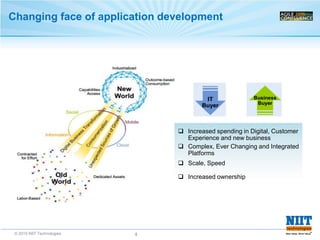
Changing face of application development
 Increased spending in Digital, Customer
Experience and new business
 Complex, Ever Changing and Integrated
Platforms
 Scale, Speed
 Increased ownership
© 2015 NIIT Technologies 5
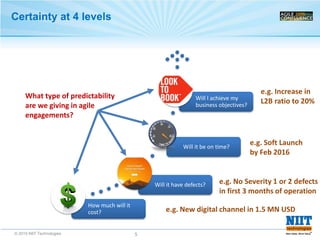
Certainty at 4 levels
How much will it
cost?
Will it have defects?
Will it be on time?
Will I achieve my
business objectives?
What type of predictability
are we giving in agile
engagements?
e.g. New digital channel in 1.5 MN USD
e.g. No Severity 1 or 2 defects
in first 3 months of operation
e.g. Soft Launch
by Feb 2016
e.g. Increase in
L2B ratio to 20%
© 2015 NIIT Technologies 6
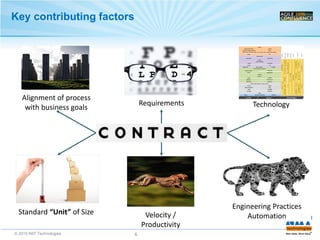
Key contributing factors
Requirements
Velocity /
Productivity
Engineering Practices
Automation
Standard “Unit” of Size
Alignment of process
with business goals Technology
© 2015 NIIT Technologies 7
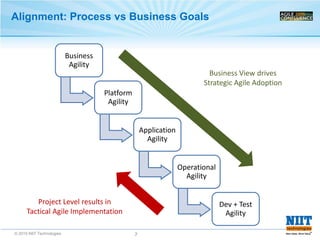
Alignment: Process vs Business Goals
Business
Agility
Platform
Agility
Application
Agility
Operational
Agility
Dev + Test
Agility
Project Level results in
Tactical Agile Implementation
Business View drives
Strategic Agile Adoption
© 2015 NIIT Technologies 8
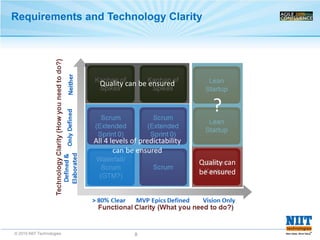
Requirements and Technology Clarity
All 4 levels of predictability
can be ensured
Quality can
be ensured
Quality can be ensured
?
© 2015 NIIT Technologies 9
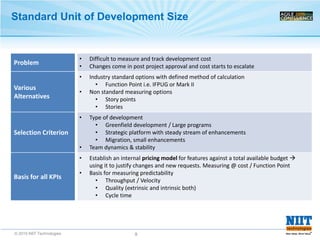
Standard Unit of Development Size
Problem
• Difficult to measure and track development cost
• Changes come in post project approval and cost starts to escalate
Various
Alternatives
• Industry standard options with defined method of calculation
• Function Point i.e. IFPUG or Mark II
• Non standard measuring options
• Story points
• Stories
Selection Criterion
• Type of development
• Greenfield development / Large programs
• Strategic platform with steady stream of enhancements
• Migration, small enhancements
• Team dynamics & stability
Basis for all KPIs
• Establish an internal pricing model for features against a total available budget 
using it to justify changes and new requests. Measuring @ cost / Function Point
• Basis for measuring predictability
• Throughput / Velocity
• Quality (extrinsic and intrinsic both)
• Cycle time
© 2015 NIIT Technologies 10
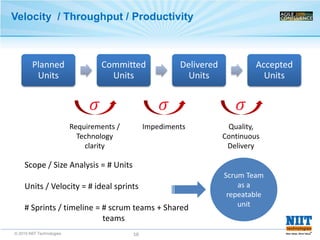
Velocity / Throughput / Productivity
Planned
Units
Committed
Units
Delivered
Units
Accepted
Units
Quality,
Continuous
Delivery
Requirements /
Technology
clarity
Impediments
Scrum Team
as a
repeatable
unit
Scope / Size Analysis = # Units
Units / Velocity = # ideal sprints
# Sprints / timeline = # scrum teams + Shared
teams
© 2015 NIIT Technologies 11
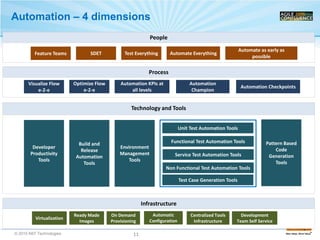
Automation – 4 dimensions
People
Feature Teams SDET Test Everything Automate Everything
Automate as early as
possible
Process
Visualize Flow
e-2-e
Optimize Flow
e-2-e
Automation
Champion
Automation Checkpoints
Automation KPIs at
all levels
Technology and Tools
Infrastructure
Virtualization
Ready Made
Images
Centralized Tools
Infrastructure
Development
Team Self Service
On Demand
Provisioning
Developer
Productivity
Tools
Build and
Release
Automation
Tools
Environment
Management
Tools
Unit Test Automation Tools
Functional Test Automation Tools
Service Test Automation Tools
Non Functional Test Automation Tools
Test Case Generation Tools
Pattern Based
Code
Generation
Tools
Automatic
Configuration
© 2015 NIIT Technologies 12
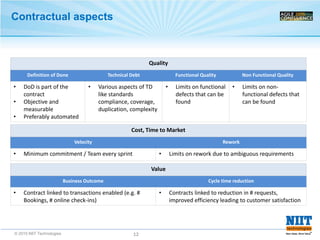
Contractual aspects
Quality
Definition of Done Technical Debt Functional Quality Non Functional Quality
• DoD is part of the
contract
• Objective and
measurable
• Preferably automated
• Various aspects of TD
like standards
compliance, coverage,
duplication, complexity
• Limits on functional
defects that can be
found
• Limits on non-
functional defects that
can be found
Cost, Time to Market
Velocity Rework
• Minimum commitment / Team every sprint • Limits on rework due to ambiguous requirements
Value
Business Outcome Cycle time reduction
• Contract linked to transactions enabled (e.g. #
Bookings, # online check-ins)
• Contracts linked to reduction in # requests,
improved efficiency leading to customer satisfaction
© 2015 NIIT Technologies 13© 2015 NIIT Technologies
Open Discussion
Puneet Sachdev, Chief Architect, NIIT Technologies
puneet.sachdev@niit-tech.com,

Agile Certainty, bringing predictability in Agile engagements

  • 1.
    © 2015 NIITTechnologies 1© 2015 NIIT Technologies Agile Certainty: Bringing Predictability in Agile Agile Confluence 28th November 2015
  • 2.
    © 2015 NIITTechnologies 2 NIIT Technologies – Focus industry segments Primary Focus Industries SpecializedServiceLines ADM (Development, Management, Independent Testing, Enterprise Data, Digital and Mobility Services) Business Process Outsourcing Managed Services- Infrastructure Management, Application Support Asset Based System Integration & Packaged Implementations Airlines, TD, Railways, Airports, Ground Transportation, Cargo, Logistics Life, P&C and Commercial (Re-)Insurance Banking & Investment Management
  • 3.
    © 2015 NIITTechnologies 3 “Global Agile” @ NIIT Technologies 33% % of Rev. from Agile 30% CAGR in Agile Revenue 90% of Application Services 88% Offshoring Ratio 59.5% Reduction in Per FP cost 0.3 Wt. Defects escaped / FP 25%+ Increased throughput in Enhancements > 80 % Non Traditional Commercial Models
  • 4.
    © 2015 NIITTechnologies 4 Changing face of application development  Increased spending in Digital, Customer Experience and new business  Complex, Ever Changing and Integrated Platforms  Scale, Speed  Increased ownership
  • 5.
    © 2015 NIITTechnologies 5 Certainty at 4 levels How much will it cost? Will it have defects? Will it be on time? Will I achieve my business objectives? What type of predictability are we giving in agile engagements? e.g. New digital channel in 1.5 MN USD e.g. No Severity 1 or 2 defects in first 3 months of operation e.g. Soft Launch by Feb 2016 e.g. Increase in L2B ratio to 20%
  • 6.
    © 2015 NIITTechnologies 6 Key contributing factors Requirements Velocity / Productivity Engineering Practices Automation Standard “Unit” of Size Alignment of process with business goals Technology
  • 7.
    © 2015 NIITTechnologies 7 Alignment: Process vs Business Goals Business Agility Platform Agility Application Agility Operational Agility Dev + Test Agility Project Level results in Tactical Agile Implementation Business View drives Strategic Agile Adoption
  • 8.
    © 2015 NIITTechnologies 8 Requirements and Technology Clarity All 4 levels of predictability can be ensured Quality can be ensured Quality can be ensured ?
  • 9.
    © 2015 NIITTechnologies 9 Standard Unit of Development Size Problem • Difficult to measure and track development cost • Changes come in post project approval and cost starts to escalate Various Alternatives • Industry standard options with defined method of calculation • Function Point i.e. IFPUG or Mark II • Non standard measuring options • Story points • Stories Selection Criterion • Type of development • Greenfield development / Large programs • Strategic platform with steady stream of enhancements • Migration, small enhancements • Team dynamics & stability Basis for all KPIs • Establish an internal pricing model for features against a total available budget  using it to justify changes and new requests. Measuring @ cost / Function Point • Basis for measuring predictability • Throughput / Velocity • Quality (extrinsic and intrinsic both) • Cycle time
  • 10.
    © 2015 NIITTechnologies 10 Velocity / Throughput / Productivity Planned Units Committed Units Delivered Units Accepted Units Quality, Continuous Delivery Requirements / Technology clarity Impediments Scrum Team as a repeatable unit Scope / Size Analysis = # Units Units / Velocity = # ideal sprints # Sprints / timeline = # scrum teams + Shared teams
  • 11.
    © 2015 NIITTechnologies 11 Automation – 4 dimensions People Feature Teams SDET Test Everything Automate Everything Automate as early as possible Process Visualize Flow e-2-e Optimize Flow e-2-e Automation Champion Automation Checkpoints Automation KPIs at all levels Technology and Tools Infrastructure Virtualization Ready Made Images Centralized Tools Infrastructure Development Team Self Service On Demand Provisioning Developer Productivity Tools Build and Release Automation Tools Environment Management Tools Unit Test Automation Tools Functional Test Automation Tools Service Test Automation Tools Non Functional Test Automation Tools Test Case Generation Tools Pattern Based Code Generation Tools Automatic Configuration
  • 12.
    © 2015 NIITTechnologies 12 Contractual aspects Quality Definition of Done Technical Debt Functional Quality Non Functional Quality • DoD is part of the contract • Objective and measurable • Preferably automated • Various aspects of TD like standards compliance, coverage, duplication, complexity • Limits on functional defects that can be found • Limits on non- functional defects that can be found Cost, Time to Market Velocity Rework • Minimum commitment / Team every sprint • Limits on rework due to ambiguous requirements Value Business Outcome Cycle time reduction • Contract linked to transactions enabled (e.g. # Bookings, # online check-ins) • Contracts linked to reduction in # requests, improved efficiency leading to customer satisfaction
  • 13.
    © 2015 NIITTechnologies 13© 2015 NIIT Technologies Open Discussion Puneet Sachdev, Chief Architect, NIIT Technologies puneet.sachdev@niit-tech.com,