Stacie Mann Robin Hood Marketing
A question  for you When was the last time you saw, heard or read something from a good cause  (not your own!) that prompted you to donate or act?
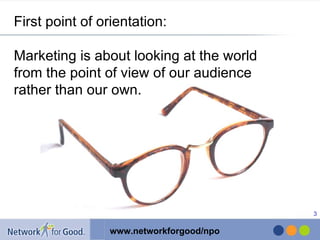
First point of orientation: Marketing is about looking at the world from the point of view of our audience rather than our own.
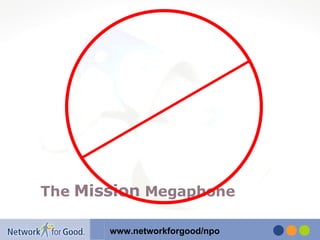
The  Mission  Megaphone
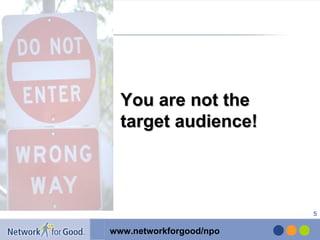
You are not the  target audience!
The right way to answer
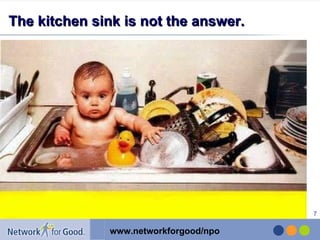
The kitchen sink is not the answer.
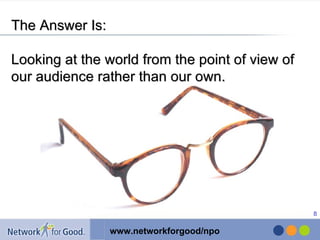
The Answer Is: Looking at the world from the point of view of our audience rather than our own.
That’s marketing, and it’s not slimy. It’s neither good nor evil It’s a tool for being more convincing Nonprofits are all about convincing Audience-based approaches are respectful and relational Failing to effectively do the work of convincing is what’s unconscionable Corporations  that are good at marketing  can teach us a thing or two
Agenda Introduction: My personal Robin Hood story Key takeaways: Focus on audience values, not your own Find your marketing sweet spot Marketing should compel action (CRAM) Address people in open-minded moments Donors as messengers
My Story Homepage in 2004
Who is our audience?  Survey (Give us 30 seconds for charity!) In-depth interviews Donation records The “mom” test
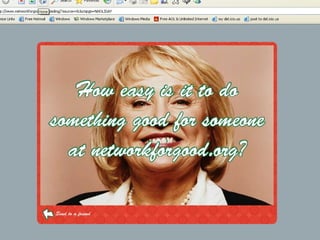
Message is convenience Homepage in 2007
Four Parts of Audience-Based Message Why me? What for? Why now? Who says? THEN…Make it EASY TO ACT
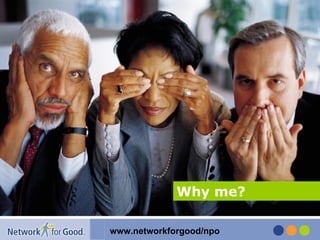
Why me?
Why me: speak to THEIR values CONNECT TO: To their existing values To their existing feelings To their existing desires
What Savvy Corporate Marketers Know There is a marketing sweet spot There are four elements of an audience-based message (CRAM) You have to tell a story
Finding the Marketing Sweet Spot Your Org Is Good at It Important to  Partner/Audience No One Else Does It/UVP Sources: BBMG and Jim Collins,  Good to Great,  Hedgehog Concept
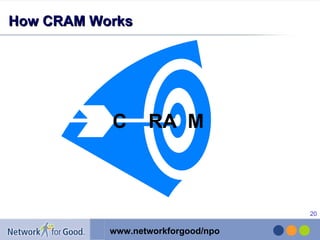
Four Parts of Audience-Based Message Connection Reward Action Memory The benefit exchange – aka what’s in it for the audience
How CRAM Works C  RA  M
Get Someone’s Attention by Connecting… To existing values To existing feelings To existing desires
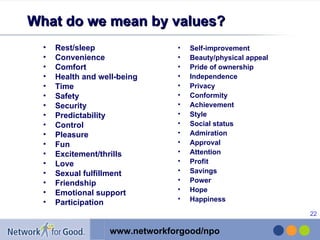
What do we mean by values? Rest/sleep Convenience Comfort Health and well-being Time Safety Security Predictability Control Pleasure Fun Excitement/thrills Love Sexual fulfillment Friendship Emotional support Participation Self-improvement Beauty/physical appeal Pride of ownership Independence Privacy Conformity Achievement Style Social status Admiration  Approval  Attention Profit Savings Power  Hope Happiness
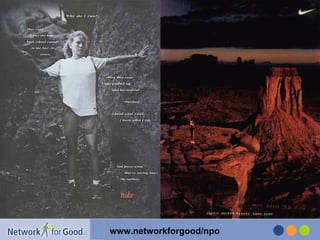
What are the values of… Teenage girls?
 
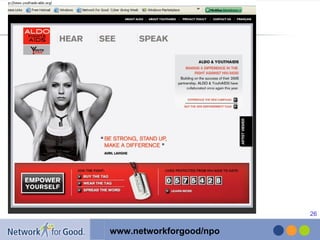
What are the values of… Potential YouthAIDS donors?
 
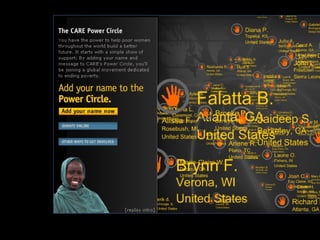
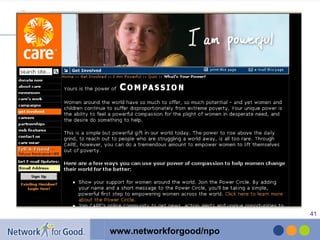
What are the values of… Potential CARE donors?
 
 
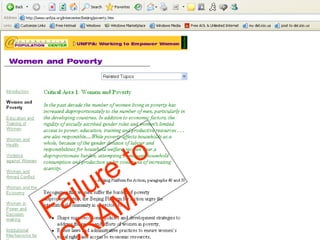
Failure to CRAM
What are the values of… The people in this room?
 
 
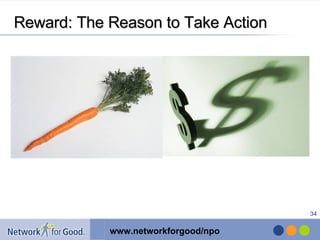
Reward: The Reason to Take Action
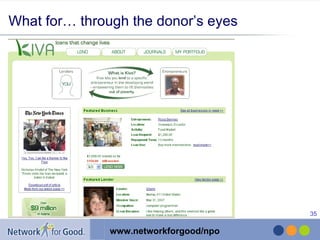
What for… through the donor’s eyes
Good rewards are… Immediate Personal (not collective) Reflective of audience values Better than competing benefits (messages) Credible Not necessarily highly relevant to our cause
ACTION: What we want
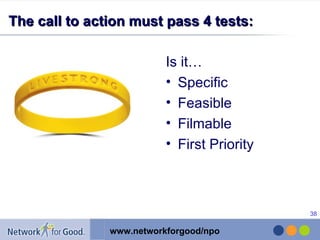
Is it… Specific  Feasible Filmable First Priority  The call to action must pass 4 tests:
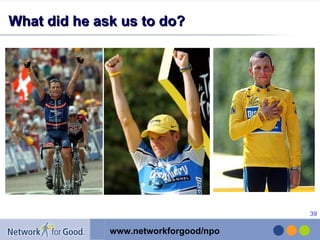
What did he ask us to do?
 
 
Memorable… Different Catchy Personal Specific Engaging Human element Tied to our cause
 
Open-minded Moments Places Times  States of Mind
When do people care about this?
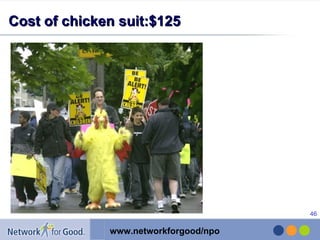
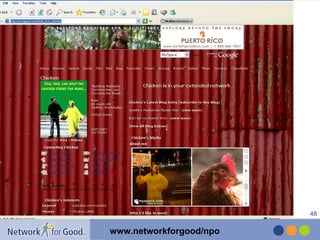
Cost of chicken suit:$125
One chicken donate now button: $30/month
 
Choose the right messenger
We are NOT the best messengers 76% of givers are motivated by friends and family, says Cone It’s okay to relinquish control of the message  Donors are experts at knowing how to speak about your cause to their friends and family Tools out there to do that for free!
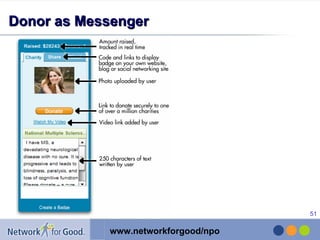
Donor as Messenger
 
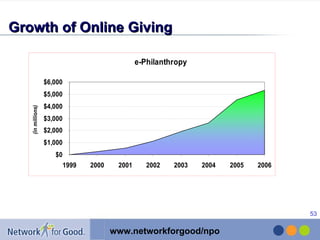
Growth of Online Giving
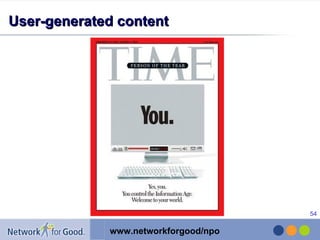
User-generated content
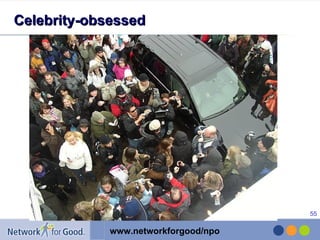
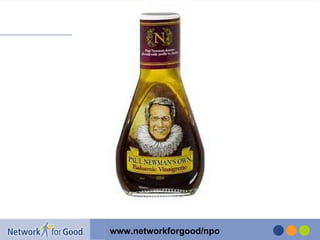
Celebrity-obsessed


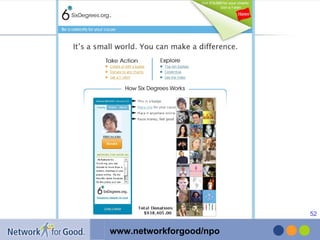
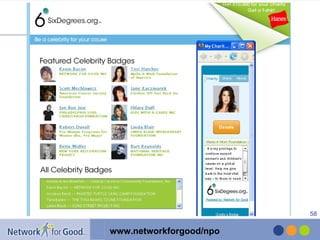
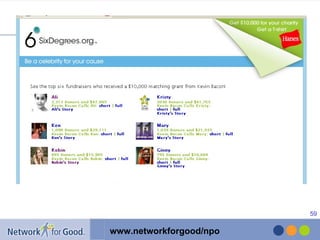
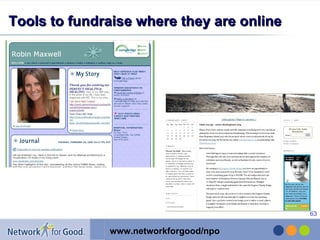
Lessons learned with SixDegrees.org Focus on audience values not your own Choose the right messenger What attracts is celebs; what motivates is personal Contests are good Uber-activists are more than ATMs Give them the tools to fundraise WHERE THEY ARE ONLINE Social networks are complex Be prepared to help people; this is bleeding edge
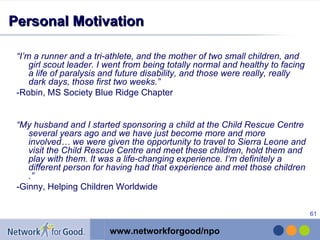
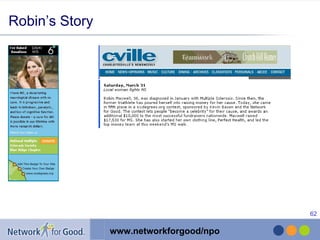
Personal Motivation “ I’m a runner and a tri-athlete, and the mother of two small children, and girl scout leader. I went from being totally normal and healthy to facing a life of paralysis and future disability, and those were really, really dark days, those first two weeks.” -Robin, MS Society Blue Ridge Chapter “ My husband and I started sponsoring a child at the Child Rescue Centre several years ago and we have just become more and more involved… we were given the opportunity to travel to Sierra Leone and visit the Child Rescue Centre and meet these children, hold them and play with them. It was a life-changing experience. I‘m definitely a different person for having had that experience and met those children   .” -Ginny, Helping Children Worldwide
Robin’s Story
Tools to fundraise where they are online
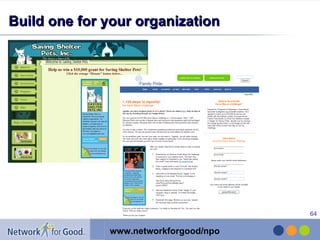
Build one for your organization
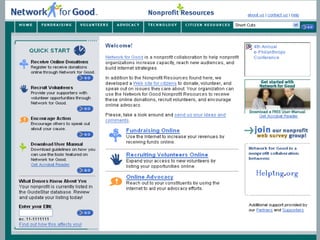
Resources Robin Hood Marketing has more to help you raise money, forge partnerships and compel action  www.nonprofitmarketingblog.com Network for Good has very affordable tools for online fundraising and outreach  www.networkforgood.org/npo Learning Center  http://www.fundraising123.org/ Email me  [email_address]  or  [email_address]
Q&A
11 Steps to Success with Social Networking  Have faith in yourself – this is all just another form of personal networking and you can do it.  Have faith in your audience – Give them respect, control and visibility.  Define your desired outcome - Ask who and why before how.  Decide if social networking will get you there.  Borrow, don’t build, your tools.  Social media is about “social,” not “media,” so put people first.  Find your wired fundraisers.  Think like the Marine Corps: the few, the proud.  Help your supporters crank WOM to 11.  Provide a sense of urgency – think competitions and deadlines.  Plug your wired fundraiser into great resources
Who Is Giving Online?* Online givers are young (38-39 years old) They are generous -- ($163) Men and women give online in equal numbers Virtually all (96%) have given to charity before, but 38% haven’t given online before Online giving is tracking to the trends of online shopping and banking * Network for Good Study, “The Young and Generous”

AFP Conf_Ft. Lauderdale

  • 1.
    Stacie Mann RobinHood Marketing
  • 2.
    A question for you When was the last time you saw, heard or read something from a good cause (not your own!) that prompted you to donate or act?
  • 3.
    First point oforientation: Marketing is about looking at the world from the point of view of our audience rather than our own.
  • 4.
    The Mission Megaphone
  • 5.
    You are notthe target audience!
  • 6.
    The right wayto answer
  • 7.
    The kitchen sinkis not the answer.
  • 8.
    The Answer Is:Looking at the world from the point of view of our audience rather than our own.
  • 9.
    That’s marketing, andit’s not slimy. It’s neither good nor evil It’s a tool for being more convincing Nonprofits are all about convincing Audience-based approaches are respectful and relational Failing to effectively do the work of convincing is what’s unconscionable Corporations that are good at marketing can teach us a thing or two
  • 10.
    Agenda Introduction: Mypersonal Robin Hood story Key takeaways: Focus on audience values, not your own Find your marketing sweet spot Marketing should compel action (CRAM) Address people in open-minded moments Donors as messengers
  • 11.
  • 12.
    Who is ouraudience? Survey (Give us 30 seconds for charity!) In-depth interviews Donation records The “mom” test
  • 13.
    Message is convenienceHomepage in 2007
  • 14.
    Four Parts ofAudience-Based Message Why me? What for? Why now? Who says? THEN…Make it EASY TO ACT
  • 15.
  • 16.
    Why me: speakto THEIR values CONNECT TO: To their existing values To their existing feelings To their existing desires
  • 17.
    What Savvy CorporateMarketers Know There is a marketing sweet spot There are four elements of an audience-based message (CRAM) You have to tell a story
  • 18.
    Finding the MarketingSweet Spot Your Org Is Good at It Important to Partner/Audience No One Else Does It/UVP Sources: BBMG and Jim Collins, Good to Great, Hedgehog Concept
  • 19.
    Four Parts ofAudience-Based Message Connection Reward Action Memory The benefit exchange – aka what’s in it for the audience
  • 20.
  • 21.
    Get Someone’s Attentionby Connecting… To existing values To existing feelings To existing desires
  • 22.
    What do wemean by values? Rest/sleep Convenience Comfort Health and well-being Time Safety Security Predictability Control Pleasure Fun Excitement/thrills Love Sexual fulfillment Friendship Emotional support Participation Self-improvement Beauty/physical appeal Pride of ownership Independence Privacy Conformity Achievement Style Social status Admiration Approval Attention Profit Savings Power Hope Happiness
  • 23.
    What are thevalues of… Teenage girls?
  • 24.
  • 25.
    What are thevalues of… Potential YouthAIDS donors?
  • 26.
  • 27.
    What are thevalues of… Potential CARE donors?
  • 28.
  • 29.
  • 30.
  • 31.
    What are thevalues of… The people in this room?
  • 32.
  • 33.
  • 34.
    Reward: The Reasonto Take Action
  • 35.
    What for… throughthe donor’s eyes
  • 36.
    Good rewards are…Immediate Personal (not collective) Reflective of audience values Better than competing benefits (messages) Credible Not necessarily highly relevant to our cause
  • 37.
  • 38.
    Is it… Specific Feasible Filmable First Priority The call to action must pass 4 tests:
  • 39.
    What did heask us to do?
  • 40.
  • 41.
  • 42.
    Memorable… Different CatchyPersonal Specific Engaging Human element Tied to our cause
  • 43.
  • 44.
    Open-minded Moments PlacesTimes States of Mind
  • 45.
    When do peoplecare about this?
  • 46.
    Cost of chickensuit:$125
  • 47.
    One chicken donatenow button: $30/month
  • 48.
  • 49.
  • 50.
    We are NOTthe best messengers 76% of givers are motivated by friends and family, says Cone It’s okay to relinquish control of the message Donors are experts at knowing how to speak about your cause to their friends and family Tools out there to do that for free!
  • 51.
  • 52.
  • 53.
  • 54.
  • 55.
  • 56.
  • 57.
  • 58.
  • 59.
  • 60.
    Lessons learned withSixDegrees.org Focus on audience values not your own Choose the right messenger What attracts is celebs; what motivates is personal Contests are good Uber-activists are more than ATMs Give them the tools to fundraise WHERE THEY ARE ONLINE Social networks are complex Be prepared to help people; this is bleeding edge
  • 61.
    Personal Motivation “I’m a runner and a tri-athlete, and the mother of two small children, and girl scout leader. I went from being totally normal and healthy to facing a life of paralysis and future disability, and those were really, really dark days, those first two weeks.” -Robin, MS Society Blue Ridge Chapter “ My husband and I started sponsoring a child at the Child Rescue Centre several years ago and we have just become more and more involved… we were given the opportunity to travel to Sierra Leone and visit the Child Rescue Centre and meet these children, hold them and play with them. It was a life-changing experience. I‘m definitely a different person for having had that experience and met those children .” -Ginny, Helping Children Worldwide
  • 62.
  • 63.
    Tools to fundraisewhere they are online
  • 64.
    Build one foryour organization
  • 65.
    Resources Robin HoodMarketing has more to help you raise money, forge partnerships and compel action www.nonprofitmarketingblog.com Network for Good has very affordable tools for online fundraising and outreach www.networkforgood.org/npo Learning Center http://www.fundraising123.org/ Email me [email_address] or [email_address]
  • 66.
  • 67.
    11 Steps toSuccess with Social Networking Have faith in yourself – this is all just another form of personal networking and you can do it. Have faith in your audience – Give them respect, control and visibility. Define your desired outcome - Ask who and why before how. Decide if social networking will get you there. Borrow, don’t build, your tools. Social media is about “social,” not “media,” so put people first. Find your wired fundraisers. Think like the Marine Corps: the few, the proud. Help your supporters crank WOM to 11. Provide a sense of urgency – think competitions and deadlines. Plug your wired fundraiser into great resources
  • 68.
    Who Is GivingOnline?* Online givers are young (38-39 years old) They are generous -- ($163) Men and women give online in equal numbers Virtually all (96%) have given to charity before, but 38% haven’t given online before Online giving is tracking to the trends of online shopping and banking * Network for Good Study, “The Young and Generous”