Aphasias
of
Wernicke and Broca
Members: Advisor:
Airane Cardoso Prof. Dr. Camilo Aquino Melgaço
Arthur Felix
Bruna Vidal
Cristielle Rocha
Cristiano Batisteli
Lorrane Villela
summary
• Introduction
• Etiology
• Wernicke area
• Broca area
• Arched fascia
• Wernicke's aphasia
• Aphasia of Broca
• Clinical features
• Causes
• Diagnostics
• Treatments
• Conclusion
• References
Introduction
• Language specialists distinguish speech
disorders, which include difficulties in
pronunciation and articulation, language
disorders, which are manifested by the
difficulty in finding words and phrases
• Aphasia is the total or partial loss of ability to
communicate (talk and understand) and is
usually caused by poor brain irrigation.
Etiology
• Some etiological factors responsible for
aphasia are:
Vascular
Tumorals
Infectious
Traumatic
Metabolic
Degenerative
Wernicke area
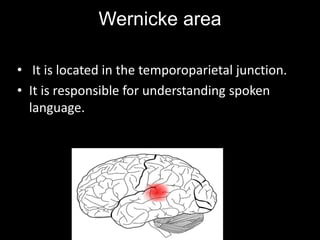
• It is located in the temporoparietal junction.
• It is responsible for understanding spoken
language.
Broca area
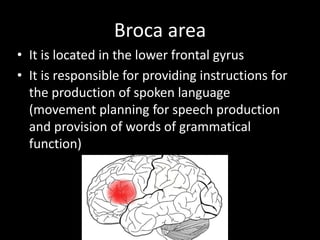
• It is located in the lower frontal gyrus
• It is responsible for providing instructions for
the production of spoken language
(movement planning for speech production
and provision of words of grammatical
function)
Arched fascia
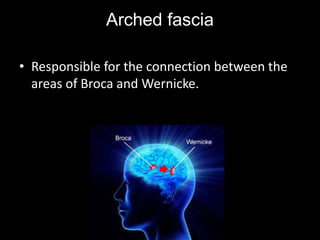
• Responsible for the connection between the
areas of Broca and Wernicke.
Wernicke's aphasia
• Aphasia receptive or sensory or fluent.
• Inability to understand language.
• Language is fluent.
• He speaks with many functional words
and few nouns or verbs.
• Inability to read (alexia).
• Not knowledge of the disorder.
• Understanding, repetition, naming,
reading and writing are
compromised.
• Paranoid agitation and behavior.
Aphasia of Broca
• Motor or expressive or non-fluent
aphasia.
• Inability to express themselves through
spoken or written language.
• There remains the ability to understand
language and to control the muscles of
language for other purposes.
• She speaks not fluent, labored,
interrupted by many pauses.
• Few functional words, but many
verbs and nouns (telegraph).
• Knowledge of the disorder: tearful,
depressed and frustrated.
• Denomination and repetition.
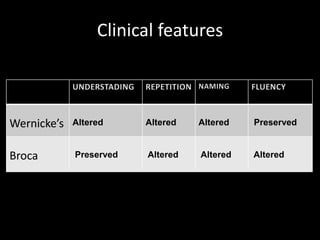
Clinical features
Altered Altered Altered Preserved
Preserved Altered Altered Altered
Causes
• It is not a disease, it is a symptom;
• Usually due to neurological diseases such as a
tumor, stroke, and degenerative diseases such
as Alzheimer's;
• Accidents such as traumatic brain injury
(Epilepsy, intoxications).
Diagnosis
• It should be multidisciplinary and
exclusionary;
• Psychologist: Evaluates through tests and
detailed observations, performing cognitive
assessments and affective disorders;
• Speech-Language Pathologist: Evaluates
spoken language, processing of sound
elements such as phonemes and syllables;
• Psychopedagogue: Evaluates by means of
tests the cognition comprehension and
the performance of reading and writing;
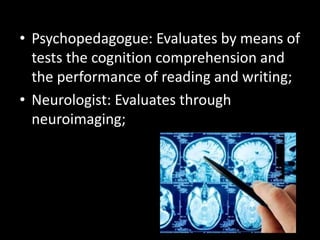
• Neurologist: Evaluates through
neuroimaging;
Trataments
• It is necessary multidisciplinary therapy
intervention to work the functional
compensation of the contra lateral limb of the
injured hemisphere;
• It is performed through the stimulation of the
language and it is necessary to plan
specifically for each case;
• The therapist will build bridges between skills
that have remained and those that have been
lost, using the plasticity of the central nervous
system;
• Exacerbating intact brain functions to
compensate for lost functions is a good
rehabilitation strategy.
Conlusion
• Concluded that the treatments for aphasia
described in the literature do not indicate
superiority of a therapeutic approach on the
other, nor do they identify conditions for which
patient justifies the use of one or other specific
rehabilitation therapy.
• It should be emphasized that the theoretical-
methodological foundations are essential to
guide the therapeutic work with aphasic subjects.
References
• Lima SI, Cury EMG. Afasia. Rio de Janeiro: Editora UFRJ; 2007.
• Jackubovicz R. Introdução à afasia. Rio de Janeiro: Revinter; 1996.
• Bruna O, Suhevic N. Afasias, Alexias, Agrafias, Acalculias e
distúrbios relacionados. In: Plaja CJI, Rabassa OBI, Serrat MMI.
Neuropsicologia da linguagem: funcionamento normal e patológico,
reabilitação. São Paulo: Livraria Santos Editora; 2006. p. 49-78.
• Middleton E, Schwartz MF. Learning to fail in aphasia: an
investigation of error learning in naming. J Speech Lang Hear Res.
2013;56(4):1287-97.
• Parkinson RB, Raymer A, Chang YL, FitzGerald DB, Crosson B.
Lesion Characteristics related to treatment improvement in object
and action naming for patients with chronic aphasia. Brain
Language. 2009;110(2):61-70.
• Pérez M. Afasias do Adulto. In: Casanova JP. Manual de
Fonoaudiologia. Porto Alegre: Artes Médicas; 1992. p. 314-40
Thank you!

Afasias - inglês.pptx

  • 1.
    Aphasias of Wernicke and Broca Members:Advisor: Airane Cardoso Prof. Dr. Camilo Aquino Melgaço Arthur Felix Bruna Vidal Cristielle Rocha Cristiano Batisteli Lorrane Villela
  • 2.
    summary • Introduction • Etiology •Wernicke area • Broca area • Arched fascia • Wernicke's aphasia • Aphasia of Broca • Clinical features • Causes • Diagnostics • Treatments • Conclusion • References
  • 3.
    Introduction • Language specialistsdistinguish speech disorders, which include difficulties in pronunciation and articulation, language disorders, which are manifested by the difficulty in finding words and phrases • Aphasia is the total or partial loss of ability to communicate (talk and understand) and is usually caused by poor brain irrigation.
  • 4.
    Etiology • Some etiologicalfactors responsible for aphasia are: Vascular Tumorals Infectious Traumatic Metabolic Degenerative
  • 5.
    Wernicke area • Itis located in the temporoparietal junction. • It is responsible for understanding spoken language.
  • 6.
    Broca area • Itis located in the lower frontal gyrus • It is responsible for providing instructions for the production of spoken language (movement planning for speech production and provision of words of grammatical function)
  • 7.
    Arched fascia • Responsiblefor the connection between the areas of Broca and Wernicke.
  • 8.
    Wernicke's aphasia • Aphasiareceptive or sensory or fluent. • Inability to understand language. • Language is fluent. • He speaks with many functional words and few nouns or verbs.
  • 9.
    • Inability toread (alexia). • Not knowledge of the disorder. • Understanding, repetition, naming, reading and writing are compromised. • Paranoid agitation and behavior.
  • 10.
    Aphasia of Broca •Motor or expressive or non-fluent aphasia. • Inability to express themselves through spoken or written language. • There remains the ability to understand language and to control the muscles of language for other purposes.
  • 11.
    • She speaksnot fluent, labored, interrupted by many pauses. • Few functional words, but many verbs and nouns (telegraph). • Knowledge of the disorder: tearful, depressed and frustrated. • Denomination and repetition.
  • 12.
    Clinical features Altered AlteredAltered Preserved Preserved Altered Altered Altered
  • 13.
    Causes • It isnot a disease, it is a symptom; • Usually due to neurological diseases such as a tumor, stroke, and degenerative diseases such as Alzheimer's; • Accidents such as traumatic brain injury (Epilepsy, intoxications).
  • 14.
    Diagnosis • It shouldbe multidisciplinary and exclusionary; • Psychologist: Evaluates through tests and detailed observations, performing cognitive assessments and affective disorders; • Speech-Language Pathologist: Evaluates spoken language, processing of sound elements such as phonemes and syllables;
  • 15.
    • Psychopedagogue: Evaluatesby means of tests the cognition comprehension and the performance of reading and writing; • Neurologist: Evaluates through neuroimaging;
  • 16.
    Trataments • It isnecessary multidisciplinary therapy intervention to work the functional compensation of the contra lateral limb of the injured hemisphere; • It is performed through the stimulation of the language and it is necessary to plan specifically for each case;
  • 17.
    • The therapistwill build bridges between skills that have remained and those that have been lost, using the plasticity of the central nervous system; • Exacerbating intact brain functions to compensate for lost functions is a good rehabilitation strategy.
  • 18.
    Conlusion • Concluded thatthe treatments for aphasia described in the literature do not indicate superiority of a therapeutic approach on the other, nor do they identify conditions for which patient justifies the use of one or other specific rehabilitation therapy. • It should be emphasized that the theoretical- methodological foundations are essential to guide the therapeutic work with aphasic subjects.
  • 19.
    References • Lima SI,Cury EMG. Afasia. Rio de Janeiro: Editora UFRJ; 2007. • Jackubovicz R. Introdução à afasia. Rio de Janeiro: Revinter; 1996. • Bruna O, Suhevic N. Afasias, Alexias, Agrafias, Acalculias e distúrbios relacionados. In: Plaja CJI, Rabassa OBI, Serrat MMI. Neuropsicologia da linguagem: funcionamento normal e patológico, reabilitação. São Paulo: Livraria Santos Editora; 2006. p. 49-78. • Middleton E, Schwartz MF. Learning to fail in aphasia: an investigation of error learning in naming. J Speech Lang Hear Res. 2013;56(4):1287-97. • Parkinson RB, Raymer A, Chang YL, FitzGerald DB, Crosson B. Lesion Characteristics related to treatment improvement in object and action naming for patients with chronic aphasia. Brain Language. 2009;110(2):61-70. • Pérez M. Afasias do Adulto. In: Casanova JP. Manual de Fonoaudiologia. Porto Alegre: Artes Médicas; 1992. p. 314-40
  • 20.