Adventure travel is a type of tourism, involving exploration or travel
to remote, exotic and possibly hostile areas. Adventure tourism is
rapidly growing in popularity, as tourists seek different kinds of
vacations. According to the U.S. based Adventure Travel Trade
Association, adventure travel may be any tourist activity, including two
of the following three components: a physical activity, a cultural
exchange or interaction and engagement with nature.

Adventure tourism gains much of its excitement by allowing its
participants to step outside of their comfort zone. This may be from
experiencing culture shock or through the performance of acts, that
require significant effort and involve some degree of risk (real or
perceived) and/or physical danger (See extreme sports). This may
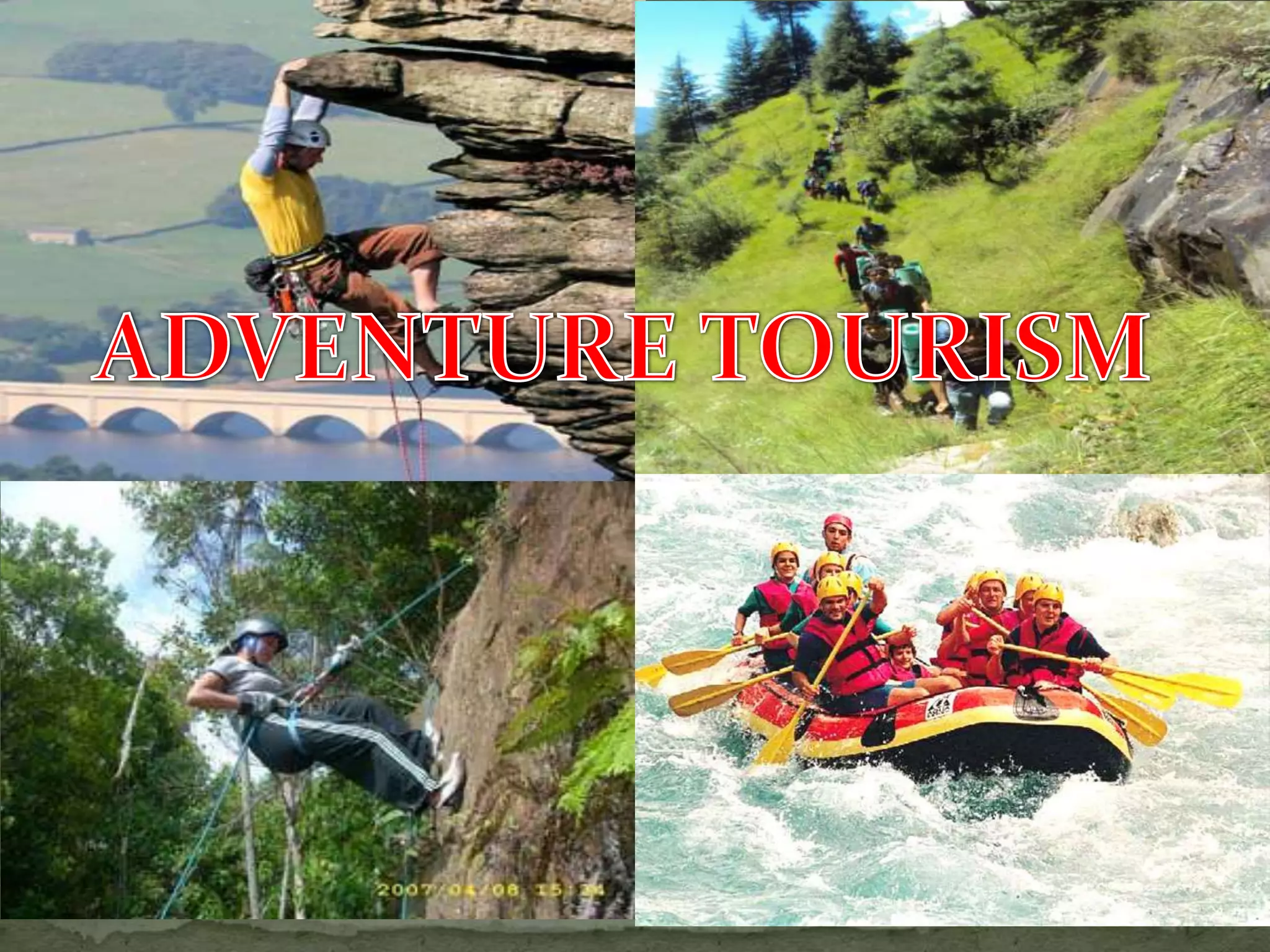
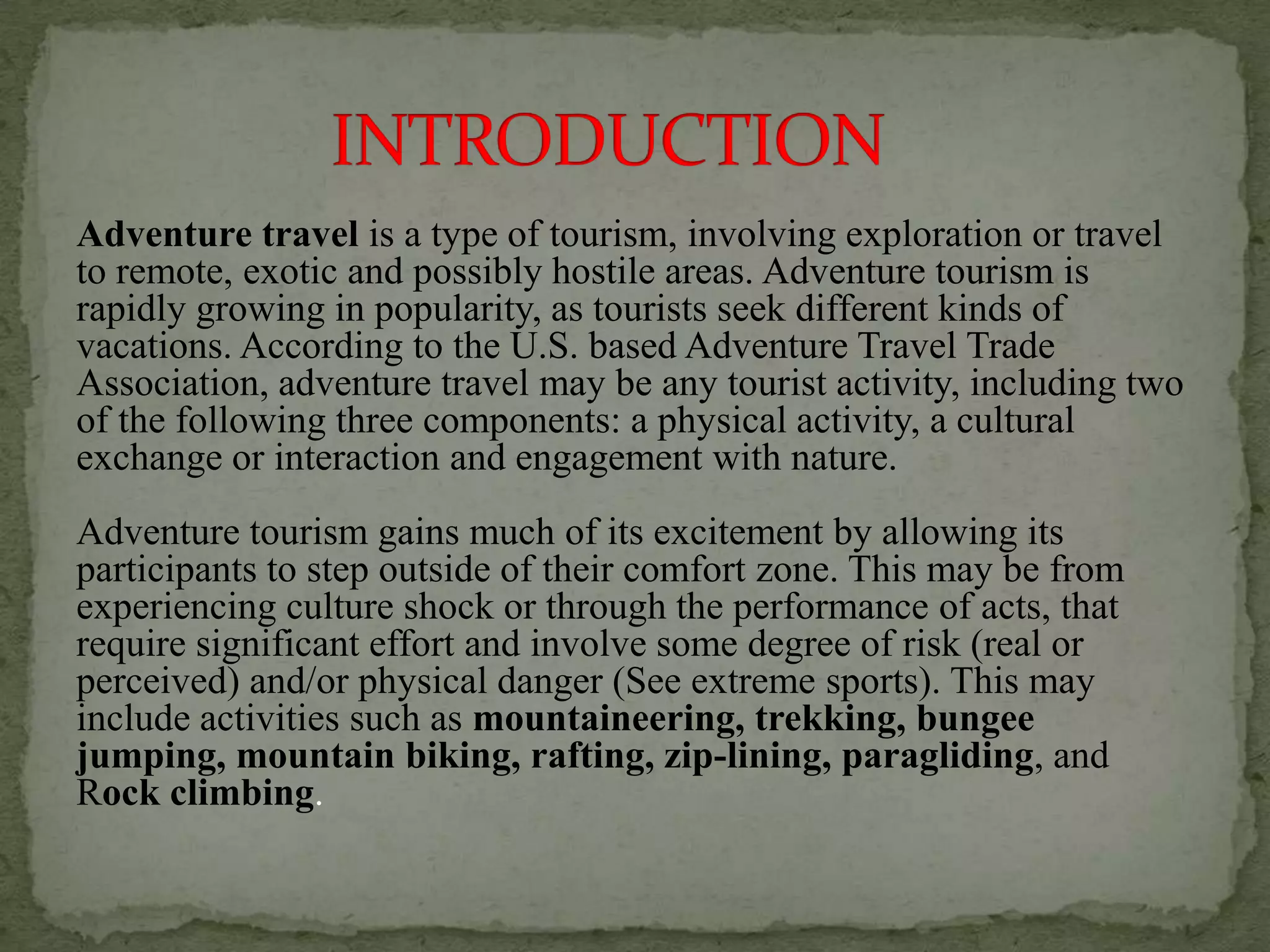
include activities such as mountaineering, trekking, bungee
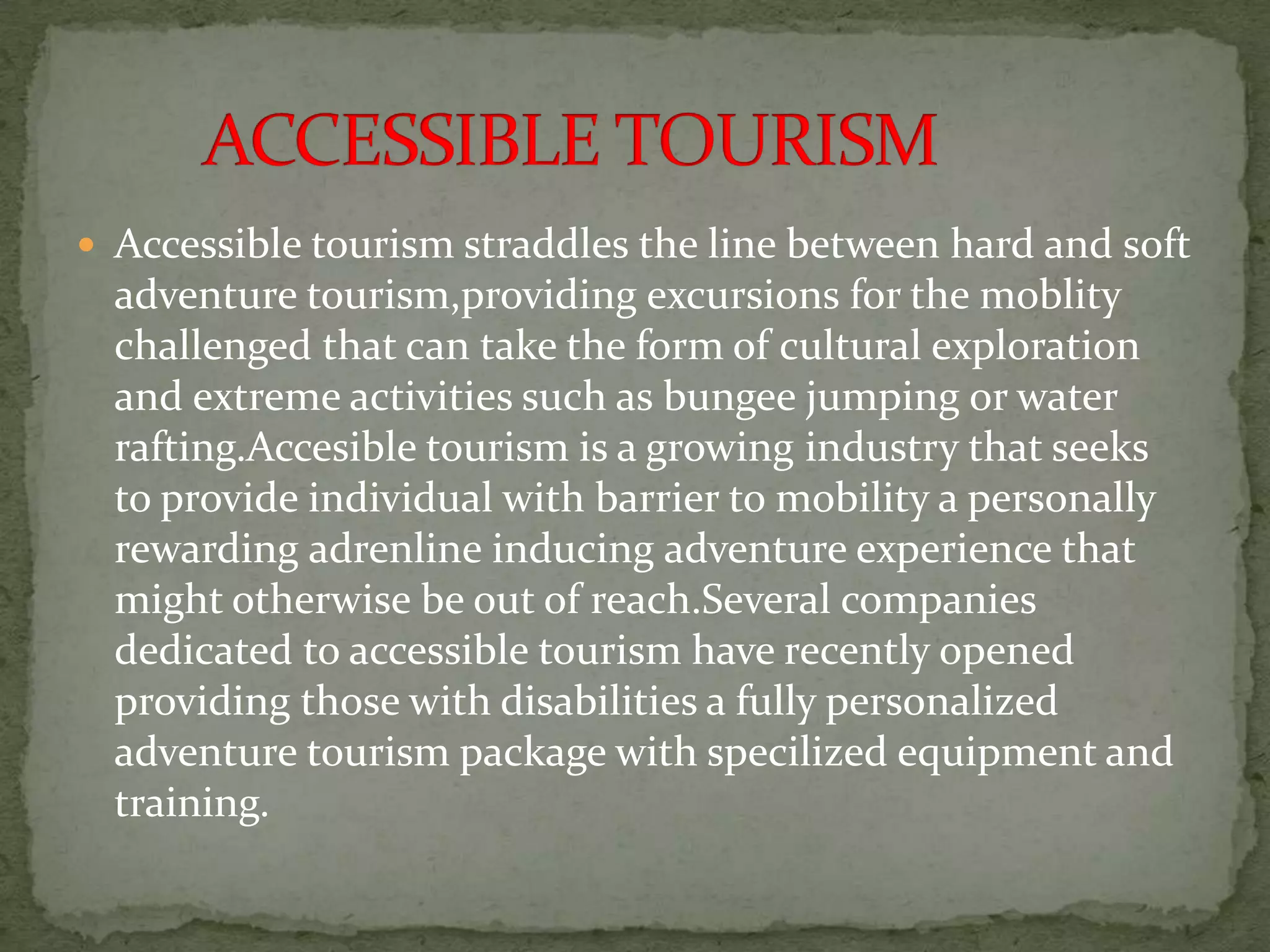
jumping, mountain biking, rafting, zip-lining, paragliding, and
Rock climbing.
ECOTOURISM
Rainforest treks are a popular form of eco tourism,Generally
considered to fall under the category of soft adventure
tourism.Eco tourism is a form of travel whereby the
adventurer explores undeveloped natural and culturally
sensitive area with a desire to experieance it while leaving it
intact and unchanged.Eco tourism is done with minimum
equipment and accomodated relying on an ecologically and
culture sensitive approch for procuring food and shelter,such
as forgoing established resorts and restaurant in favour of
locally owned and sourced alternatives.Although eco tourism
is more of a travel philosphy than a destination for
ecotourism include the amazon rainforest,arctic polar bear
viewing,the costarican rainforest and barrier rects.
 Accessible tourism straddles the line between hard and soft

adventure tourism,providing excursions for the moblity
challenged that can take the form of cultural exploration
and extreme activities such as bungee jumping or water
rafting.Accesible tourism is a growing industry that seeks
to provide individual with barrier to mobility a personally
rewarding adrenline inducing adventure experience that
might otherwise be out of reach.Several companies
dedicated to accessible tourism have recently opened
providing those with disabilities a fully personalized
adventure tourism package with specilized equipment and
training.
 Thrill tourism is the best known type of hard

adventure tourism.
 Bungee jumping,mountaineering,parasailing,base
jumping,rock climbimg all are popular forms of thrill
tourism but anything that incites an adrending rush
and a sense of danger applies.
 This type of adventure tourism is generally done
through an established company that provide
appropriate safety and training,since most thrill
tourism activities are extremely risky.
 Ethno tourism is a form of soft tourism that brings

participants into contact with culture and diverse
people around the globe.
 It involves long treks into undevloped areas.Ethno
tourism does involve a certain amount of risk,but
reputed ethno tourism companies take these
considertation into account to ameliorate risk
factors,such as exposure to disease social or poltical
upheaval,food safety issues and physical demand.
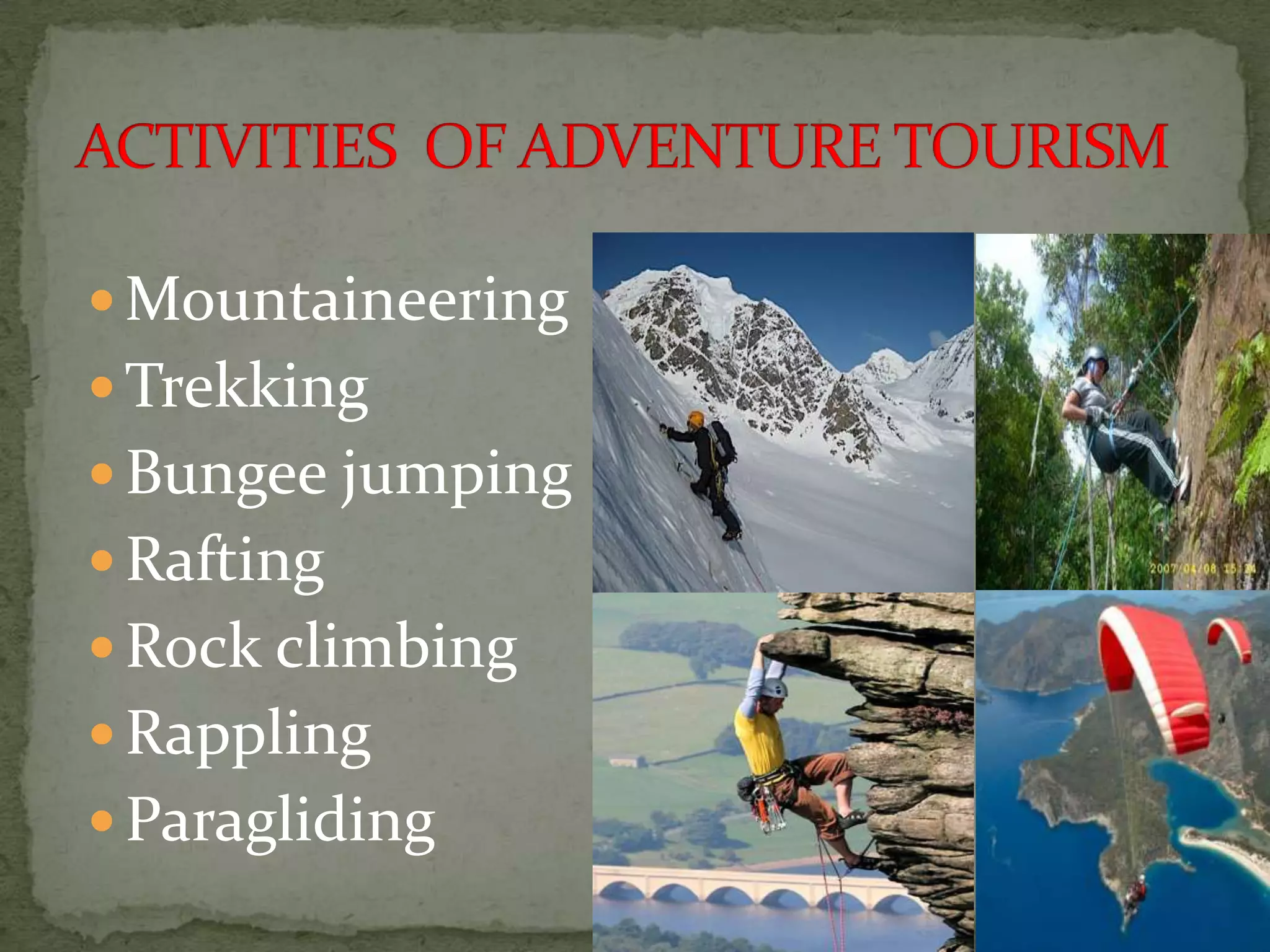
 Mountaineering
 Trekking
 Bungee jumping

 Rafting
 Rock climbing
 Rappling
 Paragliding
 Boots - well broken in and











waterproofed
Personal first-aid kit including
medication for common ailments
Flashlight with extra batteries
Sunglasses or snow goggles
Water bottle, preferably wide
mouthed, with at least one liter
capacity
Pocket knife
Note book with pens and pencils
Plastic bags - small size for books,
film etc., larger bags for clothes,
sleeping bags
 Mountaineering or mountain climbing is the

sport,hobby or profession of hiking,skiing and
climbing mountains.while mountaneering began as
attempts to reach the highest point of unclimbed big
mountains.It has branched into specilization that
address different aspect of the mountain and consists
of three areas:rock craft,snow craft and
sping,depending on wheather the route chosen is over
rock,snow or ice,all require experience,athletic
ability,and technical knowledge to maintain safety.
 1. Mount Everest
 2. K2,

3. Mount Kailash,
 4. Mount Kinabalu,
 5. Mount Huang


Nepal
China, Pakistan
Tibet
Borneo
China
 Trekking is an activity in which people take multi-day

hiking trips through rural, often rugged territory.
Many people who are trekkers engage in longer trips
through entire regions of the world, using trekking as a
way of getting from place to place.
 It also can be incorporated with other outdoor sports,
such as rock climbing or backpacking.
 GR 20
 Inca Trail
 Pays Dogon
 Everest Base Camp
 Indian Himalayas

France
Peru
Mali
Nepal
India
 Victoria Falls Bridge
 Bloukrans Bridge
 Graskop Gorge
 Royal Gorge Suspension Bridge
 The Corinth Canal

Zambia
South Africa
South Africa
USA
Greece
Rafting or white water rafting is a challenging
recreational outdoor activity using an inflatable
raft to navigate a river or other bodies of water.
This is usually done on white water or different
degrees of rough water, in order to thrill and
excite the raft passengers. The development of
this activity as a leisure sport has become
popular since the mid-1970s. It is considered an
extreme sport, as it can be dangerous
 Alsek and Tatshenshini Rivers
 Magpie River
 Middle Fork, Salmon River
 Río Upano
 Futaleufú River

Alaska/Canada
Canada
Idaho
Ecuador
Chile
Rock climbing is an activity in which participants climb up,
down or across natural rock formations or artificial rock
walls. The goal is to reach the summit of a formation or the
endpoint of a pre-defined route without falling. Rock
climbing competitions have objectives of completing the
route in the quickest possible time or the farthest along an
increasingly difficult route. Rock climbing is similar to
scrambling (another activity involving the scaling of hills and
similar formations), but climbing is generally differentiated
by its sustained use of hands to support the climber's weight
as well as to provide balance.
 Mount Roraima





Venezuela
Grampians National Park
Australia
Canyon de Chelly National Monument USA
Cordillera del Paine
Chile
Meteora
Greece
 Manaslu
 Pokhara
 Petchaburi
 Solang Nala
 Bali

Nepal
Nepal
Thailand
Manali, India
Indonesia
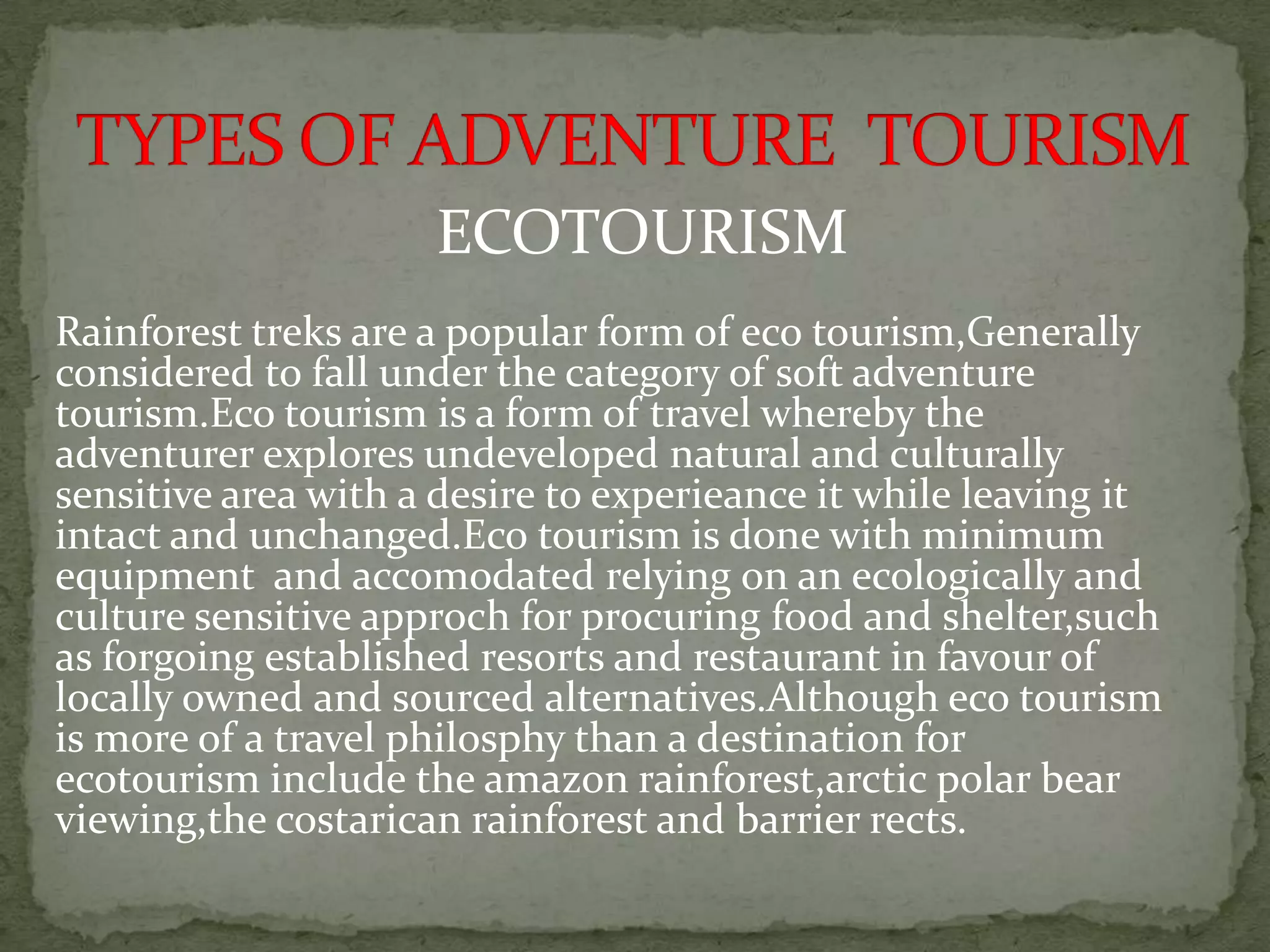
 Rappelling is the controlled descent down a rock face

using a rope, climbers use this technique when a cliff
or slope is too steep and/or dangerous to descend
without protection.
 Rope access technicians also use this as a method to
access difficult to reach areas at height for various
industrial applications like maintenance, construction,
inspection and welding.
 Northeastern

USA

 Japan

 Tajikistan
 Porto
 Lesotho

Portugal
Adventure tourism

Adventure tourism

  • 3.
    Adventure travel isa type of tourism, involving exploration or travel to remote, exotic and possibly hostile areas. Adventure tourism is rapidly growing in popularity, as tourists seek different kinds of vacations. According to the U.S. based Adventure Travel Trade Association, adventure travel may be any tourist activity, including two of the following three components: a physical activity, a cultural exchange or interaction and engagement with nature. Adventure tourism gains much of its excitement by allowing its participants to step outside of their comfort zone. This may be from experiencing culture shock or through the performance of acts, that require significant effort and involve some degree of risk (real or perceived) and/or physical danger (See extreme sports). This may include activities such as mountaineering, trekking, bungee jumping, mountain biking, rafting, zip-lining, paragliding, and Rock climbing.
  • 4.
    ECOTOURISM Rainforest treks area popular form of eco tourism,Generally considered to fall under the category of soft adventure tourism.Eco tourism is a form of travel whereby the adventurer explores undeveloped natural and culturally sensitive area with a desire to experieance it while leaving it intact and unchanged.Eco tourism is done with minimum equipment and accomodated relying on an ecologically and culture sensitive approch for procuring food and shelter,such as forgoing established resorts and restaurant in favour of locally owned and sourced alternatives.Although eco tourism is more of a travel philosphy than a destination for ecotourism include the amazon rainforest,arctic polar bear viewing,the costarican rainforest and barrier rects.
  • 5.
     Accessible tourismstraddles the line between hard and soft adventure tourism,providing excursions for the moblity challenged that can take the form of cultural exploration and extreme activities such as bungee jumping or water rafting.Accesible tourism is a growing industry that seeks to provide individual with barrier to mobility a personally rewarding adrenline inducing adventure experience that might otherwise be out of reach.Several companies dedicated to accessible tourism have recently opened providing those with disabilities a fully personalized adventure tourism package with specilized equipment and training.
  • 6.
     Thrill tourismis the best known type of hard adventure tourism.  Bungee jumping,mountaineering,parasailing,base jumping,rock climbimg all are popular forms of thrill tourism but anything that incites an adrending rush and a sense of danger applies.  This type of adventure tourism is generally done through an established company that provide appropriate safety and training,since most thrill tourism activities are extremely risky.
  • 7.
     Ethno tourismis a form of soft tourism that brings participants into contact with culture and diverse people around the globe.  It involves long treks into undevloped areas.Ethno tourism does involve a certain amount of risk,but reputed ethno tourism companies take these considertation into account to ameliorate risk factors,such as exposure to disease social or poltical upheaval,food safety issues and physical demand.
  • 8.
     Mountaineering  Trekking Bungee jumping  Rafting  Rock climbing  Rappling  Paragliding
  • 9.
     Boots -well broken in and        waterproofed Personal first-aid kit including medication for common ailments Flashlight with extra batteries Sunglasses or snow goggles Water bottle, preferably wide mouthed, with at least one liter capacity Pocket knife Note book with pens and pencils Plastic bags - small size for books, film etc., larger bags for clothes, sleeping bags
  • 10.
     Mountaineering ormountain climbing is the sport,hobby or profession of hiking,skiing and climbing mountains.while mountaneering began as attempts to reach the highest point of unclimbed big mountains.It has branched into specilization that address different aspect of the mountain and consists of three areas:rock craft,snow craft and sping,depending on wheather the route chosen is over rock,snow or ice,all require experience,athletic ability,and technical knowledge to maintain safety.
  • 11.
     1. MountEverest  2. K2, 3. Mount Kailash,  4. Mount Kinabalu,  5. Mount Huang  Nepal China, Pakistan Tibet Borneo China
  • 12.
     Trekking isan activity in which people take multi-day hiking trips through rural, often rugged territory. Many people who are trekkers engage in longer trips through entire regions of the world, using trekking as a way of getting from place to place.  It also can be incorporated with other outdoor sports, such as rock climbing or backpacking.
  • 14.
     GR 20 Inca Trail  Pays Dogon  Everest Base Camp  Indian Himalayas France Peru Mali Nepal India
  • 16.
     Victoria FallsBridge  Bloukrans Bridge  Graskop Gorge  Royal Gorge Suspension Bridge  The Corinth Canal Zambia South Africa South Africa USA Greece
  • 17.
    Rafting or whitewater rafting is a challenging recreational outdoor activity using an inflatable raft to navigate a river or other bodies of water. This is usually done on white water or different degrees of rough water, in order to thrill and excite the raft passengers. The development of this activity as a leisure sport has become popular since the mid-1970s. It is considered an extreme sport, as it can be dangerous
  • 18.
     Alsek andTatshenshini Rivers  Magpie River  Middle Fork, Salmon River  Río Upano  Futaleufú River Alaska/Canada Canada Idaho Ecuador Chile
  • 19.
    Rock climbing isan activity in which participants climb up, down or across natural rock formations or artificial rock walls. The goal is to reach the summit of a formation or the endpoint of a pre-defined route without falling. Rock climbing competitions have objectives of completing the route in the quickest possible time or the farthest along an increasingly difficult route. Rock climbing is similar to scrambling (another activity involving the scaling of hills and similar formations), but climbing is generally differentiated by its sustained use of hands to support the climber's weight as well as to provide balance.
  • 20.
     Mount Roraima     Venezuela GrampiansNational Park Australia Canyon de Chelly National Monument USA Cordillera del Paine Chile Meteora Greece
  • 22.
     Manaslu  Pokhara Petchaburi  Solang Nala  Bali Nepal Nepal Thailand Manali, India Indonesia
  • 23.
     Rappelling isthe controlled descent down a rock face using a rope, climbers use this technique when a cliff or slope is too steep and/or dangerous to descend without protection.  Rope access technicians also use this as a method to access difficult to reach areas at height for various industrial applications like maintenance, construction, inspection and welding.
  • 24.
     Northeastern USA  Japan Tajikistan  Porto  Lesotho Portugal