
Start the Discussion: The Importance
of Advance Directives
Presented by:
Rebecca A. Levy, Esq.
Mary M. Petti, MPA, RN
October 24, 2012
Please hold all questions until
the end of the slide
presentation. There will be
plenty of time for questions.
The Patient Self Determination Act
(PSDA)
• Passed by Congress in 1990
• Effective December 1, 1991
• Applies to Hospitals, Nursing Homes,
home health agencies, hospice
providers and HMOs
• Does not apply to individual doctors
PSDA Patients’ Rights Include
• The right to facilitate their own
healthcare decisions
• The right to accept or refuse
medical treatment
• The right to make an advance
healthcare directive
PSDA Requires Certain Facilities to:
• Inquire whether the patient already has an
advance healthcare directive and make note
of this in their medical records
• Give the patient written information about
preparing an advance directive (specifically
the patient’s rights under law)
• Provide education to their staff and affiliates
about advance healthcare directives
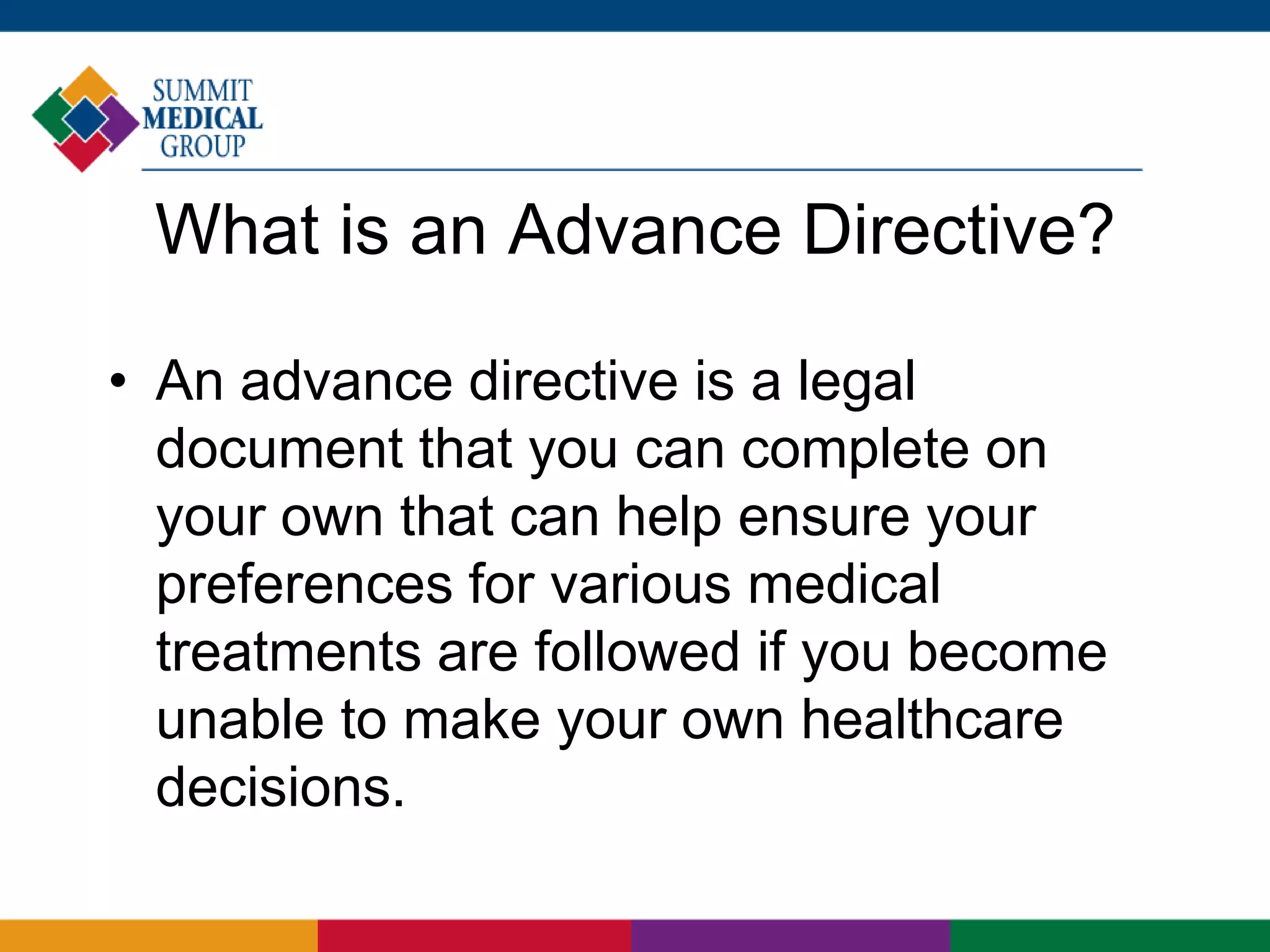
What is an Advance Directive?
• An advance directive is a legal
document that you can complete on
your own that can help ensure your
preferences for various medical
treatments are followed if you become
unable to make your own healthcare
decisions.
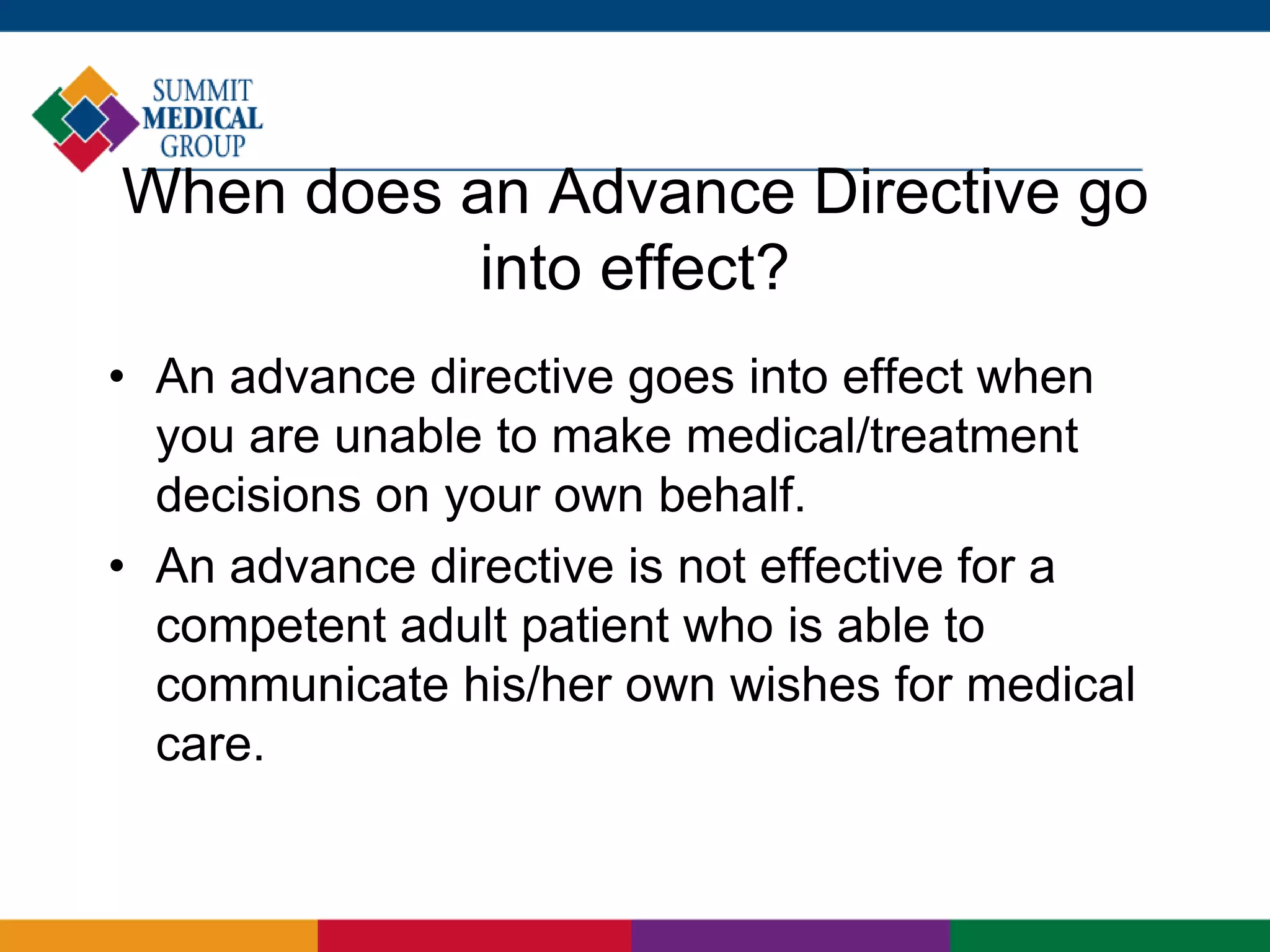
When does an Advance Directive go
into effect?
• An advance directive goes into effect when
you are unable to make medical/treatment
decisions on your own behalf.
• An advance directive is not effective for a
competent adult patient who is able to
communicate his/her own wishes for medical
care.
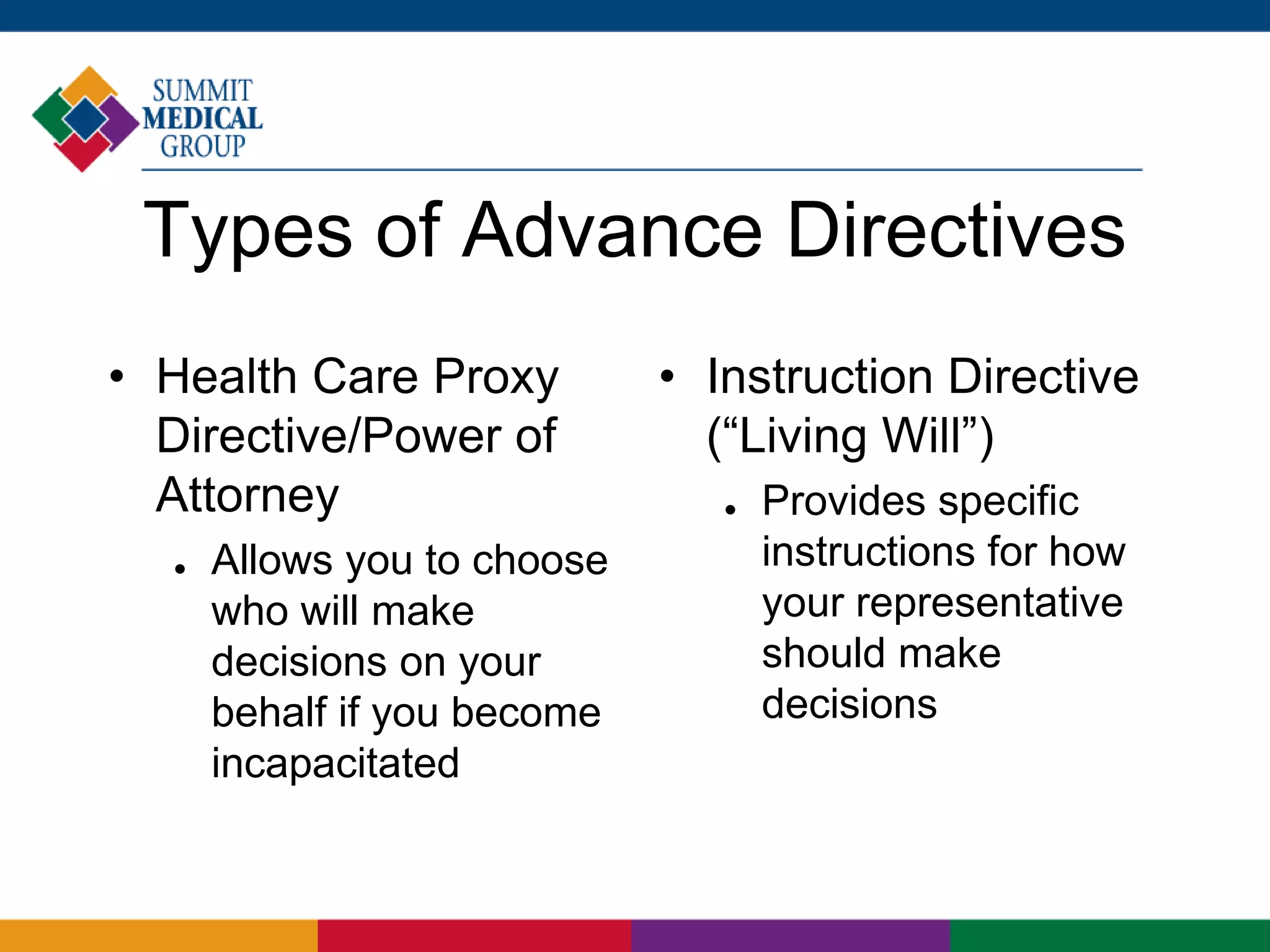
Types of Advance Directives
• Health Care Proxy
Directive/Power of
Attorney
 Allows you to choose
who will make
decisions on your
behalf if you become
incapacitated
• Instruction Directive
(“Living Will”)
 Provides specific
instructions for how
your representative
should make
decisions
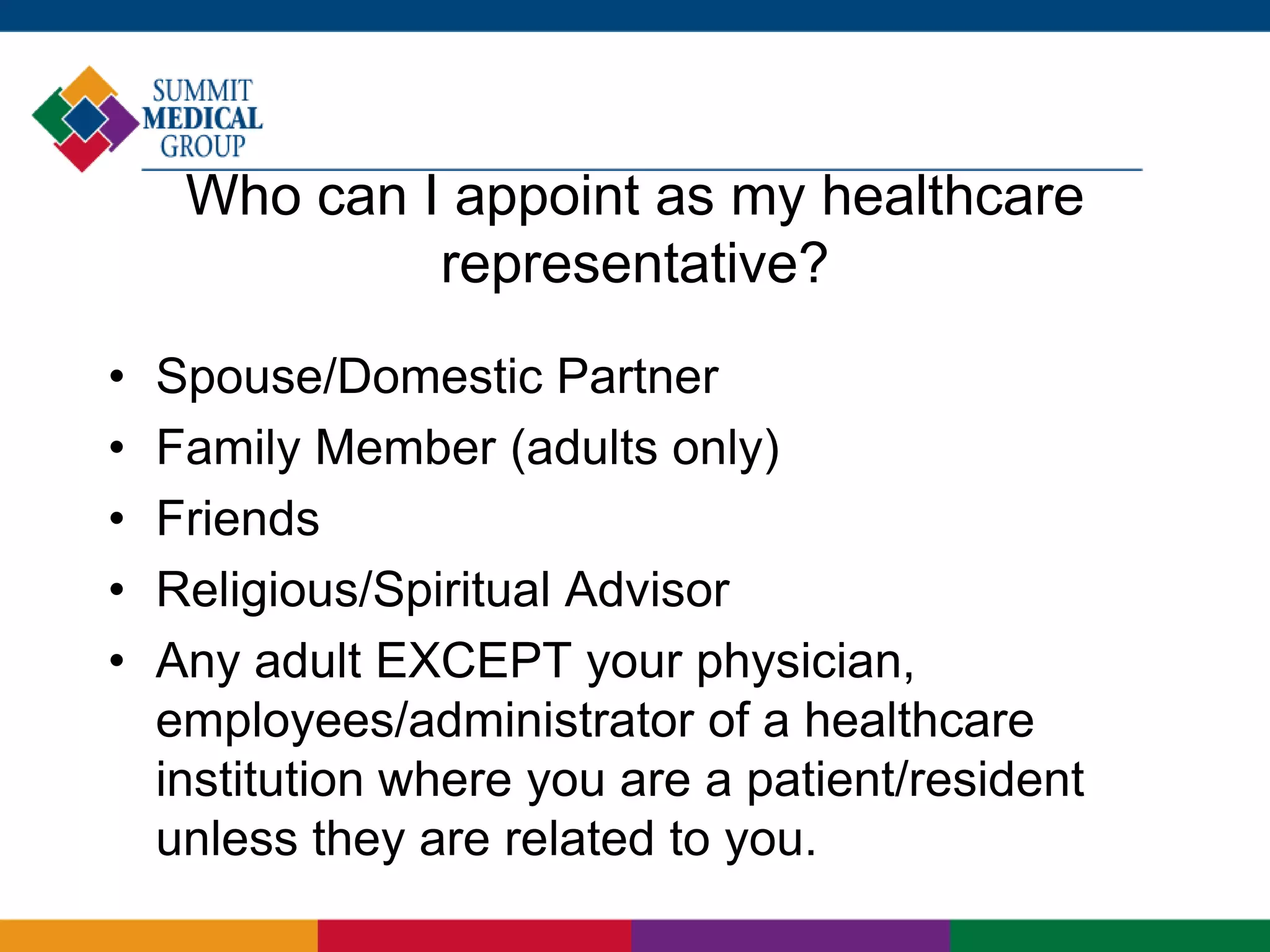
Who can I appoint as my healthcare
representative?
• Spouse/Domestic Partner
• Family Member (adults only)
• Friends
• Religious/Spiritual Advisor
• Any adult EXCEPT your physician,
employees/administrator of a healthcare
institution where you are a patient/resident
unless they are related to you.
Where do I get an advance directive
form?
• WWW.state.nj.us/health/advancedirecti
ve/document
• Five Wishes booklet prepared by Aging
with Dignity
What do I need to do?
• Study and understand the terminology
used in discussing treatments and end-
of-life decisions
• Identify someone you would like to be
your healthcare agent/representative
and get their agreement to assume that
role if you become unable to make
decisions for yourself
Have the discussion…
• With your healthcare
agent/representative
• With your spouse/partner
• With your family members/loved ones
• Using the form, make your choices for
treatment clear
Complete the Form
• Sign the form
• Get signatures of two witnesses (may
not be witnessed by your healthcare
representative)
• New Jersey does not require
notarization (but may be notarized)
What do I do with my advance
directive?
• Keep the original in an easily accessible
place in your home (Not the safe deposit box)
• Give copies to:
 Your healthcare agent/representative
 Your Primary Care Physician or Summit Medical
Group
 The hospital or extended care facility if you are
admitted there
 Fill out the wallet card and carry it with you
Still have questions?
• Mary Petti, RN
• Patient Relations, 908-277-8928
• Spend some time preparing your
advance directive. It could become a
great gift to your loved ones in the
future.
What is POLST?
• Practitioner Orders for Life
Sustaining Treatment
• 12/21/2011 legislation that
enables patients to indicate
their preferences regarding
life-sustaining treatment
What is the POLST Form?
• Standardized form for practitioner
orders
• Signed by a physician or advanced
practice nurse
• Provides instructions for health care
personnel to follow for a range of life
prolonging interventions
Who Should Have a POLST Form?
• Seriously ill patients
• Medically frail persons with limited life
expectancy
• Those living in a nursing home or
hospice
• Those afraid of losing the capacity to
make their own healthcare decisions in
the near future
POLST
Questions?

Start the Discussion: The Importance of Advance Directives

  • 1.
    Start the Discussion:The Importance of Advance Directives Presented by: Rebecca A. Levy, Esq. Mary M. Petti, MPA, RN October 24, 2012
  • 2.
    Please hold allquestions until the end of the slide presentation. There will be plenty of time for questions.
  • 3.
    The Patient SelfDetermination Act (PSDA) • Passed by Congress in 1990 • Effective December 1, 1991 • Applies to Hospitals, Nursing Homes, home health agencies, hospice providers and HMOs • Does not apply to individual doctors
  • 4.
    PSDA Patients’ RightsInclude • The right to facilitate their own healthcare decisions • The right to accept or refuse medical treatment • The right to make an advance healthcare directive
  • 5.
    PSDA Requires CertainFacilities to: • Inquire whether the patient already has an advance healthcare directive and make note of this in their medical records • Give the patient written information about preparing an advance directive (specifically the patient’s rights under law) • Provide education to their staff and affiliates about advance healthcare directives
  • 6.
    What is anAdvance Directive? • An advance directive is a legal document that you can complete on your own that can help ensure your preferences for various medical treatments are followed if you become unable to make your own healthcare decisions.
  • 7.
    When does anAdvance Directive go into effect? • An advance directive goes into effect when you are unable to make medical/treatment decisions on your own behalf. • An advance directive is not effective for a competent adult patient who is able to communicate his/her own wishes for medical care.
  • 8.
    Types of AdvanceDirectives • Health Care Proxy Directive/Power of Attorney  Allows you to choose who will make decisions on your behalf if you become incapacitated • Instruction Directive (“Living Will”)  Provides specific instructions for how your representative should make decisions
  • 9.
    Who can Iappoint as my healthcare representative? • Spouse/Domestic Partner • Family Member (adults only) • Friends • Religious/Spiritual Advisor • Any adult EXCEPT your physician, employees/administrator of a healthcare institution where you are a patient/resident unless they are related to you.
  • 10.
    Where do Iget an advance directive form? • WWW.state.nj.us/health/advancedirecti ve/document • Five Wishes booklet prepared by Aging with Dignity
  • 11.
    What do Ineed to do? • Study and understand the terminology used in discussing treatments and end- of-life decisions • Identify someone you would like to be your healthcare agent/representative and get their agreement to assume that role if you become unable to make decisions for yourself
  • 12.
    Have the discussion… •With your healthcare agent/representative • With your spouse/partner • With your family members/loved ones • Using the form, make your choices for treatment clear
  • 13.
    Complete the Form •Sign the form • Get signatures of two witnesses (may not be witnessed by your healthcare representative) • New Jersey does not require notarization (but may be notarized)
  • 14.
    What do Ido with my advance directive? • Keep the original in an easily accessible place in your home (Not the safe deposit box) • Give copies to:  Your healthcare agent/representative  Your Primary Care Physician or Summit Medical Group  The hospital or extended care facility if you are admitted there  Fill out the wallet card and carry it with you
  • 15.
    Still have questions? •Mary Petti, RN • Patient Relations, 908-277-8928 • Spend some time preparing your advance directive. It could become a great gift to your loved ones in the future.
  • 16.
    What is POLST? •Practitioner Orders for Life Sustaining Treatment • 12/21/2011 legislation that enables patients to indicate their preferences regarding life-sustaining treatment
  • 17.
    What is thePOLST Form? • Standardized form for practitioner orders • Signed by a physician or advanced practice nurse • Provides instructions for health care personnel to follow for a range of life prolonging interventions
  • 18.
    Who Should Havea POLST Form? • Seriously ill patients • Medically frail persons with limited life expectancy • Those living in a nursing home or hospice • Those afraid of losing the capacity to make their own healthcare decisions in the near future
  • 19.