Adverse Drug Reaction
-Classification
Dr. Ajith JS
Asst. Professor
Department of Pharmacology
Sanjivani College of Pharmaceutical Education & Research, Kopargaon
Traditional Classification
2
- 1970s
ADR
Type B
(Bizarre)
Type A
(Augmented)
3
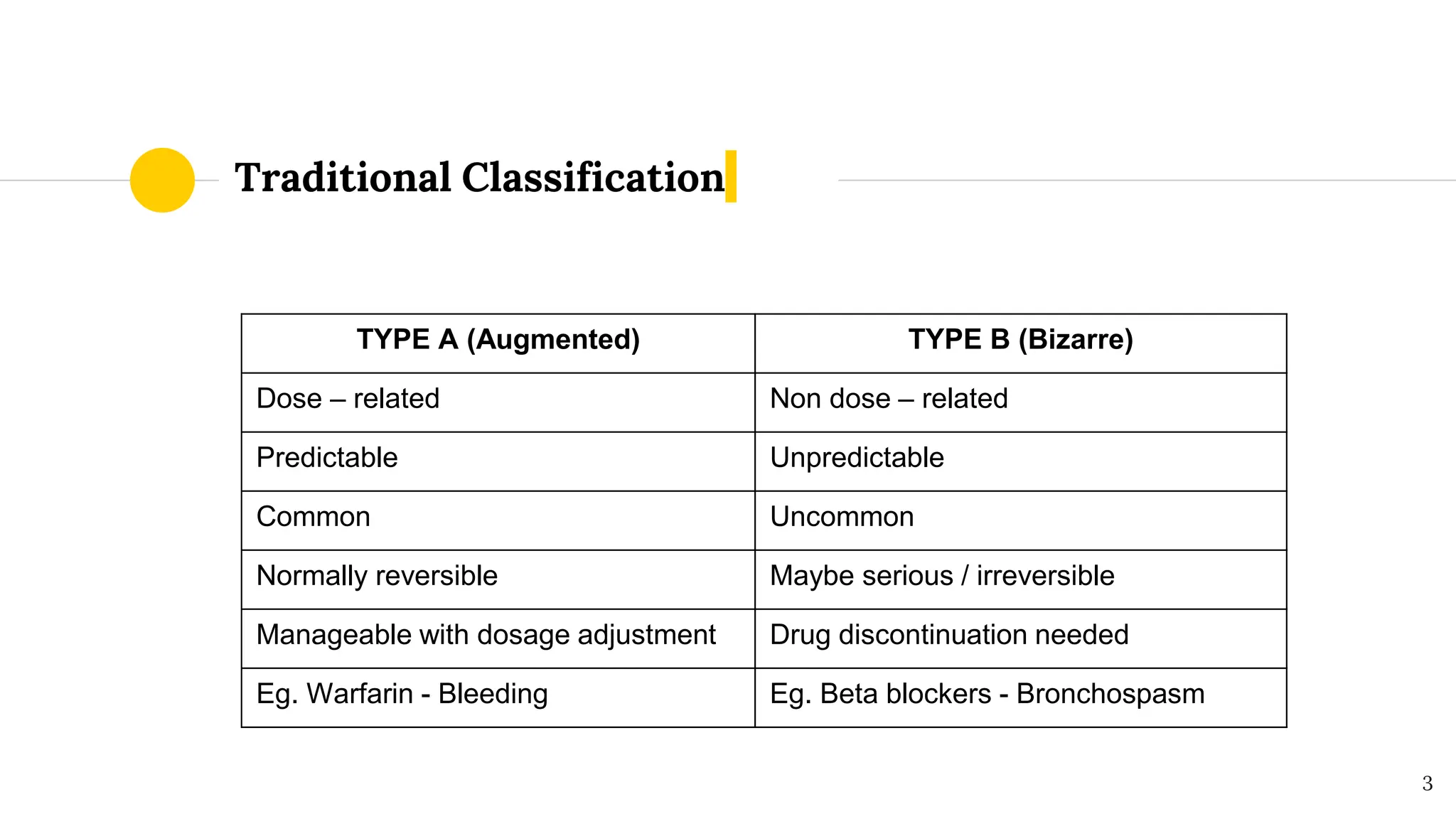
TYPE A (Augmented) TYPE B (Bizarre)
Dose – related Non dose – related
Predictable Unpredictable
Common Uncommon
Normally reversible Maybe serious / irreversible
Manageable with dosage adjustment Drug discontinuation needed
Eg. Warfarin - Bleeding Eg. Beta blockers - Bronchospasm
Traditional Classification
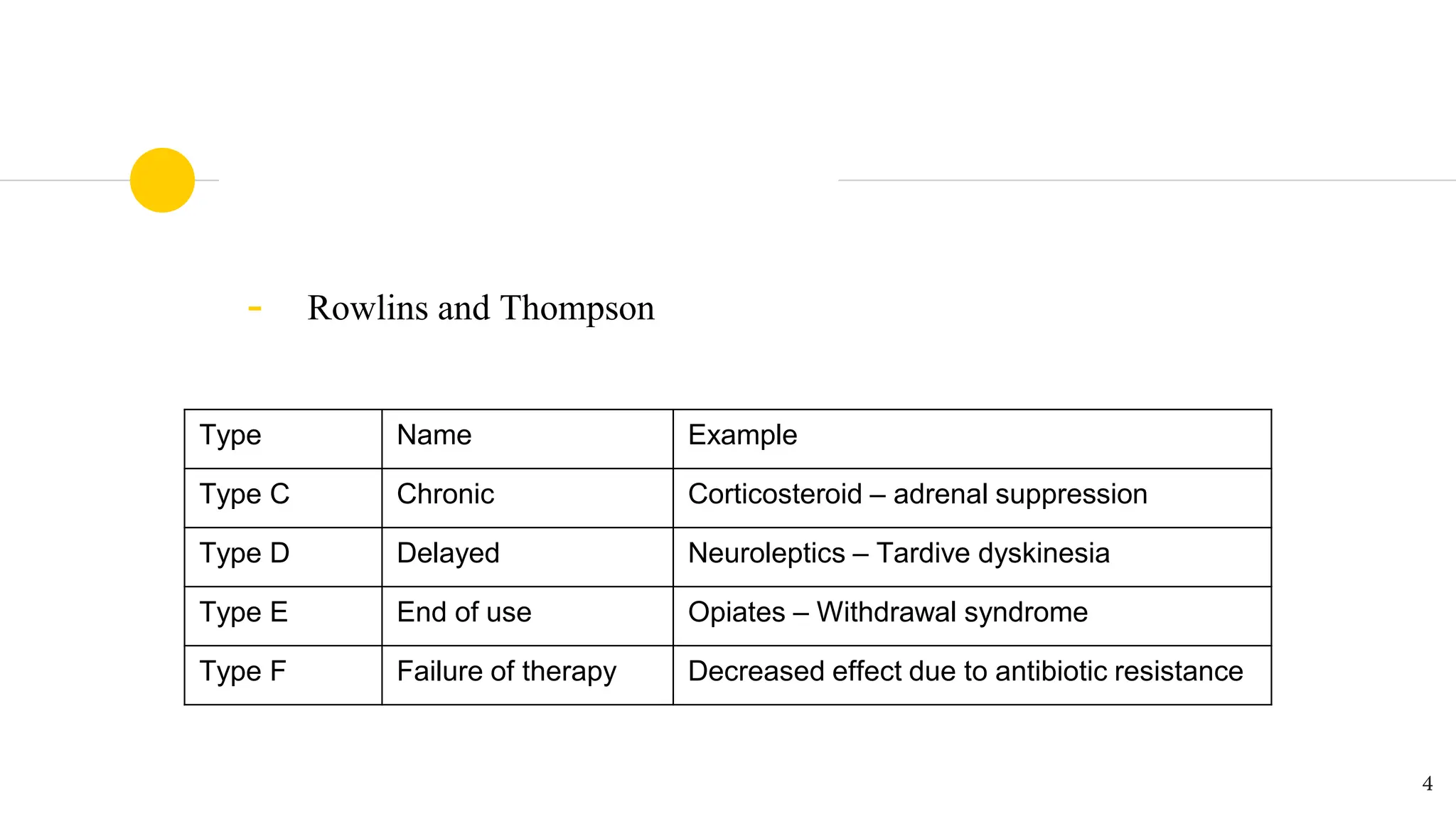
- Rowlins and Thompson
4
Type Name Example
Type C Chronic Corticosteroid – adrenal suppression
Type D Delayed Neuroleptics – Tardive dyskinesia
Type E End of use Opiates – Withdrawal syndrome
Type F Failure of therapy Decreased effect due to antibiotic resistance
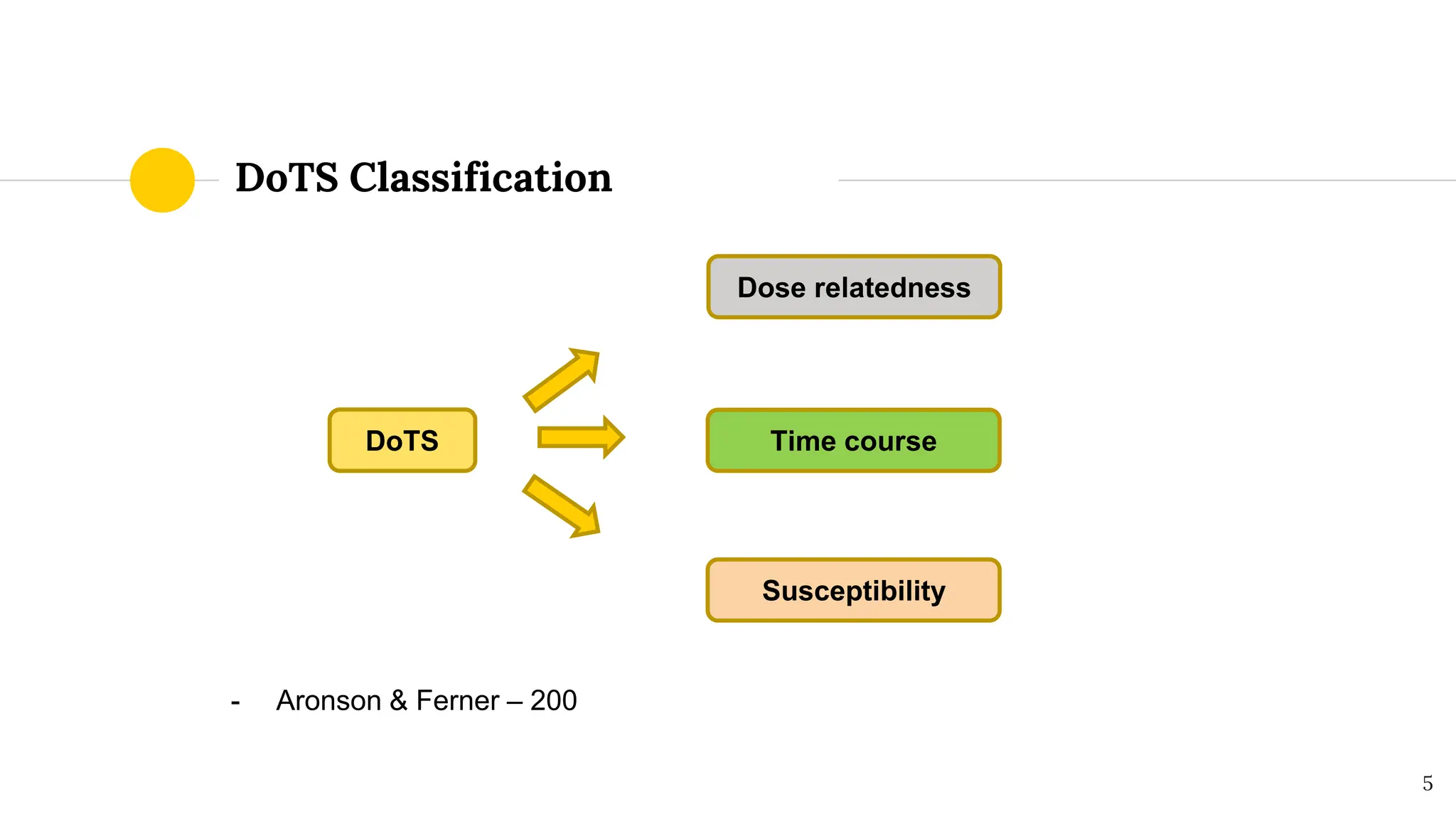
DoTS Classification
5
DoTS
Susceptibility
Time course
Dose relatedness
- Aronson & Ferner – 200
DoTS Classification
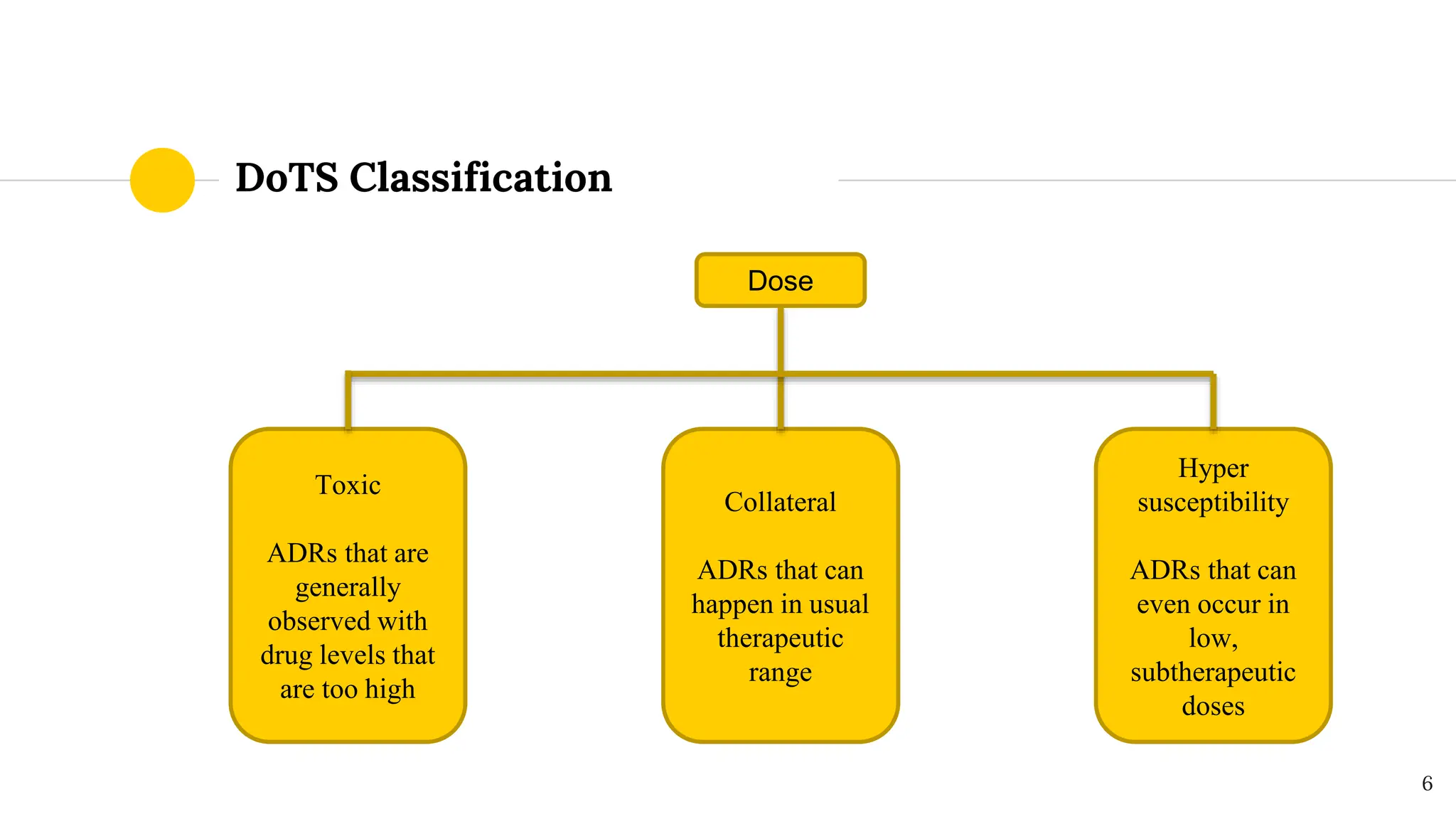
6
Dose
Toxic
ADRs that are
generally
observed with
drug levels that
are too high
Collateral
ADRs that can
happen in usual
therapeutic
range
Hyper
susceptibility
ADRs that can
even occur in
low,
subtherapeutic
doses
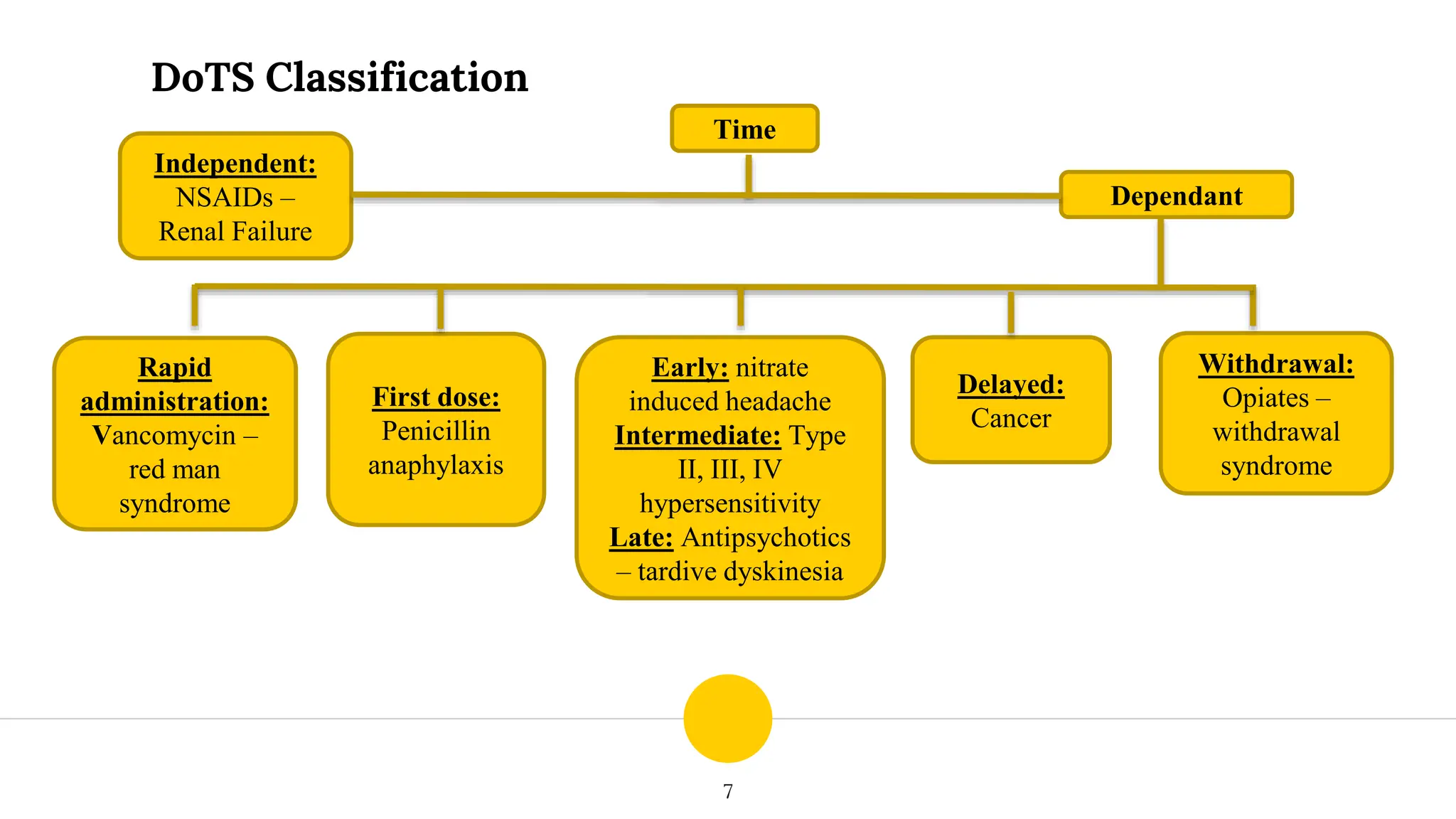
7
DoTS Classification
Time
Dependant
Independent:
NSAIDs –
Renal Failure
Early: nitrate
induced headache
Intermediate: Type
II, III, IV
hypersensitivity
Late: Antipsychotics
– tardive dyskinesia
Delayed:
Cancer
Withdrawal:
Opiates –
withdrawal
syndrome
First dose:
Penicillin
anaphylaxis
Rapid
administration:
Vancomycin –
red man
syndrome
8
DoTS Classification
Susceptibility
Gender:
-Females are
more prone to
ADRs
Age:
- Elderly and
pediatrics
-Elderly patients
are more
sensitive to
antipsychotics
and anxiolytics
Ethnic origin:
G6PD deficiency
High risk of
hemolysis with
nitrofurantoin or
quinolone
antibtiotics
Genetics:
CYP2C9
polymorphisms -
bleeding
Disease:
Hepatic or renal
disease – kinetics
is altered
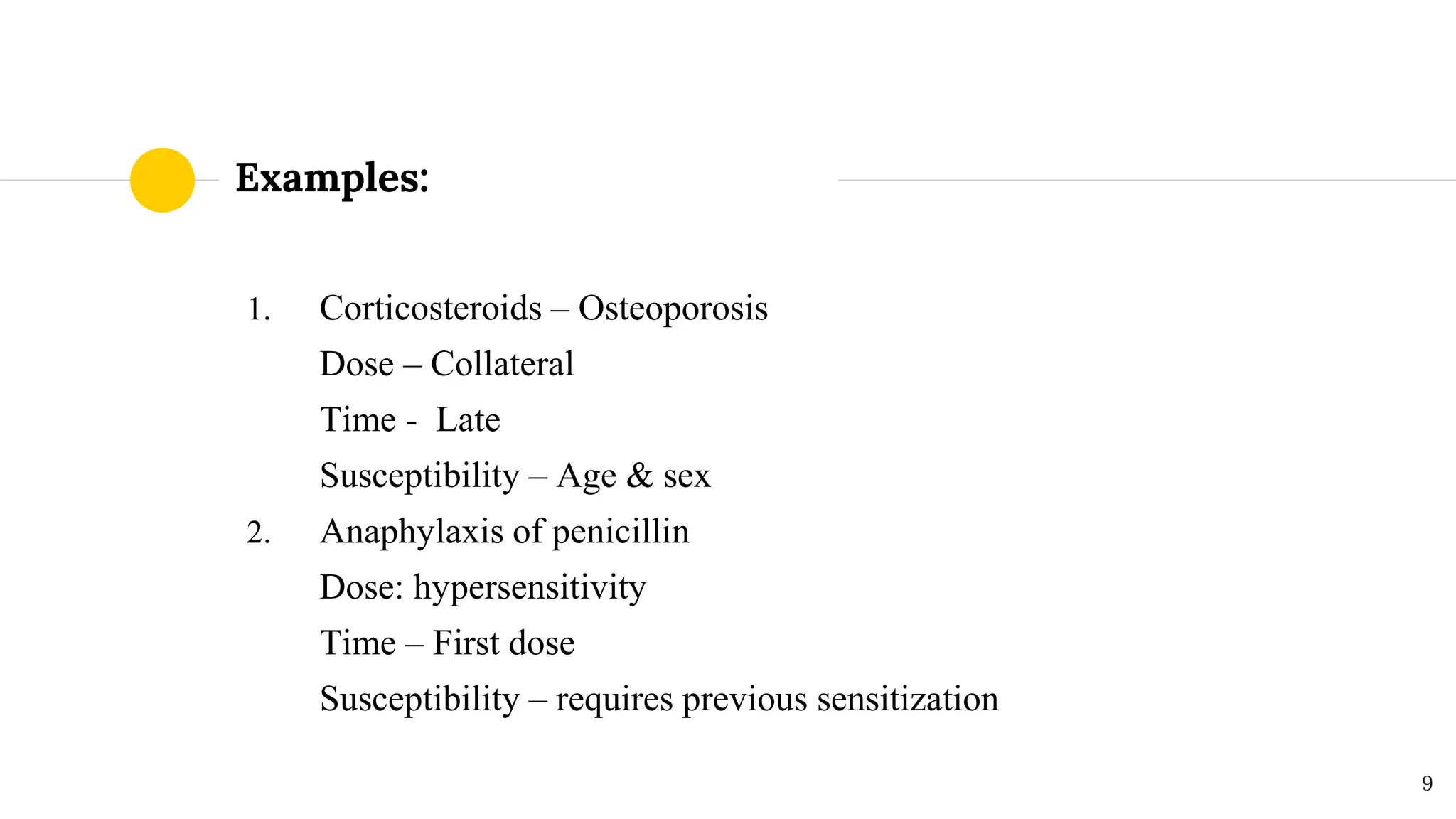
Examples:
1. Corticosteroids – Osteoporosis
Dose – Collateral
Time - Late
Susceptibility – Age & sex
2. Anaphylaxis of penicillin
Dose: hypersensitivity
Time – First dose
Susceptibility – requires previous sensitization
9
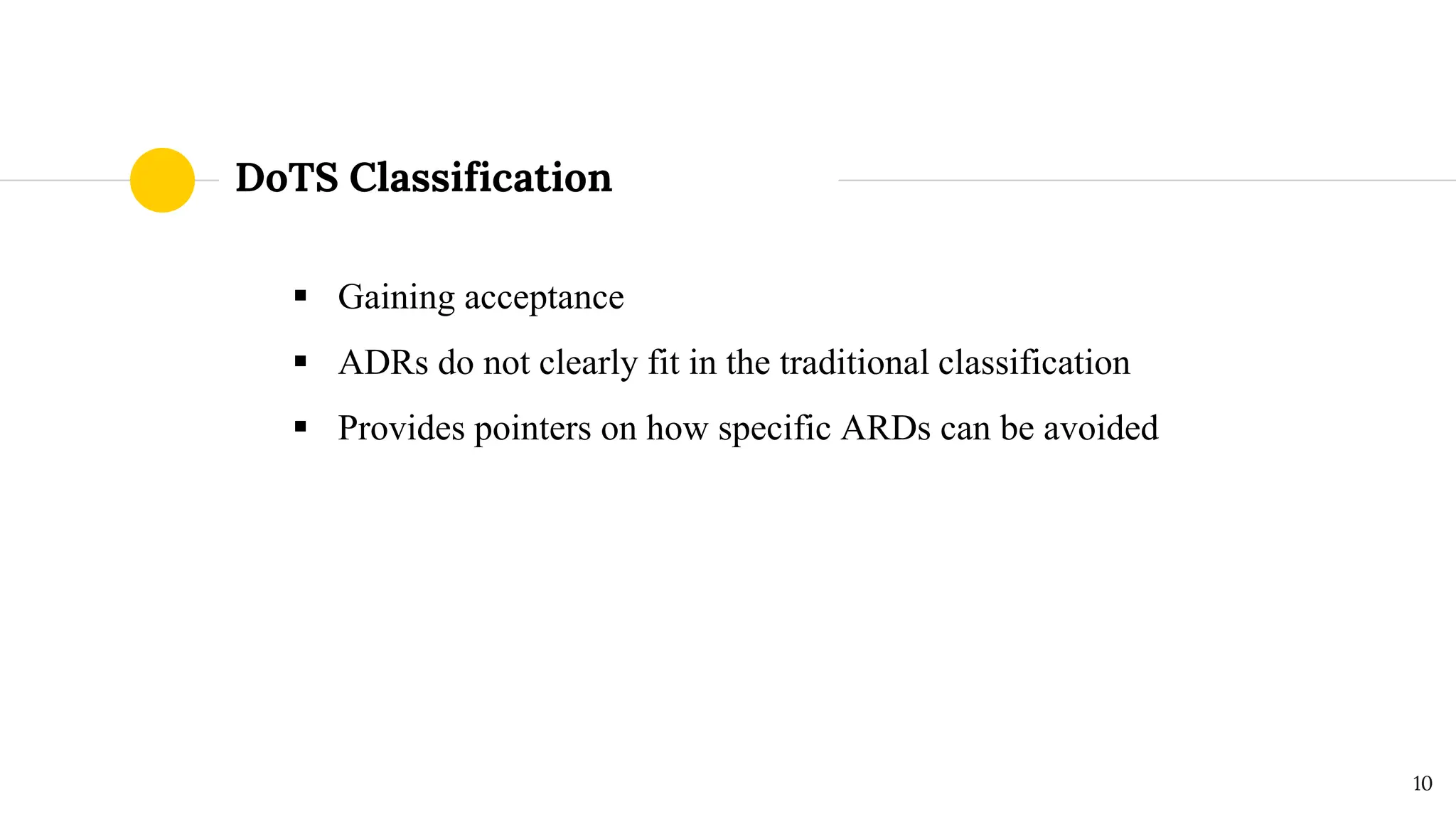
DoTS Classification
10
 Gaining acceptance
 ADRs do not clearly fit in the traditional classification
 Provides pointers on how specific ARDs can be avoided

ADR classification.pptx

  • 1.
    Adverse Drug Reaction -Classification Dr.Ajith JS Asst. Professor Department of Pharmacology Sanjivani College of Pharmaceutical Education & Research, Kopargaon
  • 2.
    Traditional Classification 2 - 1970s ADR TypeB (Bizarre) Type A (Augmented)
  • 3.
    3 TYPE A (Augmented)TYPE B (Bizarre) Dose – related Non dose – related Predictable Unpredictable Common Uncommon Normally reversible Maybe serious / irreversible Manageable with dosage adjustment Drug discontinuation needed Eg. Warfarin - Bleeding Eg. Beta blockers - Bronchospasm Traditional Classification
  • 4.
    - Rowlins andThompson 4 Type Name Example Type C Chronic Corticosteroid – adrenal suppression Type D Delayed Neuroleptics – Tardive dyskinesia Type E End of use Opiates – Withdrawal syndrome Type F Failure of therapy Decreased effect due to antibiotic resistance
  • 5.
    DoTS Classification 5 DoTS Susceptibility Time course Doserelatedness - Aronson & Ferner – 200
  • 6.
    DoTS Classification 6 Dose Toxic ADRs thatare generally observed with drug levels that are too high Collateral ADRs that can happen in usual therapeutic range Hyper susceptibility ADRs that can even occur in low, subtherapeutic doses
  • 7.
    7 DoTS Classification Time Dependant Independent: NSAIDs – RenalFailure Early: nitrate induced headache Intermediate: Type II, III, IV hypersensitivity Late: Antipsychotics – tardive dyskinesia Delayed: Cancer Withdrawal: Opiates – withdrawal syndrome First dose: Penicillin anaphylaxis Rapid administration: Vancomycin – red man syndrome
  • 8.
    8 DoTS Classification Susceptibility Gender: -Females are moreprone to ADRs Age: - Elderly and pediatrics -Elderly patients are more sensitive to antipsychotics and anxiolytics Ethnic origin: G6PD deficiency High risk of hemolysis with nitrofurantoin or quinolone antibtiotics Genetics: CYP2C9 polymorphisms - bleeding Disease: Hepatic or renal disease – kinetics is altered
  • 9.
    Examples: 1. Corticosteroids –Osteoporosis Dose – Collateral Time - Late Susceptibility – Age & sex 2. Anaphylaxis of penicillin Dose: hypersensitivity Time – First dose Susceptibility – requires previous sensitization 9
  • 10.
    DoTS Classification 10  Gainingacceptance  ADRs do not clearly fit in the traditional classification  Provides pointers on how specific ARDs can be avoided