ADDICTIONASA DISEASE
DEFINITIONS
Addiction/Chemical dependence:
• a disease caused by long habitual use of drugs and other
substances of abuse
• It is a progressive illness that is not completely curable
but is manageable.
• It’s characterized by a pattern of repeated self
administration of the drug of choice which results in
tolerance, dependence and compulsive drug taking.
Definitions contd…
Detoxification:
First step in addiction treatment
where medication is given to:
 Remove the substances from the
body system
To reduce the discomfort of
withdrawal symptoms
MANIFESTATIONS
• Physical deterioration from persistent use e.g. skin rash,
liver damage, cognitive damage, strong subjective drive to
use substance in larger amounts over longer periods.
• Persistent desire to cut down on amounts of use.
• Virtually all of the person’s daily activities revolve around
the substance.
• Sense of guilt, irritability or annoyance over family and
friends’ expressed concerns about use.
Manifestations contd…
• Waste of a great deal of time seeking to
obtain the substance or recovering from
their effects.
• Withdrawal from healthy hobbies, friends
and family in order to use the substance.
• ‘Raising’ money through dubious means
like theft, prostitution etc to sustain
procurement.
A, B,C, D, E OF ADDICTION
Addiction is characterized by:
1. Inability to consistently Abstain;
2. Impairment in Behavioral control;
3. Craving; or increased “hunger” for drugs or
rewarding experiences;
4. Diminished recognition of significant
problems with one’s behaviors and
interpersonal relationships; and
5. A dysfunctional Emotional response.
CHARACTERISTICS OF
ADDICTION
 It is characterized by:
An obsession-always thinking about the
‘positive’ effects of using drugs, actively
planning and looking forward to using them.
A compulsion-an irrational urge or craving to
use the drug or substance for anticipated
positive effects even though the user knows it
will hurt in the long run
Emotional logic works to satisfy the urgency and
compulsion to use drugs
TYPES OF DEPENDENCE
• Physical dependence
A state of physical adjustment with increase in level of
tolerance coupled with withdrawal symptoms.
• Behavioral dependence
The person feels incompetent or unable to function
appropriately without the drug of choice.
Types of dependence contd…
• Social dependence
Marked by a drug related lifestyle
The abuser adjusts his life to ensure access to drugs.
Individual cannot function socially without drugs
Relationships change to allow and support use and
provide protection from consequences of drug use
ADDICTION PROCESS
The Addiction Process is characterized by five
stages:
1. Experimental
2. Social
3. Instrumental
4. Habitual
5. Compulsive
Experimental Stage
• The motive for experimental use includes:
- Curiosity
- Risk taking
- Peer Pressure
- Thrill for adventure (Thrill Seeking)
- Rebellion
Instrumental Stage
• Individual learns to use substances
purposely to manipulate emotions
and behavior of other people.
• The individual discovers that alcohol
and other drugs can affect feelings
and actions in the following ways;
–Suppress feelings
–Enhance feelings
–Dis-Inhibit behavior
Social Stage
• The primary motivation for use is social acceptance.
• The individual remains functional.
• This level of use is rarely identified as risky by adolescents
and youth adults.
• Warning and cautions are ignored and no one believes that
negative consequences will happen to them.
Habitual Stage
• Symptoms of dependence start to appear.
• The abuser’s lifestyle becomes progressively centered
around using the drug as a means of coping and
recreating.
• The individual uses the substances to relieve their
discomfort arising from non-use.
• The individual starts to sense their impending
dependence and reacts to it by establishing various self
imposed rules and limits.
• They begin to break the rules.
• Drugs become ‘medicine’ for problems.
Compulsive Stage
•The individual is now pre-occupied
with drug use to the extent that getting
high or planning for it is all he does
and thinks about.
•The only relationship the addict has is
with his/her drug of choice.
•Compulsive use is totally out of
control and chemicals in the drug are
now running the individuals life.
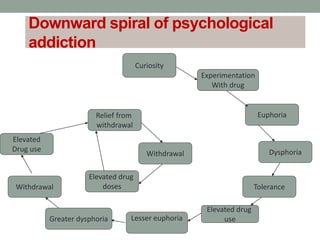
Downward spiral of psychological
addiction
Curiosity
Experimentation
With drug
Euphoria
Dysphoria
Tolerance
Elevated drug
use
Lesser euphoria
Greater dysphoria
Withdrawal
Elevated
Drug use
Relief from
withdrawal
Withdrawal
Elevated drug
doses
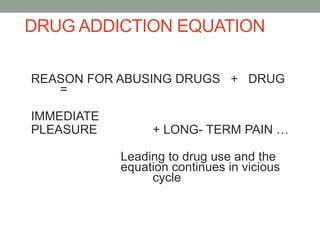
DRUG ADDICTION EQUATION
REASON FOR ABUSING DRUGS + DRUG
=
IMMEDIATE
PLEASURE + LONG- TERM PAIN …
Leading to drug use and the
equation continues in vicious
cycle

Addiction as a disease.ppt

  • 1.
  • 2.
    DEFINITIONS Addiction/Chemical dependence: • adisease caused by long habitual use of drugs and other substances of abuse • It is a progressive illness that is not completely curable but is manageable. • It’s characterized by a pattern of repeated self administration of the drug of choice which results in tolerance, dependence and compulsive drug taking.
  • 3.
    Definitions contd… Detoxification: First stepin addiction treatment where medication is given to:  Remove the substances from the body system To reduce the discomfort of withdrawal symptoms
  • 4.
    MANIFESTATIONS • Physical deteriorationfrom persistent use e.g. skin rash, liver damage, cognitive damage, strong subjective drive to use substance in larger amounts over longer periods. • Persistent desire to cut down on amounts of use. • Virtually all of the person’s daily activities revolve around the substance. • Sense of guilt, irritability or annoyance over family and friends’ expressed concerns about use.
  • 5.
    Manifestations contd… • Wasteof a great deal of time seeking to obtain the substance or recovering from their effects. • Withdrawal from healthy hobbies, friends and family in order to use the substance. • ‘Raising’ money through dubious means like theft, prostitution etc to sustain procurement.
  • 6.
    A, B,C, D,E OF ADDICTION Addiction is characterized by: 1. Inability to consistently Abstain; 2. Impairment in Behavioral control; 3. Craving; or increased “hunger” for drugs or rewarding experiences; 4. Diminished recognition of significant problems with one’s behaviors and interpersonal relationships; and 5. A dysfunctional Emotional response.
  • 7.
    CHARACTERISTICS OF ADDICTION  Itis characterized by: An obsession-always thinking about the ‘positive’ effects of using drugs, actively planning and looking forward to using them. A compulsion-an irrational urge or craving to use the drug or substance for anticipated positive effects even though the user knows it will hurt in the long run Emotional logic works to satisfy the urgency and compulsion to use drugs
  • 8.
    TYPES OF DEPENDENCE •Physical dependence A state of physical adjustment with increase in level of tolerance coupled with withdrawal symptoms. • Behavioral dependence The person feels incompetent or unable to function appropriately without the drug of choice.
  • 9.
    Types of dependencecontd… • Social dependence Marked by a drug related lifestyle The abuser adjusts his life to ensure access to drugs. Individual cannot function socially without drugs Relationships change to allow and support use and provide protection from consequences of drug use
  • 10.
    ADDICTION PROCESS The AddictionProcess is characterized by five stages: 1. Experimental 2. Social 3. Instrumental 4. Habitual 5. Compulsive
  • 11.
    Experimental Stage • Themotive for experimental use includes: - Curiosity - Risk taking - Peer Pressure - Thrill for adventure (Thrill Seeking) - Rebellion
  • 12.
    Instrumental Stage • Individuallearns to use substances purposely to manipulate emotions and behavior of other people. • The individual discovers that alcohol and other drugs can affect feelings and actions in the following ways; –Suppress feelings –Enhance feelings –Dis-Inhibit behavior
  • 13.
    Social Stage • Theprimary motivation for use is social acceptance. • The individual remains functional. • This level of use is rarely identified as risky by adolescents and youth adults. • Warning and cautions are ignored and no one believes that negative consequences will happen to them.
  • 14.
    Habitual Stage • Symptomsof dependence start to appear. • The abuser’s lifestyle becomes progressively centered around using the drug as a means of coping and recreating. • The individual uses the substances to relieve their discomfort arising from non-use. • The individual starts to sense their impending dependence and reacts to it by establishing various self imposed rules and limits. • They begin to break the rules. • Drugs become ‘medicine’ for problems.
  • 15.
    Compulsive Stage •The individualis now pre-occupied with drug use to the extent that getting high or planning for it is all he does and thinks about. •The only relationship the addict has is with his/her drug of choice. •Compulsive use is totally out of control and chemicals in the drug are now running the individuals life.
  • 16.
    Downward spiral ofpsychological addiction Curiosity Experimentation With drug Euphoria Dysphoria Tolerance Elevated drug use Lesser euphoria Greater dysphoria Withdrawal Elevated Drug use Relief from withdrawal Withdrawal Elevated drug doses
  • 17.
    DRUG ADDICTION EQUATION REASONFOR ABUSING DRUGS + DRUG = IMMEDIATE PLEASURE + LONG- TERM PAIN … Leading to drug use and the equation continues in vicious cycle