
This presentation is also available online at  http://www.webschool.org.uk
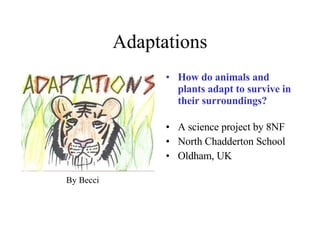
Adaptations How do animals and plants adapt to survive in their surroundings? A science project by 8NF North Chadderton School Oldham, UK By Becci
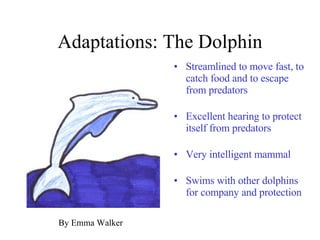
Adaptations: The Dolphin Streamlined to move fast, to catch food and to escape from predators Excellent hearing to protect itself from predators Very intelligent mammal Swims with other dolphins for company and protection By Emma Walker
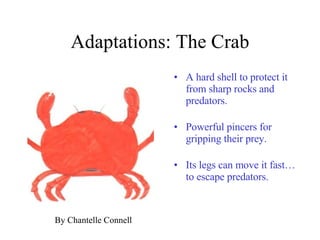
Adaptations: The Crab A hard shell to protect it from sharp rocks and predators. Powerful pincers for gripping their prey. Its legs can move it fast…to escape predators. By Chantelle Connell
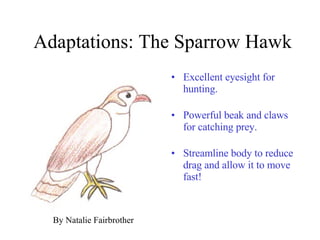
Adaptations: The Sparrow Hawk Excellent eyesight for hunting. Powerful beak and claws for catching prey. Streamline body to reduce drag and allow it to move fast! By Natalie Fairbrother
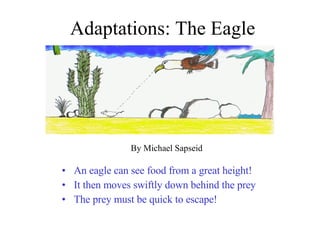
Adaptations: The Eagle An eagle can see food from a great height! It then moves swiftly down behind the prey The prey must be quick to escape! By Michael Sapseid
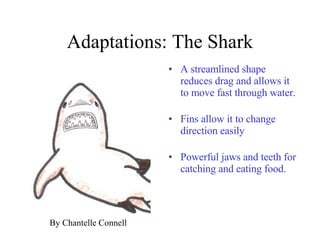
Adaptations: The Shark A streamlined shape reduces drag and allows it to move fast through water.  Fins allow it to change direction easily Powerful jaws and teeth for catching and eating food. By Chantelle Connell
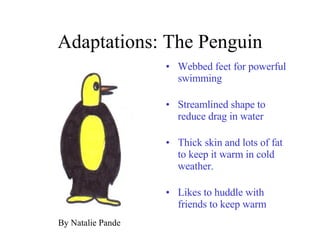
Adaptations: The Penguin Webbed feet for powerful swimming Streamlined shape to reduce drag in water Thick skin and lots of fat to keep it warm in cold weather. Likes to huddle with friends to keep warm By Natalie Pande
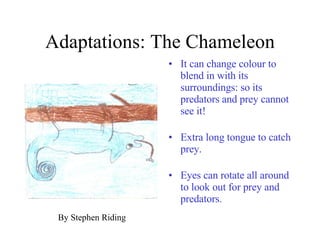
Adaptations: The Chameleon It can change colour to blend in with its surroundings: so its predators and prey cannot see it! Extra long tongue to catch prey. Eyes can rotate all around to look out for prey and predators. By Stephen Riding
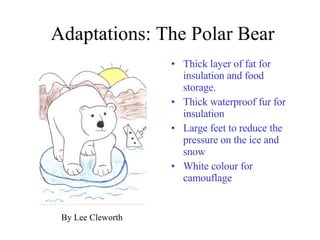
Adaptations: The Polar Bear Thick layer of fat for insulation and food storage. Thick waterproof fur for insulation Large feet to reduce the pressure on the ice and snow White colour for camouflage By Lee Cleworth
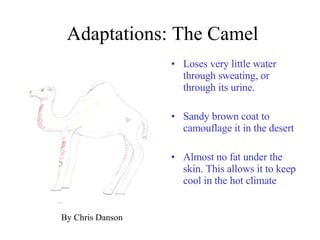
Adaptations: The Camel Loses very little water through sweating, or through its urine. Sandy brown coat to camouflage it in the desert Almost no fat under the skin. This allows it to keep cool in the hot climate By Chris Danson
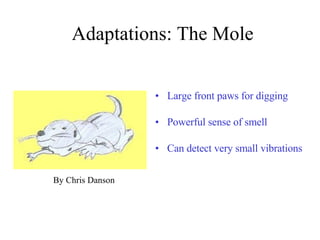
Adaptations: The Mole Large front paws for digging Powerful sense of smell Can detect very small vibrations By Chris Danson

Adaptations

  • 1.
    This presentation isalso available online at http://www.webschool.org.uk
  • 2.
    Adaptations How doanimals and plants adapt to survive in their surroundings? A science project by 8NF North Chadderton School Oldham, UK By Becci
  • 3.
    Adaptations: The DolphinStreamlined to move fast, to catch food and to escape from predators Excellent hearing to protect itself from predators Very intelligent mammal Swims with other dolphins for company and protection By Emma Walker
  • 4.
    Adaptations: The CrabA hard shell to protect it from sharp rocks and predators. Powerful pincers for gripping their prey. Its legs can move it fast…to escape predators. By Chantelle Connell
  • 5.
    Adaptations: The SparrowHawk Excellent eyesight for hunting. Powerful beak and claws for catching prey. Streamline body to reduce drag and allow it to move fast! By Natalie Fairbrother
  • 6.
    Adaptations: The EagleAn eagle can see food from a great height! It then moves swiftly down behind the prey The prey must be quick to escape! By Michael Sapseid
  • 7.
    Adaptations: The SharkA streamlined shape reduces drag and allows it to move fast through water. Fins allow it to change direction easily Powerful jaws and teeth for catching and eating food. By Chantelle Connell
  • 8.
    Adaptations: The PenguinWebbed feet for powerful swimming Streamlined shape to reduce drag in water Thick skin and lots of fat to keep it warm in cold weather. Likes to huddle with friends to keep warm By Natalie Pande
  • 9.
    Adaptations: The ChameleonIt can change colour to blend in with its surroundings: so its predators and prey cannot see it! Extra long tongue to catch prey. Eyes can rotate all around to look out for prey and predators. By Stephen Riding
  • 10.
    Adaptations: The PolarBear Thick layer of fat for insulation and food storage. Thick waterproof fur for insulation Large feet to reduce the pressure on the ice and snow White colour for camouflage By Lee Cleworth
  • 11.
    Adaptations: The CamelLoses very little water through sweating, or through its urine. Sandy brown coat to camouflage it in the desert Almost no fat under the skin. This allows it to keep cool in the hot climate By Chris Danson
  • 12.
    Adaptations: The MoleLarge front paws for digging Powerful sense of smell Can detect very small vibrations By Chris Danson