Management of acute MI
Dr. Lailmaah Habibi 3rd year trainee of KABUL RBH ( afg), 2017
 Aspirin :all pts definite or suspected MI
 𝑝2 𝑦12 inhibitors: in combine with aspirin, ‘v shown ↑ important benefits in
acute STEMI
 Preferred 𝑝2 𝑦12I : prasugrel & ticagrelor
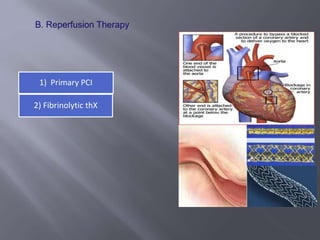
1) Primary PCI
2) Fibrinolytic thX
Drug eluting
stents
a)_PCI stenting is standard for AMI
I. DES
II. BMS
b)_ antiplatelet therapy after drug-eluting / bare metal stents
 DAPT is indicated for 1yr in all pts (medical thX & pts undergoing
revascularization irrespective of stent type
 Alteplase (rt_PA)
 Reteplase (r_PA)
 Tenecteplase (TNK_PA)
 Streptokinase (SK)
 Selection of a fibrinolytic agent :
 differences in efficacy between them are small
 principal objective is to administer a thrombolytic agent within
30 min of presentation or even during transport.
 aspirin
 Anticoagulation: continued until revascularization / duration of hospital stay or
(up to 8 days) .
 LMWH (enoxaparin or fondaparinux) is prefered to UFH
 (A) LMWH
 (B) UFH
 (c) Prophylactic Therapy Against Gastrointestinal Bleeding
 Initial attempt should be made to relieve pain vs sublingual NTG
 IV opioids provide most rapid & effective analgesia also ↓pulmonary
congestion.
 Morphine sulfate4-8 mg / meperidine 50-75 mg .
 The benefits in STEMI pts divided into: those occur immediately when the drug
is given acutely /over the long term after infarction.
 metoprolol 25-50 mg orally BID
 Carvedilol 6.25 mg BID , titrated to 25 mg BID
 NTG is the agent of choice for continued or recurrent ischemic pain
↓Bp & ↓ pulmonary congestion
 routine nitrate administration not recommended
 short- and long-term survival improvement vs ACE inhibitor therapy.
 Because substantial amounts of the survival benefit occur on the 1ST day, ACE
inhibitor Tx should commenced early in pts without hypotension, especially
with large / Ant _MI
 patients with ACE inhibitor intolerance
 valsartan 160 mg orally BID is equivalent to captopril in ↓ mortality
& ↑ expensive alternative to captopril.
 ↓ Mortality rate of pts with advanced HF
 Spironolactone 25mg/d
 Eplerenone 25 mg /d
 All pts in the abcense of CI should receive statins
 Goal LDL < 70mg/dl or 70% ↓ in LDL level
 No studies to support the routine use of CCBs
 Long- acting CCBs should generally be reserved for management of HTN
& ischemia as 2nd & 3rd line medications after beta-blockers and
nitrates.
 Smoking Cessation and lifestyle modifications.
 Aspirin, Beta Blockers and Clopidogrel will be indefinite.
 Lipid lowering medication along with diet modifications
 Source:
 CMDT 2017
 HARRISSON TEXTBOOK EDITION 19TH
 WASHINGTON MANUAL 35TH EDITION

Acute mi management

  • 1.
    Management of acuteMI Dr. Lailmaah Habibi 3rd year trainee of KABUL RBH ( afg), 2017
  • 2.
     Aspirin :allpts definite or suspected MI  𝑝2 𝑦12 inhibitors: in combine with aspirin, ‘v shown ↑ important benefits in acute STEMI  Preferred 𝑝2 𝑦12I : prasugrel & ticagrelor
  • 3.
    1) Primary PCI 2)Fibrinolytic thX Drug eluting stents
  • 4.
    a)_PCI stenting isstandard for AMI I. DES II. BMS b)_ antiplatelet therapy after drug-eluting / bare metal stents  DAPT is indicated for 1yr in all pts (medical thX & pts undergoing revascularization irrespective of stent type
  • 5.
     Alteplase (rt_PA) Reteplase (r_PA)  Tenecteplase (TNK_PA)  Streptokinase (SK)
  • 6.
     Selection ofa fibrinolytic agent :  differences in efficacy between them are small  principal objective is to administer a thrombolytic agent within 30 min of presentation or even during transport.
  • 7.
     aspirin  Anticoagulation:continued until revascularization / duration of hospital stay or (up to 8 days) .  LMWH (enoxaparin or fondaparinux) is prefered to UFH  (A) LMWH  (B) UFH  (c) Prophylactic Therapy Against Gastrointestinal Bleeding
  • 8.
     Initial attemptshould be made to relieve pain vs sublingual NTG  IV opioids provide most rapid & effective analgesia also ↓pulmonary congestion.  Morphine sulfate4-8 mg / meperidine 50-75 mg .
  • 9.
     The benefitsin STEMI pts divided into: those occur immediately when the drug is given acutely /over the long term after infarction.  metoprolol 25-50 mg orally BID  Carvedilol 6.25 mg BID , titrated to 25 mg BID
  • 10.
     NTG isthe agent of choice for continued or recurrent ischemic pain ↓Bp & ↓ pulmonary congestion  routine nitrate administration not recommended
  • 11.
     short- andlong-term survival improvement vs ACE inhibitor therapy.  Because substantial amounts of the survival benefit occur on the 1ST day, ACE inhibitor Tx should commenced early in pts without hypotension, especially with large / Ant _MI
  • 12.
     patients withACE inhibitor intolerance  valsartan 160 mg orally BID is equivalent to captopril in ↓ mortality & ↑ expensive alternative to captopril.
  • 13.
     ↓ Mortalityrate of pts with advanced HF  Spironolactone 25mg/d  Eplerenone 25 mg /d
  • 14.
     All ptsin the abcense of CI should receive statins  Goal LDL < 70mg/dl or 70% ↓ in LDL level
  • 15.
     No studiesto support the routine use of CCBs  Long- acting CCBs should generally be reserved for management of HTN & ischemia as 2nd & 3rd line medications after beta-blockers and nitrates.
  • 16.
     Smoking Cessationand lifestyle modifications.  Aspirin, Beta Blockers and Clopidogrel will be indefinite.  Lipid lowering medication along with diet modifications
  • 17.
     Source:  CMDT2017  HARRISSON TEXTBOOK EDITION 19TH  WASHINGTON MANUAL 35TH EDITION