CONTACT
Australian Council of Social Service
Locked Bag 4777, Strawberry Hills, NSW, 2012
T (02) 9310 6200 E info@acoss.org.au
www.acoss.org.au
Australian Community Sector Survey
ACOSS Paper 173
Volume 1 - National
2011
Call Maxxia on 1300 728 801 or visit
www.maxxia.com.au to find out more.
Maxxia Pty Limited ABN 39 082 449 036 Authorised Representative (No. 278683) of McMillan Shakespeare Limited (AFSL No. 299054)
Maxxia.
Helping you
maximise
your salary.
At Maxxia, we work with you to manage your salary
packaging and workplace benefits programs, to provide
real benefits and genuine savings for your employees.
MAXMKG_MECU_ad.indd 1 12/08/11 3:52 PM
Australian Community Sector Survey
2011
ACOSS Paper 173
Volume 1 - National
First published in 2011 by the
Australian Council of Social Service
Locked Bag 4777
Strawberry Hills, NSW, 2012 Australia
Email: info@acoss.org.au
Website: www.acoss.org.au
ISSN: 1326 7124
ISBN: 978 0 85871 808 1
© Australian Council of Social Service 2011
Publication is copyright. Apart from fair dealing for the purpose of private study, research, criticism, or review, as
permitted under the Copyright Act, no part may be reproduced by any process without written permission.
Enquiries should be addressed to the Publications Officer, Australian Council of Social Service, email
publications@acoss.org.au phone (02) 9310 6200.
Index v
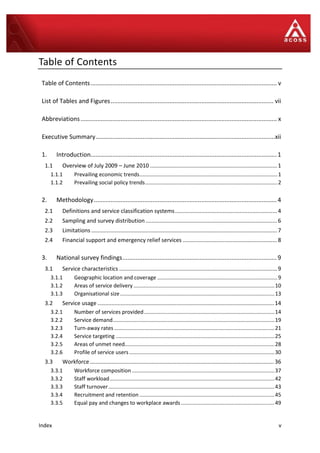
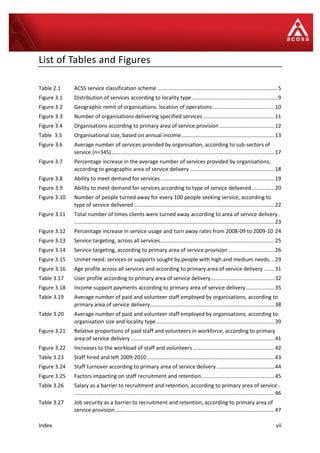
Table of Contents
Table of Contents............................................................................................................... v
List of Tables and Figures................................................................................................. vii
Abbreviations..................................................................................................................... x
Executive Summary...........................................................................................................xii
1. Introduction...............................................................................................................1
1.1 Overview of July 2009 – June 2010 ..................................................................................1
1.1.1 Prevailing economic trends.............................................................................................1
1.1.2 Prevailing social policy trends.........................................................................................2
2. Methodology.............................................................................................................4
2.1 Definitions and service classification systems..................................................................4
2.2 Sampling and survey distribution.....................................................................................6
2.3 Limitations ........................................................................................................................7
2.4 Financial support and emergency relief services .............................................................8
3. National survey findings............................................................................................9
3.1 Service characteristics ......................................................................................................9
3.1.1 Geographic location and coverage .................................................................................9
3.1.2 Areas of service delivery ...............................................................................................10
3.1.3 Organisational size........................................................................................................13
3.2 Service usage ..................................................................................................................14
3.2.1 Number of services provided........................................................................................14
3.2.2 Service demand.............................................................................................................19
3.2.3 Turn-away rates ............................................................................................................21
3.2.4 Service targeting ...........................................................................................................25
3.2.5 Areas of unmet need.....................................................................................................28
3.2.6 Profile of service users..................................................................................................30
3.3 Workforce.......................................................................................................................36
3.3.1 Workforce composition ................................................................................................37
3.3.2 Staff workload...............................................................................................................42
3.3.3 Staff turnover................................................................................................................43
3.3.4 Recruitment and retention ...........................................................................................45
3.3.5 Equal pay and changes to workplace awards ...............................................................49
vi AUSTRALIAN COMMUNITY SECTOR SURVEY VOLUME I NATIONAL
3.4 Funding and regulatory arrangements...........................................................................50
3.4.1 Sources of income.........................................................................................................51
3.4.2 Indexation .....................................................................................................................56
3.4.3 Reporting and contractual requirements .....................................................................57
3.4.4 Government policy and programs ................................................................................68
3.4.5 Tax status ......................................................................................................................70
4. Financial support and emergency relief services....................................................72
4.1 Introduction....................................................................................................................72
4.1.1 Survey questions about financial support and emergency relief services ...................73
4.2 Organisational profile.....................................................................................................73
4.2.1 Emergency relief services .............................................................................................74
4.2.2 Financial support services.............................................................................................74
4.3 Client profile ...................................................................................................................76
4.3.1 Factors contributing to client financial stress...............................................................79
4.4 Service usage and demand.............................................................................................81
4.4.1 Introduction ..................................................................................................................81
4.4.2 Usage and turn-away rates...........................................................................................81
4.4.3 Service targeting ...........................................................................................................83
4.4.4 Average waiting times for emergency relief and financial support services................83
4.4.5 Impact of external factors on the provision of financial support services ...................86
4.4.6 Impact of government initiatives or policies on service provision...............................87
4.4.7 Unmet client need ........................................................................................................88
4.5 Emergency relief and financial support services workforce ..........................................91
4.6 Referrals to and from emergency relief and financial support services ........................93
4.6.1 Referral pathways to emergency relief and financial support services........................94
4.6.2 Referrals to appropriate services..................................................................................97
5. References...............................................................................................................98
Index vii
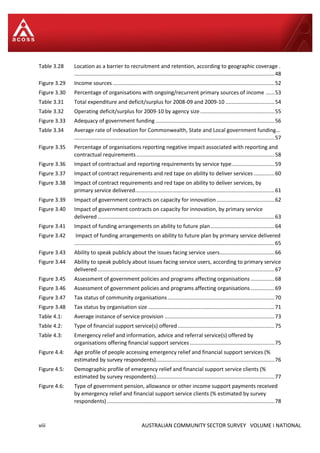
List of Tables and Figures
Table 2.1 ACSS service classification scheme .................................................................................5
Figure 3.1 Distribution of services according to locality type..........................................................9
Figure 3.2 Geographic remit of organisations: location of operations..........................................10
Figure 3.3 Number of organisations delivering specified services ................................................11
Figure 3.4 Organisations according to primary area of service provision .....................................12
Table 3.5 Organisational size, based on annual income...............................................................13
Figure 3.6 Average number of services provided by organisation, according to sub-sectors of
service (n=345)..............................................................................................................17
Figure 3.7 Percentage increase in the average number of services provided by organisations,
according to geographic area of service delivery .........................................................18
Figure 3.8 Ability to meet demand for services.............................................................................19
Figure 3.9 Ability to meet demand for services according to type of service delivered ...............20
Figure 3.10 Number of people turned away for every 100 people seeking service, according to
type of service delivered...............................................................................................22
Figure 3.11 Total number of times clients were turned away according to area of service delivery .
.......................................................................................................................................23
Figure 3.12 Percentage increase in service usage and turn away rates from 2008-09 to 2009-10 24
Figure 3.13 Service targeting, across all services.............................................................................25
Figure 3.14 Service targeting, according to primary area of service provision ...............................26
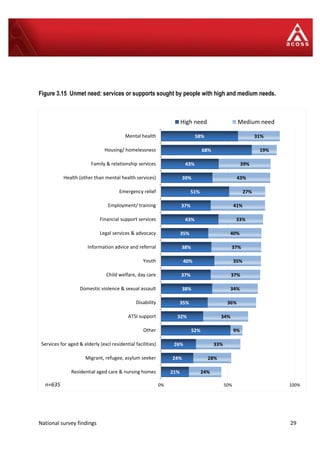
Figure 3.15 Unmet need: services or supports sought by people with high and medium needs. ..29
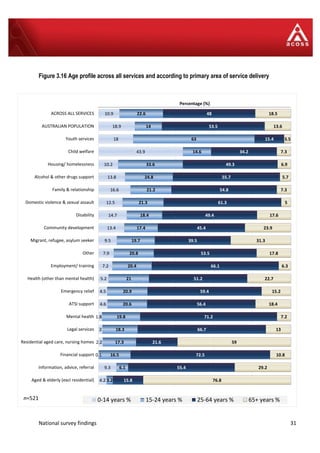
Figure 3.16 Age profile across all services and according to primary area of service delivery .......31
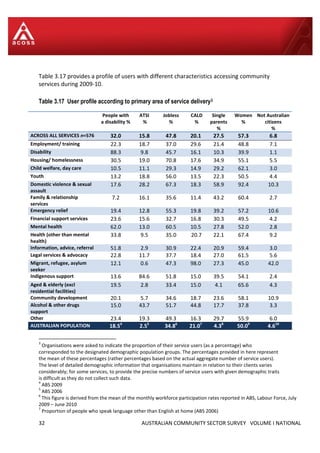
Table 3.17 User profile according to primary area of service delivery...........................................32
Figure 3.18 Income support payments according to primary area of service delivery ...................35
Table 3.19 Average number of paid and volunteer staff employed by organisations, according to
primary area of service delivery....................................................................................38
Table 3.20 Average number of paid and volunteer staff employed by organisations, according to
organisation size and locality type................................................................................39
Figure 3.21 Relative proportions of paid staff and volunteers in workforce, according to primary
area of service delivery .................................................................................................41
Figure 3.22 Increases to the workload of staff and volunteers .......................................................42
Table 3.23 Staff hired and left 2009-2010......................................................................................43
Figure 3.24 Staff turnover according to primary area of service delivery.......................................44
Figure 3.25 Factors impacting on staff recruitment and retention.................................................45
Table 3.26 Salary as a barrier to recruitment and retention, according to primary area of service..
.......................................................................................................................................46
Table 3.27 Job security as a barrier to recruitment and retention, according to primary area of
service provision ...........................................................................................................47
viii AUSTRALIAN COMMUNITY SECTOR SURVEY VOLUME I NATIONAL
Table 3.28 Location as a barrier to recruitment and retention, according to geographic coverage .
.......................................................................................................................................48
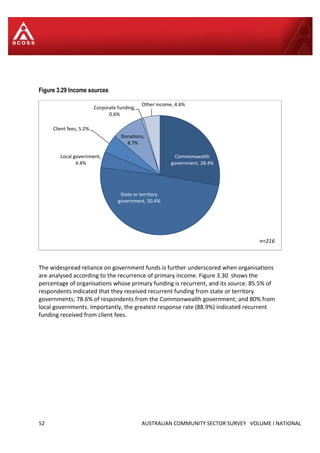
Figure 3.29 Income sources .............................................................................................................52
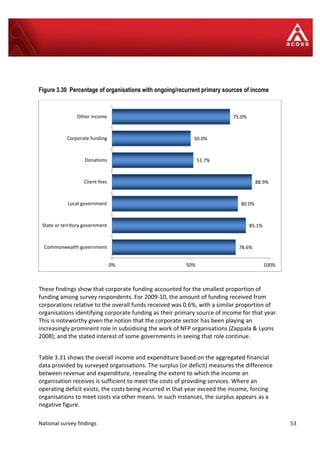
Figure 3.30 Percentage of organisations with ongoing/recurrent primary sources of income ......53
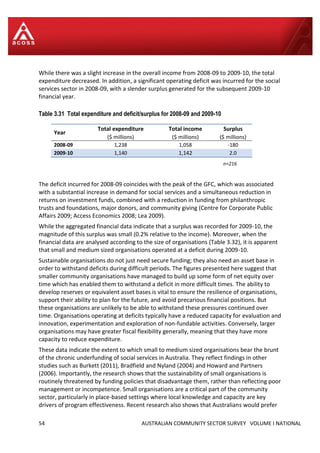
Table 3.31 Total expenditure and deficit/surplus for 2008-09 and 2009-10 .................................54
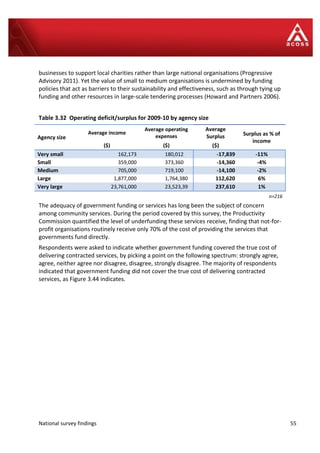
Table 3.32 Operating deficit/surplus for 2009-10 by agency size..................................................55
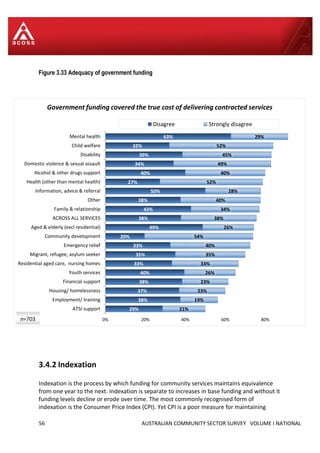
Figure 3.33 Adequacy of government funding ................................................................................56
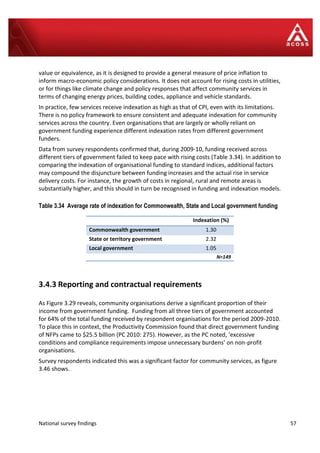
Table 3.34 Average rate of indexation for Commonwealth, State and Local government funding...
.......................................................................................................................................57
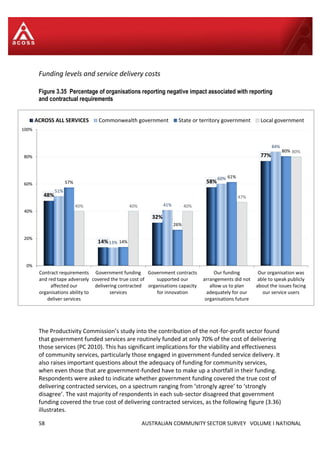
Figure 3.35 Percentage of organisations reporting negative impact associated with reporting and
contractual requirements .............................................................................................58
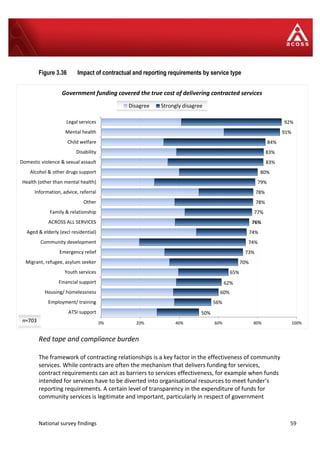
Figure 3.36 Impact of contractual and reporting requirements by service type.............................59
Figure 3.37 Impact of contract requirements and red tape on ability to deliver services ..............60
Figure 3.38 Impact of contract requirements and red tape on ability to deliver services, by
primary service delivered..............................................................................................61
Figure 3.39 Impact of government contracts on capacity for innovation.......................................62
Figure 3.40 Impact of government contracts on capacity for innovation, by primary service
delivered .......................................................................................................................63
Figure 3.41 Impact of funding arrangements on ability to future plan...........................................64
Figure 3.42 Impact of funding arrangements on ability to future plan by primary service delivered
.......................................................................................................................................65
Figure 3.43 Ability to speak publicly about the issues facing service users.....................................66
Figure 3.44 Ability to speak publicly about issues facing service users, according to primary service
delivered .......................................................................................................................67
Figure 3.45 Assessment of government policies and programs affecting organisations ................68
Figure 3.46 Assessment of government policies and programs affecting organisations ................69
Figure 3.47 Tax status of community organisations........................................................................70
Figure 3.48 Tax status by organisation size .....................................................................................71
Table 4.1: Average instance of service provision ..........................................................................73
Table 4.2: Type of financial support service(s) offered .................................................................75
Table 4.3: Emergency relief and information, advice and referral service(s) offered by
organisations offering financial support services .........................................................75
Figure 4.4: Age profile of people accessing emergency relief and financial support services (%
estimated by survey respondents)................................................................................76
Figure 4.5: Demographic profile of emergency relief and financial support service clients (%
estimated by survey respondents)................................................................................77
Figure 4.6: Type of government pension, allowance or other income support payments received
by emergency relief and financial support service clients (% estimated by survey
respondents).................................................................................................................78
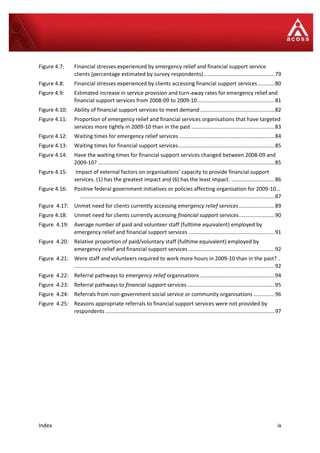
Index ix
Figure 4.7: Financial stresses experienced by emergency relief and financial support service
clients (percentage estimated by survey respondents)................................................79
Figure 4.8: Financial stresses experienced by clients accessing financial support services ...........80
Figure 4.9: Estimated increase in service provision and turn-away rates for emergency relief and
financial support services from 2008-09 to 2009-10....................................................81
Figure 4.10: Ability of financial support services to meet demand ..................................................82
Figure 4.11: Proportion of emergency relief and financial services organisations that have targeted
services more tightly in 2009-10 than in the past ........................................................83
Figure 4.12: Waiting times for emergency relief services ................................................................84
Figure 4.13: Waiting times for financial support services.................................................................85
Figure 4.14: Have the waiting times for financial support services changed between 2008-09 and
2009-10? .......................................................................................................................85
Figure 4.15: Impact of external factors on organisations’ capacity to provide financial support
services. (1) has the greatest impact and (6) has the least impact. .............................86
Figure 4.16: Positive federal government initiatives or policies affecting organisation for 2009-10...
...................................................................................................................................87
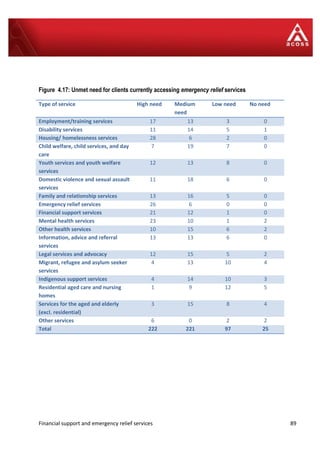
Figure 4.17: Unmet need for clients currently accessing emergency relief services........................89
Figure 4.18: Unmet need for clients currently accessing financial support services........................90
Figure 4.19: Average number of paid and volunteer staff (fulltime equivalent) employed by
emergency relief and financial support services ..........................................................91
Figure 4.20: Relative proportion of paid/voluntary staff (fulltime equivalent) employed by
emergency relief and financial support services ..........................................................92
Figure 4.21: Were staff and volunteers required to work more hours in 2009-10 than in the past?..
.......................................................................................................................................92
Figure 4.22: Referral pathways to emergency relief organisations ..................................................94
Figure 4.23: Referral pathways to financial support services...........................................................95
Figure 4.24: Referrals from non-government social service or community organisations ..............96
Figure 4.25: Reasons appropriate referrals to financial support services were not provided by
respondents ..................................................................................................................97
x AUSTRALIAN COMMUNITY SECTOR SURVEY VOLUME I NATIONAL
Abbreviations
AASB Australian Accounting Standards Board
ABS Australian Bureau of Statistics
ACOSS Australian Council of Social Service
ACSS Australian Community Sector Survey
AIHW Australian Institute of Health and Welfare
ANZSIC Australian and New Zealand Standard Industrial Classification
ASGC Australian Standard Geographical Classification
ATO Australian Taxation Office
ATSI Aboriginal and Torres Strait Islander
COAG Council of Australian Governments
CALD Culturally and linguistically diverse
DEEWR Department of Education, Employment and Workplace Relations
DGR Deductable Gift Recipient
DSP Disability Support Pension
ER Emergency relief
FaHCSIA Department of Families, Housing, Community Services and Indigenous Affairs
FBT Fringe Benefits Tax
FTE Full time equivalent
FMP Financial Management Program
GDP Gross Domestic Product
GFC Global Financial Crisis
ICNPO International Classification of Non-Profit Organisations
ICT Information and Communication Technologies
NCCS National Classification of Community Services
NFP Not-For-Profit
NGO Non-Government Organisation
NILS® No Interest Loans Scheme
PBI Public Benevolent Institution
Index xi
PC Productivity Commission
QIRC
SCOA
Queensland Industrial Relations Commission
Standard Chart of Accounts
xii AUSTRALIAN COMMUNITY SECTOR SURVEY VOLUME I NATIONAL
Executive Summary
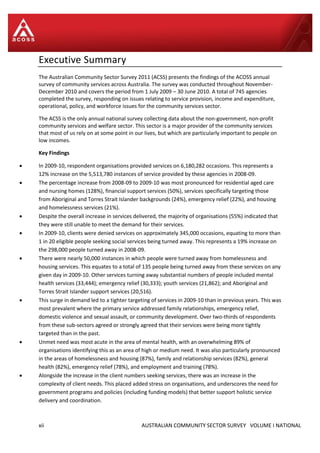
The Australian Community Sector Survey 2011 (ACSS) presents the findings of the ACOSS annual
survey of community services across Australia. The survey was conducted throughout November-
December 2010 and covers the period from 1 July 2009 – 30 June 2010. A total of 745 agencies
completed the survey, responding on issues relating to service provision, income and expenditure,
operational, policy, and workforce issues for the community services sector.
The ACSS is the only annual national survey collecting data about the non-government, non-profit
community services and welfare sector. This sector is a major provider of the community services
that most of us rely on at some point in our lives, but which are particularly important to people on
low incomes.
Key Findings
 In 2009-10, respondent organisations provided services on 6,180,282 occasions. This represents a
12% increase on the 5,513,780 instances of service provided by these agencies in 2008-09.
 The percentage increase from 2008-09 to 2009-10 was most pronounced for residential aged care
and nursing homes (128%), financial support services (50%), services specifically targeting those
from Aboriginal and Torres Strait Islander backgrounds (24%), emergency relief (22%), and housing
and homelessness services (21%).
 Despite the overall increase in services delivered, the majority of organisations (55%) indicated that
they were still unable to meet the demand for their services.
 In 2009-10, clients were denied services on approximately 345,000 occasions, equating to more than
1 in 20 eligible people seeking social services being turned away. This represents a 19% increase on
the 298,000 people turned away in 2008-09.
 There were nearly 50,000 instances in which people were turned away from homelessness and
housing services. This equates to a total of 135 people being turned away from these services on any
given day in 2009-10. Other services turning away substantial numbers of people included mental
health services (33,444); emergency relief (30,333); youth services (21,862); and Aboriginal and
Torres Strait Islander support services (20,516).
 This surge in demand led to a tighter targeting of services in 2009-10 than in previous years. This was
most prevalent where the primary service addressed family relationships, emergency relief,
domestic violence and sexual assault, or community development. Over two-thirds of respondents
from these sub-sectors agreed or strongly agreed that their services were being more tightly
targeted than in the past.
 Unmet need was most acute in the area of mental health, with an overwhelming 89% of
organisations identifying this as an area of high or medium need. It was also particularly pronounced
in the areas of homelessness and housing (87%), family and relationship services (82%), general
health (82%), emergency relief (78%), and employment and training (78%).
 Alongside the increase in the client numbers seeking services, there was an increase in the
complexity of client needs. This placed added stress on organisations, and underscores the need for
government programs and policies (including funding models) that better support holistic service
delivery and coordination.
Index xiii
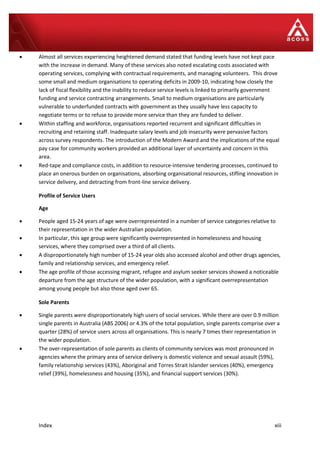
 Almost all services experiencing heightened demand stated that funding levels have not kept pace
with the increase in demand. Many of these services also noted escalating costs associated with
operating services, complying with contractual requirements, and managing volunteers. This drove
some small and medium organisations to operating deficits in 2009-10, indicating how closely the
lack of fiscal flexibility and the inability to reduce service levels is linked to primarily government
funding and service contracting arrangements. Small to medium organisations are particularly
vulnerable to underfunded contracts with government as they usually have less capacity to
negotiate terms or to refuse to provide more service than they are funded to deliver.
 Within staffing and workforce, organisations reported recurrent and significant difficulties in
recruiting and retaining staff. Inadequate salary levels and job insecurity were pervasive factors
across survey respondents. The introduction of the Modern Award and the implications of the equal
pay case for community workers provided an additional layer of uncertainty and concern in this
area.
 Red-tape and compliance costs, in addition to resource-intensive tendering processes, continued to
place an onerous burden on organisations, absorbing organisational resources, stifling innovation in
service delivery, and detracting from front-line service delivery.
Profile of Service Users
Age
 People aged 15-24 years of age were overrepresented in a number of service categories relative to
their representation in the wider Australian population.
 In particular, this age group were significantly overrepresented in homelessness and housing
services, where they comprised over a third of all clients.
 A disproportionately high number of 15-24 year olds also accessed alcohol and other drugs agencies,
family and relationship services, and emergency relief.
 The age profile of those accessing migrant, refugee and asylum seeker services showed a noticeable
departure from the age structure of the wider population, with a significant overrepresentation
among young people but also those aged over 65.
Sole Parents
 Single parents were disproportionately high users of social services. While there are over 0.9 million
single parents in Australia (ABS 2006) or 4.3% of the total population, single parents comprise over a
quarter (28%) of service users across all organisations. This is nearly 7 times their representation in
the wider population.
 The over-representation of sole parents as clients of community services was most pronounced in
agencies where the primary area of service delivery is domestic violence and sexual assault (59%),
family relationship services (43%), Aboriginal and Torres Strait Islander services (40%), emergency
relief (39%), homelessness and housing (35%), and financial support services (30%).
xiv AUSTRALIAN COMMUNITY SECTOR SURVEY VOLUME I NATIONAL
People from Aboriginal and Torres Strait Islander backgrounds
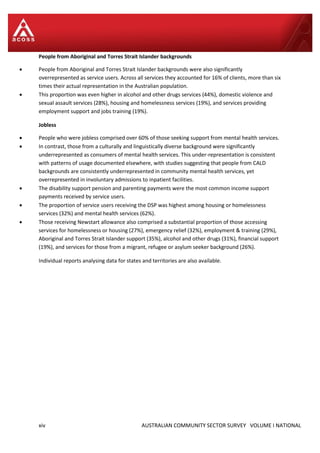
 People from Aboriginal and Torres Strait Islander backgrounds were also significantly
overrepresented as service users. Across all services they accounted for 16% of clients, more than six
times their actual representation in the Australian population.
 This proportion was even higher in alcohol and other drugs services (44%), domestic violence and
sexual assault services (28%), housing and homelessness services (19%), and services providing
employment support and jobs training (19%).
Jobless
 People who were jobless comprised over 60% of those seeking support from mental health services.
 In contrast, those from a culturally and linguistically diverse background were significantly
underrepresented as consumers of mental health services. This under-representation is consistent
with patterns of usage documented elsewhere, with studies suggesting that people from CALD
backgrounds are consistently underrepresented in community mental health services, yet
overrepresented in involuntary admissions to inpatient facilities.
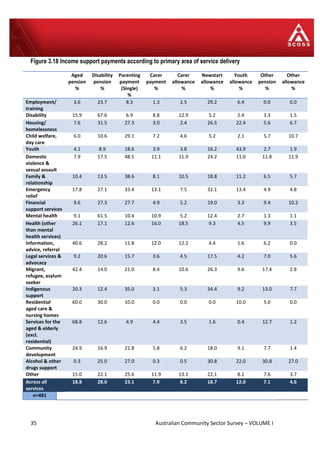
 The disability support pension and parenting payments were the most common income support
payments received by service users.
 The proportion of service users receiving the DSP was highest among housing or homelessness
services (32%) and mental health services (62%).
 Those receiving Newstart allowance also comprised a substantial proportion of those accessing
services for homelessness or housing (27%), emergency relief (32%), employment & training (29%),
Aboriginal and Torres Strait Islander support (35%), alcohol and other drugs (31%), financial support
(19%), and services for those from a migrant, refugee or asylum seeker background (26%).
Individual reports analysing data for states and territories are also available.
Introduction 1
1. Introduction
1.1 Overview of July 2009 – June 2010
1.1.1 Prevailing economic trends
The 2009 Federal Budget was handed down amid a deteriorating global economy and the
first serious downturn in the Australian economy since the early 1990s. During the previous
financial year, there had been significant deterioration in the budget due to falls in taxation
revenue and additional expenses arising from the government’s policy response to the
Global Financial Crisis (GFC). For example, spending included in the stimulus package
introduced by the Rudd Government in the immediate aftermath of the GFC resulted in
$98.2 billion in additional federal spending between 2008-09 and 2011-12.
At the outset of the 2009 financial year, economists predicted that Australia would
experience a technical recession (defined as two consecutive quarters of negative growth);
and the May budget predicted that unemployment would reach a peak of 8.5% in the June
quarter of 2011. Over the course of the year, the strength of the Australian economy
surprised most commentators: technical recession was avoided; the Australian economy
grew by almost 1.5%; and the unemployment rate peaked at 5.6%. The strength of the
Australian banking sector and neighbouring Asian economies such as China, as well as the
Federal Government’s stimulus package, which continued throughout the 2009-10 financial
year, were seen as largely responsible for the resilience of the Australian economy.
Despite the Government’s swift response and the resilience of the Australian economy, the
GFC continued to impact the Australian economy and many households throughout 2009-
10. For example, the relatively low peak in the unemployment rate was achieved in part by
increases in part-time and casual work as employers chose to cut working hours instead of
shedding jobs. Reduced working hours and a decline in private sector salaries resulted in
reduced incomes for many individuals and families. As a result, consumer and business
confidence remained fragile throughout the year, with many households opting to pay
down debts and boost their savings in response to the GFC.
Low-income and unemployed Australians were badly affected by the GFC. Young people and
sole parents were particularly hard hit, competing for jobs in the face of unemployment
rates of 14% and 10% respectively. As was the case with previous recessions, the level of
long-term unemployment also rose. In 2009-10, over half of the 600,000 people on the
Newstart Allowance had received it for more than 12 months, and approximately a third
2 AUSTRALIAN COMMUNITY SECTOR SURVEY VOLUME I NATIONAL
had received it for more than 2 years (ACOSS 2010). These groups were also excluded from
the income support payment increases awarded to aged and disability pensioners in the
2009 budget, discussed further below.
1.1.2 Prevailing social policy trends
In 2009 and 2010, the Federal social policy agenda included:
 welfare reform, including changes to income support payments and the national
rollout of income management;
 a heightened emphasis on workforce participation; and
 reduced expenditure in the aftermath of the GFC. In this context there was
increasing community concern about disproportionate levels of government
expenditure across different low-income groups and for social services.
Social policy measures introduced in the 2009 Federal Budget provide insight into the
federal government’s social policy agenda. The Budget was cautious in the area of social
policy as the government attempted to manage the tension between increased spending in
some areas, decreased spending in others, and continued implementation of significant
welfare reforms, such as the further rollout of income management.
Additional areas of policy reform included the Review of Pensions (Harmer review) and the
Australia’s Future Tax System review (Henry review); both processes which were underway
during the period of this survey and which generated considerable debate about social as
well as economic policy reform. Climate change and energy efficiency were also key areas of
policy review across the country. Federal and state government schemes sought to mitigate
the impact of rising utility costs for low-income households, for example, the Greenhouse
Gas Reduction Scheme in NSW. The development and eventual delay of implementation of
the Carbon Pollution Reduction Scheme from July 2010 to July 2011 was also a key policy
issue at this time.
In recognition of the particular impact the GFC had on people on low-incomes and the
unemployed in Australia, the Government targeted significant stimulus spending at these
groups. For example, funding for the FaHCSIA administered Financial Management Program
(FMP) was increased from $50 million at the start of 2008-09 to $105 million in 2009-10.
This included the doubling of emergency relief funding over two years, with an extra $80.4
million from 1 March 2009 - 30 June 2011, and provision of an additional $50 million over
two years from 1 July 2009 for financial literacy and support programs such as matched
savings accounts and no interest loans. In 2009-10, a further $12 million was provided to
existing emergency relief services to support particularly vulnerable client groups such as
the homeless and recent humanitarian arrivals.
There were also welcome increases to the single age, disability support and carer pension
payments, resulting in an additional $33 per week to base rate payments for these income
support payments. Unfortunately these increases to some income support recipients did not
flow through to recipients of the unemployment benefit Newstart, sole parenting or youth
Index 3
allowance payments. This led to an expanding gap between pension and allowance
payments for those reliant on income support. Other changes at the time addressed
eligibility for Disability Support Pension payments, and changes to Family Tax Benefit
payments.
There was increased expenditure to support Aboriginal and Torres Strait Islander people,
but criticism focused on the targeting of spending and overall shortfalls in that expenditure,
particularly in health. For example, there were increases in Government expenditure for
‘close the gap’ initiatives; however these focused on funding for the Northern Territory.
A number of changes to government expenditure on health had an impact for people on low
incomes in Australia. For example, Medicare low income thresholds were increased for
individuals and for families, with additional amounts for each dependent child or student.
Changes to the Medicare Benefits Schedule included caps introduced on Medicare benefits
payable under the Extended Medicare Safety Net; and there were some additional high-cost
drugs added to the Pharmaceutical Benefits Scheme.
Despite areas of increased spending to assist those worst affected by the GFC, community
welfare organisations struggled to meet the increased demand for assistance experienced
during and after the crisis. Welfare agencies reported increased demand for services across
the board, with emergency relief providers noting a marked increase in the numbers of
people requesting assistance for the first time, including employed people on low fixed
incomes and those struggling to meet mortgage repayments and other housing costs.
Cost of living pressures also continued to have a significant impact on low-income
households. Low- and middle-income Australians experienced ongoing financial pressure
throughout the 2009-10 financial year, due partly to the high and growing cost of housing
and the continuing shift towards private funding for essential services such as health and
education. For example, over the past 10 years housing and privately funded health costs
have risen by 58% and 63% respectively. Rising rental costs have also placed particular
financial pressures on low- and middle-income families unable to purchase their own
homes. Over the past 5 years, the median private rent for a 2 bedroom flat in Sydney has
risen from $280 to $420 per week; in Melbourne, from $209 to $340. As a result, over a
million low-income households experienced housing stress in 2009-10 with housing costs
exceeding 30% of household income. Despite these rising housing costs, $750 million was
cut from the stimulus budget for social housing at this time.
Utilities costs also increased significantly in recent years. For example, the ABS reported that
over the year to March 2010, electricity prices increased by 18.2%, water and sewerage by
14% and gas and other household fuels by 3.6%. For households on low and fixed incomes,
these costs are significant and can lead to an increased risk of under-consumption and
disconnection, which can have significant health and financial ramifications of their own.
4 AUSTRALIAN COMMUNITY SECTOR SURVEY VOLUME I NATIONAL
2. Methodology
2.1 Definitions and service classification systems
Currently there is no national data standard for collecting information about not-for-profit
(NFP) organisations, with different classificatory schemes used by different national and
international research bodies. Classification schemes commonly used in Australia include
the Australian Institute of Health and Welfare’s (AIHW) National Classification of Community
Services (NCCS); the ABS classification systems; the Australia and New Zealand Standard
Industry Classification (ANZSIC) community services definition; and the International
Classification of Non-Profit Organisations (ICNPO) scheme.
The ABS classifies community services as: residential aged-care services; child-care services;
and other social assistance services, including employment and disability services and policy
and advocacy work. By contrast the ICNPO classifies not-for-profit social services according
to the following categories: child welfare, child services and day care; youth services and
youth welfare; family and relationship services; disability services; services for the elderly;
self-help and other personal social services; emergency relief and disaster control;
temporary shelters; refugee assistance; income support and maintenance; and material
assistance (PC 2010, 65). In addition, the ICNPO defines not-for-profit health services as:
hospitals and rehabilitation; nursing homes; mental health and crisis intervention; and other
health services such as public health education (PC 2010, 65). Finally, the NCCS classifies
community services as: personal and social support; support for children, families and
carers; training, vocational rehabilitation and employment; financial and material
assistance; residential care and supported accommodation; corrective services; service and
community development and support; and other community service activities. Each
category of service within the NCCS includes numerous subcategories that further define
areas of specific service provision.
Each of these schemes differs in the way it classifies non-profit community services and has
certain limitations in terms of collecting accurate and comprehensive data about a sector as
diverse as the Australian community services sector. For example, data coded using the
ANZSIC classification does not allow the subsectors of the community services sector to be
identified. Similarly, the ICNPO does not reflect the way community services are structured
and defined domestically. A clear example of this is the definition of refugee services. The
ICNPO defines refugee services and those provided to internally displaced people and
inhabitants of UN refugee camps; where as in Australia refugee services typically comprise
settlement and other support services provided to people who have been recognised as
refugees and resettled in Australia.
Index 5
There are inherent difficulties in establishing a definitive classificatory scheme which
identifies organisations according to service type. In addition, many organisations are
typically a composite of services and supports. The typology adopted in ACSS was more
exhaustive than the classification systems outlined above, particularly the ABS and AIHW
schema, which did not enable the capture of data specific to particular areas, such as
employment, housing, health, aged care and child care services. Grouping organisations
according to their principal activity – which was done throughout the data analysis below –
circumvents this to some extent, but nevertheless is a compromise. Even then, some survey
respondents found identifying a primary area of service provision difficult, despite the
expanded classification scheme adopted by the ACSS.
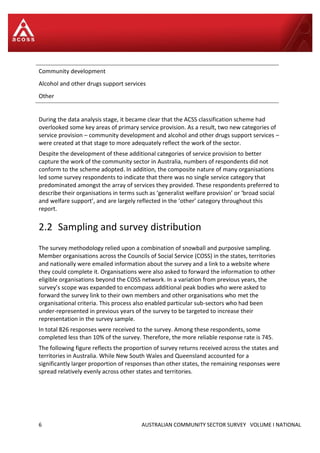
The table below identifies and defines the classification scheme employed in the 2011 ACSS.
Table 2.1 ACSS service classification scheme
Service Type
Employment/training services
Disability services
Housing/homelessness services
Child welfare, child services and day care
Domestic violence and sexual assault
Family and relationship services
Emergency relief services for those experiencing financial crisis (eg. Provision of food,
clothing, transport, utilities vouchers)
Financial support services (eg. Financial counselling, financial literacy education, NILS®,
money management services and problem gambling)
Mental health
Other health services
Information, advice and referral services
Legal services and advocacy
Migrant, refugee and asylum seeker services
Indigenous support services
Residential aged care and nursing homes
Services for the aged and elderly (excluding residential facilities)
6 AUSTRALIAN COMMUNITY SECTOR SURVEY VOLUME I NATIONAL
Community development
Alcohol and other drugs support services
Other
During the data analysis stage, it became clear that the ACSS classification scheme had
overlooked some key areas of primary service provision. As a result, two new categories of
service provision – community development and alcohol and other drugs support services –
were created at that stage to more adequately reflect the work of the sector.
Despite the development of these additional categories of service provision to better
capture the work of the community sector in Australia, numbers of respondents did not
conform to the scheme adopted. In addition, the composite nature of many organisations
led some survey respondents to indicate that there was no single service category that
predominated amongst the array of services they provided. These respondents preferred to
describe their organisations in terms such as ‘generalist welfare provision’ or ‘broad social
and welfare support’, and are largely reflected in the ‘other’ category throughout this
report.
2.2 Sampling and survey distribution
The survey methodology relied upon a combination of snowball and purposive sampling.
Member organisations across the Councils of Social Service (COSS) in the states, territories
and nationally were emailed information about the survey and a link to a website where
they could complete it. Organisations were also asked to forward the information to other
eligible organisations beyond the COSS network. In a variation from previous years, the
survey’s scope was expanded to encompass additional peak bodies who were asked to
forward the survey link to their own members and other organisations who met the
organisational criteria. This process also enabled particular sub-sectors who had been
under-represented in previous years of the survey to be targeted to increase their
representation in the survey sample.
In total 826 responses were received to the survey. Among these respondents, some
completed less than 10% of the survey. Therefore, the more reliable response rate is 745.
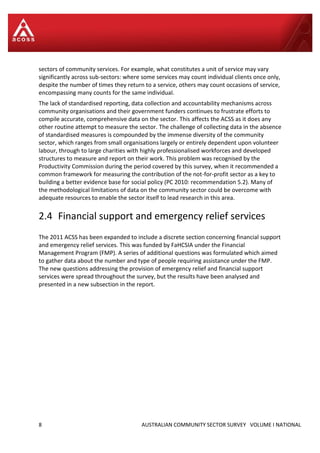
The following figure reflects the proportion of survey returns received across the states and
territories in Australia. While New South Wales and Queensland accounted for a
significantly larger proportion of responses than other states, the remaining responses were
spread relatively evenly across other states and territories.
Index 7
Figure 2.1 Survey returns by State/Territory
2.3 Limitations
There are a number of limitations to the data presented in this report. Firstly, the
representativeness of the sample depends upon the self-definition of organisations
according to specified criteria. Boundaries around who is included within the community
sector are not precise or sharply delineated, and similar such caveats apply to the definition
of sub-sector boundaries. These limitations are inherent in the sector itself and are
therefore reflected in any efforts to analyse and research the community sector, including
through the methodology and conduct of this survey.
Secondly, there is a high variability in the response rate to questions within this survey
among respondents. This means that many of the data presented are indicative rather than
representative. The survey analysis has taken account of this as much as possible, for
instance by omitting questions from the report’s analysis where the response rate was
insufficient.
One of the reasons for this high variability in response rates is due to the limited capacity of
many community services to collect, compile and collate the data requested by the survey.
As a result, certain information is based on considered estimates from respondents rather
than rigorous and precise data collection at an organisational level. This also has an impact
on the comparability of data collected by individual organisations within and across sub-
ACT
70
NSW
218
NT
40QLD
133
SA
85
TAS
45
VIC
60
WA
95
n=746
8 AUSTRALIAN COMMUNITY SECTOR SURVEY VOLUME I NATIONAL
sectors of community services. For example, what constitutes a unit of service may vary
significantly across sub-sectors: where some services may count individual clients once only,
despite the number of times they return to a service, others may count occasions of service,
encompassing many counts for the same individual.
The lack of standardised reporting, data collection and accountability mechanisms across
community organisations and their government funders continues to frustrate efforts to
compile accurate, comprehensive data on the sector. This affects the ACSS as it does any
other routine attempt to measure the sector. The challenge of collecting data in the absence
of standardised measures is compounded by the immense diversity of the community
sector, which ranges from small organisations largely or entirely dependent upon volunteer
labour, through to large charities with highly professionalised workforces and developed
structures to measure and report on their work. This problem was recognised by the
Productivity Commission during the period covered by this survey, when it recommended a
common framework for measuring the contribution of the not-for-profit sector as a key to
building a better evidence base for social policy (PC 2010: recommendation 5.2). Many of
the methodological limitations of data on the community sector could be overcome with
adequate resources to enable the sector itself to lead research in this area.
2.4 Financial support and emergency relief services
The 2011 ACSS has been expanded to include a discrete section concerning financial support
and emergency relief services. This was funded by FaHCSIA under the Financial
Management Program (FMP). A series of additional questions was formulated which aimed
to gather data about the number and type of people requiring assistance under the FMP.
The new questions addressing the provision of emergency relief and financial support
services were spread throughout the survey, but the results have been analysed and
presented in a new subsection in the report.
National survey findings 9
3. National survey findings
3.1 Service characteristics
The non-government, NFP social services sector comprises an enormous diversity of
organisations. This section characterises the surveyed organisations according to the type of
services they deliver, their size, and the location and geographic remit of their operations. It
thereby provides a framework for the analysis that follows in subsequent sections.
3.1.1 Geographic location and coverage
Using the Australian Standard Geographical Classification (ASGC) schema (ABS 2010),
organisations were asked to identify their locality type according to the degree of rurality or
remoteness associated with their area(s) of operation.
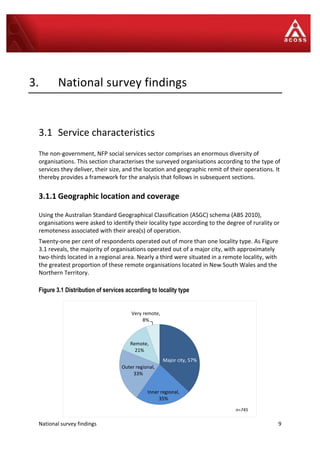
Twenty-one per cent of respondents operated out of more than one locality type. As Figure
3.1 reveals, the majority of organisations operated out of a major city, with approximately
two-thirds located in a regional area. Nearly a third were situated in a remote locality, with
the greatest proportion of these remote organisations located in New South Wales and the
Northern Territory.
Figure 3.1 Distribution of services according to locality type
Major city, 57%
Inner regional,
35%
Outer regional,
33%
Remote,
21%
Very remote,
8%
n=745
10 AUSTRALIAN COMMUNITY SECTOR SURVEY VOLUME I NATIONAL
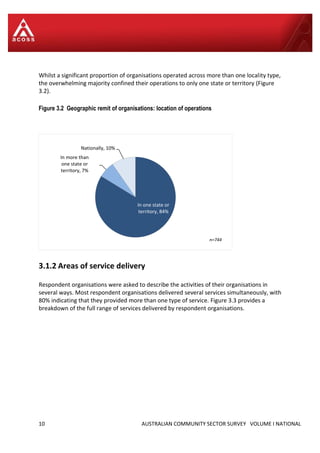
Whilst a significant proportion of organisations operated across more than one locality type,
the overwhelming majority confined their operations to only one state or territory (Figure
3.2).
Figure 3.2 Geographic remit of organisations: location of operations
3.1.2 Areas of service delivery
Respondent organisations were asked to describe the activities of their organisations in
several ways. Most respondent organisations delivered several services simultaneously, with
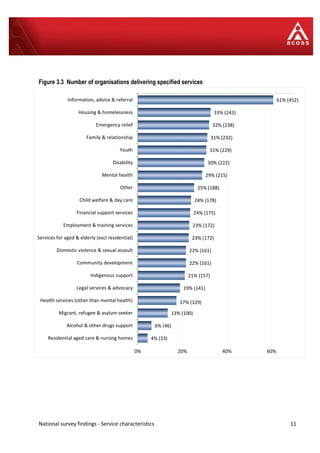
80% indicating that they provided more than one type of service. Figure 3.3 provides a
breakdown of the full range of services delivered by respondent organisations.
In one state or
territory, 84%
In more than
one state or
territory, 7%
Nationally, 10%
n=744
National survey findings - Service characteristics 11
61% (452)
33% (243)
32% (238)
31% (232)
31% (229)
30% (222)
29% (215)
25% (188)
24% (178)
24% (175)
23% (172)
23% (172)
22% (161)
22% (161)
21% (157)
19% (141)
17% (129)
13% (100)
6% (46)
4% (33)
0% 20% 40% 60%
Information, advice & referral
Housing & homelessness
Emergency relief
Family & relationship
Youth
Disability
Mental health
Other
Child welfare & day care
Financial support services
Employment & training services
Services for aged & elderly (excl residential)
Domestic violence & sexual assault
Community development
Indigenous support
Legal services & advocacy
Health services (other than mental health)
Migrant, refugee & asylum seeker
Alcohol & other drugs support
Residential aged care & nursing homes
Figure 3.3 Number of organisations delivering specified services
12 AUSTRALIAN COMMUNITY SECTOR SURVEY VOLUME I NATIONAL
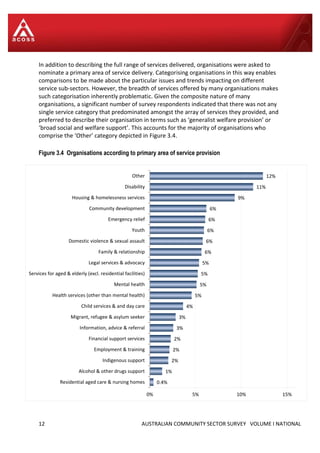
In addition to describing the full range of services delivered, organisations were asked to
nominate a primary area of service delivery. Categorising organisations in this way enables
comparisons to be made about the particular issues and trends impacting on different
service sub-sectors. However, the breadth of services offered by many organisations makes
such categorisation inherently problematic. Given the composite nature of many
organisations, a significant number of survey respondents indicated that there was not any
single service category that predominated amongst the array of services they provided, and
preferred to describe their organisation in terms such as ‘generalist welfare provision’ or
‘broad social and welfare support’. This accounts for the majority of organisations who
comprise the ‘Other’ category depicted in Figure 3.4.
Figure 3.4 Organisations according to primary area of service provision
0.4%
1%
2%
2%
2%
3%
3%
4%
5%
5%
5%
5%
6%
6%
6%
6%
6%
9%
11%
12%
0% 5% 10% 15%
Residential aged care & nursing homes
Alcohol & other drugs support
Indigenous support
Employment & training
Financial support services
Information, advice & referral
Migrant, refugee & asylum seeker
Child services & and day care
Health services (other than mental health)
Mental health
Services for aged & elderly (excl. residential facilities)
Legal services & advocacy
Family & relationship
Domestic violence & sexual assault
Youth
Emergency relief
Community development
Housing & homelessness services
Disability
Other
National survey findings - Service characteristics 13
3.1.3 Organisational size
Within the NFP sector, organisational size has emerged as a policy issue of increasing
prominence and debate. There are increasing concerns about the capacity of smaller
organisations to compete with larger organisations in securing government funding; as well
as the relationship between size and impact, sustainability or efficiency (Wiseman et al
2009); and the likelihood of smaller organisations being able to engage in advocacy
effectively. It is also recognised that the financial needs and realities facing organisations
may vary according to their size (Burkett 2011). Despite this range of concerns, there are
few empirical studies that document the scope and implications of these issues.
The 2008 Senate Standing Committee on Disclosure Regimes for Charities and NFP
Organisations recommended that a uniform terminology referring to the size of
organisations be adopted. However, there is still no standard framework for defining the
size of NFP organisations. Some states have developed typologies that include both income
and assets; others consider only income. The size of an organisation’s workforce and the
scope of its social impact are additional characteristics that can be used to define
organisational size (Burkett 2011).
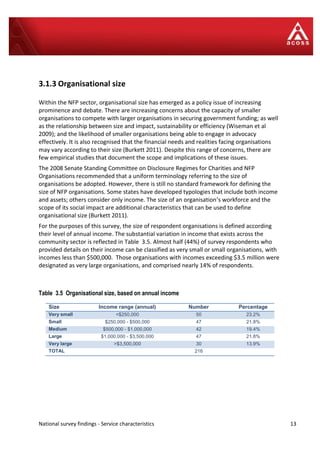
For the purposes of this survey, the size of respondent organisations is defined according
their level of annual income. The substantial variation in income that exists across the
community sector is reflected in Table 3.5. Almost half (44%) of survey respondents who
provided details on their income can be classified as very small or small organisations, with
incomes less than $500,000. Those organisations with incomes exceeding $3.5 million were
designated as very large organisations, and comprised nearly 14% of respondents.
Table 3.5 Organisational size, based on annual income
Size Income range (annual) Number Percentage
Very small <$250,000 50 23.2%
Small $250,000 - $500,000 47 21.8%
Medium $500,000 - $1,000,000 42 19.4%
Large $1,000,000 - $3,500,000 47 21.8%
Very large >$3,500,000 30 13.9%
TOTAL 216
14 AUSTRALIAN COMMUNITY SECTOR SURVEY VOLUME I NATIONAL
3.2 Service usage
A fundamental challenge for community sector organisations is the capacity to meet the
demand for services, while at the same time managing funding and resourcing constraints.
Monitoring shifts in the scope and complexity of client needs is also critical to mapping and
understanding trends in the use of services across the community sector.
This section examines patterns in service usage, revealing not only a significant increase in
demand across sub-sectors, but also a growth in the numbers of people turned away from
services and an increase in the proportion of people presenting with multiple and complex
needs.
The precise causes and implications of these findings cannot be directly inferred from the
survey findings. However, the heightened demand for services is observed amongst
organisations servicing some of the most financially vulnerable and socially disadvantaged
segments of the community. This finding is consistent with deepening social and economic
inequalities, suggesting that the benefits of economic recovery from the GFC have been
unevenly distributed. In addition, the difficulties many organisations report in meeting
demand, combined with the increasing complexity of problems service users experience,
pose critical short- and long-term policy challenges. With high levels of unmet need, many
people are unable to access essential social assistance or support – a situation which
ultimately risks reinforcing and compounding the extent and complexity of social
disadvantages. The inability to meet the demand for services, combined with a trend
towards more narrowly targeted services, fosters a service system based on episodic
support and ‘band-aid’ interventions, negating preventative approaches or social policies
based on early-intervention.
The patterns in service usage detailed in this section therefore have important implications
not only in terms of identifying the operational pressures facing individual organisations, but
also indicating potential areas of long term social and economic costs as the needs of an
increasing number of people seeking social services remain unmet.
3.2.1 Number of services provided
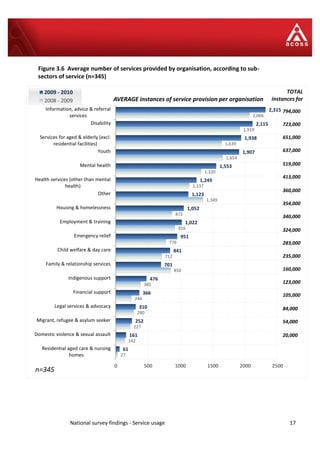
In 2009-10, respondent organisations provided services on 6,180,282 occasions. This
represents a 12% increase on the 5,513,780 instances of service provided by these agencies
in 2008-09. The number of services provided in different areas of service delivery is
illustrated by Figure 3.6, which depicts the average number of times individual organisations
provided a service in 2008-09 and 2009-10. The column on the right of this figure shows the
total number of times services were provided in specific service areas in 2009-10. Some
caution should be exercised in comparing the number of services provided across different
categories of service delivery, as what constitutes an instance of ‘service’ provision (and the
resources each ‘instance’ entails) depends on the type and nature of the service delivered
(see Section 2.3 above).
National survey findings 15
Almost all areas of service delivery experienced an increase in the number of services
provided. The percentage increase from 2008-09 to 2009-10 was most pronounced for
residential aged care and nursing homes (128%), financial support services (50%), services
specifically targeting those from Aboriginal and Torres Strait Islander backgrounds (24%),
emergency relief (22%), and housing and homelessness services (21%). The only two sub-
sectors which experienced a decline in the instances of service provision were family and
relationship services, and the cluster of organisations whose primary service fell under the
category ‘other’.
Areas of service which recorded the highest average number of services per organisation,
and the largest total number of services during 2009-10, were information, advice and
referral; disability; services for the aged and elderly; and youth services. It should be noted
that, while the provision of information, advice and referrals accounted for the greatest
number of services, in most instances this was not the primary focus of organisations, but
rather occurred in conjunction with other core services. The only two sub-sectors
experiencing a decline in the instances of service provision were family and relationship
services, and the cluster of organisations whose primary service fell under the category
‘other’.
While it is beyond the scope of this report to determine precisely the factors causing the
decline in these sub-sectors, there are a range of factors that are likely to have had an
impact, particularly in the area of family relationship services. Significant variation was
observed at a state and territory level, which may account for some of the particular trends
observed in this sector. There may also be definitional issues within this sub-sector, for
example, state-funded organisations nominating family relationship services as their
primary area of service although they deliver child welfare services. However, these are only
partial explanations as the Commonwealth still accounted for the highest proportion of
funding to these services. Services at this time were also reporting a discernable increase in
the complexity of needs presented by their clients, which corresponded with a changing
policy context that emphasised people with multiple disadvantages or who met certain
‘vulnerability criteria’ as a focus for directing resources and services. As more complex
needs typically require more time and resource-intensive services, this may contribute to
fewer clients being serviced, while at the same time resulting in a heightening of demand
and increased number of people turned away. Other policy changes underway at the time
may also have had an impact, such as the review of the Federally-funded Family
Relationship Services program.
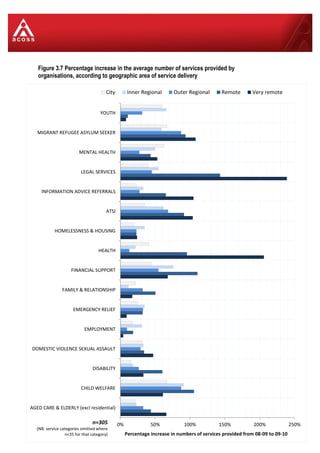
In addition to an overall growth in the number of services provided across the sector, the
growth in specific sub-sectors has occurred at a different rate depending on the locality
type. The variation between remote, regional and metropolitan areas can be seen in Figure
3.7, which shows the percentage increase in the number of services provided according to
the geographical area of service delivery. As this graph indicates, organisations in remote
and regional areas experienced a pronounced and disproportionate growth in the services
provided across a range of areas, including health services, legal services and legal advocacy,
financial support services, youth services, domestic violence and sexual assault, disability,
child welfare, support services for people from Aboriginal and Torres Strait Islander
16 AUSTRALIAN COMMUNITY SECTOR SURVEY VOLUME I NATIONAL
backgrounds, and services for asylum seekers, migrants and those with refugee
backgrounds.
In summary, these findings indicate that, within a twelve-month period, many social services
experienced substantial increases in the number of services they provided. This rapid
growth in the volume of services delivered has significant implications in terms of
organisational and overall sector capacity. Without a commensurate increase in the level of
funds available and the number of staff required to deliver services, organisations may be
subject to significant pressures, stretching the existing workforce and organisational
resources to levels that are unsustainable.
National survey findings - Service usage 17
Figure 3.6 Average number of services provided by organisation, according to sub-
sectors of service (n=345)
27
142
227
280
244
385
850
712
776
916
872
1,349
1,137
1,320
1,654
1,639
1,919
2,066
61
161
252
310
366
476
701
841
951
1,022
1,052
1,123
1,249
1,553
1,907
1,938
2,115
2,315
0 500 1000 1500 2000 2500
Residential aged care & nursing
homes
Domestic violence & sexual assault
Migrant, refugee & asylum seeker
Legal services & advocacy
Financial support
Indigenous support
Family & relationship services
Child welfare & day care
Emergency relief
Employment & training
Housing & homelessness
Other
Health services (other than mental
health)
Mental health
Youth
Services for aged & elderly (excl.
residential facilities)
Disability
Information, advice & referral
services
AVERAGE instances of service provision per organisation
2009 - 2010
2008 - 2009
794,000
723,000
651,000
637,000
519,000
413,000
360,000
354,000
340,000
324,000
283,000
235,000
160,000
123,000
105,000
84,000
54,000
20,000
TOTAL
instances for
n=345
Australian Community Sector Survey – VOLUME I 18
Figure 3.7 Percentage increase in the average number of services provided by
organisations, according to geographic area of service delivery
0% 50% 100% 150% 200% 250%
AGED CARE & ELDERLY (excl residential)
CHILD WELFARE
DISABILITY
DOMESTIC VIOLENCE SEXUAL ASSAULT
EMPLOYMENT
EMERGENCY RELIEF
FAMILY & RELATIONSHIP
FINANCIAL SUPPORT
HEALTH
HOMELESSNESS & HOUSING
ATSI
INFORMATION ADVICE REFERRALS
LEGAL SERVICES
MENTAL HEALTH
MIGRANT REFUGEE ASYLUM SEEKER
YOUTH
Percentage increase in numbers of services provided from 08-09 to 09-10
City Inner Regional Outer Regional Remote Very remote
n=305
(NB. service categories omitted where
n<35 for that category)
National survey findings - Service usage 19
Strongly agree,
6%
Agree, 28%
Neither agree nor
disagree, 11%
Disagree, 37%
Strongly
disagree, 18%
Our organisation was able to meet the demand for our services
3.2.2 Service demand
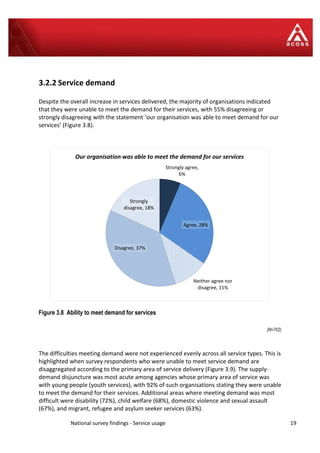
Despite the overall increase in services delivered, the majority of organisations indicated
that they were unable to meet the demand for their services, with 55% disagreeing or
strongly disagreeing with the statement ‘our organisation was able to meet demand for our
services’ (Figure 3.8).
Figure 3.8 Ability to meet demand for services
(N=702)
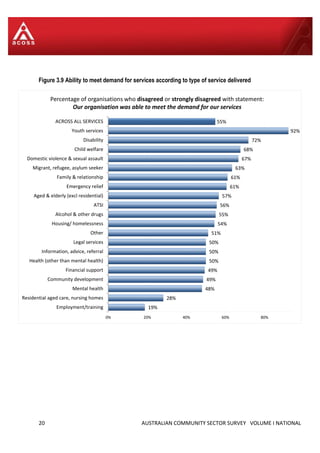
The difficulties meeting demand were not experienced evenly across all service types. This is
highlighted when survey respondents who were unable to meet service demand are
disaggregated according to the primary area of service delivery (Figure 3.9). The supply-
demand disjuncture was most acute among agencies whose primary area of service was
with young people (youth services), with 92% of such organisations stating they were unable
to meet the demand for their services. Additional areas where meeting demand was most
difficult were disability (72%), child welfare (68%), domestic violence and sexual assault
(67%), and migrant, refugee and asylum seeker services (63%).
20 AUSTRALIAN COMMUNITY SECTOR SURVEY VOLUME I NATIONAL
Figure 3.9 Ability to meet demand for services according to type of service delivered
19%
28%
48%
49%
49%
50%
50%
50%
51%
54%
55%
56%
57%
61%
61%
63%
67%
68%
72%
92%
55%
0% 20% 40% 60% 80%
Employment/training
Residential aged care, nursing homes
Mental health
Community development
Financial support
Health (other than mental health)
Information, advice, referral
Legal services
Other
Housing/ homelessness
Alcohol & other drugs
ATSI
Aged & elderly (excl residential)
Emergency relief
Family & relationship
Migrant, refugee, asylum seeker
Domestic violence & sexual assault
Child welfare
Disability
Youth services
ACROSS ALL SERVICES
Percentage of organisations who disagreed or strongly disagreed with statement:
Our organisation was able to meet the demand for our services
National survey findings 21
3.2.3 Turn-away rates
Corresponding to widespread difficulties meeting demand, survey respondents indicated
that a substantial number of people were unable to access the social services that they
sought. For 2009-10, clients were denied service on approximately 345,000 occasions. This
equates to more than one in twenty eligible people seeking social services being turned
away, and represents a 19% increase on the 298,000 people turned away in 2008-09.
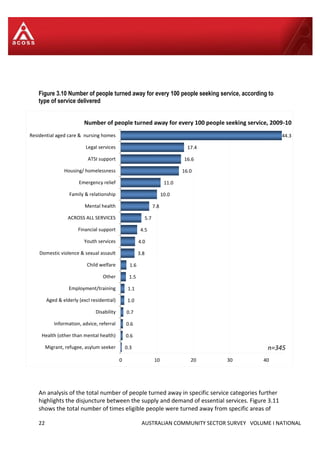
The turn away rate varied considerably across different areas of service, reaching
pronounced levels in areas where the disparity between supply and demand was at crisis
point (Figure 3.10).1
The rate of people turned away was most acute for residential aged
care, legal services, Aboriginal and Torres Strait Islander support services, housing and
homelessness services, and emergency relief. The significant shortfall in services for
homelessness and housing and emergency relief suggests that a large proportion of those
experiencing financial hardship were unable to access essential services.2
1
In this survey, the turn-away rate has been defined as the percentage of the total number of services
provided. The total number of services in this formulation includes services provided to new service users and
existing/ongoing service users.
2
The most recent AIHW report (2011) into government-funded specialist homelessness accommodation
2
The most recent AIHW report (2011) into government-funded specialist homelessness accommodation
indicates that, in 2009-10, 58% of all people with new requests for accommodation were turned away on any
given day. It should be noted that the AIHW rate measures a specific sub-set of service users and is therefore
based on a different method of calculation to that used in this survey. The turn-away rate calculated in this
survey for homelessness and housing represents the turn-away as a percentage of the total instances of
service provided, with the total including services provided to people continuing their accommodation from a
previous day. A significantly higher rate would be derived if the turn-away rate was to be calculated as a
percentage of people requiring a new service, which would represent the likelihood of an eligible person
approaching a service for accommodation on any given day. This latter formulation is adopted in the recent
AIHW report.
22 AUSTRALIAN COMMUNITY SECTOR SURVEY VOLUME I NATIONAL
Figure 3.10 Number of people turned away for every 100 people seeking service, according to
type of service delivered
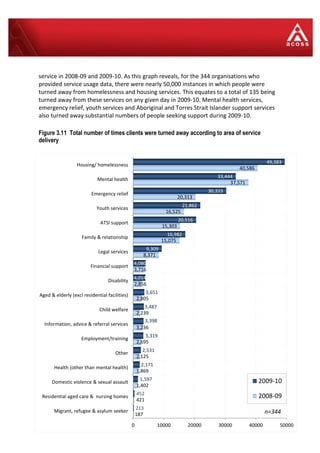
An analysis of the total number of people turned away in specific service categories further
highlights the disjuncture between the supply and demand of essential services. Figure 3.11
shows the total number of times eligible people were turned away from specific areas of
0.3
0.6
0.6
0.7
1.0
1.1
1.5
1.6
3.8
4.0
4.5
5.7
7.8
10.0
11.0
16.0
16.6
17.4
44.3
0 10 20 30 40
Migrant, refugee, asylum seeker
Health (other than mental health)
Information, advice, referral
Disability
Aged & elderly (excl residential)
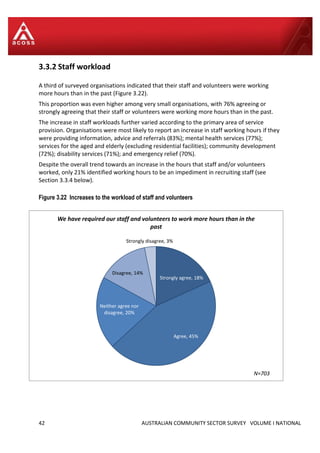
Employment/training
Other
Child welfare
Domestic violence & sexual assault
Youth services
Financial support
ACROSS ALL SERVICES
Mental health
Family & relationship
Emergency relief
Housing/ homelessness
ATSI support
Legal services
Residential aged care & nursing homes
Number of people turned away for every 100 people seeking service, 2009-10
n=345
National survey findings 23
service in 2008-09 and 2009-10. As this graph reveals, for the 344 organisations who
provided service usage data, there were nearly 50,000 instances in which people were
turned away from homelessness and housing services. This equates to a total of 135 being
turned away from these services on any given day in 2009-10. Mental health services,
emergency relief, youth services and Aboriginal and Torres Strait Islander support services
also turned away substantial numbers of people seeking support during 2009-10.
Figure 3.11 Total number of times clients were turned away according to area of service
delivery
187
421
1,402
1,869
2,125
2,695
3,236
2,239
2,805
2,856
3,716
8,371
15,075
15,303
16,525
20,313
37,571
40,586
213
452
1,597
2,171
2,531
3,319
3,398
3,487
3,651
4,014
4,080
9,309
16,982
20,516
21,862
30,333
33,444
49,383
0 10000 20000 30000 40000 50000
Migrant, refugee & asylum seeker
Residential aged care & nursing homes
Domestic violence & sexual assault
Health (other than mental health)
Other
Employment/training
Information, advice & referral services
Child welfare
Aged & elderly (excl residential facilities)
Disability
Financial support
Legal services
Family & relationship
ATSI support
Youth services
Emergency relief
Mental health
Housing/ homelessness
2009-10
2008-09
n=344
24 AUSTRALIAN COMMUNITY SECTOR SURVEY VOLUME I NATIONAL
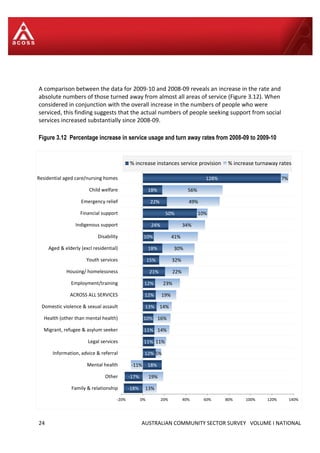
A comparison between the data for 2009-10 and 2008-09 reveals an increase in the rate and
absolute numbers of those turned away from almost all areas of service (Figure 3.12). When
considered in conjunction with the overall increase in the numbers of people who were
serviced, this finding suggests that the actual numbers of people seeking support from social
services increased substantially since 2008-09.
Figure 3.12 Percentage increase in service usage and turn away rates from 2008-09 to 2009-10
-18%
-17%
18%
12%
11%
11%
10%
13%
12%
12%
21%
15%
18%
10%
24%
50%
22%
18%
128%
13%
19%
-11%
5%
11%
14%
16%
14%
19%
23%
22%
32%
30%
41%
34%
10%
49%
56%
7%
-20% 0% 20% 40% 60% 80% 100% 120% 140%
Family & relationship
Other
Mental health
Information, advice & referral
Legal services
Migrant, refugee & asylum seeker
Health (other than mental health)
Domestic violence & sexual assault
ACROSS ALL SERVICES
Employment/training
Housing/ homelessness
Youth services
Aged & elderly (excl residential)
Disability
Indigenous support
Financial support
Emergency relief
Child welfare
Residential aged care/nursing homes
% increase instances service provision % increase turnaway rates
National survey findings 25
3.2.4 Service targeting
The majority of respondents reported tighter targeting of their services in 2009-10 than in
previous years (Figure 3.13). When asked to respond to the statement ‘our organisation is
targeting its services more tightly than in the past’, 60% of respondents agreed (49%) or
strongly agreed (11%) with this statement. Only 13% disagreed or strongly disagreed, while
just over a quarter neither agreed nor disagreed.
Figure 3.13 Service targeting, across all services
These figures may be further disaggregated to pinpoint areas where the increase in service
targeting was most widespread. Figure 3.14 suggests that the tightening of services was
most prevalent where the primary service addresses family and relationships, emergency
relief, domestic violence and sexual assault, or community development. Over two-thirds of
respondents from these sub-sectors agreed or strongly agreed that their services were
being more tightly targeted than in the past.
Strongly agree
11%
Agree
49%
Neither agree nor
disagree
26%
Disagree
12%
Strongly disagree
1%
Our organisation targeted its services more tightly than in the past
N=705
26 AUSTRALIAN COMMUNITY SECTOR SURVEY VOLUME I NATIONAL
Figure 3.14 Service targeting, according to primary area of service provision
8%
17%
9%
11%
6%
18%
9%
11%
12%
4%
15%
14%
25%
4%
17%
18%
11%
32%
34%
45%
44%
50%
39%
49%
49%
51%
60%
49%
50%
40%
63%
51%
53%
61%
0% 20% 40% 60% 80%
Child welfare, day care
Mental health
Housing/ homelessness
Information, advice, referral
Employment/ training
Health (other than mental health)
Youth
Across all services
Disability
Other
Legal services & advocacy
ATSI
Migrant, refugee and asylum seeker
Community development
Domestic violence & sexual assault
Emergency relief
Family & relationship
Our organisation targeted its services more tightly than in the
past
Strongly agree Agree
National survey findings 27
Several factors may contribute to a narrower targeting of social services. When demand
outstrips the capacity to supply services, organisations will often ration services by
tightening the eligibility criteria for prospective clients, or limiting the scope and extent of
services offered to individual service users. This varies depending on the area of service
delivery, but can involve directing services to people in the greatest need, or focusing on
interventions that address immediate crises rather than underlying needs (i.e. ‘band-aid’
interventions). Alternatively, government policy and practices may compel organisations to
target services toward specific clients. Performance-based funding contracts often prescribe
target groups or require specific output measures to be met. To secure funding and meet
contractual requirements, organisations may therefore prioritise designated target groups.
Where there is an emphasis on meeting numerical targets or outputs, contractual
requirements may induce organisations to focus on service users who are ‘cheaper’ or
whose needs are easier to meet. In other words, the imperatives of rationalising resources
and meeting output measures can discourage organisations from engaging with individuals
with more complex needs who may require more resource-intensive interventions.
Although the survey data do not enable the relative impact of these different factors to be
determined, they do indicate that tighter service targeting correlates with difficulties
meeting service demand and contractual requirements with government. In particular,
there was a strong positive correlation between tighter service targeting and those
organisations who reported that contract requirements and red tape were adversely
impacting on their ability to deliver services (0.15), and a positive correlation (albeit weaker)
between service targeting and those organisations who reported government contracts
stifled service innovation (0.05). There was also a positive correlation between service
targeting and reliance on government funding. That is, the proportion of organisations who
reported narrowing the targeting of their services was significantly higher amongst
organisations heavily dependent on government funding than those agencies that derived
most of their funding from donations, client fees, and other non-government sources.
28 AUSTRALIAN COMMUNITY SECTOR SURVEY VOLUME I NATIONAL
3.2.5 Areas of unmet need
Organisations were asked to indicate the level of unmet need among their service users for
supports and services that they as an organisation did not provide. In response to this
question, organisations reported a high level of unmet need across a wide range of services.
As Figure 3.15 indicates, unmet need was most acute in the area of mental health, with an
overwhelming 89% of organisations identifying this as an area of high or medium need. The
level of unmet need was also particularly pronounced in the areas of homelessness and
housing (87%), family and relationship services (82%), general health (82%), emergency
relief (78%), and employment and training (78%).
The high level and variety of unmet need was consistent with both an increasing complexity
in the issues service users face, and policy and service delivery systems ill-equipped to deal
with this complexity. Addressing these challenges is central to a range of key social policy
strategies, including the white paper for homelessness and successive national strategies
and plans for mental health (see for example FaHCSIA 2008). However, with homelessness
and mental health emerging as the two areas of greatest unmet need in this survey, it
appears these policy and program challenges persist and pose ongoing issues for
organisations working at the coal-face of service delivery. The following figure represents
services or supports that people with high and medium needs sought but were not able to
access adequately.
National survey findings 29
Figure 3.15 Unmet need: services or supports sought by people with high and medium needs.
58%
68%
43%
39%
51%
37%
43%
35%
38%
40%
37%
38%
35%
32%
52%
26%
24%
21%
31%
19%
39%
43%
27%
41%
33%
40%
37%
35%
37%
34%
36%
34%
9%
33%
28%
24%
0% 50% 100%
Mental health
Housing/ homelessness
Family & relationship services
Health (other than mental health services)
Emergency relief
Employment/ training
Financial support services
Legal services & advocacy
Information advice and referral
Youth
Child welfare, day care
Domestic violence & sexual assault
Disability
ATSI support
Other
Services for aged & elderly (excl residential facilities)
Migrant, refugee, asylum seeker
Residential aged care & nursing homes
High need Medium need
n=635
30 AUSTRALIAN COMMUNITY SECTOR SURVEY VOLUME I NATIONAL
3.2.6 Profile of service users
Although social services are accessed by a broad cross-section of the community, certain
population groups figure more prominently than others. Organisations were asked to
identify the profile of services according to a range of characteristics including age, gender,
and employment status and, where applicable, the type of government payment they
received.
Mapping the service user profile against wider population demographics reveals service
areas where specific groups are under- or over-represented. Examining the extent to which
certain groups are over-represented as service users can be a useful means of tracking areas
of need. Conversely, an under-representation of sub-populations known to have heightened
needs can be indicative of service inequities, suggesting barriers to accessing existing
services or a lack of availability or appropriate services.
Age
As this age profile suggests, people aged 15-24 years of age were overrepresented in a
number of service categories relative to their representation in the wider Australian
population. In particular, this age group were significantly overrepresented in homelessness
and housing services, where they comprised over a third of all clients. A disproportionately
high number of 15-24 year olds also accessed alcohol and other drugs agencies, family and
relationship services, and emergency relief organisations. The age profile of those accessing
migrant, refugee and asylum seeker services showed a noticeable departure from the age
structure of the wider population, with a significant overrepresentation of the youth age
cohort and those aged over 65.
National survey findings 31
Figure 3.16 Age profile across all services and according to primary area of service delivery
10.9
18.9
18
43.9
10.2
13.8
16.6
12.5
14.7
13.4
9.5
7.9
7.2
5.2
4.5
4.6
1.8
2
2.2
0.1
9.3
4.2
22.6
14
63
14.6
33.6
24.8
21.2
21.3
18.4
17.4
19.7
20.8
20.4
21
20.9
20.6
19.8
18.3
17.3
16.5
6.1
3.2
48
53.5
15.4
34.2
49.3
55.7
54.8
61.3
49.4
45.4
39.5
53.5
66.1
51.2
59.4
56.4
71.2
66.7
21.6
72.5
55.4
15.8
18.5
13.6
3.5
7.3
6.9
5.7
7.3
5
17.6
23.9
31.3
17.8
6.3
22.7
15.2
18.4
7.2
13
59
10.8
29.2
76.8
ACROSS ALL SERVICES
AUSTRALIAN POPULATION
Youth services
Child welfare
Housing/ homelessness
Alcohol & other drugs support
Family & relationship
Domestic violence & sexual assault
Disability
Community development
Migrant, refugee, asylum seeker
Other
Employment/ training
Health (other than mental health)
Emergency relief
ATSI support
Mental health
Legal services
Residential aged care, nursing homes
Financial support
Information, advice, referral
Aged & elderly (excl residential)
Percentage (%)
0-14 years % 15-24 years % 25-64 years % 65+ years %n=521
32 AUSTRALIAN COMMUNITY SECTOR SURVEY VOLUME I NATIONAL
Table 3.17 provides a profile of users with different characteristics accessing community
services during 2009-10.
Table 3.17 User profile according to primary area of service delivery3
People with
a disability %
ATSI
%
Jobless
%
CALD
%
Single
parents
%
Women
%
Not Australian
citizens
%
ACROSS ALL SERVICES n=576 32.0 15.8 47.8 20.1 27.5 57.3 6.8
Employment/ training 22.3 18.7 37.0 29.6 21.4 48.8 7.1
Disability 88.3 9.8 45.7 16.1 10.3 39.9 1.1
Housing/ homelessness 30.5 19.0 70.8 17.6 34.9 55.1 5.5
Child welfare, day care 10.5 11.1 29.3 14.9 29.2 62.1 3.0
Youth 13.2 18.8 56.0 13.5 22.3 50.5 4.4
Domestic violence & sexual
assault
17.6 28.2 67.3 18.3 58.9 92.4 10.3
Family & relationship
services
7.2 16.1 35.6 11.4 43.2 60.4 2.7
Emergency relief 19.4 12.8 55.3 19.8 39.2 57.2 10.6
Financial support services 23.6 15.6 32.7 16.8 30.3 49.5 4.2
Mental health 62.0 13.0 60.5 10.5 27.8 52.0 2.8
Health (other than mental
health)
33.8 9.5 35.0 20.7 22.1 67.4 9.2
Information, advice, referral 51.8 2.9 30.9 22.4 20.9 59.4 3.0
Legal services & advocacy 22.8 11.7 37.7 18.4 27.0 61.5 5.6
Migrant, refugee, asylum
seeker
12.1 0.6 47.3 98.0 27.3 45.0 42.0
Indigenous support 13.6 84.6 51.8 15.0 39.5 54.1 2.4
Aged & elderly (excl
residential facilities)
19.5 2.8 33.4 15.0 4.1 65.6 4.3
Community development 20.1 5.7 34.6 18.7 23.6 58.1 10.9
Alcohol & other drugs
support
15.0 43.7 51.7 44.8 17.7 37.8 3.3
Other 23.4 19.3 49.3 16.3 29.7 55.9 6.0
AUSTRALIAN POPULATION 18.54
2.55
34.86
21.07
4.38
50.09
4.610
3
Organisations were asked to indicate the proportion of their service users (as a percentage) who
corresponded to the designated demographic population groups. The percentages provided in here represent
the mean of these percentages (rather percentages based on the actual aggregate number of service users).
The level of detailed demographic information that organisations maintain in relation to their clients varies
considerably; for some services, to provide the precise numbers of service users with given demographic traits
is difficult as they do not collect such data.
4
ABS 2009
5
ABS 2006
6
This figure is derived from the mean of the monthly workforce participation rates reported in ABS, Labour Force, July
2009 – June 2010
7
Proportion of people who speak language other than English at home (ABS 2006)
National survey findings 33
Among those accessing support from social services, there were several population groups
who were notably overrepresented across all service types and in particular areas of service
delivery.
Single parents were disproportionately high users of social services. Although they
constituted approximately 4.3% of the total population, single parents comprised over a
quarter (28%) of service users across all organisations. The incidence of single parents
accessing services was seven times their representation in the wider population. For this
population group, the level of overrepresentation was most pronounced in agencies where
the primary area of service delivery was domestic violence and sexual assault (59%), family
and relationship services (43%), Aboriginal and Torres Strait Islander services (40%),
emergency relief (39%), homelessness and housing (35%), and financial support services
(30%).
People from Aboriginal and Torres Strait Islander backgrounds were also significantly
overrepresented as service users. Across all services they accounted for 16% of clients’ – or
more than six times their actual representation in the Australian population. This proportion
was even higher in alcohol and other drugs services (44%), domestic violence and sexual
assault services (28%), housing and homelessness services (19%), and services providing
employment support and jobs training (19%).
The stark overrepresentation of single parents and people from Aboriginal and Torres Strait
Islander backgrounds mirrors data showing that these sub-groups are at a heightened risk of
poverty and multiple deprivation11
(ACOSS 2010; Saunders et al 2007; Saunders & Wong
2009). The survey data therefore point to the vital role that the provision of, and support
for, community services plays in combating deprivation.
Particular areas of service delivery also reveal distinctive patterns of usage among certain
sub-groups. Most of the population groups were overrepresented in homelessness and
housing services. In addition to a disproportionate number of single parents and people
from Aboriginal and Torres Strait Islander backgrounds seeking such services, nearly 71% of
those accessing homelessness and housing services were jobless.
Those who were jobless also comprised over 60% of those seeking support from mental
health services. In contrast, those from a CALD background were significantly
underrepresented as consumers of mental health services. This underrepresentation is
consistent with patterns of usage that have been documented elsewhere, with studies
suggesting that people from CALD backgrounds are consistently underrepresented in
8
ABS 2007
9
ABS 2006
10
ABS 2006
11
Multiple deprivation is experienced by those unable to afford a number of basic items most people regard as
essentials of life. Saunders et al 2007 maintain that sole parents are at an increased risk of poverty and
deprivation, with an estimated 49% experiencing multiple deprivations.
34 AUSTRALIAN COMMUNITY SECTOR SURVEY VOLUME I NATIONAL
community mental health services, yet overrepresented in involuntary admissions to
inpatient facilities (Stolk et al 2008; Sobolewska 2005; Alizadeh-Khoei 2008). Furthermore, it
has been argued that this disparity is widening (Stolk et al 2008). While the survey data
cannot confirm service usage trends amongst particular population groups, they do suggest
that those from a CALD background continue to experience significant inequities in access to
mental health services.
Government pensions and other income support payments received
Figure 3.18 provides a break-down of service users according to the type of government
pension, allowance or other income support payment they received.
As this table indicates, the disability support pension and parenting payments were the
most common income support payments received by service users. The proportion of
service users receiving the disability support pension was highest among housing or
homelessness services (32%) and mental health services (62%). Those receiving Newstart
Allowance also comprised a substantial proportion of those accessing services for
homelessness or housing, emergency relief, financial support, Aboriginal and Torres Strait
Islander support, alcohol and other drugs, and services for those from a migrant, refugee or
asylum seeker background.
35 Australian Community Sector Survey – VOLUME I
Figure 3.18 Income support payments according to primary area of service delivery
Aged
pension
%
Disability
pension
%
Parenting
payment
(Single)
%
Carer
payment
%
Carer
allowance
%
Newstart
allowance
%
Youth
allowance
%
Other
pension
%
Other
allowance
%
Employment/
training
3.6 23.7 8.3 1.3 2.5 29.2 6.4 0.0 0.0
Disability 15.9 67.6 6.9 8.8 12.9 5.2 2.4 3.3 1.5
Housing/
homelessness
7.6 31.5 27.3 3.0 2.4 26.5 22.4 5.6 6.7
Child welfare,
day care
6.0 10.6 29.1 7.2 4.6 5.2 2.1 5.7 10.7
Youth 4.1 8.9 18.6 3.9 3.8 16.2 43.9 2.7 1.9
Domestic
violence &
sexual assault
7.9 17.5 48.5 11.1 11.9 24.2 11.0 11.8 11.9
Family &
relationship
10.4 13.5 38.6 8.1 10.5 18.8 11.2 6.5 5.7
Emergency
relief
17.8 27.1 33.4 13.1 7.5 32.1 13.4 4.9 4.8
Financial
support services
9.6 27.3 27.7 4.9 5.2 19.0 3.3 9.4 10.2
Mental health 9.1 61.5 10.4 10.9 5.2 12.4 2.7 1.3 1.1
Health (other
than mental
health services)
26.1 17.1 12.6 16.0 18.5 9.3 4.5 9.9 3.5
Information,
advice, referral
40.6 28.2 11.8 12.0 12.2 4.4 1.6 6.2 0.0
Legal services &
advocacy
9.2 20.6 15.7 3.6 4.5 17.5 4.2 7.0 5.6
Migrant,
refugee, asylum
seeker
42.4 14.0 21.0 8.4 10.6 26.3 9.6 17.4 2.8
Indigenous
support
20.3 12.4 35.0 3.1 5.3 34.4 9.2 13.0 7.7
Residential
aged care &
nursing homes
60.0 30.0 10.0 0.0 0.0 0.0 10.0 5.0 0.0
Services for the
aged & elderly
(excl.
residential)
68.8 12.6 4.9 4.4 3.5 1.6 0.4 12.7 1.2
Community
development
24.9 16.9 21.8 5.8 6.2 18.0 9.1 7.7 1.4
Alcohol & other
drugs support
0.3 25.0 27.0 0.3 0.5 30.8 22.0 30.8 27.0
Other 15.0 22.1 25.6 11.9 13.1 22.1 8.1 7.6 3.7
Across all
services
18.8 28.0 23.1 7.9 8.2 18.7 12.0 7.1 4.6
n=481
36 Australian Community Sector Survey – VOLUME I
3.3 Workforce
Concerns about workforce sustainability and viability are well established within the
community sector. Developing, supporting and sustaining the community sector workforce
poses a critical challenge to the sector, and to governments concerned about the
effectiveness of their funding for community services, as a number of trends relating to
labour dynamics, working conditions, and workforce converge. These issues were given
added impetus during the period that this survey covers, with several significant events and
landmark reports highlighting the workforce challenges faced by the non-government
community services sector.
In November 2009 the Australian Services Union launched an equal remuneration
application to Fair Work Australia for community sector workers. This application came on
the back of an equal remuneration precedent set in the Queensland Industrial Relations
Commission in May 2009, which found that social and community services workers in
Queensland had been undervalued and that wage adjustment to the Queensland
Community Services and Crisis Assistance State Award was needed to remedy this situation.
In January 2010 the Productivity Commission released its report into the contribution of the
not-for-profit sector, indicating clearly the contribution that social and community services
make economically as well as socially (PC 2010). The PC also lent weight to the claim of
unequal pay in the sector with its recommendation that Australian governments purchasing
community services base their funding on relevant market wages for equivalent positions.
Finally, the introduction of the modern award system in July 2009 had the potential for
significant impacts in the community sector, although in the end the implementation of the
key Social, Community, Home Care and Disability Services Award was delayed with the
announcement of the equal pay case.
Within the sector, workforce challenges are multi-faceted and dynamic, and manifest in
various ways in different service sub-sectors and in different organisational and geographic
contexts. Nevertheless, across these different domains a number of recurring challenges for
the workforce have been identified. These include:
 Rapid growth of the workforce over the past decade, growing at a rate that outstrips
employment growth across the entire economy (Productivity Commission 2009:68).
 Labour dynamics, including high levels of turnover; shortages of qualified and
specialist staff; acute recruitment and retention difficulties outside metropolitan
areas; and uncoordinated pathways to entry into community sector employment;
 Working conditions, including pay which is lower than in equal or comparable
industries; inter-sectoral pay inequity; high caseloads; performance of unpaid hours;
emotional exhaustion and burnout; poor support for staff development; limited
career paths; unclear boundaries between professional and non-professional roles;
poor supervisory and management capacity; and high incidence of workplace
incidents and adverse events and
National survey findings 37
 Worker characteristics, including workforce ageing; over-representation of women;
high proportions of part time, casual and temporary staff; shortages of Aboriginal
and Torres Strait Islander and culturally and linguistically diverse CALD staff.
 While the ageing of the Australian workforce is a national trend (Kryger, 2005),
human services workers are particularly affected. On average, care workers in
community services are older than workers in other industries, and this in itself can
make it difficult to recruit younger people into the industry, compounding concerns
about workforce sustainability when the older generation retires (Meagher & Healy
2005).
The survey reaffirmed the following workforce challenges facing the community sector:
 additional issues included difficulties recruiting and retaining volunteers;
 volunteer burn-out;
 the increasing costs of engaging volunteers;
 the lack of volunteers with the requisite skills and training needed in particular areas
of service delivery; and
 an inability to plan ahead for some organisations solely dependent on volunteers,
given the uncertainty and lack of continuity in their workforce.
3.3.1 Workforce composition
Across the non-government NFP community sector there was a wide variation in the size
and composition of the workforce. This variation is demonstrated by Table 3.19, which
presents the average organisational numbers of paid staff, volunteers, and paid and unpaid
board members in different areas of service delivery.
38 AUSTRALIAN COMMUNITY SECTOR SURVEY VOLUME I NATIONAL
Table 3.19 Average number of paid and volunteer staff employed by organisations, according
to primary area of service delivery
Paid staff
(FTE)
Voluntary staff
(FTE)
Total Staff
(FTE)
Paid board/
management
committee
Voluntary board/
management
committee
ACROSS ALL SERVICES 65.8 27.6 93.4 0.3 7.6
Other 217.2 73.5 290.6 0.5 7.7
Disability 151.5 22.9 174.3 0.4 6.9
Family & relationship 99.4 42.6 142.0 0.1 8.8
Child welfare, day care 80.1 49.4 129.5 0.0 7.4
Mental health 29.2 61.5 90.7 0.6 7.4
Health (other than mental
health)
54.2 25.6 79.9 0.0 8.8
Youth 53.5 15.4 68.9 0.7 6.7
Employment/ training 42.7 9.2 51.9 0.0 8.5
Migrant, refugee, asylum
seeker
17.5 32.5 50.0 0.1 9.2
Residential aged care,
nursing homes
44.5 0.0 44.5 0.0 4.5
ATSI support 31.4 6.3 37.8 3.3 8.7
Aged & elderly (excl.
residential facilities)
17.3 19.9 37.1 0.4 7.3
Housing/ homelessness 25.7 9.5 35.2 0.6 7.8
Emergency relief 2.9 28.8 31.7 0.3 6.8
Community development 16.6 12.7 29.3 0.0 8.3
Alcohol & other drugs
support
25.0 0.0 25.0 0.0 8.0
Legal services & advocacy 8.8 14.1 22.9 0.0 7.7
Information, advice, referral 9.8 7.3 17.0 0.0 9.6
Domestic violence & sexual
assault
7.2 1.3 8.5 0.4 6.7
Financial support 3.7 0.1 3.8 0.1 4.7
(n=402)
As the workforce composition data reveal, organisations from the disability, family and
relationships, and child welfare sectors typically employed the largest number of staff, in
addition to organisations whose primary service was uncategorised (i.e. ‘Other’). Those
organisations whose primary service was financial support or domestic violence and sexual
assault tended to employ the fewest staff.
National survey findings 39
Across surveyed organisations, most boards or management committees acted in a
voluntary, unpaid capacity. This contrasted with private and public sector boards, which are
typically renumerated.
The size and make-up of the workforce further varies according to the organisational size
and the type of locality out of which organisations operate (Table 3.20). As might be
expected, larger organisations (i.e. organisations with a larger income) employed the
greatest number of staff. In contrast, very small organisations employed on average less
than two full-time staff.
Organisations operating in cities had the largest workforce relative to organisations based in
regional or remote areas. Whilst very remote organisations tended to employ more staff
than those organisations based in less remote or in regional areas, it should be noted that
many of the surveyed organisations in very remote regions operated out of a number of
localities, with staff spread across several locations.
Table 3.20 Average number of paid and volunteer staff employed by organisations, according to
organisation size and locality type
Paid staff
(FTE)
Voluntary staff
(FTE)
TOTAL staff
(FTE)
Paid board/
management
committee
Voluntary board/
management
committee
ORGANISATION SIZE
Very small 1.7 8.9 10.5 0.0 7.3
Small 4.9 18.1 22.9 0.0 7.4
Medium 8.6 16.1 24.7 0.0 7.4
Large 20.8 13.0 33.8 0.1 8.7
Very large 237.9 117.7 355.6 1.0 8.5
LOCALITY TYPE
Very
remote
42.5 26.7 69.2 6.7 10.3
Remote 11.4 15.2 26.5 0.0 8.0
Outer
regional
16.9
14.6
31.5 0.4 7.5
Inner
regional
23.3 15.1 38.4 0.0 7.3
City 100.4 36.6 136.9 0.4 7.7
A distinctive feature of the social services workforce is the significant contribution that is
made by volunteers. ABS data show that the community sector relies heavily upon
volunteers, with 36% of the workforce being voluntary (ABS, 2010). Furthermore, the survey
data reveal some key patterns within community services, with a clear relationship existing
40 AUSTRALIAN COMMUNITY SECTOR SURVEY VOLUME I NATIONAL
between the relative proportions of volunteers to paid staff and the organisational size,
locality and area of service delivery.
As indicated in Figure 3.21, the proportion of volunteers to paid staff was significantly higher
in smaller organisations and in organisations in regional and remote areas, with volunteers
comprising over two-thirds of the workforce in these organisations. The proportion of
volunteers also showed substantial variation across different areas of service delivery, with
the heaviest reliance on volunteers among those agencies providing emergency relief,
mental health services, or support for migrants, refugees and asylum seekers.
While the survey data confirm the significant contribution volunteers make to the delivery
of social services, organisations that were dependent on voluntary staff faced a range of
challenges. When asked to identify the three most important issues they faced in 2009-10,
the most prevalent issue associated with volunteers related to a lack of resources and
capacity to manage, coordinate or train volunteers. As one organisation stated:
Lack of funding to cover a full-time volunteer coordinator [is a major issue for our
organisation]. We have had to expand our services significantly to meet demand and due to
some additional program funding. But we rely heavily on volunteers and have had no
additional funding to cover the costs of coordinating volunteers. Existing staff are already
over-stretched and don’t have capacity to undertake this coordinating role which is vital but
labour-intensive. This raises duty of care risks to the organisation, clients, staff and volunteers
(survey respondent).
Additional issues included difficulties recruiting and retaining volunteers; volunteer burn-
out; the increasing costs of engaging volunteers; the lack of volunteers with the requisite
skills and training needed in particular areas of services delivery; and, for some
organisations solely dependent on volunteers, an inability to plan ahead given the
uncertainty and lack of continuity in their workforce. The response from an organisation
providing emergency relief and homelessness support encapsulates a range of these issues:
Volunteer burnout/fatigue [is a major issue for organisation]. Most of our services are
unfunded, and the growth in demand has not been matched by a growth in the number of
volunteers. Retaining volunteers is an ongoing problem, due in part to the massive workload
and insufficient resources to provide coordination and support for new volunteers. This
situation threatens our sustainability as an organisation, placing serious strain on existing
volunteers, many of whom are working long hours, without support, and increasingly unable
to deal with the many and complex needs of people seeking assistance (survey respondent).
While few organisations paid their board members, those organisations that did were large
or very large organisations. When identifying prominent issues they had faced over 2009-10,
a few organisations noted that the voluntary nature of board membership made it difficult
to attract or retain board members with the appropriate skills or experiences. Continual
turnover in boards or management committees were seen to contribute to organisational
instability and to detract from service delivery and planning.
National survey findings 41
Figure 3.21 Relative proportions of paid staff and volunteers in workforce, according to primary
area of service delivery
70%
9%
32%
35%
38%
46%
57%
57%
62%
68%
70%
73%
75%
78%
82%
83%
85%
87%
98%
100%
100%
16%
21%
35%
62%
67%
61%
43%
54%
61%
73%
30%
91%
68%
65%
62%
54%
43%
43%
38%
32%
30%
27%
25%
22%
18%
17%
15%
13%
2%
0%
0%
84%
79%
65%
38%
33%
39%
57%
46%
39%
27%
ACROSS ALL SERVICES
Emergency relief
Mental health
Migrant, refugee, asylum seeker
Legal services & advocacy
Aged & elderly (excl. residential)
Community development
Information, advice, referral
Child welfare, day care
Health (other than mental health)
Family & relationship
Housing/ homelessness
Other
Youth
Employment/ training
ATSI support
Domestic violence & sexual assault
Disability
Financial support
Residential aged care, nursing homes
Alcohol & other drugs support
Very small
Small
Medium
Large
Very large
Very remote
Remote
Outer regional
Inner regional
City
Paid staff (FTE) Volunteers (FTE)
Primary area of service delivery
Organisation size
Locality type
42 AUSTRALIAN COMMUNITY SECTOR SURVEY VOLUME I NATIONAL
3.3.2 Staff workload
A third of surveyed organisations indicated that their staff and volunteers were working
more hours than in the past (Figure 3.22).
This proportion was even higher among very small organisations, with 76% agreeing or
strongly agreeing that their staff or volunteers were working more hours than in the past.
The increase in staff workloads further varied according to the primary area of service
provision. Organisations were most likely to report an increase in staff working hours if they
were providing information, advice and referrals (83%); mental health services (77%);
services for the aged and elderly (excluding residential facilities); community development
(72%); disability services (71%); and emergency relief (70%).
Despite the overall trend towards an increase in the hours that staff and/or volunteers
worked, only 21% identified working hours to be an impediment in recruiting staff (see
Section 3.3.4 below).
Figure 3.22 Increases to the workload of staff and volunteers
Strongly agree, 18%
Agree, 45%
Neither agree nor
disagree, 20%
Disagree, 14%
Strongly disagree, 3%
We have required our staff and volunteers to work more hours than in the
past
N=703=703
National survey findings 43
3.3.3 Staff turnover
High staff turnover is consistently identified as a key workforce challenge for the community
services sector (Briggs et al 2007; ASU 2007; ACOSS 2010). Apart from the loss of expertise
and continuity, staff turnover can be a major additional cost factor which drains resources
away from service delivery and staff development and training. For the community sector,
the labour-intensive nature of much service delivery, combined with the investment
required in staff collaboration and the small size of many organisations, means that the
impact of staff turnover can be more profound than what might be experienced in most
other industries.
Table 3.23 Staff hired and left 2009-2010
Hired (FTE) Left (FTE) Net increase (FTE)
Administration and finance 550 258 292
Communications/ Media 86 36 50
Management 531 204 327
Policy, research or advocacy 143 61 82
Service delivery 9,449 1,668 7,781
Other 484 345 138
TOTAL 11,243 2,573 8,670
Analysing staff turnover for social services is particularly difficult because of the enormous
diversity in terms of the scale and scope of operations, both in terms of the diversity of
organisations working within social services and wide variation in workforce size. Given this,
different methods of calculating turnover reveal different dimensions of this issue. Figure
3.24 shows annual staff turnover both in terms of an organisational average and at a sub-
sector level. The average organisational turnover figures indicate the typical turnover rates
organisations are experiencing within a sector, irrespective of their size. In this regard, it is a
measure that reflects the potential strain and pressure being experienced across all
organisations. However, it is a measure that can distort data towards small organisations in
a way that masks the proportion of employees who may be exiting their positions across an
entire sector. To balance out this effect we include the sub-sector turnover figures, which
provide an indication of the volume of movement in and out of organisations across an
entire sub-sector. Sub-sector turnover reflects the absolute number of employees who are
exiting (relative to the absolute number employed within that sector), and is therefore
weighted toward those organisations that employ the largest number of staff, and who
typically deliver a larger number of services relative to small organisations.
44 Australian Community Sector Survey – VOLUME I
Figure 3.24 Staff turnover according to primary area of service delivery
13%
16%
16%
16%
14%
22%
24%
13%
21%
28%
31%
12%
4%
6%
10%
22%
36%
25%
28%
8%
11%
14%
16%
17%
18%
19%
19%
20%
21%
22%
24%
29%
31%
32%
34%
36%
39%
41%
0% 10% 20% 30% 40% 50%
Employment/ training
Information, advice & referral
Emergency relief
Housing/ homelessness
Migrant, refugee, asylum seeker
Family & relationship
Child welfare
Community development
Aged & elderly (excl residential)
Financial support
Domestic violence & sexual assault
Health (other than mental health)
Disability
Youth services
Other
Mental health
Alcohol & other drugs support
Legal services
ATSI support
Average organisational turnover Sub-sector turnover
National survey findings 45
3.3.4 Recruitment and retention
Across the sector, salary and job security proved to be the greatest impediments to
recruiting or retaining staff. Figure 3.30 shows that these two factors were uniformly
identified as significant barriers across the organisations surveyed. However, the ultimate
impact that these and other factors had on recruitment and retention varied according to
primary area of service, geographic location and size.
Figure 3.25 Factors impacting on staff recruitment and retention
26%
34%
10%
45%
38%
14%
20%
19%
21%
68%
18%
20%
42%
44%
55%
45%
22%
37%
42%
44%
36%
0% 20% 40% 60% 80% 100%
Location
Working hours
Salary
Working conditions
Training & development opportunities
Career path
Job security
Helped attract/ retain staff Made attracting/ retaining staff more difficult Had no impact/ not applicable
n=40
46 AUSTRALIAN COMMUNITY SECTOR SURVEY VOLUME I NATIONAL
Salary
Over 68% of surveyed organisations identified salary to be a barrier to attracting and
retaining staff. As Table 3.26 indicates, the proportion of organisations identifying this as a
barrier was most pronounced in the health (89%) and mental health (88%) sectors.
Table 3.26 Salary as a barrier to recruitment and retention, according to primary area of service
Proportion of organisations who stated salary made
attracting/retaining staff more difficult (%)
Health (other than mental health) 89
Mental health 88
Legal services and advocacy 86
Community development 85
Family and relationship 81
Migrant, refugee and asylum seeker 77
Alcohol and other drugs support 73
ATSI support 71
National survey findings 47
Job security
Job insecurity also proved to be a significant barrier to attracting and retaining staff for 44%
of those surveyed. The proportion of organisations who identified this as an adverse factor
varied according to the primary area of service provision, as indicated in Table 3.27.
Table 3.27 Job security as a barrier to recruitment and retention, according to primary area of
service provision
Proportion of organisations who stated job security
made attracting/retaining staff more difficult (%)
Health (other than mental health) 72
Migrant, refugee and asylum seeker 64
Youth 62
ATSI support 57
Legal services and advocacy 57
Community development 54
Alcohol and other drugs support 53
Family and relationship 50
Career progress path
Limited career path had the greatest impact on recruitment and retention for organisations
whose primary area of service provision was health (71%), legal advocacy (57%), domestic
violence and sexual assault (57%), and mental health (53%). Excessive work hours were
reported as having the most pronounced impact on Aboriginal and Torres Strait Islander
support services (43%), health services (35%), domestic violence and sexual assault services
(35%), and for organisations whose primary area of service provision involved information,
advice and referrals (30%).
Training and development opportunities
Approximately 20% of all respondent organisations cited limited training and development
opportunities as a factor that made attracting and recruiting staff difficult. This proportion
was highest where the primary service delivered was health (47%), domestic violence and
sexual assault (35%), legal advocacy (29%), and mental health (27%). The ability to offer
sufficient training and development opportunities also varied according to organisational
48 AUSTRALIAN COMMUNITY SECTOR SURVEY VOLUME I NATIONAL
size. A higher proportion of smaller organisations experienced recruitment and retention
difficulties due to limited training and development, with the proportion of very small and
small organisations at 31% and 23% respectively. In contrast, only 4% of very large
organisations identified training and development to be a factor adversely impacting on
recruitment and retention.
Working conditions
Working conditions were identified as a barrier to recruitment and retention for 18% of
organisations. This proportion was higher where the primary area of service provision was
mental health (44%), health (41%), Aboriginal and Torres Strait Islander support (29%), and
housing and homelessness (27%).
Geographic location
Geographic location had the most pronounced impact on Aboriginal and Torres Strait
Islander support services, with 43% stating that this factor made attracting and retaining
staff more difficult. Regional and remote services also experienced greater difficulties
recruiting and retaining staff on the basis of their location, as indicated in Table 3.28.
Table 3.28 Location as a barrier to recruitment and retention, according to geographic coverage
Proportion of organisations who stated location
made attracting/retaining staff more difficult (%)
A major city 13
Inner regional area 20
Outer regional area 23
Remote area 33
Very remote area 31
National survey findings 49
3.3.5 Equal pay and changes to workplace awards
When survey respondents were asked to identify the three most important issues or
challenges facing their organisation, the most ubiquitous response concerned the
inadequacy of funding for services.
A further theme that organisations persistently identified related to the difficulties they
faced in recruiting and retaining staff. An analysis of the open-ended responses relating to
staffing and workforce further reveals that the lack of pay parity with other sectors,
industrial change with the introduction or the Modern Award and the implications of the
2009 Queensland equal pay decision for community sector workers were persistent issues
for organisations in 2009-10.
Award Modernisation
During 2009-2010, the Federal Government implemented changes to workplace bargaining
and awards systems as part of its industrial relations agenda. With the commencement of
the Fair Work Act on 1 July 2009, a process of reviewing and rationalising awards in the
national workplace relations system took place, replacing the range of awards offered in
different states and territories with a single system of 'modern awards'. Changes to
workplace awards in turn came into effect on 1 January 2010.
While organisations were not necessarily opposed to the aims and intentions of award
modernisation, the survey responses suggest that many organisations experienced
significant uncertainty and difficulties adapting to changes to wages and conditions. A lack
of resources and time to adjust to changes, limited support in implementing changes, and a
lack of internal expertise were cited as persistent concerns. As one respondent remarked:
The introduction of the modern award system [was one of the most important issues our
organisation faced in 2009-10]. This created uncertainty and also strain due to [the] resources
and time needed to understand and operationalise new awards, and the lack of relevant
expertise within our small organisation. This is in a context where we are already struggling to
cope with administering contracts, tendering for funds, managing volunteers and staff,
escalating costs (survey respondent).
Whilst some organisations expressed concerns about an inability to fund any wage increases
without a commensurate increase in the funding they received via government contracts,
others noted that the new Awards had resulted in a decrease in wages and conditions:
Transition to the new Awards system [is an important issue for our organisation]. Staff are
paid at Award rates and conditions, but the Federal Award is less generous in pay and leave. It
is not clear whether we are required to pay at Federal or State Award rate, reduce leave
entitlements, or how the transition process is to work (survey respondent).
50 AUSTRALIAN COMMUNITY SECTOR SURVEY VOLUME I NATIONAL
Equal pay
Workforce challenges arising from inadequate pay for community workers have long been
articulated by the sector. These include declining capacity by services to attract and retain
workers. In 2009 the QIRC made a new award to address what it recognised as pay inequity
for community sector workers in Queensland. The QIRC acknowledged that ‘the pay
inequity that is present in [the community services sector] as a result of undervaluation of
work is exacerbated by the absence of enterprise bargaining in this sector. This means that
the wages paid to employees in this sector are substantially less than their counterparts
employed in the public sector’ (QIRC 2007:6).
Taking the Queensland decision as a precedent, unions representing social and community
sector and disability workers lodged an Equal Remuneration Order for community workers
before Fair Work Australia in the first half of 2010. The application was based on the
gendered nature of the work conducted within the community sector and its consequent
undervaluing in terms of wages. The application sought to increase the pay of workers
covered by the Social, Community, Home Care and Disability Services Industry Award
(formerly SACS award).
The case was ongoing at the time of publication of this report and therefore its outcome
was unknown when respondents completed this survey. However, there had been a
sustained campaign for funding of higher wages that might flow from a successful equal
remuneration application, and many respondents were cognisant of the case and its
potential outcomes in the commentary they provided through open-ended survey
responses.
3.4 Funding and regulatory arrangements
The adequacy and effectiveness of funding and regulatory frameworks are issues of
enduring concern within the community sector. Over the past two decades, such issues
have taken on a renewed urgency in the context of the sector’s expansion, the rise of
competitive contracting arrangements, and the growing demand for human services. While
such changes have opened up opportunities for many organisations, access to sufficient and
reliable income remains a key challenge impacting on organisational ability to recruit and
retain staff, to effectively deliver services, and to balance service delivery demands and
administrative requirements with the need for systemic advocacy.
This section examines key measures of funding, and presents data relating to organisational
income, expenditure and operating surpluses. It also considers the impact that government
legislation and regulations have had on service delivery, including the ability of
organisations to innovate, advocate and plan.
The majority of surveyed organisations stated that the level of funding they received in
2009-10 was insufficient to cover the true costs of delivering contracted services. Although
the survey findings reveal that the overall income of larger organisations usually covered
National survey findings 51
their expenses, many smaller and medium-sized organisations experienced a funding
shortfall and incurred deficits in the 2009-10 financial year. The majority of organisations
relied heavily on government funding, but most organisations indicated that this funding
was insufficient to cover the true costs of delivering services, nor did it enable forward
planning or innovation. Most organisations, however, did not feel that the funding they
received from government imposed restrictions on their capacity to conduct public
advocacy or voice concerns on behalf of those using their services.
3.4.1 Sources of income
In contrast to for-profit and government organisations, NFP social services often derive their
revenue from a wide range of sources. Such sources include government grants and
contracts, fundraising, income from the people who consume and pay for services,
membership fees, and income from investments and other business activities.
While many organisations seek to diversify their revenue streams, government funding
continues to constitute the major source of income for many community services. Survey
respondents were asked to list the amounts and sources of income for their organisation in
2009-10, and Figure 3.29 shows the breakdown of funding sources when these financial
data are aggregated. As this graph reveals, funding received from Commonwealth, state or
territory, or local governments accounts for 83.2% of the aggregated income. A smaller
proportion of funds were derived from donations (8.7%), client fees (5.2%), corporate
funding (0.6%), and other income sources (4.6%) such as membership fees, interest or rents
received from investments and other business activities, and the sale of goods.
52 AUSTRALIAN COMMUNITY SECTOR SURVEY VOLUME I NATIONAL
Figure 3.29 Income sources
The widespread reliance on government funds is further underscored when organisations
are analysed according to the recurrence of primary income. Figure 3.30 shows the
percentage of organisations whose primary funding is recurrent, and its source. 85.5% of
respondents indicated that they received recurrent funding from state or territory
governments; 78.6% of respondents from the Commonwealth government; and 80% from
local governments. Importantly, the greatest response rate (88.9%) indicated recurrent
funding received from client fees.
Commonwealth
government, 28.4%
State or territory
government, 50.4%
Local government,
4.4%
Client fees, 5.2%
Donations,
8.7%
Corporate funding,
0.6%
Other income, 4.6%
n=216
National survey findings 53
Figure 3.30 Percentage of organisations with ongoing/recurrent primary sources of income
These findings show that corporate funding accounted for the smallest proportion of
funding among survey respondents. For 2009-10, the amount of funding received from
corporations relative to the overall funds received was 0.6%, with a similar proportion of
organisations identifying corporate funding as their primary source of income for that year.
This is noteworthy given the notion that the corporate sector has been playing an
increasingly prominent role in subsidising the work of NFP organisations (Zappala & Lyons
2008); and the stated interest of some governments in seeing that role continue.
Table 3.31 shows the overall income and expenditure based on the aggregated financial
data provided by surveyed organisations. The surplus (or deficit) measures the difference
between revenue and expenditure, revealing the extent to which the income an
organisation receives is sufficient to meet the costs of providing services. Where an
operating deficit exists, the costs being incurred in that year exceed the income, forcing
organisations to meet costs via other means. In such instances, the surplus appears as a
negative figure.
78.6%
85.1%
80.0%
88.9%
51.7%
50.0%
75.0%
Commonwealth government
State or territory government
Local government
Client fees
Donations
Corporate funding
Other income
0% 50% 100%
54 AUSTRALIAN COMMUNITY SECTOR SURVEY VOLUME I NATIONAL
While there was a slight increase in the overall income from 2008-09 to 2009-10, the total
expenditure decreased. In addition, a significant operating deficit was incurred for the social
services sector in 2008-09, with a slender surplus generated for the subsequent 2009-10
financial year.
Table 3.31 Total expenditure and deficit/surplus for 2008-09 and 2009-10
Year
Total expenditure Total income Surplus
($ millions) ($ millions) ($ millions)
2008-09 1,238 1,058 -180
2009-10 1,140 1,142 2.0
n=216
The deficit incurred for 2008-09 coincides with the peak of the GFC, which was associated
with a substantial increase in demand for social services and a simultaneous reduction in
returns on investment funds, combined with a reduction in funding from philanthropic
trusts and foundations, major donors, and community giving (Centre for Corporate Public
Affairs 2009; Access Economics 2008; Lea 2009).
While the aggregated financial data indicate that a surplus was recorded for 2009-10, the
magnitude of this surplus was small (0.2% relative to the income). Moreover, when the
financial data are analysed according to the size of organisations (Table 3.32), it is apparent
that small and medium sized organisations operated at a deficit during 2009-10.
Sustainable organisations do not just need secure funding; they also need an asset base in
order to withstand deficits during difficult periods. The figures presented here suggest that
smaller community organisations have managed to build up some form of net equity over
time which has enabled them to withstand a deficit in more difficult times. The ability to
develop reserves or equivalent asset bases is vital to ensure the resilience of organisations,
support their ability to plan for the future, and avoid precarious financial positions. But
these organisations are unlikely to be able to withstand these pressures continued over
time. Organisations operating at deficits typically have a reduced capacity for evaluation and
innovation, experimentation and exploration of non-fundable activities. Conversely, larger
organisations may have greater fiscal flexibility generally, meaning that they have more
capacity to reduce expenditure.
These data indicate the extent to which small to medium sized organisations bear the brunt
of the chronic underfunding of social services in Australia. They reflect findings in other
studies such as Burkett (2011), Bradfield and Nyland (2004) and Howard and Partners
(2006). Importantly, the research shows that the sustainability of small organisations is
routinely threatened by funding policies that disadvantage them, rather than reflecting poor
management or incompetence. Small organisations are a critical part of the community
sector, particularly in place-based settings where local knowledge and capacity are key
drivers of program effectiveness. Recent research also shows that Australians would prefer
National survey findings 55
businesses to support local charities rather than large national organisations (Progressive
Advisory 2011). Yet the value of small to medium organisations is undermined by funding
policies that act as barriers to their sustainability and effectiveness, such as through tying up
funding and other resources in large-scale tendering processes (Howard and Partners 2006).
Table 3.32 Operating deficit/surplus for 2009-10 by agency size
Agency size
Average income
Average operating
expenses
Average
Surplus Surplus as % of
income
($) ($) ($)
Very small 162,173 180,012 -17,839 -11%
Small 359,000 373,360 -14,360 -4%
Medium 705,000 719,100 -14,100 -2%
Large 1,877,000 1,764,380 112,620 6%
Very large 23,761,000 23,523,39 237,610 1%
n=216
The adequacy of government funding or services has long been the subject of concern
among community services. During the period covered by this survey, the Productivity
Commission quantified the level of underfunding these services receive, finding that not-for-
profit organisations routinely receive only 70% of the cost of providing the services that
governments fund directly.
Respondents were asked to indicate whether government funding covered the true cost of
delivering contracted services, by picking a point on the following spectrum: strongly agree,
agree, neither agree nor disagree, disagree, strongly disagree. The majority of respondents
indicated that government funding did not cover the true cost of delivering contracted
services, as Figure 3.44 indicates.
56 AUSTRALIAN COMMUNITY SECTOR SURVEY VOLUME I NATIONAL
Figure 3.33 Adequacy of government funding
3.4.2 Indexation
Indexation is the process by which funding for community services maintains equivalence
from one year to the next. Indexation is separate to increases in base funding and without it
funding levels decline or erode over time. The most commonly recognised form of
indexation is the Consumer Price Index (CPI). Yet CPI is a poor measure for maintaining
29%
38%
37%
38%
40%
33%
35%
33%
20%
49%
38%
43%
38%
50%
27%
40%
34%
39%
32%
63%
21%
19%
23%
23%
26%
33%
35%
40%
54%
26%
38%
34%
40%
28%
52%
40%
49%
45%
52%
29%
0% 20% 40% 60% 80%
ATSI support
Employment/ training
Housing/ homelessness
Financial support
Youth services
Residential aged care, nursing homes
Migrant, refugee, asylum seeker
Emergency relief
Community development
Aged & elderly (excl residential)
ACROSS ALL SERVICES
Family & relationship
Other
Information, advice & referral
Health (other than mental health)
Alcohol & other drugs support
Domestic violence & sexual assault
Disability
Child welfare
Mental health
Government funding covered the true cost of delivering contracted services
Disagree Strongly disagree
n=703
National survey findings 57
value or equivalence, as it is designed to provide a general measure of price inflation to
inform macro-economic policy considerations. It does not account for rising costs in utilities,
or for things like climate change and policy responses that affect community services in
terms of changing energy prices, building codes, appliance and vehicle standards.
In practice, few services receive indexation as high as that of CPI, even with its limitations.
There is no policy framework to ensure consistent and adequate indexation for community
services across the country. Even organisations that are largely or wholly reliant on
government funding experience different indexation rates from different government
funders.
Data from survey respondents confirmed that, during 2009-10, funding received across
different tiers of government failed to keep pace with rising costs (Table 3.34). In addition to
comparing the indexation of organisational funding to standard indices, additional factors
may compound the disjuncture between funding increases and the actual rise in service
delivery costs. For instance, the growth of costs in regional, rural and remote areas is
substantially higher, and this should in turn be recognised in funding and indexation models.
Table 3.34 Average rate of indexation for Commonwealth, State and Local government funding
3.4.3 Reporting and contractual requirements
As Figure 3.29 reveals, community organisations derive a significant proportion of their
income from government funding. Funding from all three tiers of government accounted
for 64% of the total funding received by respondent organisations for the period 2009-2010.
To place this in context, the Productivity Commission found that direct government funding
of NFPs came to $25.5 billion (PC 2010: 275). However, as the PC noted, ‘excessive
conditions and compliance requirements impose unnecessary burdens’ on non-profit
organisations.
Survey respondents indicated this was a significant factor for community services, as figure
3.46 shows.
Indexation (%)
Commonwealth government 1.30
State or territory government 2.32
Local government 1.05
N=149
58 AUSTRALIAN COMMUNITY SECTOR SURVEY VOLUME I NATIONAL
48%
14%
32%
58%
77%
51%
13%
41%
60%
84%
57%
14%
26%
61%
80%
40% 40% 40%
47%
80%
0%
20%
40%
60%
80%
100%
Contract requirements
and red tape adversely
affected our
organisations ability to
deliver services
Government funding
covered the true cost of
delivering contracted
services
Government contracts
supported our
organisations capacity
for innovation
Our funding
arrangements did not
allow us to plan
adequately for our
organisations future
Our organisation was
able to speak publicly
about the issues facing
our service users
ACROSS ALL SERVICES Commonwealth government State or territory government Local government
Funding levels and service delivery costs
Figure 3.35 Percentage of organisations reporting negative impact associated with reporting
and contractual requirements
The Productivity Commission’s study into the contribution of the not-for-profit sector found
that government funded services are routinely funded at only 70% of the cost of delivering
those services (PC 2010). This has significant implications for the viability and effectiveness
of community services, particularly those engaged in government-funded service delivery. It
also raises important questions about the adequacy of funding for community services,
when even those that are government-funded have to make up a shortfall in their funding.
Respondents were asked to indicate whether government funding covered the true cost of
delivering contracted services, on a spectrum ranging from ‘strongly agree’ to ‘strongly
disagree’. The vast majority of respondents in each sub-sector disagreed that government
funding covered the true cost of delivering contracted services, as the following figure (3.36)
illustrates.
National survey findings 59
50%
56%
60%
62%
65%
70%
73%
74%
74%
76%
77%
78%
78%
79%
80%
83%
83%
84%
91%
92%
0% 20% 40% 60% 80% 100%
ATSI support
Employment/ training
Housing/ homelessness
Financial support
Youth services
Migrant, refugee, asylum seeker
Emergency relief
Community development
Aged & elderly (excl residential)
ACROSS ALL SERVICES
Family & relationship
Other
Information, advice, referral
Health (other than mental health)
Alcohol & other drugs support
Domestic violence & sexual assault
Disability
Child welfare
Mental health
Legal services
Government funding covered the true cost of delivering contracted services
Disagree Strongly disagree
n=703
Figure 3.36 Impact of contractual and reporting requirements by service type
Red tape and compliance burden
The framework of contracting relationships is a key factor in the effectiveness of community
services. While contracts are often the mechanism that delivers funding for services,
contract requirements can act as barriers to services effectiveness, for example when funds
intended for services have to be diverted into organisational resources to meet funder’s
reporting requirements. A certain level of transparency in the expenditure of funds for
community services is legitimate and important, particularly in respect of government
60 AUSTRALIAN COMMUNITY SECTOR SURVEY VOLUME I NATIONAL
51%
57%
40%
46%
55%
50%
62%
70%
0%
10%
20%
30%
40%
50%
60%
70%
Commonwealth
State/Territory
Local
Verysmall
Small
Medium
Large
Verylarge
Primary source of government funding Organisation size
Contract requirements & red tape adversely affected our organisation's ability to
deliver services
Agree Strongly agree
funds; but the notion of ‘red tape’ implies an unnecessary or excessive compliance
requirement.
As the following figures show, many respondents indicated that excessive contract
requirements did impact on the ability to deliver services. Figure 3.37 shows the extent to
which this impact varied according to the source of funding between levels of government
(Commonwealth, state or territory and local) and the size of the organisation. The diversity
in the sources and levels of funding suggests that the red tape burden is unlikely to fall
evenly across a range of organisations. Larger organisations typically have specialised
corporate support systems to manage the tendering, contracting, performance monitoring
and reporting requirements that have become a standard feature of Government funding.
At the same time, they may have a greater number of contracts or higher levels of funding
to require these systems. Managing such processes can pose different challenges for smaller
organisations, with fewer resources to devote to them.
Figure 3.37 Impact of contract requirements and red tape on ability to deliver services
National survey findings 61
31%
33%
33%
37%
37%
38%
41%
44%
45%
48%
48%
49%
49%
50%
50%
52%
63%
67%
70%
75%
0% 20% 40% 60% 80%
Financial support
Youth services
Information, advice & referral
Domestic violence & sexual assault
Mental health
Emergency relief
Legal services
Other
Housing/ homelessness
ACROSS ALL SERVICES
Child welfare
Family & relationship
Aged & elderly (excl residential)
Migrant, refugee, asylum seeker
ATSI support
Health (other than mental health)
Community development
Disability
Alcohol & other drugs support
Employment/ training
Contract requirements and red tape adversely affected our organisation's
ability to deliver services
Agree Strongly agree
Figure 3.37 shows the impact of contract requirements on service delivery by sub-sector.
Some areas such as employment services reflected a 75% response-rate that contract
requirements and red tape adversely affected ability to deliver services. Even at the lower
end of the spectrum, at least 30% of financial services reported the same problem. This
suggests that costs associated with tendering, contractual and reporting requirements are
excessive and indicates that managing the administrative burden of funding has become
‘core business’ for many services.
Figure 3.38 Impact of contract requirements and red tape on ability to deliver services, by
primary service delivered
62 AUSTRALIAN COMMUNITY SECTOR SURVEY VOLUME I NATIONAL
Innovation, responsiveness and flexibility
Innovation is central to the mission and approach of community services. However, it rarely
receives support through funding or other resources necessary to ensure organisational
capacity for innovative approaches. The Productivity Commission recognised this need,
recommending funding for social innovation to develop new and better ways of tackling
social problems and other issues ‘where the benefits are largely to the community, rather
than financial returns’ (PC 2010: rec 9.5). Against this backdrop, respondents were asked
whether government contracts supported organisational capacity for innovation. The
following figure shows levels of agreement with that statement. Roughly 40% of
respondents agreed that Commonwealth or local government contracts supported
innovation, although far fewer reported the same for state or territory contracts.
Figure 3.39 Impact of government contracts on capacity for innovation
The following figure reflects levels of disagreement with the statement that government
contracts supported organisational capacity for innovation. Reporting by sub-sectors,
disability services stood out as most strongly disagreeing with the statement.
41%
26%
40%
30%
26%
40%
21%
17%
0%
10%
20%
30%
40%
50%
Commonwealth
Stateorterritory
Local
Verysmall
Small
Medium
Large
Verylarge
Primary source of government funding Size of organisation
Government contracts supported our organisation's capacity for
innovation
Agree Strongly agree
National survey findings 63
8%
13%
21%
25%
26%
28%
31%
33%
33%
34%
34%
37%
37%
38%
40%
40%
41%
44%
46%
59%
0% 10% 20% 30% 40% 50% 60%
Financial support
Employment/ training
ATSI support
Migrant, refugee, asylum seeker
Youth services
Legal services
Housing/ homelessness
Health (other than mental health)
Information, advice & referral
Domestic violence & sexual assault
Family & relationship
ACROSS ALL SERVICES
Community development
Emergency relief
Alcohol & other drugs support
Other
Aged & elderly (excl residential)
Child welfare
Mental health
Disability
Government contracts supported our organisation's capacity for innovation
Disagree Strongly disagree
Figure 3.40 Impact of government contracts on capacity for innovation, by primary service
delivered
64 AUSTRALIAN COMMUNITY SECTOR SURVEY VOLUME I NATIONAL
60% 61%
47%
72%
53%
64%
68%
77%
0%
20%
40%
60%
80%
Commonwealth
Stateorterritory
Localgovernment
Verysmall
Small
Medium
Large
Verylarge
Primary source government funding Organisation size
Our funding arrangements did not allow us to plan adequately for our
organisation's future
Strongly agree Agree
Future planning
As reported previously, funding received from Commonwealth, state or territory, or local
governments accounts for 83.2% of the aggregated income among respondents. Yet the
widespread reliance on government funds can act as a barrier to organisational planning,
with many organisations subject to funding arrangements that do not guarantee recurrent
or ongoing funding. This limits organisational capacity to plan adequately for the future,
especially in terms of service provision and staffing. The following figures show respondents
who agreed with the statement that funding arrangements did not allow adequate planning
for organisational futures. These data are broken down by level of government funding and
organisational size in Figure 3.41 and by sub-sector in Figure 3.42.
Figure 3.41 Impact of funding arrangements on ability to future plan
National survey findings 65
36%
44%
46%
46%
46%
48%
50%
50%
52%
52%
53%
58%
60%
62%
65%
69%
70%
71%
71%
75%
0% 20% 40% 60% 80%
ATSI support
Child welfare
Family & relationship
Aged & elderly (excl residential)
Financial support
Emergency relief
Employment/ training
Information, advice & referral
Health (other than mental health)
Housing/ homelessness
Youth services
Total
Disability
Legal services
Community development
Mental health
Alcohol & other drugs support
Other
Domestic violence & sexual assault
Migrant, refugee, asylum seeker
Our funding arrangements did not allow us to plan adequately for our
organisation's future
Agree Strongly agree
Figure 3.42 Impact of funding arrangements on ability to future plan by primary service
delivered
66 AUSTRALIAN COMMUNITY SECTOR SURVEY VOLUME I NATIONAL
84% 80% 80% 82%
77%
81%
85%
90%
0%
20%
40%
60%
80%
Commonwealth
Stateorterritory
Local
Verysmall
Small
Medium
Large
Verylarge
PRIMARY SOURCE OF GOVERNMENT FUNDING ORGANISATION SIZE
Our organisation was able to speak publicly about the issues facing our
service users
Strongly agree Agree
Advocacy
Many organisations whose primary role is to deliver services to disadvantaged people often
develop policy responses to gaps and unintended or perverse outcomes and to address the
structural causes of disadvantage and lack of opportunity. In this way advocacy is of
fundamental importance to the work of the community services and welfare sector.
However, the extent to which community services rely on government funding is sometimes
considered a barrier to advocacy, based on the fear that organisations who speak out
against certain policies or programs may jeopardise their funding. The following figures do
not support this concern, showing that respondents largely agreed that their organisations
were able to speak publicly about the issues facing services users by source of funding and
organisational size, and by sub-sector.
Figure 3.43 Ability to speak publicly about the issues facing service users
National survey findings 67
65%
67%
67%
68%
69%
72%
75%
76%
77%
78%
79%
81%
82%
83%
83%
85%
90%
90%
91%
92%
0% 20% 40% 60% 80% 100%
Migrant, refugee, asylum seeker
Family & relationship
Community development
Child welfare
Disability
Other
Employment/ training
Domestic violence & sexual assault
ACROSS ALL SERVICES
Emergency relief
ATSI support
Youth services
Housing/ homelessness
Mental health
Information, advice & referral
Aged & elderly (excl residential)
Legal services
Alcohol & other drugs support
Health (other than mental health)
Financial support
Our organisation was able to speak publicly about the issues facing our service users
Agree Strongly agree
Figure 3.44 Ability to speak publicly about issues facing service users, according to primary
service delivered
68 AUSTRALIAN COMMUNITY SECTOR SURVEY VOLUME I NATIONAL
2%
1%
2%
29%
28%
25%
46%
38%
52%
17%
24%
16%
6%
9%
5%
0% 20% 40% 60% 80% 100%
Federal government
State/Territory government
Local government
Percentage of organisations
Impact of government policies was mostly positive
Strongly agree Agree Neither agree nor disagree Disagree Strongly disagree
3.4.4 Government policy and programs
Government funders have an obligation to ensure that services delivered by welfare and
community organisations are of a high quality and are a cost effective use of public funds.
To that extent the policy or programmatic context in which services are delivered can have a
significant impact on community organisations. Additional policy impacts can range from
macro or high-level policy contexts such as the Commonwealth Government’s participation
agenda, through to minute or detailed issues about contracting policy.
The following figures show that the majority of respondents remained relatively neutral
about the impact of government policies across differing levels of government. Around 30%
of organisations agreed or strongly agreed that the impact of government policies was
mostly positive, with little variation across different levels of government. There was greater
variation among those services that disagreed or strongly disagreed with the statement:
21% and 23% respectively disagreed or strongly disagreed in relation to local government
and federal government levels respectively. Far more disagreed or strongly disagreed that
the impact of government policies was mostly positive at state or territory government
levels, at 33%.
Figure 3.45 Assessment of government policies and programs affecting organisations
The following figure reveals the variance across states and territories in greater detail. The
majority of services responded neutrally or disagreed with the statement that state or
National survey findings 69
territory government initiatives affected their organisations mostly positively. At the
outliers, very few services strongly agreed with the statement, whereas there were far more
respondents who strongly disagreed. The greatest number of respondents who strongly
disagreed was in the Northern Territory, followed by Queensland and then Tasmania.
Figure 3.46 Assessment of government policies and programs affecting organisations
0%
5%
10%
15%
20%
25%
30%
35%
40%
45%
50%
ACT NSW NT QLD SA TAS VIC WA
State or Territory government initiatives or policies affecting our organisation
were mostly positive
Strongly agree Agree Neither agree nor disagree Disagree Strongly disagree
70 AUSTRALIAN COMMUNITY SECTOR SURVEY VOLUME I NATIONAL
3.4.5 Tax status
Australian governments provide a range of tax concessions to eligible NFP organisations.
These tax concessions depend on the purposes and activities of specific organisations, in
addition to how the Australian Taxation Office and State Government entities interpret the
laws governing charities and related organisations.
The tax status of organisations has a number of implications in terms of both income and
expenditure. Status as a Public Benevolent Institution (PBI) attracts particularly generous
concessions, including exemptions from Fringe Benefits Tax (FBT). Status as a Deductible
Gift Recipient (DGR) not only makes gifting to these organisations attractive, but is a pre-
condition for funding by most philanthropic bodies.
Survey respondents were asked to indicate if they were an Income Tax Exempt Charity
(ITEC), Deductible Gift Recipient (DGR), Public Benevolent Institution (PBI) or any
combination of these.
Most respondents indicated that they had at least two of these forms of tax status,
including ITEC, DGR and PBI status, with only 12% having neither ITEC, DGR or PBI status.
This explains why the percentages in the following figures add up to more than 100%.
Figure 3.47 Tax status of community organisations
Examining these responses according to the size of organisations revealed that the
proportion of organisations with ITEC, DGR and PBI status increases with organisational size.
Income Tax
Exempt Charity,
60%
Deductible Gift
Recipient, 56%
Public
Benevolent
Institution, 49%
None of the
above, 12%
n=596
National survey findings 71
66%
60%
60%
74%
80%
54%
62%
64%
72%
73%
36%
47%
64%
72%
77%
12%
13%
24%
2%
0%
Very small
Small
Medium
Large
Very large
Income Tax Exempt Charity Deductible Gift Recipient Public Benevolent Institution None of the above
n=429
The following figure reflects the percentage of organisations surveyed who had each tax
status, noting that organisations could have more than one type of tax status (therefore
these percentages do not sum to 100).
Figure 3.48 Tax status by organisation size
72 AUSTRALIAN COMMUNITY SECTOR SURVEY VOLUME I NATIONAL
4. Financial support and emergency relief
services
4.1 Introduction
Emergency relief and financial support services are often grouped together. This reflects
administrative structures in a number of ways. For instance, they come under the same
Commonwealth funding stream within FaHCSIA, which is the source of the vast majority of
government funding for each area of service. The linking of the two areas also reflects
similarities in service practice and referral pathways.
Whether or not clients of emergency relief services are necessarily in need of financial
support, particularly financial counselling, is a more complicated question. ER is
undoubtedly a service upon which many individuals and their households are dependent.
However, it can also be seen as a bandaid approach to social welfare, the ‘safety net for the
safety net’ (Barbato 2006). As such, it fills the gaps left by other services, including those
funded by governments to meet community needs (Emergency Relief Victoria 2007). Some
argue that ER, as ‘a supplement to inadequate income support payments’ (Anglicare
2009:8), is indicative of the welfare state’s failure to provide adequately for its people
(Landvogt 2006). In this context, the financial challenges facing clients of ER services may be
less related to capacity to budget and more related to the adequacy of basic income levels.
Topics covered in this section include:
 The profile of service clients;
 Unmet need for additional services;
 Referral pathways to emergency relief and financial support services;
 The characteristics of organisations providing these services;
 Demand for services and organisations’ abilities to meet demand; and
 The impact of government initiatives and contracting arrangements on
organisations’ abilities to provide services.
Financial support and emergency relief services 73
4.1.1 Survey questions about financial support and emergency
relief services
A number of questions within the survey were only for organisations who indicated the
provision of financial support as one of their areas of service. These included:
 The type of financial support service(s) provided;
 The average waiting time for receiving financial support services; and
 Whether or not the waiting times have increased or decreased between 2008-09 and
2009-10.
 A second series of questions was directed towards organisations which provided
either or both financial support services and emergency relief, regarding:
 What led clients to seek either financial support or emergency relief services; and
 The referral pathways leading to these services.
 Some of the survey answers have been disaggregated in order to address financial
support and emergency relief services more specifically, such as:
 Which services or support do emergency relief and financial support service clients
need but not currently have adequate access to?
4.2 Organisational profile
413 survey respondents stated that they offered some form of financial support service or
emergency relief. Of these, 238 provided emergency relief and 175 provided some form of
financial support service.
6.1% of survey respondents stated that emergency relief was their primary area of service
provision, and 2.3% of respondents stated that financial support services were their primary
service area.
Table 4.1: Average instance of service provision
Type of service(s) offered 2009-10 2008-09
Emergency relief 951 776
Financial support services 366 244
Total 1,317 1,020
The average instances of emergency relief provision increased between 2008-09 and 2009-
10 by 175, an increase of 22.6%. The average instance of financial support service provision
increased during the same period by 122 or 50%. These increases reflect a number of key
74 AUSTRALIAN COMMUNITY SECTOR SURVEY VOLUME I NATIONAL
issues at the time including rising costs of living such as utility prices, and the impact of the
GFC.
4.2.1 Emergency relief services
Emergency relief is the provision of financial or material assistance to people experiencing
financial crisis. While emergency relief aims to help people through a single episode of
financial crisis, it is increasingly sought by people facing ongoing financial disadvantage.
Assistance usually takes the form of provision of financial or material aid to meet an
immediate need; and/or information and referrals that could help resolve the underlying
problems causing the client financial stress, for example, referral to financial counselling.
The Australian Government, through the FaHCSIA-administered FMP, funded approximately
700 community organisations operating 1,340 ER outlets in 2010-11. ER services are also
funded by service-organised donations and fundraising; state, territory and local
government; industry and corporate donations; and private donors and philanthropic
organisations.
Emergency relief can consist of:
 Food, either in parcels or single items.
 Vouchers or gift cards.
 Material aid such as clothing, bedding, household items, whitegoods or furniture.
 Utilities payment, usually paid by a cheque to the billing company or with vouchers.
 Cash, either direct or as a cheque to be cashed at a nearby bank. (This form of ER is
becoming less common.)
 Transport assistance, either for public transport or as petrol vouchers.
 Pharmacy assistance, including vouchers to help pay for prescriptions or toiletries,
(restrictions apply for methadone, certain sedatives, or other addictive drugs).
4.2.2 Financial support services
Financial support services are divided into four main categories: financial counselling;
financial literacy education; micro-finance, such as the no interest loans scheme, NiLS, low
interest loans and Saver Plus; and problem gambling support services.
Financial counselling helps people with a range of financial issues, assisting clients to help
them out of debt cycles and regain control of their finances.
Financial literacy education programs gives clients the skills to manage their money by
teaching them how to make informed and effective decisions about the use and
management of money.
Financial support and emergency relief services 75
Microfinance programs assist people on low incomes to find small finance loans with low-
interest rates, and matched savings rewards. NiLS are programs assisting people, generally
on income support payments, to buy essential household items such as fridges or washing-
machines.
Problem-gambling support services assist clients with specific gambling-related problems.
Table 4.2: Type of financial support service(s) offered
37% of financial support service providers provide financial counselling services, followed by
micro-finance and financial literacy education services. Importantly, many services providing
financial support were not solely focused in that area, with many working across the range
of community service areas.
Amongst the types of other services provided by financial support services, emergency relief was the
most common (15.6 %), followed by information advice and referral (12.2%). These services were
most likely to be offered by organisations who offered financial counselling or micro-finance
services.
Table 4.3: Emergency relief and information, advice and referral service(s) offered by
organisations offering financial support services
Type of financial support service(s) offered Number Percentage
of total
Financial counselling 121 37%
Financial literacy education 62 19%
Micro-finance (e.g. NILS®, low interest loans,
Saver Plus)
77 24%
Problem-gambling support services 40 12%
Other 27 8%
Total 327 100%
Type of financial support service(s) offered Percentage also
providing
emergency relief
services
Percentage
providing
information,
advice and referral
services
Financial counselling 35.5% 25.8%
Financial literacy education 12.3% 9.1%
Micro-finance (e.g. NILS®, low interest loans, Saver
Plus)
40.0% 35.0%
Problem-gambling support services 11.1% 11.1%
Percentage of total financial support services
responses
15.6% 12.2%
76 AUSTRALIAN COMMUNITY SECTOR SURVEY VOLUME I NATIONAL
4.3 Client profile
While the majority of clients utilising emergency relief and financial support services were in
similar age groups, there were some key differences in the demographic profile of clients
between the two services.
The highest proportion of emergency relief clients were aged between 25 and 64 years.
They were most likely female, without paid employment, and/or a single parent. The
majority of clients seeking emergency relief and in receipt of a government pension were
receiving the Parenting Payment (single), or the Newstart Allowance. A high proportion of
emergency relief clients were receiving the disability pension.
The majority of financial support service clients were also aged between 25 and 64, but a
higher proportion (21.3%) than emergency relief clients were aged between 15-24 years.
Financial support service clients were also likely to be female, probably without paid
employment, and/or a single parent.
The biggest difference between the client profiles of the two services was in the proportion
of jobless clients. Jobless financial support service clients were estimated at 32.7%,
compared with 55.3% of emergency relief clients. This was also indicated by the proportion
of financial support clients receiving the Newstart Allowance (19.0%) compared with the
higher proportion of emergency relief clients receiving the Newstart Allowance (32.1%).
Figure 4.4: Age profile of people accessing emergency relief and financial support services
(% estimated by survey respondents)
0.1
16.5
72.5
10.8
4.6
21.3
60.4
15.5
0 10 20 30 40 50 60 70 80
0-14 years
15-24 years
25-64 years
65+ years
Financial support services Emergency relief services
Financial support and emergency relief services 77
Figure 4.5: Demographic profile of emergency relief and financial support service clients (%
estimated by survey respondents)
19.4
12.8
55.3
19.8
39.2
57.2
10.6
23.6
15.6
32.7
16.8
30.3
49.5
4.2
0 10 20 30 40 50 60 70
People with a disability
Aboriginal & Torres Strait Islanders
Jobless
Culturally & linguistically diverse
Single parents
Women
Not Australian citizens
Financial support services Emergency relief services
78 AUSTRALIAN COMMUNITY SECTOR SURVEY VOLUME I NATIONAL
Figure 4.6: Type of government pension, allowance or other income support payments
received by emergency relief and financial support service clients (% estimated by survey
respondents)
17.8
27.1
33.4
13.1
7.5
32.1
13.4
4.9
4.8
9.6
27.3
27.7
4.9
5.2
19
3.3
9.4
10.2
0 5 10 15 20 25 30 35 40
Aged pension
Disability pension
Parenting payment (single)
Carer payment
Carer allowance
Newstart allowance
Youth allowance
Other pension
Other allowance
Financial support services Emergency relief services
Financial support and emergency relief services 79
9.5
56.3
41.9
13.2
13.2
34.2
11.3
32.4
14.2
18.8
8
4.1
25.1
3.4
1.7
0 10 20 30 40 50 60
Impact of Centrelink non-payment periods %
Inadequate income from government payments %
Lack of affordable housing %
Healthcare costs %
Recent job loss %
Longterm unemployment %
Inadequate income from paid employment %
Disability and/or mental illness %
Income management %
Drug or alcohol addiction %
Problem gambling %
Other %
Rising cost of household utilities %*
Systemic barriers %*
Domestic violence and/or sexual assault %*
4.3.1 Factors contributing to client financial stress
A number of items were identified as contributing to the financial stress of emergency relief
and financial support service clients.
Figure 4.7: Financial stresses experienced by emergency relief and financial support service
clients (percentage estimated by survey respondents)
* These categories were created after the survey was taken from within the “Other” category, as there was a
large response emphasising these stressors
Much of the advocacy around emergency relief stems from the increasing use of the service
as a crutch for people who are heavily dependent upon government payments as their main
or only source of income.
Service providers have identified inadequate income from government payments as the
largest factor contributing to the financial stress of emergency relief and financial support
service clients (56.3% or 209,488 instances).
80 AUSTRALIAN COMMUNITY SECTOR SURVEY VOLUME I NATIONAL
Other large financial stressors for emergency relief and financial support service clients
were identified as the lack of affordable housing (41.9% or 155,690 instances); long-term
unemployment (34.2% or 127,221 instances); and disability and/or mental illness (32.4% or
120,728 instances).
Due to the high proportion of “Other” responses emphasising the financial stress of the
rising cost of household utilities, it was decided, after the survey itself closed, to split the
“Other” category into four sections – the rising cost of household utilities (25.1% or 93,296
instances); systemic barriers (3.4% or 12,471 instances); and domestic violence and/or
sexual assault (1.7% or 6,148 instances). The “systemic barriers” category includes barriers
such as: services unable to provide interpreters; the system proving too complicated to
navigate; and lack of literacy.
Figure 4.8: Financial stresses experienced by clients accessing financial support services
No of service
clients
Percentage of
clients of each
service
Impact of Centrelink non-payment periods 35,316 9.5%
Inadequate income from government
payments
209,488 56.3%
Lack of affordable housing 155,690 41.9%
Healthcare costs 49,066 13.2%
Recent job loss 49,137 13.2%
Long-term unemployment 127,221 34.2%
Inadequate income from paid employment 41,958 11.3%
Disability and/or mental illness 120,728 32.4%
Income management 52,778 14.2%
Drug or alcohol addiction 69,826 18.8%
Problem gambling 29,437 8.0%
Other 15,380 4.1%
Rising household utilities costs* 93,296 25.1%
Systemic barriers* 12,471 3.4%
Domestic violence and/or sexual assault* 6,148 1.7%
Total 372,216
Financial support and emergency relief services 81
4.4 Service usage and demand
4.4.1 Introduction
Organisations offering emergency relief and/or financial support services were asked
whether they had experienced increased demand between 2008-09 and 2009-10; and
whether they had experienced a change in turn-away rates during the same period. They
were also asked whether they felt they could adequately meet demand for their services;
and whether they had to target their services more tightly than in the past.
Generally, demand for emergency relief and financial support services increased between
2008-09 and 2009-10. The provision of emergency relief and financial support services also
increased, in an attempt to meet demand, but the turn-away rate grew as well, especially in
the case of emergency relief, increasing by 47%.
Some financial support services, especially financial counselling services, reported that they
were unable to meet demand. Services, especially emergency relief services, reported that
they found they had to target their service provision more tightly than in the past.
4.4.2 Usage and turn-away rates
The provision of both emergency relief and financial support services increased between
2008-09 and 2009-10, due in a large part to the effects of the GFC. This was met with
increased federal funding under the FMP.
However, the turn-away rates for both emergency relief and financial support services also
increased. The turn-away rate for emergency relief services, in particular, increased by 47%.
Survey respondents estimated that, for every 100 people seeking emergency relief, 10.1
people were turned away. For financial support services, the estimated turn-away figure
was 3.6 people for every 100 people.
Figure 4.9: Estimated increase in service provision and turn-away rates for emergency relief and
financial support services from 2008-09 to 2009-10
Type of service Increase of
service
provision
Increase of
turnaway
rate
Emergency relief services 22% 47%
Financial support services 50% 8%
82 AUSTRALIAN COMMUNITY SECTOR SURVEY VOLUME I NATIONAL
Many financial support services indicated that they experienced an inability to meet client
demand. This was highest in the financial counselling area of financial support services,
followed by financial literacy education and micro-finance. The area that strongly agreed
they were meeting demand was the “Other” respondents, which included:
 Referral to other agencies;
 Budgeting assistance;
 Advocacy; and
 Financial aid for educational purposes.
Figure 4.10: Ability of financial support services to meet demand
20%
36% 36%
39%
45%
0%
19%
9%
21% 20%
30%
21%
18%
30%
20%
0%
15%
32%
6%
13%
50%
8%
5% 5%
4%
0%
10%
20%
30%
40%
50%
60%
Strongly Agree Agree Neither Agree nor
Disagree
Disagree Strongly Disagree
Financial counselling
Financial literacy education
Micro-finance
Problem-gambling support services
Financial support and emergency relief services 83
4.4.3 Service targeting
Many organisations have implemented targeting measures in order to limit over-demand
for services, and to make the best of constrained resources. Targeting of service delivery can
also be the result of constraints imposed by government policy and funding.
Any change in service targeting can be seen as an important means of gauging both demand
for services, and an organisation’s resources relative to this demand. The majority of
emergency relief services agree that they have had to target their services more tightly in
2009-10 than in the past (53%), although only 17% strongly agreed with this statement. The
majority of financial support services either agreed that they have had to target their
services, or else did not agree or disagree with the statement. 8% of financial support
services disagreed with the statement that they had had to target services more tightly in
2009-10 than in the past.
Figure 4.11: Proportion of emergency relief and financial services organisations that have
targeted services more tightly in 2009-10 than in the past
4.4.4 Average waiting times for emergency relief and financial
support services
Services were asked to nominate the average waiting time for their service. The estimated
average waiting times for both emergency relief and financial support services were very
similar, with over 20% of clients experiencing no wait, around 45% experiencing a wait of 0-
2 weeks, and approximately one quarter of clients having to wait between 2 and 4 weeks for
their service. 1% of financial support clients, however, would have a wait of over 10 weeks,
whereas no emergency relief service clients would have to wait this long.
17%
53%
15% 15%
0%
8%
31% 31%
23%
8%
0%
10%
20%
30%
40%
50%
60%
Strongly agree Agree Neither agree
nor disagree
Disagree Strongly
disagree
Emergency Relief Financial Services
84 AUSTRALIAN COMMUNITY SECTOR SURVEY VOLUME I NATIONAL
Figure 4.12: Waiting times for emergency relief services
No wait
22%
0 – 2 weeks
48%
2 – 4 weeks
22%
4 – 10 weeks
9%
More than 10
weeks
0%
Financial support and emergency relief services 85
Figure 4.13: Waiting times for financial support services
44% of respondents stated that waiting times had remained about the same and 31% stated
that waiting times had increased in the period between 2008-09 and 2009-10.
Figure 4.14: Have the waiting times for financial support services changed between 2008-09 and
2009-10?
No wait
24%
0-2 weeks
44%
2-4 weeks
25%
4-10 weeks
6%
More than 10
weeks
1%
31%
6%
44%
19%
0% 10% 20% 30% 40% 50%
Increased
Decreased
Remained about the same
Don’t know / not applicable
86 AUSTRALIAN COMMUNITY SECTOR SURVEY VOLUME I NATIONAL
4.4.5 Impact of external factors on the provision of financial
support services
Financial support services were asked to rank six separate factors in terms of the impact
they had on the organisation’s capacity to provide services. These factors were:
1. The complex needs of service clients;
2. Staffing issues, such as turnover, recruitment difficulties and training;
3. Unreliable and/or inadequate funding;
4. Increased demand for services;
5. Complex reporting and accountability requirements; and
6. Increased operating costs.
Figure 4.15: Impact of external factors on organisations’ capacity to provide financial
support services. (1) has the greatest impact and (6) has the least impact.
The factor that organisations rated as having the greatest impact on their capacity to
provide services was complex user need. 35.4% of respondents indicated that this had the
35.4%
6.1%
27.9%
21.8%
3.4% 5.4%
14.3%
17.0%
12.9%
29.9%
8.2%
17.7%
21.1%
6.8%
25.2%
15.0%
11.6%
20.4%
10.2%
16.3%
10.9%
18.4%
18.4%
25.9%
11.6%
16.3%
14.3%
6.8%
33.3%
17.7%
7.5%
37.4%
8.8% 8.2%
25.2%
12.9%
0%
10%
20%
30%
40%
50%
60%
70%
80%
90%
100%
1 2 3 4 5 6
Financial support and emergency relief services 87
greatest impact on their service. Unreliable and/or inadequate funding also had an impact,
with 27.9% of respondents indicating this as the greatest impact on their capacity to provide
services. 29.9% of organisations indicated that increased demand had a large (but not the
largest) impact on their capacity. The issues that had the least impact on capacity to provide
financial support services were staffing, at 37.4%, and complex reporting and accountability
requirements, at 25.2%.
4.4.6 Impact of government initiatives or policies on service
provision
Respondents were asked to indicate whether federal government initiatives or policies in
2009-10 had affected their organisation in a positive manner. Overall, many organisations
remained neutral about the impact of federal initiatives and policies. However those that
commented responded that Federal government initiatives and policies were less positive
for emergency relief services than for financial support services: 36% of emergency relief
services either disagreed or strongly disagreed that federal initiatives and policies had had
affect their organisation in a positive manner.
Figure 4.16: Positive federal government initiatives or policies affecting organisation for
2009-10
Organisations were also asked whether state and territory government, and local
government initiatives and policies had positive effects. Survey respondents indicated that
38% of emergency relief services and 46% of financial support services found their local
government initiatives and policies to have positive effects.
0.0%
22.5%
42.5%
27.5%
7.5%
0.0%
23.1%
53.8%
7.7%
15.4%
0%
10%
20%
30%
40%
50%
60%
Strongly agree Agree Neither agree
nor disagree
Disagree Strongly
disagree
Emergency Relief Financial Support Services
88 AUSTRALIAN COMMUNITY SECTOR SURVEY VOLUME I NATIONAL
4.4.7 Unmet client need
Respondents were asked to estimate which services and supports their clients needed but
could not access. The highest need identified for clients currently receiving emergency relief
services was for housing and homelessness services, emergency relief services (perhaps
indicating need for further emergency relief) and mental health services. The need for
financial support services was not as great as the need for these other services. A medium
need was identified mainly for:
 Child welfare, child services and daycare;
 Domestic violence and sexual assault;
 Family and relationship services;
 Information and referral; and
 Legal services and advocacy.
 The lowest identified need was for residential aged care and nursing homes.
The highest need identified for those currently receiving financial support services was also
housing and homelessness services; followed by emergency relief, mental health services,
and, again, financial support services (perhaps indicating need for more financial support
services than the clients were currently receiving from that organisation).
Financial support and emergency relief services 89
Figure 4.17: Unmet need for clients currently accessing emergency relief services
Type of service High need Medium
need
Low need No need
Employment/training services 17 13 3 0
Disability services 11 14 5 1
Housing/ homelessness services 28 6 2 0
Child welfare, child services, and day
care
7 19 7 0
Youth services and youth welfare
services
12 13 8 0
Domestic violence and sexual assault
services
11 18 6 0
Family and relationship services 13 16 5 0
Emergency relief services 26 6 0 0
Financial support services 21 12 1 0
Mental health services 23 10 1 2
Other health services 10 15 6 2
Information, advice and referral
services
13 13 6 0
Legal services and advocacy 12 15 5 2
Migrant, refugee and asylum seeker
services
4 13 10 4
Indigenous support services 4 14 10 3
Residential aged care and nursing
homes
1 9 12 5
Services for the aged and elderly
(excl. residential)
3 15 8 4
Other services 6 0 2 2
Total 222 221 97 25
90 AUSTRALIAN COMMUNITY SECTOR SURVEY VOLUME I NATIONAL
Figure 4.18: Unmet need for clients currently accessing financial support services
Type of service High need Medium
need
Low need No need
Employment/training services 5 5 1 0
Disability services 4 8 1 0
Housing/ homelessness services 12 0 1 0
Child welfare, child services, and day
care
4 6 2 0
Youth services and youth welfare
services
2 5 5 0
Domestic violence and sexual assault
services
4 6 3 0
Family and relationship services 5 5 2 0
Emergency relief services 9 4 0 0
Financial support services 8 2 1 1
Mental health services 9 4 0 0
Other health services 5 4 2 0
Information, advice and referral
services
3 4 6 0
Legal services and advocacy 7 5 1 0
Migrant, refugee and asylum seeker
services
2 3 6 1
Indigenous support services 3 6 4 0
Residential aged care and nursing
homes
1 4 3 0
Services for the aged and elderly
(excl. residential)
1 4 3 0
Other services 1 0 1 0
Total 85 75 42 2
Financial support and emergency relief services 91
4.5 Emergency relief and financial support services
workforce
Emergency relief and financial support services have vastly different staffing needs. While
emergency relief services utilised, on average, 38.8 staff (fulltime equivalent), financial
support services utilised only 8.6 staff (fulltime equivalent).
Emergency relief services were most dependent upon voluntary staff for actual client
contact (not management/board), while financial support services relied more upon paid
staff for client contact. Both, however, relied upon a high number of volunteer
board/management committee members compared with paid board/management
committee members.
Figure 4.19: Average number of paid and volunteer staff (fulltime equivalent) employed by
emergency relief and financial support services
Emergency
relief services
Financial
support
services
Paid staff (FTE) 2.9 3.7
Voluntary staff (FTE) 28.8 0.1
Paid board/management committee 0.3 0.1
Voluntary board/management committee 6.8 4.7
Total (FTE) 38.8 8.6
92 AUSTRALIAN COMMUNITY SECTOR SURVEY VOLUME I NATIONAL
Figure 4.20: Relative proportion of paid/voluntary staff (fulltime equivalent) employed by
emergency relief and financial support services
Figure 4.21: Were staff and volunteers required to work more hours in 2009-10 than in the past?
9.1%
97.4%
90.9%
2.6%
0.0% 20.0% 40.0% 60.0% 80.0% 100.0% 120.0%
Emergency relief
Financial support services
Voluntary staff Paid staff
18.2%
45.0%
19.8%
13.9%
3.1%
27.5%
42.5%
7.5%
20.0%
2.5%
30.8% 30.8%
23.1%
0.0%
15.4%
0%
5%
10%
15%
20%
25%
30%
35%
40%
45%
50%
Strongly agree Agree Neither agree nor
disagree
Disagree Strongly disagree
% of Total Responses Emergency Relief Financial Support Services
Financial support and emergency relief services 93
45% of emergency relief and financial support services agreed that their staff and volunteers
were required to work more hours in 2009-10 than in the past. 28% of emergency relief
service respondents strongly agreed with this statement, while 31% of financial support
services strongly agreed. Overall, 63% agreed or strongly agreed that staff were required to
work more than previously, compared with 17% who disagreed or strongly disagreed.
4.6 Referrals to and from emergency relief and
financial support services
Organisations were asked to estimate the percentage of clients who accessed their
organisation during 2009-10 from various referral pathways. These included from a:
 Government agency;
 Utilities provider;
 Court/lawyer/legal aid;
 Self-referral, or referral from client’s family
 Internal referral, from one part of an organisation to another;
 Website or telephone referral;
 Non-government social service or community organisation; and
 Government agency.
94 AUSTRALIAN COMMUNITY SECTOR SURVEY VOLUME I NATIONAL
4.6.1 Referral pathways to emergency relief and financial support
services
Figure 4.22: Referral pathways to emergency relief organisations
Referrals to organisations for emergency relief were more likely to come from the client
themselves or the client’s family (15.2%) or from a non-government social service or
community organisation (15.2%). However, the estimated percentage of referrals from a
government agency, through an internal referral process, or from website or telephone
referrals was almost as high, at around 14% each.
14.8%
15.2%
14.0%
14.4%
15.2%
12.8%
12.4%
1.2%
0% 2% 4% 6% 8% 10% 12% 14% 16%
Government agency
Non-government social service or community
organisation
Website or telephone referral
Internal referral
Self-referral or from client family
Court/lawyer/legal aid
Other
Utilities provider
Financial support and emergency relief services 95
Figure 4.23: Referral pathways to financial support services
Referrals to organisations for financial support services differed slightly to those for
emergency relief. It was estimated that referrals from a government agency, a non-
government social service or community organisations, and self-referral from a client or
from the client’s family were almost 15%. Website or telephone referrals, internal referrals,
and court/lawyer/legal aid referrals were each estimated at 13.6%.
14.8%
14.8%
13.6%
13.6%
14.7%
13.6%
10.7%
4.5%
0% 2% 4% 6% 8% 10% 12% 14% 16%
Government agency
Non-government social service or community
organisation
Website or telephone referral
Internal referral
Self-referral from client or from client's family
Court/lawyer/legal aid
Other
Utilities provider
96 AUSTRALIAN COMMUNITY SECTOR SURVEY VOLUME I NATIONAL
Figure 4.24: Referrals from non-government social service or community organisations
Referrals from non-government social service or community organisations to emergency
relief and financial support services were further disaggregated into types of service.
Referrals came mainly from emergency relief services (36.6%) or from other types of
financial support services (32%). However, 21.3% nominated “Other” services, which
included:
 Welfare agencies;
 Domestic violence services;
 Community health services;
 Aboriginal and Torres Strait Islander services; and
 Accommodation services.
Emergency
relief service
36.6%
Financial
counselling
service
20.2%
Micro-finance
11.8%
Not sure
10.1%
Other
21.3%
Financial support and emergency relief services 97
4.6.2 Referrals to appropriate services
29.47% of respondents who indicated a need for financial support services stated that their
organisation did not provide referrals to an appropriate service in 2009-10. The reasons for
this are as follows:
Figure 4.25: Reasons appropriate referrals to financial support services were not provided by
respondents
Appropriate
services not
available
40.9%
Not aware of
appropriate
services to refer
clients to
22.6%
Lack of time or
resources to
provide referrals
16.1%
Other
20.4%
98 Australian Community Sector Survey – VOLUME I
5. References
ABS (Australian Bureau of Statistics) 2007. Single Parents. Australian Social Trends, 2007.
Cat. No. 4102.0
http://www.abs.gov.au/ausstats/abs@.nsf/0/F4B15709EC89CB1ECA25732C002079B2?ope
ndocument
––––– 2009. Disability, Ageing and Carers: Summary of findings, Cat. No. 4430.0, Canberra.
––––– 2010. Australian Standard Geographical Classification (ASGC), July 2010. Cat. No.
1216.0, Canberra.
––––– 2010a. Community Services Australia, 2008-09. Cat. No. 8696.0, Canberra.
Access Economics, 2008. The impact of the global financial crisis on social services in
Australia, November 2008, Report to Anglicare Australia, Catholic Social Services Australia,
The Salvation Army and UnitingCare Australia.
ACOSS, 2010. Statement to fair work Australia; Equal Remuneration case No. C2010/3131,
August.
AIHW (Australian Institute of Health and Welfare), 2011. People turned away from
government-funded specialist homelessness accommodation 2009-10. Cat. No. HOU 248,
Canberra.
Alizadeh-Khoei, Mahtab, 2008. Assessing factors in utilisation of health services and
community aged care services by the Iranian elderly living in the Sydney metropolitan area.
University of Sydney, NSW.
Anglicare Australia, Catholic Social Services Australia, The Salvation Army, UnitingCare
Australia (2009): Building Financial Health and Wellbeing for Disadvantaged and Vulnerable
Australians in the Wake of the Global Financial Crisis. Anglicare Australia, Catholic Social
Services Australia, The Salvation Army, UnitingCare Australia.
ASU (Australian Services Union), 2007. Building Social Inclusion in Australia: Priorities for
social and community services sector workforce. ASU, Melbourne.
Barbato C, Concannon G and Leppert S, 2006. State of the family 2006: life on a low income.
Anglicare Australia, Canberra.
Bradfield Nyland Group, 2004. Waving not drowning: Staying afloat as a small NGO. Report
of the SNOW Viability Research Project. Bradfield Nyland, NSW.
References 99
Briggs C, Meagher, G & Healy K, 2007. Becoming an industry: The struggle of social and
community workers for award coverage, 1976-2001. Journal of Industrial relations, 49(4):
497-521.
Burkett I, 2011. Finance and the Australian Not-For-Profit Sector: Examining the potential for
a not-for-profit capital market in Australia. National Australia Bank and Foresters
Community Finance.
Centre for Corporate Public Affairs, 2009. The Impact of the Economic Downturn on Not-for-
profit Organisation Management. Report to Department of Families, Housing, Community
Services and Indigenous Affairs.
Emergency Relief Victoria, 2007. The Challenges and Triumphs of Volunteering in Emergency
Relief: Proceedings of the Emergency Relief Victoria Forum. Emergency Relief Victoria,
Melbourne.
FaHCSIA ,2008. The Road Home, Homelessness White Paper, Department of Families and
Housing, Community Services and Indigenous Affairs, December,
http://www.fahcsia.gov.au/sa/housing/progserv/homelessness/whitepaper/Pages/default.a
spx
Landvogt, K, 2006. The ‘Big Idea’ of Emergency Relief. Just Policy: A Journal of Australian
Social Policy, no. 40, pp. 54-57.
Lea K, 2009. ‘Impact of the financial crisis on philanthropy — a cross sector analysis’, Pro
Bono Australia’s NFP Newsletter, viewed 3 May 2010,
http://www.probonoaustralia.com.au/news/detail.chtml?filename_num=273340.
Howard and Partners (2006) The Impact of the NSW Department of Community Services
Funding Policy on Small Non-Government Organisations. A Report for Western Sydney
Community Forum, Frazer Howard & Partners, June.
Progressive Advisory (2011) Survey of progressive society. Progressive Papers,
http://www.progressiveadvisory.com.au/Survey_of_Progressive_society.html.
Productivity Commission (2010) Contribution of the Not-for-Profit Sector: Research Report.
Australian Government Productivity Commission, Canberra.
QIRC (2009) Queensland Community Services and Crisis Assistance Award - State 2008,
A/2008/5.
Saunders, P, Naidoo, Y, & Griffiths, M, 2007. Towards New Indicators of Disadvantage:
Deprivation and Social Exclusion in Australia. Social Policy Research Centre, Sydney.
Saunders, P & Wong, M, 2009. Still doing it tough: an update on deprivation and social
exclusion among welfare service clients, Social Policy Research Centre, Sydney.
100 AUSTRALIAN COMMUNITY SECTOR SURVEY VOLUME I NATIONAL
Sobolewska, A, 2005. Mental Health and the Polish Community. Australian Multicultural
Community Services, Melbourne.
Stolk, Y, Minas, H & Klimidis, S, 2008. Access to mental health services in Victoria. A focus on
ethnic communities. Victorian Transcultural Psychiatry Unit, Melbourne.
Zappala, G & Lyons, M, 2008. ‘Not-for-profit organisations and business: mapping the extent
and scope of community-business partnership in Australia’, in Barraket, J. (ed.), 2008,
Strategic issues for the not-for-profit sector, UNSW Press, Sydney, pp.16-42.
Invest your money
for a responsible,
secure and
competitive return.
mecu Limited ABN 21 087 651 607 AFSL 238431 Terms, conditions, fees and charges apply and are available on application. Consider terms and conditions from mecu before
deciding whether to apply.
For more than 50 years we’ve believed
there is only one way to bank and that’s
responsibly.
Don’t take our word for it. Recognising
the responsible approach we take to
banking, Ethical Investor awarded mecu
the most Sustainable Small Company of
the Year in 2010.
Now you can invest your money
responsibly, securely and for
performance. Talk to us today.
Call 132 888 or visit
mecu.com.au/communitybanking
Mecu 32516 • ACOSS

Acss 2011 report_volume_1_national

  • 1.
    CONTACT Australian Council ofSocial Service Locked Bag 4777, Strawberry Hills, NSW, 2012 T (02) 9310 6200 E info@acoss.org.au www.acoss.org.au Australian Community Sector Survey ACOSS Paper 173 Volume 1 - National 2011
  • 2.
    Call Maxxia on1300 728 801 or visit www.maxxia.com.au to find out more. Maxxia Pty Limited ABN 39 082 449 036 Authorised Representative (No. 278683) of McMillan Shakespeare Limited (AFSL No. 299054) Maxxia. Helping you maximise your salary. At Maxxia, we work with you to manage your salary packaging and workplace benefits programs, to provide real benefits and genuine savings for your employees. MAXMKG_MECU_ad.indd 1 12/08/11 3:52 PM
  • 3.
    Australian Community SectorSurvey 2011 ACOSS Paper 173 Volume 1 - National
  • 4.
    First published in2011 by the Australian Council of Social Service Locked Bag 4777 Strawberry Hills, NSW, 2012 Australia Email: info@acoss.org.au Website: www.acoss.org.au ISSN: 1326 7124 ISBN: 978 0 85871 808 1 © Australian Council of Social Service 2011 Publication is copyright. Apart from fair dealing for the purpose of private study, research, criticism, or review, as permitted under the Copyright Act, no part may be reproduced by any process without written permission. Enquiries should be addressed to the Publications Officer, Australian Council of Social Service, email publications@acoss.org.au phone (02) 9310 6200.
  • 5.
    Index v Table ofContents Table of Contents............................................................................................................... v List of Tables and Figures................................................................................................. vii Abbreviations..................................................................................................................... x Executive Summary...........................................................................................................xii 1. Introduction...............................................................................................................1 1.1 Overview of July 2009 – June 2010 ..................................................................................1 1.1.1 Prevailing economic trends.............................................................................................1 1.1.2 Prevailing social policy trends.........................................................................................2 2. Methodology.............................................................................................................4 2.1 Definitions and service classification systems..................................................................4 2.2 Sampling and survey distribution.....................................................................................6 2.3 Limitations ........................................................................................................................7 2.4 Financial support and emergency relief services .............................................................8 3. National survey findings............................................................................................9 3.1 Service characteristics ......................................................................................................9 3.1.1 Geographic location and coverage .................................................................................9 3.1.2 Areas of service delivery ...............................................................................................10 3.1.3 Organisational size........................................................................................................13 3.2 Service usage ..................................................................................................................14 3.2.1 Number of services provided........................................................................................14 3.2.2 Service demand.............................................................................................................19 3.2.3 Turn-away rates ............................................................................................................21 3.2.4 Service targeting ...........................................................................................................25 3.2.5 Areas of unmet need.....................................................................................................28 3.2.6 Profile of service users..................................................................................................30 3.3 Workforce.......................................................................................................................36 3.3.1 Workforce composition ................................................................................................37 3.3.2 Staff workload...............................................................................................................42 3.3.3 Staff turnover................................................................................................................43 3.3.4 Recruitment and retention ...........................................................................................45 3.3.5 Equal pay and changes to workplace awards ...............................................................49
  • 6.
    vi AUSTRALIAN COMMUNITYSECTOR SURVEY VOLUME I NATIONAL 3.4 Funding and regulatory arrangements...........................................................................50 3.4.1 Sources of income.........................................................................................................51 3.4.2 Indexation .....................................................................................................................56 3.4.3 Reporting and contractual requirements .....................................................................57 3.4.4 Government policy and programs ................................................................................68 3.4.5 Tax status ......................................................................................................................70 4. Financial support and emergency relief services....................................................72 4.1 Introduction....................................................................................................................72 4.1.1 Survey questions about financial support and emergency relief services ...................73 4.2 Organisational profile.....................................................................................................73 4.2.1 Emergency relief services .............................................................................................74 4.2.2 Financial support services.............................................................................................74 4.3 Client profile ...................................................................................................................76 4.3.1 Factors contributing to client financial stress...............................................................79 4.4 Service usage and demand.............................................................................................81 4.4.1 Introduction ..................................................................................................................81 4.4.2 Usage and turn-away rates...........................................................................................81 4.4.3 Service targeting ...........................................................................................................83 4.4.4 Average waiting times for emergency relief and financial support services................83 4.4.5 Impact of external factors on the provision of financial support services ...................86 4.4.6 Impact of government initiatives or policies on service provision...............................87 4.4.7 Unmet client need ........................................................................................................88 4.5 Emergency relief and financial support services workforce ..........................................91 4.6 Referrals to and from emergency relief and financial support services ........................93 4.6.1 Referral pathways to emergency relief and financial support services........................94 4.6.2 Referrals to appropriate services..................................................................................97 5. References...............................................................................................................98
  • 7.
    Index vii List ofTables and Figures Table 2.1 ACSS service classification scheme .................................................................................5 Figure 3.1 Distribution of services according to locality type..........................................................9 Figure 3.2 Geographic remit of organisations: location of operations..........................................10 Figure 3.3 Number of organisations delivering specified services ................................................11 Figure 3.4 Organisations according to primary area of service provision .....................................12 Table 3.5 Organisational size, based on annual income...............................................................13 Figure 3.6 Average number of services provided by organisation, according to sub-sectors of service (n=345)..............................................................................................................17 Figure 3.7 Percentage increase in the average number of services provided by organisations, according to geographic area of service delivery .........................................................18 Figure 3.8 Ability to meet demand for services.............................................................................19 Figure 3.9 Ability to meet demand for services according to type of service delivered ...............20 Figure 3.10 Number of people turned away for every 100 people seeking service, according to type of service delivered...............................................................................................22 Figure 3.11 Total number of times clients were turned away according to area of service delivery . .......................................................................................................................................23 Figure 3.12 Percentage increase in service usage and turn away rates from 2008-09 to 2009-10 24 Figure 3.13 Service targeting, across all services.............................................................................25 Figure 3.14 Service targeting, according to primary area of service provision ...............................26 Figure 3.15 Unmet need: services or supports sought by people with high and medium needs. ..29 Figure 3.16 Age profile across all services and according to primary area of service delivery .......31 Table 3.17 User profile according to primary area of service delivery...........................................32 Figure 3.18 Income support payments according to primary area of service delivery ...................35 Table 3.19 Average number of paid and volunteer staff employed by organisations, according to primary area of service delivery....................................................................................38 Table 3.20 Average number of paid and volunteer staff employed by organisations, according to organisation size and locality type................................................................................39 Figure 3.21 Relative proportions of paid staff and volunteers in workforce, according to primary area of service delivery .................................................................................................41 Figure 3.22 Increases to the workload of staff and volunteers .......................................................42 Table 3.23 Staff hired and left 2009-2010......................................................................................43 Figure 3.24 Staff turnover according to primary area of service delivery.......................................44 Figure 3.25 Factors impacting on staff recruitment and retention.................................................45 Table 3.26 Salary as a barrier to recruitment and retention, according to primary area of service.. .......................................................................................................................................46 Table 3.27 Job security as a barrier to recruitment and retention, according to primary area of service provision ...........................................................................................................47
  • 8.
    viii AUSTRALIAN COMMUNITYSECTOR SURVEY VOLUME I NATIONAL Table 3.28 Location as a barrier to recruitment and retention, according to geographic coverage . .......................................................................................................................................48 Figure 3.29 Income sources .............................................................................................................52 Figure 3.30 Percentage of organisations with ongoing/recurrent primary sources of income ......53 Table 3.31 Total expenditure and deficit/surplus for 2008-09 and 2009-10 .................................54 Table 3.32 Operating deficit/surplus for 2009-10 by agency size..................................................55 Figure 3.33 Adequacy of government funding ................................................................................56 Table 3.34 Average rate of indexation for Commonwealth, State and Local government funding... .......................................................................................................................................57 Figure 3.35 Percentage of organisations reporting negative impact associated with reporting and contractual requirements .............................................................................................58 Figure 3.36 Impact of contractual and reporting requirements by service type.............................59 Figure 3.37 Impact of contract requirements and red tape on ability to deliver services ..............60 Figure 3.38 Impact of contract requirements and red tape on ability to deliver services, by primary service delivered..............................................................................................61 Figure 3.39 Impact of government contracts on capacity for innovation.......................................62 Figure 3.40 Impact of government contracts on capacity for innovation, by primary service delivered .......................................................................................................................63 Figure 3.41 Impact of funding arrangements on ability to future plan...........................................64 Figure 3.42 Impact of funding arrangements on ability to future plan by primary service delivered .......................................................................................................................................65 Figure 3.43 Ability to speak publicly about the issues facing service users.....................................66 Figure 3.44 Ability to speak publicly about issues facing service users, according to primary service delivered .......................................................................................................................67 Figure 3.45 Assessment of government policies and programs affecting organisations ................68 Figure 3.46 Assessment of government policies and programs affecting organisations ................69 Figure 3.47 Tax status of community organisations........................................................................70 Figure 3.48 Tax status by organisation size .....................................................................................71 Table 4.1: Average instance of service provision ..........................................................................73 Table 4.2: Type of financial support service(s) offered .................................................................75 Table 4.3: Emergency relief and information, advice and referral service(s) offered by organisations offering financial support services .........................................................75 Figure 4.4: Age profile of people accessing emergency relief and financial support services (% estimated by survey respondents)................................................................................76 Figure 4.5: Demographic profile of emergency relief and financial support service clients (% estimated by survey respondents)................................................................................77 Figure 4.6: Type of government pension, allowance or other income support payments received by emergency relief and financial support service clients (% estimated by survey respondents).................................................................................................................78
  • 9.
    Index ix Figure 4.7:Financial stresses experienced by emergency relief and financial support service clients (percentage estimated by survey respondents)................................................79 Figure 4.8: Financial stresses experienced by clients accessing financial support services ...........80 Figure 4.9: Estimated increase in service provision and turn-away rates for emergency relief and financial support services from 2008-09 to 2009-10....................................................81 Figure 4.10: Ability of financial support services to meet demand ..................................................82 Figure 4.11: Proportion of emergency relief and financial services organisations that have targeted services more tightly in 2009-10 than in the past ........................................................83 Figure 4.12: Waiting times for emergency relief services ................................................................84 Figure 4.13: Waiting times for financial support services.................................................................85 Figure 4.14: Have the waiting times for financial support services changed between 2008-09 and 2009-10? .......................................................................................................................85 Figure 4.15: Impact of external factors on organisations’ capacity to provide financial support services. (1) has the greatest impact and (6) has the least impact. .............................86 Figure 4.16: Positive federal government initiatives or policies affecting organisation for 2009-10... ...................................................................................................................................87 Figure 4.17: Unmet need for clients currently accessing emergency relief services........................89 Figure 4.18: Unmet need for clients currently accessing financial support services........................90 Figure 4.19: Average number of paid and volunteer staff (fulltime equivalent) employed by emergency relief and financial support services ..........................................................91 Figure 4.20: Relative proportion of paid/voluntary staff (fulltime equivalent) employed by emergency relief and financial support services ..........................................................92 Figure 4.21: Were staff and volunteers required to work more hours in 2009-10 than in the past?.. .......................................................................................................................................92 Figure 4.22: Referral pathways to emergency relief organisations ..................................................94 Figure 4.23: Referral pathways to financial support services...........................................................95 Figure 4.24: Referrals from non-government social service or community organisations ..............96 Figure 4.25: Reasons appropriate referrals to financial support services were not provided by respondents ..................................................................................................................97
  • 10.
    x AUSTRALIAN COMMUNITYSECTOR SURVEY VOLUME I NATIONAL Abbreviations AASB Australian Accounting Standards Board ABS Australian Bureau of Statistics ACOSS Australian Council of Social Service ACSS Australian Community Sector Survey AIHW Australian Institute of Health and Welfare ANZSIC Australian and New Zealand Standard Industrial Classification ASGC Australian Standard Geographical Classification ATO Australian Taxation Office ATSI Aboriginal and Torres Strait Islander COAG Council of Australian Governments CALD Culturally and linguistically diverse DEEWR Department of Education, Employment and Workplace Relations DGR Deductable Gift Recipient DSP Disability Support Pension ER Emergency relief FaHCSIA Department of Families, Housing, Community Services and Indigenous Affairs FBT Fringe Benefits Tax FTE Full time equivalent FMP Financial Management Program GDP Gross Domestic Product GFC Global Financial Crisis ICNPO International Classification of Non-Profit Organisations ICT Information and Communication Technologies NCCS National Classification of Community Services NFP Not-For-Profit NGO Non-Government Organisation NILS® No Interest Loans Scheme PBI Public Benevolent Institution
  • 11.
    Index xi PC ProductivityCommission QIRC SCOA Queensland Industrial Relations Commission Standard Chart of Accounts
  • 12.
    xii AUSTRALIAN COMMUNITYSECTOR SURVEY VOLUME I NATIONAL Executive Summary The Australian Community Sector Survey 2011 (ACSS) presents the findings of the ACOSS annual survey of community services across Australia. The survey was conducted throughout November- December 2010 and covers the period from 1 July 2009 – 30 June 2010. A total of 745 agencies completed the survey, responding on issues relating to service provision, income and expenditure, operational, policy, and workforce issues for the community services sector. The ACSS is the only annual national survey collecting data about the non-government, non-profit community services and welfare sector. This sector is a major provider of the community services that most of us rely on at some point in our lives, but which are particularly important to people on low incomes. Key Findings  In 2009-10, respondent organisations provided services on 6,180,282 occasions. This represents a 12% increase on the 5,513,780 instances of service provided by these agencies in 2008-09.  The percentage increase from 2008-09 to 2009-10 was most pronounced for residential aged care and nursing homes (128%), financial support services (50%), services specifically targeting those from Aboriginal and Torres Strait Islander backgrounds (24%), emergency relief (22%), and housing and homelessness services (21%).  Despite the overall increase in services delivered, the majority of organisations (55%) indicated that they were still unable to meet the demand for their services.  In 2009-10, clients were denied services on approximately 345,000 occasions, equating to more than 1 in 20 eligible people seeking social services being turned away. This represents a 19% increase on the 298,000 people turned away in 2008-09.  There were nearly 50,000 instances in which people were turned away from homelessness and housing services. This equates to a total of 135 people being turned away from these services on any given day in 2009-10. Other services turning away substantial numbers of people included mental health services (33,444); emergency relief (30,333); youth services (21,862); and Aboriginal and Torres Strait Islander support services (20,516).  This surge in demand led to a tighter targeting of services in 2009-10 than in previous years. This was most prevalent where the primary service addressed family relationships, emergency relief, domestic violence and sexual assault, or community development. Over two-thirds of respondents from these sub-sectors agreed or strongly agreed that their services were being more tightly targeted than in the past.  Unmet need was most acute in the area of mental health, with an overwhelming 89% of organisations identifying this as an area of high or medium need. It was also particularly pronounced in the areas of homelessness and housing (87%), family and relationship services (82%), general health (82%), emergency relief (78%), and employment and training (78%).  Alongside the increase in the client numbers seeking services, there was an increase in the complexity of client needs. This placed added stress on organisations, and underscores the need for government programs and policies (including funding models) that better support holistic service delivery and coordination.
  • 13.
    Index xiii  Almostall services experiencing heightened demand stated that funding levels have not kept pace with the increase in demand. Many of these services also noted escalating costs associated with operating services, complying with contractual requirements, and managing volunteers. This drove some small and medium organisations to operating deficits in 2009-10, indicating how closely the lack of fiscal flexibility and the inability to reduce service levels is linked to primarily government funding and service contracting arrangements. Small to medium organisations are particularly vulnerable to underfunded contracts with government as they usually have less capacity to negotiate terms or to refuse to provide more service than they are funded to deliver.  Within staffing and workforce, organisations reported recurrent and significant difficulties in recruiting and retaining staff. Inadequate salary levels and job insecurity were pervasive factors across survey respondents. The introduction of the Modern Award and the implications of the equal pay case for community workers provided an additional layer of uncertainty and concern in this area.  Red-tape and compliance costs, in addition to resource-intensive tendering processes, continued to place an onerous burden on organisations, absorbing organisational resources, stifling innovation in service delivery, and detracting from front-line service delivery. Profile of Service Users Age  People aged 15-24 years of age were overrepresented in a number of service categories relative to their representation in the wider Australian population.  In particular, this age group were significantly overrepresented in homelessness and housing services, where they comprised over a third of all clients.  A disproportionately high number of 15-24 year olds also accessed alcohol and other drugs agencies, family and relationship services, and emergency relief.  The age profile of those accessing migrant, refugee and asylum seeker services showed a noticeable departure from the age structure of the wider population, with a significant overrepresentation among young people but also those aged over 65. Sole Parents  Single parents were disproportionately high users of social services. While there are over 0.9 million single parents in Australia (ABS 2006) or 4.3% of the total population, single parents comprise over a quarter (28%) of service users across all organisations. This is nearly 7 times their representation in the wider population.  The over-representation of sole parents as clients of community services was most pronounced in agencies where the primary area of service delivery is domestic violence and sexual assault (59%), family relationship services (43%), Aboriginal and Torres Strait Islander services (40%), emergency relief (39%), homelessness and housing (35%), and financial support services (30%).
  • 14.
    xiv AUSTRALIAN COMMUNITYSECTOR SURVEY VOLUME I NATIONAL People from Aboriginal and Torres Strait Islander backgrounds  People from Aboriginal and Torres Strait Islander backgrounds were also significantly overrepresented as service users. Across all services they accounted for 16% of clients, more than six times their actual representation in the Australian population.  This proportion was even higher in alcohol and other drugs services (44%), domestic violence and sexual assault services (28%), housing and homelessness services (19%), and services providing employment support and jobs training (19%). Jobless  People who were jobless comprised over 60% of those seeking support from mental health services.  In contrast, those from a culturally and linguistically diverse background were significantly underrepresented as consumers of mental health services. This under-representation is consistent with patterns of usage documented elsewhere, with studies suggesting that people from CALD backgrounds are consistently underrepresented in community mental health services, yet overrepresented in involuntary admissions to inpatient facilities.  The disability support pension and parenting payments were the most common income support payments received by service users.  The proportion of service users receiving the DSP was highest among housing or homelessness services (32%) and mental health services (62%).  Those receiving Newstart allowance also comprised a substantial proportion of those accessing services for homelessness or housing (27%), emergency relief (32%), employment & training (29%), Aboriginal and Torres Strait Islander support (35%), alcohol and other drugs (31%), financial support (19%), and services for those from a migrant, refugee or asylum seeker background (26%). Individual reports analysing data for states and territories are also available.
  • 15.
    Introduction 1 1. Introduction 1.1Overview of July 2009 – June 2010 1.1.1 Prevailing economic trends The 2009 Federal Budget was handed down amid a deteriorating global economy and the first serious downturn in the Australian economy since the early 1990s. During the previous financial year, there had been significant deterioration in the budget due to falls in taxation revenue and additional expenses arising from the government’s policy response to the Global Financial Crisis (GFC). For example, spending included in the stimulus package introduced by the Rudd Government in the immediate aftermath of the GFC resulted in $98.2 billion in additional federal spending between 2008-09 and 2011-12. At the outset of the 2009 financial year, economists predicted that Australia would experience a technical recession (defined as two consecutive quarters of negative growth); and the May budget predicted that unemployment would reach a peak of 8.5% in the June quarter of 2011. Over the course of the year, the strength of the Australian economy surprised most commentators: technical recession was avoided; the Australian economy grew by almost 1.5%; and the unemployment rate peaked at 5.6%. The strength of the Australian banking sector and neighbouring Asian economies such as China, as well as the Federal Government’s stimulus package, which continued throughout the 2009-10 financial year, were seen as largely responsible for the resilience of the Australian economy. Despite the Government’s swift response and the resilience of the Australian economy, the GFC continued to impact the Australian economy and many households throughout 2009- 10. For example, the relatively low peak in the unemployment rate was achieved in part by increases in part-time and casual work as employers chose to cut working hours instead of shedding jobs. Reduced working hours and a decline in private sector salaries resulted in reduced incomes for many individuals and families. As a result, consumer and business confidence remained fragile throughout the year, with many households opting to pay down debts and boost their savings in response to the GFC. Low-income and unemployed Australians were badly affected by the GFC. Young people and sole parents were particularly hard hit, competing for jobs in the face of unemployment rates of 14% and 10% respectively. As was the case with previous recessions, the level of long-term unemployment also rose. In 2009-10, over half of the 600,000 people on the Newstart Allowance had received it for more than 12 months, and approximately a third
  • 16.
    2 AUSTRALIAN COMMUNITYSECTOR SURVEY VOLUME I NATIONAL had received it for more than 2 years (ACOSS 2010). These groups were also excluded from the income support payment increases awarded to aged and disability pensioners in the 2009 budget, discussed further below. 1.1.2 Prevailing social policy trends In 2009 and 2010, the Federal social policy agenda included:  welfare reform, including changes to income support payments and the national rollout of income management;  a heightened emphasis on workforce participation; and  reduced expenditure in the aftermath of the GFC. In this context there was increasing community concern about disproportionate levels of government expenditure across different low-income groups and for social services. Social policy measures introduced in the 2009 Federal Budget provide insight into the federal government’s social policy agenda. The Budget was cautious in the area of social policy as the government attempted to manage the tension between increased spending in some areas, decreased spending in others, and continued implementation of significant welfare reforms, such as the further rollout of income management. Additional areas of policy reform included the Review of Pensions (Harmer review) and the Australia’s Future Tax System review (Henry review); both processes which were underway during the period of this survey and which generated considerable debate about social as well as economic policy reform. Climate change and energy efficiency were also key areas of policy review across the country. Federal and state government schemes sought to mitigate the impact of rising utility costs for low-income households, for example, the Greenhouse Gas Reduction Scheme in NSW. The development and eventual delay of implementation of the Carbon Pollution Reduction Scheme from July 2010 to July 2011 was also a key policy issue at this time. In recognition of the particular impact the GFC had on people on low-incomes and the unemployed in Australia, the Government targeted significant stimulus spending at these groups. For example, funding for the FaHCSIA administered Financial Management Program (FMP) was increased from $50 million at the start of 2008-09 to $105 million in 2009-10. This included the doubling of emergency relief funding over two years, with an extra $80.4 million from 1 March 2009 - 30 June 2011, and provision of an additional $50 million over two years from 1 July 2009 for financial literacy and support programs such as matched savings accounts and no interest loans. In 2009-10, a further $12 million was provided to existing emergency relief services to support particularly vulnerable client groups such as the homeless and recent humanitarian arrivals. There were also welcome increases to the single age, disability support and carer pension payments, resulting in an additional $33 per week to base rate payments for these income support payments. Unfortunately these increases to some income support recipients did not flow through to recipients of the unemployment benefit Newstart, sole parenting or youth
  • 17.
    Index 3 allowance payments.This led to an expanding gap between pension and allowance payments for those reliant on income support. Other changes at the time addressed eligibility for Disability Support Pension payments, and changes to Family Tax Benefit payments. There was increased expenditure to support Aboriginal and Torres Strait Islander people, but criticism focused on the targeting of spending and overall shortfalls in that expenditure, particularly in health. For example, there were increases in Government expenditure for ‘close the gap’ initiatives; however these focused on funding for the Northern Territory. A number of changes to government expenditure on health had an impact for people on low incomes in Australia. For example, Medicare low income thresholds were increased for individuals and for families, with additional amounts for each dependent child or student. Changes to the Medicare Benefits Schedule included caps introduced on Medicare benefits payable under the Extended Medicare Safety Net; and there were some additional high-cost drugs added to the Pharmaceutical Benefits Scheme. Despite areas of increased spending to assist those worst affected by the GFC, community welfare organisations struggled to meet the increased demand for assistance experienced during and after the crisis. Welfare agencies reported increased demand for services across the board, with emergency relief providers noting a marked increase in the numbers of people requesting assistance for the first time, including employed people on low fixed incomes and those struggling to meet mortgage repayments and other housing costs. Cost of living pressures also continued to have a significant impact on low-income households. Low- and middle-income Australians experienced ongoing financial pressure throughout the 2009-10 financial year, due partly to the high and growing cost of housing and the continuing shift towards private funding for essential services such as health and education. For example, over the past 10 years housing and privately funded health costs have risen by 58% and 63% respectively. Rising rental costs have also placed particular financial pressures on low- and middle-income families unable to purchase their own homes. Over the past 5 years, the median private rent for a 2 bedroom flat in Sydney has risen from $280 to $420 per week; in Melbourne, from $209 to $340. As a result, over a million low-income households experienced housing stress in 2009-10 with housing costs exceeding 30% of household income. Despite these rising housing costs, $750 million was cut from the stimulus budget for social housing at this time. Utilities costs also increased significantly in recent years. For example, the ABS reported that over the year to March 2010, electricity prices increased by 18.2%, water and sewerage by 14% and gas and other household fuels by 3.6%. For households on low and fixed incomes, these costs are significant and can lead to an increased risk of under-consumption and disconnection, which can have significant health and financial ramifications of their own.
  • 18.
    4 AUSTRALIAN COMMUNITYSECTOR SURVEY VOLUME I NATIONAL 2. Methodology 2.1 Definitions and service classification systems Currently there is no national data standard for collecting information about not-for-profit (NFP) organisations, with different classificatory schemes used by different national and international research bodies. Classification schemes commonly used in Australia include the Australian Institute of Health and Welfare’s (AIHW) National Classification of Community Services (NCCS); the ABS classification systems; the Australia and New Zealand Standard Industry Classification (ANZSIC) community services definition; and the International Classification of Non-Profit Organisations (ICNPO) scheme. The ABS classifies community services as: residential aged-care services; child-care services; and other social assistance services, including employment and disability services and policy and advocacy work. By contrast the ICNPO classifies not-for-profit social services according to the following categories: child welfare, child services and day care; youth services and youth welfare; family and relationship services; disability services; services for the elderly; self-help and other personal social services; emergency relief and disaster control; temporary shelters; refugee assistance; income support and maintenance; and material assistance (PC 2010, 65). In addition, the ICNPO defines not-for-profit health services as: hospitals and rehabilitation; nursing homes; mental health and crisis intervention; and other health services such as public health education (PC 2010, 65). Finally, the NCCS classifies community services as: personal and social support; support for children, families and carers; training, vocational rehabilitation and employment; financial and material assistance; residential care and supported accommodation; corrective services; service and community development and support; and other community service activities. Each category of service within the NCCS includes numerous subcategories that further define areas of specific service provision. Each of these schemes differs in the way it classifies non-profit community services and has certain limitations in terms of collecting accurate and comprehensive data about a sector as diverse as the Australian community services sector. For example, data coded using the ANZSIC classification does not allow the subsectors of the community services sector to be identified. Similarly, the ICNPO does not reflect the way community services are structured and defined domestically. A clear example of this is the definition of refugee services. The ICNPO defines refugee services and those provided to internally displaced people and inhabitants of UN refugee camps; where as in Australia refugee services typically comprise settlement and other support services provided to people who have been recognised as refugees and resettled in Australia.
  • 19.
    Index 5 There areinherent difficulties in establishing a definitive classificatory scheme which identifies organisations according to service type. In addition, many organisations are typically a composite of services and supports. The typology adopted in ACSS was more exhaustive than the classification systems outlined above, particularly the ABS and AIHW schema, which did not enable the capture of data specific to particular areas, such as employment, housing, health, aged care and child care services. Grouping organisations according to their principal activity – which was done throughout the data analysis below – circumvents this to some extent, but nevertheless is a compromise. Even then, some survey respondents found identifying a primary area of service provision difficult, despite the expanded classification scheme adopted by the ACSS. The table below identifies and defines the classification scheme employed in the 2011 ACSS. Table 2.1 ACSS service classification scheme Service Type Employment/training services Disability services Housing/homelessness services Child welfare, child services and day care Domestic violence and sexual assault Family and relationship services Emergency relief services for those experiencing financial crisis (eg. Provision of food, clothing, transport, utilities vouchers) Financial support services (eg. Financial counselling, financial literacy education, NILS®, money management services and problem gambling) Mental health Other health services Information, advice and referral services Legal services and advocacy Migrant, refugee and asylum seeker services Indigenous support services Residential aged care and nursing homes Services for the aged and elderly (excluding residential facilities)
  • 20.
    6 AUSTRALIAN COMMUNITYSECTOR SURVEY VOLUME I NATIONAL Community development Alcohol and other drugs support services Other During the data analysis stage, it became clear that the ACSS classification scheme had overlooked some key areas of primary service provision. As a result, two new categories of service provision – community development and alcohol and other drugs support services – were created at that stage to more adequately reflect the work of the sector. Despite the development of these additional categories of service provision to better capture the work of the community sector in Australia, numbers of respondents did not conform to the scheme adopted. In addition, the composite nature of many organisations led some survey respondents to indicate that there was no single service category that predominated amongst the array of services they provided. These respondents preferred to describe their organisations in terms such as ‘generalist welfare provision’ or ‘broad social and welfare support’, and are largely reflected in the ‘other’ category throughout this report. 2.2 Sampling and survey distribution The survey methodology relied upon a combination of snowball and purposive sampling. Member organisations across the Councils of Social Service (COSS) in the states, territories and nationally were emailed information about the survey and a link to a website where they could complete it. Organisations were also asked to forward the information to other eligible organisations beyond the COSS network. In a variation from previous years, the survey’s scope was expanded to encompass additional peak bodies who were asked to forward the survey link to their own members and other organisations who met the organisational criteria. This process also enabled particular sub-sectors who had been under-represented in previous years of the survey to be targeted to increase their representation in the survey sample. In total 826 responses were received to the survey. Among these respondents, some completed less than 10% of the survey. Therefore, the more reliable response rate is 745. The following figure reflects the proportion of survey returns received across the states and territories in Australia. While New South Wales and Queensland accounted for a significantly larger proportion of responses than other states, the remaining responses were spread relatively evenly across other states and territories.
  • 21.
    Index 7 Figure 2.1Survey returns by State/Territory 2.3 Limitations There are a number of limitations to the data presented in this report. Firstly, the representativeness of the sample depends upon the self-definition of organisations according to specified criteria. Boundaries around who is included within the community sector are not precise or sharply delineated, and similar such caveats apply to the definition of sub-sector boundaries. These limitations are inherent in the sector itself and are therefore reflected in any efforts to analyse and research the community sector, including through the methodology and conduct of this survey. Secondly, there is a high variability in the response rate to questions within this survey among respondents. This means that many of the data presented are indicative rather than representative. The survey analysis has taken account of this as much as possible, for instance by omitting questions from the report’s analysis where the response rate was insufficient. One of the reasons for this high variability in response rates is due to the limited capacity of many community services to collect, compile and collate the data requested by the survey. As a result, certain information is based on considered estimates from respondents rather than rigorous and precise data collection at an organisational level. This also has an impact on the comparability of data collected by individual organisations within and across sub- ACT 70 NSW 218 NT 40QLD 133 SA 85 TAS 45 VIC 60 WA 95 n=746
  • 22.
    8 AUSTRALIAN COMMUNITYSECTOR SURVEY VOLUME I NATIONAL sectors of community services. For example, what constitutes a unit of service may vary significantly across sub-sectors: where some services may count individual clients once only, despite the number of times they return to a service, others may count occasions of service, encompassing many counts for the same individual. The lack of standardised reporting, data collection and accountability mechanisms across community organisations and their government funders continues to frustrate efforts to compile accurate, comprehensive data on the sector. This affects the ACSS as it does any other routine attempt to measure the sector. The challenge of collecting data in the absence of standardised measures is compounded by the immense diversity of the community sector, which ranges from small organisations largely or entirely dependent upon volunteer labour, through to large charities with highly professionalised workforces and developed structures to measure and report on their work. This problem was recognised by the Productivity Commission during the period covered by this survey, when it recommended a common framework for measuring the contribution of the not-for-profit sector as a key to building a better evidence base for social policy (PC 2010: recommendation 5.2). Many of the methodological limitations of data on the community sector could be overcome with adequate resources to enable the sector itself to lead research in this area. 2.4 Financial support and emergency relief services The 2011 ACSS has been expanded to include a discrete section concerning financial support and emergency relief services. This was funded by FaHCSIA under the Financial Management Program (FMP). A series of additional questions was formulated which aimed to gather data about the number and type of people requiring assistance under the FMP. The new questions addressing the provision of emergency relief and financial support services were spread throughout the survey, but the results have been analysed and presented in a new subsection in the report.
  • 23.
    National survey findings9 3. National survey findings 3.1 Service characteristics The non-government, NFP social services sector comprises an enormous diversity of organisations. This section characterises the surveyed organisations according to the type of services they deliver, their size, and the location and geographic remit of their operations. It thereby provides a framework for the analysis that follows in subsequent sections. 3.1.1 Geographic location and coverage Using the Australian Standard Geographical Classification (ASGC) schema (ABS 2010), organisations were asked to identify their locality type according to the degree of rurality or remoteness associated with their area(s) of operation. Twenty-one per cent of respondents operated out of more than one locality type. As Figure 3.1 reveals, the majority of organisations operated out of a major city, with approximately two-thirds located in a regional area. Nearly a third were situated in a remote locality, with the greatest proportion of these remote organisations located in New South Wales and the Northern Territory. Figure 3.1 Distribution of services according to locality type Major city, 57% Inner regional, 35% Outer regional, 33% Remote, 21% Very remote, 8% n=745
  • 24.
    10 AUSTRALIAN COMMUNITYSECTOR SURVEY VOLUME I NATIONAL Whilst a significant proportion of organisations operated across more than one locality type, the overwhelming majority confined their operations to only one state or territory (Figure 3.2). Figure 3.2 Geographic remit of organisations: location of operations 3.1.2 Areas of service delivery Respondent organisations were asked to describe the activities of their organisations in several ways. Most respondent organisations delivered several services simultaneously, with 80% indicating that they provided more than one type of service. Figure 3.3 provides a breakdown of the full range of services delivered by respondent organisations. In one state or territory, 84% In more than one state or territory, 7% Nationally, 10% n=744
  • 25.
    National survey findings- Service characteristics 11 61% (452) 33% (243) 32% (238) 31% (232) 31% (229) 30% (222) 29% (215) 25% (188) 24% (178) 24% (175) 23% (172) 23% (172) 22% (161) 22% (161) 21% (157) 19% (141) 17% (129) 13% (100) 6% (46) 4% (33) 0% 20% 40% 60% Information, advice & referral Housing & homelessness Emergency relief Family & relationship Youth Disability Mental health Other Child welfare & day care Financial support services Employment & training services Services for aged & elderly (excl residential) Domestic violence & sexual assault Community development Indigenous support Legal services & advocacy Health services (other than mental health) Migrant, refugee & asylum seeker Alcohol & other drugs support Residential aged care & nursing homes Figure 3.3 Number of organisations delivering specified services
  • 26.
    12 AUSTRALIAN COMMUNITYSECTOR SURVEY VOLUME I NATIONAL In addition to describing the full range of services delivered, organisations were asked to nominate a primary area of service delivery. Categorising organisations in this way enables comparisons to be made about the particular issues and trends impacting on different service sub-sectors. However, the breadth of services offered by many organisations makes such categorisation inherently problematic. Given the composite nature of many organisations, a significant number of survey respondents indicated that there was not any single service category that predominated amongst the array of services they provided, and preferred to describe their organisation in terms such as ‘generalist welfare provision’ or ‘broad social and welfare support’. This accounts for the majority of organisations who comprise the ‘Other’ category depicted in Figure 3.4. Figure 3.4 Organisations according to primary area of service provision 0.4% 1% 2% 2% 2% 3% 3% 4% 5% 5% 5% 5% 6% 6% 6% 6% 6% 9% 11% 12% 0% 5% 10% 15% Residential aged care & nursing homes Alcohol & other drugs support Indigenous support Employment & training Financial support services Information, advice & referral Migrant, refugee & asylum seeker Child services & and day care Health services (other than mental health) Mental health Services for aged & elderly (excl. residential facilities) Legal services & advocacy Family & relationship Domestic violence & sexual assault Youth Emergency relief Community development Housing & homelessness services Disability Other
  • 27.
    National survey findings- Service characteristics 13 3.1.3 Organisational size Within the NFP sector, organisational size has emerged as a policy issue of increasing prominence and debate. There are increasing concerns about the capacity of smaller organisations to compete with larger organisations in securing government funding; as well as the relationship between size and impact, sustainability or efficiency (Wiseman et al 2009); and the likelihood of smaller organisations being able to engage in advocacy effectively. It is also recognised that the financial needs and realities facing organisations may vary according to their size (Burkett 2011). Despite this range of concerns, there are few empirical studies that document the scope and implications of these issues. The 2008 Senate Standing Committee on Disclosure Regimes for Charities and NFP Organisations recommended that a uniform terminology referring to the size of organisations be adopted. However, there is still no standard framework for defining the size of NFP organisations. Some states have developed typologies that include both income and assets; others consider only income. The size of an organisation’s workforce and the scope of its social impact are additional characteristics that can be used to define organisational size (Burkett 2011). For the purposes of this survey, the size of respondent organisations is defined according their level of annual income. The substantial variation in income that exists across the community sector is reflected in Table 3.5. Almost half (44%) of survey respondents who provided details on their income can be classified as very small or small organisations, with incomes less than $500,000. Those organisations with incomes exceeding $3.5 million were designated as very large organisations, and comprised nearly 14% of respondents. Table 3.5 Organisational size, based on annual income Size Income range (annual) Number Percentage Very small <$250,000 50 23.2% Small $250,000 - $500,000 47 21.8% Medium $500,000 - $1,000,000 42 19.4% Large $1,000,000 - $3,500,000 47 21.8% Very large >$3,500,000 30 13.9% TOTAL 216
  • 28.
    14 AUSTRALIAN COMMUNITYSECTOR SURVEY VOLUME I NATIONAL 3.2 Service usage A fundamental challenge for community sector organisations is the capacity to meet the demand for services, while at the same time managing funding and resourcing constraints. Monitoring shifts in the scope and complexity of client needs is also critical to mapping and understanding trends in the use of services across the community sector. This section examines patterns in service usage, revealing not only a significant increase in demand across sub-sectors, but also a growth in the numbers of people turned away from services and an increase in the proportion of people presenting with multiple and complex needs. The precise causes and implications of these findings cannot be directly inferred from the survey findings. However, the heightened demand for services is observed amongst organisations servicing some of the most financially vulnerable and socially disadvantaged segments of the community. This finding is consistent with deepening social and economic inequalities, suggesting that the benefits of economic recovery from the GFC have been unevenly distributed. In addition, the difficulties many organisations report in meeting demand, combined with the increasing complexity of problems service users experience, pose critical short- and long-term policy challenges. With high levels of unmet need, many people are unable to access essential social assistance or support – a situation which ultimately risks reinforcing and compounding the extent and complexity of social disadvantages. The inability to meet the demand for services, combined with a trend towards more narrowly targeted services, fosters a service system based on episodic support and ‘band-aid’ interventions, negating preventative approaches or social policies based on early-intervention. The patterns in service usage detailed in this section therefore have important implications not only in terms of identifying the operational pressures facing individual organisations, but also indicating potential areas of long term social and economic costs as the needs of an increasing number of people seeking social services remain unmet. 3.2.1 Number of services provided In 2009-10, respondent organisations provided services on 6,180,282 occasions. This represents a 12% increase on the 5,513,780 instances of service provided by these agencies in 2008-09. The number of services provided in different areas of service delivery is illustrated by Figure 3.6, which depicts the average number of times individual organisations provided a service in 2008-09 and 2009-10. The column on the right of this figure shows the total number of times services were provided in specific service areas in 2009-10. Some caution should be exercised in comparing the number of services provided across different categories of service delivery, as what constitutes an instance of ‘service’ provision (and the resources each ‘instance’ entails) depends on the type and nature of the service delivered (see Section 2.3 above).
  • 29.
    National survey findings15 Almost all areas of service delivery experienced an increase in the number of services provided. The percentage increase from 2008-09 to 2009-10 was most pronounced for residential aged care and nursing homes (128%), financial support services (50%), services specifically targeting those from Aboriginal and Torres Strait Islander backgrounds (24%), emergency relief (22%), and housing and homelessness services (21%). The only two sub- sectors which experienced a decline in the instances of service provision were family and relationship services, and the cluster of organisations whose primary service fell under the category ‘other’. Areas of service which recorded the highest average number of services per organisation, and the largest total number of services during 2009-10, were information, advice and referral; disability; services for the aged and elderly; and youth services. It should be noted that, while the provision of information, advice and referrals accounted for the greatest number of services, in most instances this was not the primary focus of organisations, but rather occurred in conjunction with other core services. The only two sub-sectors experiencing a decline in the instances of service provision were family and relationship services, and the cluster of organisations whose primary service fell under the category ‘other’. While it is beyond the scope of this report to determine precisely the factors causing the decline in these sub-sectors, there are a range of factors that are likely to have had an impact, particularly in the area of family relationship services. Significant variation was observed at a state and territory level, which may account for some of the particular trends observed in this sector. There may also be definitional issues within this sub-sector, for example, state-funded organisations nominating family relationship services as their primary area of service although they deliver child welfare services. However, these are only partial explanations as the Commonwealth still accounted for the highest proportion of funding to these services. Services at this time were also reporting a discernable increase in the complexity of needs presented by their clients, which corresponded with a changing policy context that emphasised people with multiple disadvantages or who met certain ‘vulnerability criteria’ as a focus for directing resources and services. As more complex needs typically require more time and resource-intensive services, this may contribute to fewer clients being serviced, while at the same time resulting in a heightening of demand and increased number of people turned away. Other policy changes underway at the time may also have had an impact, such as the review of the Federally-funded Family Relationship Services program. In addition to an overall growth in the number of services provided across the sector, the growth in specific sub-sectors has occurred at a different rate depending on the locality type. The variation between remote, regional and metropolitan areas can be seen in Figure 3.7, which shows the percentage increase in the number of services provided according to the geographical area of service delivery. As this graph indicates, organisations in remote and regional areas experienced a pronounced and disproportionate growth in the services provided across a range of areas, including health services, legal services and legal advocacy, financial support services, youth services, domestic violence and sexual assault, disability, child welfare, support services for people from Aboriginal and Torres Strait Islander
  • 30.
    16 AUSTRALIAN COMMUNITYSECTOR SURVEY VOLUME I NATIONAL backgrounds, and services for asylum seekers, migrants and those with refugee backgrounds. In summary, these findings indicate that, within a twelve-month period, many social services experienced substantial increases in the number of services they provided. This rapid growth in the volume of services delivered has significant implications in terms of organisational and overall sector capacity. Without a commensurate increase in the level of funds available and the number of staff required to deliver services, organisations may be subject to significant pressures, stretching the existing workforce and organisational resources to levels that are unsustainable.
  • 31.
    National survey findings- Service usage 17 Figure 3.6 Average number of services provided by organisation, according to sub- sectors of service (n=345) 27 142 227 280 244 385 850 712 776 916 872 1,349 1,137 1,320 1,654 1,639 1,919 2,066 61 161 252 310 366 476 701 841 951 1,022 1,052 1,123 1,249 1,553 1,907 1,938 2,115 2,315 0 500 1000 1500 2000 2500 Residential aged care & nursing homes Domestic violence & sexual assault Migrant, refugee & asylum seeker Legal services & advocacy Financial support Indigenous support Family & relationship services Child welfare & day care Emergency relief Employment & training Housing & homelessness Other Health services (other than mental health) Mental health Youth Services for aged & elderly (excl. residential facilities) Disability Information, advice & referral services AVERAGE instances of service provision per organisation 2009 - 2010 2008 - 2009 794,000 723,000 651,000 637,000 519,000 413,000 360,000 354,000 340,000 324,000 283,000 235,000 160,000 123,000 105,000 84,000 54,000 20,000 TOTAL instances for n=345
  • 32.
    Australian Community SectorSurvey – VOLUME I 18 Figure 3.7 Percentage increase in the average number of services provided by organisations, according to geographic area of service delivery 0% 50% 100% 150% 200% 250% AGED CARE & ELDERLY (excl residential) CHILD WELFARE DISABILITY DOMESTIC VIOLENCE SEXUAL ASSAULT EMPLOYMENT EMERGENCY RELIEF FAMILY & RELATIONSHIP FINANCIAL SUPPORT HEALTH HOMELESSNESS & HOUSING ATSI INFORMATION ADVICE REFERRALS LEGAL SERVICES MENTAL HEALTH MIGRANT REFUGEE ASYLUM SEEKER YOUTH Percentage increase in numbers of services provided from 08-09 to 09-10 City Inner Regional Outer Regional Remote Very remote n=305 (NB. service categories omitted where n<35 for that category)
  • 33.
    National survey findings- Service usage 19 Strongly agree, 6% Agree, 28% Neither agree nor disagree, 11% Disagree, 37% Strongly disagree, 18% Our organisation was able to meet the demand for our services 3.2.2 Service demand Despite the overall increase in services delivered, the majority of organisations indicated that they were unable to meet the demand for their services, with 55% disagreeing or strongly disagreeing with the statement ‘our organisation was able to meet demand for our services’ (Figure 3.8). Figure 3.8 Ability to meet demand for services (N=702) The difficulties meeting demand were not experienced evenly across all service types. This is highlighted when survey respondents who were unable to meet service demand are disaggregated according to the primary area of service delivery (Figure 3.9). The supply- demand disjuncture was most acute among agencies whose primary area of service was with young people (youth services), with 92% of such organisations stating they were unable to meet the demand for their services. Additional areas where meeting demand was most difficult were disability (72%), child welfare (68%), domestic violence and sexual assault (67%), and migrant, refugee and asylum seeker services (63%).
  • 34.
    20 AUSTRALIAN COMMUNITYSECTOR SURVEY VOLUME I NATIONAL Figure 3.9 Ability to meet demand for services according to type of service delivered 19% 28% 48% 49% 49% 50% 50% 50% 51% 54% 55% 56% 57% 61% 61% 63% 67% 68% 72% 92% 55% 0% 20% 40% 60% 80% Employment/training Residential aged care, nursing homes Mental health Community development Financial support Health (other than mental health) Information, advice, referral Legal services Other Housing/ homelessness Alcohol & other drugs ATSI Aged & elderly (excl residential) Emergency relief Family & relationship Migrant, refugee, asylum seeker Domestic violence & sexual assault Child welfare Disability Youth services ACROSS ALL SERVICES Percentage of organisations who disagreed or strongly disagreed with statement: Our organisation was able to meet the demand for our services
  • 35.
    National survey findings21 3.2.3 Turn-away rates Corresponding to widespread difficulties meeting demand, survey respondents indicated that a substantial number of people were unable to access the social services that they sought. For 2009-10, clients were denied service on approximately 345,000 occasions. This equates to more than one in twenty eligible people seeking social services being turned away, and represents a 19% increase on the 298,000 people turned away in 2008-09. The turn away rate varied considerably across different areas of service, reaching pronounced levels in areas where the disparity between supply and demand was at crisis point (Figure 3.10).1 The rate of people turned away was most acute for residential aged care, legal services, Aboriginal and Torres Strait Islander support services, housing and homelessness services, and emergency relief. The significant shortfall in services for homelessness and housing and emergency relief suggests that a large proportion of those experiencing financial hardship were unable to access essential services.2 1 In this survey, the turn-away rate has been defined as the percentage of the total number of services provided. The total number of services in this formulation includes services provided to new service users and existing/ongoing service users. 2 The most recent AIHW report (2011) into government-funded specialist homelessness accommodation 2 The most recent AIHW report (2011) into government-funded specialist homelessness accommodation indicates that, in 2009-10, 58% of all people with new requests for accommodation were turned away on any given day. It should be noted that the AIHW rate measures a specific sub-set of service users and is therefore based on a different method of calculation to that used in this survey. The turn-away rate calculated in this survey for homelessness and housing represents the turn-away as a percentage of the total instances of service provided, with the total including services provided to people continuing their accommodation from a previous day. A significantly higher rate would be derived if the turn-away rate was to be calculated as a percentage of people requiring a new service, which would represent the likelihood of an eligible person approaching a service for accommodation on any given day. This latter formulation is adopted in the recent AIHW report.
  • 36.
    22 AUSTRALIAN COMMUNITYSECTOR SURVEY VOLUME I NATIONAL Figure 3.10 Number of people turned away for every 100 people seeking service, according to type of service delivered An analysis of the total number of people turned away in specific service categories further highlights the disjuncture between the supply and demand of essential services. Figure 3.11 shows the total number of times eligible people were turned away from specific areas of 0.3 0.6 0.6 0.7 1.0 1.1 1.5 1.6 3.8 4.0 4.5 5.7 7.8 10.0 11.0 16.0 16.6 17.4 44.3 0 10 20 30 40 Migrant, refugee, asylum seeker Health (other than mental health) Information, advice, referral Disability Aged & elderly (excl residential) Employment/training Other Child welfare Domestic violence & sexual assault Youth services Financial support ACROSS ALL SERVICES Mental health Family & relationship Emergency relief Housing/ homelessness ATSI support Legal services Residential aged care & nursing homes Number of people turned away for every 100 people seeking service, 2009-10 n=345
  • 37.
    National survey findings23 service in 2008-09 and 2009-10. As this graph reveals, for the 344 organisations who provided service usage data, there were nearly 50,000 instances in which people were turned away from homelessness and housing services. This equates to a total of 135 being turned away from these services on any given day in 2009-10. Mental health services, emergency relief, youth services and Aboriginal and Torres Strait Islander support services also turned away substantial numbers of people seeking support during 2009-10. Figure 3.11 Total number of times clients were turned away according to area of service delivery 187 421 1,402 1,869 2,125 2,695 3,236 2,239 2,805 2,856 3,716 8,371 15,075 15,303 16,525 20,313 37,571 40,586 213 452 1,597 2,171 2,531 3,319 3,398 3,487 3,651 4,014 4,080 9,309 16,982 20,516 21,862 30,333 33,444 49,383 0 10000 20000 30000 40000 50000 Migrant, refugee & asylum seeker Residential aged care & nursing homes Domestic violence & sexual assault Health (other than mental health) Other Employment/training Information, advice & referral services Child welfare Aged & elderly (excl residential facilities) Disability Financial support Legal services Family & relationship ATSI support Youth services Emergency relief Mental health Housing/ homelessness 2009-10 2008-09 n=344
  • 38.
    24 AUSTRALIAN COMMUNITYSECTOR SURVEY VOLUME I NATIONAL A comparison between the data for 2009-10 and 2008-09 reveals an increase in the rate and absolute numbers of those turned away from almost all areas of service (Figure 3.12). When considered in conjunction with the overall increase in the numbers of people who were serviced, this finding suggests that the actual numbers of people seeking support from social services increased substantially since 2008-09. Figure 3.12 Percentage increase in service usage and turn away rates from 2008-09 to 2009-10 -18% -17% 18% 12% 11% 11% 10% 13% 12% 12% 21% 15% 18% 10% 24% 50% 22% 18% 128% 13% 19% -11% 5% 11% 14% 16% 14% 19% 23% 22% 32% 30% 41% 34% 10% 49% 56% 7% -20% 0% 20% 40% 60% 80% 100% 120% 140% Family & relationship Other Mental health Information, advice & referral Legal services Migrant, refugee & asylum seeker Health (other than mental health) Domestic violence & sexual assault ACROSS ALL SERVICES Employment/training Housing/ homelessness Youth services Aged & elderly (excl residential) Disability Indigenous support Financial support Emergency relief Child welfare Residential aged care/nursing homes % increase instances service provision % increase turnaway rates
  • 39.
    National survey findings25 3.2.4 Service targeting The majority of respondents reported tighter targeting of their services in 2009-10 than in previous years (Figure 3.13). When asked to respond to the statement ‘our organisation is targeting its services more tightly than in the past’, 60% of respondents agreed (49%) or strongly agreed (11%) with this statement. Only 13% disagreed or strongly disagreed, while just over a quarter neither agreed nor disagreed. Figure 3.13 Service targeting, across all services These figures may be further disaggregated to pinpoint areas where the increase in service targeting was most widespread. Figure 3.14 suggests that the tightening of services was most prevalent where the primary service addresses family and relationships, emergency relief, domestic violence and sexual assault, or community development. Over two-thirds of respondents from these sub-sectors agreed or strongly agreed that their services were being more tightly targeted than in the past. Strongly agree 11% Agree 49% Neither agree nor disagree 26% Disagree 12% Strongly disagree 1% Our organisation targeted its services more tightly than in the past N=705
  • 40.
    26 AUSTRALIAN COMMUNITYSECTOR SURVEY VOLUME I NATIONAL Figure 3.14 Service targeting, according to primary area of service provision 8% 17% 9% 11% 6% 18% 9% 11% 12% 4% 15% 14% 25% 4% 17% 18% 11% 32% 34% 45% 44% 50% 39% 49% 49% 51% 60% 49% 50% 40% 63% 51% 53% 61% 0% 20% 40% 60% 80% Child welfare, day care Mental health Housing/ homelessness Information, advice, referral Employment/ training Health (other than mental health) Youth Across all services Disability Other Legal services & advocacy ATSI Migrant, refugee and asylum seeker Community development Domestic violence & sexual assault Emergency relief Family & relationship Our organisation targeted its services more tightly than in the past Strongly agree Agree
  • 41.
    National survey findings27 Several factors may contribute to a narrower targeting of social services. When demand outstrips the capacity to supply services, organisations will often ration services by tightening the eligibility criteria for prospective clients, or limiting the scope and extent of services offered to individual service users. This varies depending on the area of service delivery, but can involve directing services to people in the greatest need, or focusing on interventions that address immediate crises rather than underlying needs (i.e. ‘band-aid’ interventions). Alternatively, government policy and practices may compel organisations to target services toward specific clients. Performance-based funding contracts often prescribe target groups or require specific output measures to be met. To secure funding and meet contractual requirements, organisations may therefore prioritise designated target groups. Where there is an emphasis on meeting numerical targets or outputs, contractual requirements may induce organisations to focus on service users who are ‘cheaper’ or whose needs are easier to meet. In other words, the imperatives of rationalising resources and meeting output measures can discourage organisations from engaging with individuals with more complex needs who may require more resource-intensive interventions. Although the survey data do not enable the relative impact of these different factors to be determined, they do indicate that tighter service targeting correlates with difficulties meeting service demand and contractual requirements with government. In particular, there was a strong positive correlation between tighter service targeting and those organisations who reported that contract requirements and red tape were adversely impacting on their ability to deliver services (0.15), and a positive correlation (albeit weaker) between service targeting and those organisations who reported government contracts stifled service innovation (0.05). There was also a positive correlation between service targeting and reliance on government funding. That is, the proportion of organisations who reported narrowing the targeting of their services was significantly higher amongst organisations heavily dependent on government funding than those agencies that derived most of their funding from donations, client fees, and other non-government sources.
  • 42.
    28 AUSTRALIAN COMMUNITYSECTOR SURVEY VOLUME I NATIONAL 3.2.5 Areas of unmet need Organisations were asked to indicate the level of unmet need among their service users for supports and services that they as an organisation did not provide. In response to this question, organisations reported a high level of unmet need across a wide range of services. As Figure 3.15 indicates, unmet need was most acute in the area of mental health, with an overwhelming 89% of organisations identifying this as an area of high or medium need. The level of unmet need was also particularly pronounced in the areas of homelessness and housing (87%), family and relationship services (82%), general health (82%), emergency relief (78%), and employment and training (78%). The high level and variety of unmet need was consistent with both an increasing complexity in the issues service users face, and policy and service delivery systems ill-equipped to deal with this complexity. Addressing these challenges is central to a range of key social policy strategies, including the white paper for homelessness and successive national strategies and plans for mental health (see for example FaHCSIA 2008). However, with homelessness and mental health emerging as the two areas of greatest unmet need in this survey, it appears these policy and program challenges persist and pose ongoing issues for organisations working at the coal-face of service delivery. The following figure represents services or supports that people with high and medium needs sought but were not able to access adequately.
  • 43.
    National survey findings29 Figure 3.15 Unmet need: services or supports sought by people with high and medium needs. 58% 68% 43% 39% 51% 37% 43% 35% 38% 40% 37% 38% 35% 32% 52% 26% 24% 21% 31% 19% 39% 43% 27% 41% 33% 40% 37% 35% 37% 34% 36% 34% 9% 33% 28% 24% 0% 50% 100% Mental health Housing/ homelessness Family & relationship services Health (other than mental health services) Emergency relief Employment/ training Financial support services Legal services & advocacy Information advice and referral Youth Child welfare, day care Domestic violence & sexual assault Disability ATSI support Other Services for aged & elderly (excl residential facilities) Migrant, refugee, asylum seeker Residential aged care & nursing homes High need Medium need n=635
  • 44.
    30 AUSTRALIAN COMMUNITYSECTOR SURVEY VOLUME I NATIONAL 3.2.6 Profile of service users Although social services are accessed by a broad cross-section of the community, certain population groups figure more prominently than others. Organisations were asked to identify the profile of services according to a range of characteristics including age, gender, and employment status and, where applicable, the type of government payment they received. Mapping the service user profile against wider population demographics reveals service areas where specific groups are under- or over-represented. Examining the extent to which certain groups are over-represented as service users can be a useful means of tracking areas of need. Conversely, an under-representation of sub-populations known to have heightened needs can be indicative of service inequities, suggesting barriers to accessing existing services or a lack of availability or appropriate services. Age As this age profile suggests, people aged 15-24 years of age were overrepresented in a number of service categories relative to their representation in the wider Australian population. In particular, this age group were significantly overrepresented in homelessness and housing services, where they comprised over a third of all clients. A disproportionately high number of 15-24 year olds also accessed alcohol and other drugs agencies, family and relationship services, and emergency relief organisations. The age profile of those accessing migrant, refugee and asylum seeker services showed a noticeable departure from the age structure of the wider population, with a significant overrepresentation of the youth age cohort and those aged over 65.
  • 45.
    National survey findings31 Figure 3.16 Age profile across all services and according to primary area of service delivery 10.9 18.9 18 43.9 10.2 13.8 16.6 12.5 14.7 13.4 9.5 7.9 7.2 5.2 4.5 4.6 1.8 2 2.2 0.1 9.3 4.2 22.6 14 63 14.6 33.6 24.8 21.2 21.3 18.4 17.4 19.7 20.8 20.4 21 20.9 20.6 19.8 18.3 17.3 16.5 6.1 3.2 48 53.5 15.4 34.2 49.3 55.7 54.8 61.3 49.4 45.4 39.5 53.5 66.1 51.2 59.4 56.4 71.2 66.7 21.6 72.5 55.4 15.8 18.5 13.6 3.5 7.3 6.9 5.7 7.3 5 17.6 23.9 31.3 17.8 6.3 22.7 15.2 18.4 7.2 13 59 10.8 29.2 76.8 ACROSS ALL SERVICES AUSTRALIAN POPULATION Youth services Child welfare Housing/ homelessness Alcohol & other drugs support Family & relationship Domestic violence & sexual assault Disability Community development Migrant, refugee, asylum seeker Other Employment/ training Health (other than mental health) Emergency relief ATSI support Mental health Legal services Residential aged care, nursing homes Financial support Information, advice, referral Aged & elderly (excl residential) Percentage (%) 0-14 years % 15-24 years % 25-64 years % 65+ years %n=521
  • 46.
    32 AUSTRALIAN COMMUNITYSECTOR SURVEY VOLUME I NATIONAL Table 3.17 provides a profile of users with different characteristics accessing community services during 2009-10. Table 3.17 User profile according to primary area of service delivery3 People with a disability % ATSI % Jobless % CALD % Single parents % Women % Not Australian citizens % ACROSS ALL SERVICES n=576 32.0 15.8 47.8 20.1 27.5 57.3 6.8 Employment/ training 22.3 18.7 37.0 29.6 21.4 48.8 7.1 Disability 88.3 9.8 45.7 16.1 10.3 39.9 1.1 Housing/ homelessness 30.5 19.0 70.8 17.6 34.9 55.1 5.5 Child welfare, day care 10.5 11.1 29.3 14.9 29.2 62.1 3.0 Youth 13.2 18.8 56.0 13.5 22.3 50.5 4.4 Domestic violence & sexual assault 17.6 28.2 67.3 18.3 58.9 92.4 10.3 Family & relationship services 7.2 16.1 35.6 11.4 43.2 60.4 2.7 Emergency relief 19.4 12.8 55.3 19.8 39.2 57.2 10.6 Financial support services 23.6 15.6 32.7 16.8 30.3 49.5 4.2 Mental health 62.0 13.0 60.5 10.5 27.8 52.0 2.8 Health (other than mental health) 33.8 9.5 35.0 20.7 22.1 67.4 9.2 Information, advice, referral 51.8 2.9 30.9 22.4 20.9 59.4 3.0 Legal services & advocacy 22.8 11.7 37.7 18.4 27.0 61.5 5.6 Migrant, refugee, asylum seeker 12.1 0.6 47.3 98.0 27.3 45.0 42.0 Indigenous support 13.6 84.6 51.8 15.0 39.5 54.1 2.4 Aged & elderly (excl residential facilities) 19.5 2.8 33.4 15.0 4.1 65.6 4.3 Community development 20.1 5.7 34.6 18.7 23.6 58.1 10.9 Alcohol & other drugs support 15.0 43.7 51.7 44.8 17.7 37.8 3.3 Other 23.4 19.3 49.3 16.3 29.7 55.9 6.0 AUSTRALIAN POPULATION 18.54 2.55 34.86 21.07 4.38 50.09 4.610 3 Organisations were asked to indicate the proportion of their service users (as a percentage) who corresponded to the designated demographic population groups. The percentages provided in here represent the mean of these percentages (rather percentages based on the actual aggregate number of service users). The level of detailed demographic information that organisations maintain in relation to their clients varies considerably; for some services, to provide the precise numbers of service users with given demographic traits is difficult as they do not collect such data. 4 ABS 2009 5 ABS 2006 6 This figure is derived from the mean of the monthly workforce participation rates reported in ABS, Labour Force, July 2009 – June 2010 7 Proportion of people who speak language other than English at home (ABS 2006)
  • 47.
    National survey findings33 Among those accessing support from social services, there were several population groups who were notably overrepresented across all service types and in particular areas of service delivery. Single parents were disproportionately high users of social services. Although they constituted approximately 4.3% of the total population, single parents comprised over a quarter (28%) of service users across all organisations. The incidence of single parents accessing services was seven times their representation in the wider population. For this population group, the level of overrepresentation was most pronounced in agencies where the primary area of service delivery was domestic violence and sexual assault (59%), family and relationship services (43%), Aboriginal and Torres Strait Islander services (40%), emergency relief (39%), homelessness and housing (35%), and financial support services (30%). People from Aboriginal and Torres Strait Islander backgrounds were also significantly overrepresented as service users. Across all services they accounted for 16% of clients’ – or more than six times their actual representation in the Australian population. This proportion was even higher in alcohol and other drugs services (44%), domestic violence and sexual assault services (28%), housing and homelessness services (19%), and services providing employment support and jobs training (19%). The stark overrepresentation of single parents and people from Aboriginal and Torres Strait Islander backgrounds mirrors data showing that these sub-groups are at a heightened risk of poverty and multiple deprivation11 (ACOSS 2010; Saunders et al 2007; Saunders & Wong 2009). The survey data therefore point to the vital role that the provision of, and support for, community services plays in combating deprivation. Particular areas of service delivery also reveal distinctive patterns of usage among certain sub-groups. Most of the population groups were overrepresented in homelessness and housing services. In addition to a disproportionate number of single parents and people from Aboriginal and Torres Strait Islander backgrounds seeking such services, nearly 71% of those accessing homelessness and housing services were jobless. Those who were jobless also comprised over 60% of those seeking support from mental health services. In contrast, those from a CALD background were significantly underrepresented as consumers of mental health services. This underrepresentation is consistent with patterns of usage that have been documented elsewhere, with studies suggesting that people from CALD backgrounds are consistently underrepresented in 8 ABS 2007 9 ABS 2006 10 ABS 2006 11 Multiple deprivation is experienced by those unable to afford a number of basic items most people regard as essentials of life. Saunders et al 2007 maintain that sole parents are at an increased risk of poverty and deprivation, with an estimated 49% experiencing multiple deprivations.
  • 48.
    34 AUSTRALIAN COMMUNITYSECTOR SURVEY VOLUME I NATIONAL community mental health services, yet overrepresented in involuntary admissions to inpatient facilities (Stolk et al 2008; Sobolewska 2005; Alizadeh-Khoei 2008). Furthermore, it has been argued that this disparity is widening (Stolk et al 2008). While the survey data cannot confirm service usage trends amongst particular population groups, they do suggest that those from a CALD background continue to experience significant inequities in access to mental health services. Government pensions and other income support payments received Figure 3.18 provides a break-down of service users according to the type of government pension, allowance or other income support payment they received. As this table indicates, the disability support pension and parenting payments were the most common income support payments received by service users. The proportion of service users receiving the disability support pension was highest among housing or homelessness services (32%) and mental health services (62%). Those receiving Newstart Allowance also comprised a substantial proportion of those accessing services for homelessness or housing, emergency relief, financial support, Aboriginal and Torres Strait Islander support, alcohol and other drugs, and services for those from a migrant, refugee or asylum seeker background.
  • 49.
    35 Australian CommunitySector Survey – VOLUME I Figure 3.18 Income support payments according to primary area of service delivery Aged pension % Disability pension % Parenting payment (Single) % Carer payment % Carer allowance % Newstart allowance % Youth allowance % Other pension % Other allowance % Employment/ training 3.6 23.7 8.3 1.3 2.5 29.2 6.4 0.0 0.0 Disability 15.9 67.6 6.9 8.8 12.9 5.2 2.4 3.3 1.5 Housing/ homelessness 7.6 31.5 27.3 3.0 2.4 26.5 22.4 5.6 6.7 Child welfare, day care 6.0 10.6 29.1 7.2 4.6 5.2 2.1 5.7 10.7 Youth 4.1 8.9 18.6 3.9 3.8 16.2 43.9 2.7 1.9 Domestic violence & sexual assault 7.9 17.5 48.5 11.1 11.9 24.2 11.0 11.8 11.9 Family & relationship 10.4 13.5 38.6 8.1 10.5 18.8 11.2 6.5 5.7 Emergency relief 17.8 27.1 33.4 13.1 7.5 32.1 13.4 4.9 4.8 Financial support services 9.6 27.3 27.7 4.9 5.2 19.0 3.3 9.4 10.2 Mental health 9.1 61.5 10.4 10.9 5.2 12.4 2.7 1.3 1.1 Health (other than mental health services) 26.1 17.1 12.6 16.0 18.5 9.3 4.5 9.9 3.5 Information, advice, referral 40.6 28.2 11.8 12.0 12.2 4.4 1.6 6.2 0.0 Legal services & advocacy 9.2 20.6 15.7 3.6 4.5 17.5 4.2 7.0 5.6 Migrant, refugee, asylum seeker 42.4 14.0 21.0 8.4 10.6 26.3 9.6 17.4 2.8 Indigenous support 20.3 12.4 35.0 3.1 5.3 34.4 9.2 13.0 7.7 Residential aged care & nursing homes 60.0 30.0 10.0 0.0 0.0 0.0 10.0 5.0 0.0 Services for the aged & elderly (excl. residential) 68.8 12.6 4.9 4.4 3.5 1.6 0.4 12.7 1.2 Community development 24.9 16.9 21.8 5.8 6.2 18.0 9.1 7.7 1.4 Alcohol & other drugs support 0.3 25.0 27.0 0.3 0.5 30.8 22.0 30.8 27.0 Other 15.0 22.1 25.6 11.9 13.1 22.1 8.1 7.6 3.7 Across all services 18.8 28.0 23.1 7.9 8.2 18.7 12.0 7.1 4.6 n=481
  • 50.
    36 Australian CommunitySector Survey – VOLUME I 3.3 Workforce Concerns about workforce sustainability and viability are well established within the community sector. Developing, supporting and sustaining the community sector workforce poses a critical challenge to the sector, and to governments concerned about the effectiveness of their funding for community services, as a number of trends relating to labour dynamics, working conditions, and workforce converge. These issues were given added impetus during the period that this survey covers, with several significant events and landmark reports highlighting the workforce challenges faced by the non-government community services sector. In November 2009 the Australian Services Union launched an equal remuneration application to Fair Work Australia for community sector workers. This application came on the back of an equal remuneration precedent set in the Queensland Industrial Relations Commission in May 2009, which found that social and community services workers in Queensland had been undervalued and that wage adjustment to the Queensland Community Services and Crisis Assistance State Award was needed to remedy this situation. In January 2010 the Productivity Commission released its report into the contribution of the not-for-profit sector, indicating clearly the contribution that social and community services make economically as well as socially (PC 2010). The PC also lent weight to the claim of unequal pay in the sector with its recommendation that Australian governments purchasing community services base their funding on relevant market wages for equivalent positions. Finally, the introduction of the modern award system in July 2009 had the potential for significant impacts in the community sector, although in the end the implementation of the key Social, Community, Home Care and Disability Services Award was delayed with the announcement of the equal pay case. Within the sector, workforce challenges are multi-faceted and dynamic, and manifest in various ways in different service sub-sectors and in different organisational and geographic contexts. Nevertheless, across these different domains a number of recurring challenges for the workforce have been identified. These include:  Rapid growth of the workforce over the past decade, growing at a rate that outstrips employment growth across the entire economy (Productivity Commission 2009:68).  Labour dynamics, including high levels of turnover; shortages of qualified and specialist staff; acute recruitment and retention difficulties outside metropolitan areas; and uncoordinated pathways to entry into community sector employment;  Working conditions, including pay which is lower than in equal or comparable industries; inter-sectoral pay inequity; high caseloads; performance of unpaid hours; emotional exhaustion and burnout; poor support for staff development; limited career paths; unclear boundaries between professional and non-professional roles; poor supervisory and management capacity; and high incidence of workplace incidents and adverse events and
  • 51.
    National survey findings37  Worker characteristics, including workforce ageing; over-representation of women; high proportions of part time, casual and temporary staff; shortages of Aboriginal and Torres Strait Islander and culturally and linguistically diverse CALD staff.  While the ageing of the Australian workforce is a national trend (Kryger, 2005), human services workers are particularly affected. On average, care workers in community services are older than workers in other industries, and this in itself can make it difficult to recruit younger people into the industry, compounding concerns about workforce sustainability when the older generation retires (Meagher & Healy 2005). The survey reaffirmed the following workforce challenges facing the community sector:  additional issues included difficulties recruiting and retaining volunteers;  volunteer burn-out;  the increasing costs of engaging volunteers;  the lack of volunteers with the requisite skills and training needed in particular areas of service delivery; and  an inability to plan ahead for some organisations solely dependent on volunteers, given the uncertainty and lack of continuity in their workforce. 3.3.1 Workforce composition Across the non-government NFP community sector there was a wide variation in the size and composition of the workforce. This variation is demonstrated by Table 3.19, which presents the average organisational numbers of paid staff, volunteers, and paid and unpaid board members in different areas of service delivery.
  • 52.
    38 AUSTRALIAN COMMUNITYSECTOR SURVEY VOLUME I NATIONAL Table 3.19 Average number of paid and volunteer staff employed by organisations, according to primary area of service delivery Paid staff (FTE) Voluntary staff (FTE) Total Staff (FTE) Paid board/ management committee Voluntary board/ management committee ACROSS ALL SERVICES 65.8 27.6 93.4 0.3 7.6 Other 217.2 73.5 290.6 0.5 7.7 Disability 151.5 22.9 174.3 0.4 6.9 Family & relationship 99.4 42.6 142.0 0.1 8.8 Child welfare, day care 80.1 49.4 129.5 0.0 7.4 Mental health 29.2 61.5 90.7 0.6 7.4 Health (other than mental health) 54.2 25.6 79.9 0.0 8.8 Youth 53.5 15.4 68.9 0.7 6.7 Employment/ training 42.7 9.2 51.9 0.0 8.5 Migrant, refugee, asylum seeker 17.5 32.5 50.0 0.1 9.2 Residential aged care, nursing homes 44.5 0.0 44.5 0.0 4.5 ATSI support 31.4 6.3 37.8 3.3 8.7 Aged & elderly (excl. residential facilities) 17.3 19.9 37.1 0.4 7.3 Housing/ homelessness 25.7 9.5 35.2 0.6 7.8 Emergency relief 2.9 28.8 31.7 0.3 6.8 Community development 16.6 12.7 29.3 0.0 8.3 Alcohol & other drugs support 25.0 0.0 25.0 0.0 8.0 Legal services & advocacy 8.8 14.1 22.9 0.0 7.7 Information, advice, referral 9.8 7.3 17.0 0.0 9.6 Domestic violence & sexual assault 7.2 1.3 8.5 0.4 6.7 Financial support 3.7 0.1 3.8 0.1 4.7 (n=402) As the workforce composition data reveal, organisations from the disability, family and relationships, and child welfare sectors typically employed the largest number of staff, in addition to organisations whose primary service was uncategorised (i.e. ‘Other’). Those organisations whose primary service was financial support or domestic violence and sexual assault tended to employ the fewest staff.
  • 53.
    National survey findings39 Across surveyed organisations, most boards or management committees acted in a voluntary, unpaid capacity. This contrasted with private and public sector boards, which are typically renumerated. The size and make-up of the workforce further varies according to the organisational size and the type of locality out of which organisations operate (Table 3.20). As might be expected, larger organisations (i.e. organisations with a larger income) employed the greatest number of staff. In contrast, very small organisations employed on average less than two full-time staff. Organisations operating in cities had the largest workforce relative to organisations based in regional or remote areas. Whilst very remote organisations tended to employ more staff than those organisations based in less remote or in regional areas, it should be noted that many of the surveyed organisations in very remote regions operated out of a number of localities, with staff spread across several locations. Table 3.20 Average number of paid and volunteer staff employed by organisations, according to organisation size and locality type Paid staff (FTE) Voluntary staff (FTE) TOTAL staff (FTE) Paid board/ management committee Voluntary board/ management committee ORGANISATION SIZE Very small 1.7 8.9 10.5 0.0 7.3 Small 4.9 18.1 22.9 0.0 7.4 Medium 8.6 16.1 24.7 0.0 7.4 Large 20.8 13.0 33.8 0.1 8.7 Very large 237.9 117.7 355.6 1.0 8.5 LOCALITY TYPE Very remote 42.5 26.7 69.2 6.7 10.3 Remote 11.4 15.2 26.5 0.0 8.0 Outer regional 16.9 14.6 31.5 0.4 7.5 Inner regional 23.3 15.1 38.4 0.0 7.3 City 100.4 36.6 136.9 0.4 7.7 A distinctive feature of the social services workforce is the significant contribution that is made by volunteers. ABS data show that the community sector relies heavily upon volunteers, with 36% of the workforce being voluntary (ABS, 2010). Furthermore, the survey data reveal some key patterns within community services, with a clear relationship existing
  • 54.
    40 AUSTRALIAN COMMUNITYSECTOR SURVEY VOLUME I NATIONAL between the relative proportions of volunteers to paid staff and the organisational size, locality and area of service delivery. As indicated in Figure 3.21, the proportion of volunteers to paid staff was significantly higher in smaller organisations and in organisations in regional and remote areas, with volunteers comprising over two-thirds of the workforce in these organisations. The proportion of volunteers also showed substantial variation across different areas of service delivery, with the heaviest reliance on volunteers among those agencies providing emergency relief, mental health services, or support for migrants, refugees and asylum seekers. While the survey data confirm the significant contribution volunteers make to the delivery of social services, organisations that were dependent on voluntary staff faced a range of challenges. When asked to identify the three most important issues they faced in 2009-10, the most prevalent issue associated with volunteers related to a lack of resources and capacity to manage, coordinate or train volunteers. As one organisation stated: Lack of funding to cover a full-time volunteer coordinator [is a major issue for our organisation]. We have had to expand our services significantly to meet demand and due to some additional program funding. But we rely heavily on volunteers and have had no additional funding to cover the costs of coordinating volunteers. Existing staff are already over-stretched and don’t have capacity to undertake this coordinating role which is vital but labour-intensive. This raises duty of care risks to the organisation, clients, staff and volunteers (survey respondent). Additional issues included difficulties recruiting and retaining volunteers; volunteer burn- out; the increasing costs of engaging volunteers; the lack of volunteers with the requisite skills and training needed in particular areas of services delivery; and, for some organisations solely dependent on volunteers, an inability to plan ahead given the uncertainty and lack of continuity in their workforce. The response from an organisation providing emergency relief and homelessness support encapsulates a range of these issues: Volunteer burnout/fatigue [is a major issue for organisation]. Most of our services are unfunded, and the growth in demand has not been matched by a growth in the number of volunteers. Retaining volunteers is an ongoing problem, due in part to the massive workload and insufficient resources to provide coordination and support for new volunteers. This situation threatens our sustainability as an organisation, placing serious strain on existing volunteers, many of whom are working long hours, without support, and increasingly unable to deal with the many and complex needs of people seeking assistance (survey respondent). While few organisations paid their board members, those organisations that did were large or very large organisations. When identifying prominent issues they had faced over 2009-10, a few organisations noted that the voluntary nature of board membership made it difficult to attract or retain board members with the appropriate skills or experiences. Continual turnover in boards or management committees were seen to contribute to organisational instability and to detract from service delivery and planning.
  • 55.
    National survey findings41 Figure 3.21 Relative proportions of paid staff and volunteers in workforce, according to primary area of service delivery 70% 9% 32% 35% 38% 46% 57% 57% 62% 68% 70% 73% 75% 78% 82% 83% 85% 87% 98% 100% 100% 16% 21% 35% 62% 67% 61% 43% 54% 61% 73% 30% 91% 68% 65% 62% 54% 43% 43% 38% 32% 30% 27% 25% 22% 18% 17% 15% 13% 2% 0% 0% 84% 79% 65% 38% 33% 39% 57% 46% 39% 27% ACROSS ALL SERVICES Emergency relief Mental health Migrant, refugee, asylum seeker Legal services & advocacy Aged & elderly (excl. residential) Community development Information, advice, referral Child welfare, day care Health (other than mental health) Family & relationship Housing/ homelessness Other Youth Employment/ training ATSI support Domestic violence & sexual assault Disability Financial support Residential aged care, nursing homes Alcohol & other drugs support Very small Small Medium Large Very large Very remote Remote Outer regional Inner regional City Paid staff (FTE) Volunteers (FTE) Primary area of service delivery Organisation size Locality type
  • 56.
    42 AUSTRALIAN COMMUNITYSECTOR SURVEY VOLUME I NATIONAL 3.3.2 Staff workload A third of surveyed organisations indicated that their staff and volunteers were working more hours than in the past (Figure 3.22). This proportion was even higher among very small organisations, with 76% agreeing or strongly agreeing that their staff or volunteers were working more hours than in the past. The increase in staff workloads further varied according to the primary area of service provision. Organisations were most likely to report an increase in staff working hours if they were providing information, advice and referrals (83%); mental health services (77%); services for the aged and elderly (excluding residential facilities); community development (72%); disability services (71%); and emergency relief (70%). Despite the overall trend towards an increase in the hours that staff and/or volunteers worked, only 21% identified working hours to be an impediment in recruiting staff (see Section 3.3.4 below). Figure 3.22 Increases to the workload of staff and volunteers Strongly agree, 18% Agree, 45% Neither agree nor disagree, 20% Disagree, 14% Strongly disagree, 3% We have required our staff and volunteers to work more hours than in the past N=703=703
  • 57.
    National survey findings43 3.3.3 Staff turnover High staff turnover is consistently identified as a key workforce challenge for the community services sector (Briggs et al 2007; ASU 2007; ACOSS 2010). Apart from the loss of expertise and continuity, staff turnover can be a major additional cost factor which drains resources away from service delivery and staff development and training. For the community sector, the labour-intensive nature of much service delivery, combined with the investment required in staff collaboration and the small size of many organisations, means that the impact of staff turnover can be more profound than what might be experienced in most other industries. Table 3.23 Staff hired and left 2009-2010 Hired (FTE) Left (FTE) Net increase (FTE) Administration and finance 550 258 292 Communications/ Media 86 36 50 Management 531 204 327 Policy, research or advocacy 143 61 82 Service delivery 9,449 1,668 7,781 Other 484 345 138 TOTAL 11,243 2,573 8,670 Analysing staff turnover for social services is particularly difficult because of the enormous diversity in terms of the scale and scope of operations, both in terms of the diversity of organisations working within social services and wide variation in workforce size. Given this, different methods of calculating turnover reveal different dimensions of this issue. Figure 3.24 shows annual staff turnover both in terms of an organisational average and at a sub- sector level. The average organisational turnover figures indicate the typical turnover rates organisations are experiencing within a sector, irrespective of their size. In this regard, it is a measure that reflects the potential strain and pressure being experienced across all organisations. However, it is a measure that can distort data towards small organisations in a way that masks the proportion of employees who may be exiting their positions across an entire sector. To balance out this effect we include the sub-sector turnover figures, which provide an indication of the volume of movement in and out of organisations across an entire sub-sector. Sub-sector turnover reflects the absolute number of employees who are exiting (relative to the absolute number employed within that sector), and is therefore weighted toward those organisations that employ the largest number of staff, and who typically deliver a larger number of services relative to small organisations.
  • 58.
    44 Australian CommunitySector Survey – VOLUME I Figure 3.24 Staff turnover according to primary area of service delivery 13% 16% 16% 16% 14% 22% 24% 13% 21% 28% 31% 12% 4% 6% 10% 22% 36% 25% 28% 8% 11% 14% 16% 17% 18% 19% 19% 20% 21% 22% 24% 29% 31% 32% 34% 36% 39% 41% 0% 10% 20% 30% 40% 50% Employment/ training Information, advice & referral Emergency relief Housing/ homelessness Migrant, refugee, asylum seeker Family & relationship Child welfare Community development Aged & elderly (excl residential) Financial support Domestic violence & sexual assault Health (other than mental health) Disability Youth services Other Mental health Alcohol & other drugs support Legal services ATSI support Average organisational turnover Sub-sector turnover
  • 59.
    National survey findings45 3.3.4 Recruitment and retention Across the sector, salary and job security proved to be the greatest impediments to recruiting or retaining staff. Figure 3.30 shows that these two factors were uniformly identified as significant barriers across the organisations surveyed. However, the ultimate impact that these and other factors had on recruitment and retention varied according to primary area of service, geographic location and size. Figure 3.25 Factors impacting on staff recruitment and retention 26% 34% 10% 45% 38% 14% 20% 19% 21% 68% 18% 20% 42% 44% 55% 45% 22% 37% 42% 44% 36% 0% 20% 40% 60% 80% 100% Location Working hours Salary Working conditions Training & development opportunities Career path Job security Helped attract/ retain staff Made attracting/ retaining staff more difficult Had no impact/ not applicable n=40
  • 60.
    46 AUSTRALIAN COMMUNITYSECTOR SURVEY VOLUME I NATIONAL Salary Over 68% of surveyed organisations identified salary to be a barrier to attracting and retaining staff. As Table 3.26 indicates, the proportion of organisations identifying this as a barrier was most pronounced in the health (89%) and mental health (88%) sectors. Table 3.26 Salary as a barrier to recruitment and retention, according to primary area of service Proportion of organisations who stated salary made attracting/retaining staff more difficult (%) Health (other than mental health) 89 Mental health 88 Legal services and advocacy 86 Community development 85 Family and relationship 81 Migrant, refugee and asylum seeker 77 Alcohol and other drugs support 73 ATSI support 71
  • 61.
    National survey findings47 Job security Job insecurity also proved to be a significant barrier to attracting and retaining staff for 44% of those surveyed. The proportion of organisations who identified this as an adverse factor varied according to the primary area of service provision, as indicated in Table 3.27. Table 3.27 Job security as a barrier to recruitment and retention, according to primary area of service provision Proportion of organisations who stated job security made attracting/retaining staff more difficult (%) Health (other than mental health) 72 Migrant, refugee and asylum seeker 64 Youth 62 ATSI support 57 Legal services and advocacy 57 Community development 54 Alcohol and other drugs support 53 Family and relationship 50 Career progress path Limited career path had the greatest impact on recruitment and retention for organisations whose primary area of service provision was health (71%), legal advocacy (57%), domestic violence and sexual assault (57%), and mental health (53%). Excessive work hours were reported as having the most pronounced impact on Aboriginal and Torres Strait Islander support services (43%), health services (35%), domestic violence and sexual assault services (35%), and for organisations whose primary area of service provision involved information, advice and referrals (30%). Training and development opportunities Approximately 20% of all respondent organisations cited limited training and development opportunities as a factor that made attracting and recruiting staff difficult. This proportion was highest where the primary service delivered was health (47%), domestic violence and sexual assault (35%), legal advocacy (29%), and mental health (27%). The ability to offer sufficient training and development opportunities also varied according to organisational
  • 62.
    48 AUSTRALIAN COMMUNITYSECTOR SURVEY VOLUME I NATIONAL size. A higher proportion of smaller organisations experienced recruitment and retention difficulties due to limited training and development, with the proportion of very small and small organisations at 31% and 23% respectively. In contrast, only 4% of very large organisations identified training and development to be a factor adversely impacting on recruitment and retention. Working conditions Working conditions were identified as a barrier to recruitment and retention for 18% of organisations. This proportion was higher where the primary area of service provision was mental health (44%), health (41%), Aboriginal and Torres Strait Islander support (29%), and housing and homelessness (27%). Geographic location Geographic location had the most pronounced impact on Aboriginal and Torres Strait Islander support services, with 43% stating that this factor made attracting and retaining staff more difficult. Regional and remote services also experienced greater difficulties recruiting and retaining staff on the basis of their location, as indicated in Table 3.28. Table 3.28 Location as a barrier to recruitment and retention, according to geographic coverage Proportion of organisations who stated location made attracting/retaining staff more difficult (%) A major city 13 Inner regional area 20 Outer regional area 23 Remote area 33 Very remote area 31
  • 63.
    National survey findings49 3.3.5 Equal pay and changes to workplace awards When survey respondents were asked to identify the three most important issues or challenges facing their organisation, the most ubiquitous response concerned the inadequacy of funding for services. A further theme that organisations persistently identified related to the difficulties they faced in recruiting and retaining staff. An analysis of the open-ended responses relating to staffing and workforce further reveals that the lack of pay parity with other sectors, industrial change with the introduction or the Modern Award and the implications of the 2009 Queensland equal pay decision for community sector workers were persistent issues for organisations in 2009-10. Award Modernisation During 2009-2010, the Federal Government implemented changes to workplace bargaining and awards systems as part of its industrial relations agenda. With the commencement of the Fair Work Act on 1 July 2009, a process of reviewing and rationalising awards in the national workplace relations system took place, replacing the range of awards offered in different states and territories with a single system of 'modern awards'. Changes to workplace awards in turn came into effect on 1 January 2010. While organisations were not necessarily opposed to the aims and intentions of award modernisation, the survey responses suggest that many organisations experienced significant uncertainty and difficulties adapting to changes to wages and conditions. A lack of resources and time to adjust to changes, limited support in implementing changes, and a lack of internal expertise were cited as persistent concerns. As one respondent remarked: The introduction of the modern award system [was one of the most important issues our organisation faced in 2009-10]. This created uncertainty and also strain due to [the] resources and time needed to understand and operationalise new awards, and the lack of relevant expertise within our small organisation. This is in a context where we are already struggling to cope with administering contracts, tendering for funds, managing volunteers and staff, escalating costs (survey respondent). Whilst some organisations expressed concerns about an inability to fund any wage increases without a commensurate increase in the funding they received via government contracts, others noted that the new Awards had resulted in a decrease in wages and conditions: Transition to the new Awards system [is an important issue for our organisation]. Staff are paid at Award rates and conditions, but the Federal Award is less generous in pay and leave. It is not clear whether we are required to pay at Federal or State Award rate, reduce leave entitlements, or how the transition process is to work (survey respondent).
  • 64.
    50 AUSTRALIAN COMMUNITYSECTOR SURVEY VOLUME I NATIONAL Equal pay Workforce challenges arising from inadequate pay for community workers have long been articulated by the sector. These include declining capacity by services to attract and retain workers. In 2009 the QIRC made a new award to address what it recognised as pay inequity for community sector workers in Queensland. The QIRC acknowledged that ‘the pay inequity that is present in [the community services sector] as a result of undervaluation of work is exacerbated by the absence of enterprise bargaining in this sector. This means that the wages paid to employees in this sector are substantially less than their counterparts employed in the public sector’ (QIRC 2007:6). Taking the Queensland decision as a precedent, unions representing social and community sector and disability workers lodged an Equal Remuneration Order for community workers before Fair Work Australia in the first half of 2010. The application was based on the gendered nature of the work conducted within the community sector and its consequent undervaluing in terms of wages. The application sought to increase the pay of workers covered by the Social, Community, Home Care and Disability Services Industry Award (formerly SACS award). The case was ongoing at the time of publication of this report and therefore its outcome was unknown when respondents completed this survey. However, there had been a sustained campaign for funding of higher wages that might flow from a successful equal remuneration application, and many respondents were cognisant of the case and its potential outcomes in the commentary they provided through open-ended survey responses. 3.4 Funding and regulatory arrangements The adequacy and effectiveness of funding and regulatory frameworks are issues of enduring concern within the community sector. Over the past two decades, such issues have taken on a renewed urgency in the context of the sector’s expansion, the rise of competitive contracting arrangements, and the growing demand for human services. While such changes have opened up opportunities for many organisations, access to sufficient and reliable income remains a key challenge impacting on organisational ability to recruit and retain staff, to effectively deliver services, and to balance service delivery demands and administrative requirements with the need for systemic advocacy. This section examines key measures of funding, and presents data relating to organisational income, expenditure and operating surpluses. It also considers the impact that government legislation and regulations have had on service delivery, including the ability of organisations to innovate, advocate and plan. The majority of surveyed organisations stated that the level of funding they received in 2009-10 was insufficient to cover the true costs of delivering contracted services. Although the survey findings reveal that the overall income of larger organisations usually covered
  • 65.
    National survey findings51 their expenses, many smaller and medium-sized organisations experienced a funding shortfall and incurred deficits in the 2009-10 financial year. The majority of organisations relied heavily on government funding, but most organisations indicated that this funding was insufficient to cover the true costs of delivering services, nor did it enable forward planning or innovation. Most organisations, however, did not feel that the funding they received from government imposed restrictions on their capacity to conduct public advocacy or voice concerns on behalf of those using their services. 3.4.1 Sources of income In contrast to for-profit and government organisations, NFP social services often derive their revenue from a wide range of sources. Such sources include government grants and contracts, fundraising, income from the people who consume and pay for services, membership fees, and income from investments and other business activities. While many organisations seek to diversify their revenue streams, government funding continues to constitute the major source of income for many community services. Survey respondents were asked to list the amounts and sources of income for their organisation in 2009-10, and Figure 3.29 shows the breakdown of funding sources when these financial data are aggregated. As this graph reveals, funding received from Commonwealth, state or territory, or local governments accounts for 83.2% of the aggregated income. A smaller proportion of funds were derived from donations (8.7%), client fees (5.2%), corporate funding (0.6%), and other income sources (4.6%) such as membership fees, interest or rents received from investments and other business activities, and the sale of goods.
  • 66.
    52 AUSTRALIAN COMMUNITYSECTOR SURVEY VOLUME I NATIONAL Figure 3.29 Income sources The widespread reliance on government funds is further underscored when organisations are analysed according to the recurrence of primary income. Figure 3.30 shows the percentage of organisations whose primary funding is recurrent, and its source. 85.5% of respondents indicated that they received recurrent funding from state or territory governments; 78.6% of respondents from the Commonwealth government; and 80% from local governments. Importantly, the greatest response rate (88.9%) indicated recurrent funding received from client fees. Commonwealth government, 28.4% State or territory government, 50.4% Local government, 4.4% Client fees, 5.2% Donations, 8.7% Corporate funding, 0.6% Other income, 4.6% n=216
  • 67.
    National survey findings53 Figure 3.30 Percentage of organisations with ongoing/recurrent primary sources of income These findings show that corporate funding accounted for the smallest proportion of funding among survey respondents. For 2009-10, the amount of funding received from corporations relative to the overall funds received was 0.6%, with a similar proportion of organisations identifying corporate funding as their primary source of income for that year. This is noteworthy given the notion that the corporate sector has been playing an increasingly prominent role in subsidising the work of NFP organisations (Zappala & Lyons 2008); and the stated interest of some governments in seeing that role continue. Table 3.31 shows the overall income and expenditure based on the aggregated financial data provided by surveyed organisations. The surplus (or deficit) measures the difference between revenue and expenditure, revealing the extent to which the income an organisation receives is sufficient to meet the costs of providing services. Where an operating deficit exists, the costs being incurred in that year exceed the income, forcing organisations to meet costs via other means. In such instances, the surplus appears as a negative figure. 78.6% 85.1% 80.0% 88.9% 51.7% 50.0% 75.0% Commonwealth government State or territory government Local government Client fees Donations Corporate funding Other income 0% 50% 100%
  • 68.
    54 AUSTRALIAN COMMUNITYSECTOR SURVEY VOLUME I NATIONAL While there was a slight increase in the overall income from 2008-09 to 2009-10, the total expenditure decreased. In addition, a significant operating deficit was incurred for the social services sector in 2008-09, with a slender surplus generated for the subsequent 2009-10 financial year. Table 3.31 Total expenditure and deficit/surplus for 2008-09 and 2009-10 Year Total expenditure Total income Surplus ($ millions) ($ millions) ($ millions) 2008-09 1,238 1,058 -180 2009-10 1,140 1,142 2.0 n=216 The deficit incurred for 2008-09 coincides with the peak of the GFC, which was associated with a substantial increase in demand for social services and a simultaneous reduction in returns on investment funds, combined with a reduction in funding from philanthropic trusts and foundations, major donors, and community giving (Centre for Corporate Public Affairs 2009; Access Economics 2008; Lea 2009). While the aggregated financial data indicate that a surplus was recorded for 2009-10, the magnitude of this surplus was small (0.2% relative to the income). Moreover, when the financial data are analysed according to the size of organisations (Table 3.32), it is apparent that small and medium sized organisations operated at a deficit during 2009-10. Sustainable organisations do not just need secure funding; they also need an asset base in order to withstand deficits during difficult periods. The figures presented here suggest that smaller community organisations have managed to build up some form of net equity over time which has enabled them to withstand a deficit in more difficult times. The ability to develop reserves or equivalent asset bases is vital to ensure the resilience of organisations, support their ability to plan for the future, and avoid precarious financial positions. But these organisations are unlikely to be able to withstand these pressures continued over time. Organisations operating at deficits typically have a reduced capacity for evaluation and innovation, experimentation and exploration of non-fundable activities. Conversely, larger organisations may have greater fiscal flexibility generally, meaning that they have more capacity to reduce expenditure. These data indicate the extent to which small to medium sized organisations bear the brunt of the chronic underfunding of social services in Australia. They reflect findings in other studies such as Burkett (2011), Bradfield and Nyland (2004) and Howard and Partners (2006). Importantly, the research shows that the sustainability of small organisations is routinely threatened by funding policies that disadvantage them, rather than reflecting poor management or incompetence. Small organisations are a critical part of the community sector, particularly in place-based settings where local knowledge and capacity are key drivers of program effectiveness. Recent research also shows that Australians would prefer
  • 69.
    National survey findings55 businesses to support local charities rather than large national organisations (Progressive Advisory 2011). Yet the value of small to medium organisations is undermined by funding policies that act as barriers to their sustainability and effectiveness, such as through tying up funding and other resources in large-scale tendering processes (Howard and Partners 2006). Table 3.32 Operating deficit/surplus for 2009-10 by agency size Agency size Average income Average operating expenses Average Surplus Surplus as % of income ($) ($) ($) Very small 162,173 180,012 -17,839 -11% Small 359,000 373,360 -14,360 -4% Medium 705,000 719,100 -14,100 -2% Large 1,877,000 1,764,380 112,620 6% Very large 23,761,000 23,523,39 237,610 1% n=216 The adequacy of government funding or services has long been the subject of concern among community services. During the period covered by this survey, the Productivity Commission quantified the level of underfunding these services receive, finding that not-for- profit organisations routinely receive only 70% of the cost of providing the services that governments fund directly. Respondents were asked to indicate whether government funding covered the true cost of delivering contracted services, by picking a point on the following spectrum: strongly agree, agree, neither agree nor disagree, disagree, strongly disagree. The majority of respondents indicated that government funding did not cover the true cost of delivering contracted services, as Figure 3.44 indicates.
  • 70.
    56 AUSTRALIAN COMMUNITYSECTOR SURVEY VOLUME I NATIONAL Figure 3.33 Adequacy of government funding 3.4.2 Indexation Indexation is the process by which funding for community services maintains equivalence from one year to the next. Indexation is separate to increases in base funding and without it funding levels decline or erode over time. The most commonly recognised form of indexation is the Consumer Price Index (CPI). Yet CPI is a poor measure for maintaining 29% 38% 37% 38% 40% 33% 35% 33% 20% 49% 38% 43% 38% 50% 27% 40% 34% 39% 32% 63% 21% 19% 23% 23% 26% 33% 35% 40% 54% 26% 38% 34% 40% 28% 52% 40% 49% 45% 52% 29% 0% 20% 40% 60% 80% ATSI support Employment/ training Housing/ homelessness Financial support Youth services Residential aged care, nursing homes Migrant, refugee, asylum seeker Emergency relief Community development Aged & elderly (excl residential) ACROSS ALL SERVICES Family & relationship Other Information, advice & referral Health (other than mental health) Alcohol & other drugs support Domestic violence & sexual assault Disability Child welfare Mental health Government funding covered the true cost of delivering contracted services Disagree Strongly disagree n=703
  • 71.
    National survey findings57 value or equivalence, as it is designed to provide a general measure of price inflation to inform macro-economic policy considerations. It does not account for rising costs in utilities, or for things like climate change and policy responses that affect community services in terms of changing energy prices, building codes, appliance and vehicle standards. In practice, few services receive indexation as high as that of CPI, even with its limitations. There is no policy framework to ensure consistent and adequate indexation for community services across the country. Even organisations that are largely or wholly reliant on government funding experience different indexation rates from different government funders. Data from survey respondents confirmed that, during 2009-10, funding received across different tiers of government failed to keep pace with rising costs (Table 3.34). In addition to comparing the indexation of organisational funding to standard indices, additional factors may compound the disjuncture between funding increases and the actual rise in service delivery costs. For instance, the growth of costs in regional, rural and remote areas is substantially higher, and this should in turn be recognised in funding and indexation models. Table 3.34 Average rate of indexation for Commonwealth, State and Local government funding 3.4.3 Reporting and contractual requirements As Figure 3.29 reveals, community organisations derive a significant proportion of their income from government funding. Funding from all three tiers of government accounted for 64% of the total funding received by respondent organisations for the period 2009-2010. To place this in context, the Productivity Commission found that direct government funding of NFPs came to $25.5 billion (PC 2010: 275). However, as the PC noted, ‘excessive conditions and compliance requirements impose unnecessary burdens’ on non-profit organisations. Survey respondents indicated this was a significant factor for community services, as figure 3.46 shows. Indexation (%) Commonwealth government 1.30 State or territory government 2.32 Local government 1.05 N=149
  • 72.
    58 AUSTRALIAN COMMUNITYSECTOR SURVEY VOLUME I NATIONAL 48% 14% 32% 58% 77% 51% 13% 41% 60% 84% 57% 14% 26% 61% 80% 40% 40% 40% 47% 80% 0% 20% 40% 60% 80% 100% Contract requirements and red tape adversely affected our organisations ability to deliver services Government funding covered the true cost of delivering contracted services Government contracts supported our organisations capacity for innovation Our funding arrangements did not allow us to plan adequately for our organisations future Our organisation was able to speak publicly about the issues facing our service users ACROSS ALL SERVICES Commonwealth government State or territory government Local government Funding levels and service delivery costs Figure 3.35 Percentage of organisations reporting negative impact associated with reporting and contractual requirements The Productivity Commission’s study into the contribution of the not-for-profit sector found that government funded services are routinely funded at only 70% of the cost of delivering those services (PC 2010). This has significant implications for the viability and effectiveness of community services, particularly those engaged in government-funded service delivery. It also raises important questions about the adequacy of funding for community services, when even those that are government-funded have to make up a shortfall in their funding. Respondents were asked to indicate whether government funding covered the true cost of delivering contracted services, on a spectrum ranging from ‘strongly agree’ to ‘strongly disagree’. The vast majority of respondents in each sub-sector disagreed that government funding covered the true cost of delivering contracted services, as the following figure (3.36) illustrates.
  • 73.
    National survey findings59 50% 56% 60% 62% 65% 70% 73% 74% 74% 76% 77% 78% 78% 79% 80% 83% 83% 84% 91% 92% 0% 20% 40% 60% 80% 100% ATSI support Employment/ training Housing/ homelessness Financial support Youth services Migrant, refugee, asylum seeker Emergency relief Community development Aged & elderly (excl residential) ACROSS ALL SERVICES Family & relationship Other Information, advice, referral Health (other than mental health) Alcohol & other drugs support Domestic violence & sexual assault Disability Child welfare Mental health Legal services Government funding covered the true cost of delivering contracted services Disagree Strongly disagree n=703 Figure 3.36 Impact of contractual and reporting requirements by service type Red tape and compliance burden The framework of contracting relationships is a key factor in the effectiveness of community services. While contracts are often the mechanism that delivers funding for services, contract requirements can act as barriers to services effectiveness, for example when funds intended for services have to be diverted into organisational resources to meet funder’s reporting requirements. A certain level of transparency in the expenditure of funds for community services is legitimate and important, particularly in respect of government
  • 74.
    60 AUSTRALIAN COMMUNITYSECTOR SURVEY VOLUME I NATIONAL 51% 57% 40% 46% 55% 50% 62% 70% 0% 10% 20% 30% 40% 50% 60% 70% Commonwealth State/Territory Local Verysmall Small Medium Large Verylarge Primary source of government funding Organisation size Contract requirements & red tape adversely affected our organisation's ability to deliver services Agree Strongly agree funds; but the notion of ‘red tape’ implies an unnecessary or excessive compliance requirement. As the following figures show, many respondents indicated that excessive contract requirements did impact on the ability to deliver services. Figure 3.37 shows the extent to which this impact varied according to the source of funding between levels of government (Commonwealth, state or territory and local) and the size of the organisation. The diversity in the sources and levels of funding suggests that the red tape burden is unlikely to fall evenly across a range of organisations. Larger organisations typically have specialised corporate support systems to manage the tendering, contracting, performance monitoring and reporting requirements that have become a standard feature of Government funding. At the same time, they may have a greater number of contracts or higher levels of funding to require these systems. Managing such processes can pose different challenges for smaller organisations, with fewer resources to devote to them. Figure 3.37 Impact of contract requirements and red tape on ability to deliver services
  • 75.
    National survey findings61 31% 33% 33% 37% 37% 38% 41% 44% 45% 48% 48% 49% 49% 50% 50% 52% 63% 67% 70% 75% 0% 20% 40% 60% 80% Financial support Youth services Information, advice & referral Domestic violence & sexual assault Mental health Emergency relief Legal services Other Housing/ homelessness ACROSS ALL SERVICES Child welfare Family & relationship Aged & elderly (excl residential) Migrant, refugee, asylum seeker ATSI support Health (other than mental health) Community development Disability Alcohol & other drugs support Employment/ training Contract requirements and red tape adversely affected our organisation's ability to deliver services Agree Strongly agree Figure 3.37 shows the impact of contract requirements on service delivery by sub-sector. Some areas such as employment services reflected a 75% response-rate that contract requirements and red tape adversely affected ability to deliver services. Even at the lower end of the spectrum, at least 30% of financial services reported the same problem. This suggests that costs associated with tendering, contractual and reporting requirements are excessive and indicates that managing the administrative burden of funding has become ‘core business’ for many services. Figure 3.38 Impact of contract requirements and red tape on ability to deliver services, by primary service delivered
  • 76.
    62 AUSTRALIAN COMMUNITYSECTOR SURVEY VOLUME I NATIONAL Innovation, responsiveness and flexibility Innovation is central to the mission and approach of community services. However, it rarely receives support through funding or other resources necessary to ensure organisational capacity for innovative approaches. The Productivity Commission recognised this need, recommending funding for social innovation to develop new and better ways of tackling social problems and other issues ‘where the benefits are largely to the community, rather than financial returns’ (PC 2010: rec 9.5). Against this backdrop, respondents were asked whether government contracts supported organisational capacity for innovation. The following figure shows levels of agreement with that statement. Roughly 40% of respondents agreed that Commonwealth or local government contracts supported innovation, although far fewer reported the same for state or territory contracts. Figure 3.39 Impact of government contracts on capacity for innovation The following figure reflects levels of disagreement with the statement that government contracts supported organisational capacity for innovation. Reporting by sub-sectors, disability services stood out as most strongly disagreeing with the statement. 41% 26% 40% 30% 26% 40% 21% 17% 0% 10% 20% 30% 40% 50% Commonwealth Stateorterritory Local Verysmall Small Medium Large Verylarge Primary source of government funding Size of organisation Government contracts supported our organisation's capacity for innovation Agree Strongly agree
  • 77.
    National survey findings63 8% 13% 21% 25% 26% 28% 31% 33% 33% 34% 34% 37% 37% 38% 40% 40% 41% 44% 46% 59% 0% 10% 20% 30% 40% 50% 60% Financial support Employment/ training ATSI support Migrant, refugee, asylum seeker Youth services Legal services Housing/ homelessness Health (other than mental health) Information, advice & referral Domestic violence & sexual assault Family & relationship ACROSS ALL SERVICES Community development Emergency relief Alcohol & other drugs support Other Aged & elderly (excl residential) Child welfare Mental health Disability Government contracts supported our organisation's capacity for innovation Disagree Strongly disagree Figure 3.40 Impact of government contracts on capacity for innovation, by primary service delivered
  • 78.
    64 AUSTRALIAN COMMUNITYSECTOR SURVEY VOLUME I NATIONAL 60% 61% 47% 72% 53% 64% 68% 77% 0% 20% 40% 60% 80% Commonwealth Stateorterritory Localgovernment Verysmall Small Medium Large Verylarge Primary source government funding Organisation size Our funding arrangements did not allow us to plan adequately for our organisation's future Strongly agree Agree Future planning As reported previously, funding received from Commonwealth, state or territory, or local governments accounts for 83.2% of the aggregated income among respondents. Yet the widespread reliance on government funds can act as a barrier to organisational planning, with many organisations subject to funding arrangements that do not guarantee recurrent or ongoing funding. This limits organisational capacity to plan adequately for the future, especially in terms of service provision and staffing. The following figures show respondents who agreed with the statement that funding arrangements did not allow adequate planning for organisational futures. These data are broken down by level of government funding and organisational size in Figure 3.41 and by sub-sector in Figure 3.42. Figure 3.41 Impact of funding arrangements on ability to future plan
  • 79.
    National survey findings65 36% 44% 46% 46% 46% 48% 50% 50% 52% 52% 53% 58% 60% 62% 65% 69% 70% 71% 71% 75% 0% 20% 40% 60% 80% ATSI support Child welfare Family & relationship Aged & elderly (excl residential) Financial support Emergency relief Employment/ training Information, advice & referral Health (other than mental health) Housing/ homelessness Youth services Total Disability Legal services Community development Mental health Alcohol & other drugs support Other Domestic violence & sexual assault Migrant, refugee, asylum seeker Our funding arrangements did not allow us to plan adequately for our organisation's future Agree Strongly agree Figure 3.42 Impact of funding arrangements on ability to future plan by primary service delivered
  • 80.
    66 AUSTRALIAN COMMUNITYSECTOR SURVEY VOLUME I NATIONAL 84% 80% 80% 82% 77% 81% 85% 90% 0% 20% 40% 60% 80% Commonwealth Stateorterritory Local Verysmall Small Medium Large Verylarge PRIMARY SOURCE OF GOVERNMENT FUNDING ORGANISATION SIZE Our organisation was able to speak publicly about the issues facing our service users Strongly agree Agree Advocacy Many organisations whose primary role is to deliver services to disadvantaged people often develop policy responses to gaps and unintended or perverse outcomes and to address the structural causes of disadvantage and lack of opportunity. In this way advocacy is of fundamental importance to the work of the community services and welfare sector. However, the extent to which community services rely on government funding is sometimes considered a barrier to advocacy, based on the fear that organisations who speak out against certain policies or programs may jeopardise their funding. The following figures do not support this concern, showing that respondents largely agreed that their organisations were able to speak publicly about the issues facing services users by source of funding and organisational size, and by sub-sector. Figure 3.43 Ability to speak publicly about the issues facing service users
  • 81.
    National survey findings67 65% 67% 67% 68% 69% 72% 75% 76% 77% 78% 79% 81% 82% 83% 83% 85% 90% 90% 91% 92% 0% 20% 40% 60% 80% 100% Migrant, refugee, asylum seeker Family & relationship Community development Child welfare Disability Other Employment/ training Domestic violence & sexual assault ACROSS ALL SERVICES Emergency relief ATSI support Youth services Housing/ homelessness Mental health Information, advice & referral Aged & elderly (excl residential) Legal services Alcohol & other drugs support Health (other than mental health) Financial support Our organisation was able to speak publicly about the issues facing our service users Agree Strongly agree Figure 3.44 Ability to speak publicly about issues facing service users, according to primary service delivered
  • 82.
    68 AUSTRALIAN COMMUNITYSECTOR SURVEY VOLUME I NATIONAL 2% 1% 2% 29% 28% 25% 46% 38% 52% 17% 24% 16% 6% 9% 5% 0% 20% 40% 60% 80% 100% Federal government State/Territory government Local government Percentage of organisations Impact of government policies was mostly positive Strongly agree Agree Neither agree nor disagree Disagree Strongly disagree 3.4.4 Government policy and programs Government funders have an obligation to ensure that services delivered by welfare and community organisations are of a high quality and are a cost effective use of public funds. To that extent the policy or programmatic context in which services are delivered can have a significant impact on community organisations. Additional policy impacts can range from macro or high-level policy contexts such as the Commonwealth Government’s participation agenda, through to minute or detailed issues about contracting policy. The following figures show that the majority of respondents remained relatively neutral about the impact of government policies across differing levels of government. Around 30% of organisations agreed or strongly agreed that the impact of government policies was mostly positive, with little variation across different levels of government. There was greater variation among those services that disagreed or strongly disagreed with the statement: 21% and 23% respectively disagreed or strongly disagreed in relation to local government and federal government levels respectively. Far more disagreed or strongly disagreed that the impact of government policies was mostly positive at state or territory government levels, at 33%. Figure 3.45 Assessment of government policies and programs affecting organisations The following figure reveals the variance across states and territories in greater detail. The majority of services responded neutrally or disagreed with the statement that state or
  • 83.
    National survey findings69 territory government initiatives affected their organisations mostly positively. At the outliers, very few services strongly agreed with the statement, whereas there were far more respondents who strongly disagreed. The greatest number of respondents who strongly disagreed was in the Northern Territory, followed by Queensland and then Tasmania. Figure 3.46 Assessment of government policies and programs affecting organisations 0% 5% 10% 15% 20% 25% 30% 35% 40% 45% 50% ACT NSW NT QLD SA TAS VIC WA State or Territory government initiatives or policies affecting our organisation were mostly positive Strongly agree Agree Neither agree nor disagree Disagree Strongly disagree
  • 84.
    70 AUSTRALIAN COMMUNITYSECTOR SURVEY VOLUME I NATIONAL 3.4.5 Tax status Australian governments provide a range of tax concessions to eligible NFP organisations. These tax concessions depend on the purposes and activities of specific organisations, in addition to how the Australian Taxation Office and State Government entities interpret the laws governing charities and related organisations. The tax status of organisations has a number of implications in terms of both income and expenditure. Status as a Public Benevolent Institution (PBI) attracts particularly generous concessions, including exemptions from Fringe Benefits Tax (FBT). Status as a Deductible Gift Recipient (DGR) not only makes gifting to these organisations attractive, but is a pre- condition for funding by most philanthropic bodies. Survey respondents were asked to indicate if they were an Income Tax Exempt Charity (ITEC), Deductible Gift Recipient (DGR), Public Benevolent Institution (PBI) or any combination of these. Most respondents indicated that they had at least two of these forms of tax status, including ITEC, DGR and PBI status, with only 12% having neither ITEC, DGR or PBI status. This explains why the percentages in the following figures add up to more than 100%. Figure 3.47 Tax status of community organisations Examining these responses according to the size of organisations revealed that the proportion of organisations with ITEC, DGR and PBI status increases with organisational size. Income Tax Exempt Charity, 60% Deductible Gift Recipient, 56% Public Benevolent Institution, 49% None of the above, 12% n=596
  • 85.
    National survey findings71 66% 60% 60% 74% 80% 54% 62% 64% 72% 73% 36% 47% 64% 72% 77% 12% 13% 24% 2% 0% Very small Small Medium Large Very large Income Tax Exempt Charity Deductible Gift Recipient Public Benevolent Institution None of the above n=429 The following figure reflects the percentage of organisations surveyed who had each tax status, noting that organisations could have more than one type of tax status (therefore these percentages do not sum to 100). Figure 3.48 Tax status by organisation size
  • 86.
    72 AUSTRALIAN COMMUNITYSECTOR SURVEY VOLUME I NATIONAL 4. Financial support and emergency relief services 4.1 Introduction Emergency relief and financial support services are often grouped together. This reflects administrative structures in a number of ways. For instance, they come under the same Commonwealth funding stream within FaHCSIA, which is the source of the vast majority of government funding for each area of service. The linking of the two areas also reflects similarities in service practice and referral pathways. Whether or not clients of emergency relief services are necessarily in need of financial support, particularly financial counselling, is a more complicated question. ER is undoubtedly a service upon which many individuals and their households are dependent. However, it can also be seen as a bandaid approach to social welfare, the ‘safety net for the safety net’ (Barbato 2006). As such, it fills the gaps left by other services, including those funded by governments to meet community needs (Emergency Relief Victoria 2007). Some argue that ER, as ‘a supplement to inadequate income support payments’ (Anglicare 2009:8), is indicative of the welfare state’s failure to provide adequately for its people (Landvogt 2006). In this context, the financial challenges facing clients of ER services may be less related to capacity to budget and more related to the adequacy of basic income levels. Topics covered in this section include:  The profile of service clients;  Unmet need for additional services;  Referral pathways to emergency relief and financial support services;  The characteristics of organisations providing these services;  Demand for services and organisations’ abilities to meet demand; and  The impact of government initiatives and contracting arrangements on organisations’ abilities to provide services.
  • 87.
    Financial support andemergency relief services 73 4.1.1 Survey questions about financial support and emergency relief services A number of questions within the survey were only for organisations who indicated the provision of financial support as one of their areas of service. These included:  The type of financial support service(s) provided;  The average waiting time for receiving financial support services; and  Whether or not the waiting times have increased or decreased between 2008-09 and 2009-10.  A second series of questions was directed towards organisations which provided either or both financial support services and emergency relief, regarding:  What led clients to seek either financial support or emergency relief services; and  The referral pathways leading to these services.  Some of the survey answers have been disaggregated in order to address financial support and emergency relief services more specifically, such as:  Which services or support do emergency relief and financial support service clients need but not currently have adequate access to? 4.2 Organisational profile 413 survey respondents stated that they offered some form of financial support service or emergency relief. Of these, 238 provided emergency relief and 175 provided some form of financial support service. 6.1% of survey respondents stated that emergency relief was their primary area of service provision, and 2.3% of respondents stated that financial support services were their primary service area. Table 4.1: Average instance of service provision Type of service(s) offered 2009-10 2008-09 Emergency relief 951 776 Financial support services 366 244 Total 1,317 1,020 The average instances of emergency relief provision increased between 2008-09 and 2009- 10 by 175, an increase of 22.6%. The average instance of financial support service provision increased during the same period by 122 or 50%. These increases reflect a number of key
  • 88.
    74 AUSTRALIAN COMMUNITYSECTOR SURVEY VOLUME I NATIONAL issues at the time including rising costs of living such as utility prices, and the impact of the GFC. 4.2.1 Emergency relief services Emergency relief is the provision of financial or material assistance to people experiencing financial crisis. While emergency relief aims to help people through a single episode of financial crisis, it is increasingly sought by people facing ongoing financial disadvantage. Assistance usually takes the form of provision of financial or material aid to meet an immediate need; and/or information and referrals that could help resolve the underlying problems causing the client financial stress, for example, referral to financial counselling. The Australian Government, through the FaHCSIA-administered FMP, funded approximately 700 community organisations operating 1,340 ER outlets in 2010-11. ER services are also funded by service-organised donations and fundraising; state, territory and local government; industry and corporate donations; and private donors and philanthropic organisations. Emergency relief can consist of:  Food, either in parcels or single items.  Vouchers or gift cards.  Material aid such as clothing, bedding, household items, whitegoods or furniture.  Utilities payment, usually paid by a cheque to the billing company or with vouchers.  Cash, either direct or as a cheque to be cashed at a nearby bank. (This form of ER is becoming less common.)  Transport assistance, either for public transport or as petrol vouchers.  Pharmacy assistance, including vouchers to help pay for prescriptions or toiletries, (restrictions apply for methadone, certain sedatives, or other addictive drugs). 4.2.2 Financial support services Financial support services are divided into four main categories: financial counselling; financial literacy education; micro-finance, such as the no interest loans scheme, NiLS, low interest loans and Saver Plus; and problem gambling support services. Financial counselling helps people with a range of financial issues, assisting clients to help them out of debt cycles and regain control of their finances. Financial literacy education programs gives clients the skills to manage their money by teaching them how to make informed and effective decisions about the use and management of money.
  • 89.
    Financial support andemergency relief services 75 Microfinance programs assist people on low incomes to find small finance loans with low- interest rates, and matched savings rewards. NiLS are programs assisting people, generally on income support payments, to buy essential household items such as fridges or washing- machines. Problem-gambling support services assist clients with specific gambling-related problems. Table 4.2: Type of financial support service(s) offered 37% of financial support service providers provide financial counselling services, followed by micro-finance and financial literacy education services. Importantly, many services providing financial support were not solely focused in that area, with many working across the range of community service areas. Amongst the types of other services provided by financial support services, emergency relief was the most common (15.6 %), followed by information advice and referral (12.2%). These services were most likely to be offered by organisations who offered financial counselling or micro-finance services. Table 4.3: Emergency relief and information, advice and referral service(s) offered by organisations offering financial support services Type of financial support service(s) offered Number Percentage of total Financial counselling 121 37% Financial literacy education 62 19% Micro-finance (e.g. NILS®, low interest loans, Saver Plus) 77 24% Problem-gambling support services 40 12% Other 27 8% Total 327 100% Type of financial support service(s) offered Percentage also providing emergency relief services Percentage providing information, advice and referral services Financial counselling 35.5% 25.8% Financial literacy education 12.3% 9.1% Micro-finance (e.g. NILS®, low interest loans, Saver Plus) 40.0% 35.0% Problem-gambling support services 11.1% 11.1% Percentage of total financial support services responses 15.6% 12.2%
  • 90.
    76 AUSTRALIAN COMMUNITYSECTOR SURVEY VOLUME I NATIONAL 4.3 Client profile While the majority of clients utilising emergency relief and financial support services were in similar age groups, there were some key differences in the demographic profile of clients between the two services. The highest proportion of emergency relief clients were aged between 25 and 64 years. They were most likely female, without paid employment, and/or a single parent. The majority of clients seeking emergency relief and in receipt of a government pension were receiving the Parenting Payment (single), or the Newstart Allowance. A high proportion of emergency relief clients were receiving the disability pension. The majority of financial support service clients were also aged between 25 and 64, but a higher proportion (21.3%) than emergency relief clients were aged between 15-24 years. Financial support service clients were also likely to be female, probably without paid employment, and/or a single parent. The biggest difference between the client profiles of the two services was in the proportion of jobless clients. Jobless financial support service clients were estimated at 32.7%, compared with 55.3% of emergency relief clients. This was also indicated by the proportion of financial support clients receiving the Newstart Allowance (19.0%) compared with the higher proportion of emergency relief clients receiving the Newstart Allowance (32.1%). Figure 4.4: Age profile of people accessing emergency relief and financial support services (% estimated by survey respondents) 0.1 16.5 72.5 10.8 4.6 21.3 60.4 15.5 0 10 20 30 40 50 60 70 80 0-14 years 15-24 years 25-64 years 65+ years Financial support services Emergency relief services
  • 91.
    Financial support andemergency relief services 77 Figure 4.5: Demographic profile of emergency relief and financial support service clients (% estimated by survey respondents) 19.4 12.8 55.3 19.8 39.2 57.2 10.6 23.6 15.6 32.7 16.8 30.3 49.5 4.2 0 10 20 30 40 50 60 70 People with a disability Aboriginal & Torres Strait Islanders Jobless Culturally & linguistically diverse Single parents Women Not Australian citizens Financial support services Emergency relief services
  • 92.
    78 AUSTRALIAN COMMUNITYSECTOR SURVEY VOLUME I NATIONAL Figure 4.6: Type of government pension, allowance or other income support payments received by emergency relief and financial support service clients (% estimated by survey respondents) 17.8 27.1 33.4 13.1 7.5 32.1 13.4 4.9 4.8 9.6 27.3 27.7 4.9 5.2 19 3.3 9.4 10.2 0 5 10 15 20 25 30 35 40 Aged pension Disability pension Parenting payment (single) Carer payment Carer allowance Newstart allowance Youth allowance Other pension Other allowance Financial support services Emergency relief services
  • 93.
    Financial support andemergency relief services 79 9.5 56.3 41.9 13.2 13.2 34.2 11.3 32.4 14.2 18.8 8 4.1 25.1 3.4 1.7 0 10 20 30 40 50 60 Impact of Centrelink non-payment periods % Inadequate income from government payments % Lack of affordable housing % Healthcare costs % Recent job loss % Longterm unemployment % Inadequate income from paid employment % Disability and/or mental illness % Income management % Drug or alcohol addiction % Problem gambling % Other % Rising cost of household utilities %* Systemic barriers %* Domestic violence and/or sexual assault %* 4.3.1 Factors contributing to client financial stress A number of items were identified as contributing to the financial stress of emergency relief and financial support service clients. Figure 4.7: Financial stresses experienced by emergency relief and financial support service clients (percentage estimated by survey respondents) * These categories were created after the survey was taken from within the “Other” category, as there was a large response emphasising these stressors Much of the advocacy around emergency relief stems from the increasing use of the service as a crutch for people who are heavily dependent upon government payments as their main or only source of income. Service providers have identified inadequate income from government payments as the largest factor contributing to the financial stress of emergency relief and financial support service clients (56.3% or 209,488 instances).
  • 94.
    80 AUSTRALIAN COMMUNITYSECTOR SURVEY VOLUME I NATIONAL Other large financial stressors for emergency relief and financial support service clients were identified as the lack of affordable housing (41.9% or 155,690 instances); long-term unemployment (34.2% or 127,221 instances); and disability and/or mental illness (32.4% or 120,728 instances). Due to the high proportion of “Other” responses emphasising the financial stress of the rising cost of household utilities, it was decided, after the survey itself closed, to split the “Other” category into four sections – the rising cost of household utilities (25.1% or 93,296 instances); systemic barriers (3.4% or 12,471 instances); and domestic violence and/or sexual assault (1.7% or 6,148 instances). The “systemic barriers” category includes barriers such as: services unable to provide interpreters; the system proving too complicated to navigate; and lack of literacy. Figure 4.8: Financial stresses experienced by clients accessing financial support services No of service clients Percentage of clients of each service Impact of Centrelink non-payment periods 35,316 9.5% Inadequate income from government payments 209,488 56.3% Lack of affordable housing 155,690 41.9% Healthcare costs 49,066 13.2% Recent job loss 49,137 13.2% Long-term unemployment 127,221 34.2% Inadequate income from paid employment 41,958 11.3% Disability and/or mental illness 120,728 32.4% Income management 52,778 14.2% Drug or alcohol addiction 69,826 18.8% Problem gambling 29,437 8.0% Other 15,380 4.1% Rising household utilities costs* 93,296 25.1% Systemic barriers* 12,471 3.4% Domestic violence and/or sexual assault* 6,148 1.7% Total 372,216
  • 95.
    Financial support andemergency relief services 81 4.4 Service usage and demand 4.4.1 Introduction Organisations offering emergency relief and/or financial support services were asked whether they had experienced increased demand between 2008-09 and 2009-10; and whether they had experienced a change in turn-away rates during the same period. They were also asked whether they felt they could adequately meet demand for their services; and whether they had to target their services more tightly than in the past. Generally, demand for emergency relief and financial support services increased between 2008-09 and 2009-10. The provision of emergency relief and financial support services also increased, in an attempt to meet demand, but the turn-away rate grew as well, especially in the case of emergency relief, increasing by 47%. Some financial support services, especially financial counselling services, reported that they were unable to meet demand. Services, especially emergency relief services, reported that they found they had to target their service provision more tightly than in the past. 4.4.2 Usage and turn-away rates The provision of both emergency relief and financial support services increased between 2008-09 and 2009-10, due in a large part to the effects of the GFC. This was met with increased federal funding under the FMP. However, the turn-away rates for both emergency relief and financial support services also increased. The turn-away rate for emergency relief services, in particular, increased by 47%. Survey respondents estimated that, for every 100 people seeking emergency relief, 10.1 people were turned away. For financial support services, the estimated turn-away figure was 3.6 people for every 100 people. Figure 4.9: Estimated increase in service provision and turn-away rates for emergency relief and financial support services from 2008-09 to 2009-10 Type of service Increase of service provision Increase of turnaway rate Emergency relief services 22% 47% Financial support services 50% 8%
  • 96.
    82 AUSTRALIAN COMMUNITYSECTOR SURVEY VOLUME I NATIONAL Many financial support services indicated that they experienced an inability to meet client demand. This was highest in the financial counselling area of financial support services, followed by financial literacy education and micro-finance. The area that strongly agreed they were meeting demand was the “Other” respondents, which included:  Referral to other agencies;  Budgeting assistance;  Advocacy; and  Financial aid for educational purposes. Figure 4.10: Ability of financial support services to meet demand 20% 36% 36% 39% 45% 0% 19% 9% 21% 20% 30% 21% 18% 30% 20% 0% 15% 32% 6% 13% 50% 8% 5% 5% 4% 0% 10% 20% 30% 40% 50% 60% Strongly Agree Agree Neither Agree nor Disagree Disagree Strongly Disagree Financial counselling Financial literacy education Micro-finance Problem-gambling support services
  • 97.
    Financial support andemergency relief services 83 4.4.3 Service targeting Many organisations have implemented targeting measures in order to limit over-demand for services, and to make the best of constrained resources. Targeting of service delivery can also be the result of constraints imposed by government policy and funding. Any change in service targeting can be seen as an important means of gauging both demand for services, and an organisation’s resources relative to this demand. The majority of emergency relief services agree that they have had to target their services more tightly in 2009-10 than in the past (53%), although only 17% strongly agreed with this statement. The majority of financial support services either agreed that they have had to target their services, or else did not agree or disagree with the statement. 8% of financial support services disagreed with the statement that they had had to target services more tightly in 2009-10 than in the past. Figure 4.11: Proportion of emergency relief and financial services organisations that have targeted services more tightly in 2009-10 than in the past 4.4.4 Average waiting times for emergency relief and financial support services Services were asked to nominate the average waiting time for their service. The estimated average waiting times for both emergency relief and financial support services were very similar, with over 20% of clients experiencing no wait, around 45% experiencing a wait of 0- 2 weeks, and approximately one quarter of clients having to wait between 2 and 4 weeks for their service. 1% of financial support clients, however, would have a wait of over 10 weeks, whereas no emergency relief service clients would have to wait this long. 17% 53% 15% 15% 0% 8% 31% 31% 23% 8% 0% 10% 20% 30% 40% 50% 60% Strongly agree Agree Neither agree nor disagree Disagree Strongly disagree Emergency Relief Financial Services
  • 98.
    84 AUSTRALIAN COMMUNITYSECTOR SURVEY VOLUME I NATIONAL Figure 4.12: Waiting times for emergency relief services No wait 22% 0 – 2 weeks 48% 2 – 4 weeks 22% 4 – 10 weeks 9% More than 10 weeks 0%
  • 99.
    Financial support andemergency relief services 85 Figure 4.13: Waiting times for financial support services 44% of respondents stated that waiting times had remained about the same and 31% stated that waiting times had increased in the period between 2008-09 and 2009-10. Figure 4.14: Have the waiting times for financial support services changed between 2008-09 and 2009-10? No wait 24% 0-2 weeks 44% 2-4 weeks 25% 4-10 weeks 6% More than 10 weeks 1% 31% 6% 44% 19% 0% 10% 20% 30% 40% 50% Increased Decreased Remained about the same Don’t know / not applicable
  • 100.
    86 AUSTRALIAN COMMUNITYSECTOR SURVEY VOLUME I NATIONAL 4.4.5 Impact of external factors on the provision of financial support services Financial support services were asked to rank six separate factors in terms of the impact they had on the organisation’s capacity to provide services. These factors were: 1. The complex needs of service clients; 2. Staffing issues, such as turnover, recruitment difficulties and training; 3. Unreliable and/or inadequate funding; 4. Increased demand for services; 5. Complex reporting and accountability requirements; and 6. Increased operating costs. Figure 4.15: Impact of external factors on organisations’ capacity to provide financial support services. (1) has the greatest impact and (6) has the least impact. The factor that organisations rated as having the greatest impact on their capacity to provide services was complex user need. 35.4% of respondents indicated that this had the 35.4% 6.1% 27.9% 21.8% 3.4% 5.4% 14.3% 17.0% 12.9% 29.9% 8.2% 17.7% 21.1% 6.8% 25.2% 15.0% 11.6% 20.4% 10.2% 16.3% 10.9% 18.4% 18.4% 25.9% 11.6% 16.3% 14.3% 6.8% 33.3% 17.7% 7.5% 37.4% 8.8% 8.2% 25.2% 12.9% 0% 10% 20% 30% 40% 50% 60% 70% 80% 90% 100% 1 2 3 4 5 6
  • 101.
    Financial support andemergency relief services 87 greatest impact on their service. Unreliable and/or inadequate funding also had an impact, with 27.9% of respondents indicating this as the greatest impact on their capacity to provide services. 29.9% of organisations indicated that increased demand had a large (but not the largest) impact on their capacity. The issues that had the least impact on capacity to provide financial support services were staffing, at 37.4%, and complex reporting and accountability requirements, at 25.2%. 4.4.6 Impact of government initiatives or policies on service provision Respondents were asked to indicate whether federal government initiatives or policies in 2009-10 had affected their organisation in a positive manner. Overall, many organisations remained neutral about the impact of federal initiatives and policies. However those that commented responded that Federal government initiatives and policies were less positive for emergency relief services than for financial support services: 36% of emergency relief services either disagreed or strongly disagreed that federal initiatives and policies had had affect their organisation in a positive manner. Figure 4.16: Positive federal government initiatives or policies affecting organisation for 2009-10 Organisations were also asked whether state and territory government, and local government initiatives and policies had positive effects. Survey respondents indicated that 38% of emergency relief services and 46% of financial support services found their local government initiatives and policies to have positive effects. 0.0% 22.5% 42.5% 27.5% 7.5% 0.0% 23.1% 53.8% 7.7% 15.4% 0% 10% 20% 30% 40% 50% 60% Strongly agree Agree Neither agree nor disagree Disagree Strongly disagree Emergency Relief Financial Support Services
  • 102.
    88 AUSTRALIAN COMMUNITYSECTOR SURVEY VOLUME I NATIONAL 4.4.7 Unmet client need Respondents were asked to estimate which services and supports their clients needed but could not access. The highest need identified for clients currently receiving emergency relief services was for housing and homelessness services, emergency relief services (perhaps indicating need for further emergency relief) and mental health services. The need for financial support services was not as great as the need for these other services. A medium need was identified mainly for:  Child welfare, child services and daycare;  Domestic violence and sexual assault;  Family and relationship services;  Information and referral; and  Legal services and advocacy.  The lowest identified need was for residential aged care and nursing homes. The highest need identified for those currently receiving financial support services was also housing and homelessness services; followed by emergency relief, mental health services, and, again, financial support services (perhaps indicating need for more financial support services than the clients were currently receiving from that organisation).
  • 103.
    Financial support andemergency relief services 89 Figure 4.17: Unmet need for clients currently accessing emergency relief services Type of service High need Medium need Low need No need Employment/training services 17 13 3 0 Disability services 11 14 5 1 Housing/ homelessness services 28 6 2 0 Child welfare, child services, and day care 7 19 7 0 Youth services and youth welfare services 12 13 8 0 Domestic violence and sexual assault services 11 18 6 0 Family and relationship services 13 16 5 0 Emergency relief services 26 6 0 0 Financial support services 21 12 1 0 Mental health services 23 10 1 2 Other health services 10 15 6 2 Information, advice and referral services 13 13 6 0 Legal services and advocacy 12 15 5 2 Migrant, refugee and asylum seeker services 4 13 10 4 Indigenous support services 4 14 10 3 Residential aged care and nursing homes 1 9 12 5 Services for the aged and elderly (excl. residential) 3 15 8 4 Other services 6 0 2 2 Total 222 221 97 25
  • 104.
    90 AUSTRALIAN COMMUNITYSECTOR SURVEY VOLUME I NATIONAL Figure 4.18: Unmet need for clients currently accessing financial support services Type of service High need Medium need Low need No need Employment/training services 5 5 1 0 Disability services 4 8 1 0 Housing/ homelessness services 12 0 1 0 Child welfare, child services, and day care 4 6 2 0 Youth services and youth welfare services 2 5 5 0 Domestic violence and sexual assault services 4 6 3 0 Family and relationship services 5 5 2 0 Emergency relief services 9 4 0 0 Financial support services 8 2 1 1 Mental health services 9 4 0 0 Other health services 5 4 2 0 Information, advice and referral services 3 4 6 0 Legal services and advocacy 7 5 1 0 Migrant, refugee and asylum seeker services 2 3 6 1 Indigenous support services 3 6 4 0 Residential aged care and nursing homes 1 4 3 0 Services for the aged and elderly (excl. residential) 1 4 3 0 Other services 1 0 1 0 Total 85 75 42 2
  • 105.
    Financial support andemergency relief services 91 4.5 Emergency relief and financial support services workforce Emergency relief and financial support services have vastly different staffing needs. While emergency relief services utilised, on average, 38.8 staff (fulltime equivalent), financial support services utilised only 8.6 staff (fulltime equivalent). Emergency relief services were most dependent upon voluntary staff for actual client contact (not management/board), while financial support services relied more upon paid staff for client contact. Both, however, relied upon a high number of volunteer board/management committee members compared with paid board/management committee members. Figure 4.19: Average number of paid and volunteer staff (fulltime equivalent) employed by emergency relief and financial support services Emergency relief services Financial support services Paid staff (FTE) 2.9 3.7 Voluntary staff (FTE) 28.8 0.1 Paid board/management committee 0.3 0.1 Voluntary board/management committee 6.8 4.7 Total (FTE) 38.8 8.6
  • 106.
    92 AUSTRALIAN COMMUNITYSECTOR SURVEY VOLUME I NATIONAL Figure 4.20: Relative proportion of paid/voluntary staff (fulltime equivalent) employed by emergency relief and financial support services Figure 4.21: Were staff and volunteers required to work more hours in 2009-10 than in the past? 9.1% 97.4% 90.9% 2.6% 0.0% 20.0% 40.0% 60.0% 80.0% 100.0% 120.0% Emergency relief Financial support services Voluntary staff Paid staff 18.2% 45.0% 19.8% 13.9% 3.1% 27.5% 42.5% 7.5% 20.0% 2.5% 30.8% 30.8% 23.1% 0.0% 15.4% 0% 5% 10% 15% 20% 25% 30% 35% 40% 45% 50% Strongly agree Agree Neither agree nor disagree Disagree Strongly disagree % of Total Responses Emergency Relief Financial Support Services
  • 107.
    Financial support andemergency relief services 93 45% of emergency relief and financial support services agreed that their staff and volunteers were required to work more hours in 2009-10 than in the past. 28% of emergency relief service respondents strongly agreed with this statement, while 31% of financial support services strongly agreed. Overall, 63% agreed or strongly agreed that staff were required to work more than previously, compared with 17% who disagreed or strongly disagreed. 4.6 Referrals to and from emergency relief and financial support services Organisations were asked to estimate the percentage of clients who accessed their organisation during 2009-10 from various referral pathways. These included from a:  Government agency;  Utilities provider;  Court/lawyer/legal aid;  Self-referral, or referral from client’s family  Internal referral, from one part of an organisation to another;  Website or telephone referral;  Non-government social service or community organisation; and  Government agency.
  • 108.
    94 AUSTRALIAN COMMUNITYSECTOR SURVEY VOLUME I NATIONAL 4.6.1 Referral pathways to emergency relief and financial support services Figure 4.22: Referral pathways to emergency relief organisations Referrals to organisations for emergency relief were more likely to come from the client themselves or the client’s family (15.2%) or from a non-government social service or community organisation (15.2%). However, the estimated percentage of referrals from a government agency, through an internal referral process, or from website or telephone referrals was almost as high, at around 14% each. 14.8% 15.2% 14.0% 14.4% 15.2% 12.8% 12.4% 1.2% 0% 2% 4% 6% 8% 10% 12% 14% 16% Government agency Non-government social service or community organisation Website or telephone referral Internal referral Self-referral or from client family Court/lawyer/legal aid Other Utilities provider
  • 109.
    Financial support andemergency relief services 95 Figure 4.23: Referral pathways to financial support services Referrals to organisations for financial support services differed slightly to those for emergency relief. It was estimated that referrals from a government agency, a non- government social service or community organisations, and self-referral from a client or from the client’s family were almost 15%. Website or telephone referrals, internal referrals, and court/lawyer/legal aid referrals were each estimated at 13.6%. 14.8% 14.8% 13.6% 13.6% 14.7% 13.6% 10.7% 4.5% 0% 2% 4% 6% 8% 10% 12% 14% 16% Government agency Non-government social service or community organisation Website or telephone referral Internal referral Self-referral from client or from client's family Court/lawyer/legal aid Other Utilities provider
  • 110.
    96 AUSTRALIAN COMMUNITYSECTOR SURVEY VOLUME I NATIONAL Figure 4.24: Referrals from non-government social service or community organisations Referrals from non-government social service or community organisations to emergency relief and financial support services were further disaggregated into types of service. Referrals came mainly from emergency relief services (36.6%) or from other types of financial support services (32%). However, 21.3% nominated “Other” services, which included:  Welfare agencies;  Domestic violence services;  Community health services;  Aboriginal and Torres Strait Islander services; and  Accommodation services. Emergency relief service 36.6% Financial counselling service 20.2% Micro-finance 11.8% Not sure 10.1% Other 21.3%
  • 111.
    Financial support andemergency relief services 97 4.6.2 Referrals to appropriate services 29.47% of respondents who indicated a need for financial support services stated that their organisation did not provide referrals to an appropriate service in 2009-10. The reasons for this are as follows: Figure 4.25: Reasons appropriate referrals to financial support services were not provided by respondents Appropriate services not available 40.9% Not aware of appropriate services to refer clients to 22.6% Lack of time or resources to provide referrals 16.1% Other 20.4%
  • 112.
    98 Australian CommunitySector Survey – VOLUME I 5. References ABS (Australian Bureau of Statistics) 2007. Single Parents. Australian Social Trends, 2007. Cat. No. 4102.0 http://www.abs.gov.au/ausstats/abs@.nsf/0/F4B15709EC89CB1ECA25732C002079B2?ope ndocument ––––– 2009. Disability, Ageing and Carers: Summary of findings, Cat. No. 4430.0, Canberra. ––––– 2010. Australian Standard Geographical Classification (ASGC), July 2010. Cat. No. 1216.0, Canberra. ––––– 2010a. Community Services Australia, 2008-09. Cat. No. 8696.0, Canberra. Access Economics, 2008. The impact of the global financial crisis on social services in Australia, November 2008, Report to Anglicare Australia, Catholic Social Services Australia, The Salvation Army and UnitingCare Australia. ACOSS, 2010. Statement to fair work Australia; Equal Remuneration case No. C2010/3131, August. AIHW (Australian Institute of Health and Welfare), 2011. People turned away from government-funded specialist homelessness accommodation 2009-10. Cat. No. HOU 248, Canberra. Alizadeh-Khoei, Mahtab, 2008. Assessing factors in utilisation of health services and community aged care services by the Iranian elderly living in the Sydney metropolitan area. University of Sydney, NSW. Anglicare Australia, Catholic Social Services Australia, The Salvation Army, UnitingCare Australia (2009): Building Financial Health and Wellbeing for Disadvantaged and Vulnerable Australians in the Wake of the Global Financial Crisis. Anglicare Australia, Catholic Social Services Australia, The Salvation Army, UnitingCare Australia. ASU (Australian Services Union), 2007. Building Social Inclusion in Australia: Priorities for social and community services sector workforce. ASU, Melbourne. Barbato C, Concannon G and Leppert S, 2006. State of the family 2006: life on a low income. Anglicare Australia, Canberra. Bradfield Nyland Group, 2004. Waving not drowning: Staying afloat as a small NGO. Report of the SNOW Viability Research Project. Bradfield Nyland, NSW.
  • 113.
    References 99 Briggs C,Meagher, G & Healy K, 2007. Becoming an industry: The struggle of social and community workers for award coverage, 1976-2001. Journal of Industrial relations, 49(4): 497-521. Burkett I, 2011. Finance and the Australian Not-For-Profit Sector: Examining the potential for a not-for-profit capital market in Australia. National Australia Bank and Foresters Community Finance. Centre for Corporate Public Affairs, 2009. The Impact of the Economic Downturn on Not-for- profit Organisation Management. Report to Department of Families, Housing, Community Services and Indigenous Affairs. Emergency Relief Victoria, 2007. The Challenges and Triumphs of Volunteering in Emergency Relief: Proceedings of the Emergency Relief Victoria Forum. Emergency Relief Victoria, Melbourne. FaHCSIA ,2008. The Road Home, Homelessness White Paper, Department of Families and Housing, Community Services and Indigenous Affairs, December, http://www.fahcsia.gov.au/sa/housing/progserv/homelessness/whitepaper/Pages/default.a spx Landvogt, K, 2006. The ‘Big Idea’ of Emergency Relief. Just Policy: A Journal of Australian Social Policy, no. 40, pp. 54-57. Lea K, 2009. ‘Impact of the financial crisis on philanthropy — a cross sector analysis’, Pro Bono Australia’s NFP Newsletter, viewed 3 May 2010, http://www.probonoaustralia.com.au/news/detail.chtml?filename_num=273340. Howard and Partners (2006) The Impact of the NSW Department of Community Services Funding Policy on Small Non-Government Organisations. A Report for Western Sydney Community Forum, Frazer Howard & Partners, June. Progressive Advisory (2011) Survey of progressive society. Progressive Papers, http://www.progressiveadvisory.com.au/Survey_of_Progressive_society.html. Productivity Commission (2010) Contribution of the Not-for-Profit Sector: Research Report. Australian Government Productivity Commission, Canberra. QIRC (2009) Queensland Community Services and Crisis Assistance Award - State 2008, A/2008/5. Saunders, P, Naidoo, Y, & Griffiths, M, 2007. Towards New Indicators of Disadvantage: Deprivation and Social Exclusion in Australia. Social Policy Research Centre, Sydney. Saunders, P & Wong, M, 2009. Still doing it tough: an update on deprivation and social exclusion among welfare service clients, Social Policy Research Centre, Sydney.
  • 114.
    100 AUSTRALIAN COMMUNITYSECTOR SURVEY VOLUME I NATIONAL Sobolewska, A, 2005. Mental Health and the Polish Community. Australian Multicultural Community Services, Melbourne. Stolk, Y, Minas, H & Klimidis, S, 2008. Access to mental health services in Victoria. A focus on ethnic communities. Victorian Transcultural Psychiatry Unit, Melbourne. Zappala, G & Lyons, M, 2008. ‘Not-for-profit organisations and business: mapping the extent and scope of community-business partnership in Australia’, in Barraket, J. (ed.), 2008, Strategic issues for the not-for-profit sector, UNSW Press, Sydney, pp.16-42.
  • 116.
    Invest your money fora responsible, secure and competitive return. mecu Limited ABN 21 087 651 607 AFSL 238431 Terms, conditions, fees and charges apply and are available on application. Consider terms and conditions from mecu before deciding whether to apply. For more than 50 years we’ve believed there is only one way to bank and that’s responsibly. Don’t take our word for it. Recognising the responsible approach we take to banking, Ethical Investor awarded mecu the most Sustainable Small Company of the Year in 2010. Now you can invest your money responsibly, securely and for performance. Talk to us today. Call 132 888 or visit mecu.com.au/communitybanking Mecu 32516 • ACOSS