American Chemical Society


Fun and Chemistry?

Yes, they go together!
Upper Dauphin Area High School Chemistry Club
Advisor: Todd Smeltz
Leaders: Tyler Adams, Katie Shaffer, Leslie Etzweiler, Brandon Guo, Tyler
Sidauga, Heath Starr
Apply for Chemistry Club Grants!

                            International Year of Chemistry Grant
Spark an early interest in chemistry and science while providing an
opportunity for older students to interact positively with younger students.
High School students selected, planned and performed activities with the
elementary students by visiting their classrooms. Each K-4 classroom was
visited. There were a wide range of activities. The students are required to
introduce and carry out the activity and help the students understand the
science concept involved.
Assessment: The elementary students fill out a form to rate the activity, the
high school students fill out a self assessment with a rubric that matches what
the elementary teachers fill out to assess their performance.


American Chemical Society                                                      3
Reach out to the Community

                            Community Activities Grant
We contacted our local Human Services Center to plan a Science Literacy
  Night. We used the book, S is for Scientist by Larry Verstraete to set the
  theme for the evening. The chemistry club students set up stations with
  different science activities where the elementary students discovered the
  science behind the fun. We also had the book available to read excerpts
  about different scientists and their discoveries.
We advertised the event through the area school districts, local newspapers
  and local radio stations. We held the event outside. We will be doing the
  activity again in late September at the Human Service Center's Fall
  Community Fair.


American Chemical Society                                                      4
Always Remember Safety!

Be sure that all planned activities take safety into account. This includes:
• Transporting Materials: This is part of the student planning sheet – pay
   particular attention to acids, glass containers and glassware.
• Safety Glasses, Gloves and Aprons: We purchased classroom sets of child-
   sized safety glasses, gloves and aprons for hands on activities. This also
   made the elementary students feel more like “scientists”.
• Have a plan if something goes wrong. Unexpected accidents can and do
   happen! Most elementary schools don't have eye-washes. Check to see
   what the school nurse has on hand to deal with potential problems. Eye wash
   bottles can be kept in the nurse's office as an extra precaution.
• Clean up – make sure there is nothing left behind on desks or student access
   areas that could be harmful or ruin clothing or papers.
• Check for allergies ahead of time. Activities sometimes include food – many
   students are sensitive to even small amounts of food. The classroom teacher
   can usually help with this.
American Chemical Society                                                    5
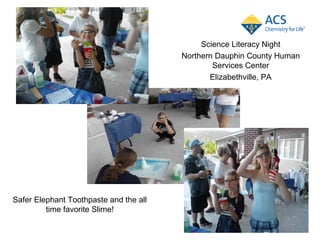
Science Literacy Night
                                        Northern Dauphin County Human
                                                Services Center
                                               Elizabethville, PA


Safer Elephant Toothpaste and the all
         time favorite Slime!
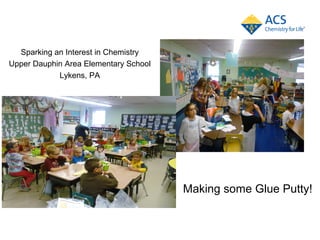
Sparking an Interest in Chemistry
Upper Dauphin Area Elementary School
            Lykens, PA


                                       Making some Glue Putty!
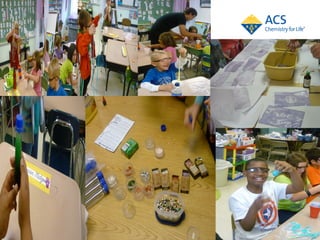
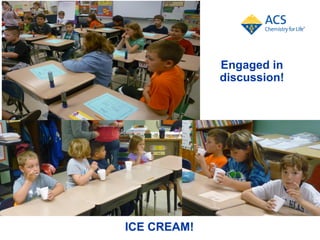
Engaged in
             discussion!


ICE CREAM!

ACS ChemClub Presentation

  • 2.
    American Chemical Society Funand Chemistry? Yes, they go together! Upper Dauphin Area High School Chemistry Club Advisor: Todd Smeltz Leaders: Tyler Adams, Katie Shaffer, Leslie Etzweiler, Brandon Guo, Tyler Sidauga, Heath Starr
  • 3.
    Apply for ChemistryClub Grants! International Year of Chemistry Grant Spark an early interest in chemistry and science while providing an opportunity for older students to interact positively with younger students. High School students selected, planned and performed activities with the elementary students by visiting their classrooms. Each K-4 classroom was visited. There were a wide range of activities. The students are required to introduce and carry out the activity and help the students understand the science concept involved. Assessment: The elementary students fill out a form to rate the activity, the high school students fill out a self assessment with a rubric that matches what the elementary teachers fill out to assess their performance. American Chemical Society 3
  • 4.
    Reach out tothe Community Community Activities Grant We contacted our local Human Services Center to plan a Science Literacy Night. We used the book, S is for Scientist by Larry Verstraete to set the theme for the evening. The chemistry club students set up stations with different science activities where the elementary students discovered the science behind the fun. We also had the book available to read excerpts about different scientists and their discoveries. We advertised the event through the area school districts, local newspapers and local radio stations. We held the event outside. We will be doing the activity again in late September at the Human Service Center's Fall Community Fair. American Chemical Society 4
  • 5.
    Always Remember Safety! Besure that all planned activities take safety into account. This includes: • Transporting Materials: This is part of the student planning sheet – pay particular attention to acids, glass containers and glassware. • Safety Glasses, Gloves and Aprons: We purchased classroom sets of child- sized safety glasses, gloves and aprons for hands on activities. This also made the elementary students feel more like “scientists”. • Have a plan if something goes wrong. Unexpected accidents can and do happen! Most elementary schools don't have eye-washes. Check to see what the school nurse has on hand to deal with potential problems. Eye wash bottles can be kept in the nurse's office as an extra precaution. • Clean up – make sure there is nothing left behind on desks or student access areas that could be harmful or ruin clothing or papers. • Check for allergies ahead of time. Activities sometimes include food – many students are sensitive to even small amounts of food. The classroom teacher can usually help with this. American Chemical Society 5
  • 6.
    Science Literacy Night Northern Dauphin County Human Services Center Elizabethville, PA Safer Elephant Toothpaste and the all time favorite Slime!
  • 7.
    Sparking an Interestin Chemistry Upper Dauphin Area Elementary School Lykens, PA Making some Glue Putty!
  • 9.
    Engaged in discussion! ICE CREAM!