The Rights of Readers and the Threat of the KindleMatthew GoinsIndependent TechnologistAlycia SellieBrooklyn College LibraryACRL Annual 2011Our ACRL hashtag: #readersrights
Our Inspiration:“The Right to Read” by Richard Stallman
“Freedom to Read Statement” by the American Library Association
The Free Software Movement
The “Five Laws of Library Science” by S.R. Ranganathan
The Free Culture Movement
Open Access Publishing
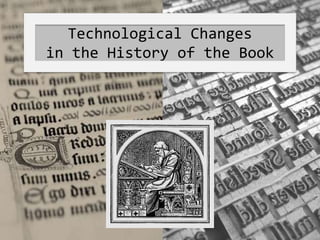
The Free Culture MovementTechnological Changesin the History of the Book
Electronic Books: The Latest Book Technology
Why are Electronic Books Appealing? (a short list)Speedy delivery of materials (downloads vs. physical delivery)
No physical object that takes up space
Full text can easily be searched/analyzed/edited
An item won’t be misplaced, stolen or vandalized
An ebook reading device can contain an entire library of materials
Ebook devices make collections mobile We’re not Smelling the Books. Important aspects related toebooks that we’re not focusing on in this talk:Preferences between ink 	on paper vs. 	reading from a 	screen
Aesthetic issues
Page Numbers
“Lendling” or short-term sharing between 	personal collections 		(via DRM)ONGOING PERFORMANCE BY RACHEL MORRISON: SMELLING THE BOOKS
We’re Interested in Rights, not FeaturesIn this project, we’re focusing on: Readers as people, more so than readers as hardware
 Examining how our rights are preserved—or lost—as  	books go digital
 Shaping, for the better, the future of ebooks 	(in libraries—andoverall)What is an Ebook?An ebook is a digital file, or a collection of digital files.  Open Formats: ePub, HTML, Plain Text, PostScript
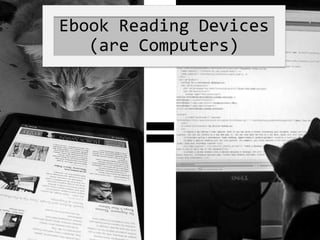
 Proprietary Formats: Mobi, AZW, etc.Ebook ReadingDevices(are Computers)
The Problem with Digital Books:Digital Restrictions Management (DRM)
What is DRM?“DRM” = Digital Rights/Restrictions Management.DRM controls access to digital content and restricts the functionality of devices.DRM relies on two forms of secrecy; one is the encryption key, the other is the proprietary code that the hardware executes. As the end user, the key that is being used to encrypt and decrypt content is a secret that is kept from you. The internal functioning of the hardware you are using is likewise kept secret. If the user could find out either of these secrets (the key or what the machine is doing) the DRM would be broken. In many cases, breaking DRM is considered a criminal act.
Digital Restrictions Affect:Control over Hardware/Freedom to Tinker
Consumer Protection
Privacy
Fair Use
Sharing“In essence, DRM treats the Information user as attacker on her own computer, blocking uses of information undesired by the provider, regardless of whether the information object is legally owned and whether the use in question is otherwise legally permissable.”--Jason Puckett “Digital Rights Management as Information Access Barrier”
DRM restricts ourControl over Hardware and Freedom to Tinker
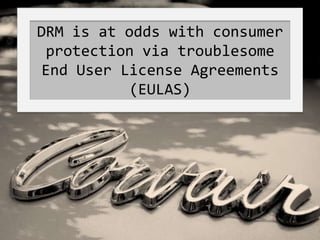
DRM is at odds with consumer protection via troublesome End User License Agreements (EULAS)
DRM restricts Fair UseDevices should not Control Us.Scholarship should not Criminalize Us.
DRM threatens our Privacy and the Freedom to Read
DRM restricts Sharing (and Threatens Libraries)
The Two Main CommercialModels for Digital Books(Both Rely on DRM)
Lending Tethered Devices
Problems and Concerns with Current Library Ebook ModelsAlmost All Ebook Vendors use DRM
Limited Printing
 Caged vs. Free Range DownloadingAdobe Digital Editions = DRM
There’s no such thing as “Minimal DRM”
Simultaneous Readers and “Checked Out” Ebooks
Rental vs. Ownership
Disappearing Books, Diminishing Budgets, and Permanent Collections
How Ebook models are different from electronic journal subscriptions
The Digital Divide
http://ushep.commons.gc.cuny.edu/
Connectivity Problems and Lack of Access to Technology can translate into Academic Barriers
In Summary, Our Concerns about Current Library Ebook Models:DRM restricts our ability to:PrintDownloadUse Texts with Others and CollaborateRetain and Archive our PurchasesMake Information Accessible to our Patrons(Or anything else the vendor/publisher would like to restrict…)
The Results ofDigital Book Restrictions: A Few Horror Stories
DRM Horror Story #1: The Amazon Kindle
It’s not just the Kindle that Threatens Readers’ Rights…
DRM Horror Story #2: Harper Collins
“Conglomeritis”
http://boycottharpercollins.com
Why Retain only the Negative Features of Print Books? i.e. Scarcity, Fragility
What’s the Solution?
The Readers’ Bill of Rights for Digital Books*As readers of traditional print materials, we are already guaranteed all of these rights--and we should not be denied them due to the medium in which we are reading.

ACRL 2011