World War Pigeon Found
  what was the code found?
Closer look
Winning power ball number??
Actually it was a football score


• Florida 37

• Florida State 26
E.J. Manuel injury: FSU QB takes shot
         to head vs. Florida
             Should he played?
Grade ?
Physiatrist Prescription


• Pain relief

• Comfort
Motion

•   Passive
•   Passive assist
•   ROM re-education
•   Active assist
•   Active
•   Stretch
•   ROM limits?
Maximum anterior translation of
the tibia occurs at 15-25 deg of
             flexion


       Limit knee extension
Strengthening
•   Isometrics
•   Multiple angle isometrics
•   Short arc isotonics
•   Full arc isotonics
•   Isokinetrics
•   Speed
•   ROM
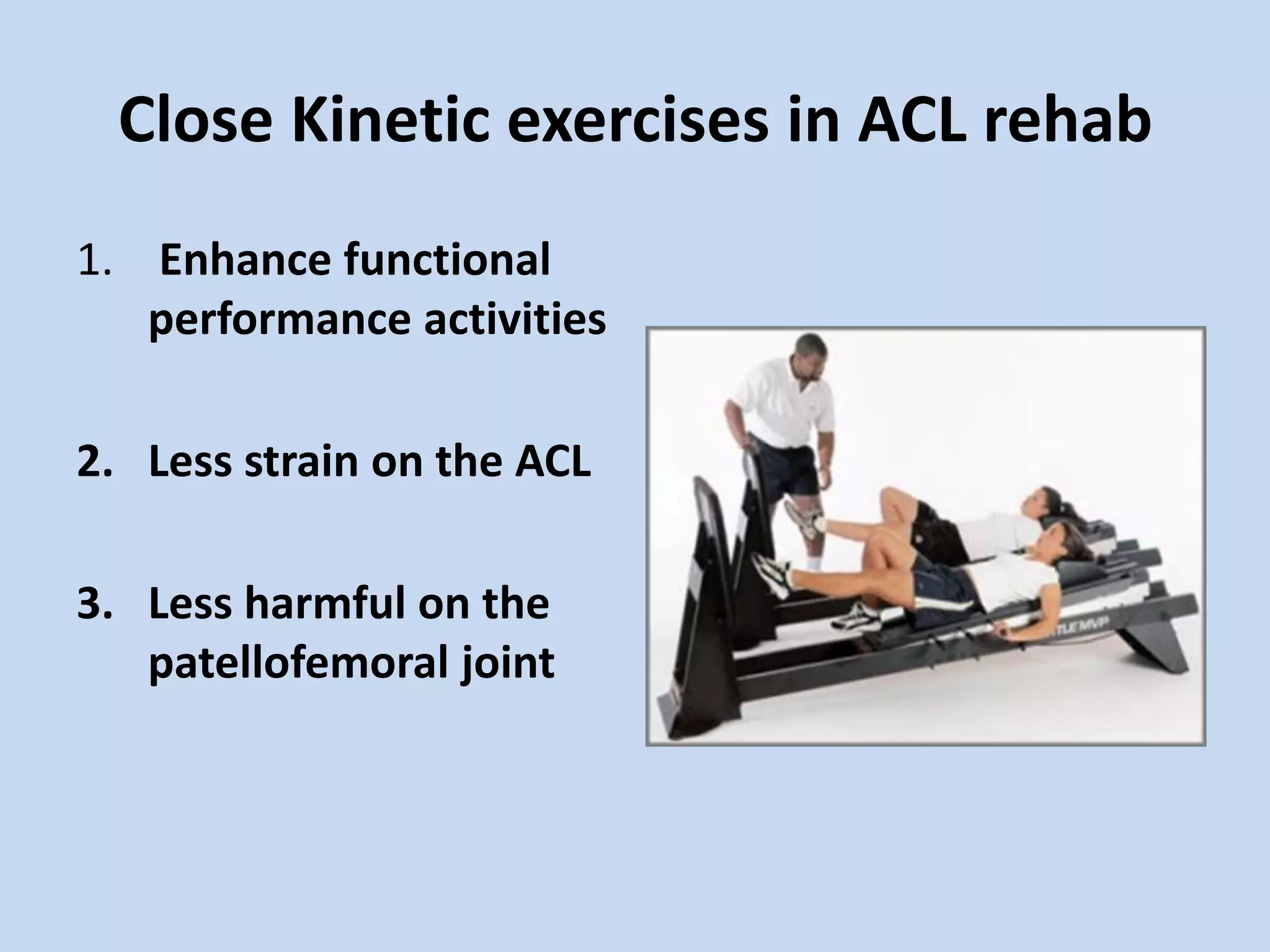
Close Kinetic exercises in ACL rehab
1. Enhance functional
   performance activities

2. Less strain on the ACL

3. Less harmful on the
   patellofemoral joint
Q/H Ratio
• exercisers are told that there should be a certain
  ratio between the strength of their hamstring and
  quadriceps muscles.

• Called the H/Q ratio and reported to be
  anywhere from .50 to .75 with a normative value
  of .60, the strength ratio of this important
  agonist/antagonist pairing is considered essential
  to the stability of the knee joint and to prevent
  ACL and other injuries.
Q/H Ratio

• The balance of quadriceps to hamstring
  strength is not 1:1; but closer to 3:2. In
  general healthy hamstrings can lift 60 - 80%
  of what healthy quads can do.
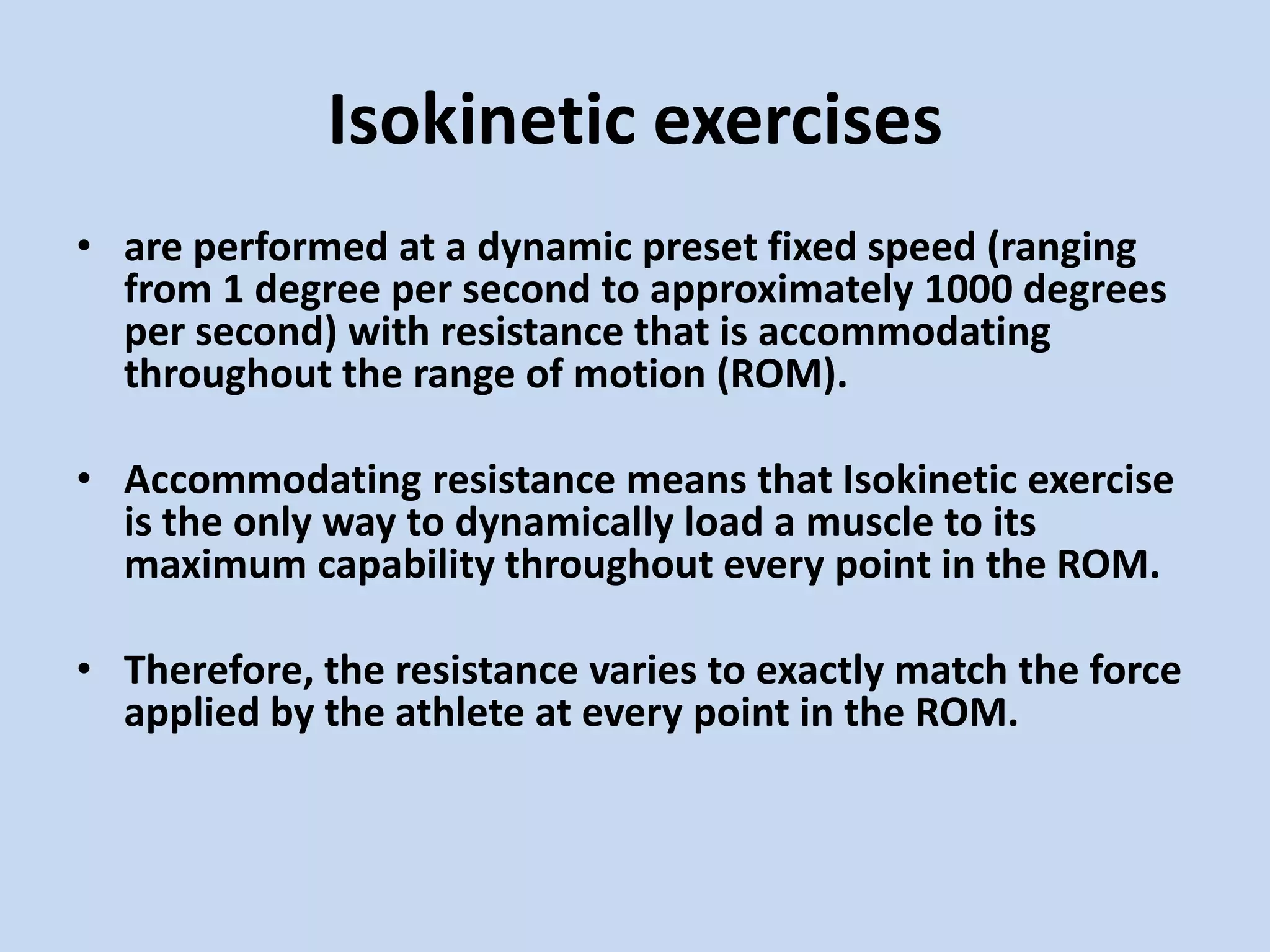
Isokinetic exercises
• are performed at a dynamic preset fixed speed (ranging
  from 1 degree per second to approximately 1000 degrees
  per second) with resistance that is accommodating
  throughout the range of motion (ROM).

• Accommodating resistance means that Isokinetic exercise
  is the only way to dynamically load a muscle to its
  maximum capability throughout every point in the ROM.

• Therefore, the resistance varies to exactly match the force
  applied by the athlete at every point in the ROM.
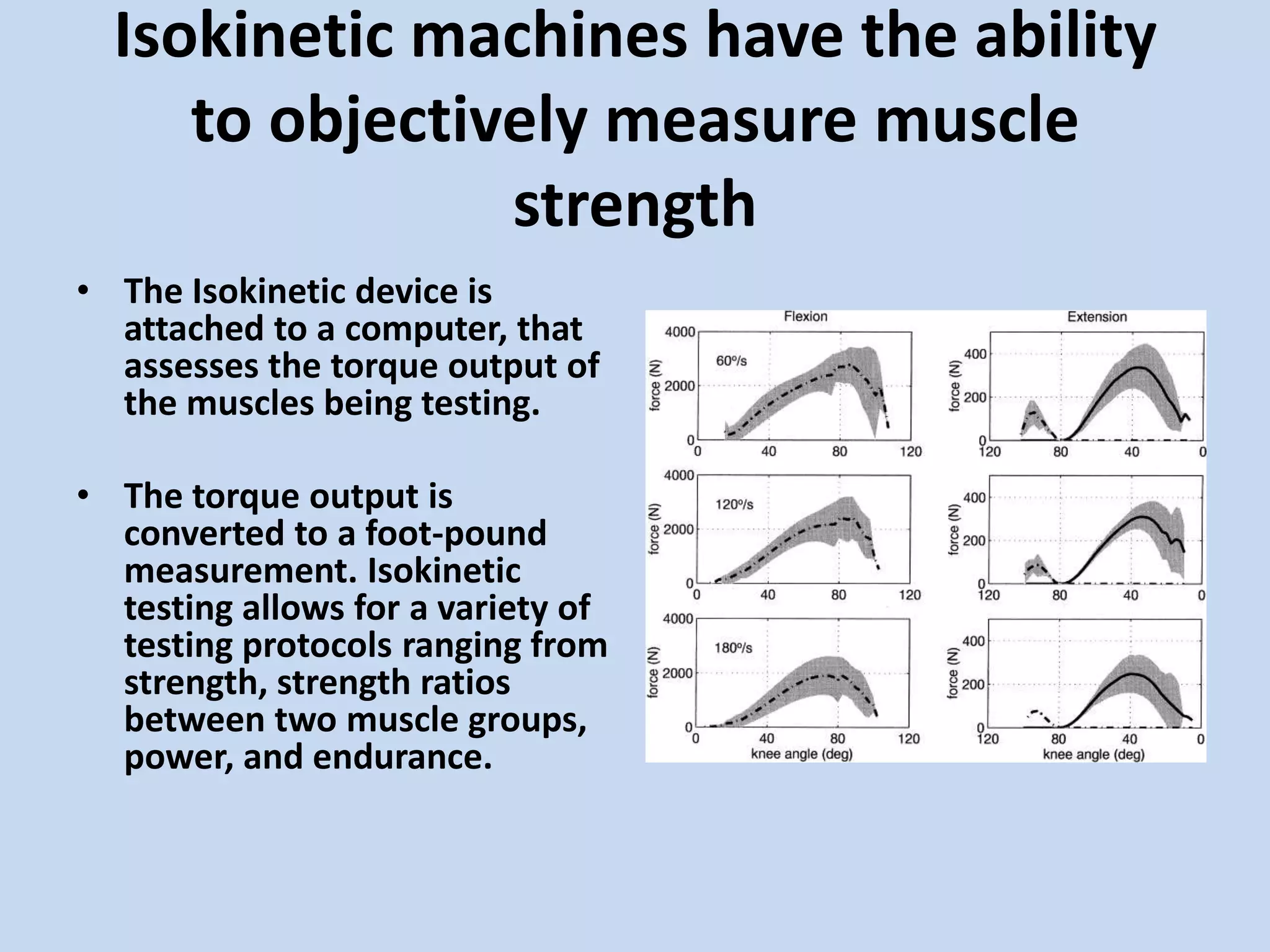
Isokinetic machines have the ability
     to objectively measure muscle
                strength
• The Isokinetic device is
  attached to a computer, that
  assesses the torque output of
  the muscles being testing.

• The torque output is
  converted to a foot-pound
  measurement. Isokinetic
  testing allows for a variety of
  testing protocols ranging from
  strength, strength ratios
  between two muscle groups,
  power, and endurance.
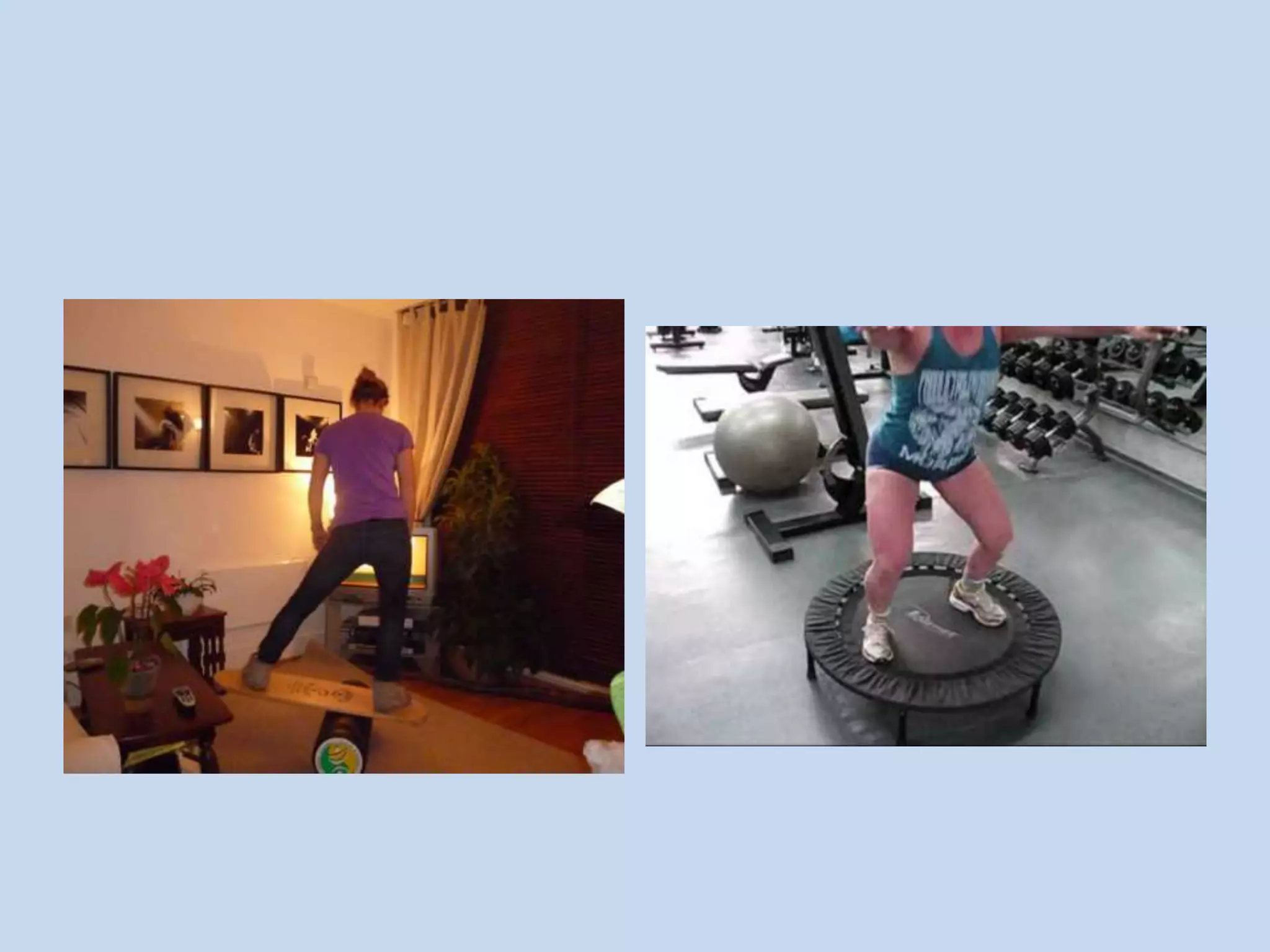
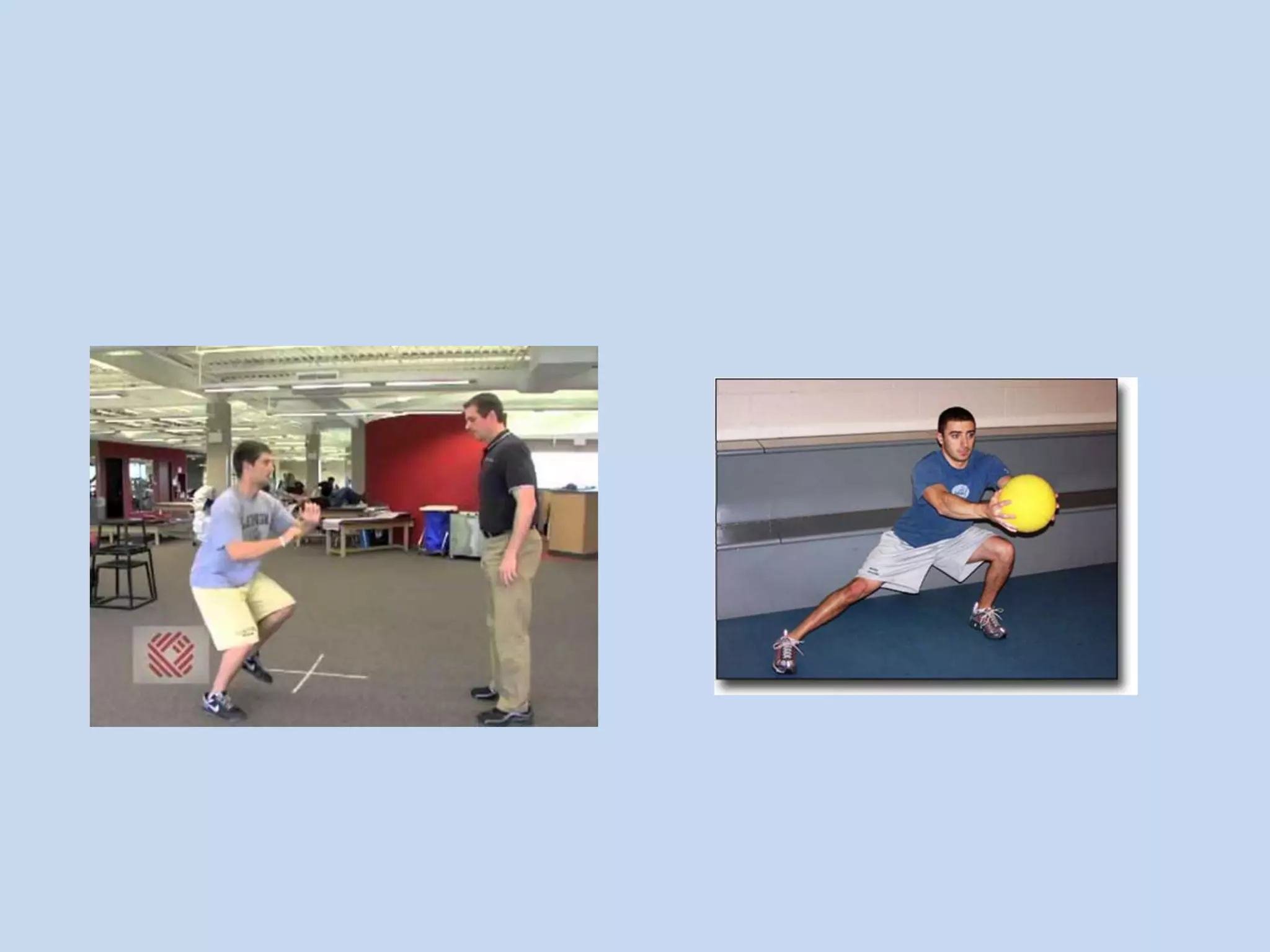
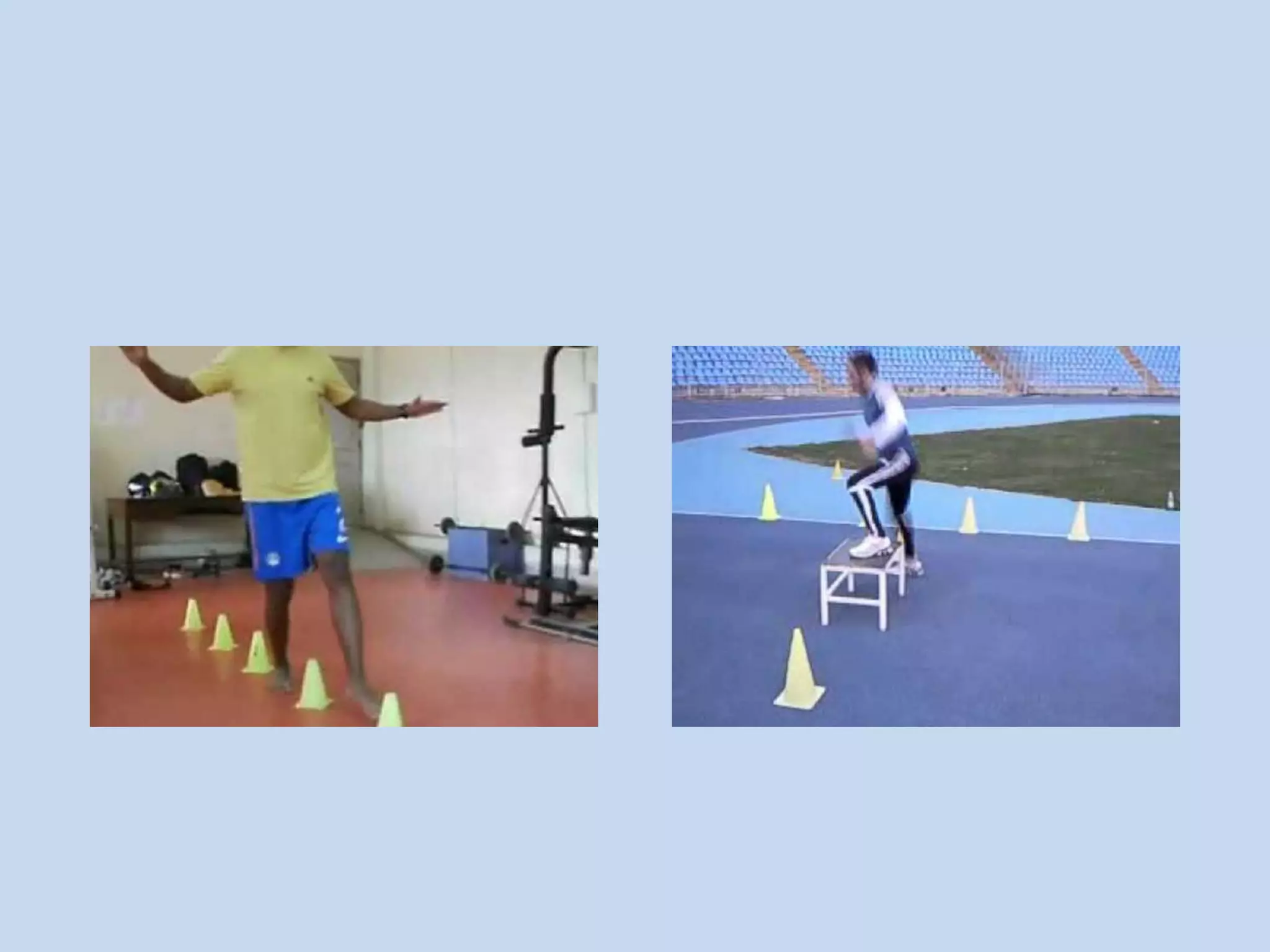
Functional Activities
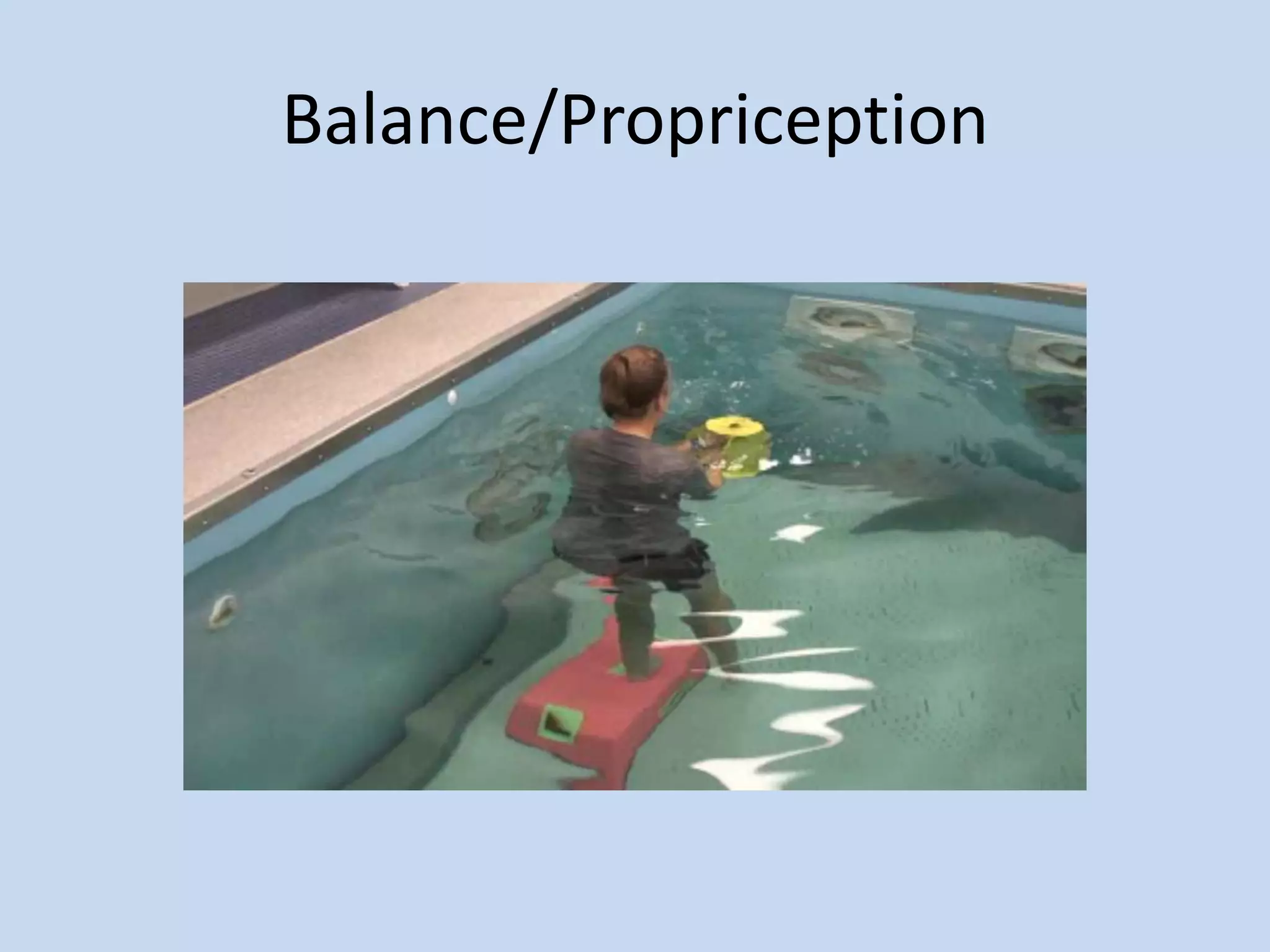
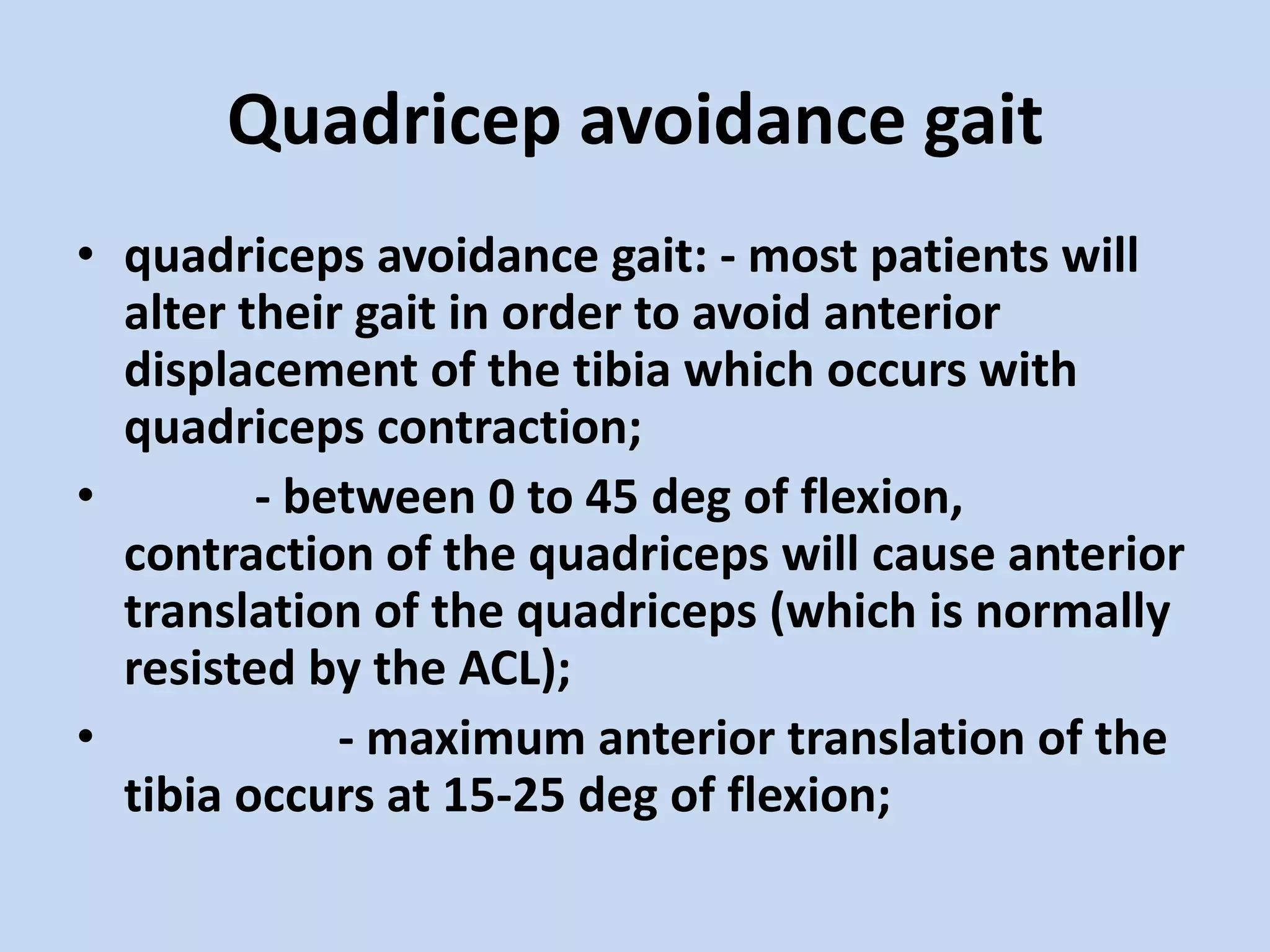
Balance/Propriception
Quadricep avoidance gait
• quadriceps avoidance gait: - most patients will
  alter their gait in order to avoid anterior
  displacement of the tibia which occurs with
  quadriceps contraction;
•        - between 0 to 45 deg of flexion,
  contraction of the quadriceps will cause anterior
  translation of the quadriceps (which is normally
  resisted by the ACL);
•            - maximum anterior translation of the
  tibia occurs at 15-25 deg of flexion;
Quadricep avoidance gait
• that is characterized by increased hip and
  knee flexion, reduced knee extensor torque,
  power, and loss of the biphasic knee joint
  torque pattern
•
• EMG studies support these findings with
  increased hamstrings and reduced
  quadriceps activity
Summary
• Early weight bearing is beneficial and may decrease PF pain
• Early motion is safe and help avoid arthofibrosis
• CPM is not warranted
• CKE should be used in the first 6 weeks
• Bracing has no advantage
• Neuromuscular stimulation electric stimulation high enough
  intensity
• Accelerated rehab program safe in the 5 to 6 month period
• Water base activities, stair climber, slide board exercise are safe
  and add variety

• Gait proprioception and psychological training may be of some
  benefit
• Creatine offers no benefit
Physiatric Prescription

       Summary

Acl rehab3

  • 1.
    World War PigeonFound what was the code found?
  • 2.
  • 3.
  • 4.
    Actually it wasa football score • Florida 37 • Florida State 26
  • 5.
    E.J. Manuel injury:FSU QB takes shot to head vs. Florida Should he played?
  • 6.
  • 7.
  • 9.
    Motion • Passive • Passive assist • ROM re-education • Active assist • Active • Stretch • ROM limits?
  • 10.
    Maximum anterior translationof the tibia occurs at 15-25 deg of flexion Limit knee extension
  • 11.
    Strengthening • Isometrics • Multiple angle isometrics • Short arc isotonics • Full arc isotonics • Isokinetrics • Speed • ROM
  • 14.
    Close Kinetic exercisesin ACL rehab 1. Enhance functional performance activities 2. Less strain on the ACL 3. Less harmful on the patellofemoral joint
  • 16.
    Q/H Ratio • exercisersare told that there should be a certain ratio between the strength of their hamstring and quadriceps muscles. • Called the H/Q ratio and reported to be anywhere from .50 to .75 with a normative value of .60, the strength ratio of this important agonist/antagonist pairing is considered essential to the stability of the knee joint and to prevent ACL and other injuries.
  • 17.
    Q/H Ratio • Thebalance of quadriceps to hamstring strength is not 1:1; but closer to 3:2. In general healthy hamstrings can lift 60 - 80% of what healthy quads can do.
  • 18.
    Isokinetic exercises • areperformed at a dynamic preset fixed speed (ranging from 1 degree per second to approximately 1000 degrees per second) with resistance that is accommodating throughout the range of motion (ROM). • Accommodating resistance means that Isokinetic exercise is the only way to dynamically load a muscle to its maximum capability throughout every point in the ROM. • Therefore, the resistance varies to exactly match the force applied by the athlete at every point in the ROM.
  • 19.
    Isokinetic machines havethe ability to objectively measure muscle strength • The Isokinetic device is attached to a computer, that assesses the torque output of the muscles being testing. • The torque output is converted to a foot-pound measurement. Isokinetic testing allows for a variety of testing protocols ranging from strength, strength ratios between two muscle groups, power, and endurance.
  • 20.
  • 21.
  • 22.
    Quadricep avoidance gait •quadriceps avoidance gait: - most patients will alter their gait in order to avoid anterior displacement of the tibia which occurs with quadriceps contraction; • - between 0 to 45 deg of flexion, contraction of the quadriceps will cause anterior translation of the quadriceps (which is normally resisted by the ACL); • - maximum anterior translation of the tibia occurs at 15-25 deg of flexion;
  • 23.
    Quadricep avoidance gait •that is characterized by increased hip and knee flexion, reduced knee extensor torque, power, and loss of the biphasic knee joint torque pattern • • EMG studies support these findings with increased hamstrings and reduced quadriceps activity
  • 27.
    Summary • Early weightbearing is beneficial and may decrease PF pain • Early motion is safe and help avoid arthofibrosis • CPM is not warranted • CKE should be used in the first 6 weeks • Bracing has no advantage • Neuromuscular stimulation electric stimulation high enough intensity • Accelerated rehab program safe in the 5 to 6 month period • Water base activities, stair climber, slide board exercise are safe and add variety • Gait proprioception and psychological training may be of some benefit • Creatine offers no benefit
  • 28.